 This article has a talk page!


Unused Track IDs#
Test#

|
To do: |
Watch on YouTubeTrack ID 0x01 loads Mario Circuit from the Flower Cup, but without music. Additionally, the orange arrow signs are not animated. According to interviews, Mario Circuit was the first track designed for this game, so this is very likely intended for testing. It works the same in Battle Mode as well.
ReservedXX#
As the name implies, Reserved01 to Reserved14 (IDs 0x02 to 0x0F) were reserved for later use, but are empty in the final game. Attempting to load them will crash the game.
UnderConstructionXX#
UnderConstruction01 to UnderConstruction32 (IDs 0x30 to 0x4F) are reserved for DLC tracks in the base game. As with the "Reserved" IDs above, these are empty and cannot be loaded. IDs 0x30 to 0x42 were later used for DLC packs 1 and 2.
Unused Models#
Fruit Basket#

A model internally labelled as TEST_FruitBasketB. The textures used for the basket and fruits are obviously meant for tests, as they are simple rectangles with solid color and border.
(Source: MrBean35000vr (Discovery))
N64 Tree#
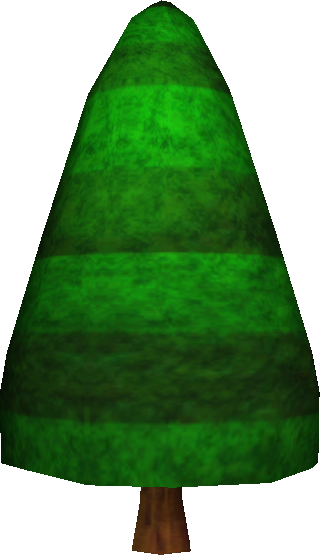
A model named N64Tree, a low-quality model edited from the trees used for Mario Raceway in Mario Kart Wii using the same texture. Being cone shaped it seemingly was used in place of the original Mario Kart 64 version of the Royal Raceway trees before ultimately being replaced by the final game's Tree64A.
(Source: MrBean35000vr (Discovery), Catley (model))
Snowless Mount Wario Tree#
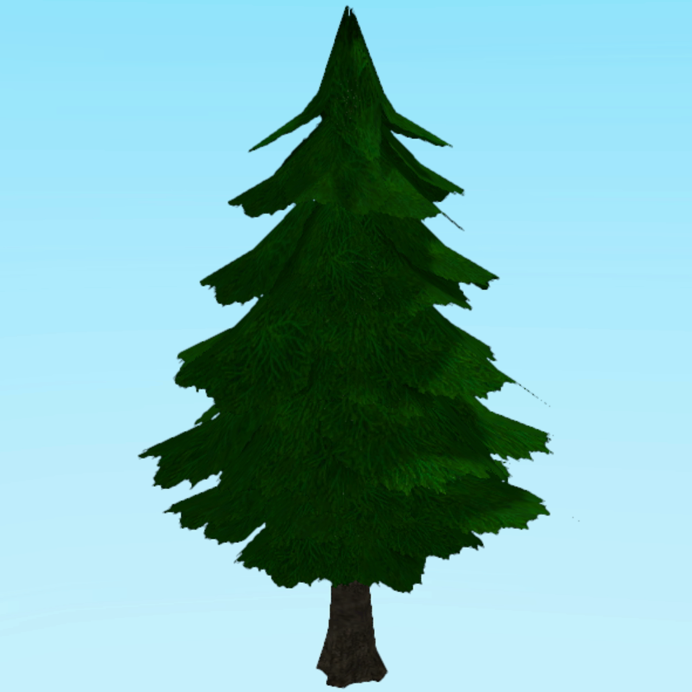
There is a non-snowy version of the tree model used in Mount Wario. It is named TreeTri and correctly listed in the object table with ObjId 5019. While this model is technically used in N64 Toad's Turnpike and 3DS Wuhu Town in Mario Kart 8 Deluxe, there it's baked into the main model of the course, implying that this object would be once interacted with similar to other tree objects, probably creating particle effects.
A similar object in appearance was later used on Hyrule Circuit as DL_TreeTri, though that model uses different textures.
Yellow Pylon#

While red and blue pylons/cones are seen throughout the game, there's also a yellow version which is not used on any track. It is correctly listed in the object table as PylonY (ObjId 1009).
These cones were eventually used in Mario Kart 8 Deluxe on SNES Battle Course 1 and Wii Daisy Circuit.
Unused Pipes not Housing Piranha Plants#
There are some pipes that are only seen in combination with a Piranha Plant. Versions without the Plants exist anyway and go unused. This might implicitly tell that more pipes were once placed on track, or fewer pipes originally had Plants in them. 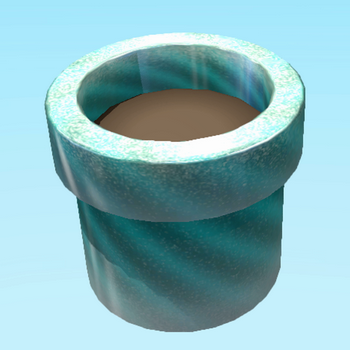 Meant for Sweet Sweet Canyon, having a sugar frosting texture. There are two pipes with Piranha Plants on the track. It is correctly listed in the object table as DokanCake (ObjId 1076).
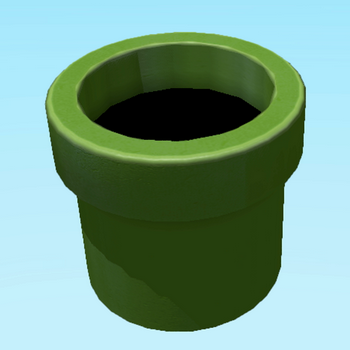
Meant for Bone Dry Dunes, having a slightly muddier green. There are two pipes with Bone Piranha Plants on the track. It is correctly listed in the object table as DokanHone (ObjId 1105).
Start Flag#
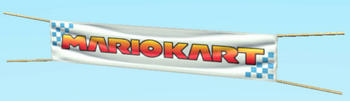
This generic start flag simply called FlagStartMario (ObjId 5024) goes unused. Resembling many starting banners found in Mario Kart 7 courses albeit with different coloration and a linear gradient on the Mario Kart logo. A similar starting banner would be used in the final game on the course GBA Mario Circuit using the classic Mario Kart logo and a red, white, and black color scheme.
Blue Goomba#
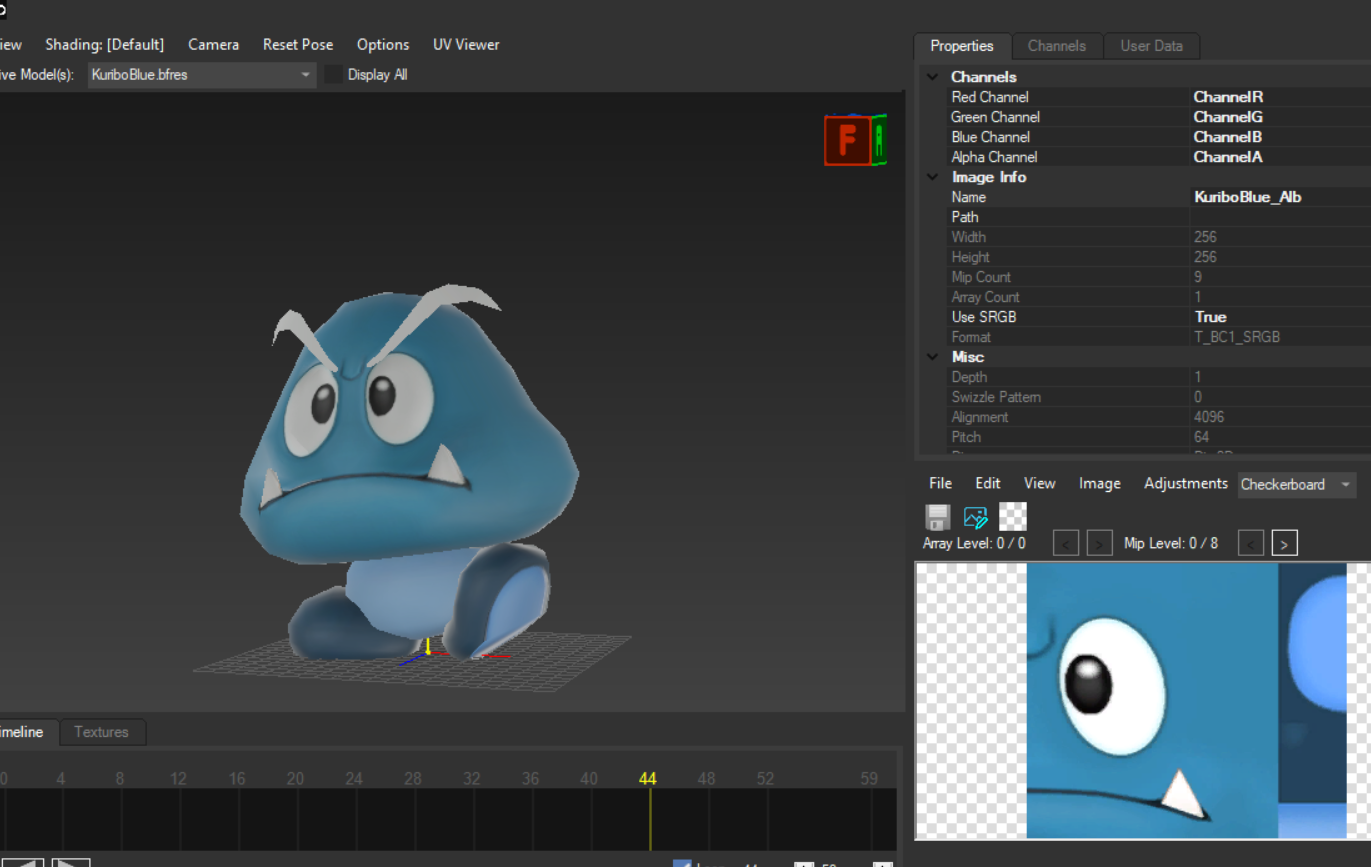
A blue Goomba named KuriboBlue. Note its slightly less refined look compared to the regular Goomba model, implying it was created at an earlier time. It was most likely intended for Piranha Plant Slide, as in Mario Kart 7 the Goombas in the underground section are blue as a homage to the original Super Mario Bros..
Airships#
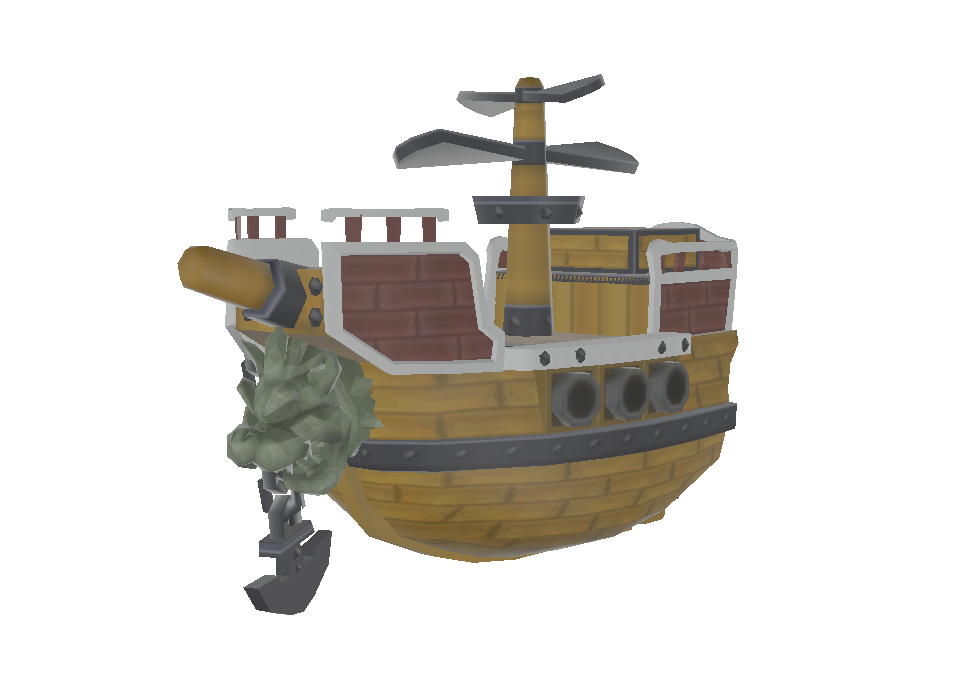
An Airship model named DesertSandShip. Similar to other Airship objects used in Cloudtop Cruise and Bowser's Castle, this object seems to have been originally intended for Bone-Dry Dunes as decoration, although it lacks any animations. While ships do appear on the course they are sandships that ride on the flowing sand of the course; none appear flying in the sky. Notably, this model is a direct port from Super Mario 3D Land.
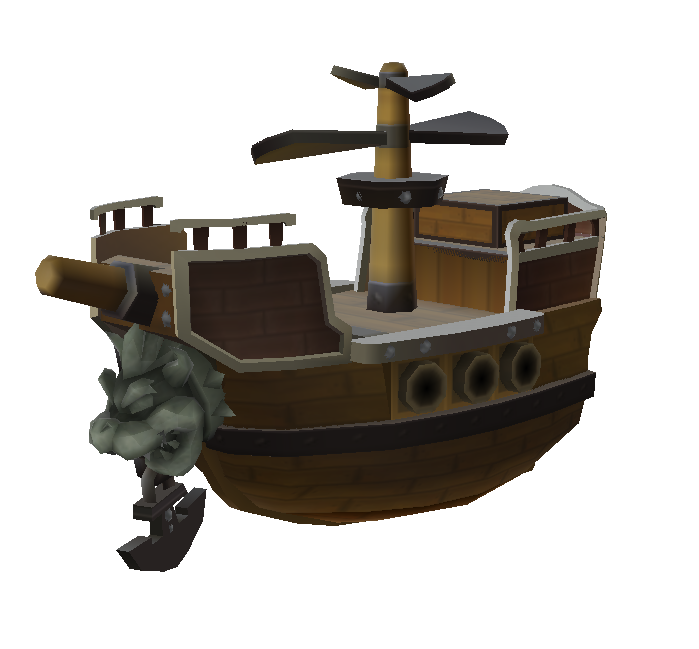
A second unused Airship model named Mcairship, which is the same as DesertSandShip, but with darker shading. "MC" refers to Mario Circuit.
Early Balloon#
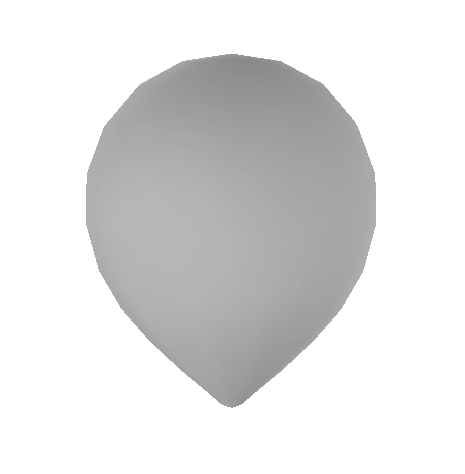
An early balloon model with the same name as the final's, BattleBalloon. This one uses the style from the earlier games. It has an animation for each of its colors. This early model is located in mapobj/BattleBalloon, and the final is in race_common/BattleBalloon.
Audience Group#
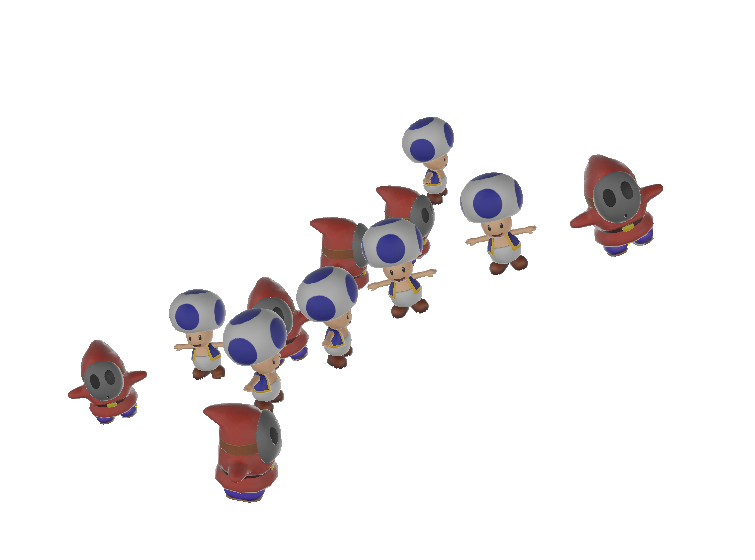
What seems to be an earlier or alternate idea to the CmnGroupToad mapobj and 2D animated crowds found on various courses named CmnGroupAndience. Consisting of three Blue Toads and Red Shy Guys respectively there are two models placing the characters in a straight line, one remaining flat while the other has the characters rotated 90 degrees and tilted along a slope. No animations are assigned to them despite the fact the model contains bones.
Flat Grass Model#
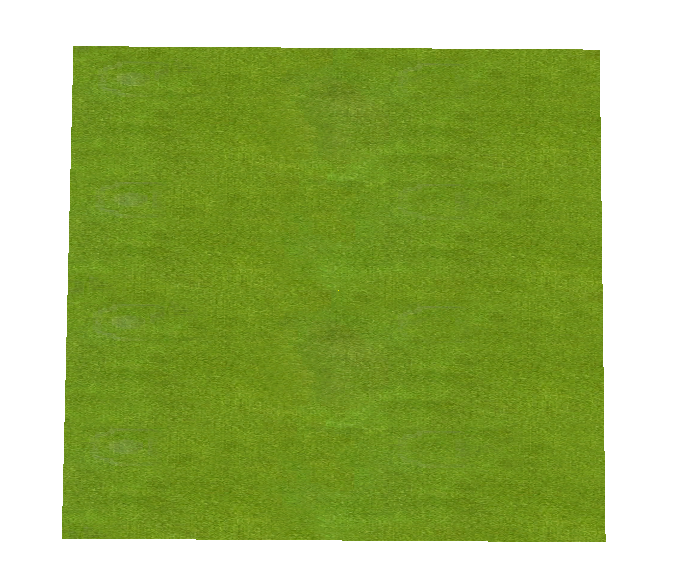
A flat grass model simply named Bake. Based on the texture names having "Tree64Yoshi", it was probably meant for testing bake maps using the tree model from N64 Yoshi Valley.
Early Flag#

An early star flag model named FlagTriangle. It has a single animation for flapping in the wind. The final model is named FlagTriangle1.
Early Trolley Gates#


Two separate models for the Trolley toll gates at Toad Harbor named TrolleyGateLeft and TrolleyGateRight respectively. They have a single animation for opening. The final one is named TollBar.
Early Tick-Tock Clock Gears#


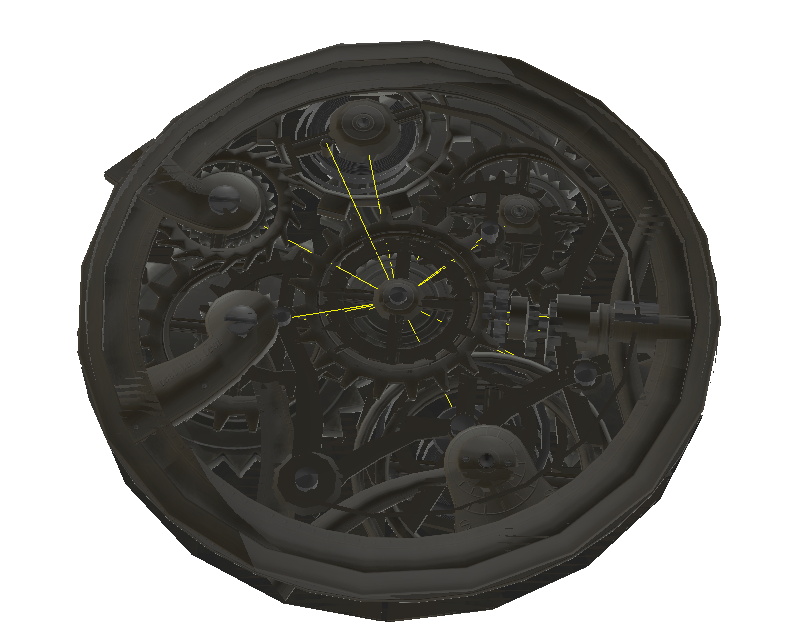



Early Tick-Tock Clock gear decorations named GearDecoA through GearDecoG respectively. They each have an animation assigned to them, while GearDecoD has two animations, which seem to be a duplicate of GearDecoE's animation. The final is all in a single object in GearDeco.
Early Iceberg#
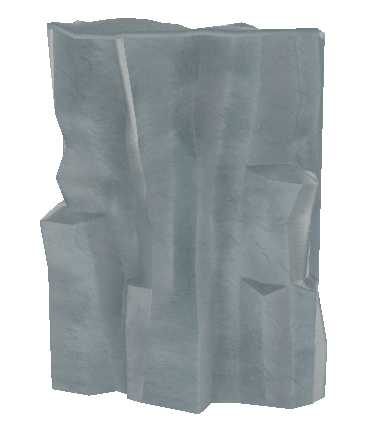
An early iceberg model meant for Ice Ice Outpost named DL_IcebergA. It has a single animation for collapsing. There's another one named DL_IcebergB, but it's a duplicate of A's.
Moving Roads#
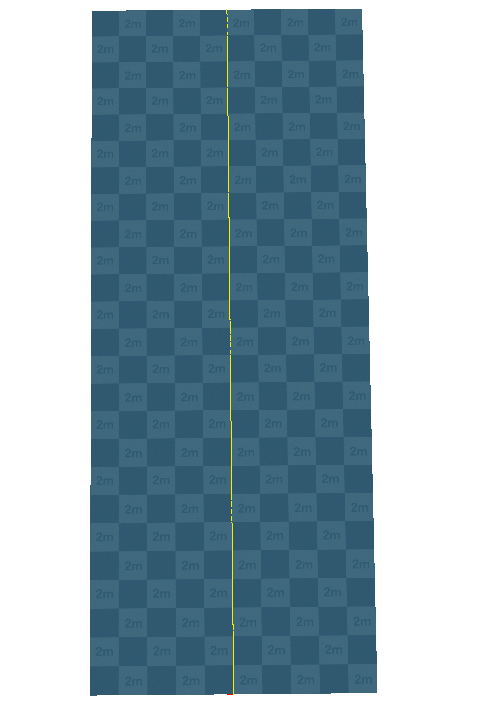
A simple flat road meant for testing the wavy roads named MovingRoad. It uses a test texture with 2m written on the squares.
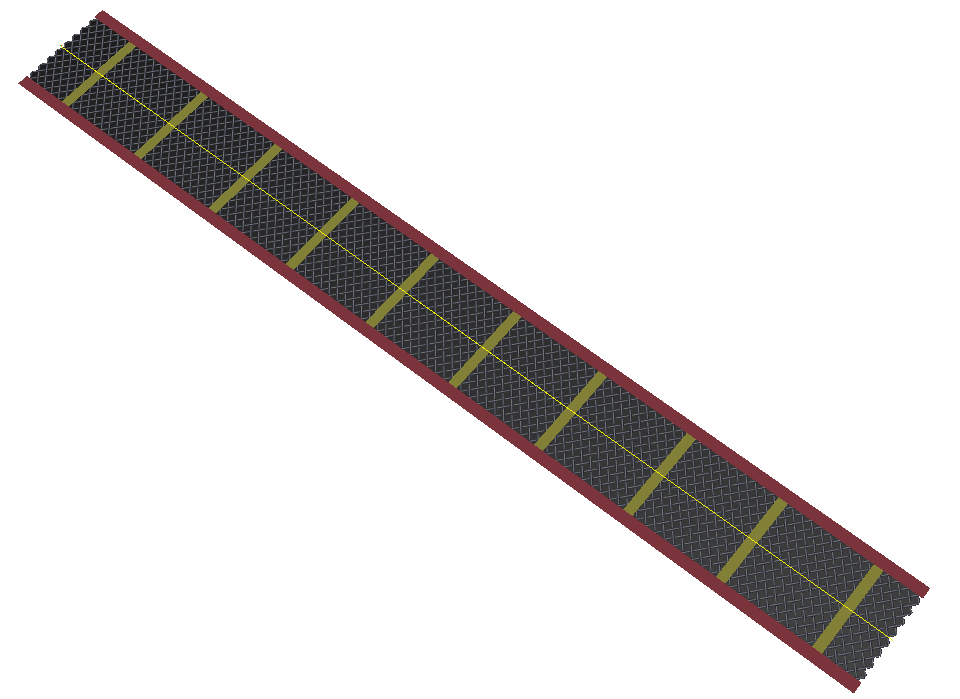
Another flat, longer road named MovingRoad2. This one uses a metal texture instead of the 2m texture. Notably this particular model is similar to that of the "Kanaami Roads" found in Mario Kart Tour using both a similar red color and chain link texture.
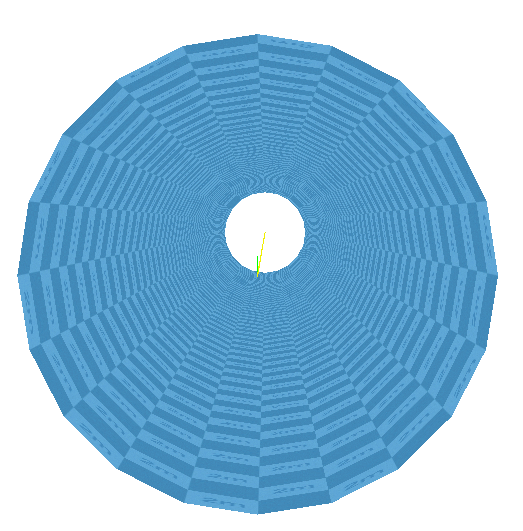
A tube road most likely meant for testing a spinning road named MovingRoad3. This one uses the 2m texture.
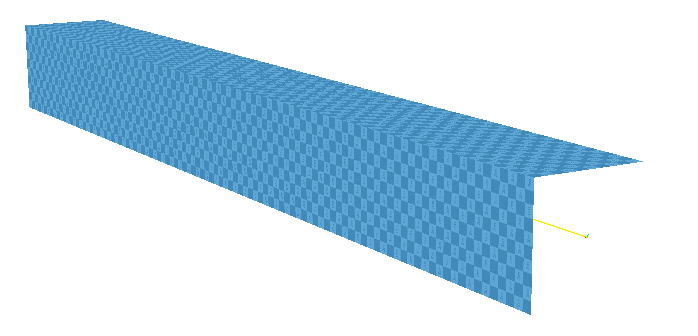
The final moving road test named MovingRoad4. This one seems to be another spinning road test, since it does have 4 sides.
Music Piranha Plant#

This Piranha Plant, named PackunMusic, is meant for Music Park. It's ripped directly from Mario Kart 7, even sharing animations. The final object in Music Park uses PackunFlower's model, so this one doesn't get used.
Wii Tree#
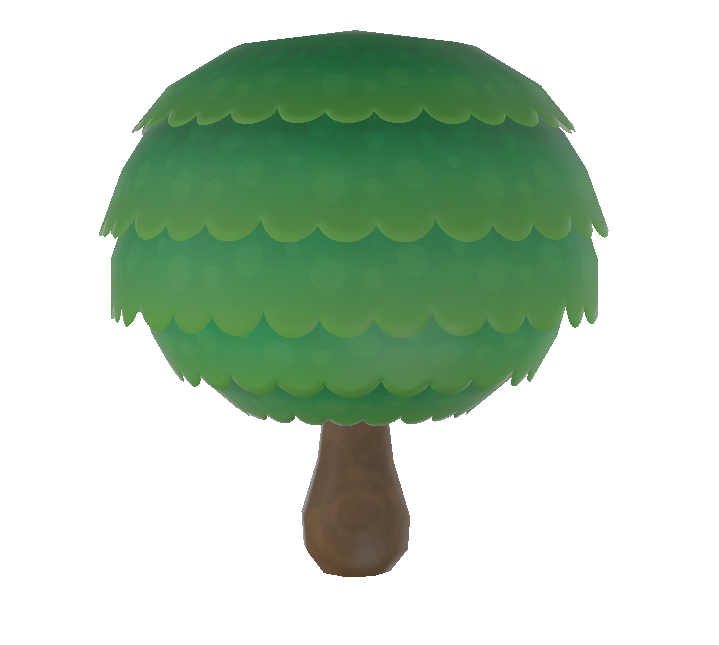
This unused tree is a of similar shape and style to trees found in Mario Kart: Double Dash!! and Mario Kart Wii, aptly named WiiTree1. It shares the same dancing animation with Wii's model as well. Using an earlier version of the bfres format this tree model can be seen placed around Mario Circuit in an early draft of promotional artwork before ultimately being replaced by the final TreeSph model.
Early SNES Rainbow Road Arrow#
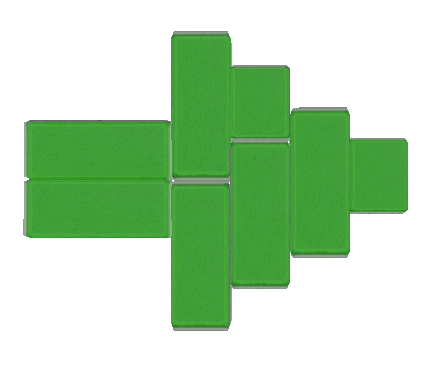
An early arrow meant for SNES Rainbow Road named DL_RainbowArrow. It seems like they were going to go for a more 16-bit styled arrow.
Unused Koopa Troopa#
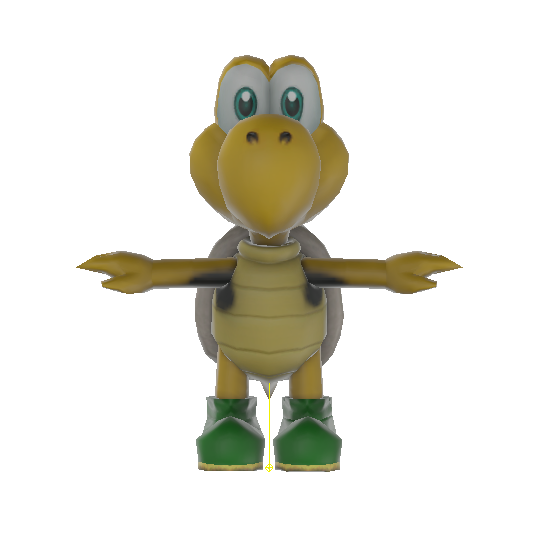
An unused Koopa Troopa model named T_Nokonoko. This Koopa was meant for the Trolleys at Toad Harbor, but the final Trolley object model has the Koopa included. This one also has an early animation.
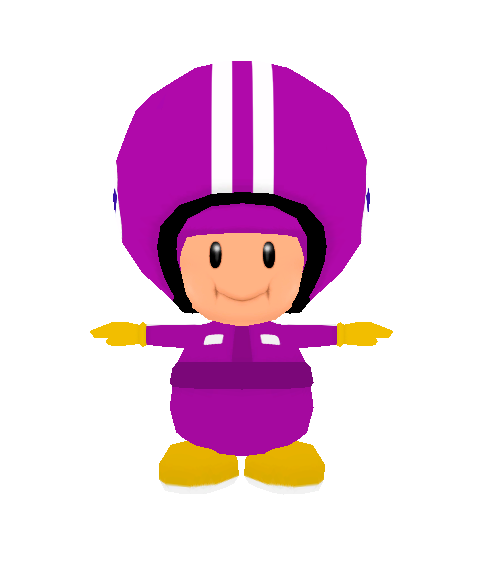
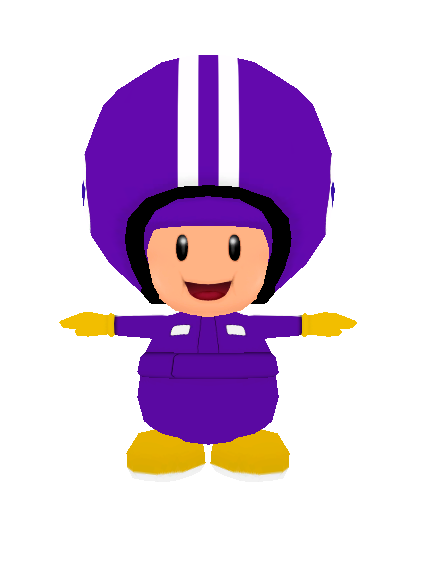
Early Pitcrew Toad#
|
Early |
Final |
|---|---|
|
|
An early Pitcrew Toad meant for Wario Stadium named PitToadW. The color of this one matches Wario's overalls more than the final's. It also doesn't open its mouth. The final one is named PitToadWro.
Rotation Road#
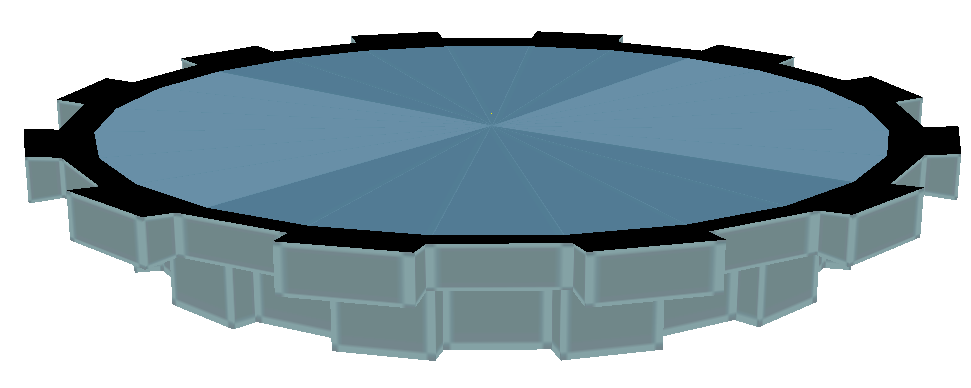
An unused road representing a gear model named RoadRotation1. This was most likely meant to test the rotating gears in Tick-Tock Clock.
Unused Skyboxes#
There are several skyboxes which are not referenced in any track. 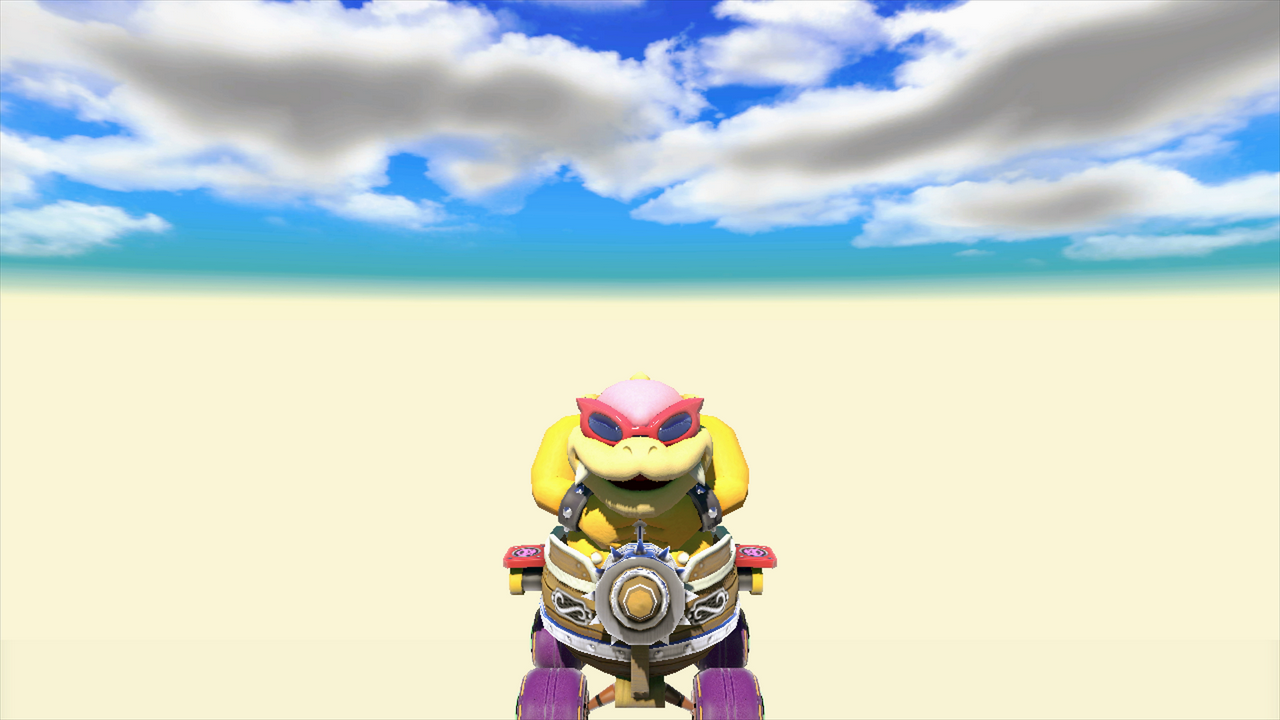 VRfair (ObjId 7006) is a rather generic cloudy sky, but with a weird yellow tint towards the horizon. Used in the test track test_WiFiTest1.
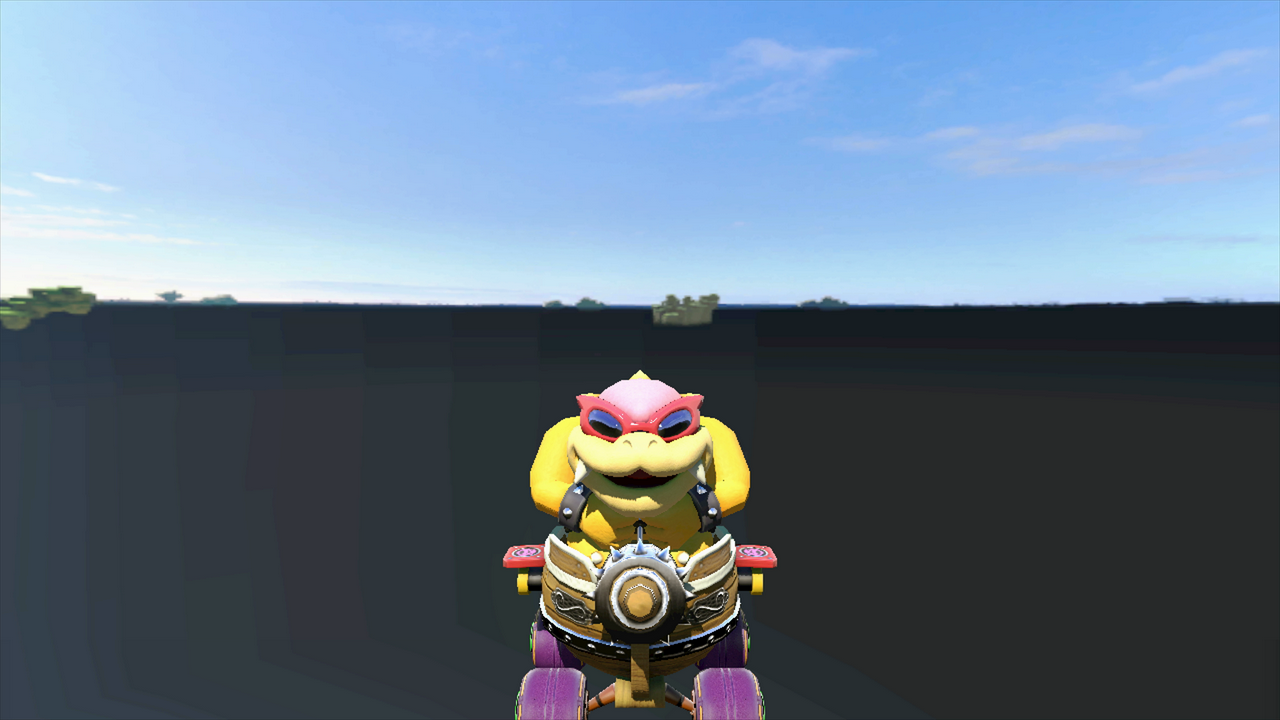
VRcloudSea (ObjId 7012) is the original version and now an unused duplicate of Mario Circuit's sky.
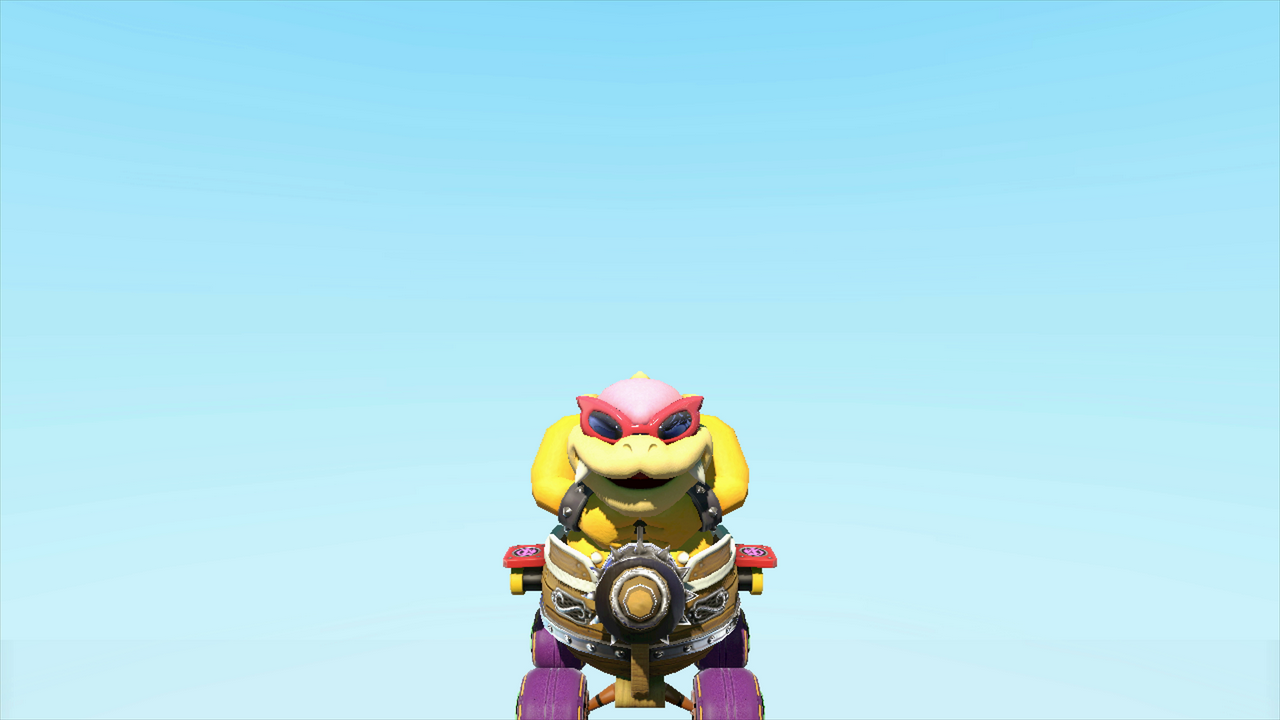
VRCustomizer (ObjId 7030) is a unicolor, light blue sky. Used in test_Customizer track, used in Debug Customizer scene for debugging purposes.
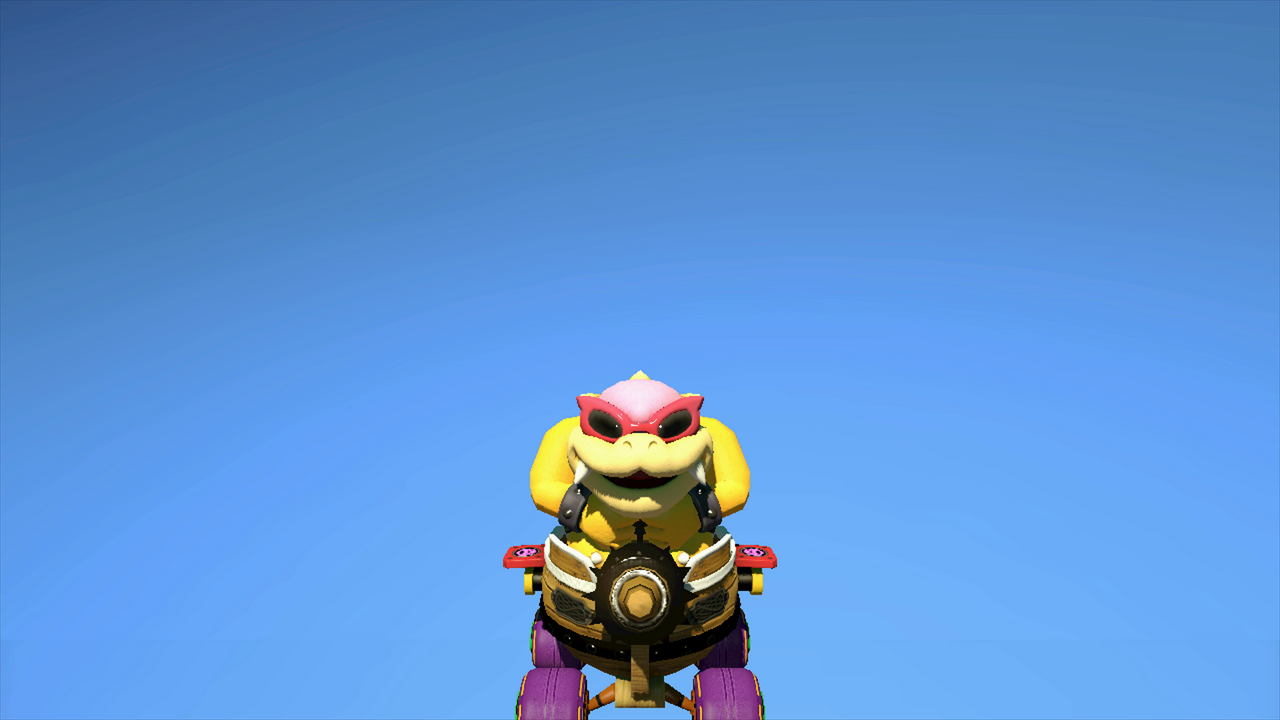
While VRClock (ObjId 7034) is actually used in Tick-Tock Clock and Super Bell Subway, it's only seldomly seen in the latter when clipping the driver or camera out of bounds as the tracks' models completely encase the racers. It is a unicolor dark blue skybox using a 2x2 pixel texture.
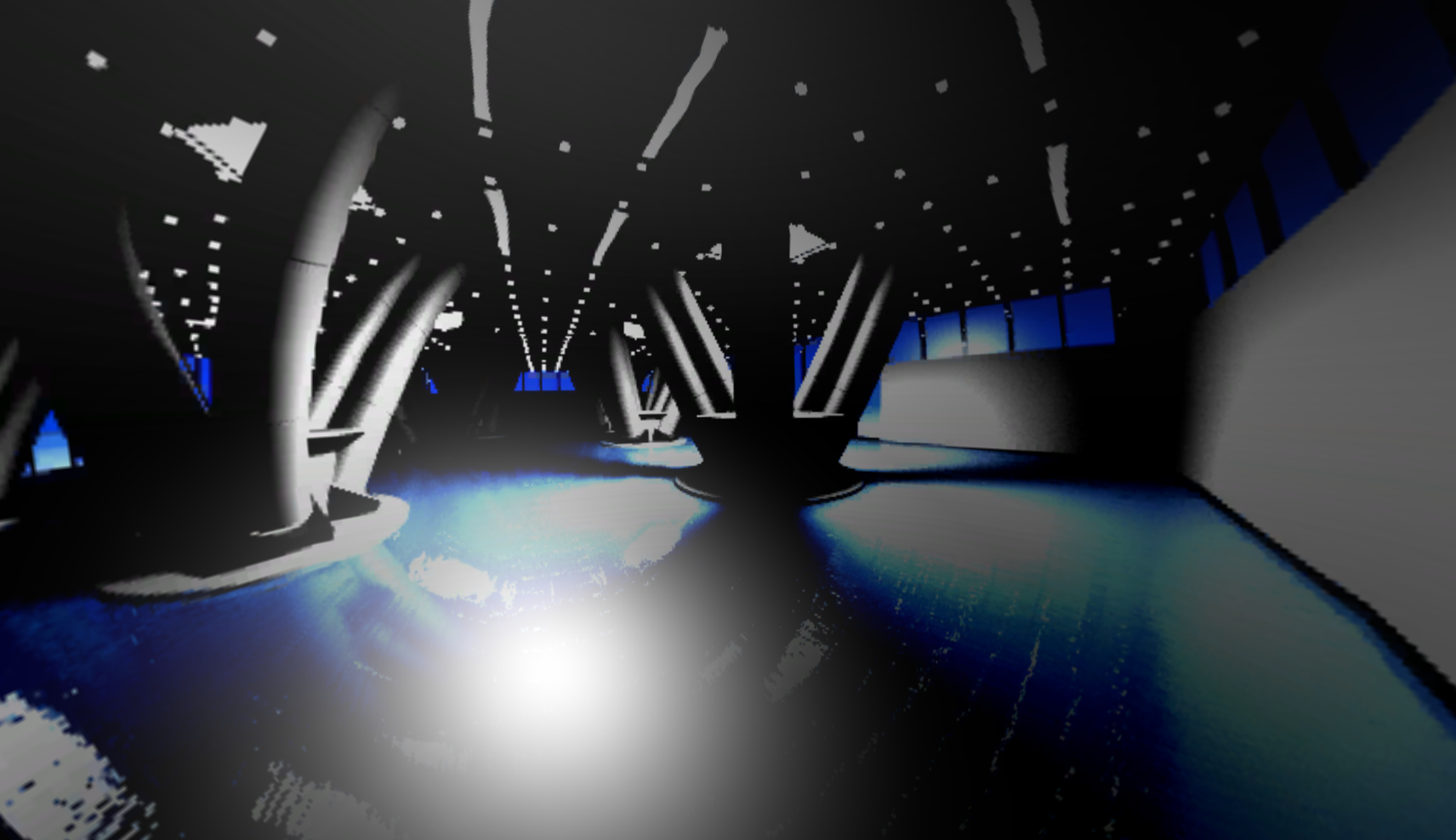
VRMenu (ObjId 7025), referenced in the internally used track Gu_Menu to draw the menu background, is not rendered when used on tracks. It only consists of the reflection map which can be indirectly seen on karts in the character and parts selection screens. On tracks, it results in no skybox being drawn at all, leaving traces of models previously rendered in front of the sky. The reflection map represents an empty hall with a lot of pillars. The game uses special coding for VRMenu, since when removing or replacing it in Gu_Menu, no menu background graphics like the main menu characters or the blue backgrounds are drawn anymore, and the whole online lobby will not be rendered at all - only the UI above remains.
Additionally, there are skyboxes listed as DL_VRAnimalSpring (ObjId 7054) and DL_VRAnimalWinter (ObjId 7055) in the object dictionary. These would've obviously been used for the Spring and Winter seasons of the Animal Crossing track, but Spring reuses VRWaterPark and Winter VRSherbet instead. These objects lack a model resulting in nothing being rendered when placing them in a track, resulting in the same effect as with VRMenu.
Unused Graphics#
Menu Graphics#
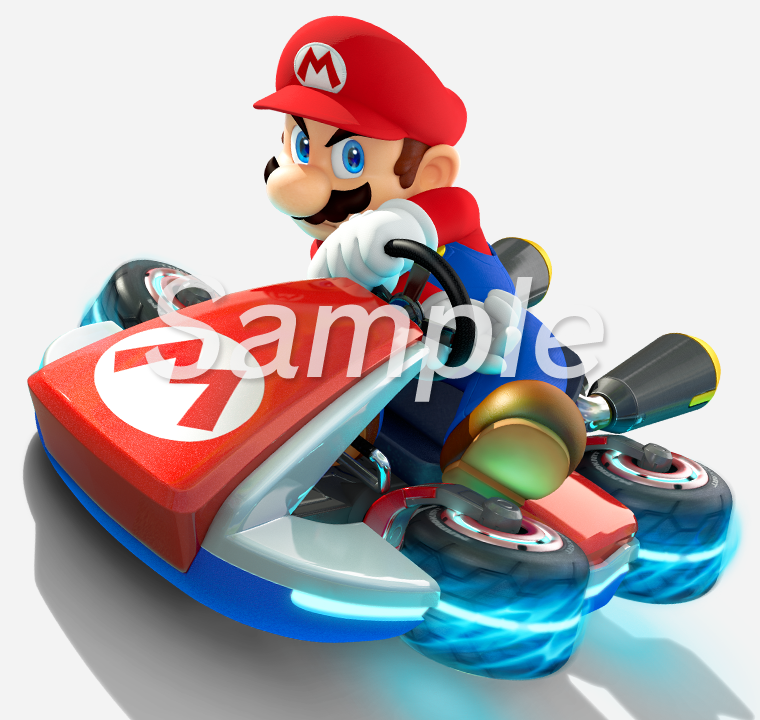
A placeholder version of the default title screen image.
(Source: NWPlayer123)
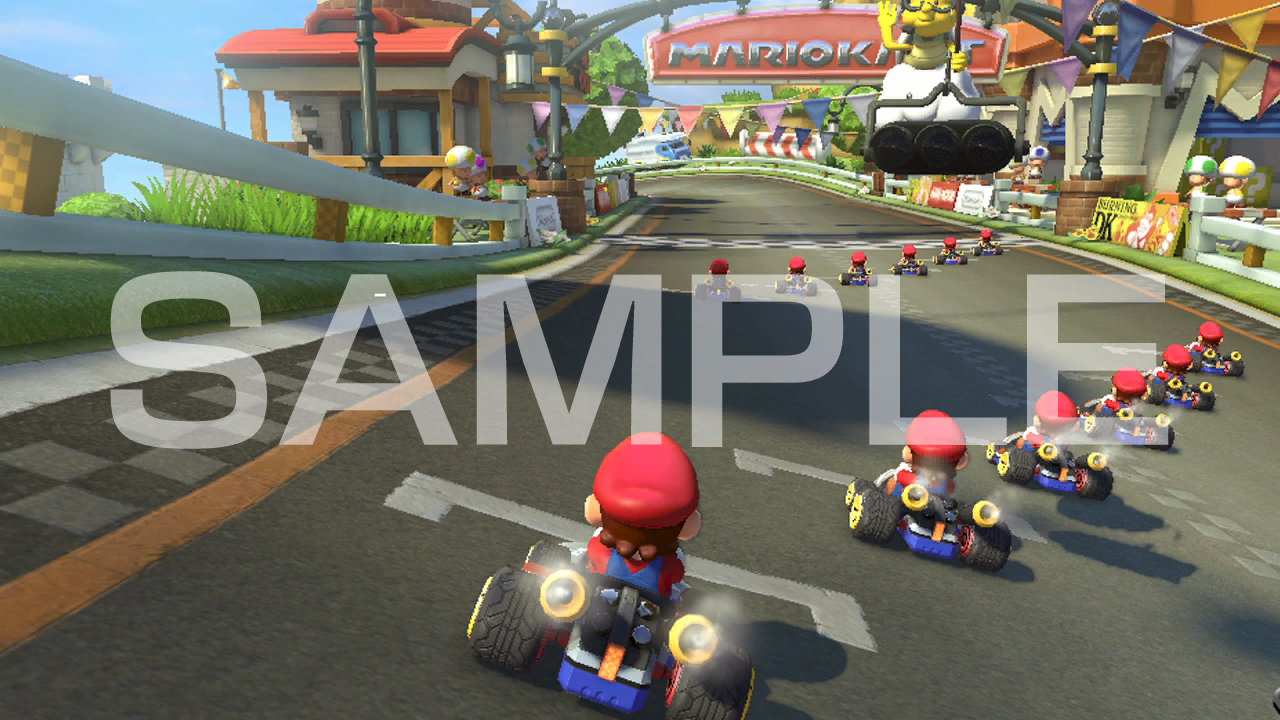
A placeholder for snapshots of the 16 DLC tracks to be shown as the background in Grand Prix result screens for the corresponding cups, existing in version 1.0 of the game. Named ym_awardbg_dlc_course_00^o.bflim through ym_awardbg_dlc_course_15^o.bflim.
This screenshot was taken in what appears to be the original reveal trailer version of the game, notably lacking the MKTV logo on the van and sign banners, a checkered brown fence post texture, and an used feature of the spectator Toad mapobjs that would have them stare at drivers as they race by.
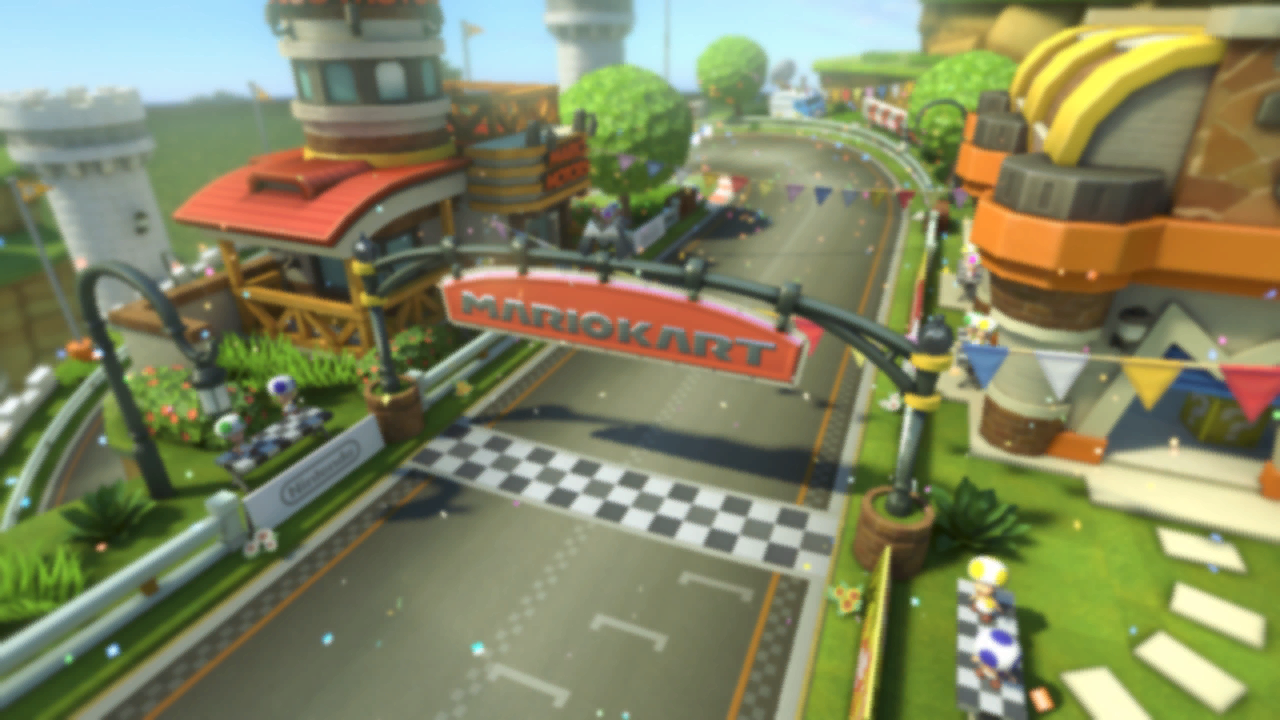
A placeholder snapshot of Mario Circuit for the results screen, while otherwise similar to the screenshot above this snapshot features an odd difference in the benches that the Toads stand on using a different material. While the first E3 trailer and all following builds of the game use the CurbStone material this version seemingly uses the StartGrit material instead, this seems to have been a conscience decision rather than a mistake as the texture has been UV mapped perfectly over the bench suggesting it was an earlier version or alternate idea before the striped texture was finalized.

An unused "START!" icon. In-game, it says "GO!" when a race begins.




There are four unused cup icons. They reuse older artwork for the central objects and lack the same extra decorations that the normal icons have. Their file names refer to them as CupIconDLC00 through CupIconDLC03, indicating that these were placeholders for the DLC cups. Of the 4 released DLC cups, only the Yoshi Egg ended up being used (albeit with a brand new icon). The Spiny Blue Shell also eventually found its way into the Switch port's Booster Course Pass DLC, also with a revamped icon. These graphics seem to imply the initial DLC was set to be more focused purely on the Mario franchise, rather than crossing over (no pun intended) with the Legend of Zelda and Animal Crossing series.


Two unused stamps. The first is a placeholder and the second is an early version of Pink Gold Peach's stamp, missing the shading.

An early kart icon for the Pipe Frame. In this icon, the vehicle in question uses a design more closely resembling that seen Mario Kart 64, Mario Kart: Super Circuit, and Mario Kart 7 than its final design made to resemble the original Super Mario Kart design. Notably this icon features dual exhaust pipes, smaller engine block, a square seat shape, a metal rectangle housing the steering column and holding up the emblem, and oddly the axel arms which aren't present in any vehicle render from Mario Kart 7 or this game.


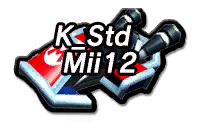

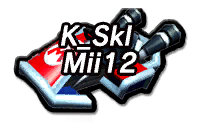
Five unused kart icons for a 13th Mii variant. The kart's variant relies on what color a player's Mii is, but there are only 12 colors to choose from. All five of the icons are placeholders using graphics from Mario Kart 7. The icons are for the Standard Bike, Super Glider, Standard Kart, Standard ATV, and Pipe Frame respectively.
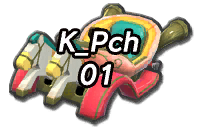
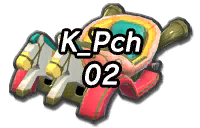
Icons for two planned variations of the Prancer. The Prancer is a vehicle for Peach, and since Rosalina and Daisy have alterations of Peach's vehicle parts, they were most likely planned for them. Both icons are placeholders.
Object Textures#

An unused emblem for either Kamek or a generic Magikoopa, neither of whom appear as a playable character in the finished game or its DLC packs. Kamek also appeared in pre-release screenshots of Mario Kart 64 (then called "Super Mario Kart R"), so this is an interesting case of history seemingly repeating itself.
Kamek would go on to join the playable roster of Mario Kart Tour, and then as part of Wave 5 in the Booster Course Pass DLC of this game's Switch port, where this emblem does indeed come into use.

A generic emblem with a silhouette of the "8" in the game's logo is included in the emblem folder. This actually can be seen indirectly in the pre-rendered images of the kart's vehicle parts, but it's never actually used as an emblem and as such the player never gets a proper look at it.

A placeholder texture for kart emblems found inside most kart model files. Loaded if the game can't find/load the correct emblem texture (read Failsafe Dummy Vehicle Textures).

Lakitu contains a texture showing a final lap or section 2 (hence the 2 is golden), but the final game always displays the 3/3 board for the last lap or section, no matter the number of total laps (except for 7 laps which it handles correctly to support Baby Park). However, during E3 2013, there were Mario Kart 8 demos in which people could try out Mario Kart 8 before its release - all races that were in the demo only had two laps, which required the use of this graphic.


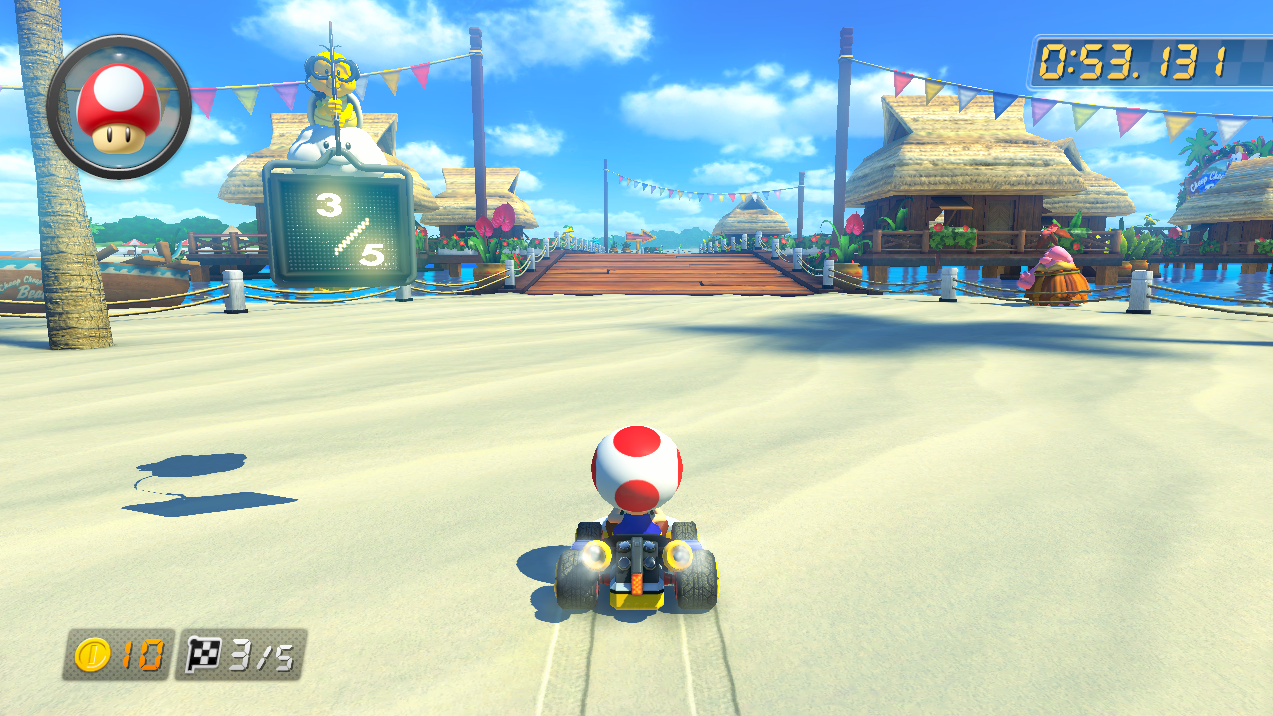
In version 2.0, until version 4.0, Lakitu had placeholder lap graphics for 5 laps, using a basic font, most likely for testing. It also seems like the unused 2/2 graphic was used for these, since the 5 looks poorly slapped over the 2. These do actually appear if a track is set to 5 laps in version 2.0 and 3.0, until GCN Baby Park was added in 4.0, which added the 7 lap graphics instead. 5 laps was also the limit in this version; anything higher would crash the game when crossing the finish line.


Crude textures made for the Standard Mii Glider. Both colors were dependent on which sex the Mii was; blue for female and red for male.
Track Textures#
|
Early |
Used |
|---|---|
|
|
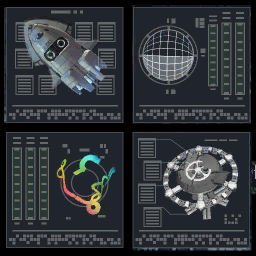
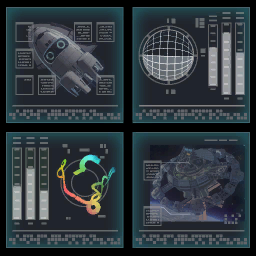
The computer screens in Rainbow Road have 8 frames of animation, but a 9th animation frame is present. This last frame is actually an early version of the first frame. The bar charts are all empty, the infoboxes use solid lines instead of fake text, and the blue glow around the edges is missing. The Blooper shuttle is shown with different lighting and with a parallel projection, but the model itself appears to be the same. The space station is displayed at a different angle and has no textures or background. It is possible that this was a stylistic choice and does not necessarily indicate that the image was made before the texturing of the course was complete.
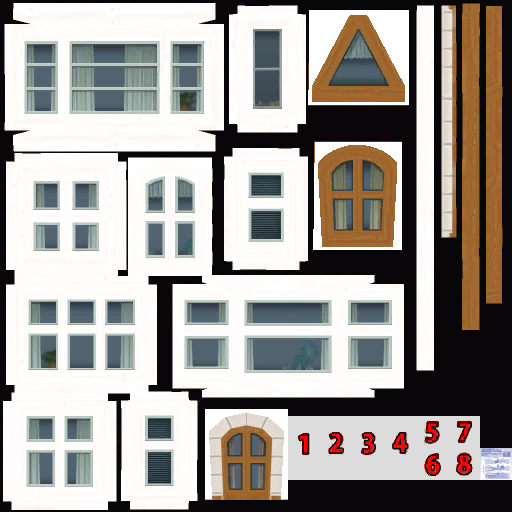
There are two copies of the building windows texture in Toad Harbor, one of which has big red numbers in the place of where the posters should go. The positioning of the numbers don't match the final poster placement and seem to indicate that taller or thinner posters were planned. There is also a small white and blue image next to the eighth spot. The texture itself is used on all of the windows outside of the marketplace area, and was likely left in due to the windows being identical in both versions.
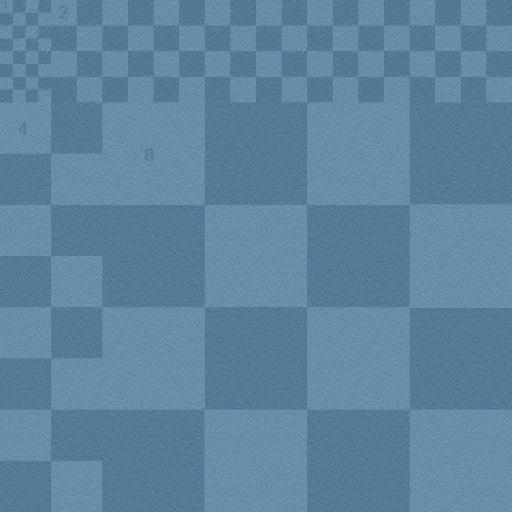
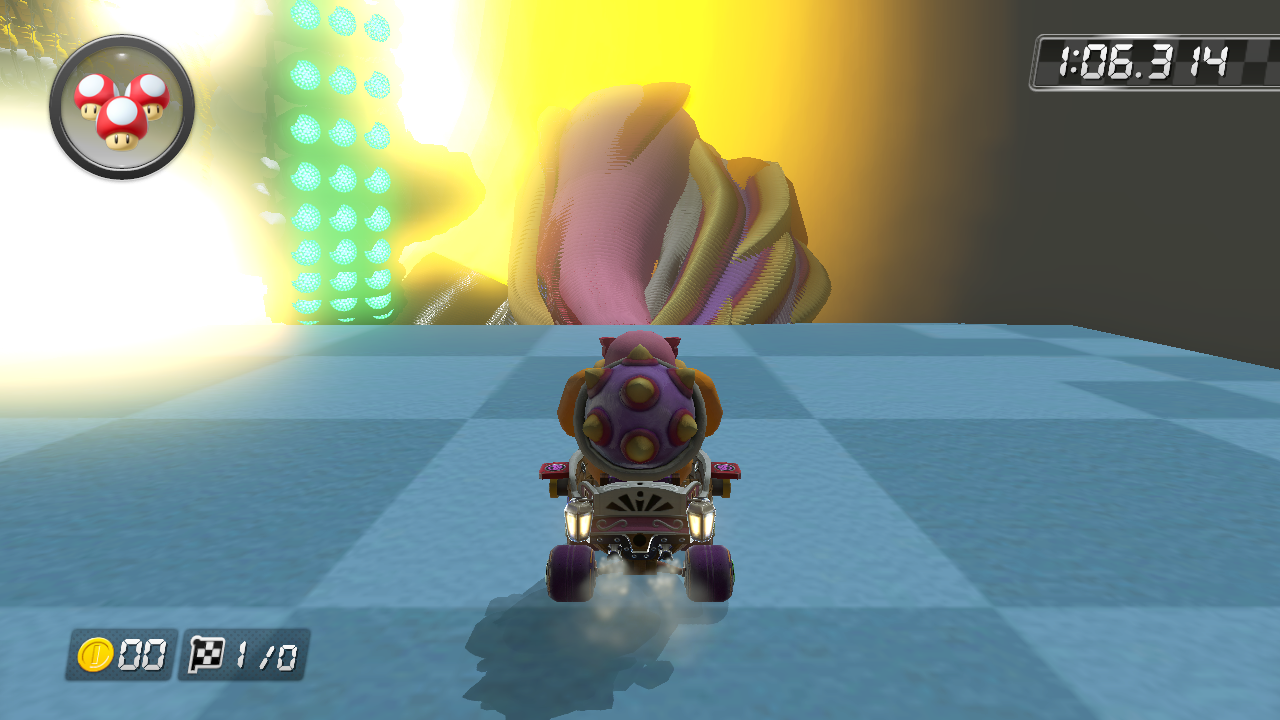 The internally used track Gu_Menu actually consists of a finite small plane on which karts are placed at race start, which is also correctly textured with a test texture. This plane is not visible when running the track as the material defines to cull both back and front faces rather than only back faces. Together with no skybox being added as an object, only drawing artifacts are visible around racers.

A placeholder signboard texture found alongside a number of other signboard textures for the Excitebike track. The text on the bottom left translates to "※4:1 Non-Sign Logo Variation".
(Translations: Glitterberri)
Unused/Test Items#
Test Items#
In the item slot table file ItemSlotTable.byaml, there are two test items called Test3 and Test4. Most likely, these items are holdovers (and serve the same lack of purpose) as the same-name items in Mario Kart 7.
Lucky Seven Leftover#
In the Item Slot Table file ItemSlotTable.byaml, there is an item called Seven. It could just be a leftover for testing the Crazy 8 during development and they forgot to change the name.
Fake Item Box Leftover#
In the file RaceLogData.exbin, appears the text "FakeBox" as well as all other known cut items. Since it is only referred to in that file, players can assume that they cut it really early in development.
Super Leaf Leftover#
In the file RaceLogData.exbin, appears the text "Tail" as well as all other known cut items. Since it is only referred to in that file, players can assume that they cut it really early in development.
Failsafe Dummy Vehicle Textures#
Dummy vehicle textures that are loaded if the game can't find/load the correct texture for character specific emblems, karts and gliders.
Unused Abilities#
Manual Glider Closing#
Glider closing with B button from Mario Kart 7 is present in Mario Kart 8/Deluxe but it is not possible to perform because the game clears the B button input when in a glider. By removing this check, the glider can be closed by pressing B, showing that the function is left in the game and working perfectly, but not performable because of the input clear.
(Source: Marioiscool246 (Discovery))
Hidden Coins & Item Boxes#
Courses that don't have coins (Mute City and Big Blue) actually have a coin loaded in, but hidden in places you can't normally see. It is loaded because it requires it or else the game crashes. The same goes for GCN Baby Park, but with stationary item boxes (those tracks only have moving item boxes, stationary ones are needed).
Mute City Hidden Coin#
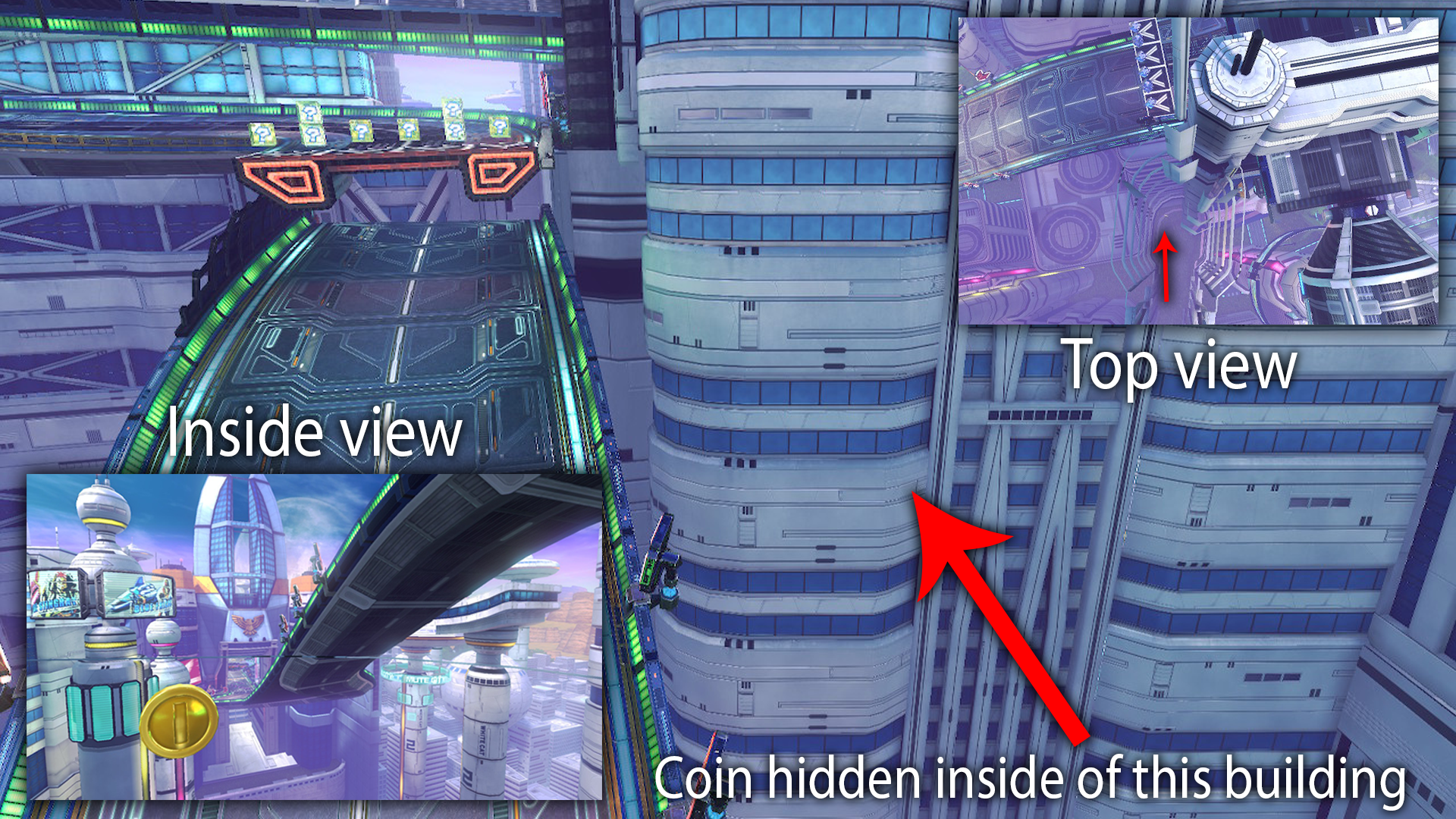
Mute City's coin is hidden inside of a building, next to the last turn of the course.
Big Blue Hidden Coin#
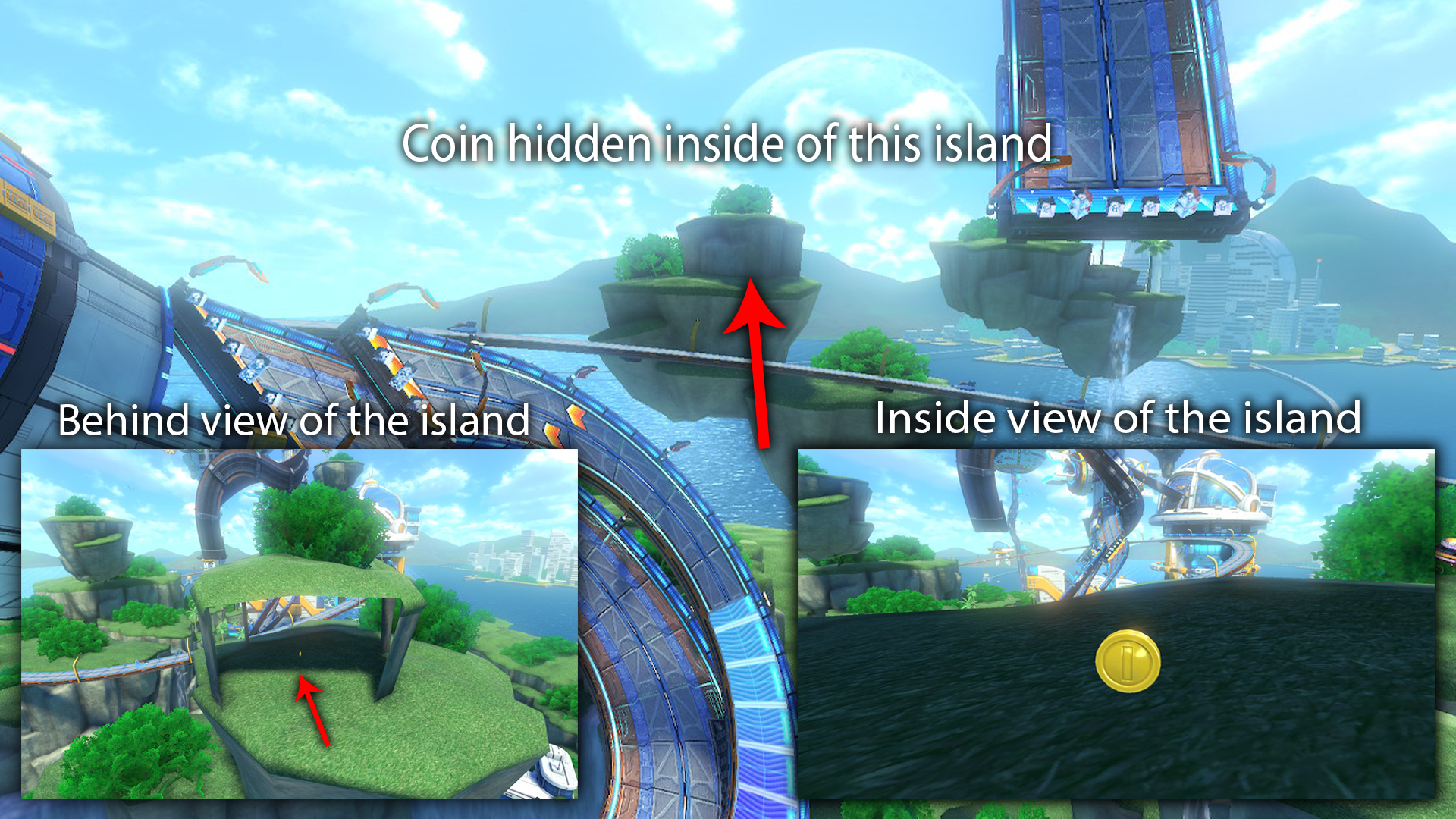
Big Blue's coin is hidden inside of an island, a bit ahead of the start of the course.
GCN Baby Park Hidden Item Box#
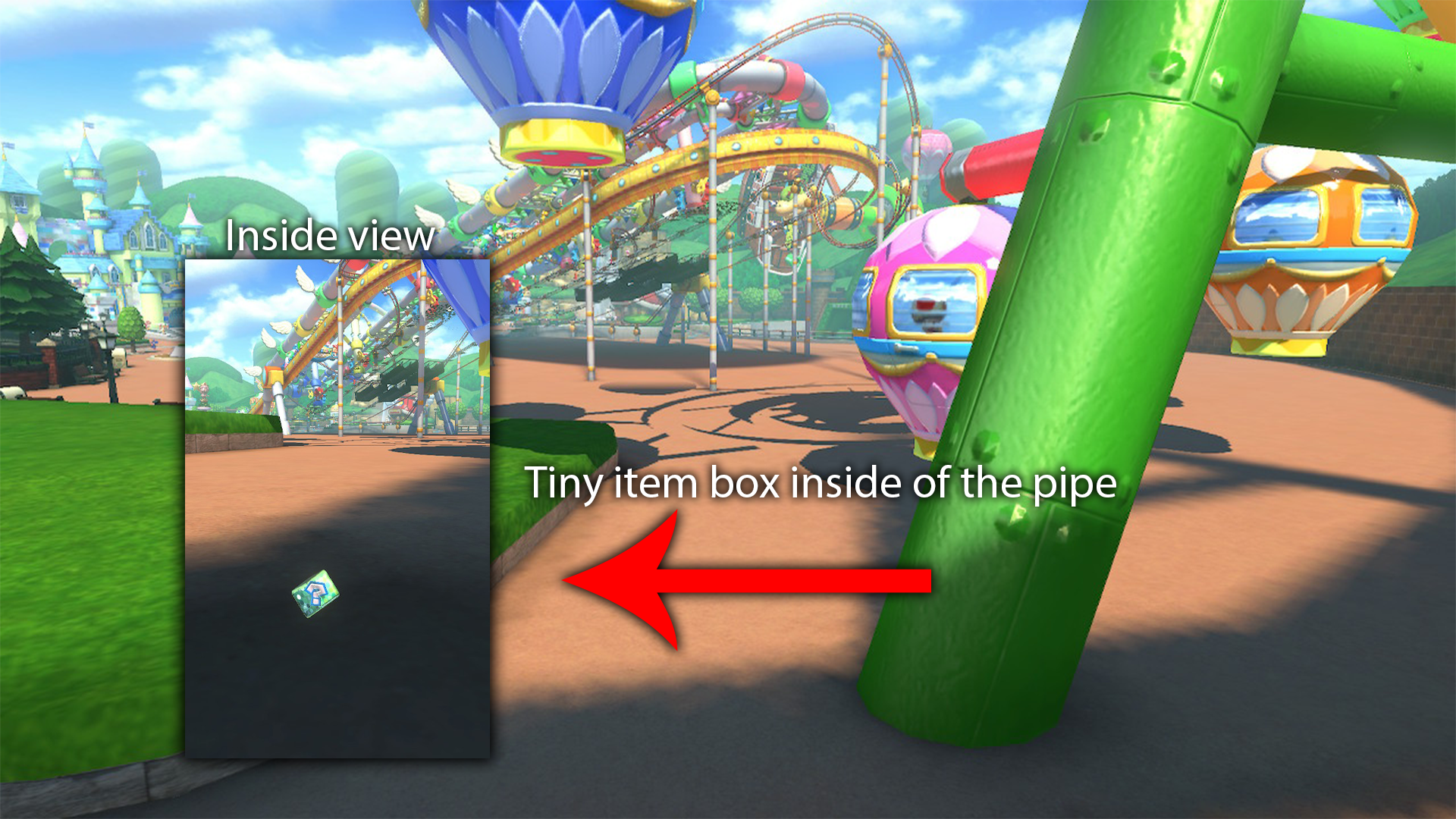
GCN Baby Park's item box is hidden inside of a pipe, which is a structure of the ferris wheel. The item box is tiny, having the scale of 0.1 for all X, Y and Z.
(Source: Ro)
Shy Guy Bazaar#
In version 2.0 of the game, present in AICourseTable_GP.byaml and AICourseTable_VS.byaml are references to the course Shy Guy Bazaar from Mario Kart 7 (D3ds_SandTown). Also present in these files are references to most of the other DLC courses, with the exceptions being GBA Cheese Land, GBA Ribbon Road, Big Blue, and seasonal variants of Animal Crossing (only a general Du_Animal is present, which promotional material suggests was an early version of the Summer variant). In contrast, however, the game's code appears to have references to the GBA courses and Big Blue while omitting Shy Guy Bazaar. This heavily suggests that Shy Guy Bazaar was planned for the DLC but ended up being cut early on.
Regional Differences#
Like Mario Kart 7, many tracks and parts have name differences between versions:
Track Names#
The names for tracks are mostly the same between Japanese and English, standard localization aside. Retro tracks keep any name changes from the games they originated from. For example, Music Park is called Melody Motorway in the European version. For the Animal Crossing course, the Japanese version uses the game's Japanese title.
Japanese |
European |
American |
|---|---|---|
Sweets Canyon (スイーツキャニオン) |
Sweet Sweet Canyon |
Sweet Sweet Canyon |
Toad Harbor (キノピオハーバー) |
Toad Harbour |
Toad Harbor |
Shy Guy Mine (ヘイホーこうざん) |
Shy Guy Falls |
Shy Guy Falls |
Dolphin Cape (ドルフィンみさき) |
Dolphin Shoals |
Dolphin Shoals |
Electro Dream (エレクトロドリーム) |
Electrodrome |
Electrodrome |
Wario Snow Mountain (ワリオスノーマウンテン) |
Mount Wario |
Mount Wario |
Sky Garden (スカイガーデン) |
Cloudtop Cruise |
Cloudtop Cruise |
Bone Bone Desert (ホネホネさばく) |
Bone Dry Dunes |
Bone-Dry Dunes |
Koopa Castle (クッパキャッスル) |
Bowser's Castle |
Bowser's Castle |
Moo Moo Country (モーモーカントリー) |
Moo Moo Meadows |
Moo Moo Meadows |
Kinopio Highway (キノピオハイウェイ) |
Toad's Turnpike |
Toad's Turnpike |
Crispy Desert (カラカラさばく) |
Dry Dry Desert |
Dry Dry Desert |
Donut Plain 3 (ドーナツへいや3) |
Donut Plains 3 |
Donut Plains 3 |
Peach Circuit (ピーチサーキット) |
Royal Raceway |
Royal Raceway |
Music Park (ミュージックパーク) |
Melody Motorway |
Music Park |
Tick TaClock (チックタックロック) |
Tick-Tock Clock |
Tick-Tock Clock |
Piranha Slider (パックンスライダー) |
Piranha Plant Pipeway |
Piranha Plant Slide |
Rumbling Volcano (グラグラかざん) |
Grumble Volcano |
Grumble Volcano |
Excitebike (エキサイトバイク) |
Excitebike Arena |
Excitebike Arena |
Dragon Road (ドラゴンロード) |
Dragon Driftway |
Dragon Driftway |
Slippery Twister (ツルツルツイスター) |
Ice Ice Outpost |
Ice Ice Outpost |
Wario Mine (ワリオこうざん) |
Wario's Gold Mine |
Wario's Gold Mine |
Nature Road (ネイチャーロード) |
Wild Woods |
Wild Woods |
Doubutsu no Mori (どうぶつの森) |
Animal Crossing |
|
Neo Koopa City (ネオクッパシティ) |
Koopa City |
Neo Bowser City |
Ring Ring Metro (リンリンメトロ) |
Super Bell Subway |
Super Bell Subway |
An odd oversight as a result of this is that the signs in the European versions of "Music Park" and "Neo Bowser City" still use their American names.
Retro Track Systems#
Keeping with their Retro Track Naming traditions started in Mario Kart DS, there is a slight difference in the initials used to indicate which system a retro track originated from between the Japanese version and other versions.
Japanese |
International |
|---|---|
SFC |
SNES |
GC |
GCN |
Bodies#
Japanese |
European |
American |
|---|---|---|
Skeleton (スケルトン) |
Pipe Frame |
Pipe Frame |
G Force (Gフォース) |
Mach 8 |
Mach 8 |
Steel Diver (スティールダイバー) |
Steel Driver |
Steel Driver |
Cat Classical (ネコクラシカル) |
Cat Cruiser |
Cat Cruiser |
Turbo One (ターボ・ワン) |
Circuit Special |
Circuit Special |
Tri-Mush (トライマッシュ) |
Tri-Speeder |
Tri-Speeder |
Beat Demon (ビートデイモン) |
Badwagon |
Badwagon |
Princess Coach (プリンセスコーチ) |
Prancer |
Prancer |
Pata Tenten (パタテンテン) |
Buggybud |
Biddybuggy |
Koopa Ship (クッパシップ) |
Landship |
Landship |
Sneakart (スニーカート) |
Bounder |
Sneeker |
Superstar (スーパースター) |
Sports Coupé |
Sports Coupe |
Gold Kart (ゴールドカート) |
Gold Kart |
Gold Standard |
Super Comet (スーパーコメット) |
Comet |
Comet |
Mach GP (マッハGP) |
Sport Bike |
Sport Bike |
Maximum (マキシマム) |
The Duke |
The Duke |
Burning Bowl (バーニングボウル) |
Flame Rider |
Flame Rider |
Moto-Dozer (モト・ドーザー) |
Varmint |
Varmint |
Soramame (そらまめ) |
Mr. Scooty |
Mr. Scooty |
Jet Rider (ジェットライダー) |
Jet Bike |
Jet Bike |
Standard ATV (スタンダードATV) |
Standard Quad |
Standard ATV |
Hana-chan Buggy (ハナチャンバギー) |
Wild Wiggler |
Wild Wiggler |
Kuma Ride (くまライド) |
Teddy Buggy |
Teddy Buggy |
Tanuki Buggy (タヌキバギー) |
Tanooki Kart |
Tanooki Kart |
B Dash (Bダッシュ) |
B Dasher |
B Dasher |
Master Bike (マスターバイク) |
Master Cycle |
Master Cycle |
Wakuwaku Beetle (わくわくビートル) |
Streetle |
Streetle |
Kisekae Scooter (きせかえスクーター) |
City Tripper |
City Tripper |
Bowser Trike (バウザートライク) |
Bone Rattler |
Bone Rattler |
The Japanese version also calls this part a frame rather than a body.
Tires#
Japanese |
European |
American |
|---|---|---|
Normal Tire (ノーマルタイヤ) |
Normal |
Standard |
Wild Tire (ワイルドタイヤ) |
Monster |
Monster |
Roller Tire (ローラータイヤ) |
Roller |
Roller |
Ring Tire (リングタイヤ) |
Slim |
Slim |
Slick Tire (スリックタイヤ) |
Slick |
Slick |
Metal Tire (メタルタイヤ) |
Metal |
Metal |
Button Tire (ボタンタイヤ) |
Button |
Button |
Block Tire (ブロックタイヤ) |
Off-Road |
Off-Road |
Sponge Tire (スポンジタイヤ) |
Sponge |
Sponge |
Wood Ring (ウッドリング) |
Wooden |
Wood |
Cushion Tire (クッションタイヤ) |
Cushion |
Cushion |
Normal Blue (ノーマルブルー) |
Normal Blue |
Blue Standard |
Wild Hot (ワイルドホット) |
Funky Monster |
Hot Monster |
Sky Roller (スカイローラー) |
Azure Roller |
Azure Roller |
Spicy Ring (スパイシーリング) |
Crimson Slim |
Crimson Slim |
Cream Block (クリームブロック) |
Retro Off-Road |
Retro Off-Road |
Gold Tire (ゴールドタイヤ) |
Gold Wheels |
Gold Tires |
GLA Tire (GLAタイヤ) |
GLA Wheels |
GLA Tires |
Triforce Tire (トライフォースタイヤ) |
Triforce Tyres |
Triforce Tires |
Leaf Tire (リーフタイヤ) |
Leaf Tyres |
Leaf Tires |
The European version also calls this part a wheel rather than a tire (or tyre, as it would happen).
Gliders#
Japanese |
English |
|---|---|
Super Kite (スーパーカイト) |
Super Glider |
Billowing Balloon (もくもくバルーン) |
Cloud Glider |
Wario Kite (ワリオカイト) |
Wario Wing |
Zunguri Kite (ズングリカイト) |
Waddle Wing |
Flower Kite (フラワーカイト) |
Flower Glider |
Koopa Kite (クッパカイト) |
Bowser Kite |
Sailplane (セイルプレーン) |
Plane Glider |
Parafoil MKTV (パラフォイルMKTV) |
MKTV Parafoil |
Gold Kite (ゴールドカイト) |
Gold Glider |
Hyrule Kite (ハイラルカイト) |
Hylian Kite |
Paper Airplane (かみひこうき) |
Paper Glider |
Other#
There are also some regional differences in other parts of the game, like the menu text or chat macros, such as removing slang to make a translation into different languages easier.
Text |
European |
American |
|---|---|---|
200cc mode description |
Super fast - braking is crucial! |
CRAZY FAST! Braking is crucial. |
Chat macro |
So unfair! |
Not fair! |
Chat macro |
I'm using motion controls! |
I'm using tilt controls! |
Chat macro |
I'm heading off... |
I'm outta here. |
Chat macro |
Thanks very much! |
Thank you! |
Chat macro |
Good night! |
Goodnight! |
Version Differences#
Version 2.0#
The Version 2.0 update was released on August 27, 2014, and boasted the following features:
- Adds an in-game shop menu on the main start screen to purchase and download downloadable content.
- Adds a statistics menu accessible from the main start page, giving players access to the number of coins they’ve collected, win-loss record play, favorite courses, and characters, number of boosts and super boosts, etc.
- Adds the ability to display a course minimap on the TV screen by pressing the minus ("-") button on the Wii U GamePad.
- Changes the default menu option after a race to whichever option was selected after the previous race (either “Next Race” or “Watch Highlight Reel”).
- Saves each player's most recent vehicle customization to system memory, restoring it even after the Wii U is powered down and rebooted.
- Increases the maximum player race or battle rating from 9,999 to 99,999.
- Improves stability for online races and battles, as well as a number of other fixes for overall player enjoyment.
(Source: My Nintendo News)
This update also changed how rating points were distributed through online matches: the required placement to gain ranking points was raised significantly for players with a large rating advantage, possibly to arrest VR and BR inflation. (This change was effectively reversed in Version 3.0.)
As of 2.0, the "random" option in online matches no longer has a chance of selecting one of the three tracks up for election (except for Battle mode, where this is still possible).
Version 3.0#
The Version 3.0 update was released on November 13, 2014. This patch was required for online play.
- Adds DLC characters Tanooki Mario, Cat Peach, and Link and courses from the Egg and Triforce Cups to the online rotation, if DLC Pack 1 has been purchased. An option is provided to play online mode with downloadable courses or without, although no such feature is provided for downloadable characters.
- Preemptively implements amiibo functionality and adds the appropriate icon to the main menu (the first wave of amiibo would not be released until November 21). This feature allows players to unlock themed racing suits for Mii characters by placing a compatible figure on the Game Pad's NFC area. The Mii icon in the character select was updated to indicate this.
- Fixes balance issues and implements a number of other fixes for overall player enjoyment.
(Source: Nintendo Support)
This change reverted the online rating system to follow rules similar to Version 1.0, making it easier for high-rated players to gain points.
Version 4.0#
The version 4.0 update was released on April 23, 2015.
- Adds DLC characters Villager, Isabelle, and Dry Bowser, and courses from the Crossing and Bell Cups to the online rotation if DLC Pack 2 has been purchased.
- Adds 200cc as a selectable class.
- Adds new amiibo-unlocked outfits for the Bowser, Sonic, Villager, Mega Man, Rosalina, and Toad amiibo, and preemptively adds outfits for the Olimar, Wario, and Pac-Man amiibo, which would be released later.
- More Miiverse stamps are included.
(Source: My Nintendo News)
Version 4.1#
The version 4.1 update was released on May 1, 2015, and automatically unlocks the Mirror and 200cc classes if they weren't unlocked already, among other minor fixes.
Version 4.2#
On March 3, 2023, Nintendo took the online servers for this game alongside Splatoon offline for emergency maintenance upon discovering the ENLBufferPwn exploit within both games, which enabled hackers to take full, remote control of users' (unmodified) systems during online multiplayer sessions. The maintenance spanned for five months, being the longest server maintenance in the history of Nintendo online gaming.
The version 4.2 update was released on August 3, 2023. It has patched said exploit for online play, whilist also removing the Recommended section in Tournaments, as was done in version 2.2.0 of Mario Kart 8 Deluxe.
Totaka's Song#
Watch on YouTubeA short signature tune of Kazumi Totaka's, this tune is hidden in almost every game in which he has composed music for. Some tracks in the game feature Yoshis that cheer for the racers, and there is a chance one of them will be singing the song (as Totaka is also the voice of Yoshi). But to make it even harder to listen to, it is low in volume and easily drowned out by the background music, the Yoshis' animations and sounds are set randomly every race, and the player cannot hear it in MKTV replays. Players must actually be racing the course.
Track |
Where it can be heard (locations are set randomly) |
|---|---|
Sweet Sweet Canyon |
One of the Yoshis at the starting area, or at the house just after the tracks merge. |
GBA Mario Circuit |
One of the Yoshis near the pitstop. |
SNES Donut Plains 3 |
One of the Yoshis standing on blocks. |
N64 Yoshi Valley |
One of the cheering Yoshis along the fence at the start of the track. |
GCN Yoshi Circuit (DLC Pack 1) |
One of the Yoshis at the start or in the tunnel. |
GCN Baby Park (DLC Pack 2) |
One of the cheering Yoshis along the edge or center of the track. |
Super Bell Subway (DLC Pack 2) |
One of the cheering Yoshis around the starting area. |
Oddities#
Revision Files#
Beyond the base game, there are two files going by resourcerev.dat and srcrev.dat, these appear to be copied over accidentally from the stripped debug directory of the final game, they appear to contain the revision of the game data and source files.
srcrev.dat |
resourcerev.dat |
|---|---|
|
|
Since these are revision numbers and not unique hashes for a specific commit, it is likely that Nintendo was using Apache Subversion as their version control for Mario Kart 8.
DLC Placeholders#
In DLC directories, excluding 13, 15, 17 and 19, there are some text files with no data at all, possibly to help the developers note what DLC would go here if any were added.
course_dummy.txt
course dummy file.course_permission.txt
course permission file.dl_permission.txt
have a permission.dl_reservation.txt
have a reservation.Character Audio Filename Oddities#
The audio for most of the characters is mainly comprised of recordings from earlier games. Characters such as Mario, Luigi, and Wario have cleaner recordings of their Mario Kart 64 voices, but mainly for boosting and tricks. Tanooki Mario, on the other hand, has recordings coming from a slew of Mario games. The developers even included the source game in the name of each sound file where applicable:
Audio Filename |
Source Game |
|---|---|
GBAGolf |
|
GC_Sunshine |
|
GCTennis |
|
Kart64 |
|
SuperMarioAdvance |
|
Wii_Bseball |
Twisted Mansion Glider Pad texture#
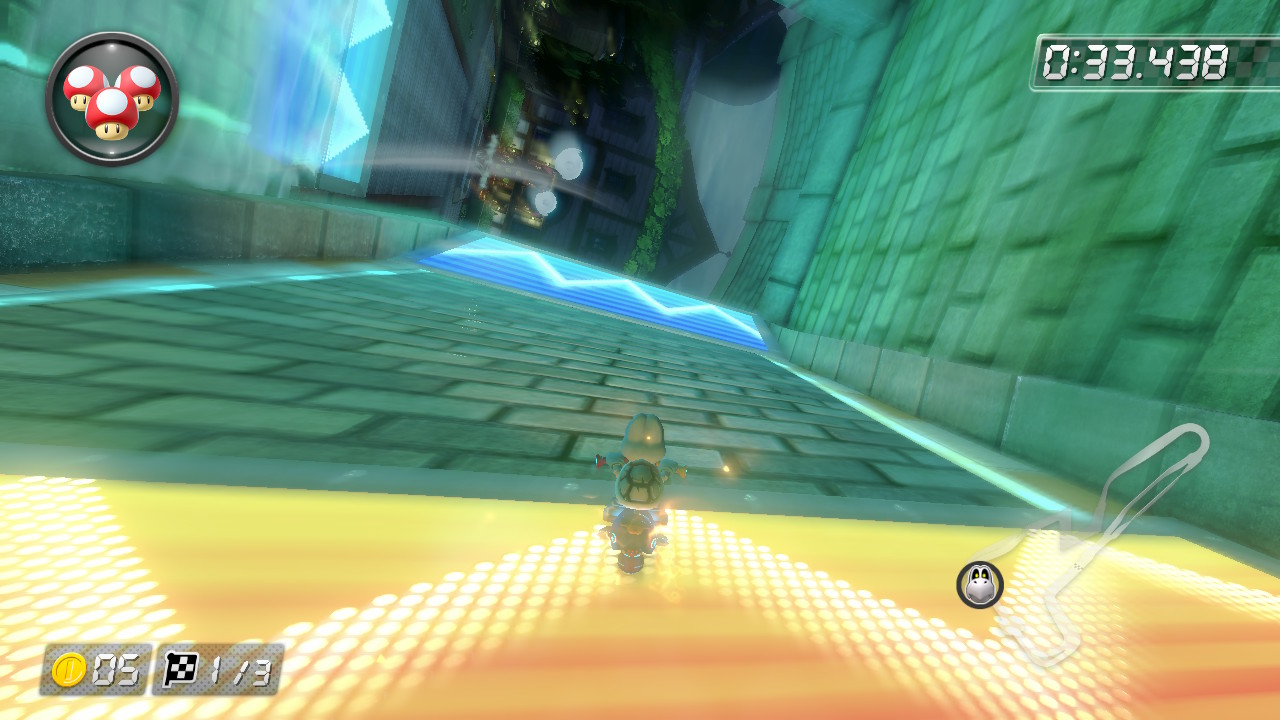
Instead of using the regular Glider Pad design with separate arrows, Twisted Mansion's Glider Pads reuse the zig-zag pattern normally used by Boost Pads. The reason for this is unknown, though it can be assumed to be an oversight during development.
Menu Videos#
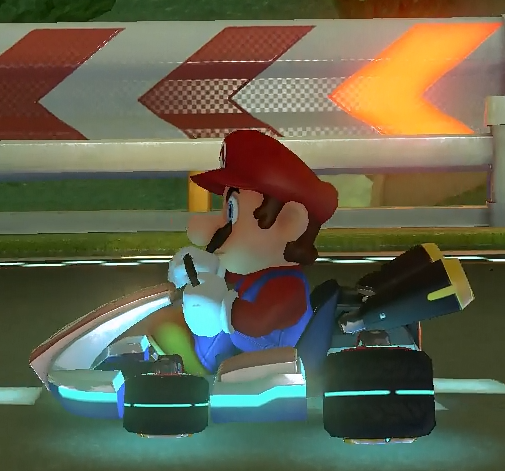
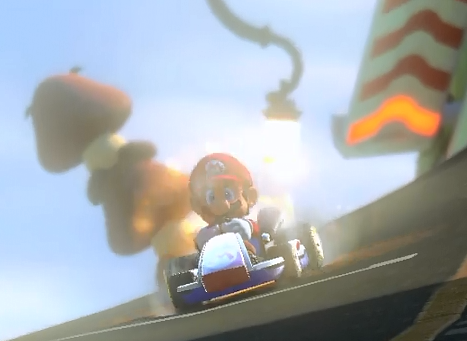
The signs in the pre-rendered videos found in the menu appear to have been recorded with the in-game music disabled, as the signs advance their lighting effects in sync with the sequencing encoded in the music files themselves.
(Source: Little_mac (Discovery on how sine works))
Tournament Icon Typo#

When creating an online tournament, you can choose from a variety of icons. One of these icons, that being Toad's team logo, appears to say "Mushroom Powerd." All other instances of this logo in the game say "Powered", meaning it must have been created early in the game's development, and that Nintendo forgot to correct it.
(Source: Scar7752)
Internal Project Name#
The game's executable is referred to as Turbo.rpx. Like Super Mario 3D World, it has files throughout the game's data that also refer to the project name.
(Source: ItsEasyActually, Catley)