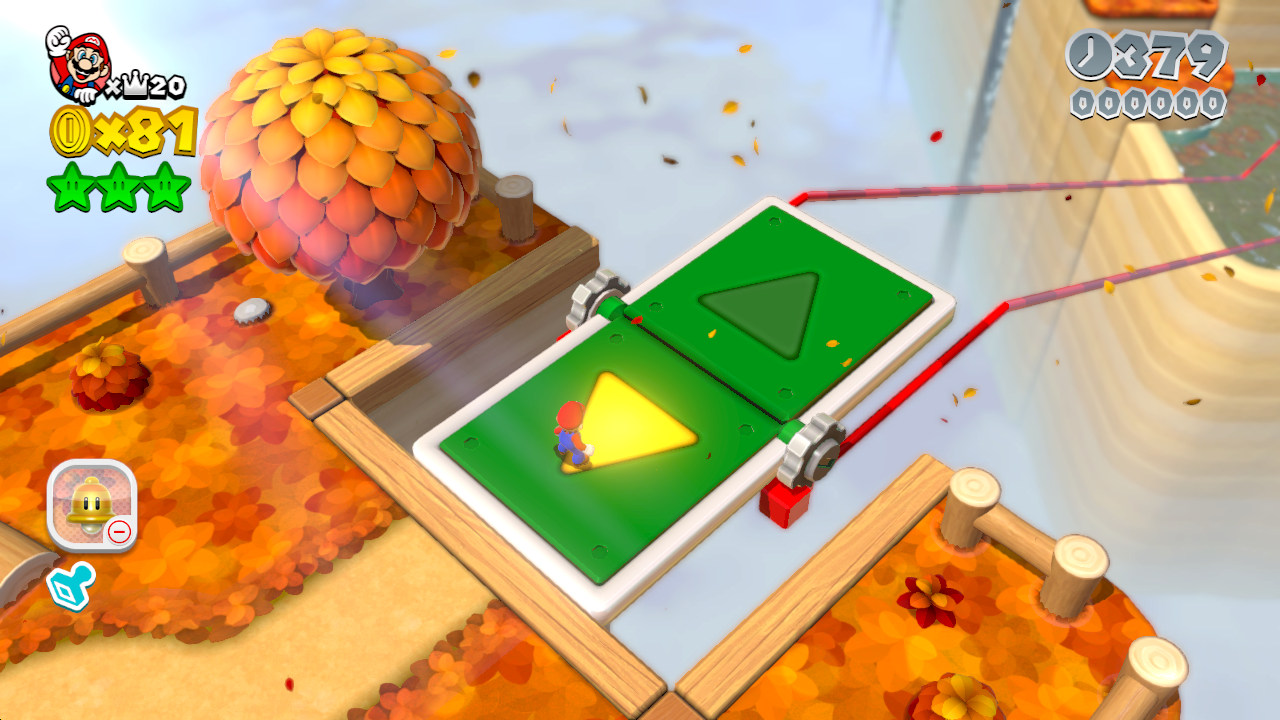
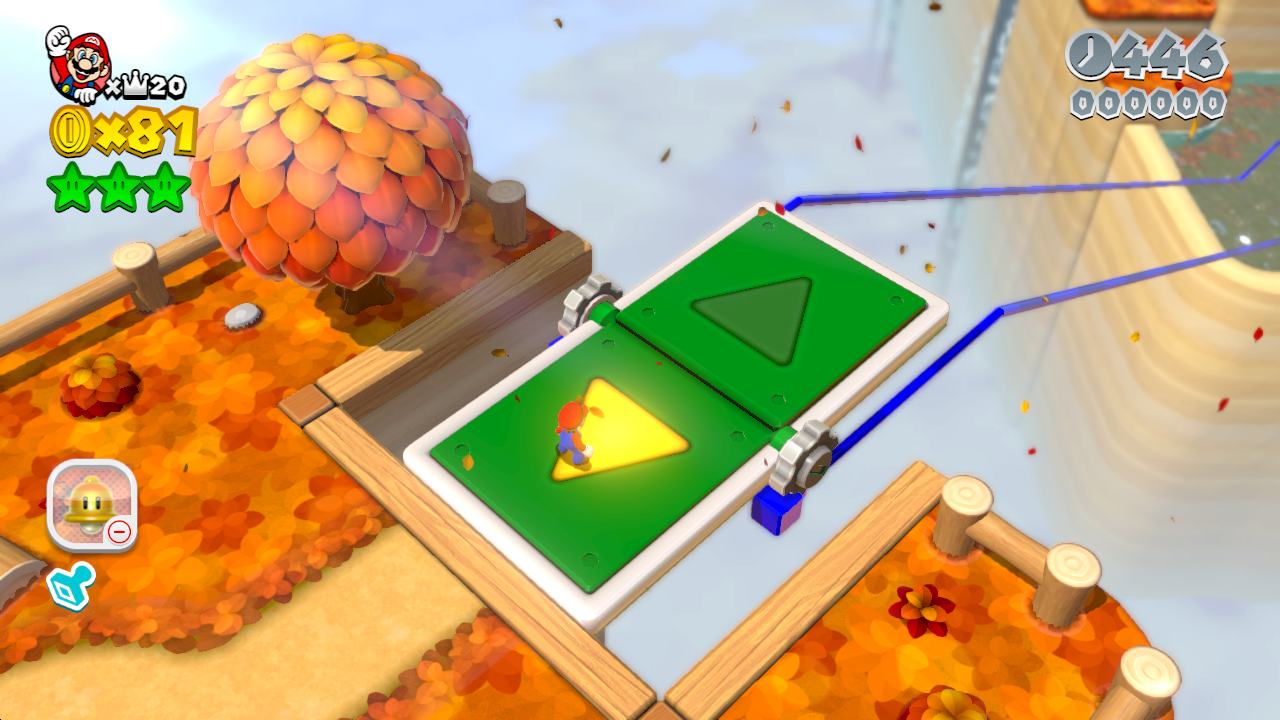
Located in /SystemData/MemorySystem.szs is a file named HeapSizeDefine.byml that defines heap sizes for levels. However, this does not apply to every single level, as there are 40 unused test stage strings located in this file. Many of the level names have staff names in them.
TestHiratake024Stage
TestIshioka02Stage
TestHiratake055Stage
TestShirai27Stage
TestYamaguchiDoubleMarioStage - "DoubleMario" refers to the Double Cherry.
TestYamaguchiDokanStage - "Dokan" refers to the Warp Pipe.
TestYamaguchiFireBallStage
TestYamaguchiItemStage
TestHosaka03Stage
TestHosaka07Stage
HosakaChikachikaAZone - "Chikachika" refers to the Beat Block.
HosakaChikachikaBZone
TestHosaka22Stage
TestIwasaYokoScroll01Stage - "Yoko" means horizontal, so "YokoScroll" might refer to 2D or auto-scroll sections.
TestHishinuma05Stage
TestShiraiUraJumpFlip - "Ura" can mean "Another" and "JumpFlip" refers to the Flip-Swap platforms.
TestIwasaSpotLight00Stage
TestMurataTuccondorStage - "Tucconder" refers to the Conkdor.
TestMusaShisakuDaysStage00 - It is unknown what "ShisakuDays" refers to.
TestHosaka14Stage
TestAndo01Stage
TestHiratake023Stage
TestHiratake039Stage
TestSato060bStage
TestSato060cStage
TestSato060dStage
TestHosaka11Stage
TestTanakaW00Stage
TestHishinuma463Stage
TestSato050Stage
TestSato070Stage
TestHiratake110Stage
TestMiyama11Stage
TestMiyamaStartEvent - "StartEvent"s are camera movements or sound effects that are played at the beginning of a level, e.g. the camera intro in World 1-1 - Super Bell Hill.
TestIwasaArrangeBossParade02Stage - "ArrangeBossParade" is World Flower-12 - Boss Blitz.
TestMCLPlayerStage - "MCL" might stand for Mox Co., Ltd., one of the companies listed in the staff roll.
TestUchidaBunretsuStage03 - "BossBunretsu" and "Bunretsu" refer to Motley Bossblob.
Mario3House02.sg.32.dspadpcm.bfstm This track's internal name is STM_BGM_TEST_BEATSYNC, suggesting it was for testing involving Beat Blocks. It's not referring to the "House" style of music, but maybe it refers to Toad Houses or Mystery Houses. The "02" in the filename suggests the stream was revised or had an alternate version(s) at some point.
Redc_bgm_Map02.my.32.dspadpcm.bfstm
A standalone version of the World 2 theme. The game uses the copy stored in the second track of STM_RC_BGM_MAP01.bfstm. In the USA kiosk demo, it is no longer present.
00Redc_bgm_test.dspadpcm.bfstm
A copy of the Super Star theme can be found in the music folder, which was presumably used as a test track. Super Mario 3D Land also has a duplicate copy of its Super Star theme.
On recent versions of the Wii U system software, the Wii U Menu banner jingle only plays for about 8 seconds before the game starts automatically. Players with these later hardware revisions can hear the whole thing by removing the disc while the banner is displayed. The full track can also be heard on the soundtrack CD. And yes, the incorrect loop is part of the game.
The BlockRail objects used for the Switchboard platforms have two unused values for its color setting (RailColor). Red appears to be the default color of the models themselves, despite grey being the default parameter.
An icon for an orange-colored Mario and a corresponding orange S logo, stored with the player icons. Their purpose is unknown, but could have been used for a "Super Guide" function, as featured in other Mario games such as New Super Mario Bros. U.
A hand icon, also stored with the player icons. Presumably, this was intended for a fifth player to control the "hand" (the one that can collect coins, hold enemies, etc.) separately with the GamePad, similar to New Super Mario Bros. U. It is also worth noting that unlike the in-game hand, which is a right hand, this icon depicts a left hand.
Super Mario 3D World's executable is internally referenced as RedCarpet. There is no other context to explain the rather... obscure project name, other than the prior game having an internal name of RedPepper. Other files in the game do refer to the project name, primarily abbreviated. The internal name is also reflected in the game's two-letter code "RD".
 This article has a talk page!