 This article has a talk page!

|
To do: |
Nintendo kicks off the mini console trend (although there were devices before with the same form factor) with a miniaturized NES (or Famicom) that includes 30 built-in games. Thanks to multiple factors like being a well-polished compilation of famous games, a higher-quality emulator than the one used for Virtual Console releases, being an open and moddable console and of course just having the Nintendo name, it was an instant success that redeemed the novelty console category almost overnight just to repeat the performance next year.
Good luck finding one near its retail price, though.
Developer Message#
Found in /usr/bin/kachikachi at 0x59988 is this message:
|
(Source: bakueikozo)
The name "hanafuda captain" is most likely a reference to the hanafuda cards that Nintendo started out as a manufacturer of (and continues to sell in Japan even today). Hanafuda is also referenced in the Wii U's DS Virtual Console development info, so it's likely the internal codename for emulator development.
Inside the Shonen Jump Edition, found in /usr/bin/kachikachi at 0x68DB0 is this updated message:
|
(Source: LuigiBlood)
Regional Differences#
While most of the world received the console based on the original NES, in Japan it was instead based on the original Famicom.
Hardware#

|
This page or section needs more images. |
Aside from the visually distinct consoles, the NES Classic Edition features 2 removable controller ports. The ports are actually borrowed from the Wii Remote's external extension connector port that was used for accessories like the Wii Classic Controller. Since the Famicom console had hardwired controllers, the Classic Mini: Famicom mimics this which also resulted in the controllers themselves being tiny. The two mini controllers were also hardwired like with the original console.
Game Lineup#
There are eight games exclusive to each version of the console.
Exclusive to the international versions:
- Bubble Bobble
- Castlevania II: Simon's Quest
- Donkey Kong Jr.
- Final Fantasy
- Kid Icarus
- Punch-Out!! Featuring Mr. Dream
- StarTropics
- Tecmo Bowl
Exclusive to the Japanese version:
- The Mystery of Atlantis
- Downtown Nekketsu Koushinkyoku: Soreyuke Daiundoukai (Downtown Nekketsu March: Super-Awesome Field Day!)
- Downtown Nekketsu Monogatari (River City Ransom)
- Final Fantasy III
- Mario Open Golf (NES Open Tournament Golf)
- Solomon no Kagi (Solomon's Key)
- Tsuppari Oozumou (Slapping Sumo)
- Yie Ar Kung-Fu
Due to the fact that all games in the international versions use their US 60hz versions, even in the European and Australian versions, any games that originally had different titles in Europe and Australia (Shadow Warriors and Probotector II: Return of the Evil Forces) use their respective American names in those versions of the NES Classic. The original European/Australian name of the former is still referenced on the back of the box, however.
Famicom Disk System versions:
Additionally, in the Famicom Mini console, the following games use their respective FDS version.
Main Menu#
International |
Japan |
|---|---|
 |
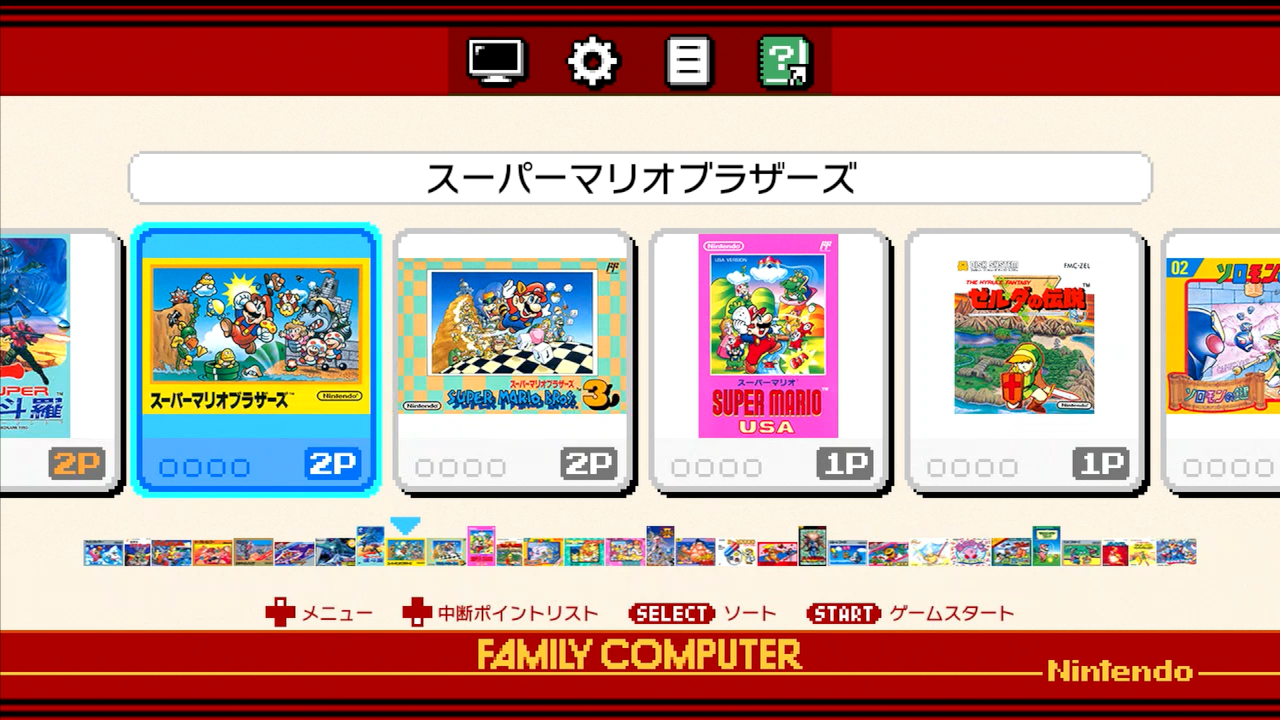 |
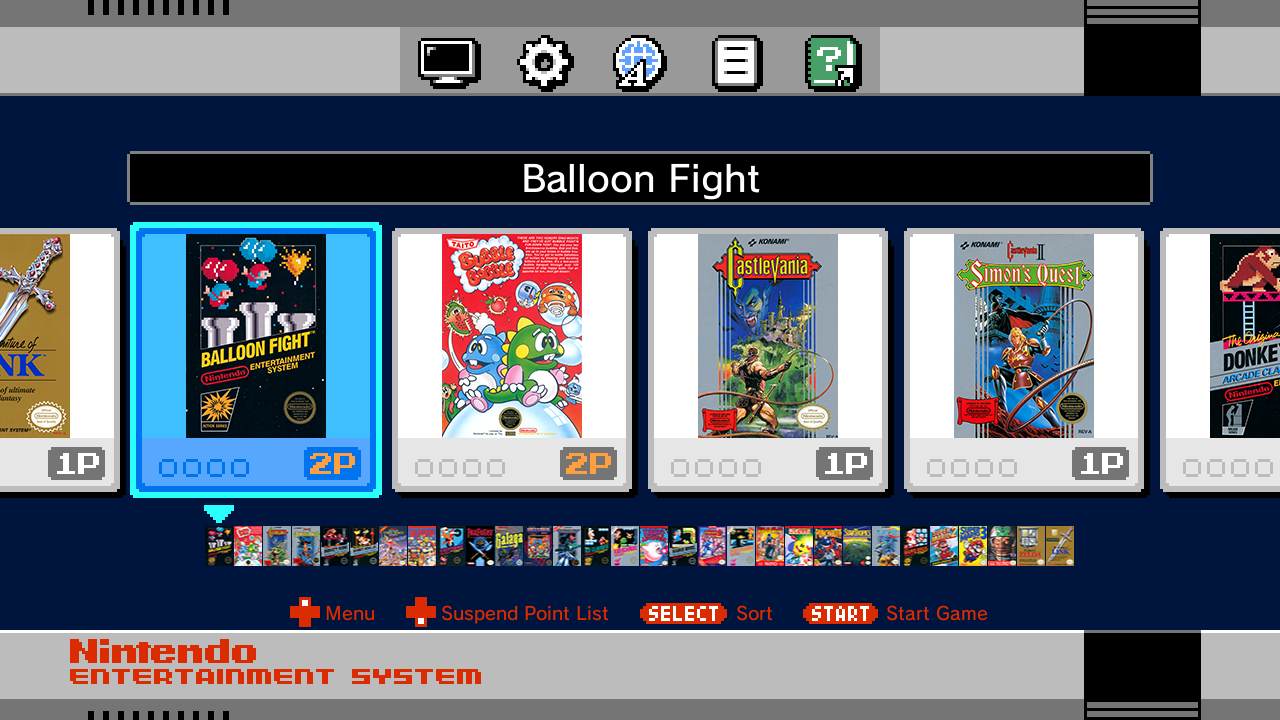
- Appropriately, the design of the main menu differs depending on the region, being based on the design of the Famicom in Japan and the design of the original NES elsewhere.
- The game icons in the Japanese version are rounder than in the international versions.
- The international versions have a language select option. This is absent in the Japanese version.
Shonen Jump Edition#
Standard |
Shonen Jump Edition |
|---|---|
|
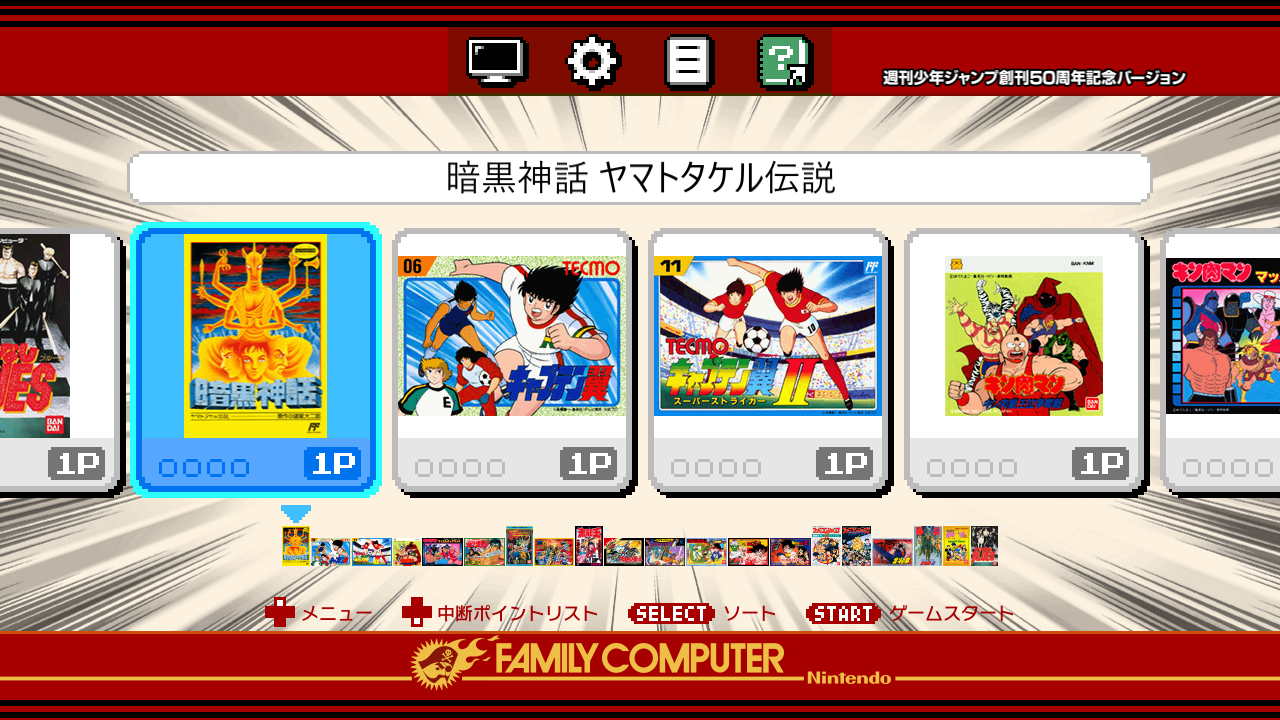 |
A special Japan-only gold-colored Famicom Mini that was released in 2018, containing 20 games based on various Shonen Jump properties:
- Ankoku Shinwa: Yamato Takeru Densetsu
- Captain Tsubasa
- Captain Tsubasa Vol. II: Super Striker
- Dragon Ball: Shenron no Nazo
- Dragon Ball 3: Gokuuden
- Dragon Ball Z: Kyoushuu! Saiya Jin
- Dragon Quest
- Famicom Jump: Hero Retsuden
- Famicom Jump II: Saikyou no 7 Nin
- Hokuto no Ken
- Hokuto no Ken 3: Shin Seiki Souzou: Seiken Retsuden
- Kinnikuman: Kinniku-sei Oui Soudatsusen
- Magical Taruruuto-kun FANTASTIC WORLD!!
- Kinnikuman: Muscle Tag Match
- Rokudenashi Blues
- Saint Seiya: Ougon Densetsu
- Saint Seiya: Ougon Densetsu Kanketsu-hen
- Sakigake!! Otokojuku Shippu Ichi-gou Sei
- Sekiryuuou
- Tenchi wo Kurau
|
The Jump series | |
|---|---|
|
NES |
Famicom Jump: Hero Retsuden • Famicom Jump II: Saikyou no 7 Nin |
|
Nintendo DS |
|
|
PlayStation 3, PlayStation Vita |
|
|
Plug & Play |
Nintendo Classic Mini: Family Computer: Weekly Shonen Jump 50th Anniversary Version |
|
See Also | |
|
Bleach • Captain Tsubasa • Dragon Ball • Fist of the North Star • JoJo's Bizarre Adventure • Naruto • Ninku • One Piece • Shaman King • Slam Dunk • Tenchi wo Kurau • Yuu Yuu Hakusho |
|