 This article has a talk page!
Mega Man II is, as you may have guessed, the followup to the first Game Boy entry. It was made in five months by a completely different development team that knew little about the series, and it shows.
It's also one of the few Game Boy titles to receive an official Chinese and Hong Kong release.
 Prerelease Info
 Notes
 Unused GraphicsSeveral early sprites and some cool poses!
 Unused Level DataTiles, Blocks, mostly derived from their NES counterparts!
Cheat Mode#
Setting memory address $FFF9 to a non-zero value enables an invulnerability cheat. This will disable all damage and turn all spikes and pits into bouncy surfaces. It also enables freeze-frame pause when pressing Select during gameplay, similar to the feature in the first NES game. The sound effect that plays when toggling it isn't used anywhere else.
This value is normally initialized to zero when selecting an option on the title screen, and is then never written to again.
Robot Master Select #2#
Watch on YouTubeSet memory address CF66 to 04-07 on the Robot Master select screen and you'll be able to choose the Mega Man 3 Robot Masters.
The select screen itself doesn't explicitly account for them, as it's simply programmed in a way that makes it possible to select any group of four levels. The intro screen, however, does, with the Robot Masters having otherwise unused text strings associated to them, as seen on the right. Their animations aren't actually unused, as they are the exact same ones used during gameplay, down to reusing the same animation code.
After beating the Robot Master, you'll be thrown back to the stage select.
In the final release, you enter unmarked teleporters akin to those traditionally found in rematches in Wily's Castle to access the Robot Masters and their stages.
(Source: Original TCRF research)
Unused Music#
Seems to be an alternate version of the ending theme.
(Source: Original TCRF research)
Unused Borders#
|
Mockup |
In-Game |
|---|---|

|

|
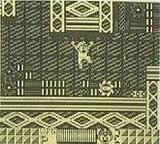
The HUD uses two different blank white tiles, $70 and $5D. Editing the $5D tile's graphics reveals that the HUD was originally supposed to have borders, similar to an early build of Dr. Wily's Revenge. This is also seen in an early version of the game itself!
Unused Damage Values#
Modifying the game to have all weapons earlier than usual results in some interesting damage data that goes otherwise unused:
Weapon Damage Data |
|---|
Boss |
Crash Man |
Metal Man |
Wood Man |
Air Man |
Top Man |
Needle Man |
Magnet Man |
Hard Man |
Quint |
Wily Machine II 1st |
Wily Machine II 2nd |
Wily Machine II 3rd |
Notes:
- Weapons obtained by the Mega Man 3 Robot Masters and Quint do not damage the Mega Man 2 Robot Masters, instead ricocheting off of them as they appear to be invulnerable.
- Metal Man is once again hilariously weak to his own weapon, taking 10 points of damage.
- Hard Man and Magnet Man take 3 damage from their own weapons; a similar mechanic is present in the original Mega Man 3. Weirdly, Needle Man and Top Man in this game don't share this hidden stat.
- Sakugarne damages the Mega Man 3 Robot Masters for 2 damage each.
Unused Code#
- The initialization routine checks if the game has been soft reset and skips re-initializing the RNG if so, but there's no way to perform one. Another game the same staff members worked on, which also lacks a soft reset mechanism, contains the same check.
- Ladders that reach all the way to the ground are fully handled, and in earlier versions of the game they were even placed in levels. The code to grab on ladders while standing does get used when doing so from Rush Jet, but not the one for touching the ground while climbing down.
- A routine that waits for the specified amount of seconds, implemented as a wrapper to the used routine that waits frames.
- A pair of generic multiplication routines, taking in an 8-bit and 16-bit multiplicand respectively.
- Code that would instantly refill all of the player's health and the current weapon's ammo, stored right after the freeze-frame pause routine.
- A vertical counterpart to the used routine that makes an actor turn towards the player horizontally.
- Routines to apply gravity depending on the actor's vertical direction, both with and without performing solid collision checks.
- An unused actor that prevents nearby actors from despawing by instantly respawning them.
- Giant Springers can handle falling off platforms, but all are placed on flat ground with solid blocks in the way.
- Friender is set to randomize the amount of spawned fireballs from 3 to 6, but the result is discarded and always hardcoded to 4. Having more than 4 fireballs on screen would cause noticeable sprite flickering, which may be why this feature got scrapped.
- Mechakkeros set a 1.5 second delay before jumping, suggesting they were intended to act more like their Mega Man 3 counterparts. However, there's no logic to actually make use of that delay, so they jump continuously without pausing.
- Metal Man has incomplete routines that would have made him pause in the air when throwing a Metal Blade, similarly to Mega Man 2.
- The Wily Station cutscene has an unreferenced routine that draws Wily's spaceship, identically to how it's normally drawn. The cutscene code instead opts to inline and duplicate the draw code every time.
Regional Differences#
Title Screen#
Japan |
US/China/HK |
EU |
|---|---|---|
 |
 |
 |
As usual, the title screen was modified for the US release. However this also included bumping the copyright date changing from 1991 to 1992, and updating the copyright info to include Capcom USA. The European version mostly takes after the US version, but reverts back to 1991 while adds ,92 and alters the licensing text to say "Licensed To Nintendo".
Despite being released about three years later, the Chinese/Hong Kong release simply uses the US ROM untouched from its original release, despite the added Chinese/Hong Kong name on the label claiming the game's name as "Rockman II", as well as the already updated EU release being present.
European Version#
Outside of the title screen assets, the JP and US versions of the game are completely identical. The EU version, meanwhile, is a later release that includes a few changes and bugfixes.
- Refilling weapon ammo and health at the same time while using the default weapon now works properly. In the older versions, it would prevent the health bar from being updated.
- Player inputs are zeroed out when dying, which forces Rush Jet to stop moving vertically.
- A lot more weapon-related variables are initialized properly when the player spawns, this fixes bugs such as the Leaf Shield persisting if the player died while it was active.
- Whenever the player dies or defeats a boss, ammo stops being used up. This mainly prevents the Rush items from wasting ammo if the player died while inside or standing on them.
- Moles can't spawn offscreen, which caused two problems in the older versions:
- Moles wouldn't show as frequently.
- Rarely, moles would spawn outside of their intended section, which would make those invisible as they'd go behind the black background.
- Goblins don't try to draw their platform graphics while the level scrolling event is in progress, presumably fixing an obscure bug.
Air Man's Stage#
|
Original |
Europe |
|---|---|

|

|
The global background priority flag gets disabled while dying to force the player's explosions to show on top of the background.
Unfortunately, this affects all other sprites as well, which looks particularly bad on the Goblin's horns. The EU version forces them to be always displayed behind the background.

On the other hand, the EU version introduces a glitch with these platforms.
For whatever reason, the game attempts to draw the Goblin a second time when the player is within 3.5 blocks from its origin, which doesn't interact well with a scrolling glitch that offsets the actors' spawn position while sliding.
Top Man's Stage#
|
Original |
Europe |
|---|---|

|

|
To work around the aforementioned scrolling glitch that made it possible to collect the extra life without using Rush, a block was removed from the end of the platform. The block obstructing the end of the tunnel also went with it.
Needle Man's Stage#
|
Original |
Europe |
|---|---|

|

|
The platform at the top of this screen was lengthened to keep the player from jumping on top.
Wily Station#
|
Original |
Europe |
|---|---|

|

|
The platform with a second Scworm generator was removed, replaced with a large background... bubble? Orb? Planet? Round thing.
Credits#
|
Original |
Europe |
|---|---|

|

|
The Have "Su" Bee's name had its spelling corrected. The correct spelling actually already exists in the other versions of the game, but the name ends up getting cut off in-game due to it being too long.
Unused Copyright Screen#

Unique to the EU version are assets for a copyright screen, intended to be similar to what's found in the European version of the first game.
The feature is clearly unfinished, as all that's implemented is a rough-looking font, code to load it to VRAM and its palette entry.
References#
- 1↩︎
- www.NINTENDO.se. "Mega Man 2 Platform Capcom 1992-12-17"↩︎