 This article has a talk page!

|
This page is rather stubbly and could use some expansion. |

|
This page sucks. |
A remake of Rayman 2: The Great Escape was released for the PlayStation 2 in 2000 (and a year later elsewhere), titled Rayman 2: Revolution. This version has by far the most changes of any version of the game, including the PS1 port.
PlayStation 2 Exclusive Audio#
The PlayStation 2 version has three unused audio files that aren't present on other ports. Clip 2, however, is used in the Nintendo 64 version.
Changes and Differences from the Other Versions#
- This version was ported to the RenderWare engine and features significantly upgraded graphics. Rayman's model is improved and there are many lighting and texture differences as well as some areas given a makeover.
- New content was added, including several new minigames and three new bosses.
- A free-roaming hub world was added to replace The Hall of Doors, called The Front. The game's levels are now accessed from this hub world, and Rayman must physically travel to them.
- The game features new audio tracks composed by Eric Chevalier, including background tracks for the new hub world and ambient tracks that play upon revisiting previously-completed levels.
- Like the PS1 version, the game features full voice acting, including dubs for different languages (English, French and German). This is the only version which allows the player to toggle between full voice acting and the gibberish "Raymanian" of earlier versions.
- When the game is set to English, French or German, their respective languages are the default spoken language.
- When the game is set to Italian or Spanish, "Raymanian" is the default spoken language.
- The Japanese version only includes the "Raymanian" dialogue.
- Some changes added to the Dreamcast port are included here, while others are missing.
- Rayman is stunted in this version in the beginning. Through various upgrades throughout the game and some which are purchasable, he can regain the abilities acquired through linear playthrough in the other ports, and some extras that are new.
- This is the only version of the game where Rayman has the ability to attack with his fist rather than shoot energy balls for any period of time, though this is only limited to the game's first level.
- Some levels have been rearranged, including the Marshes of Awakening, The Echoing Caves, and the Precipice. Instead of the Cave of Bad Dreams being located at the beginning of The Marshes of Awakening or in its own level entirely, it is located at the very end of the level.
- Levels have been reworked to account for some of Rayman's new abilities, like lighting torches and shrinking.
Regional Differences#
|
|
To do: |
Opening#
- The international versions start off with the Ubisoft logo and then show the Renderware logo. The logos are swapped in the Japanese version.
- The Japanese version has an animated Renderware logo and the Ubisoft logo fades in and out. Both logos are static images with no effects in the international versions.
- The Japanese version has a memory card check before the title screen. Other versions do not check for a memory card on startup.


- The Japanese version has a different title screen.
- If there is no controller connected during the title screen in the international versions, the game changes the "Press Start" text into "No Controller". The Japanese version has a separate screen if there is no controller connected.
|
International |
Japan |
|---|---|
|
|
|
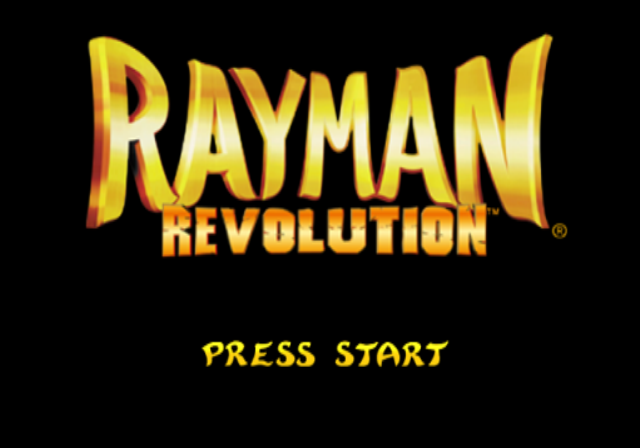
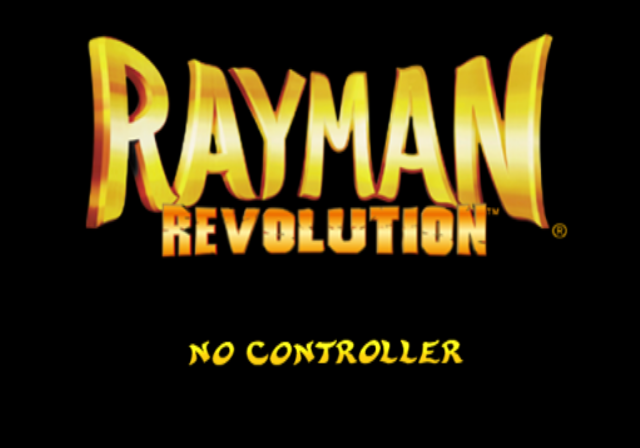
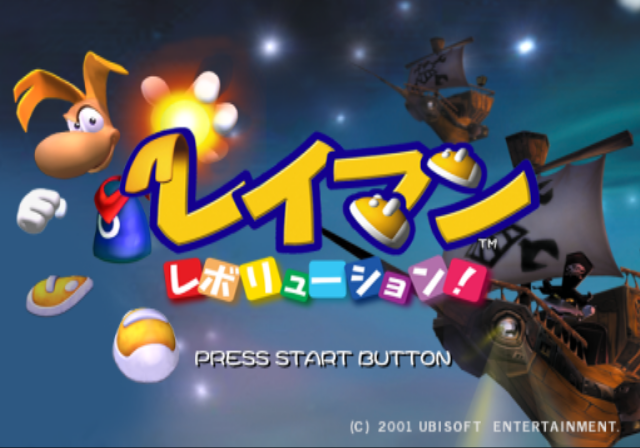

General#
|
|
To do: |
- Loading screens in the international version have the game logo on the top of the screen with a character cycling through a looping animation below. There are a variety of different characters/animations the game can choose from. In the Japanese version, the logo is on the bottom left of the screen and "Now Loading" text is displayed on the bottom right. The "Now Loading" text is animated and there are a handful of different variations.
|
International |
Japan |
|---|---|

|

|
- The international versions can be played in English, French, German, Italian and Spanish with the player also having the option to set voices to English, French, German or "Raymanian". The Japanese version however only has Japanese text and "Raymanian" voices.
- The options in the main menu were cut down to just the sound menu in the Japanese version due to the removal of selectable languages.
|
The Rayman series | |
|---|---|
|
SNES |
|
|
Jaguar |
|
|
PlayStation |
Rayman (Prototypes) • 2: The Great Escape (Prototype) • Rush |
|
Sega Saturn, DOS |
|
|
Nintendo 64, Dreamcast |
|
|
Windows |
|
|
Mac OS X, tvOS |
|
|
PlayStation 2 |
|
|
GameCube |
|
|
Xbox |
|
|
Game Boy Color |
|
|
Game Boy Advance |
|
|
Nintendo DS |
|
|
Nintendo 3DS |
|
|
iOS |
Jungle Run • Fiesta Run • Adventures • Mini |
|
Android |
|
|
PlayStation 3, Xbox 360 |
3 HD • Origins • Legends (Prototypes) |
|
PlayStation Vita |
Origins • Legends (Prototypes) |
|
PlayStation 4, Xbox One, Wii U, Nintendo Switch, Stadia |
|
|
Raving Rabbids | |
|
Windows |
|
|
PlayStation 2, Xbox 360 |
|
|
Wii |
Raving Rabbids • Raving Rabbids 2 (Prototype) • Channel • Go Home • Lab • Travel in Time |
|
Game Boy Advance |
|
|
Nintendo DS |
|
|
Wii U |
|
|
Nintendo Switch |
Mario + Rabbids Kingdom Battle • Mario + Rabbids Sparks of Hope |
|
Nintendo 3DS |
|
|
Android, iOS |
|
|
Related Games | |
|
Nintendo 64 |
|