 This article has a talk page!
This is a sub-page of The Legend of Zelda: Ocarina of Time.
Unused actors and objects in Ocarina of Time. Use Map Select and the codes and info regarding Actor, Object, and Variable Replacement to try loading them yourself.
Actors
En_Part#
Actor |
Object |
|---|---|
0007 |
0001 |
This is an effect spawner for enemies' deaths.
En_Scene_Change#
Actor |
Object |
|---|---|
0024 |
0040 |
This unused actor has little remaining functionality. All it does is write its name to the console and set a fog parameter. It may have served a similar function to En_Holl, the used actor for the Room Transition Plane that immediately precedes it in the actor list. Why it is connected to object 0040, the used object_jj (Jabu-Jabu), is unclear.
The current source code is 70 lines long, but refers to lines 290 and 386 in its calls to OPEN_DISPS and CLOSE_DISPS, meaning there was likely a lot of code commented out before it was compiled for the final game.
Bg_Pushbox#
Actor |
Object |
|---|---|
002C |
0003 |
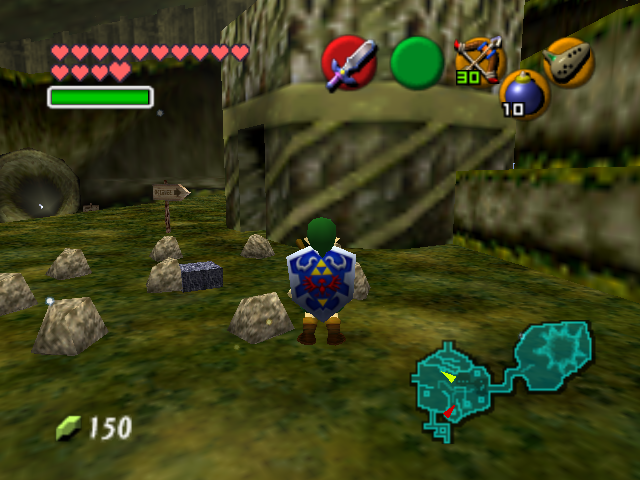
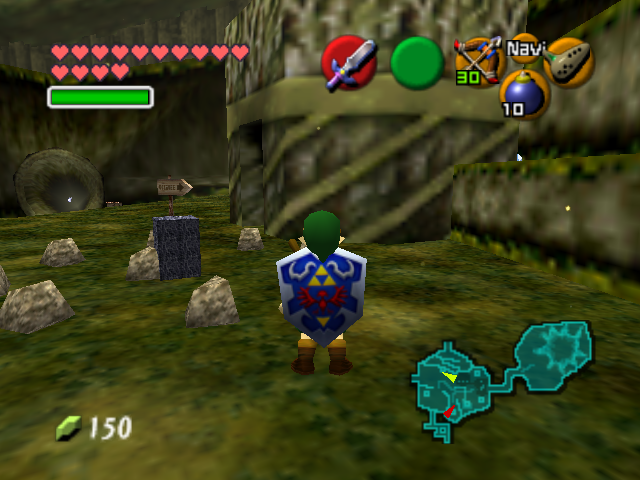
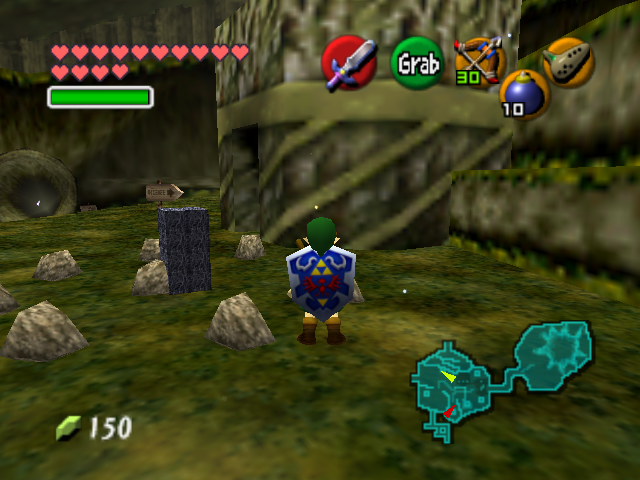
As the name suggests, Bg_Pushbox is a movable block. Trying to load this object in-game normally results in a crash because it does not load its own object. The actor seems to date back to an earlier point in development when Link was able to push and pull any wall at will, as its collision lacks the "grabbable" attribute used by grabbable objects in the final game. It also does not unset the grab flag like other objects, so Link won't let go of it. This suggests it was Link's actor that unset the flag at some point in development.
Modifying Link's code to account for these discrepancies is thus necessary for the block to function properly in the final game.
Its behavior differs from regular blocks in that it moves continuously (albeit slowly) and not in steps. It makes no sound when moved and also uses a cylinder collision box which can cause issues if the block is pushed towards a wall or off an edge.
(Source: aegiker)
En_OE2#
Actor |
Object |
|---|---|
004F |
0035 |
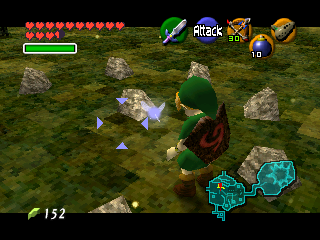
This actor is linked to object_oE2, detailed below. However, when loaded in-game, it only appears as a targetable blue spot. Though she helpfully points it out, Navi has nothing to say about it.
object_oE2#
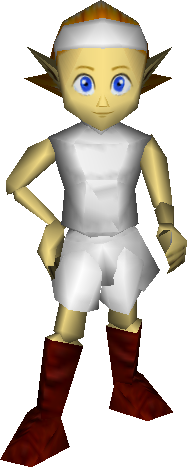
Object 0035 is an early version of the generic red-haired Kokiri girls.
En_Horse_Zelda#
Actor |
Object |
|---|---|
005B |
0046 |
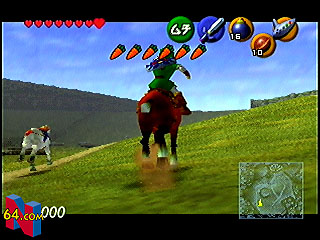
As you might expect, this actor is linked to object_horse_zelda (Zelda's white horse). However, in the final game, object_horse_zelda is only loaded by En_Viewer, an actor which loads various objects used in cutscenes, so this separate actor goes unused.
Link is seen chasing this horse in Hyrule Field in a screenshot from Spaceworld in November 1997.
En_Bird#
Actor |
Object |
|---|---|
0072 |
0077 |
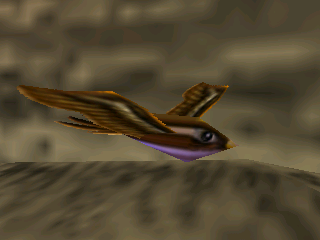
If loaded using GameShark codes, this unused bird flaps its wings but otherwise remains stationary. It is also missing transparency. It has code for movement, but the code is incomplete with most of its initial variables zeroed out.
It was later repurposed for Majora's Mask, where several fly around the tree on the plains of the Moon.
object_bird#
Object 0077 is present in the object list for Kokiri Forest setup 05, room 01 (Cutscene - The Deku Tree Tells of Ganondorf's Curse), but because it lacks an actor, it's never loaded.
En_Lightbox#
Actor |
Object |
|---|---|
007C |
0081 |
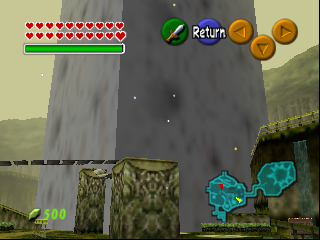
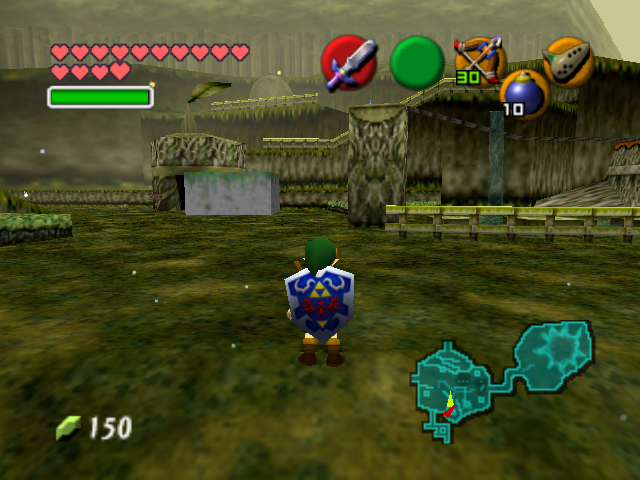
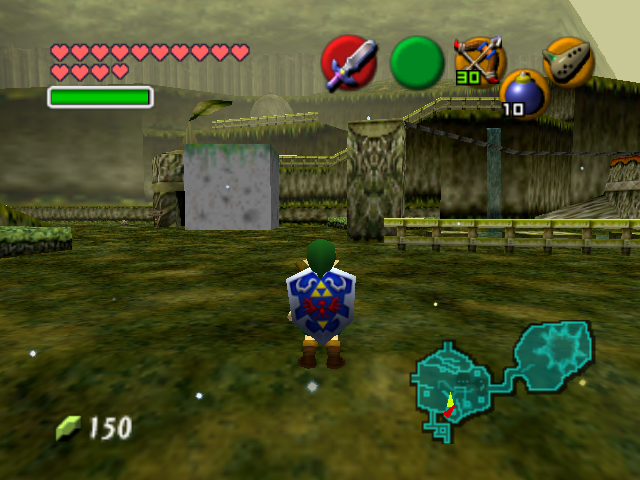
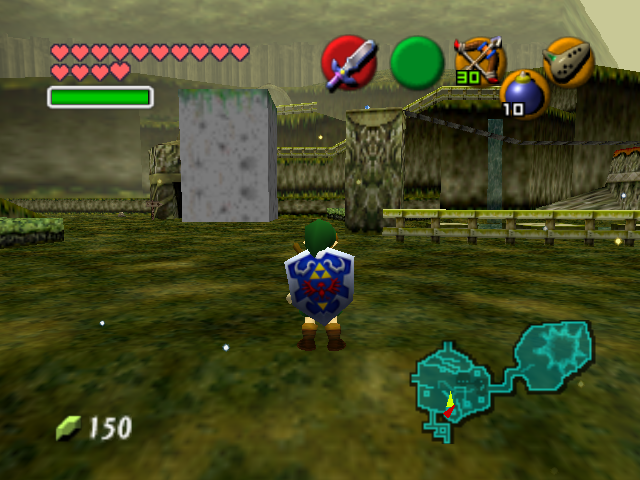
z_en_lightbox is a broken grabbable object. By default it shows up as a large rectangular block that makes a thrumming noise.
There are a few reasons why it doesn't work in the final game:
- It unsets the wrong bgcheck flag when landing, causing it to constantly be in a state of hitting the ground, explaining the sound.
- It's too big. Offsetting its scale by 0.1 puts it at a normal scale to be grabbed by Link. This also makes it match z_en_pu_box's scale.
- Picking it up voids you out. It actually tries to prevent this by setting a dynapoly flag at Actor+0x162 when held, but that value does not disable the collision anymore, so it fails.
When fixed, it behaves similarly to a bomb, except with customizable values.
- IREG(57) controls its midair deceleration
- IREG(58) controls its ground deceleration
- IREG(59) controls the max Y velocity before being allowed to collide with the ground
- IREG(60) controls its bounciness when hitting the ground
All of these values are divided by 100, so changing them by 1 increases the effect by 0.01.
(Source: aegiker)
object_lightbox#
In addition to the model loaded with the actor above, object 0081 also contains three variants as unreferenced geometry.
En_Pu_box#
Actor |
Object |
|---|---|
007D |
0082 |
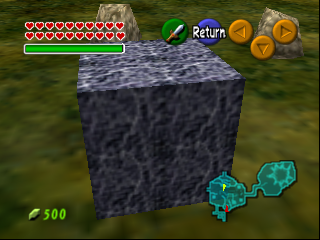
Pu_box seems to be later version of Bg_Pushbox. Unlike the former, it does load its own object but otherwise exhibits the same quirks, requiring modifying Link's code. It moves faster and also makes a sound like other stone blocks.
(Source: aegiker)
object_pu_box#
Three variants of this block also exist within the object as unreferenced geometry.
En_Arow_Trap#
Actor |
Object |
|---|---|
0081 |
0001 |
An unused trap which would periodically spawn an arrow into a fixed direction.
The arrow it spawns does use a unique parameter, which isn't properly set up inside the arrow actor itself, causing it to only become active and changing its intended direction when Link shoots an arrow.
En_Vase#
Actor |
Object |
|---|---|
0082 |
0086 |
This actor is linked to the unfinished, orange-hued pot below.
object_vase#
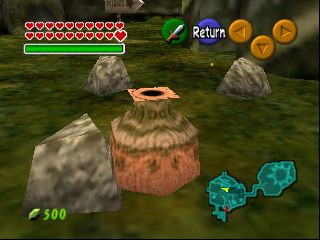
Object 0086 is a pot whose design is based on the jars in A Link to the Past. Its rim lacks transparency, and it does not have any collision or associated behaviors.
Arrow_Fire#
Actor |
Object |
|---|---|
010A |
0001 |

|
This needs some investigation. |
Arrow_Ice#
Actor |
Object |
|---|---|
010B |
0001 |
|
|
This needs some investigation. |
Arrow_Light#
Actor |
Object |
|---|---|
010C |
0001 |
|
|
This needs some investigation. |
Obj_Elevator#
Actor |
Object |
|---|---|
012B |
011B |
While this actor went unused in the retail version of Ocarina of Time, it is used in Ocarina of Time Master Quest. When loaded in-game and stepped on, it makes a clicking noise as if a switch had been pressed.
object_d_elevator#

|
To do: |
Object 011B is a large, 4-tiered stone elevator.
En_Nwc#
Actor |
Object |
|---|---|
0135 |
0124 |
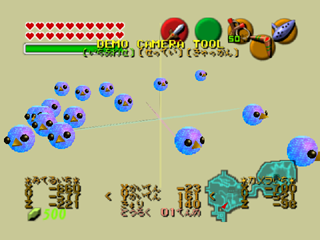
These primitive-looking baby Cuccos were later revamped and repurposed for use in Majora's Mask.
object_nwc#
|
|
To do: |
Object 0124 lacks collision, which causes it to fall through the floor and into the void when loaded. The object freeze function in the Debug ROM can be used to prevent this.
Item_Inbox#
Actor |
Object |
|---|---|
0137 |
0001 |
This actor's name indicates that it is connected to items found in treasure chests.
En_Sda#
|
|
To do: |

Actor |
Object |
|---|---|
013A |
0001 |
This is a dynamic shadow attribute; the "Sd" in its file name likely stands for "shadow". It is seen in early screenshots and videos and can be seen in the final game utilized by signs that can be cut. It is also used during the final battles with Ganondorf and Ganon, both on the bosses and the Master Sword, when Ganon knocks it out of Link's hands.
En_Clear_Tag#
Actor |
Object |
|---|---|
013B |
0001 |
The Arwing from Star Fox 64, used by the developers to model Volvagia's flying animations.
When Link enters a map in which an Arwing is loaded, an animation plays depicting it flying around and doing a barrel roll. It acts as an enemy, firing at Link with its laser beams. It can be vanquished with three Slingshot hits, or the Boomerang. Upon defeat, it will crash and explode in a huge mass of flaming red debris.
Within player_actor there is a routine that spawns an Arwing at coordinates (0,100,0) relative to Link's position. This routine is located after a sequence of code used to determine whether a chest should award an item or freeze Link, suggesting that the Arwing may have once spawned when opening a chest at one point. (Indeed, the Ocarina of Time iQue leak confirms this to be the case.)
(Source: Discovery - Cendamos & jaytheham, Purpose - Iwata Asks: Ocarina of Time 3D 2.3)
En_Go#
Actor |
Object |
|---|---|
0152 |
00C9 |
While unused, this actor is linked to a used object, object_oF1d_map, which contains the Goron. In the retail game, the used Goron actor is known as En_Go2.
|
|
This needs some investigation. |
Objects
Duplicates#
object_ny#
Actor |
Object |
|---|---|
[None] |
00E3 |
Oddly, the final game contains two instances of the Spike Trap object: 00E3 and 00E5. Only 00E5 is used. According to the Ocarina of Time iQue leak, object ID 00E3 was originally assigned to "zelda_go2".
|
|
To do: |
object_md#
Actor |
Object |
|---|---|
[None] |
00FA |
Similarly, the final game contains two instances of Mido's object: 00FA and 00FB. Only 00FB is used. According to the Ocarina of Time iQue leak, object ID 00FA was originally assigned to "zelda_gate".
|
|
To do: |
Items#
The "gi" within some of these filenames indicates the objects were "Get Items", models which Link holds over his head when an item is first obtained, and also include the item models that appear in shop selection screens.
object_b_heart#

Object 0049 is a giant kind of Heart Container that should be used by Item_B_Heart, but does not have any connection despite the name. When spawned, its texture emits an interesting motion effect.
object_gi_melody#

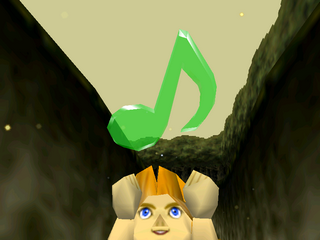
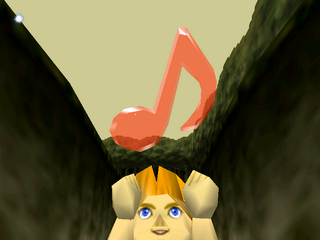
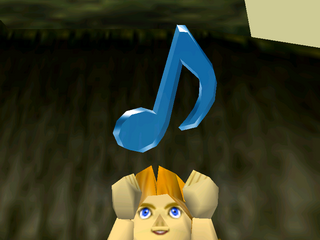
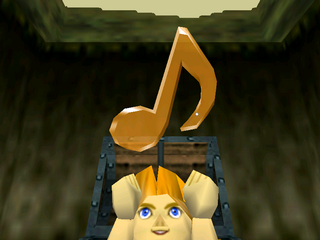
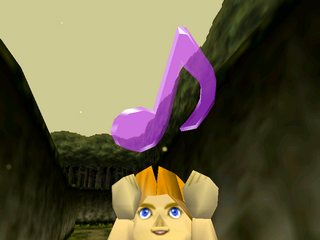
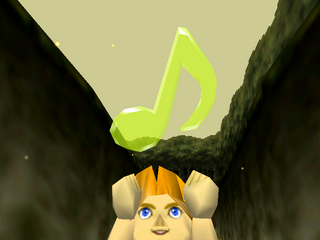
Object 00B6 was once displayed when Link learned a new song. It uses variables 0008 to 000C of the used actor 008C, Demo_Kankyo (Cutscene_Environment).
It is present in every cutscene setup where Link learns a melody from Sheik, save for the cutscene where Link learns the Nocturne of Shadow. Despite this, it is never visible in-game.
There is evidence that Demo_Kankyo was used at one point to display this music note. Starting at D45980 in the Debug ROM, there is a list of object dependencies for the different values of Demo_Kankyo's variable. At indexes 08-0C, object 00B6 is listed as a dependency. The functionality to display the note was completely removed from the actor. The object has 6 color settings intended for warp songs.
Map |
Setup |
Room |
Setup ID |
Used |
|---|---|---|---|---|
Ice Cavern |
04 |
All |
Cutscene - Learning the Serenade of Water |
✔ |
Shooting Gallery |
05 |
00 |
Sasaki Cutscene Test 2 |
✘ |
Shooting Gallery |
06 |
00 |
Sasaki Cutscene Test 3 |
✘ |
Temple of Time |
00 |
All |
Normal Gameplay |
✔ |
Temple of Time |
04 |
All |
Cutscene - First Time Returning From the Chamber of Sages |
✔ |
Temple of Time |
06 |
All |
Cutscene - Learning the Prelude of Light |
✔ |
Sacred Forest Meadow |
04 |
00 |
Cutscene - Learning the Minuet of Forest |
✔ |
Sacred Forest Meadow |
05 |
00 |
Cutscene - Learning Saria's Song |
✔ |
Desert Colossus |
04 |
00 |
Cutscene - Learning the Requiem of Spirit |
✔ |
Death Mountain Crater |
04 |
01 |
Cutscene - Learning the Bolero of Fire |
✔ |
Death Mountain Crater |
05 |
01 |
Cutscene - Learning the Bolero of Fire in Opening Demo |
✔ |
object_gi_grass#

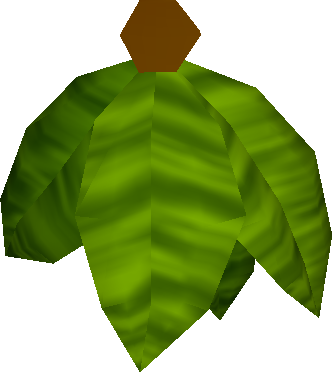
Object 00F7 is a reed whistle once used by Link for calling Epona, rather than Epona's Song. Link can be seen using this item in pre-release screenshots from April 1998, indicated by its button icon assigned to C-right, but the model itself has not been seen. This idea was revived in the form of the Horse Call item in Twilight Princess.
object_medal#

Object 009F contains early versions of the elemental Medallions, reflecting their original colors. In the final game, the Spirit Medallion is orange, the Shadow Medallion is purple, and the Light Medallion is yellow.
 |
 |
 |
 |
 |
 |
object_gi_coin#
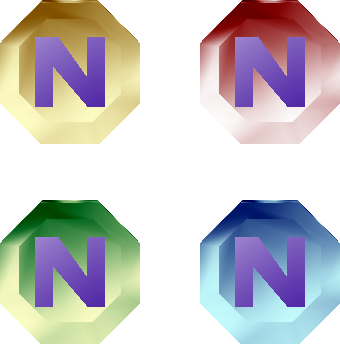
Object 012E contains N-stamped coins in four colors. The colors match that of the Rupees: green, blue, red, and gold. Some of the debug text associated with parameter.c, found in the game's code file, refers to Skulltula tokens as "N Coins", implying that these were reworked at some point into the Skulltula tokens.
object_gi_butterfly#
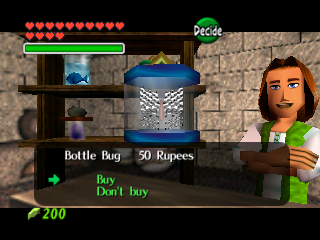
Object 0175 is similar to the container that holds the bugs sold in the Potion Shop. (Indeed, the object number of the bottled bug, 0174, immediately precedes it.) A butterfly is visible inside the cage. With a little hacking trickery, the cage can be placed in a shop and purchased, but nothing will appear in Link's inventory.
Because 0068 is missing from the list of purchasable items, and 0067 corresponds to the bottled bug, it's likely that it once corresponded to the butterfly.
object_gi_ocarina_0#
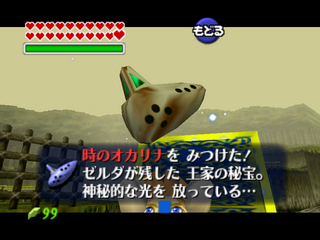
Object 010E is a Get Item model for the Fairy Ocarina. In the final game, Link receives the Fairy Ocarina from Saria, triggering a unique cutscene in which the camera pans around Link holding the item. As a result, the Get Item sequence doesn't occur, and this detailed model is never used.
There is still data in Link's actor, player_actor, that anticipates him obtaining the Fairy Ocarina like a Get Item. However, the text box displayed upon receiving this ocarina is the "Get" message for the Ocarina of Time.
NPCs#
|
|
To do: |
object_human#
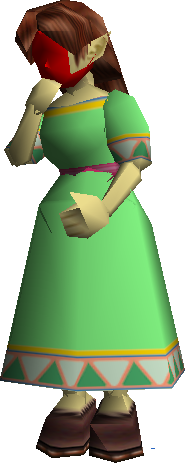
Object 0006 is an NPC that appeared in pre-release screenshots from 1996-97. She gained the nickname "Aria" through a series of interviews of dubious provenence with a supposed Nintendo insider that originally appeared on the fansite Zeldapower.com.
Her model format is more similar to the NPCs of Super Mario 64 than those in Ocarina of Time. Because of this, her model and textures will not display properly if one attempts to load the object without any additional modding. Technical details on this older format can be found here.
object_oA1#
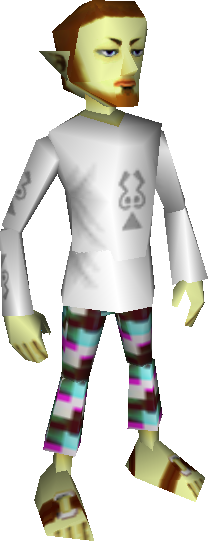
Object 0023 is an early version of the Kakariko rooftop man. His shirt hangs over his pants, while in the final, the pants texture extends up and onto his torso.
object_oA2#

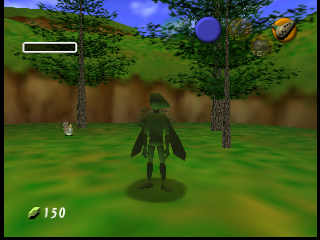
Object 002E is an early version of the Zora. While it is completely untextured, each piece of the model is colored #958DAC, which is a bluish-gray.
The object is present in the object list of the cutscene in which Link awakens in the Chamber of Sages after seven years of slumber. However, because it lacks a corresponding actor, it is never loaded.
Debug text found in actor En_Xc suggests that its filename originally belonged to Sheik, which may explain why it's in that specific Chamber of Sages cutscene's object list.
object_oA3#
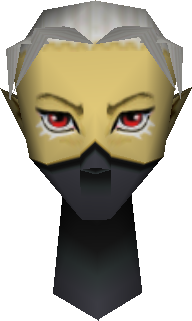
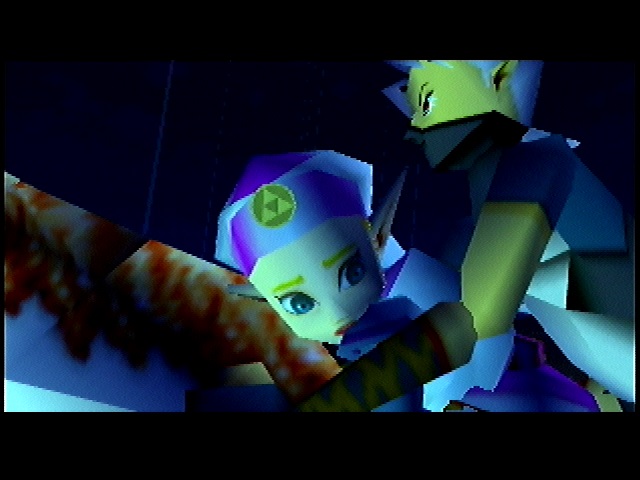
Object 003B is an early version of Impa's masked head. It can be seen in pre-release screenshots of the cutscene in which Zelda and Impa flee from Hyrule Castle.
object_oA4#

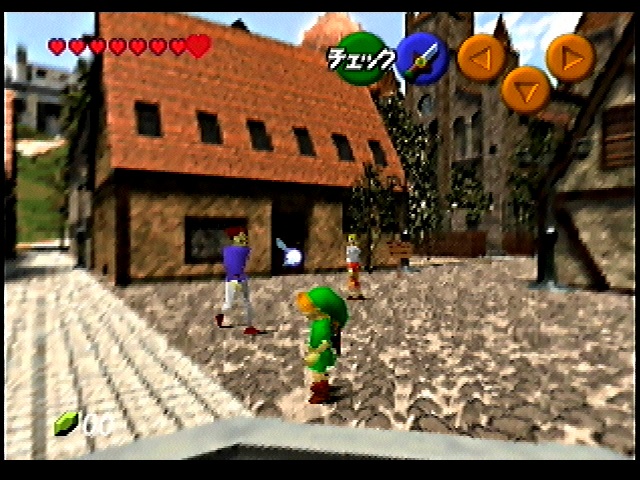
Object 003C is a Hylian man in a blue shirt and white pants. He can be seen in a pre-release screenshot of the Market from November 1997.
object_oA5#
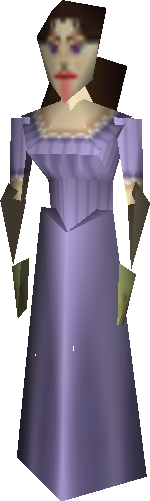
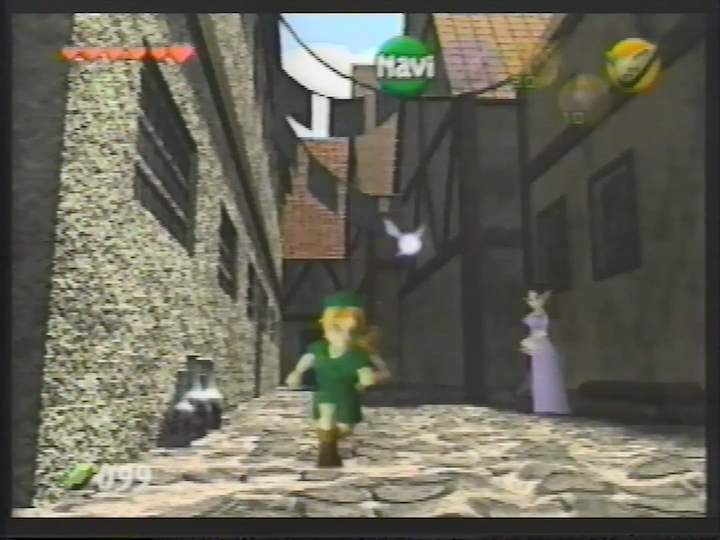
Object 003D is a thin Hylian woman in a purple dress. A similar, more-refined version of this model is used in the Market. She can be seen in a pre-release screenshot of the Back Alley.
object_oA6#
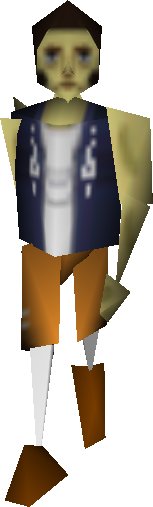
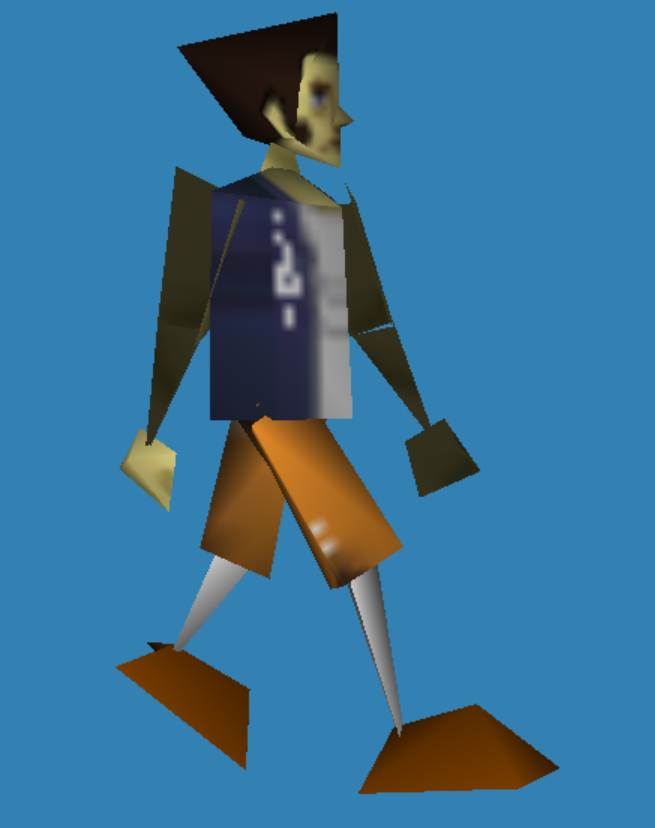
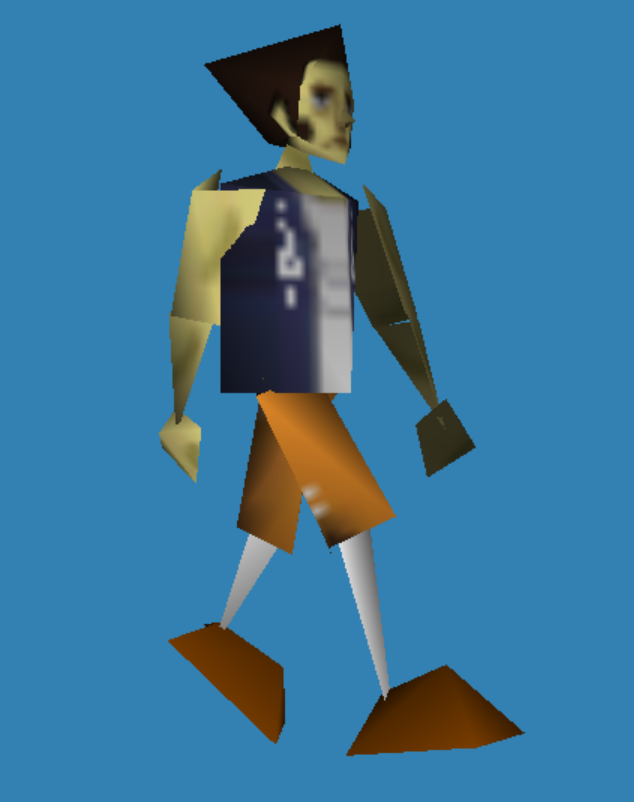
Object 003E is a Hylian man in a blue shirt and orange pants. This object was accidentally given two left arms, causing the view from the right side to look unusual. However, the right arm still exists as unreferenced geometry in the model at offsets 1028 and 10B8, making it possible for the model to be restored.
|
Original |
Restored |
|---|---|
|
|
object_oA7#

Object 003F is a Hylian woman in a white shirt and orange pants. She can be seen in a pre-release screenshot of the Market from November 1997.
object_oA8#
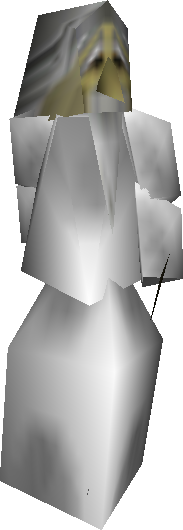
Object 0041 is an old Hylian man.
object_oA9#

Object 0042 is the hooded head of an old Hylian man.
object_oA10#

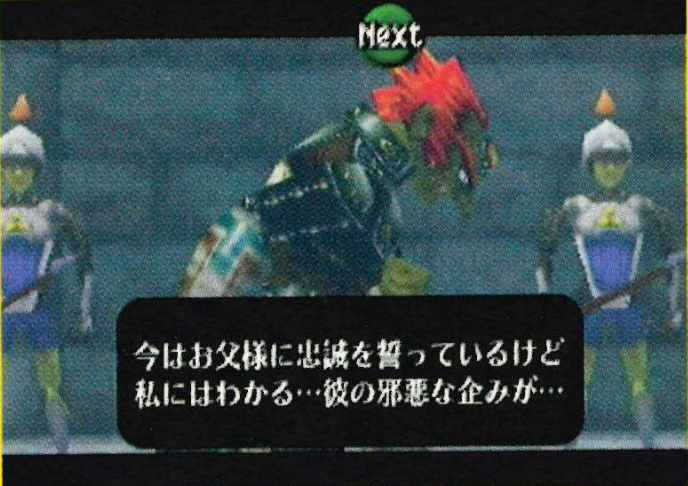
Object 0057 is an early version of a Hylian soldier. It is present in the object lists of the Castle Hedge Maze (Day) and Castle Hedge Maze (Night) maps, but it's never loaded because it lacks a corresponding actor.
object_oA11#
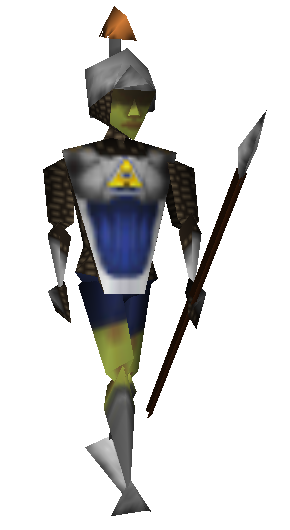
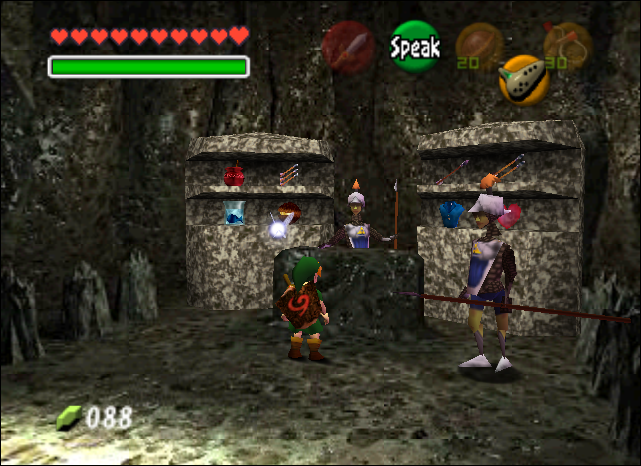
Object 0058 is another early version of a Hylian soldier. It can be seen in a pre-release screenshot from June 1998.
object_oB1#
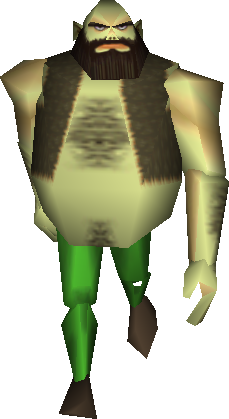
Object 0028 is an early version of the Bazaar proprietor.
object_oB2#
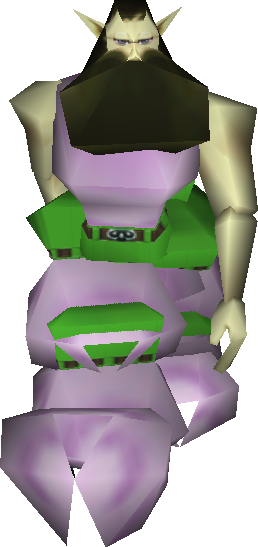
|
|
This needs some investigation. |
Object 0043 is a bearded Hylian man in a purple shirt and green pants.
object_oB3#
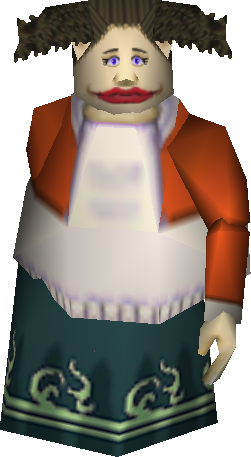
Object 0044 is an early version of the carpenter boss' wife.
object_oB4#
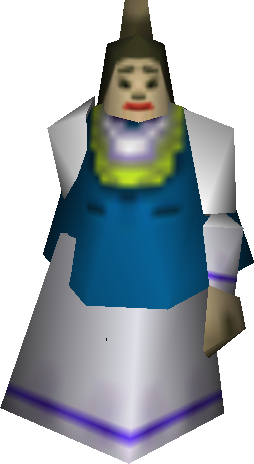
Object 0045 is a Hylian woman wearing a blue smock and a white dress. She appears in Kakariko Village in this 1998 pre-release trailer.
A similar, more-refined version of this model is used in the Market.
object_oE1#
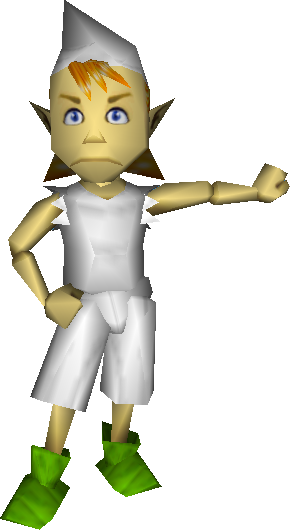
Object 0033 is an early version of Mido.
object_oE1s#

|
This page or section needs more images. |
Object 00C3 is another early version of Mido. Appears identical to other, though this one comes with a single "animation" built in, that being a static pose with his arms by his sides.
object_oE3#
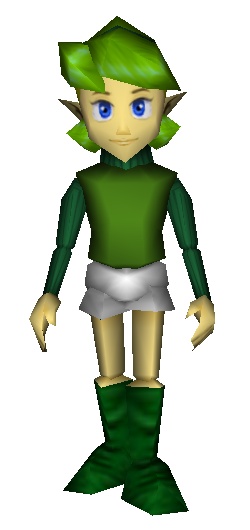
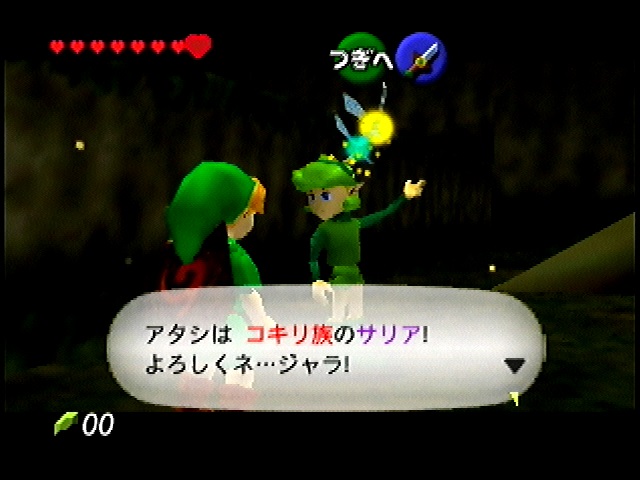
Object 004B is an early version of Saria. The unused animation file object_oE_anime contains an early animation for her, which she is seen performing in this pre-release screenshot from November 1997.
|
Pre-release Screenshot |
Restored Object |
|---|---|
|
(Restoration: Airikita)
object_oE4#
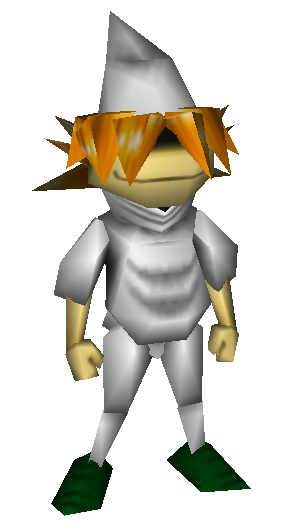
Object 004C is an early version of the generic red-haired Kokiri boys.
object_oE4s#
Object 00C4 is another early version of the generic red-haired Kokiri boys.
|
|
This page or section needs more images. |
object_oE5#
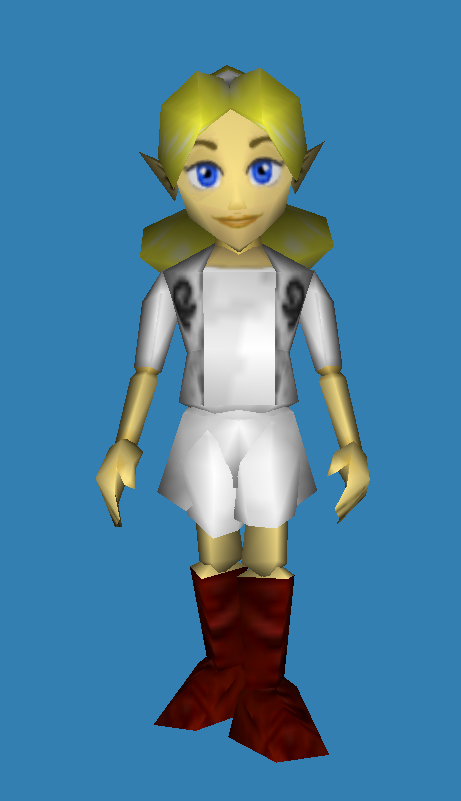
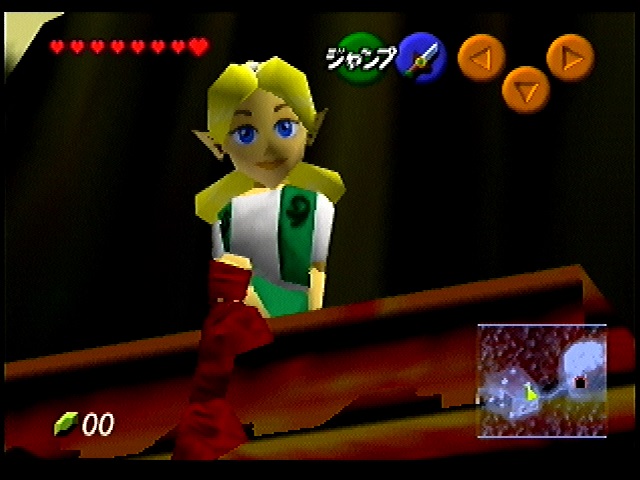
Object 004E is an unused female Kokiri NPC. At one point, the Kokiri characters had more varied designs. This particular girl appears in pre-release screenshots from November 1997. She has blonde hair, and her vest features dual Kokiri symbols. This object is dependent upon object_oE2, which contains geometry that object_oE5 needs in order to be loaded properly.
Because of this NPC's blonde hair, she is often mistaken for an early version of Fado.
object_oE6#
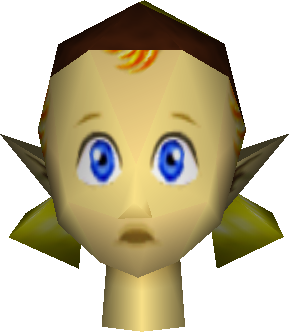
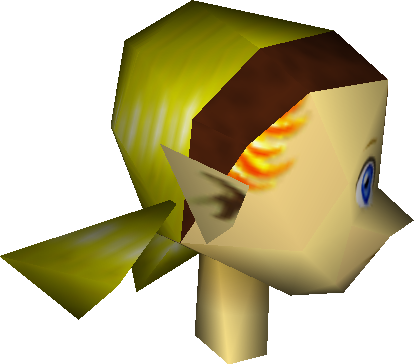
Object 004F is the head of a blonde Kokiri girl wearing a brown band. This model was used in the Spaceworld '97 demo.
Front |
Side |
Back |
|---|---|---|
 |
 |
 |
object_oE7#
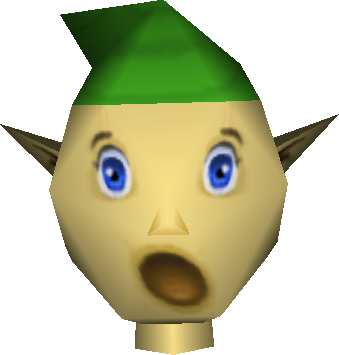
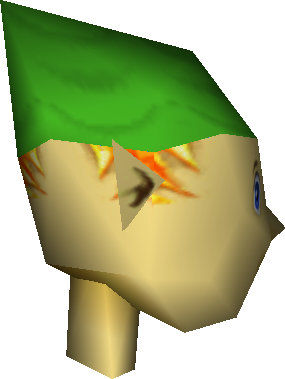
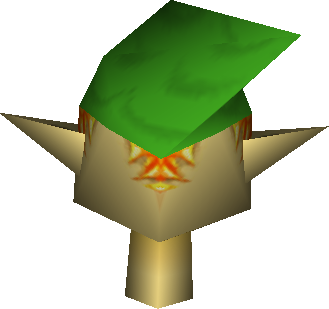
Object 0050 is the head of an open-mouthed Kokiri boy wearing a green cap. This model was used in the Spaceworld '97 demo.
Front |
Side |
Back |
|---|---|---|
 |
 |
 |
object_oE8#
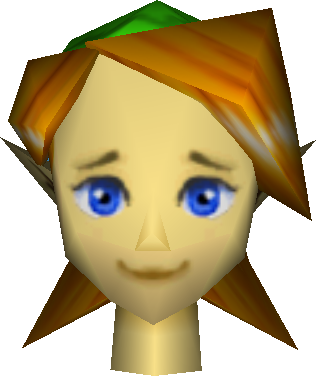
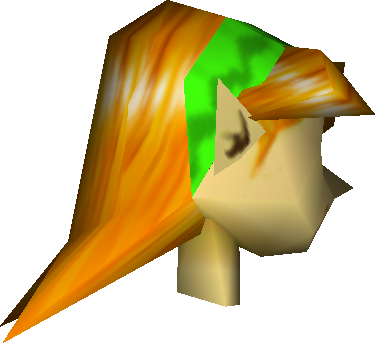
Object 0051 is the head of a red-haired Kokiri girl wearing a green band. This model was used in the Spaceworld '97 demo.
Front |
Side |
Back |
|---|---|---|
 |
 |
 |
object_oE9#
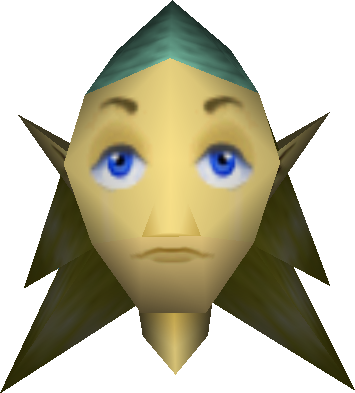
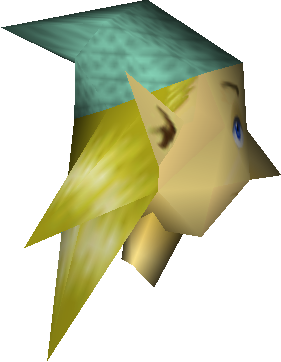
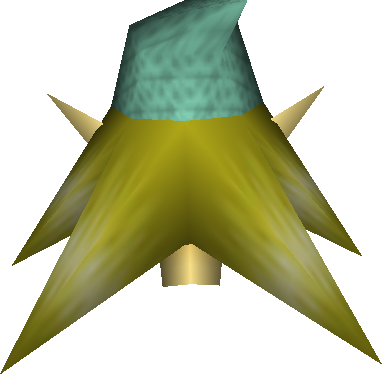
Object 0052 is the head of a blonde Kokiri boy wearing a mint-colored cap. This model was used in the Spaceworld '97 demo.
Front |
Side |
Back |
|---|---|---|
 |
 |
 |
object_oE10#

Object 0053 is an early version of the Kokiri Shop proprietor's head. This model was used in the Spaceworld '97 demo.
object_oE11#
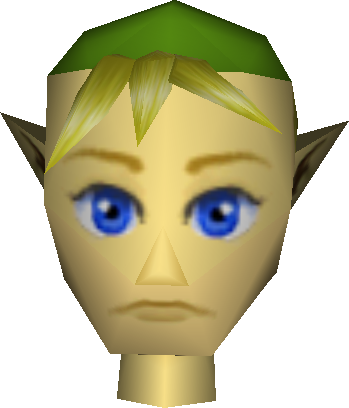
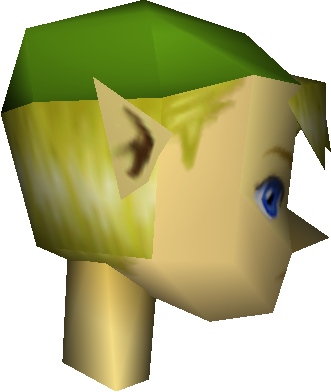
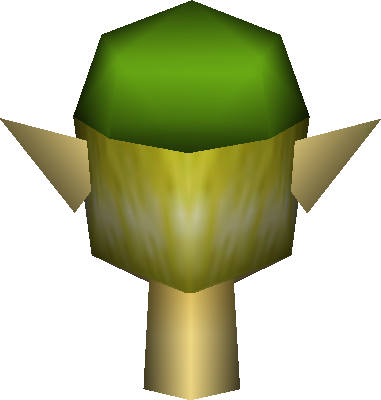
Object 0054 is the head of a blonde Kokiri boy wearing a small green beanie. This model was used in the Spaceworld '97 demo.
Front |
Side |
Back |
|---|---|---|
 |
 |
 |
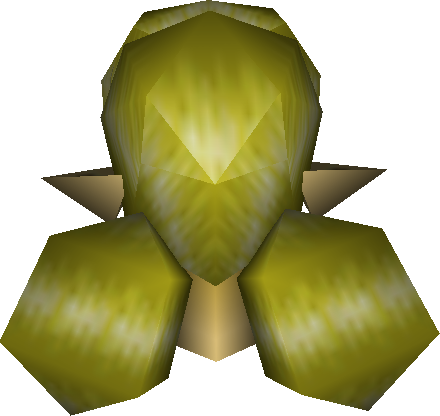
object_oE12#
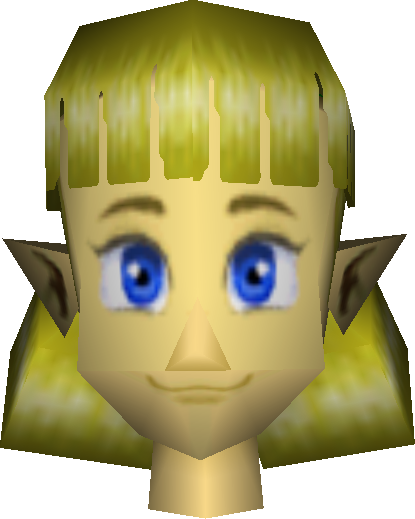
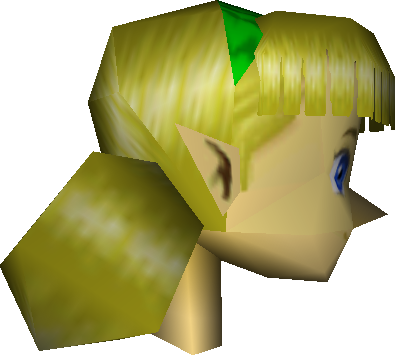
Object 0055 is an early version of Fado's head. This model was used in the Spaceworld '97 demo.
Front |
Side |
Back |
|---|---|---|
 |
 |
 |
object_oF1s#
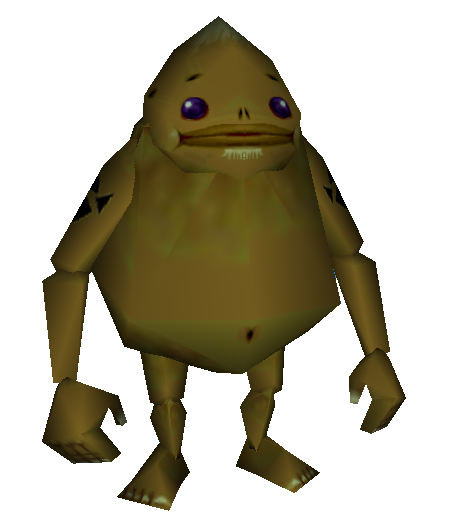
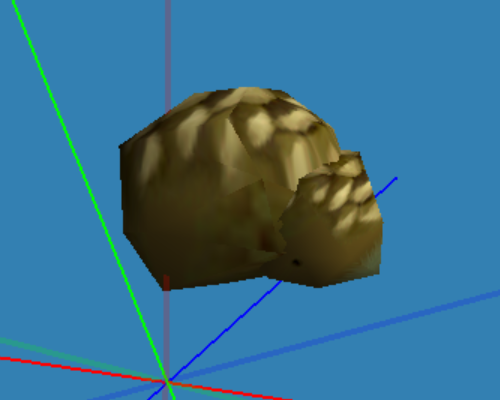
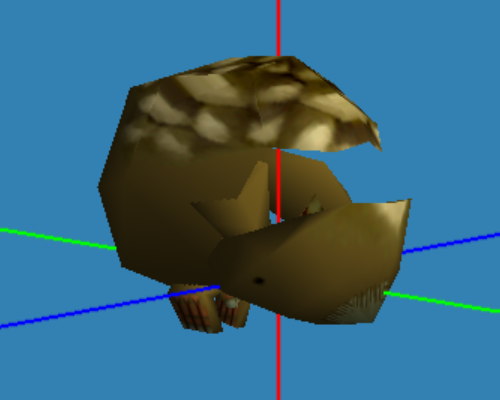
Object 00CF is an early version of the Goron. This object contains unreferenced geometry at offset 84E0 displaying an early Goron curl. This curl is recorded as static geometry instead of the animated position used in the final, and has a head that appears less tucked.
|
Early Goron Curl |
Final Goron Curl |
|---|---|
|
|
Other#
object_fire#
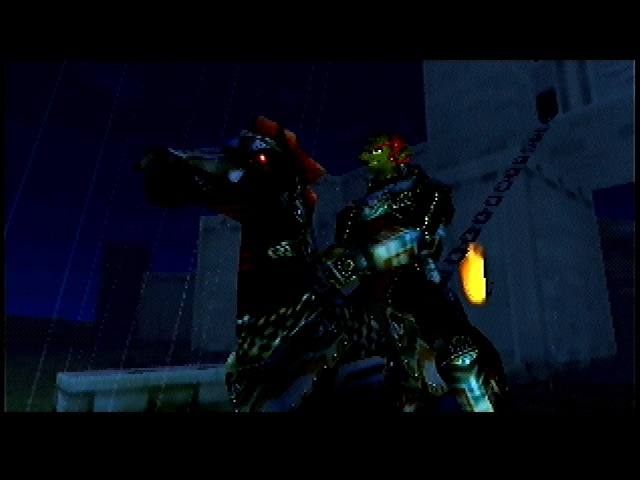

Object 000F is an early flame animation with eight frames. This was originally used for the torches alongside the drawbridge at Hyrule Castle.
The fire effect used in the final game consists of two overlapping textures: a flame shape and a noise image. The noise image scrolls to create the illusion of flickering. This is less resource-intensive, and uses a longer animation loop.
object_mjin_oka#
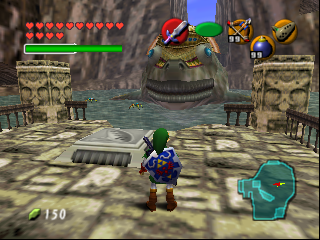

Object 0068 is a song pedestal with an ocarina design. The appearance of the ocarina reflects an earlier stage of development when it would have been inlaid with the three Spiritual Stones.
This pedestal is present in several cutscene setups:
Map |
Setup |
Room |
Setup ID |
Used |
|---|---|---|---|---|
Kokiri Forest |
08 |
00 |
Panning Through Kokiri Forest |
✘ |
Kokiri Forest |
09 |
00 |
Panning Through Kokiri Forest 2 |
✘ |
Kokiri Forest |
07 |
01 |
The Deku Tree Speaks With Navi |
✔ |
Kokiri Forest |
08 |
01 |
Panning Through Kokiri Forest |
✘ |
Kokiri Forest |
09 |
01 |
Panning Through Kokiri Forest 2 |
✘ |
Sacred Forest Meadow |
04 |
00 |
Learning the Minuet of Forest |
✔ |
Sacred Forest Meadow |
05 |
00 |
Learning Saria's Song |
✔ |
Zora's Fountain |
04 |
00 |
Receiving Zora's Sapphire |
✔ |
Zora's Fountain |
05 |
00 |
Jabu-Jabu Inhales |
✘ |
Zora's Fountain |
06 |
00 |
Credits in Zora's Fountain |
✘ |
Desert Colossus |
04 |
00 |
Learning the Requiem of Spirit |
✔ |
Ganon's Castle Exterior |
04 |
00 |
Sages Construct the Rainbow Bridge |
✔ |
However, it is only loaded and visible during gameplay in setups 05 and 06 of Zora's Fountain.
A contemporary fan account of playing the 1998 CBS Toy Test demo suggests that these pedestals were once used as song triggers, forcing Link to take out his Ocarina and displaying a musical staff when stepped on.
(Toy Test Playthrough Account: ZHQ.com)