 Prototype Info
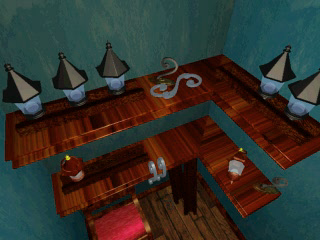 Nenaudojami fonaiNenaudojami fonai, esantys kambarių duomenyse.
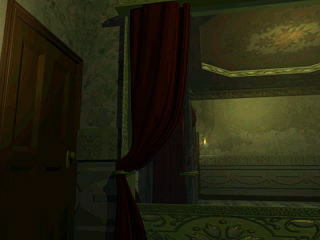 Kambarių skirtumaiDaug kambarių buvo pakeista Director's Cut versijos Advanced/Arrange režime.
Unused Content#
Items#
DumDum Rounds#


DUMDUM ROUNDS
More powerful than magnum
rounds. For the C.Python.
Alternate bullets for the Colt Python magnum. Though the game describes them as more powerful, they actually do less damage than the standard .357 magnum rounds. They can only be used in the original game through hacking and were removed entirely for the Director's Cut version. They are use-able in the January 31 1996 prototype, while in that version regular Magnum Rounds deal less damage than they do in the final.
Flamethrower Fuel#


FUEL
Fuel for the flamethrower.
Much like in the sequel, fuel for the flamethrower is hidden in the game's coding but goes unused. It is use-able in the January 31 1996 prototype and, in that version, can be found in the Underground area in Chris' scenario.
Kirtiklis#

Panaikinta iš galutinio žaidimo dėl nežinomų priežasčių. Įdomu tai, kad jei bandai panaudoti šį daiktą, vietoj įprastinio "this item cannot be used" pranešimo ekrane iššoks lentelė, leidžianti pasirinkti taip/ne, tačiau niekas nevyksta abiem pasirinkimais. Turi juodą inventoriaus grafiką, bet labiau apžiūrėjus - pilną 3D modelį.
Alyva#


Oranžinis alyvos bakelis su liepsnos grafika priekyje. Jo paskirtis nežinoma.
Comm Radio#

COM. RADIO
The battery is still
charged.
This item is given to the player in the storyline but never used in-game outside of cutscenes. Features a glitchy inventory graphic.
Lock Pick#

LOCKPICK
A simple lock can be
opened with this.
An image of a makeshift lock pick can be found in the inventory graphics of the 1996 release. While Jill does receive a lock pick from Barry early on (and uses it throughout the game), it is never actually shown anywhere in the game.
In the January 31 1996 prototype version, the lock pick is an actual inventory item using this icon, this system is re-used in Resident Evil 3: Nemesis.
A similar design is used for Claire's lock pick in Resident Evil 2, and is visible in her status screen as a "personal item" from the beginning of the game.
The GameCube remake uses a different, "professional" design for the lock pick instead.
Failai#
Trevoro laiškas / Erico laiškas#

Failo, nerandamo žaidime, foninė nuotrauka. Tačiau ji yra Nintendo DS versijos (Resident Evil: Deadly Silence) ReBirth režime, kur laiškas, užvadintas kaip "Eric's Letter" (Eriko laiškas) liudija apie doom knygos 1 lokaciją šiame režime. Pažvelgus į apribotos žaidimo versijos duomenis, galima pamatyti, jog ši nuotrauka buvo originaliai skirta vienam iš atmestų Trevoro laiškų.
Laiškas#

Nežinomo failo foninė nuotrauka. Matyt irgi skirta vienam iš atmestų Trevoro laiškų arba Spencerio pakvietimo, skirto Trevorui.
Health Status#

A "Good!" health condition is present in the graphical file for the status screen. This condition is never used in-game, instead both the green and yellow status indicate "Fine".
Įgarsinimas#
Šiuos įgarsinimus galima rasti žaidimo duomenyse, bet tie įgarsinimai nenaudojami jokioje žaidimo versijoje.
VOICE5.XAS[4].wav
VOICE5.XAS[5].wav
It looks like a cutscene for Chris' scenario during which he could meet Rebecca in the third laboratory engine room was planned, possibly with a variant if she was hurt. This scene would have foreshadowed the triggering system, something which arguably does lack foreshadowing. It is worth noting that vents can be seen all over the laboratory, including in the first engine room, which is presumably what Rebecca is referring to. The concept of having the protagonist's partner flee through draft holes will later be re-used in Resident Evil 2, its earliest execution seen in the earliest available build for that game.
More unused voice acting can be found in the PC ports of the game.
Backgrounds#
Build Date#
Japan 1.0 |
USA |
Japan 1.1 |
PAL (English) |
PAL (French) |
PAL (German) |
|---|---|---|---|---|---|
01/01 01 MASTER 21:00 19960222 BIO HAZARD |
01/01 01 MASTER 09:00 19960308 RESIDENT EVIL |
01/01 02 MASTER 14:00 19960309 BIO HAZARD |
01/01 01 MASTER 09:00 19960614 RESIDENT EVIL |
01/01 01 MASTER 10:00 19960621 RESIDENT EVIL |
01/01 01 MASTER 09:00 19960712 RESIDENT EVIL |
These are the build dates for different completion builds of the original 1996 release found in the CAPCOM.INF file. They can also be seen by inserting the game disc in any disc drive on your computer, and simply seeing the "last modified" date on the SLPS_002.22 file or such equivalent.
Regional Differences#
Original 1996 Version#
Title Screen#
|
Japan |
USA |
|---|---|

|
|
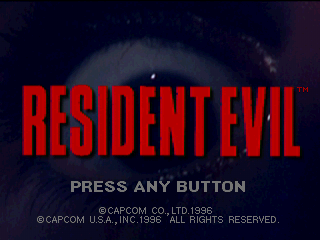
The Resident Evil series is known as Biohazard in Japan, although the title in this first entry was spelled as two words.
Demos#
All three gameplay demos which play when waiting at the title screen are shorter in the North American version than they are in the Japanese version, and two of them play out differently.
Šriftas#
|
Japonija |
JAV |
|---|---|
|

|
|
Japonija |
JAV |
|---|---|

|

|
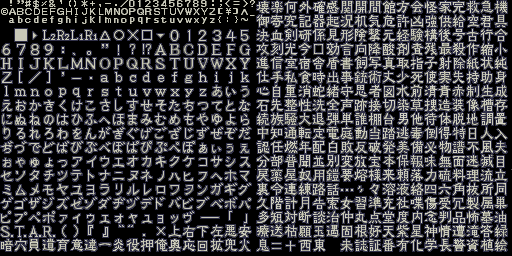
Bio Hazard turi kelias angliško teksto linijas. Kai žaidimas buvo lokalizuotas, jam buvo duotas kintamojo pločio šriftas. Tačiau jie nepasinaudojo šito galimybe teksto linijoms, buvusioms anglų kalba, nes jie išlaikė savo senąjį formatavimą.
File Images#
Botany Book |
Keeper's Diary |
Researcher's Will & Letter |
|---|---|---|
 |

|

|
Researcher's Will (Torn) |
Orders & Fax |
Plant 42 Report |
|---|---|---|

|
 |
 |
"V-JOLT" Report |
Scrapbook |
Security System |
|---|---|---|
 |
 |
 |
The Japanese version includes background images for all files with gray-colored text over them. The international versions lack these images and have just white text on a black background and only includes the images for the Pass Number, Barry's Photo, and the Pass Codes.
Difficulty#
The international versions have an adjusted difficulty.
- Auto-aiming was disabled in the international versions.
- Enemies have more health and deal more damage.
- The player is given three ink ribbons in the Japanese version with every pickup, but only two in the international versions.
Censorship#
- Some of the more gruesome scenes in the intro were censored in the international versions.
- The Japanese version shows Chris smoking in the cast roll and in one of the ending cutscenes.
- The FMV played when encountering the first zombie had a shot of Kenneth Sullivan's decapitated and torn-apart head dropping to the floor in the Japanese version. This was removed from the international versions.
- The Japanese version contains an alternative end credits cinematic where it shows the characters getting killed in various ways. To unlock it you must finish the game a second time (from a cleared save with the unlimited rocket launcher unlocked) and get a good ending.
Changed Intros#
Some of the more gruesome scenes were censored in the international versions. The shot of Chris Redfield smoking during the cast roll call was censored with footage of him from the intro overlaid on him just standing there. The cast roll in the initial Japanese release also had a completely different song, "ICY GAZE" performed by the J-pop artist Fumitaka Fuchigami. This was replaced with a new song for the international versions called "Terror" which doesn't feature any lyrics. All later versions of the game including the Japanese releases would use "Terror."
Watch on YouTubeWatch on YouTube
Changed Endings#
The Japanese version of the original release also has a vocal ending theme during the credits, "Yume de Owarasenai"/"I Won't Let This End As a Dream", also by Fumitaka Fuchigami. This was replaced with a new song for the international versions called "Still Dawn" which doesn't feature any lyrics. All later versions of the game including the Japanese releases would use "Still Dawn."
Watch on YouTubeWatch on YouTube
Other Differences#
- At the Japanese version's character select screen, the difficulty level is displayed under the character (Jill is easy, Chris is hard). This text was removed from the international versions.
- In the Japanese version, the opening FMV displays the helicopter rotor blades against the cloudy sky at the top-left corner of the screen. For some odd reason, this was mirrored in the international versions.
- In the Japanese version, you can not skip the ending cutscenes with the helicopter or the credits, no matter how many times you beat the game.
Most of the changes listed above would be reverted in the Deadly Silence DS remake..
(Source: Rage Quitter 87)
Reviziniai skirtumai#
Rev 1#
Bio Hazard (Japonija) pirmos revizijos buildo data yra 1996 m. kovo 9 d. - šešiolika dienų po pradinės leidimo versijos.
Title Screen#
|
Bio Hazard |
Bio Hazard (Rev 1) |
|---|---|
|
|

|
The color of the trademark symbol was changed to be the same as the title name. The Resident Evil versions use the red trademark but its placement differs.
V-Jolt Report#
 Rooms DifferencesMany rooms were changed in the Advanced/Arrange mode of the Director's Cut version.
Dual Shock Version#
Resident Evil: Director's Cut: Dual Shock Version, if it wasn't apparent by its ridiculously long title, is a revised edition of Resident Evil: Director's Cut (making it a revision of a revision) released in late-1998 that adds support for the newly-released at the time DualShock analog controller (a similar revision of Resident Evil 2 was released around the same period, despite the original version of that game being only a few months old). It features the following other changes as well:
- The original soundtrack by Makoto Tomozawa, Masami Ueda, and Koichi Hiroki was notoriously replaced by a new soundtrack credited to the now-equally notorious Mamoru Samuragochi. In 2014, it would be revealed that most of Samuragochi's work, including this soundtrack, was actually ghost-written by his assistant Takashi Niigaki.
- The end credits is always shown without the gameplay montage (the same end credits you get in the previous versions after getting one of the bad endings).
- The different game modes, Standard, Training and Advanced, now go by their original Japanese names: Original, Beginner and Arrange.
- Once again, the Original mode in the US release is harder than the Japanese version. (Enemies have more health, both characters have less, and ink ribbons come in sets of 2 instead of 3.)
- The Japanese version was packaged with a bonus disc known as the Bio Hazard Complete Disc, which includes save data for all versions of Bio Hazard and Biohazard 2 (save data for the standard and Dual Shock editions of Bio Hazard: Director's Cut are cross-compatible, despite not being indicated as such). Also included was footage of the most complete build of Biohazard 1.5 with voice acting implemented, as well as the live-action cutscenes from the first game featuring performances of the previously unused Japanese voice acting and different musics. The North American version on the other hand, came with no such bonus disc and was issued directly as a "Greatest Hits" release with no prior "black label" print run. No PAL versions were produced.
This is the version that is available on the North American PlayStation Store.
Gore Warning#
Bio Hazard: Director's Cut Dual Shock Version |
Resident Evil: Director's Cut Dual Shock Version |
|---|---|
 |
 |
The Dual Shock Version has a "Gore Warning" screen which appears at the start of the game in between the publisher logo and the title screen. This warning screen wasn't present in the previous releases, Resident Evil: Director's Cut included, and would become a staple in the series. Other survival horror games like Dino Crisis or Silent Hill would also include a warning screen.
FMV differences#
Resident Evil had a staggering number of different releases on the PlayStation alone. Japan, North America, the UK, France and Germany all got bespoke versions of the 1996 original and the 1997 Director's Cut, topped off with Dual Shock versions for Japan and North America. Among the multitude of releases, various FMV cutscenes were censored or edited for content, sometimes deliberately and sometimes (apparently) because of localization mix-ups. Music was changed as well, for various reasons. This section attempts to explain, in a comprehensive manner, the numerous FMV differences between all PlayStation versions of Resident Evil.
It is worth noting that no single version of Resident Evil (on the PlayStation, at least) contains totally uncut and uncensored FMV, though the original Japanese versions come the closest. With the exception of the opening prologue (which is uncut, but still mildly censored), Bio Hazard, Biohazard: Director's Cut and Biohazard: Director's Cut: Dual Shock Edition all contain uncut and uncensored FMV cutscenes.
Cutscenes in all versions of the game contain spoken English dialogue, which was never dubbed for non-English-speaking regions. (The game uses softcoded subtitles for this purpose instead.)
PJ.STR#
This is the opening prologue of the game, filmed in color throughout, and depicts simulated (but graphic) blood and gore. It's followed by a cast roll, during which Chris Redfield smokes a cigarette, and ends on a title card (Bio Hazard or Resident Evil). The prologue's uncut length is 3 minutes and 47 seconds. This file was changed the most often among all PlayStation releases of the game; counting music differences and the two title cards, there are no less than six different versions of the prologue.
Inexplicably, among all twelve PlayStation versions of Bio Hazard and Resident Evil, the opening prologue is uncut and unaltered only in the French and German releases of the Director's Cut.
The three Japanese releases are all uncut (runtime: 3:47), but show the cinematic portion in black and white. The original Bio Hazard prologue replaces the original BGM with licensed music that the developers were obliged to use.
All other versions of the prologue are in black and white for the cinematic, edited for violence (runtime: 3:30), and censor Chris' smoking (rather clumsily) during the cast roll. The two Dual Shock versions (JP and NA) of the prologue contain a new orchestral score, meaning that all three PlayStation releases of Bio Hazard have differing soundtracks for this cutscene.
DM3.STR#
This is a short, 15-second cutscene triggered when the player approaches the first zombie of the game. The full cutscene depicts the severed head of Kenneth, another S.T.A.R.S. member, falling to the floor and rolling towards the camera.
The three Japanese versions all show this scene uncut, while the overseas versions (runtime: 13 seconds) all cut out the shot of Kenneth's severed head. The two Dual Shock versions contain a different score, with the Japanese version staying uncut and the NA version staying cut.
ED1.STR#
This is the worst ending for Chris' storyline (the "lone survivor" ending), which runs 59 seconds. In all three Japanese versions, this cutscene depicts Chris removing a pack of cigarettes from his pocket and lighting one up.
Instead of edits or censoring, the overseas versions of this scene contain alternate footage of an exhausted Chris staring into the distance (runtime: 44 seconds). Once again, the JP and NA Dual Shock versions contain a new orchestral score during this cutscene, which extends their lengths by ten seconds each (1:09 and 0:54, respectively).
Credits#
The credit sequences differ significantly between the various versions of the game. That being said, the original 1996 Bio Hazard has the most unique set of credits FMVs.
- STFJ.STR and STFC.STR are the FMV files used during the "good ending" credits for Jill and Chris' storylines, respectively. They contain bits of gameplay footage that are played underneath the credits text itself, with accompanying BGM. In the original Bio Hazard, a piece of licensed music was used instead.
- STFZ.STR is a "gag reel" credits sequence exclusive to the original Bio Hazard, depicting Jill and Chris getting killed by various enemies. To see it, finish the game a second time (that is, from a cleared save with the unlimited rocket launcher unlocked) and get a good ending.
- STFR.STR is the credits sequence for the Dual Shock version, and is identical in both the NA and JP releases. It's used for both Jill and Chris' storylines. The gameplay footage has been removed, leaving only empty black, meaning that obtaining a "good" ending now results in the same credit roll as a "bad" ending in the Dual Shock version. A new orchestral score plays during this sequence.
(Source: Original TCRF research)