 This article has a talk page!
 Development Info
 Prerelease Info
 Bugs
 Unused Sounds and Dialogue"There really was a cake..."
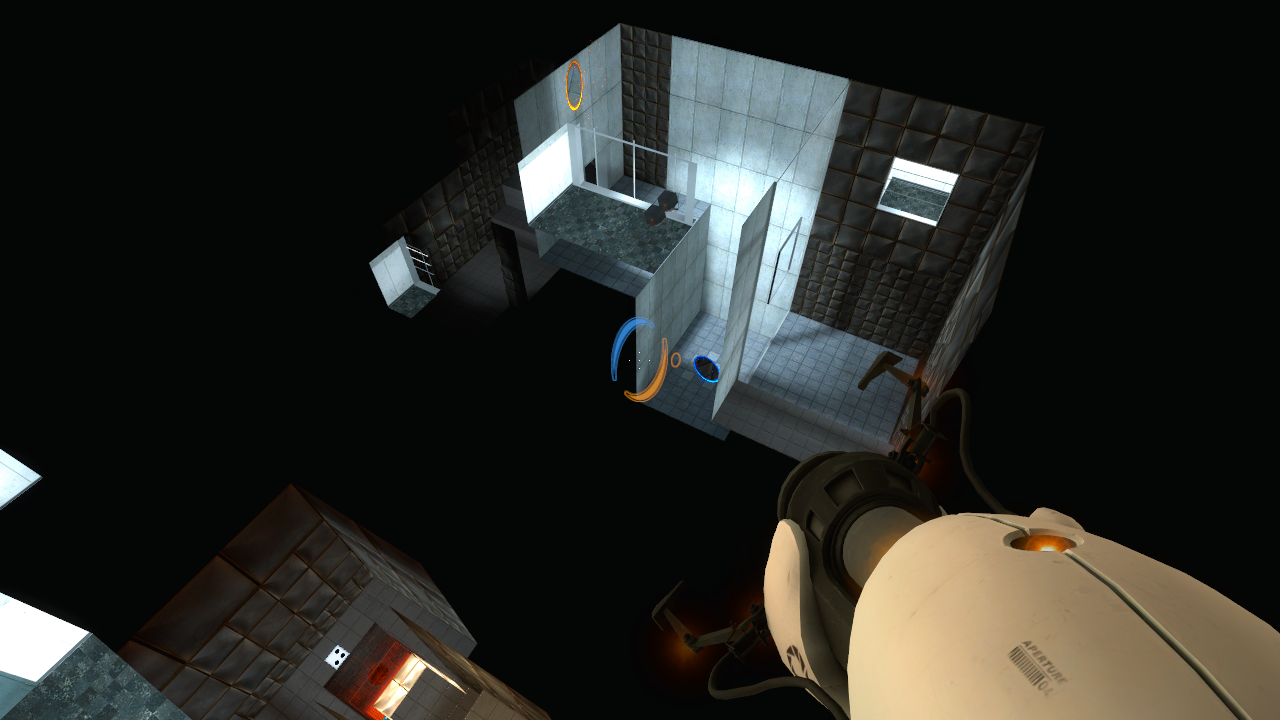 Unused Map ContentParts of maps that go unused.
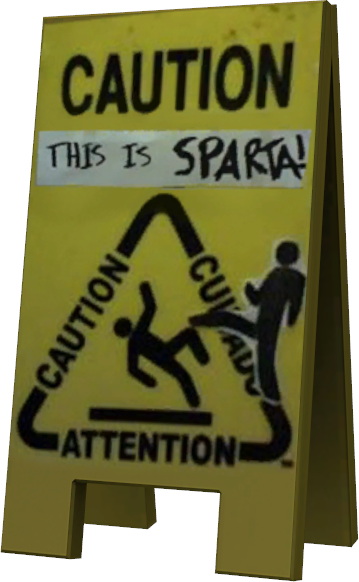 Unused Textures
Unseen Portal Gun Viewmodel Hand#

In the actual Portal Gun's viewmodel, there's a non-animated hand without textures. Unfortunately, Chell's hand texture's UV mapping does not match the VTF, so the texture doesn't align with her arm properly. This appears to be a bug, since the Xbox 360 versions show the hand with textures. This can be seen briefly if you move your camera fast enough. The hand was most likely used in older versions of the game, as older points of development show a left hand being visible in the Portal Gun.
(Source: Source 1 GitHub issue tracker)
Hidden Developer Credits#
'J' Developer Credit#
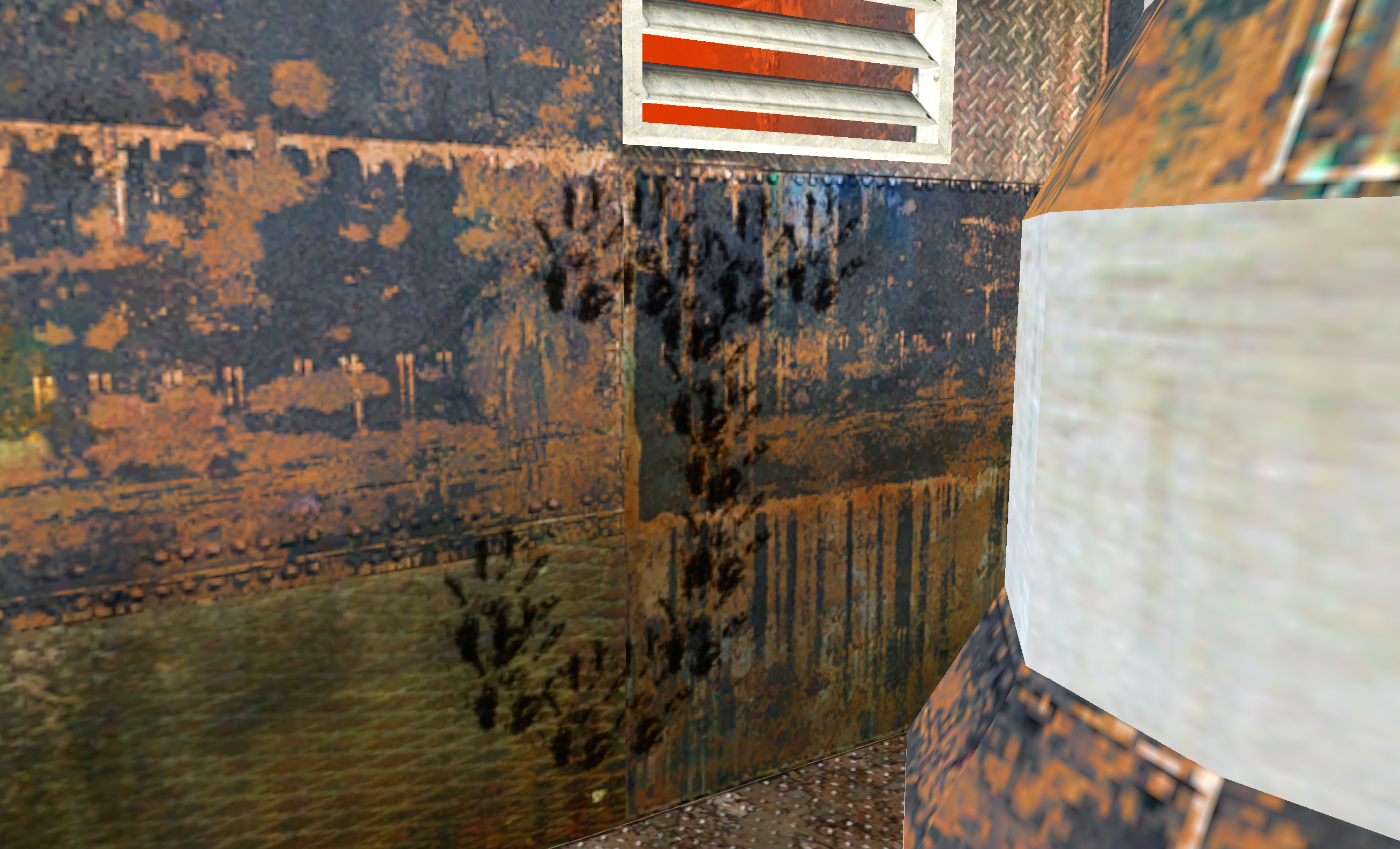
In the map escape_00.bsp, if you go into the Rattman Den featured at the start of the level, you can see the letter J made up of drawn hand decals. It's hard to see due to the dark lighting, but can be made easier to see by disabling lighting with the command mat_fullbright 1. It can be assumed that it was left by lead designer Jeep Barnett.
Tim Larkin#
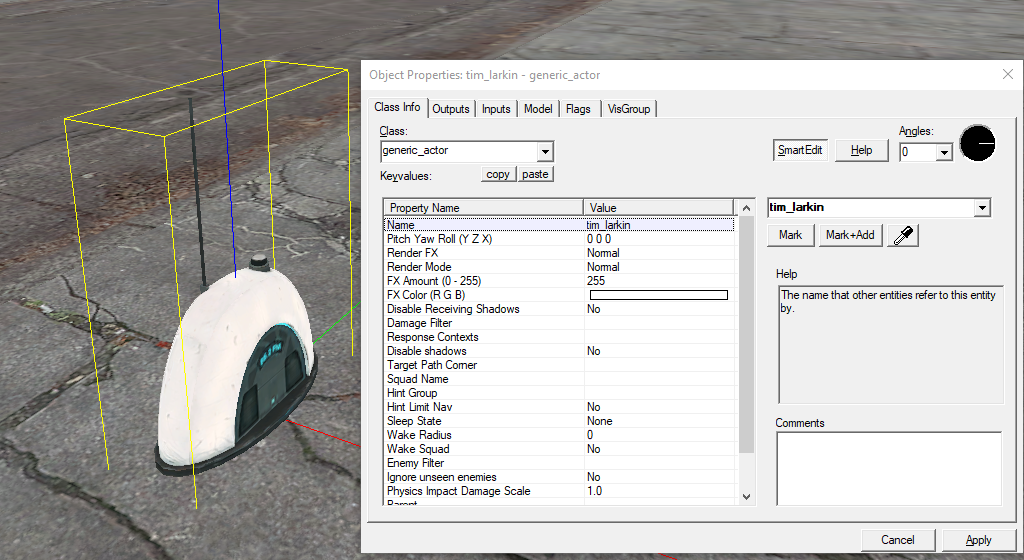
If you noclip to the end sequence, you will find a radio NPC named Tim Larkin. Larkin created the ending cinematic music/sound, and this NPC controls the playing of those sounds. It was named after him in his honor. Apparently, Tim didn't know about this!
O Fortuna#
Going through level_sounds_music_portal.txt and the map file for Test Chamber 19 (testchmb_a_15.bsp) reveals that the song that plays during the scene with the fire pit would've originally been the song O Fortuna instead of the final 4000 Degrees Kelvin, as indicated by the fact that the name of the audio entity that plays the song is called o_fortuna and the internal name of the song is Portal.room9_OFortuna.
Unused Text#
Unused Chapter 12 Title#
Going through resources/portal_english.txt (or any other language), includes the title for a scrapped 12th Chapter for the New Game / Chapter Selection menu, and it will appear when manually creating a chapter12.cfg file in the cfg folder. Its thumbnail was found in the asset leak and it was likely the original chapter for Test Chamber 19, before it changed to a very different thumbnail and title.
"Portal_Chapter12_Title" "Testing Complete"Unused ASCII Art#
Various pieces of ASCII art go unused in the credits.txt and, by proxy, in the ending credits' ASCII art section.
RADIO#
              ;=
              /=
              ;=
              /=
              ;=
              /=
              ;=
              /=
       ,--==-:$;
    ,/$@#######@X+-
     ./@###############X=
    /M#####X+/;;;;+H#####$.
   %####M/;+H@XX@@%;;@####@,
  +####H=+##$,--,=M#X-%####@.
 -####X,X@HHXH##MXHXXH-+####$
 X###@.X/$M$:####$=@X/X,X####-
.####:+$:##@:####$:##H/X=####%
-%%$%,+==%$+-$+:$;-$$%-+,/$%%+
-/+%%X$XX$$$$$$$%$$$%$X$X$%+/- COMPANION_CUBE#
+@##########M/             :@#########@/
##############$;H#######@;+#############
###############M########################
##############X,-/++/+%+/,%#############
############M$:           -X############
##########H;.      ,--.     =X##########
:X######M;     -$H@M##MH%:    :H#######@
  =%#M+=,   ,+@#######M###H:    -=/M#%
  %M##@+   .X##$, ./+- ./###;    +M##%
  %####M.  /###=         @##M.   X###%
  %####M.  ;M##H:.     =$###X.   $###%
  %####@.   /####M$-./@#####:    %###%
  %H#M/,     /H###########@:     ./M#%
 ;$H##@@H:    .;$HM#MMMH$;,   ./H@M##M$=
X#########%.      ..,,.     .;@#########
###########H+:.           ./@###########
##############/ ./%%%%+/.-M#############
##############H$@#######@@##############
##############X%########M$M#############
+M##########H: .$##########X=LIGHTBULB#
         ,=;%$%%$X%%%%;/%%%%;=,
     ,/$$+:-                -:+$$/,
   :X$=                          =$X:
 ;M%.                              .%M;
+#/                                  /#+
##                                    M#
H#,                     =;+/;,       ,#X
.HM-       :@X+%H:   .%M%- .M#.     -M@.
  /#%.     @#-  ,H@--MH, .;@$-    .%#+
   .$M;    .+@X;, MM#@:/$X;.     ;M$,
     =@H,     ,:+%H#M%;-       ,H@=
      .$#;        -#H         =#$
        %#;        #M        ;#%
         H#-       ##       -#H
         ;#+       ##       +#;
          ;H+;;;;;;HH;;;;;;+H/
           =H#@HHHHHHHHHH@#H=
           =@#H%%%%%%%$HH@#@=
           =@#X%%%%%%%$M###@=
=+%XHHX%+= MECH_ARM#
      X MM X
      X MM X
      X MM X
      X MM X
      + HX +
    ,=$$XX%/-
  =X#########@%-
 ;##############=
-###############M,
;##@@@######M@###=
.+:;+:=H##$=:/:;H.
- +###- ## :###,,;
+@:/%;-H##H==/::H;
 /#@/-=+$$%::+H#$
 $#%-,      ,.:##-
-@/            =X%.
%H=             -$;
 =HH,         .%M;
  /MM/       :@M/.
.:XX, -$H:. PERSONALITY_SPHERE#
      .-+$H###MM@MMMMM##@$+-,. ....
-@$+%$+%HX+--..  .  . .,:X$/+/++$#:
-#MXH$=                      $HXH#:
 .--,:#+   ,+$HMX =@@X%, . .X#:,,,
     =#@$H :####H =####;,M%$#X
     X###$ $####X =####H %###X
    ;###X /###@$: ,+HM##H.+###;
   :###;,X##%=;%H@H$;-;M#@-;###/
  ,M##;.@##;-H#######M=.M##-:###-
  ;##M ;##X @###H-=@###.;##X H##;
  ;##M./##X.@###H:/M###-=##X X##;
  -###;,M##:,@########+-H##; @##-
   %##M==@##%==%HMH%::/M##+.X##+
    %###/./###X+: -+$M##M=,X##+
     X###X X####H +#####% @##H
     :###H %####H +#####; X##;
     /#$.  -HM##H /###@+.  +#$. .
/HX%$X:      .,-, .-,.      =XX$H@-
/#H+/+%+/+;=.          .=/%;;/;;+#+
 ..  .,-:XM#MM@@@@@@H@@M#@+=,.   ,,
Unused Entities#
env_portal_path_track#
This unused entity is a scrapped variant of the standard path_track entity seen in all other Source engine games but modified so it can produce beam effects (like the env_beam entity). It was very likely intended to be used for the Unstationary Scaffolds, but the final game just uses the latter two mentioned entities instead. This unused entity also produces different beam effects compared to the ones seen in the final game.
func_liquidportal#
This is an unused brush entity (a piece of solid geometry that functions as an entity) known as a Liquid Portal, leftover from the game's development. A Liquid Portal is a solid-shaped like rising liquid that teleports the player to a specific area when the player is fully submerged. It was seen in action in a development map and in a earlier version for the ending right after the GLaDOS fight. It was likely cut due to the developers not being able to implement it into the game's story and mechanics correctly.
npc_portal_turret_ground#
npc_portal_turret_ground is an unused NPC that is a direct copy of the ground turret (npc_turret_ground) from Half-Life 2 with the Portal name added to it. The only differences from the original ground turret are an extra keyvalue for setting the turret's "Cone of Fire" and slightly different animations. Whether this was meant to be used in an early version of Portal or is simply a mistake during development is unknown.
prop_telescopic_arm#
prop_telescopic_arm is an unused entity that is essentially a scrapped movable High Energy Pellet Launcher, that can aim and fire a High Energy Pellet towards the player directly. This is done using a movable panel (the telescopic arm itself) that the launcher is connected to. This is likely leftover from a very early version of the GLaDOS boss fight from the end of the game. The entity is broken in the final game and the model it uses was removed from the game files, therefore, the placeholder error model will appear instead. The model was eventually found in the asset leak and uses a placeholder dark gray texture. This entity does make an appearance in the leaked art_testroom development test map.
Unused "Weapons"#
Portal supplies its own two parent classes for its rather narrow range of weapons, and due to having entities named weapon_portal_base and baseportalcombatweapon linked to them, both can be spawned ingame.
Half-Life 2 Leftovers#
There is a folder titled "hl2" filled with every single Half-Life 2 asset, an artifact of the SteamPipe update from 2013. You can read more on why this was necessary on this sub-page for Team Fortress 2, which ran into the same problem. However, unlike other post-steampipe games, Portal actually features not just the assets but also all the source code, meaning the weapons, basic functionality, HUD, vehicles and NPCs are featured. You can actually copy the Half-Life 2 maps and play them in Portal, and you can see that a lot of stuff is functional but a whole lot of sounds are missing. If you use the "scripts/game_sounds_manifest.txt" and precache the scripts that are found in the 'hl2' folder, then the sounds will function properly with working scenes and captions.
Half-Life 2 Weapons & GUI#
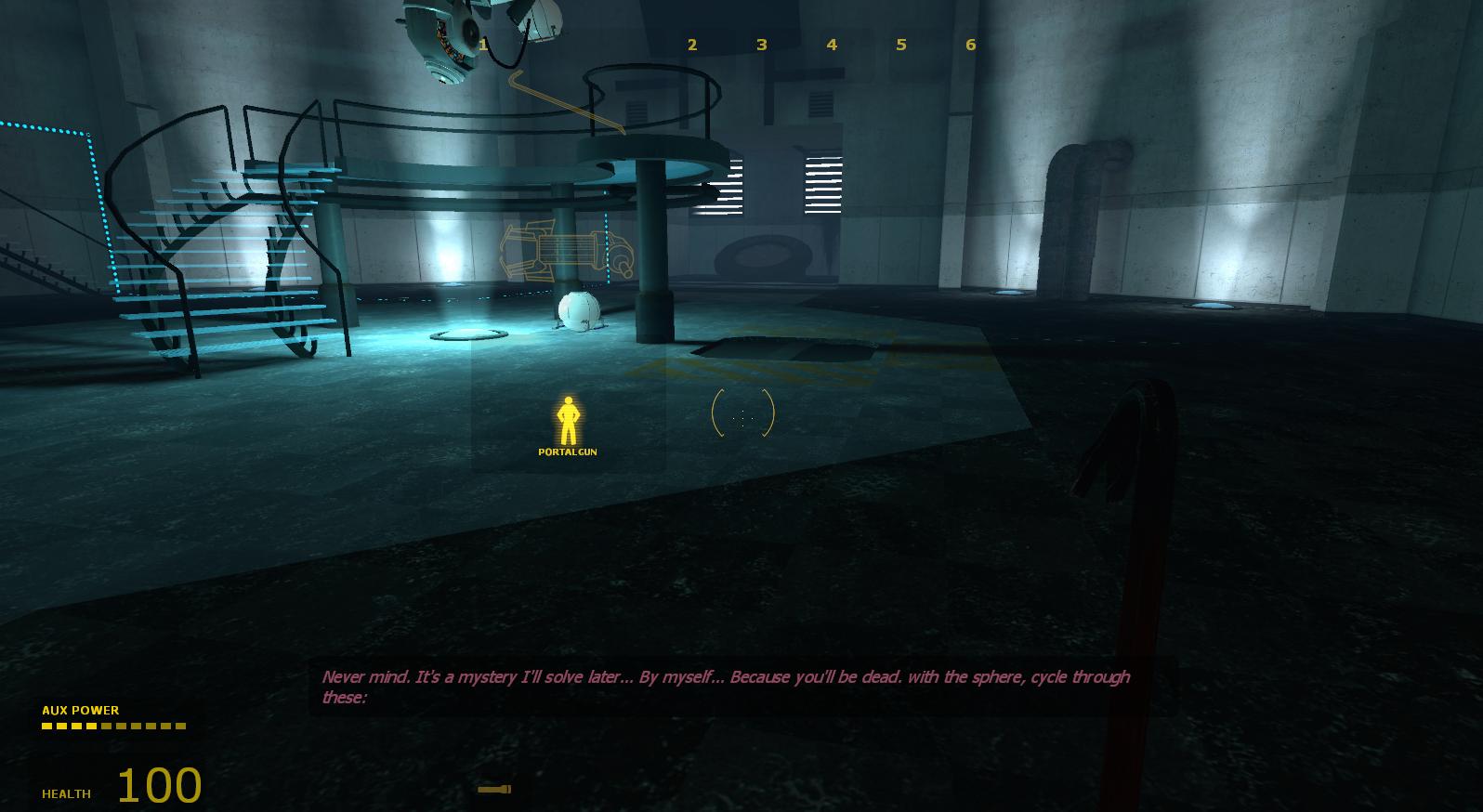
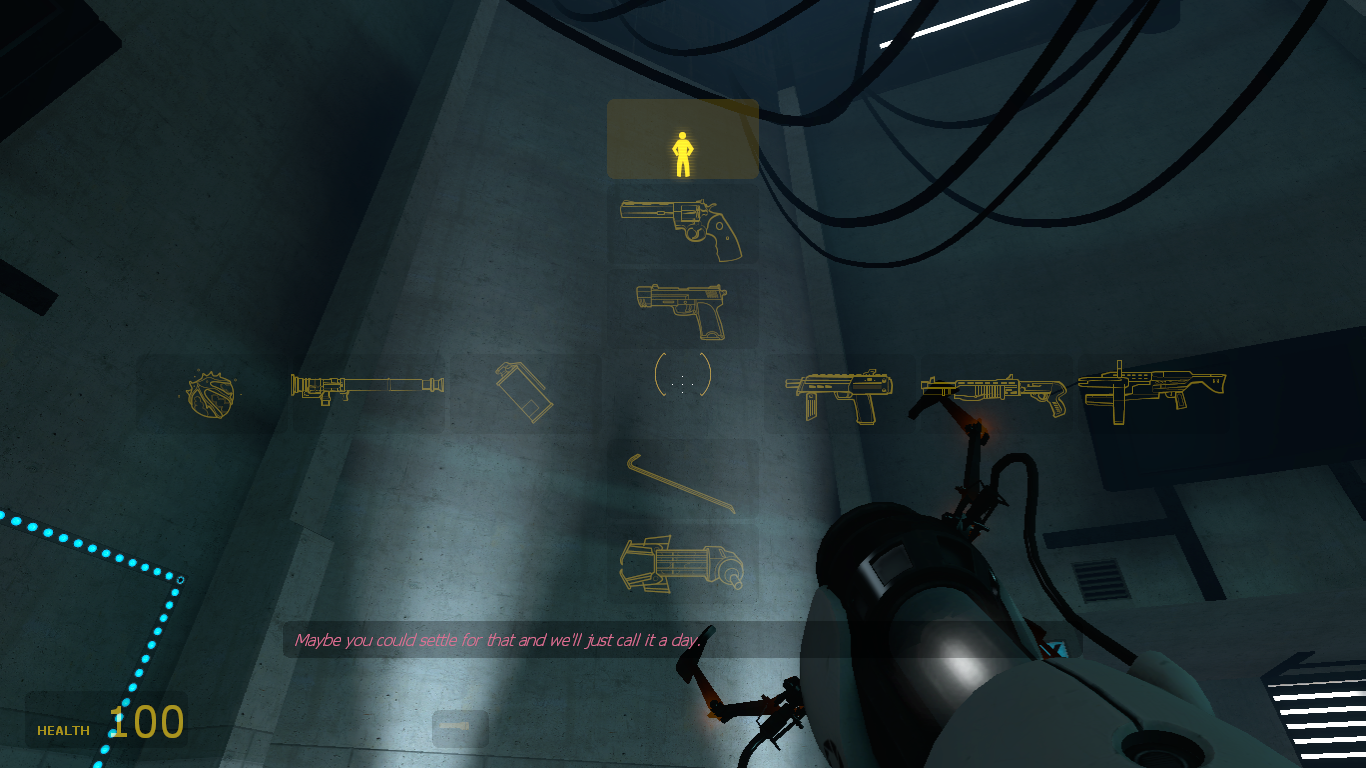
Open the console and then type 'sv_cheats 1' then type 'impulse 101'. This will spawn all of Half-Life 2's weapons, which are fully functional. The 'impulse 101' command is straight from Half-Life 2 and was also featured in Half-Life 1 (Goldsrc or Source) and in its expansions. It gives the player a HEV Suit and every weapon in the game. The Dual-Portal Gun is also featured (whether the player has it or not). The HEV Suit and Half-Life 2 GUI works perfectly fine. Note that it also features the flashlight HUD from Half-Life 2: Episode Two, although it and the flashlight don't work. However, if the player plays Half-Life 2 maps and equips the suit seen in d1_trainstation_05 and go into the map trigger for d1_trainstation_06, the flashlight will work as intended but no light will actually be projected on the screen. The crosshair remains static instead of measuring the player's health and ammo, probably because in Portal's development the crosshair was styled like the one from Half-Life 2 and was animated very similar to it as well. That fact that this crosshair remains static is probably because of the addition and removal of the earlier crosshair.
Some installations of Portal will have 'Fast Weapon Switch' enabled by default in the options menu. This is a leftover from Half-Life 2 and will instantly switch to the next weapon when trying to select a different one. Also, in certain installations of Portal, the HUD will be arranged differently, which can also be seen in some installations of Half-Life 2.
Basehlcombatweapon#
Half-Life 2's base for firearm weapons remains in the code, even though none of its weapons are used by default.
Episode One Vortex Hopwire Weapon#
In Portal, the cut weapon from Half-Life 2: Episode One known simply as weapon_hopwire (named the Vortex Hopwire or Black Hole Grenade by fans to distinguish it from another cut weapon from Half-Life 2 that's also called the Hopwire) is present, leftover from Episode One's development due to Portal borrowing Half-Life 2 and the Episode's code to use it as a base. The weapon is a unstable black hole weapon. Its viewmodel is that of the frag grenade, and when thrown, it spawns a Half-Life 2 Rollermine model that detonates into a black hole when activated by pressing Primary Attack. To enable the black hole itself, the convar hopwire_vortex 1 must be set to 1 in the console for it to spawn. It was originally included in early release versions of Half-Life 2: Episode One but was later removed in a patch but was not removed in Portal.
Half-Life 2 NPCs & Vehicles#
All of Half-Life 2's NPCs are mostly functional. They don't have sounds until you precache them in Portal's game_sounds_manifest.txt file. You can spawn them in with cheats or play a map with them featured, and they will function exactly like they did in Half-Life 2.
Portal also features a few Half-Life 2: Episode One and Episode Two NPCs, such as: the Zombine, Antlion Grub, Hunter, the Combine Advisor and others. All of the NPCs don't have their any of their assets, and will spawn as ERROR models. When the assets are brought back into the game, the player can see that the NPCs are a bit scuffed and don't function exactly. The Magnuson Device (weapon_striderbuster) is also present. These entities were mostly likely leftover from Portal using Half-Life 2 and its Episodes' source code as a base when it started development.
All of Half-Life 2's vehicles do work in the same way as they do normally by default. However, Portal also features the Half-Life 2: Episode Two Muscle Car known as the 'jalopy' in game files, but it is incomplete and missing the required resources, so the game will crash upon the player forcing it to spawn.
Half-Life 2-Style Testing Equipment#
The prefabs included in the Source SDK Episode One tools with the folder "prefabs" (having three folders inside, one of which is for Portal) feature old versions of map elements in Half-Life 2 style. Portal used Half-Life 2 assets in the early stages of development as placeholders.
Revisional Differences#
Ending#
On March 3rd, 2010, an update for Portal was released which featured a slightly altered ending. Both endings feature the player in the parking lot with GLaDOS's remains. However, the original version had a simple fade to black, before transitioning to the party room with the cake and Still Alive. The March 3rd, 2010 patch added the Party Escort Bot with the line "Thank you for assuming the party escort submission position." before slowly dragging the player back, which then transitions to cake and the Still Alive credits song from before.
|
2007 - 2010 |
2010 - Current |
|---|---|
Platform Differences#
|
|
To do:
|
Main Menu Differences#
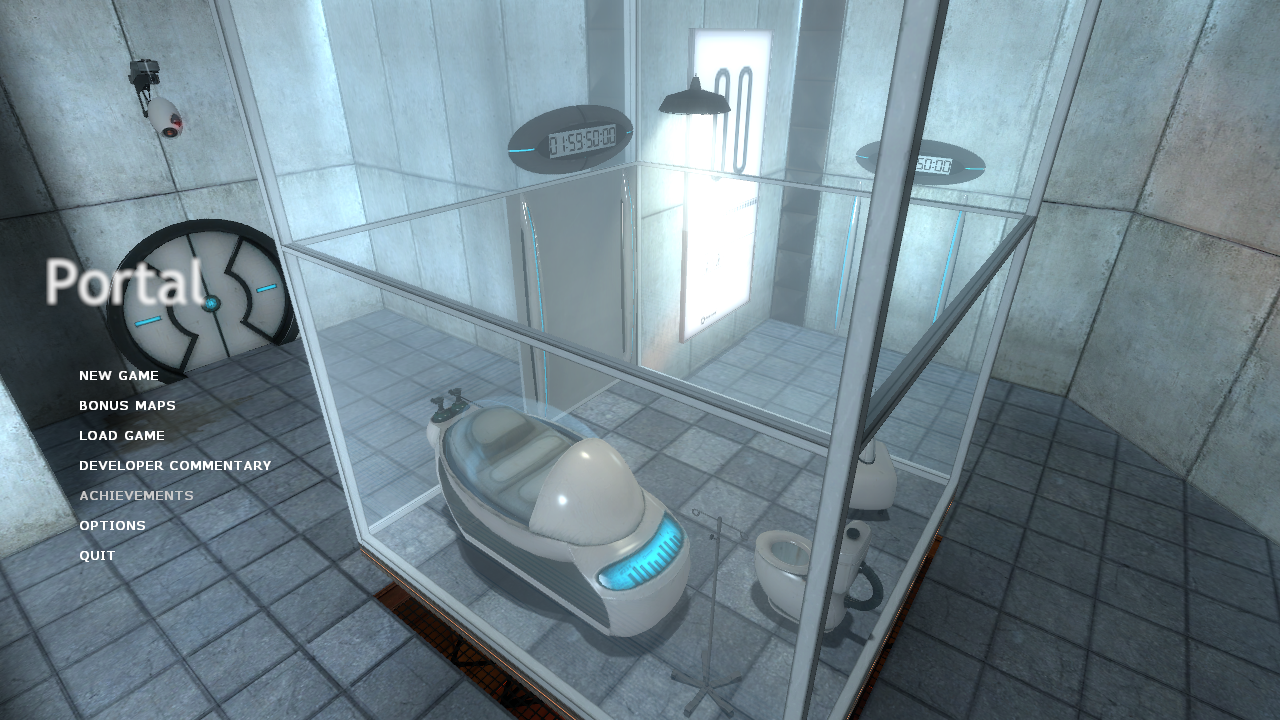
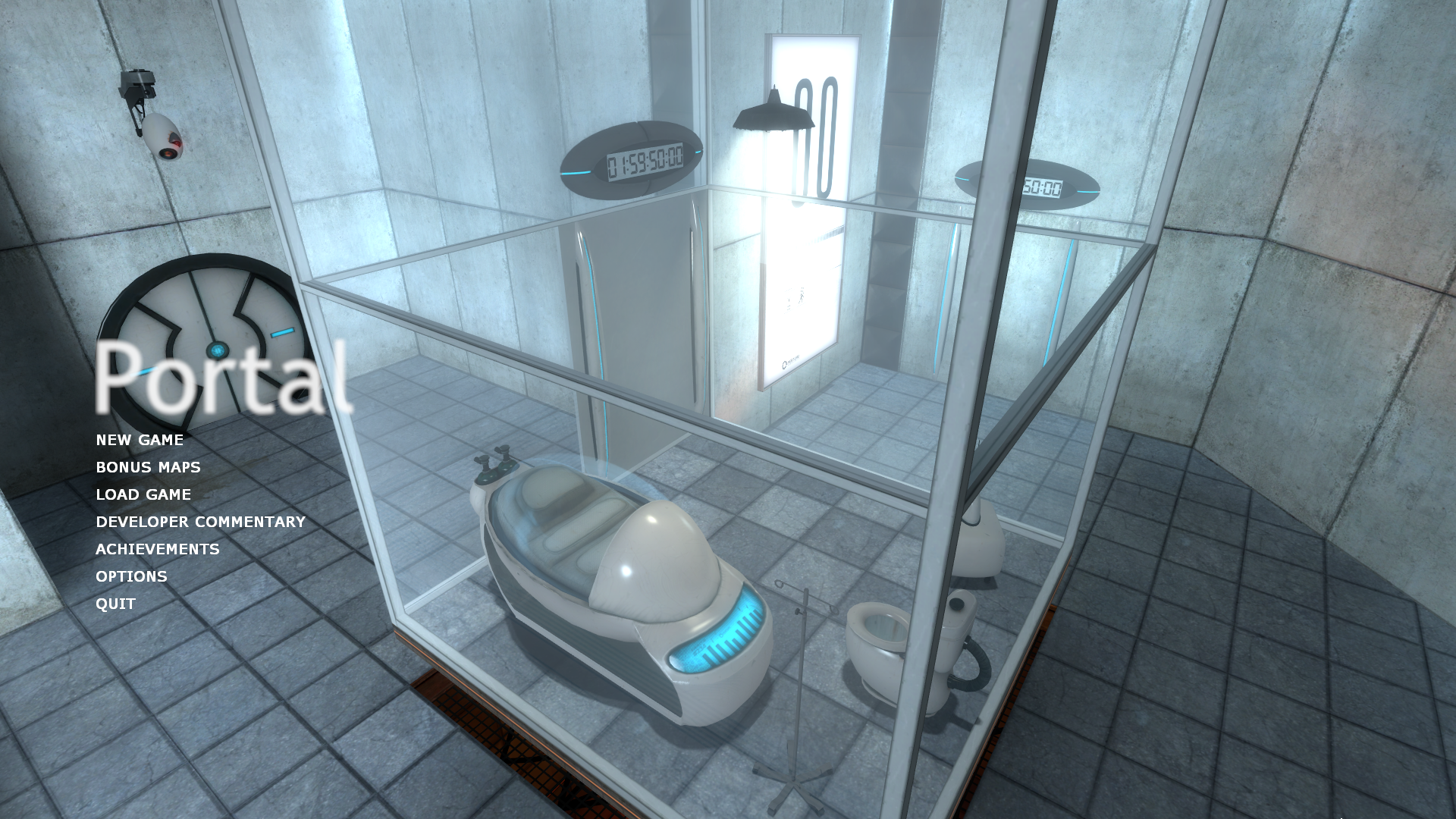
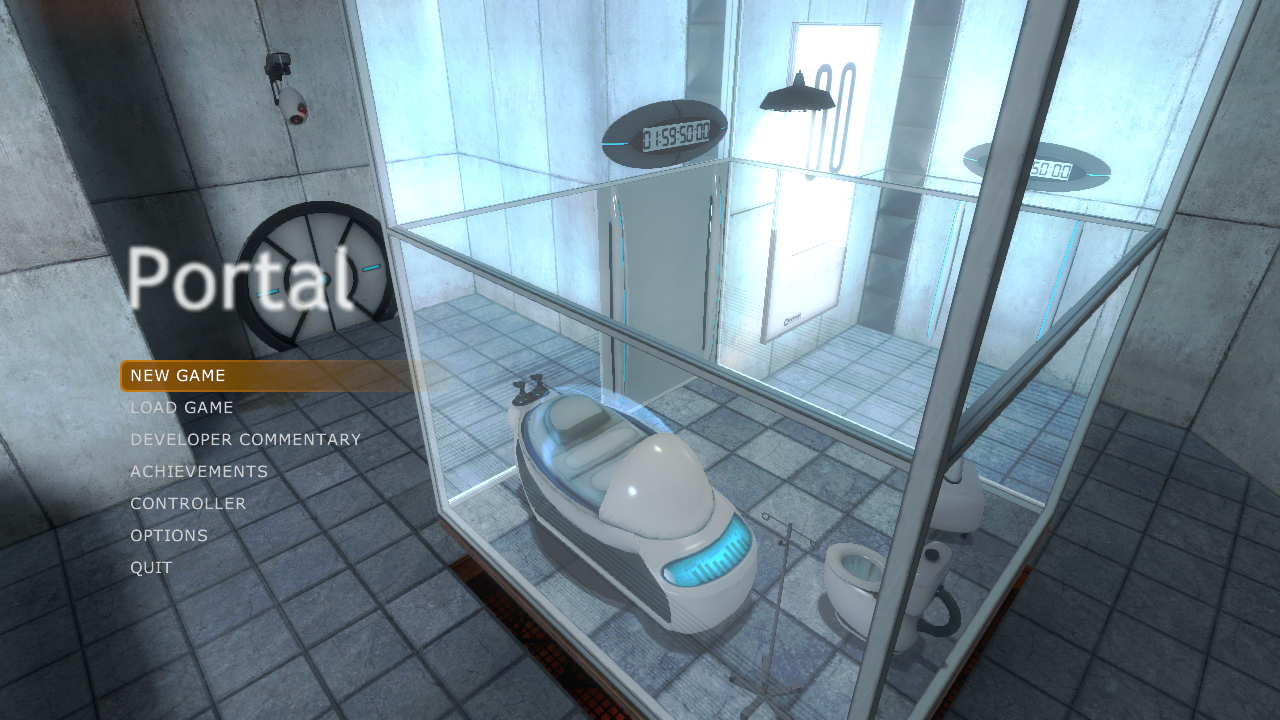
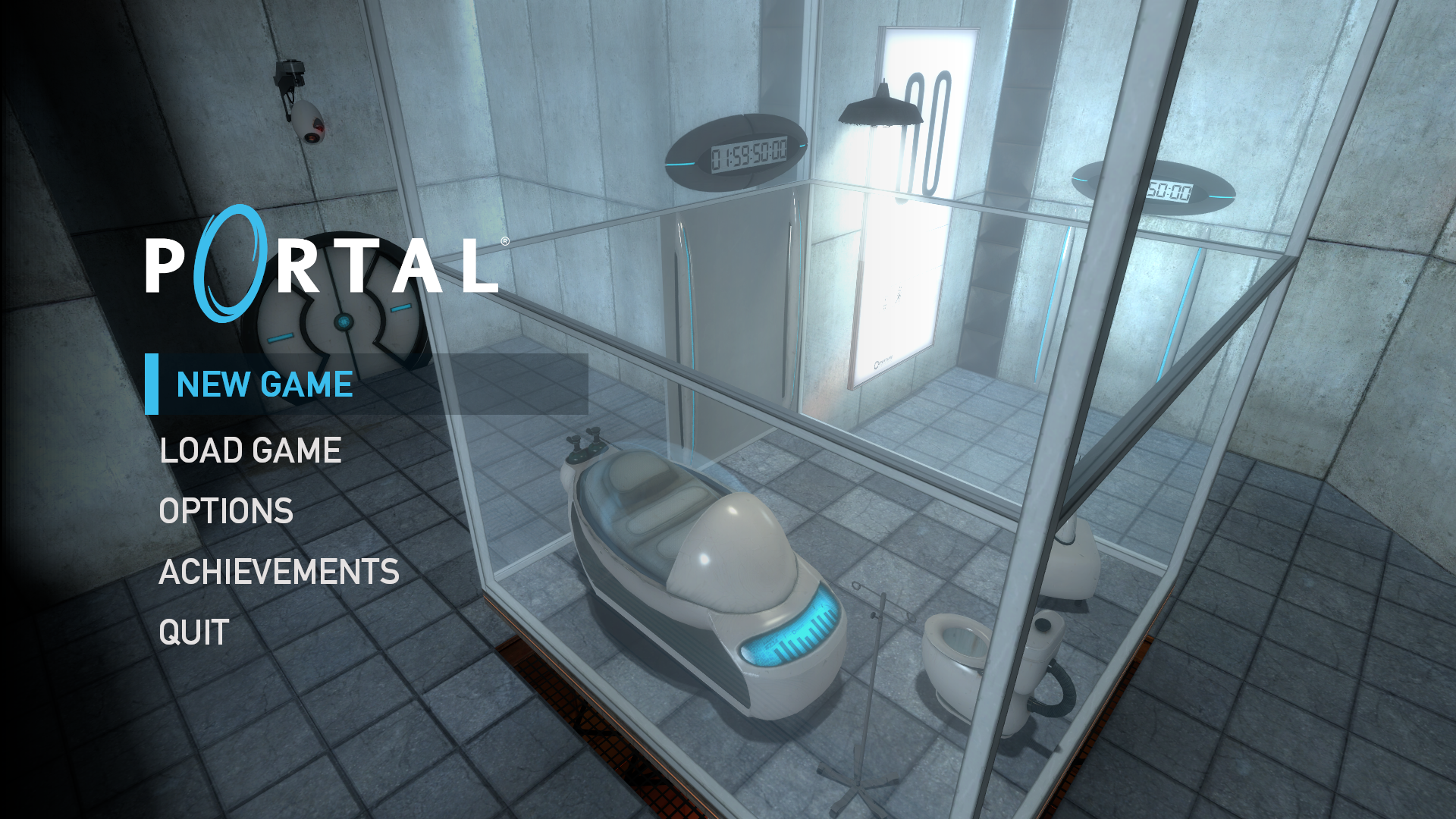
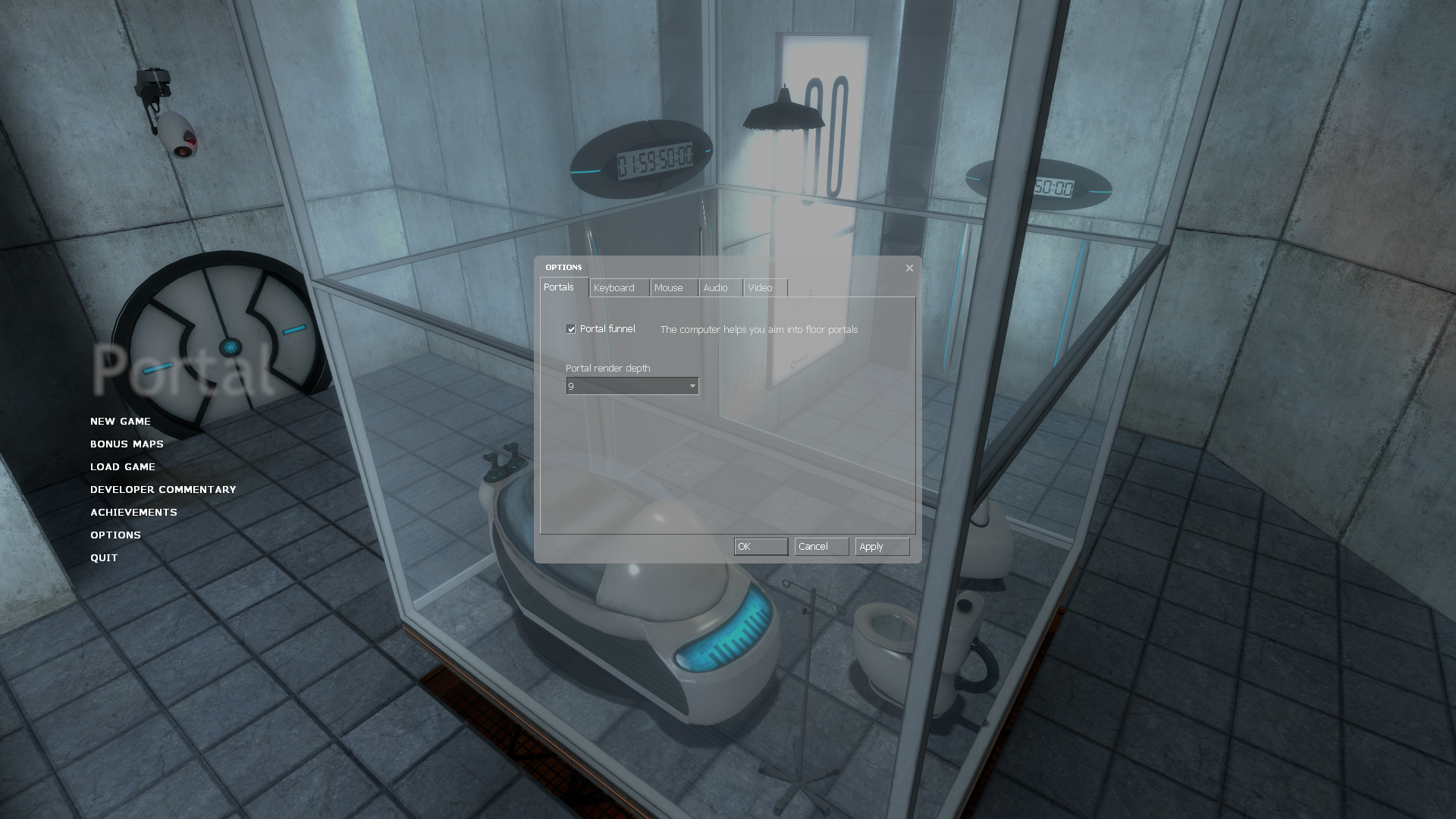
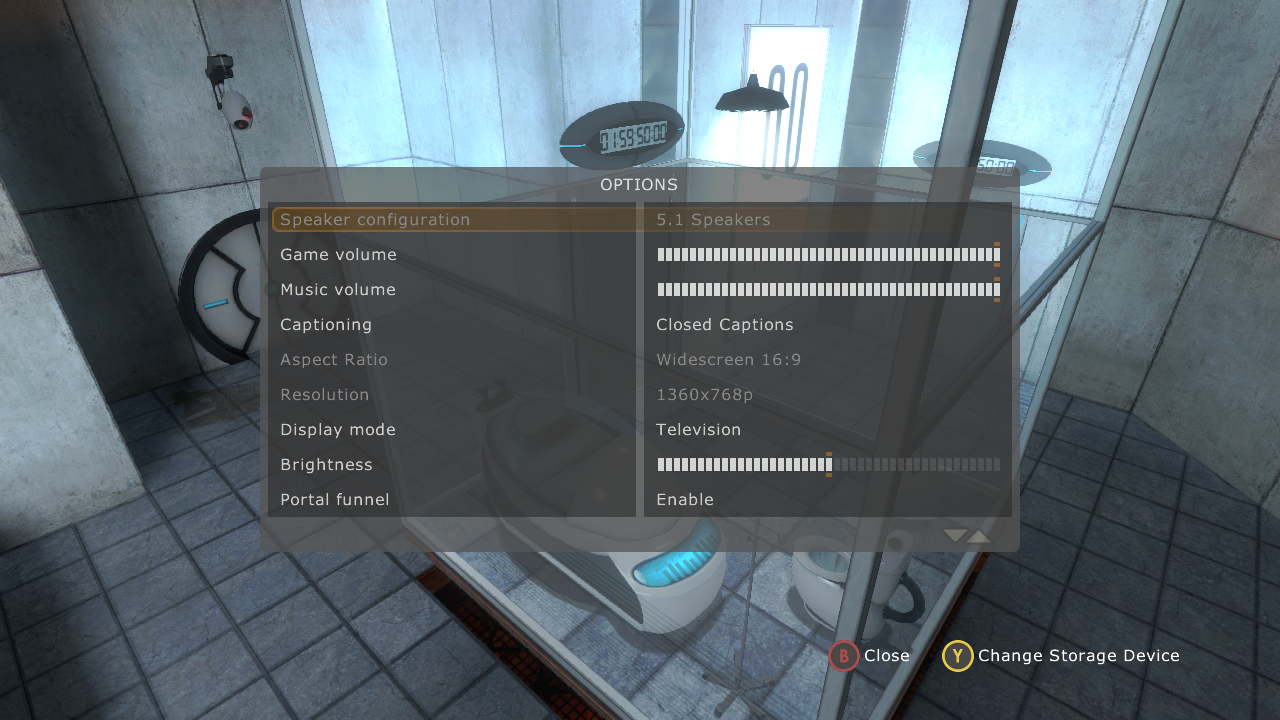
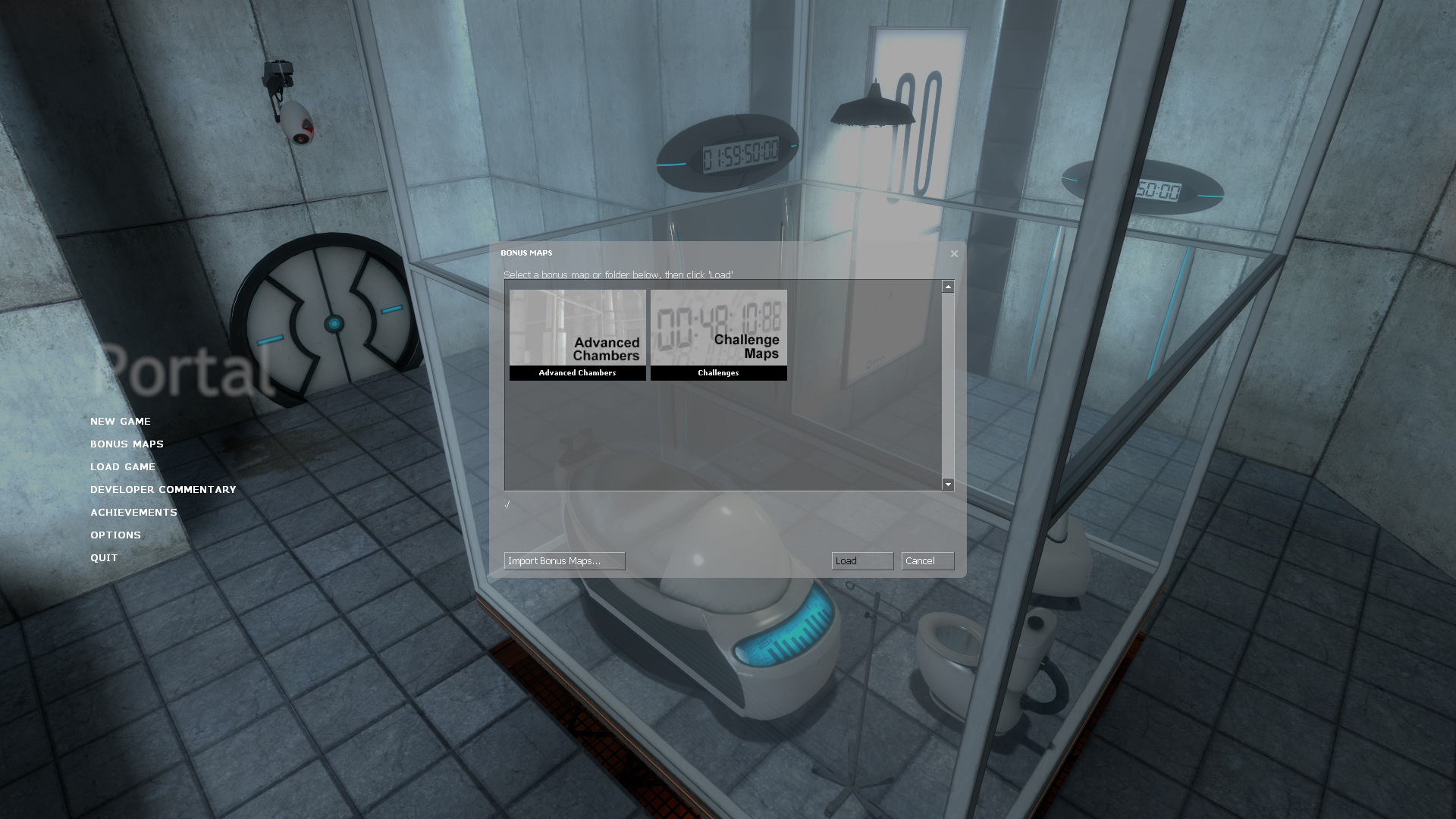
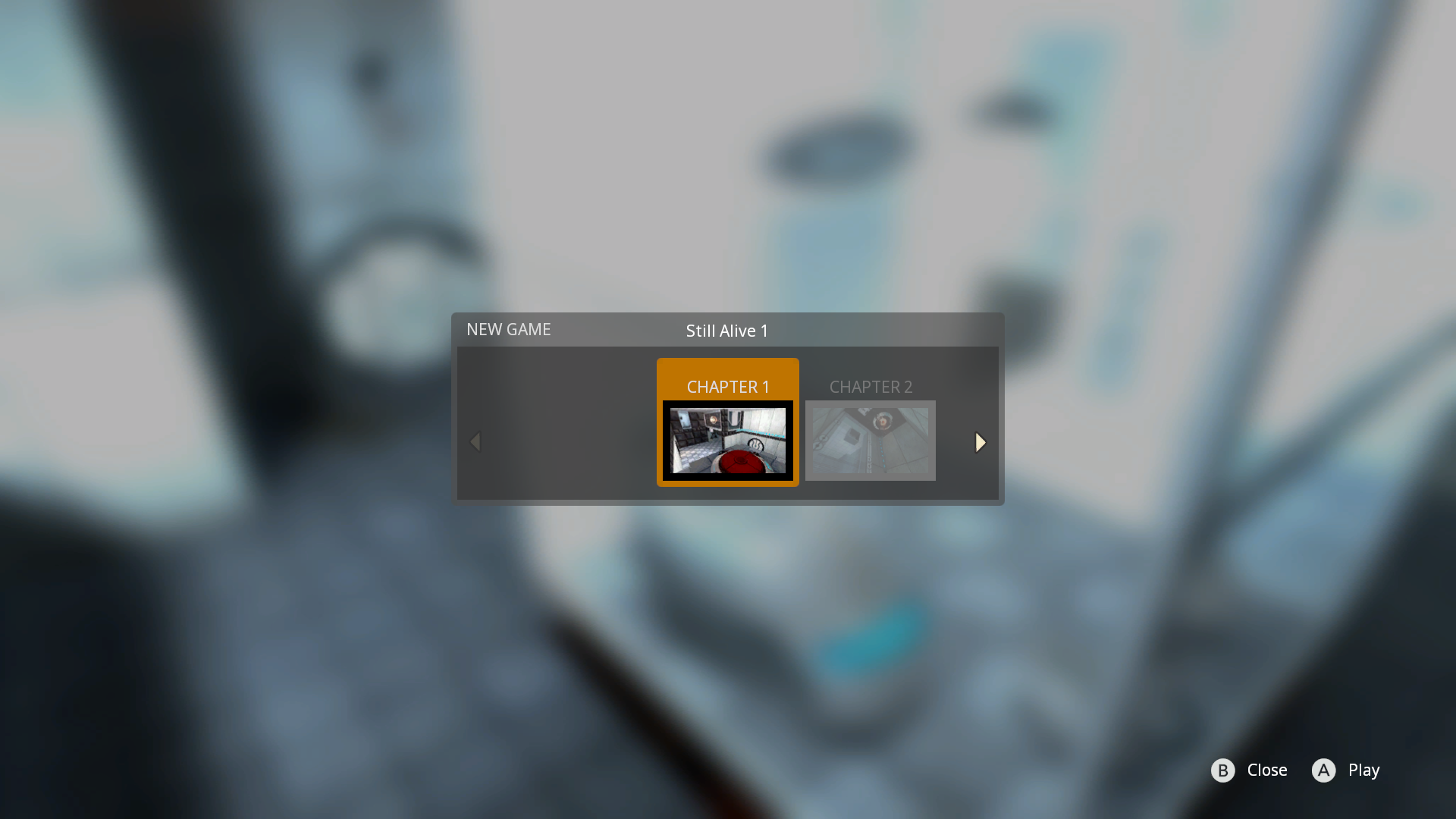
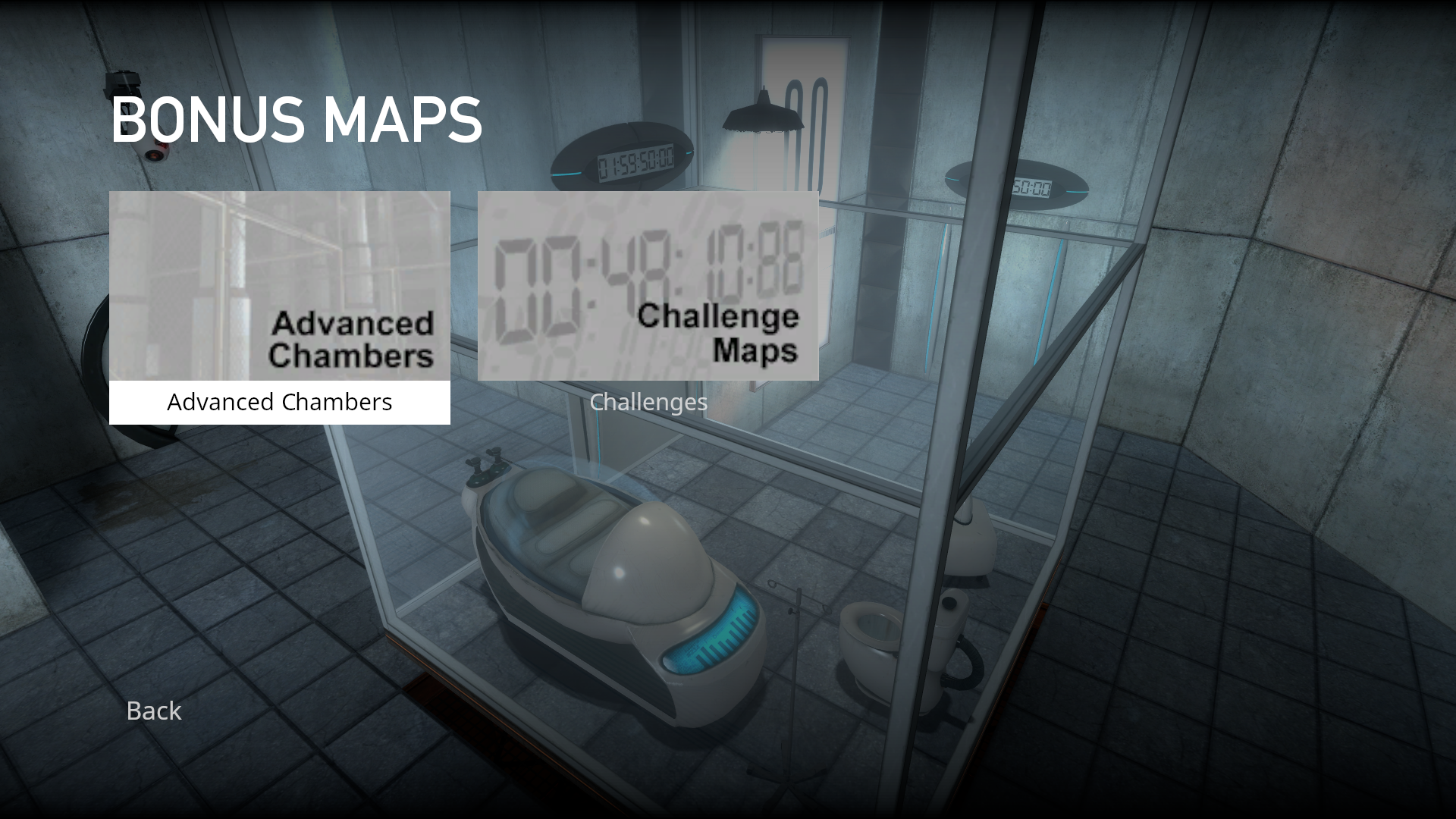
Like the other games in the Orange Box, the Xbox 360 and PlayStation 3 versions of Portal have a unique menu system which has been redesigned to be more controller-friendly. The main notable differences compared to the PC UI are that advanced chambers and challenge maps are combined into the New Game menu, while controller settings are split into a separate menu.
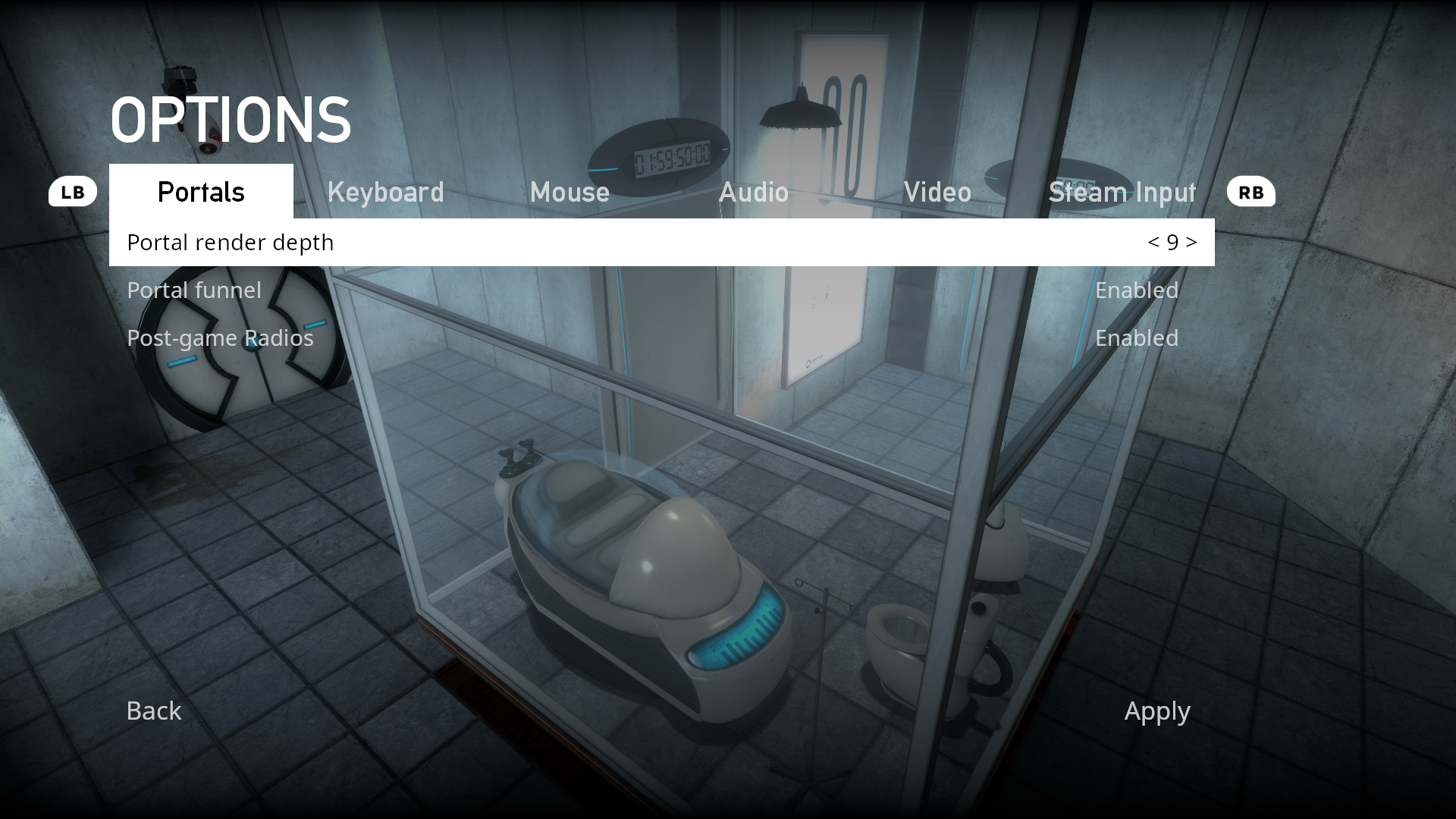
Additionally, a completely different controller UI was added to the Windows and Linux versions of the game in 2022 for use on Steam Deck. It activates on Deck automatically, but can be enabled on any Linux or Windows system by adding the launch option -gamepadui (or inversely, -nogamepadui will disable it on Deck). Before 2025 update, enabling Gamepad UI will also turn the Vulkan renderer on unless another launch option overrides it (e.g. -dx9). However, on the Mac version of the game it is not compiled in and will cause a crash on startup. This version of the UI retains the full bonus maps menu, but makes it (and commentary) submenus of New Game rather than being separate buttons on the main menu.
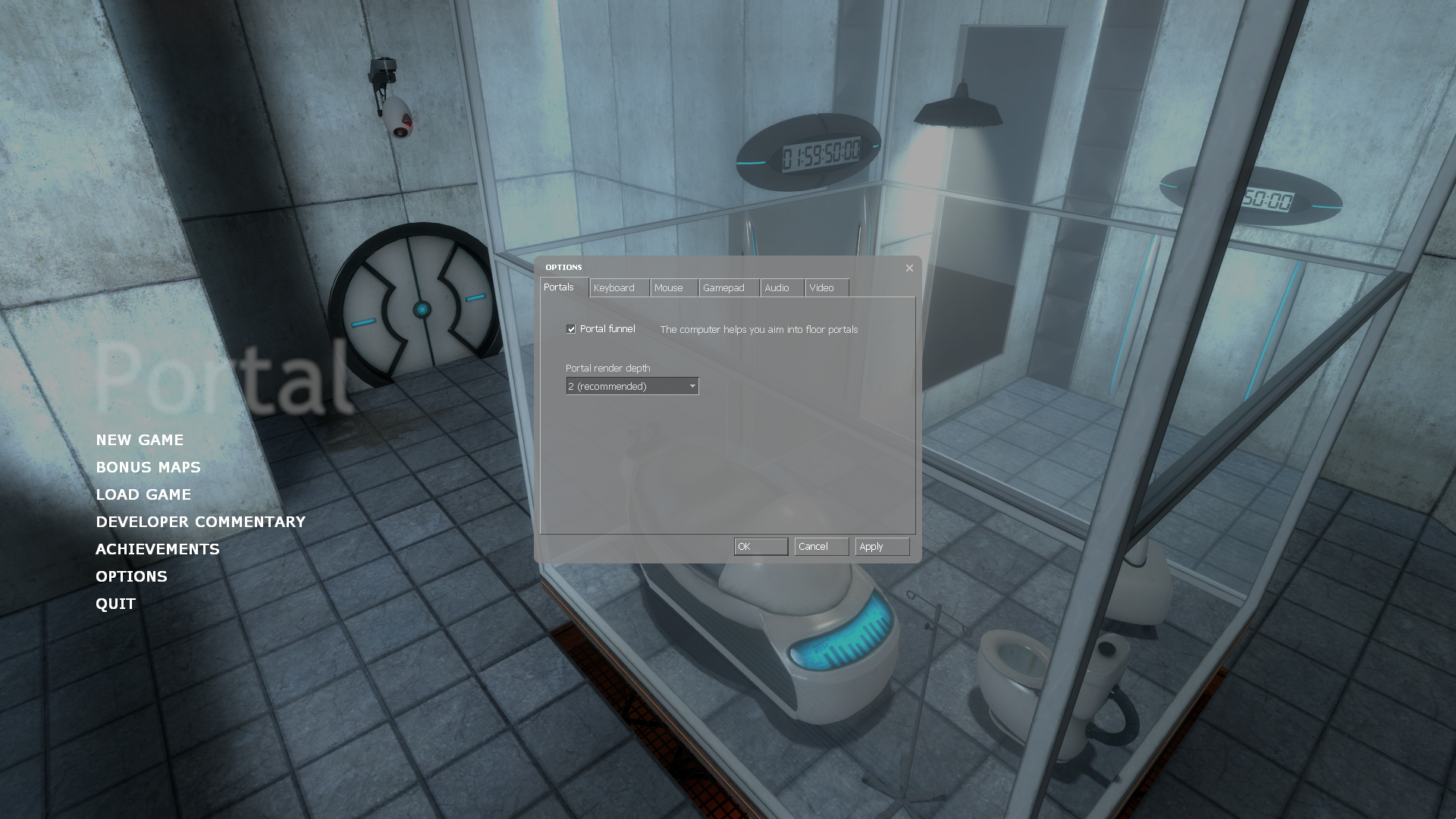
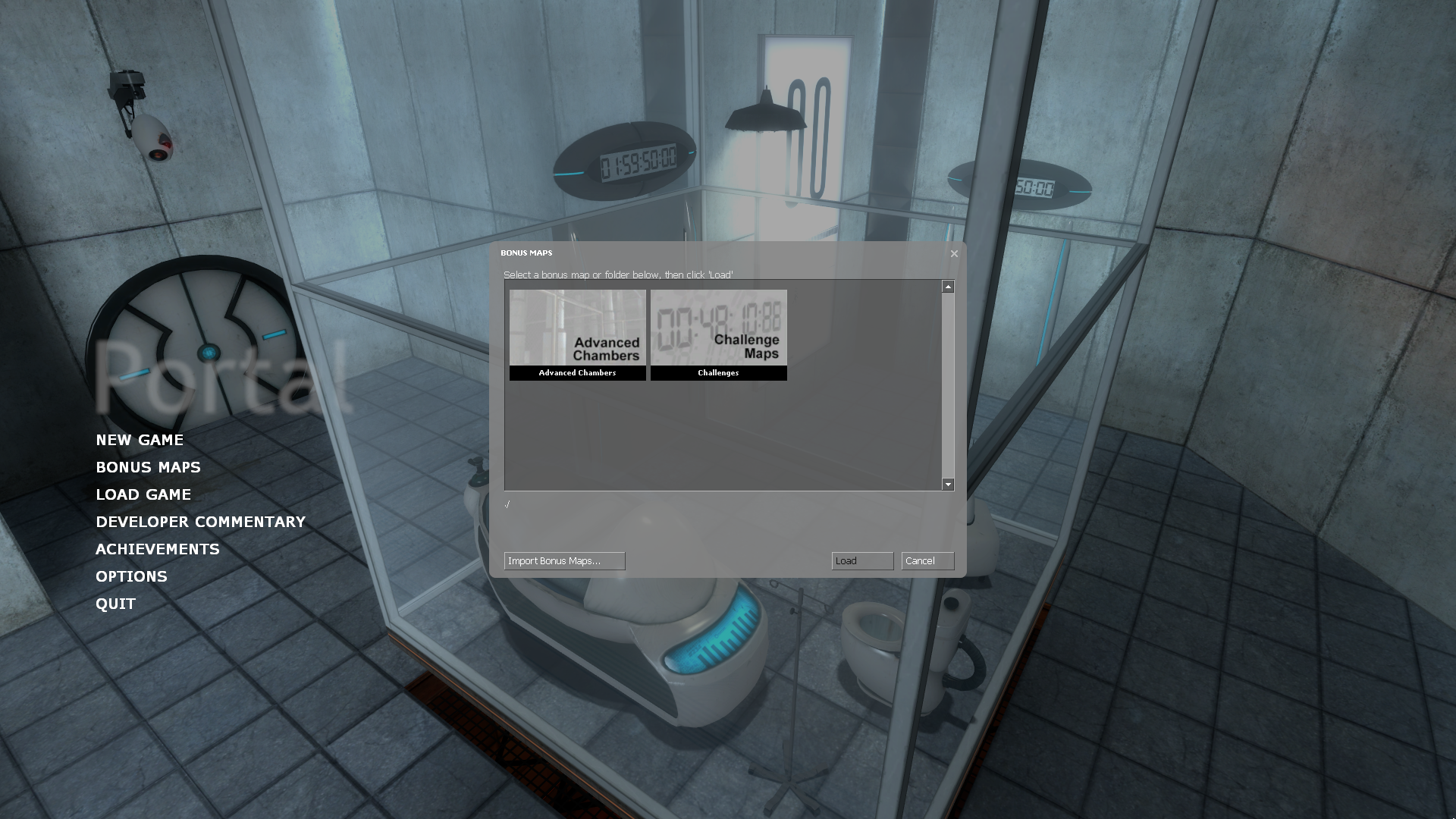
The May 20, 2025 update, which upgraded Portal to newer version of Source with changes from Half-Life 2 20th Anniversary Update, the VGUI interface has been updated and now scales properly on high-resolution (1440p, 4K or higher) or high-DPI displays. Text on the menu are now much bigger. The update also adds new section to the Options menu called "Gamepad", containing options for controller sensitivity and a button to open Steam Input configuration.
PC |
PC (2025 Update) |
Console (Xbox 360) |
Steam Deck (-gamepadui enabled) |
|---|---|---|---|
 |
 |
 |
 |
PC |
PC (2025 Update) |
Console (Xbox 360) |
Steam Deck (-gamepadui enabled) |
|---|---|---|---|
 |
 |
 |
 |
PC |
PC (2025 Update) |
Console (Nintendo Switch) |
Steam Deck (-gamepadui enabled) |
|---|---|---|---|
 |
 |
 |
 |
The PS3 version lacks achievements, since Trophies weren't introduced until 2008. Neither the PS3 or Xbox 360 versions of Portal ever received any updates, and thus are missing content from the Portal 2 ARG, including the Transmission Received achievement, the secret radios, and the extended ending.
The Switch version includes the bonus levels from Portal: Still Alive, but the menu is otherwise based on the original Orange Box version of the game, albeit with the Bonus Maps menu re-added to contain the aforementioned Still Alive levels, and runs on Source 2013 like the PC version. It also adds in-game achievement notifications, since the Switch lacks a built-in achievement system. The achievements menu still shows Xbox Gamerscore values, likely by mistake (with Transmission Received being worth 0G, having never been on Xbox originally).
Crosshair Differences#
In both The Orange Box and Portal: Still Alive, the main crosshair in-game is flipped due to the swapped controls for firing Portals, just like in Portal 2. However, what's interesting is that the centre crosshair from Half-Life 2 and seen in other Source engine games is actually offset up by a few pixels, making it uncentred in the console versions. In the more recent versions of the game, the centre crosshair from the console style crosshair is no longer offset and is in its correct location which can be seen on the Steam Deck, Nintendo Switch version from the Companion Collection or by simply using a controller with the PC version.
PC Crosshair |
Console Crosshair |
Steam Deck / Switch / PC + Controller |
|---|---|---|
 |
 |

|
Test Chamber Differences#
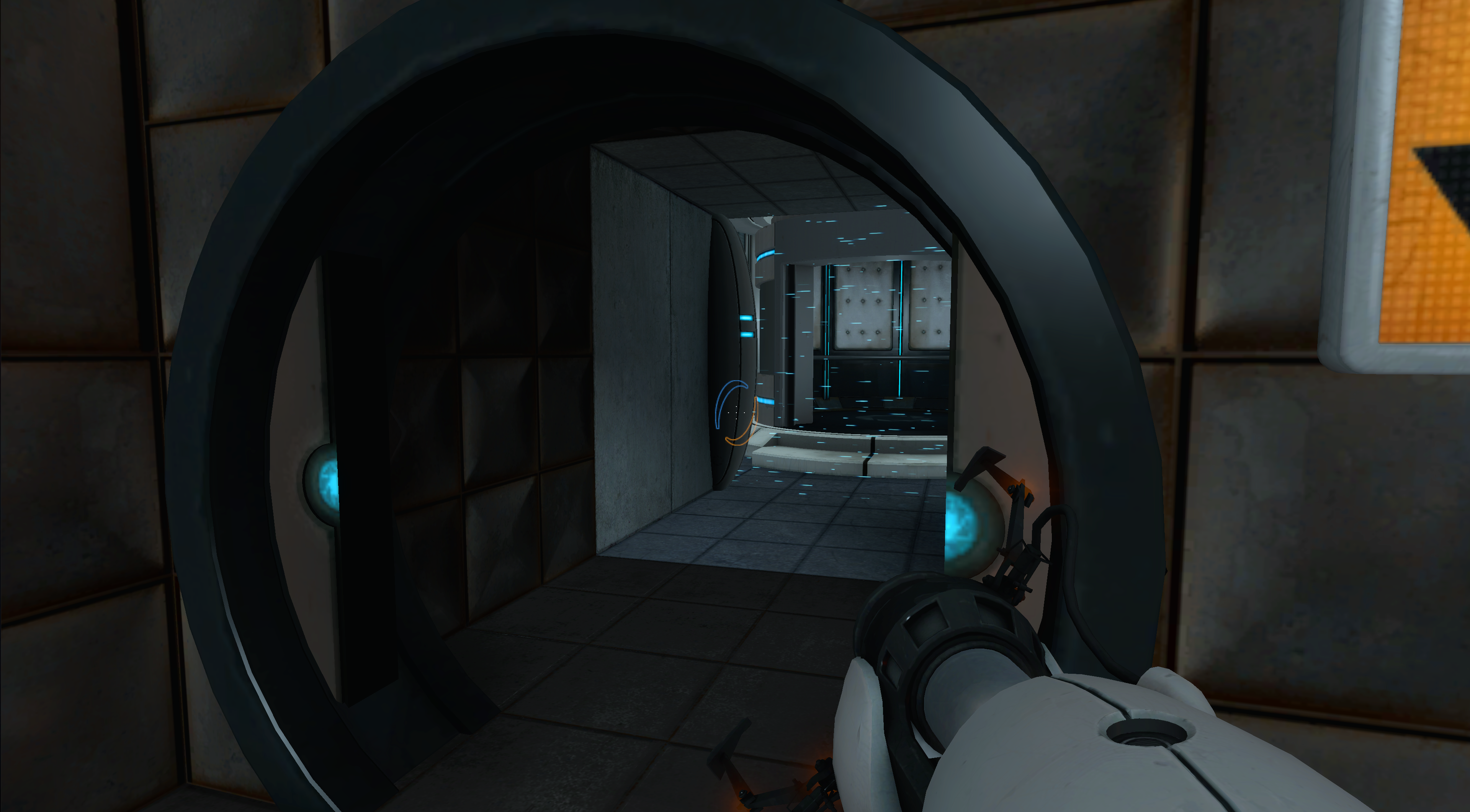
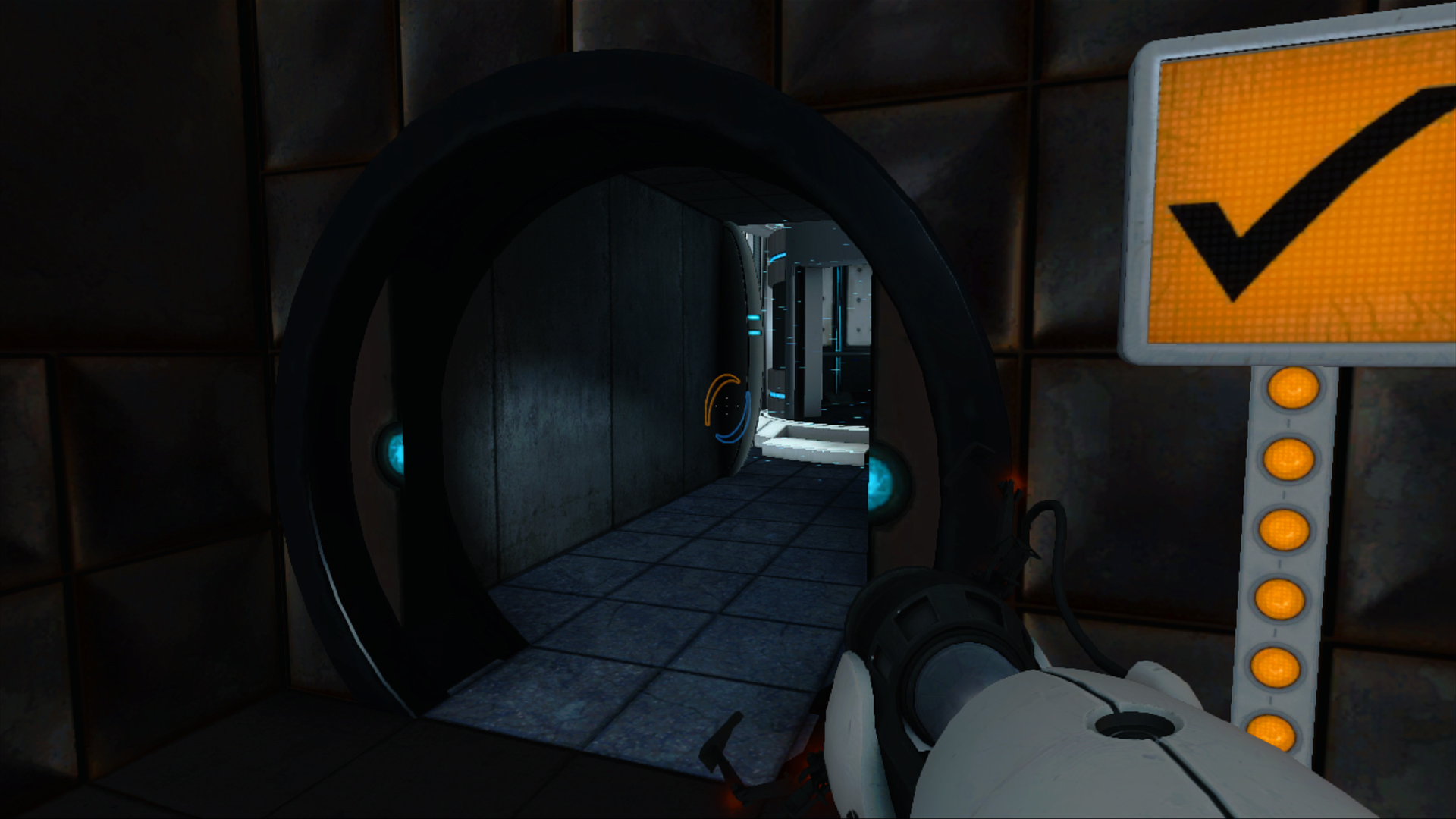
In Test Chamber 12, in The Orange Box and Still Alive versions, the ending corridor just before the elevator has two more white walls than normal, likely a leftover from older versions of the map. This lets the player skip most of the puzzle with a tricky fling.
PC |
Console |
|---|---|
 |
 |
Portal: Still Alive#
A dedicated port of Portal was released for the Xbox 360's Xbox Live Arcade in 2008, including the main campaign, 14 new bonus levels based on the fanmade Portal: The Flash Version MapPack, and a new set of 12 achievements. The bonus maps were included in the Portal: Companion Collection on Nintendo Switch in 2022, but the rest of Still Alive's unique content (namely the achievements) have yet to see any ports to other platforms.
"Skull" Cube#
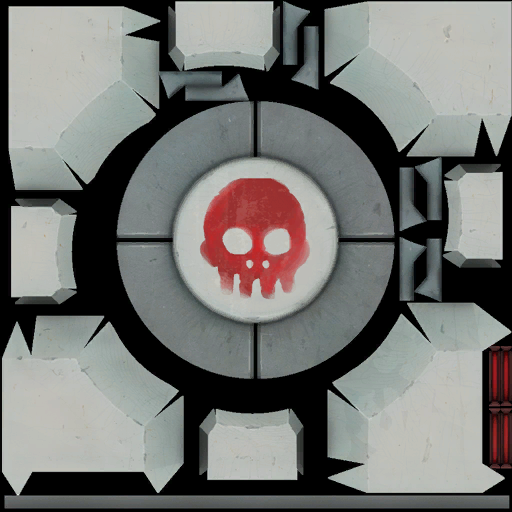
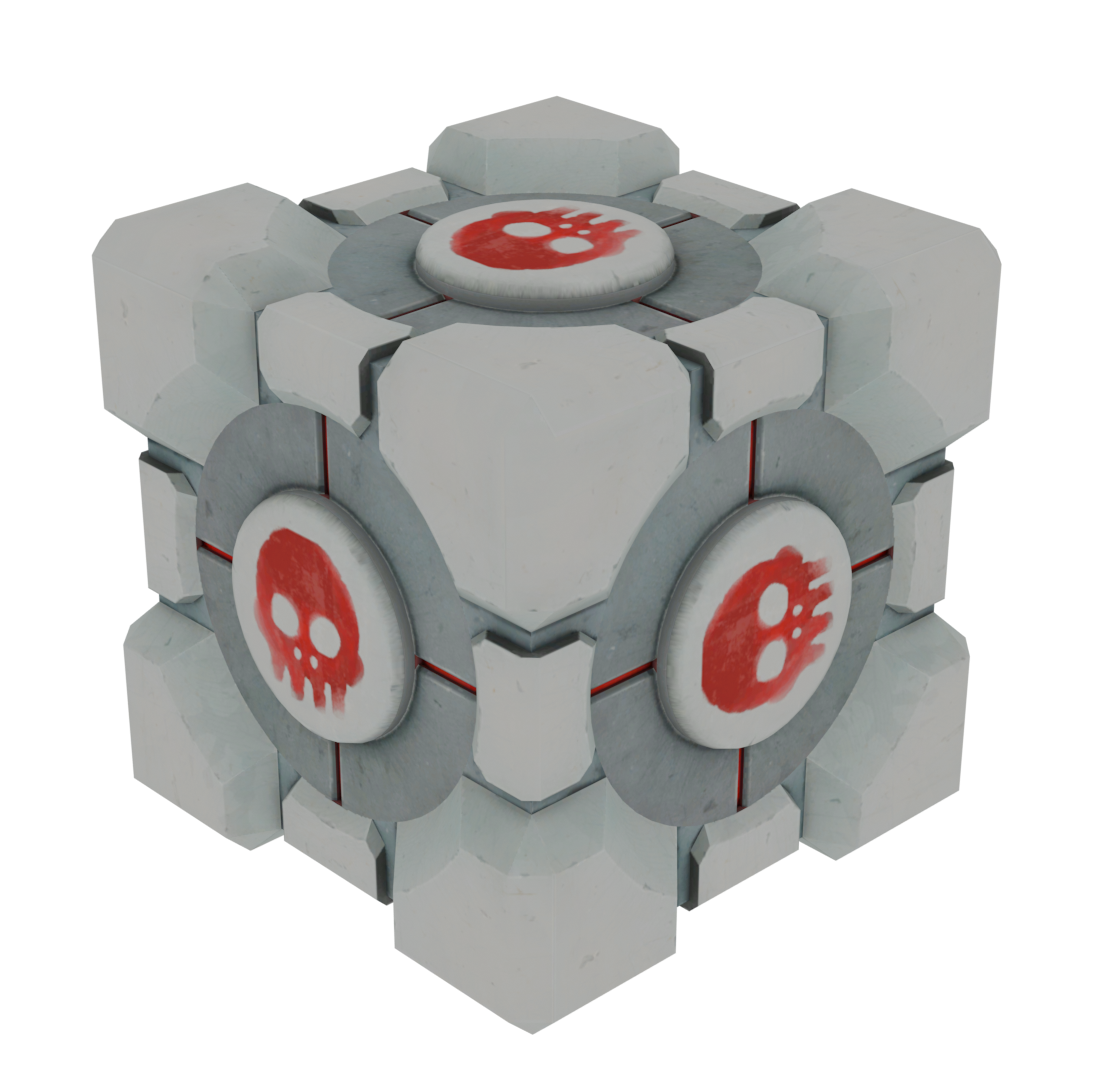
There is an unused third skin for cubes which has red lights and a crudely drawn skull in the middle. This matches the design used by pedestal buttons hooked up to cube droppers, and was likely intended to be used alongside them. In the final game, these droppers simply dispense regular cubes, likely due to the fact that the unique mechanics of these droppers don't really affect the behavior of the cube itself.
Note that these are featured in a popular fan PC port of the Still Alive maps, leading to them often being erroneously classified as used content. However, they do not appear in-game in any official release.
15th Bonus Chamber Icon#

Alongside the icons for Still Alive's 14 bonus levels is a 15th, showing a section of the escape sequence from the original Flash Version MapPack. No corresponding map exists in the game or leaked map sources, so it's unknown what it would have looked like outside this screenshot, if it even existed.
Interestingly, the section of the level shown here was reused as part of Still Alive 11 the final game, restyled with test chamber visuals.
(Source: The Portal Wiki)
References#
|
The Portal series | |
|---|---|
|
Windows |
Portal • Portal 2 (Prototypes) • The Lab • Aperture Desk Job |
|
Linux |
|
|
Xbox 360, PlayStation 3, Mac OS X, Nintendo Switch |
|
|
Related | |
|
Xbox 360, PlayStation 3 |
|
|
Windows |
SteamVR Performance Test (Prototype) • Narbacular Drop • Tag: The Power of Paint |
|
See Also | |