 This article has a talk page!

|
This needs some investigation.
|
Kirby's Dream Collection Special Edition is a game that was released to celebrate Kirby's 20th anniversary in 2012, featuring Virtual Console-style emulations of Kirby's Dream Land, Kirby's Adventure, Kirby's Dream Land 2, Kirby Super Star, Kirby's Dream Land 3, and Kirby 64: The Crystal Shards, plus challenge stages designed around the engine for Kirby's Return to Dream Land (with GameCube controller support to boot). It was included in a package that had the game, a booklet about the franchise's history, and a CD containing over an hour of Kirby music spread across 45 songs. It was also the last Nintendo-published game for the Wii.
Unused Text#
This title's trial period has ended.The trial version will now end
and you will be returned to
Super Smash Bros. Brawl.Leftovers from Super Smash Bros. Brawl 's "masterpiece" emulations. Found in the DOL file for the Nintendo 64 emulator. Equivalents for the other languages exist too.
Please insert the
Super Mario All-Stars disc.
A leftover from the Super Mario All-Stars Wii rerelease. It is found in the DOL files for the NES and SNES emulators. Equivalents for the other languages exist too.
(Source: Original TCRF research)
Unused Graphics#

This graphic's found in lyt/common/VCtutorial.arc.cmp/VCTutorial.tpl.
It says "仮". (Temporary)

This graphic's found in g3d/history/box/wii.brres.cmp/wii.02.tpl.
It says "星のカービィコレクション (仮)". (Hoshi no Kirby Collection (Temporary))
Cut Abilities#
Fire#
There are many references to Fire in the game's files. Its 3D models and animations from the previous game are all intact, and even 2 icons for Magolor races exist. All of this indicates it was going to appear in the New Challenge Stages mode, but was cut for unknown reasons.


Fire also has unused param values and mint files for it and its projectile called "Burning Bullet" which shows that some work was done for it though it could be just ports from Return to Dream Land.


Lastly, the "Burning Bullet" projectile also works fully in-game as well. For example, here the Sword Beam projectile is replaced by it with its moving being the same due to the param values. 
(Source: Params and the Projectile: JC Players)
Cutter, Hammer and Stone#
These abilities also have all of their 3D models and animations returning from Kirby's Return to Dream Land, but are nowhere to be seen in the final game. Unlike Fire, they do not have icons for Magolor races. This is because they were used as a base for the Smash ability, since it uses attacks from these 3 abilities and that said ability also doesn't have its own folder unlike the others.
Unused Languages#
The files for the Sword Challenge Stage title screen include French and Spanish graphics. Kirby's Dream Collection Special Edition was only localized into English. These graphics are probably leftovers from Kirby's Return to Dream Land.
Regional Differences#

|
This page or section needs more images. |
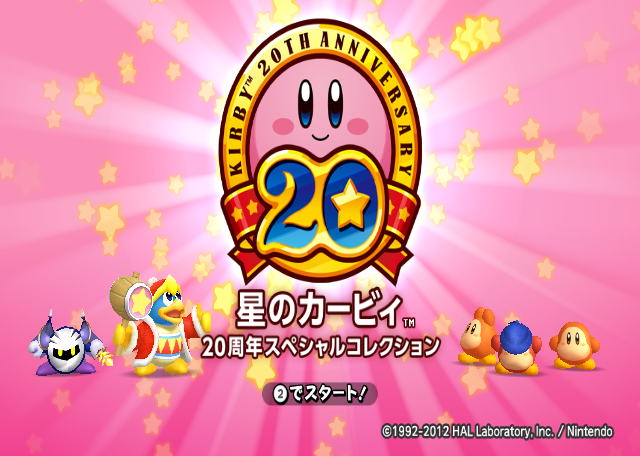
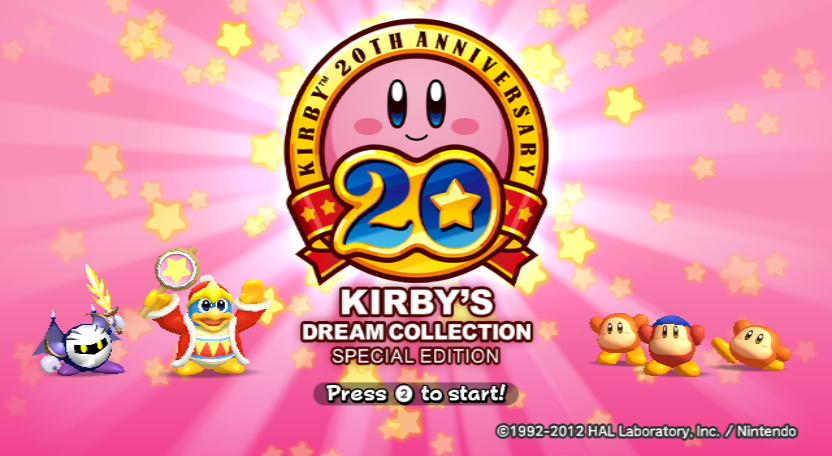
Title Screen#
|
Japan |
US |
|---|---|
|
|
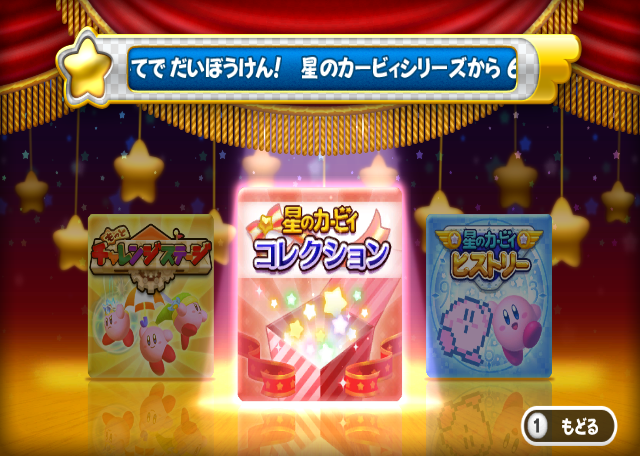
Main Menu#
|
Japan |
US |
|---|---|
|
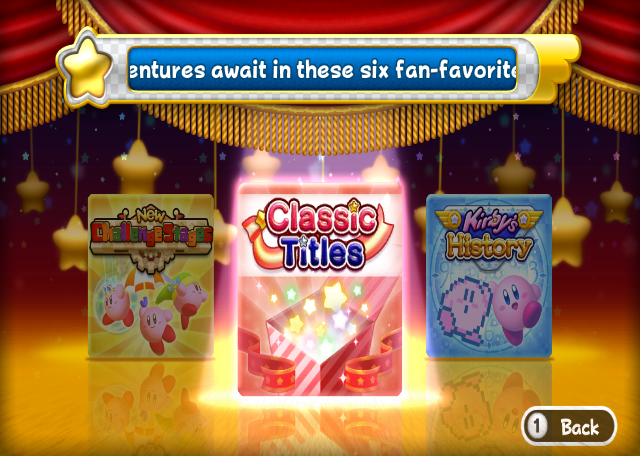
|
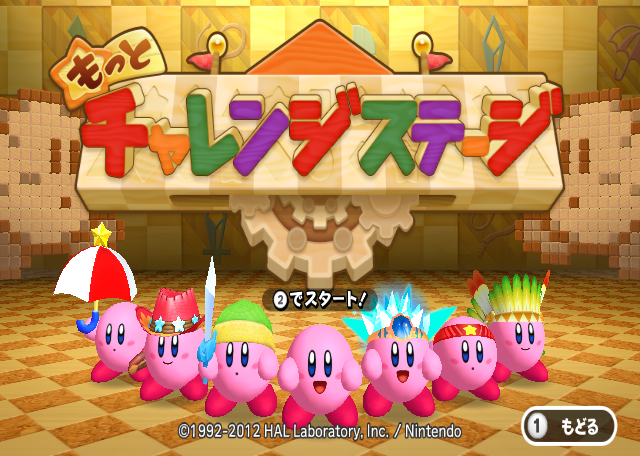
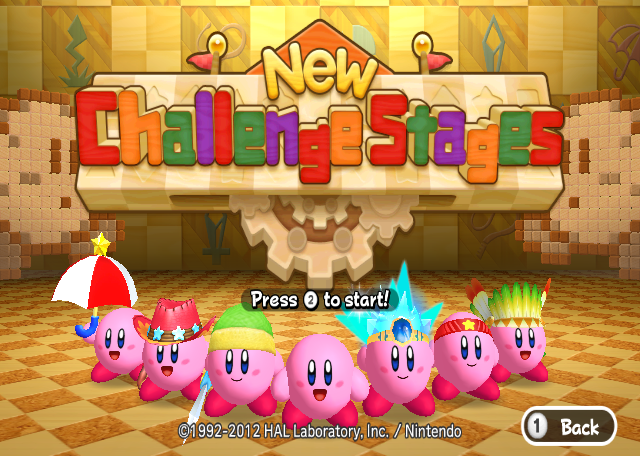
New Challenge Stages#
|
Japan |
US |
|---|---|
|
|
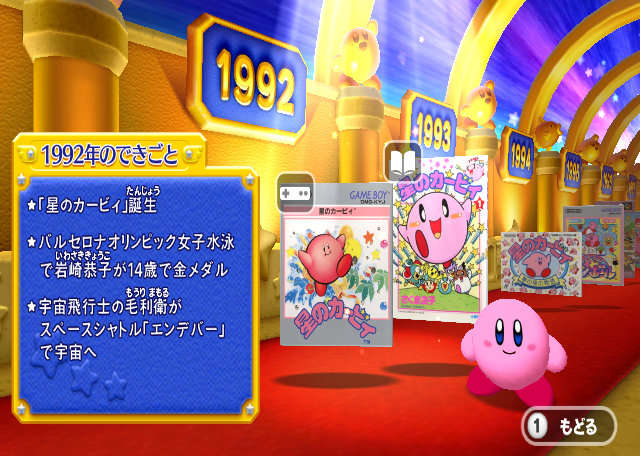
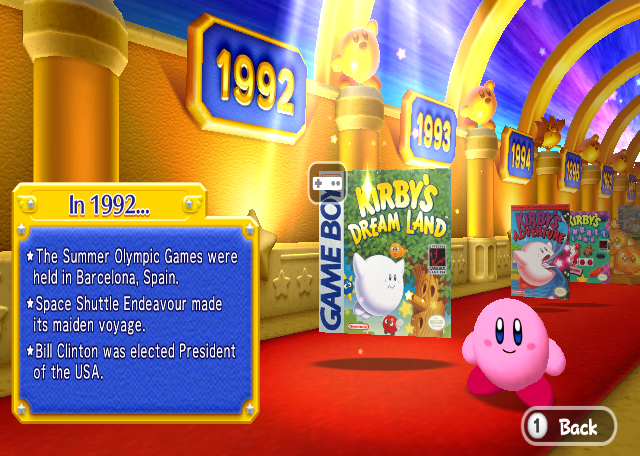
Kirby's History#
|
Japan |
US |
|---|---|
|
|
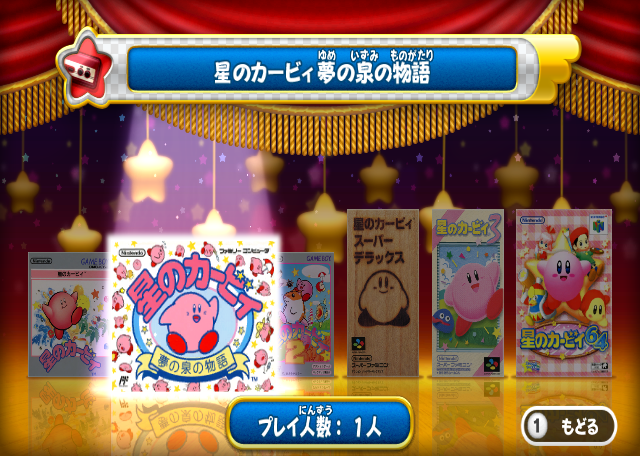
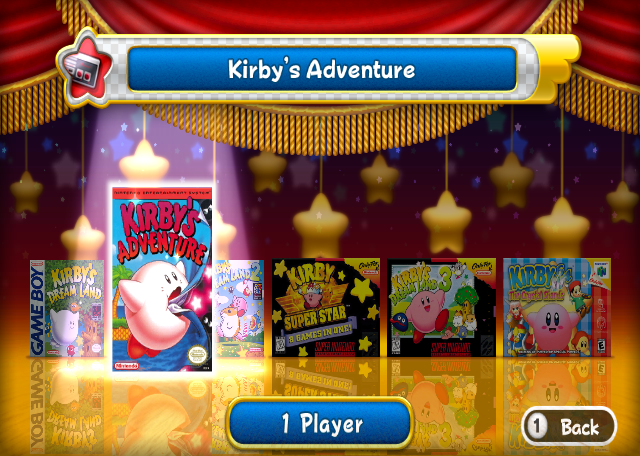
Classic Titles#
|
Japan |
US |
|---|---|
|
|
Save Banner#
|
Japan |
US |
|---|---|

|

|
Kirby's History Mode#
This mode shows the entire history of Kirby games at the time, but due to release date variations between Japan and America, there are many differences. For each available year, the mode shows an info box with trivia, and the box for a Kirby game. The trivia varies significantly between languages. Any year that didn't have a Kirby release is replaced with 8-bit statues of several characters.
Games#
Japanese |
English |
|
|---|---|---|
1991 |
Kirby Statue |
Kirby Statue |
1992 |
Hoshi no Kirby & Hoshi no Kirby (Manga) |
Kirby's Dream Land |
1993 |
Hoshi no Kirby: Yume no Izumi no Monogatari & Kirby no Pinball |
Kirby's Adventure & Kirby's Pinball Land |
1994 |
Kirby Bowl & Hoshi no Kirby: Dedede de Pupupu na Monogatari (Manga) |
Lololo and Lalala Statue |
1995 |
Hoshi no Kirby 2 & Kirby no Block Ball |
Kirby's Dream Course, Kirby's Avalanche & Kirby's Dream Land 2 |
1996 |
Hoshi no Kirby: Super Deluxe |
Kirby Super Star & Kirby's Block Ball |
1997 |
Kirby no Kira Kira Kids (Game Boy) |
Kirby's Dream Land 3 & Kirby's Star Stacker |
1998 |
Hoshi no Kirby 3 |
Waddle Dee Statue |
1999 |
Kirby no Kira Kira Kids (Super Famicom) |
King Dedede Statue |
2000 |
Hoshi no Kirby 64 & Koro Koro Kirby |
Kirby 64: The Crystal Shards |
2001 |
Hoshi no Kirby (Anime) |
Kirby: Tilt & Tumble |
2002 |
Hoshi no Kirby: Yume no Izumi Deluxe |
Kirby: Nightmare in Dream Land & Kirby: Right Back at Ya! (Anime) |
2003 |
Kirby's Airride |
Kirby Air Ride |
2004 |
Hoshi no Kirby: Kagami no Daimeikyuu |
Kirby & The Amazing Mirror |
2005 |
Touch! Kirby |
Kirby: Canvas Curse |
2006 |
Hoshi no Kirby: Sanjo! Dorocche Dan & Hoshi no Kirby! Mo~retsu Pupupu Awa! (Manga) |
Kirby: Squeak Squad |
2007 |
Hoshi no Kirby: Medal Land no Mahou no Tou (Slot Machine) |
Meta Knight Statue |
2008 |
Hoshi no Kirby: Ultra Super Deluxe |
Kirby Super Star Ultra |
2009 |
Hoshi no Kirby: Taose!! Koukaku Majuu Ebizou (Anime Short) |
Magolor Statue |
2010 |
Keito no Kirby |
Kirby's Epic Yarn |
2011 |
Atsumete! Kirby & Hoshi no Kirby Wii |
Kirby Mass Attack & Kirby's Return to Dream Land |
2012 |
Hoshi no Kirby 20th Anniversary Special Collection |
Kirby's Dream Collection Special Edition |
Trivia Box#
The Japanese trivia uses present tense whereas the English trivia uses past tense.
Year |
Japanese |
English |
Notes |
|---|---|---|---|
1991 |
|
|
The Family Computer (Famicom) and Super Famicom were redesigned and rebranded as the Nintendo Entertainment System (NES) and Super Nintendo Entertainment System (SNES) |
1992 |
|
|
"Hoshi no Kirby" refers to the game, as the character himself was born as "Popopo" in 1990. |
1993 |
|
|
The AV Famicom (or New Famicom) was redesigned and rebranded as the New-Style NES (or NES Toploader) |
1994 |
|
|
The lollipop was created by Danish company Bon-Bon Land. It would later be surpassed by a 7,003-pound lollipop created by US company See's Candies in 2012. |
1995 |
|
|
One of the few official mentions of the Satellaview following the service's 2000 closure. Strangely, while the Satellaview got three exclusive Kirby games and the game that Kirby's Dream Course was originally developed as, none of them are mentioned in any version of Dream Collection. |
1996 |
|
|
"Seven crown" refers to holding seven major professional shogi titles simultaneously. At the time (and up until 2017), there were just seven major titles. |
1997 |
|
|
|
1998 |
|
|
The Super Famicom Jr. was redesigned and rebranded as the New-Style Super NES (or SNES Jr.) |
1999 |
|
|
|
2000 |
|
|
|
2001 |
|
|
|
2002 |
|
|
Weirdly, despite the Japanese version mentioning the Kirby anime's English debut, the English version omits that fact entirely. |
2003 |
|
|
|
2004 |
|
|
|
2005 |
|
|
|
2006 |
|
|
|
2007 |
|
|
The ice-cream float was created by Coca-Cola at its Atlanta museum to promote the relaunch of Vanilla Coke. |
2008 |
|
|
|
2009 |
|
|
"DSi LL" is the Japanese name of the DSi XL. |
2010 |
|
|
|
2011 |
|
|
|
2012 |
|
|
(Source: Taranza the Spider Archive)
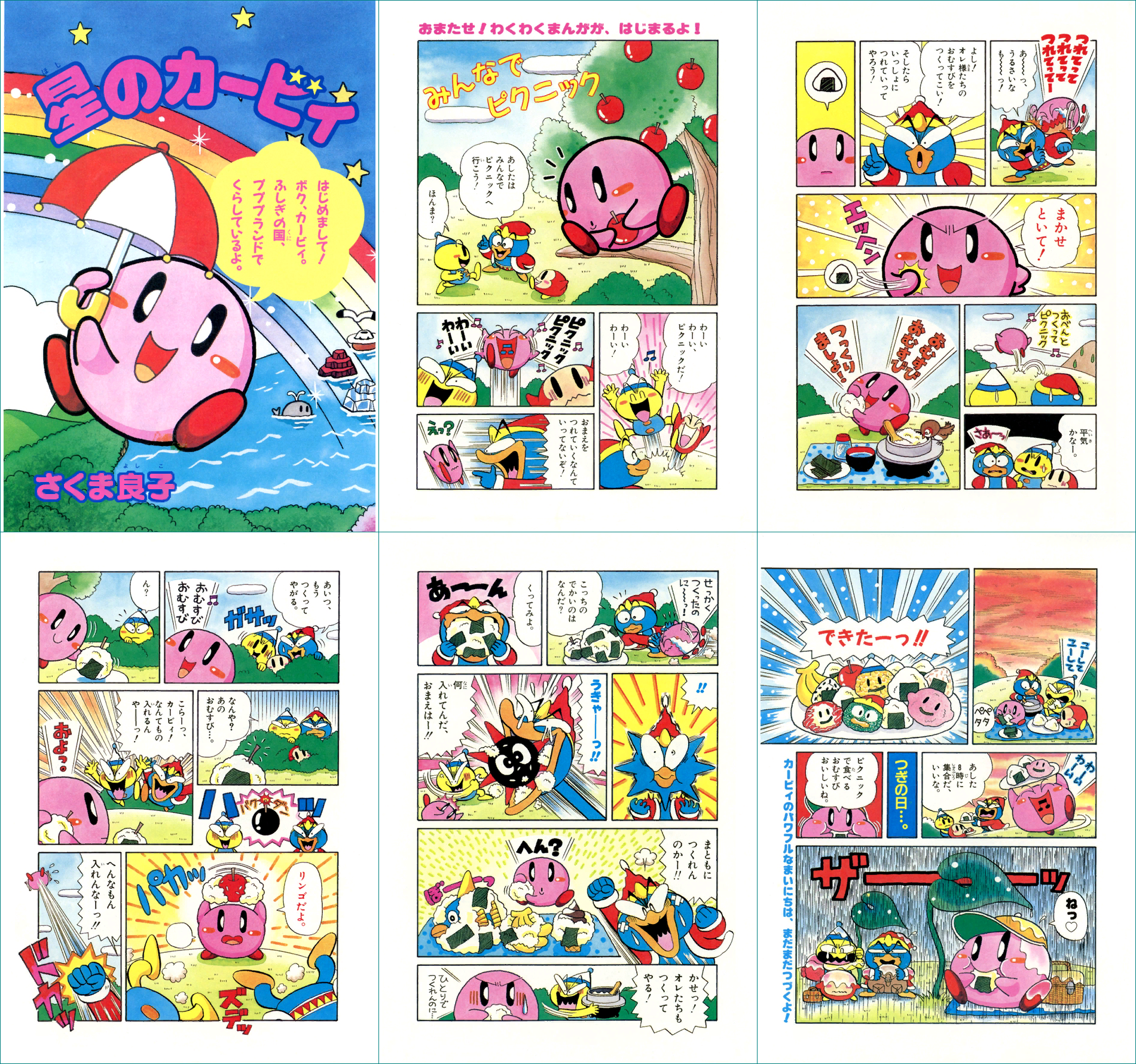
Manga#
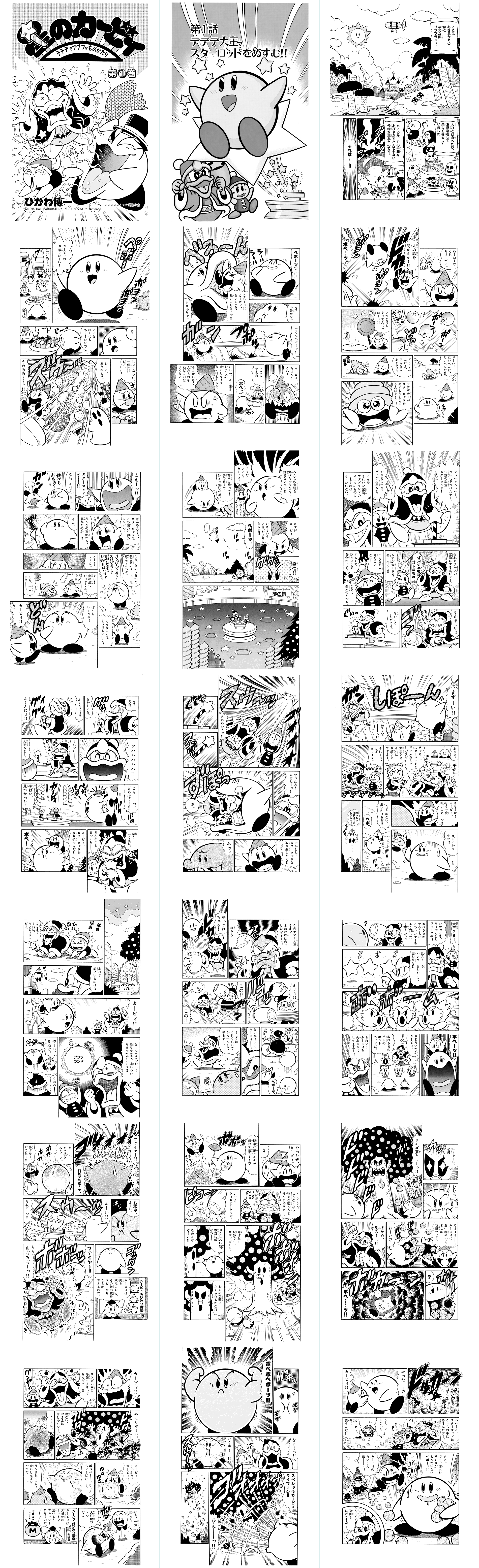
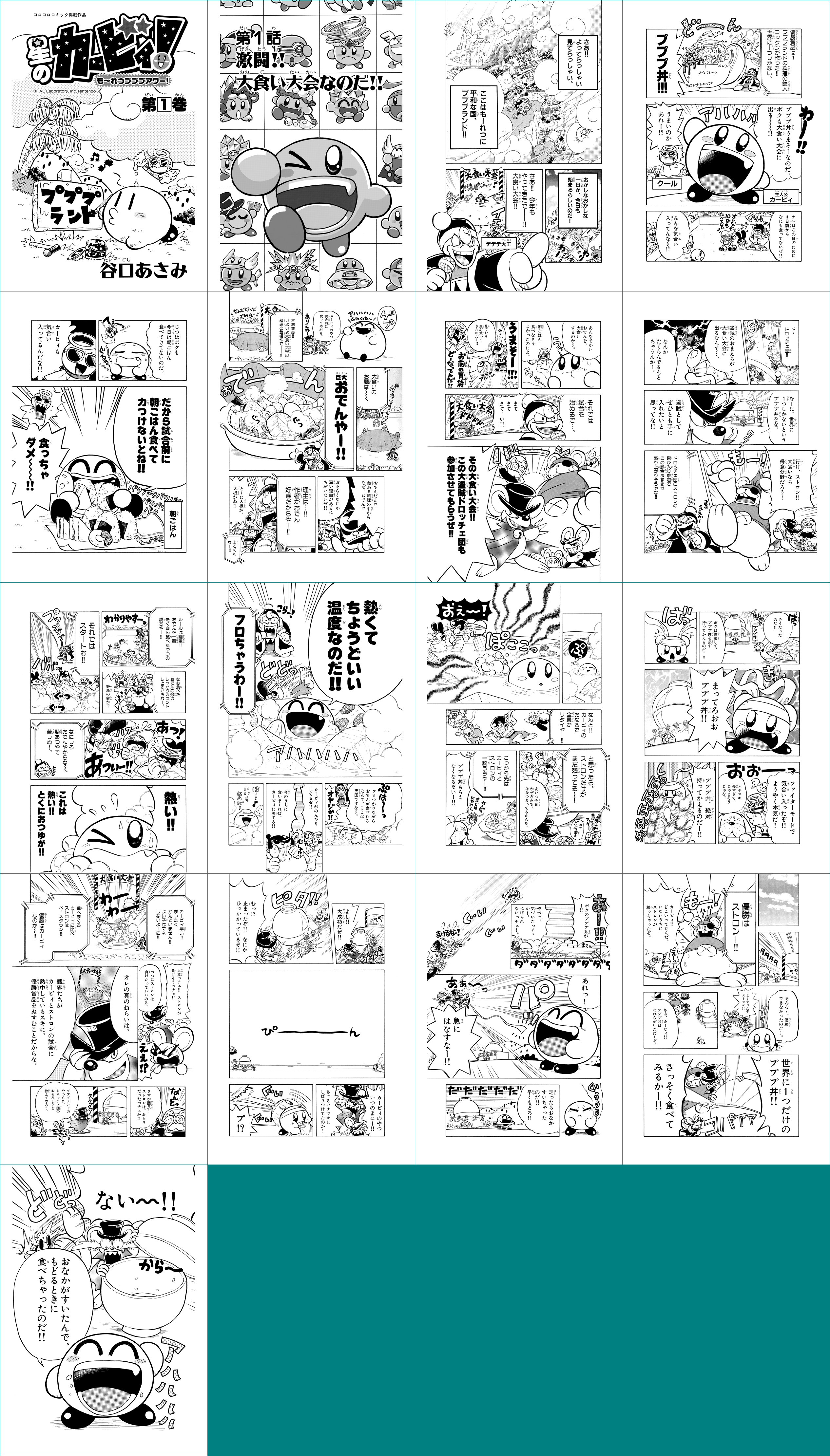
The Japanese version contains several manga scans that weren't included in the English version. They are still in the US game files, but inaccesible.
Gourmet Race to Green Greens Chamber Music#
This video is present only in the North America version.
Challenge Stages#
- In the Japanese version of the game, during the tutorial, a red circle will appear whenever an action is properly completed. In the English version, a green check mark will appear instead. This is likely because tests in Japanese schools have circles represent correct answers while check marks represent wrong answers, whereas it is the opposite in international schools. This change is also in Kirby's Return to Dream Land, Kirby: Triple Deluxe, Kirby: Planet Robobot, Kirby Battle Royale and Kirby Star Allies.
- The Japanese version does not use commas to separate thousands for points that are at least a thousand. This was an addition to the English version.
- To separate the seconds and centiseconds for the timer, the Japanese version uses a colon (:) while the English version uses a dot (.).
- One of the level names was changed in the English version of the game:
Japanese |
English |
|---|---|
Apricot Apart (アプリコット アパート) |
Apricot Atrium |
- At the last screen of the credits, the text "The End" was changed from all caps in the Japanese version to just capitalizing the first letter of the words in the English version.
Internal Project Name#
The game's internal project name is "Donut", as shown by many music files and the game's ".MAP" file.
|
The Kirby series | |
|---|---|
|
Game Boy |
|
|
NES |
|
|
SNES |
|
|
Nintendo 64 |
|
|
Game Boy Advance |
Kirby: Nightmare in Dream Land • Kirby & the Amazing Mirror (Demo) |
|
Nintendo DS |
|
|
Wii |
|
|
Nintendo 3DS |
3D Classics: Kirby's Adventure • Kirby: Triple Deluxe • Kirby: Planet Robobot |
|
Nintendo Switch |
Kirby Star Allies • Kirby and the Forgotten Land • Kirby's Return to Dream Land Deluxe |
|
Side Games | |
|
Nintendo DS |
|
|
Wii |
|
|
Nintendo 3DS |
|
|
Wii U |
|
|
Spin-Offs | |
|
Game Boy (Color) |
Kirby's Pinball Land • Kirby's Block Ball • Kirby's Star Stacker • Kirby Tilt 'n' Tumble • Jaguar Mishin Sashi Senyou Soft: Kirby Family |
|
SNES |
Kirby's Dream Course • Kirby's Avalanche • Kirby's Star Stacker |
|
Satellaview |
Kirby no Omochabako (Baseball, Pinball, Hoshi Kuzushi) |
|
GameCube |
|
|
Wii |
|
|
Nintendo 3DS |
Kirby Fighters Deluxe • Team Kirby Clash Deluxe • Kirby's Blowout Blast • Kirby Battle Royale (Demo) |
|
Nintendo Switch |
|
|
Nintendo Switch 2 |
|
|
Related | |