 This article has a talk page!
This is a sub-page of Prerelease:The Legend of Zelda: Ocarina of Time.
June, 1997
E3 1997#
Watch on YouTubeWatch on YouTubeExceptionally, E3 1997 was held in June instead of May. Media outlets revealed the first information about the timeframe for the game's release, as well as further talk about the game's size and 64DD expansion. New screenshots were released and b-roll was visible on the showfloor, though direct footage would not be released until months later on European promotional VHS cassettes. Despite being released later, the VHS footage will also be covered here for clarity.
Specifications#
Nintendo Power quoted Miyamoto on the cartridge's forecasted size: 128 Megabits (16 MB). Notably, this is well below the final cartridge's 256 Megabit (32 MB) size.1
Nintendo Power cited Zelda 64's Japanese's release date as late 1997, mentioning also that the 64DD version of the game would be released following the cartridge version, and would further expand players' Game Pak adventures.
Both Nintendo Power and N64.com claimed that the game would arrive in North America in early 1998.2
Contrary to their expectations, fans had a very long time to wait. Ocarina of Time was released in Japan and America in late Nov. 1998, nearly a year after their predictions.
Logo#
Promotional Video |
E3 1997 Showfloor |
|---|---|
|
|
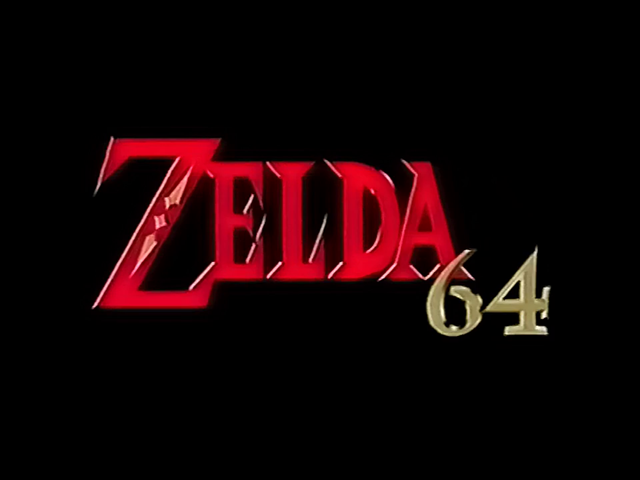
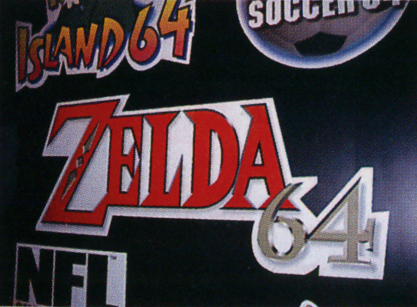
A new logo was revealed. The game was still titled Zelda 64, as the Ocarina of Time and time travel weren't part of the story yet.
Interface#
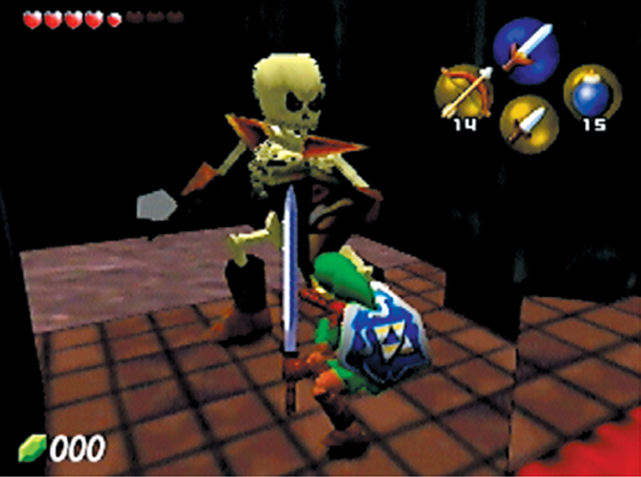
A new interface makes its appearance. The B button is gone and replaced with the C buttons. Interestingly, the A Button seemingly worked the same way as the Wii version of Twilight Princess where items on the C buttons are equipped onto the A button upon use.
|
Apr. '97 |
May '97 |
|---|---|

|
|
GUI |
Players are no longer limited to the A + B buttons when equipping items. The white letters identifying the buttons have disappeared, and the icons are now differentiated by color alone. |
A Button |
Link's sword is still equipped to A, but the icon has migrated to sit atop the C buttons. |
B Button |
The B button is no longer shown on the GUI. |
C-Left |
A brown bow is equipped to C-Left. The number of arrows differs between screenshots. The item counter has changed fonts yet again. |
C-Right |
Bombs are equipped to C-Right. Their number differs between screenshots. |
C-Down |
A sword resembling the one that appears in April's screenshots is equipped to C-Down. |
Hearts |
Link now has ♥♥♥♥♥♡♡♡ hearts. The first of Link's remaining hearts now pulses, increasing and decreasing in size. |
Rupees |
The rupees have moved back to the bottom-left corner of the screen, and the font size has increased again. The counter reads 000. |
Items#
Swords#
|
Black Sword |
Brown Sword |
|---|---|

|
|
Link can now choose between two different swords.

The first is a short, black sword that can be used with the shield.

The second is a long brown-hilted katana that requires two hands.
Bombs#

The bomb icon remains unchanged.
Bow#

The bow icon has been updated, and is now curvier than before.
Actions#
Jump Attack#
|
A+C |
Unused Animation |
|---|---|
|
|
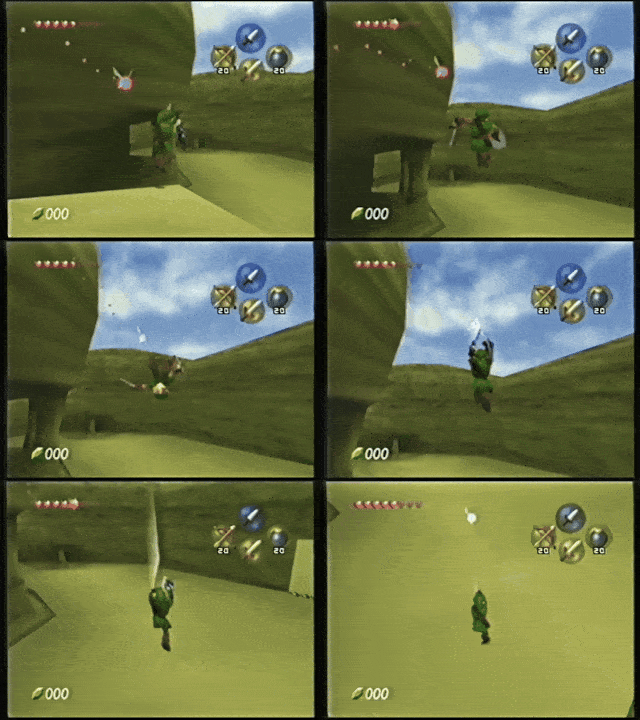
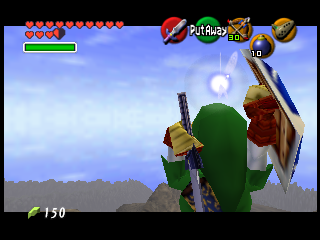
Link is seen performing a jump attack move that was altered for the final version of the game. Similar animation file for the early jump attack still exists unused in the game, but Link's sword is in a different pose.
Running Slash#
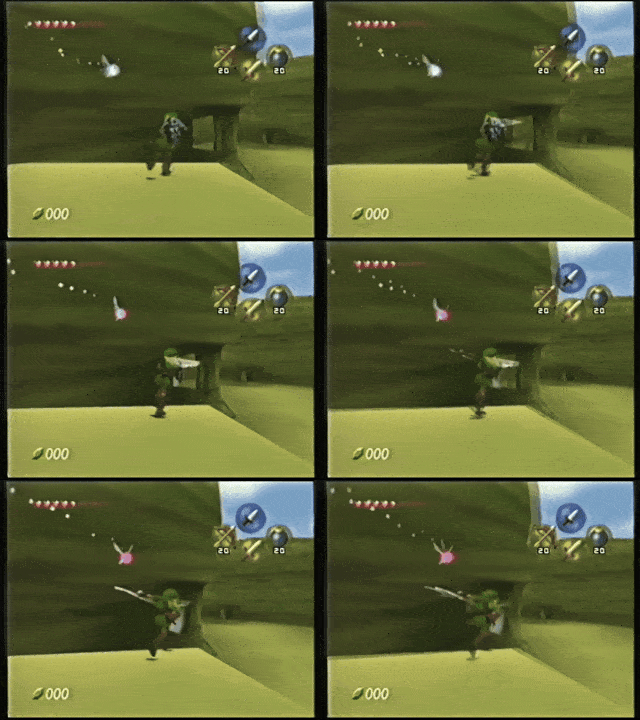
Link can be seen slashing while running, an action that ended up getting implemented in Twilight Princess.
Sword Combo Attacks#
Link was able to swing his sword rapidly back and forth in combo styled combat. 2-3 animations played in chain to create this movement when using the sword. It's unknown when this type of combat was scrapped, as it was never shown in footage after E3 1997.
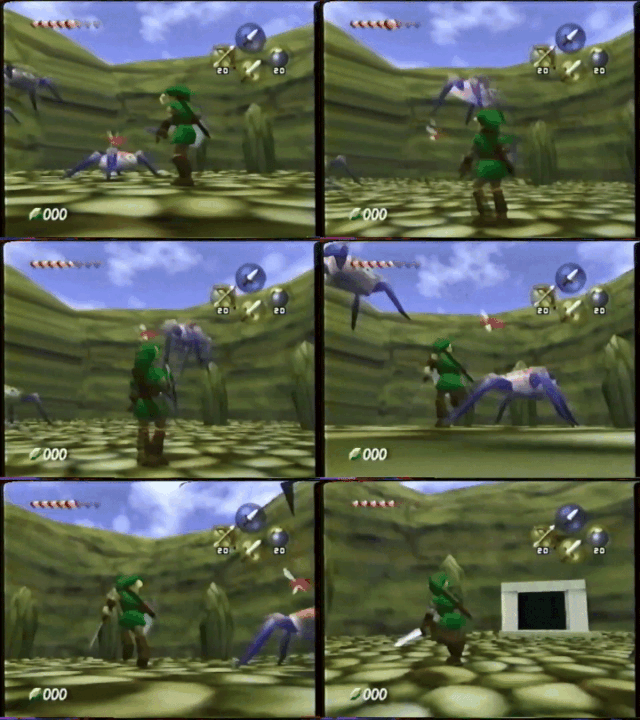
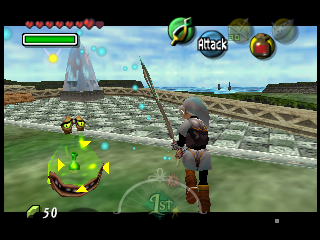
Unrestricted Z-Target movement#
|
May 1997 |
Majora's Mask |
|---|---|
|
|
An alternate Z-Target action existed, which allowed Link to run freely instead of strafing around an enemy/NPC. This still happens in Ocarina of Time if Link's movement speed is increased, but happens by default without any modifications in Majora's Mask because Fierce Deity has a higher movement speed. The higher movement speed triggers a part of Link's code that doesn't get used otherwise.
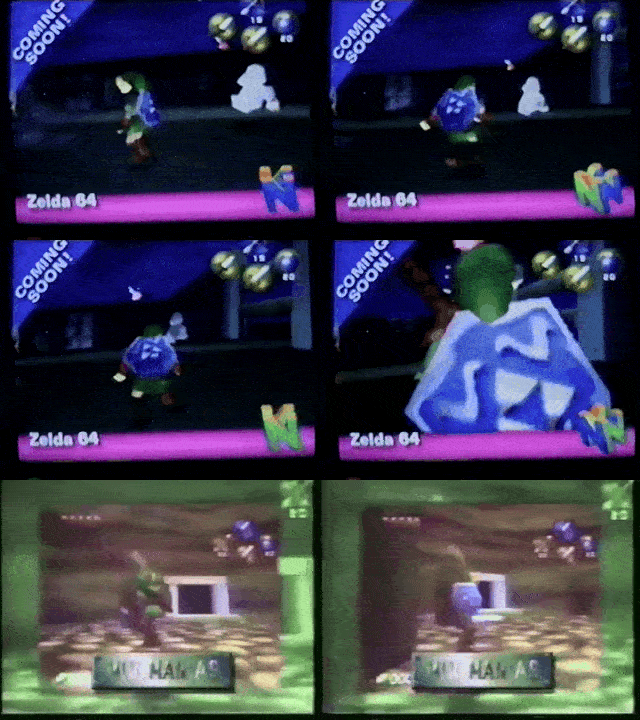
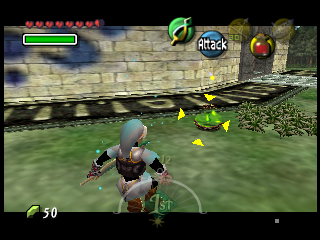
Backwalk while targeting#
|
May 1997 |
Majora's Mask |
|---|---|
|
|
In the final game, Link is only able to move sideways during targeting. It's possible to bring this backwalk back by increasing his movement speed similarly to the action above.
Bow#
Animation change#
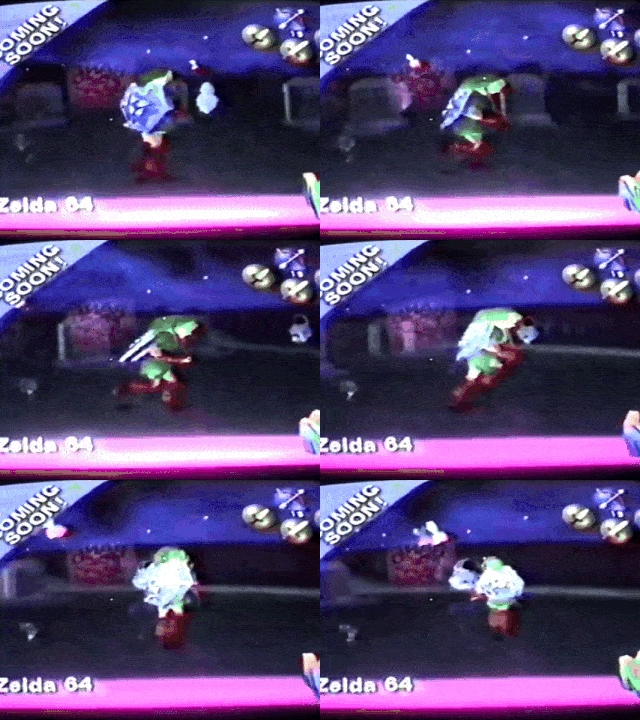
Running with the Bow used the same animation as when running with your Sword and Shield unsheathed in the final game. The regular running animation is used instead in the final game.
First Person#
|
Prototype |
Final |
|---|---|
|
|
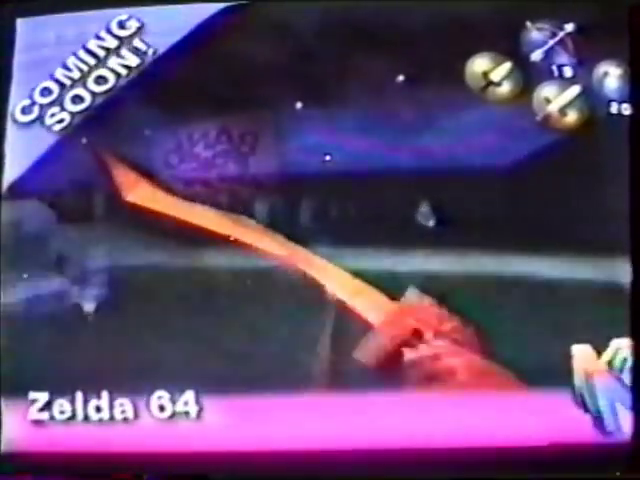
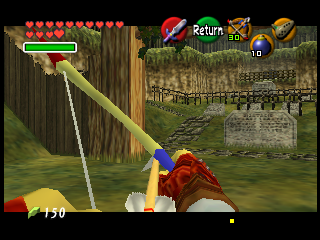
Link had no dedicated first-person model for his hands.
Characters#
Navi#
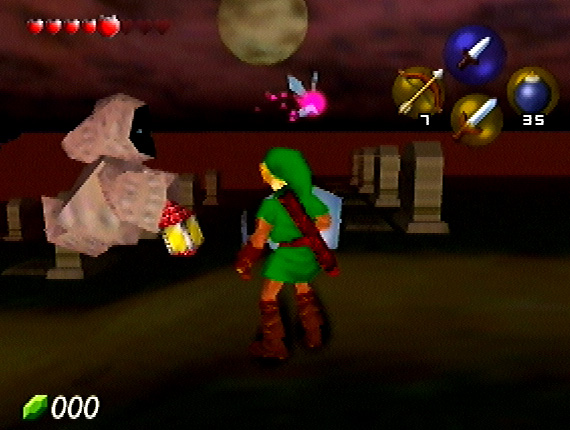
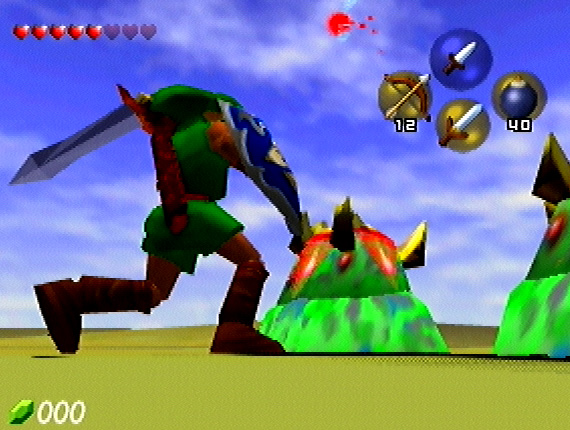 Navi was now shown to change color, turning pink when hovering near targetable entities and red when targeting them. The reticule and letterboxing from targeting was not yet implemented.
In addition to becoming more helpful in battle, Navi's increasing characterization had a strong effect on the game's story. Naming the target indicator had, in Nintendo president Satoru Iwata's words, "breathed life into what had been an impersonal marker". Character designer and director Koizumi reminisced that, once the character had been named, he started coming up with a flood of ideas about what he could do with her. Examples included Navi being able to indicate via color whether a creature you'd encountered was good or bad, and being able to talk in order to guide Link through the story.4
The fact that Navi provided Link strategy tips meant that the amount of dialogue script director Osawa had to write greatly increased.
Environments#
Revisited - Stalfos Boss Room#
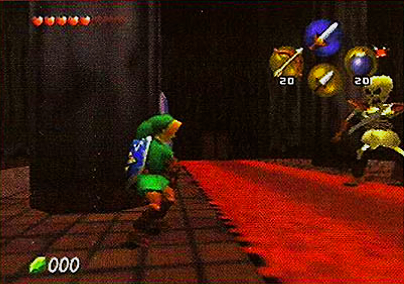
Another shot of the Stalfos Boss Room with the new interface. This one better depicts the nonfunctional door.
Revisited - Fstdan#
|
Prototype |
Final |
|---|---|
|
|
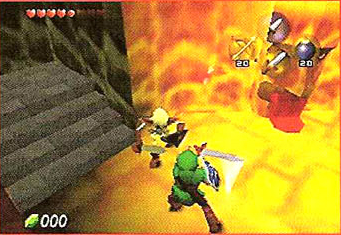
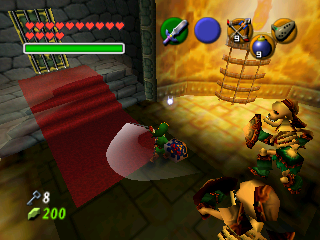
Room 1 of Fstdan makes an appearance once again.
Outside Fairy Tree#
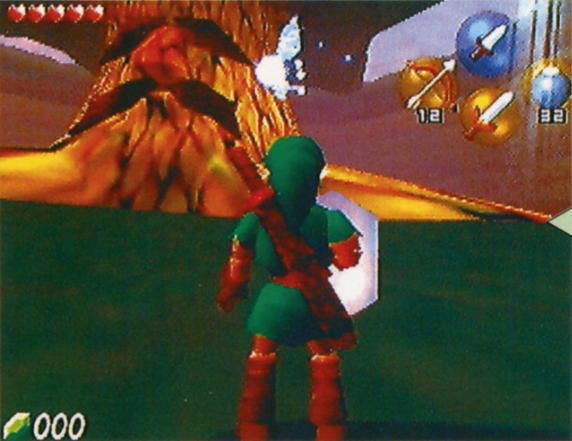
May 1997 |
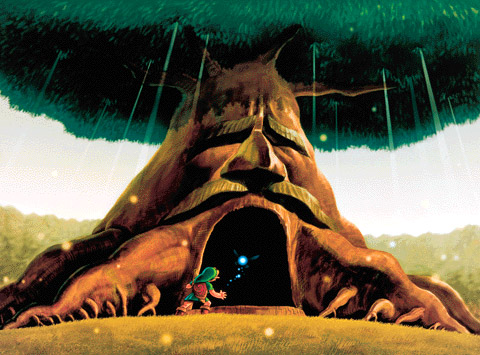
Concept Art |
Final |
|---|---|---|
 |
 |
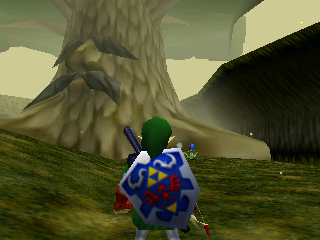 |
The first appearance of the Deku Tree which was called the Fairy Tree at this point in development. His mouth is closed, his nose is red, and sunlight filters through his branches. These rays of sunshine are present in concept art and an old version of Kokiri Forest dating to roughly October 1997, but were removed by the version built for Spaceworld '97.
May 1997 |
|---|
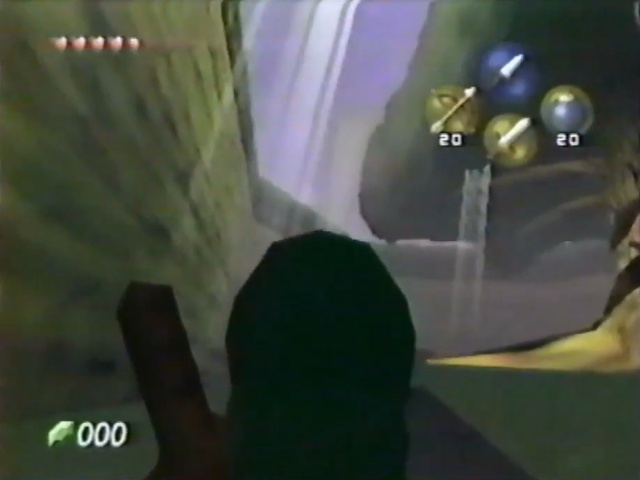 |
There was no path leading to Kokiri Forest as shown by prerelease footage of Link looking around in a Super Mario 64-style C-Up mode. It would appear that the Deku Tree area was built first.
Ranch#
|
Prototype |
Final |
|---|---|
|
|
|
Prototype |
Final |
|---|---|
|
|
|
Prototype |
Final |
|---|---|
|
|
|
Prototype |
Final |
|---|---|
|
|
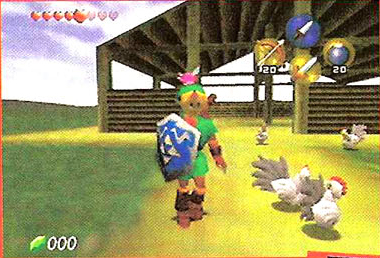
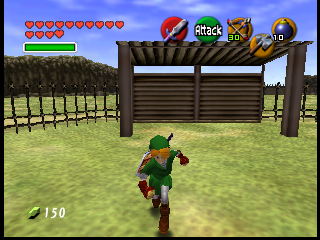
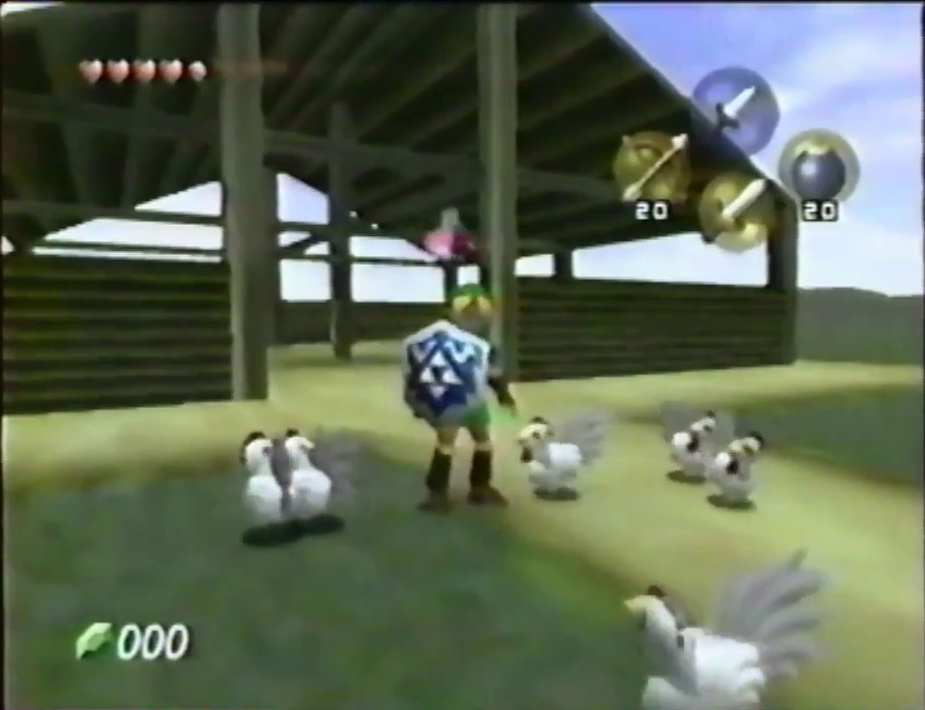
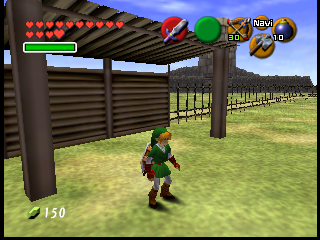
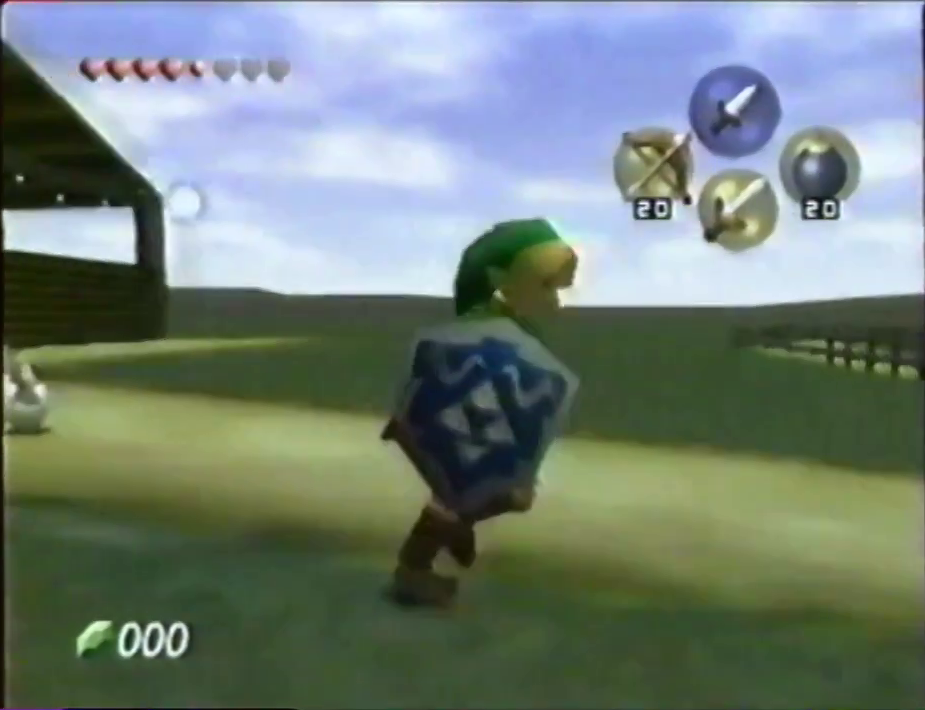
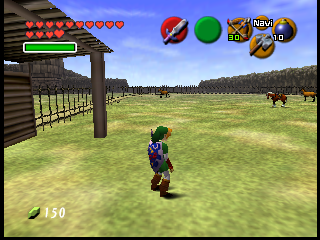
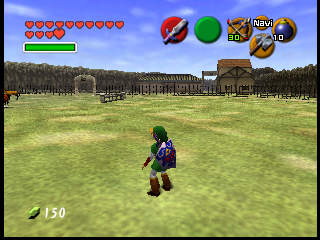
A stable in a grassy plain, with a road bordered by grass and a short fence just across from it. Some other map had taken the spot of this map since it isn't present in the late-1997 overdump, possibly the Horseback Archery test map because it takes the slot of the final Lon Lon Ranch map.
Desert#
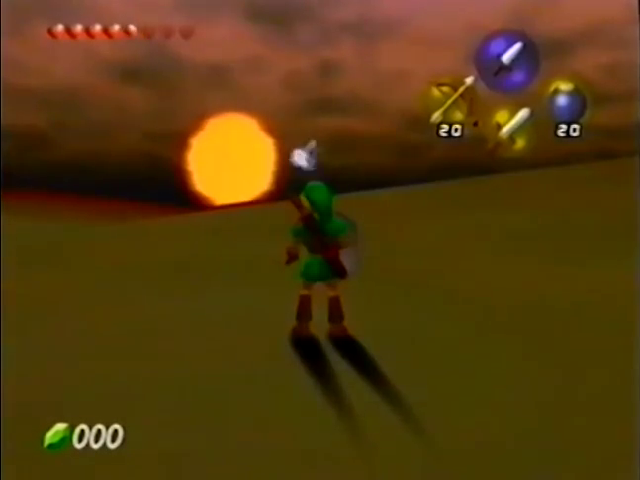
Link watches the sun set in the desert as Navi flutters around his head. This is the first concrete evidence of a night and day system.
Link attacking Leevers on a flat plain in a desert-looking environment. Leevers never changed their model even when other enemies went through many iterations.
House A#
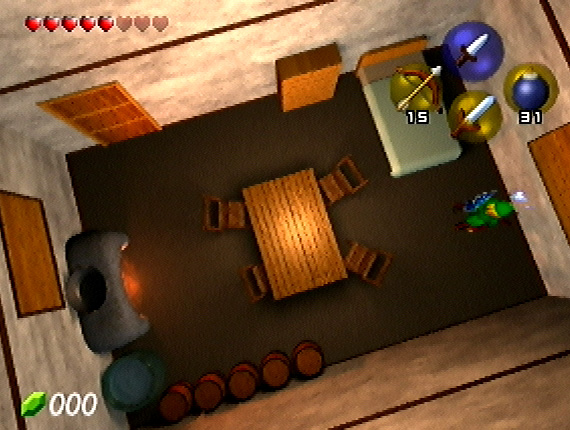
A simple 3D house pre-render, one of the first ones they ever made to test out the system. Commit logs for the game indicate this map, called House_A, was added on May 22, 1997 by hayakawa.
House B#
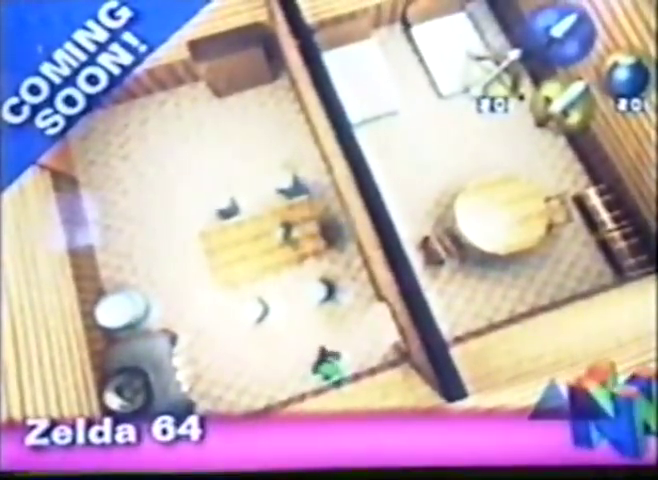
Another house pre-render which so far has only been discovered on E3 1997 showfloor footage. No commit log exists for this, though it's possible it was called "House_B".
Kakariko Village#
May '97 |
Late 1997 Overdump |
|---|---|
 |
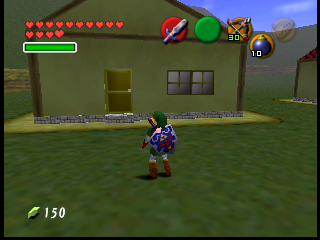 |
Link walking towards one of the houses in Kakariko Village. Its premiere was in this A+C shot and a later version of this Kakariko could also be found in the Overdump.
Kakariko Graveyard#
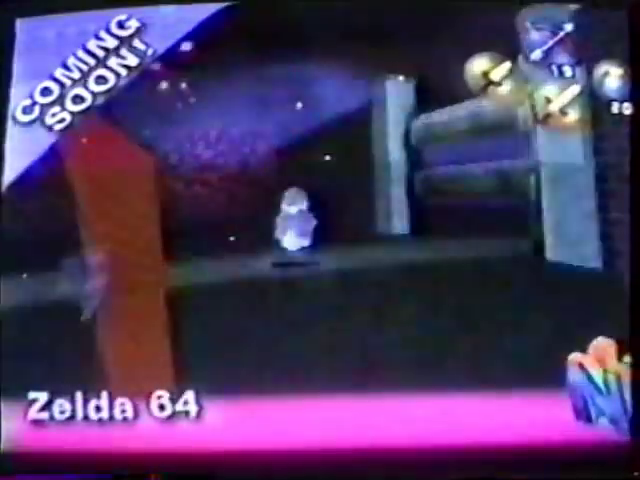 An eerie graveyard haunted by two Poes. It is filled with simplistic gravestones and bordered by a wall. The moon shines down from overhead. A version of this area was found in the 1997 overdump with some alterations made, which were the inclusion of hills beyond the brick wall and the removal of the wooden plank by the exit.
Death Mountain Trail#
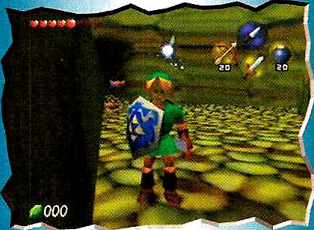
This area uses the same ground texture as the pebbled area from A + B. It contains three Tektites which chase down Link and contain two exits on opposite sides.
April '97 |
May '97 |
|---|---|
|
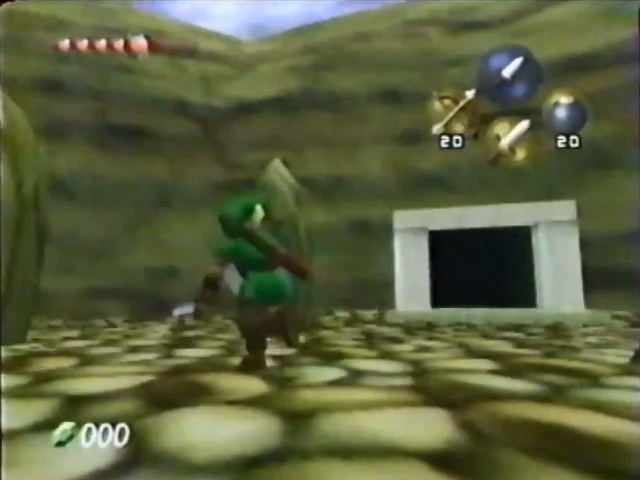 |
The map was given some makeover texture wise. Some of these textures this map uses were found in leaked files.

|
To do: |
April '97 |
May '97 |
|---|---|
 |
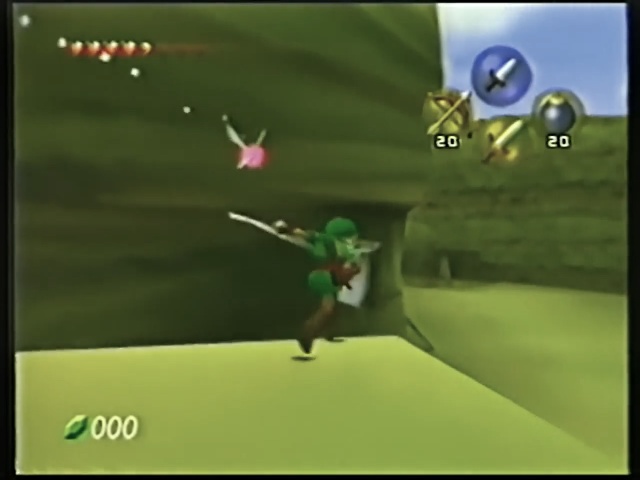 |
The same wall texture update can be noticed here and a skybox texture is added. The Octoroks seen in the April '97 screenshots can't be seen, and it's unknown whether that is due to the draw distance being low or if they were simply removed from the map.
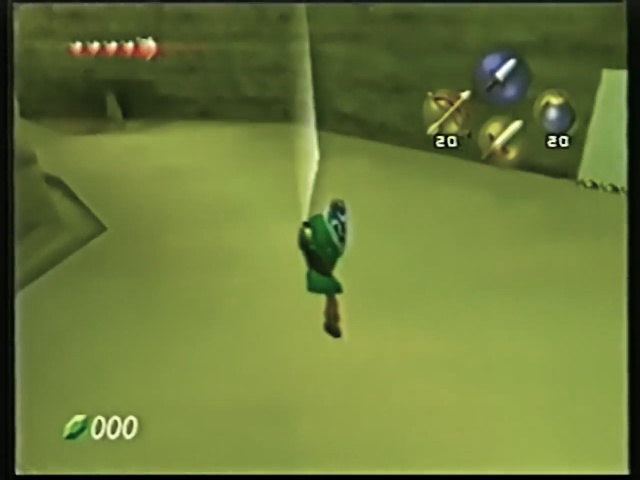

There's an entrance down in the canyon that looks similar to the entrance seen in the other screenshot. Something that is barely visible is also down in the canyon, and Navi doesn't react to it, so it can't be an enemy or an NPC. It could've been a withered tree like the ones seen in Majora's Mask's Ikana Canyon.
Revisited - Dodongo's Cavern#
|
|
To do: |
|
Apr. '97 |
May '97 |
|---|---|

|
|
One large Dodongo was changed to two smaller Dodongos.
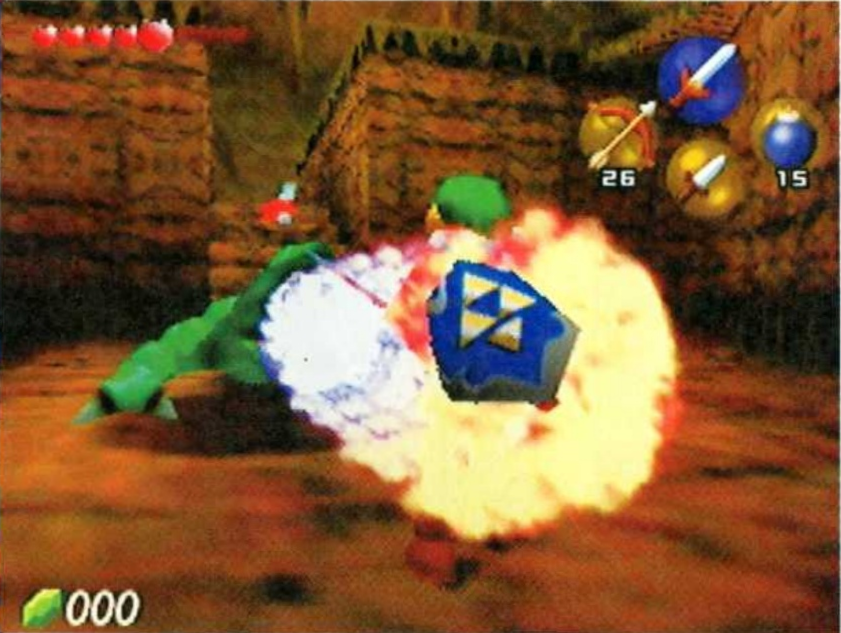
The fire effect of the Dodongos was more simple.
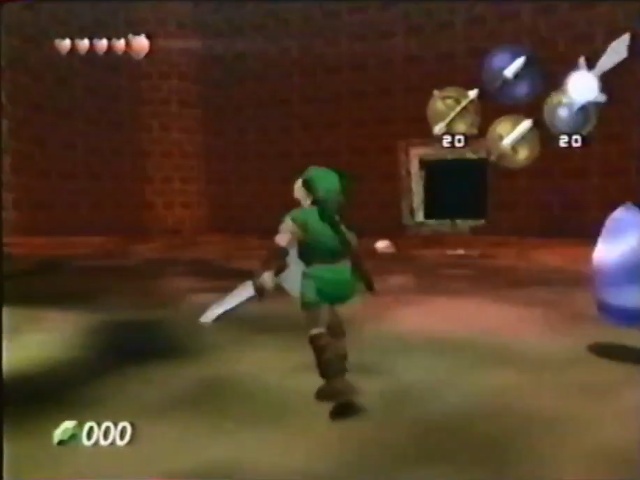
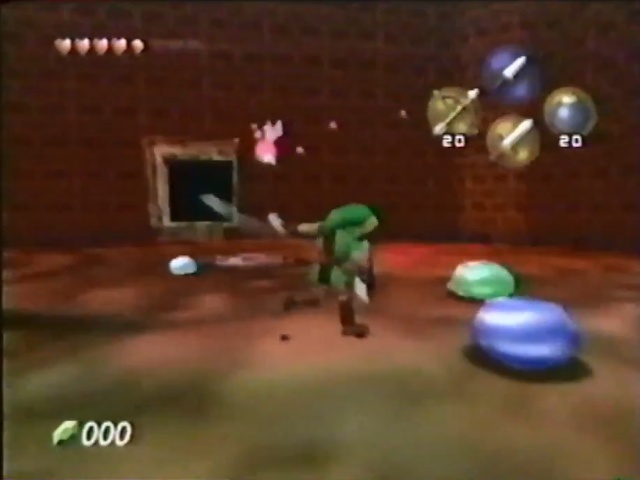
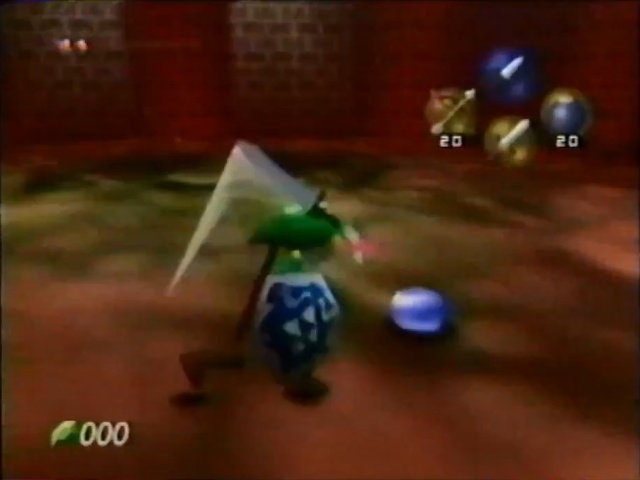
Link running around in a slime filled room. A bridge and a tunnel are seen both in the style of Dodongo's Cavern, hinting this room used to be part of it. The textures also match that of Dodongo's Cavern.
Temple of Time#
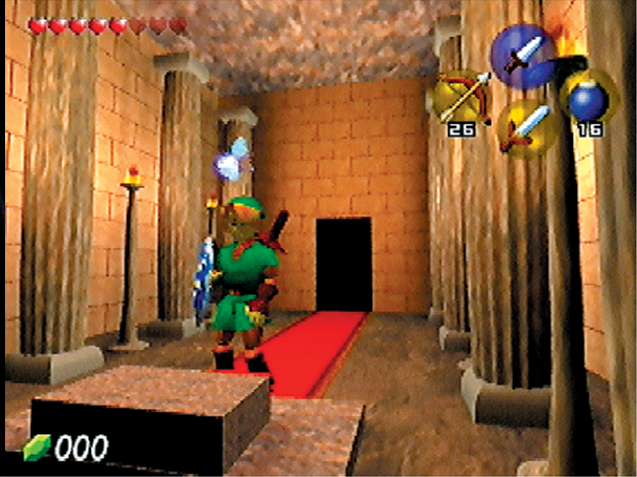
A temple with a pre-rendered background, the first to appear in early screenshots. A later revision with identical columns was found in development leaks, which has a design identical to the Temple of Time as a pre-render.
Revisited - Hyrule Field#
|
May 1997 |
iQue Collision |
|---|---|

|
|
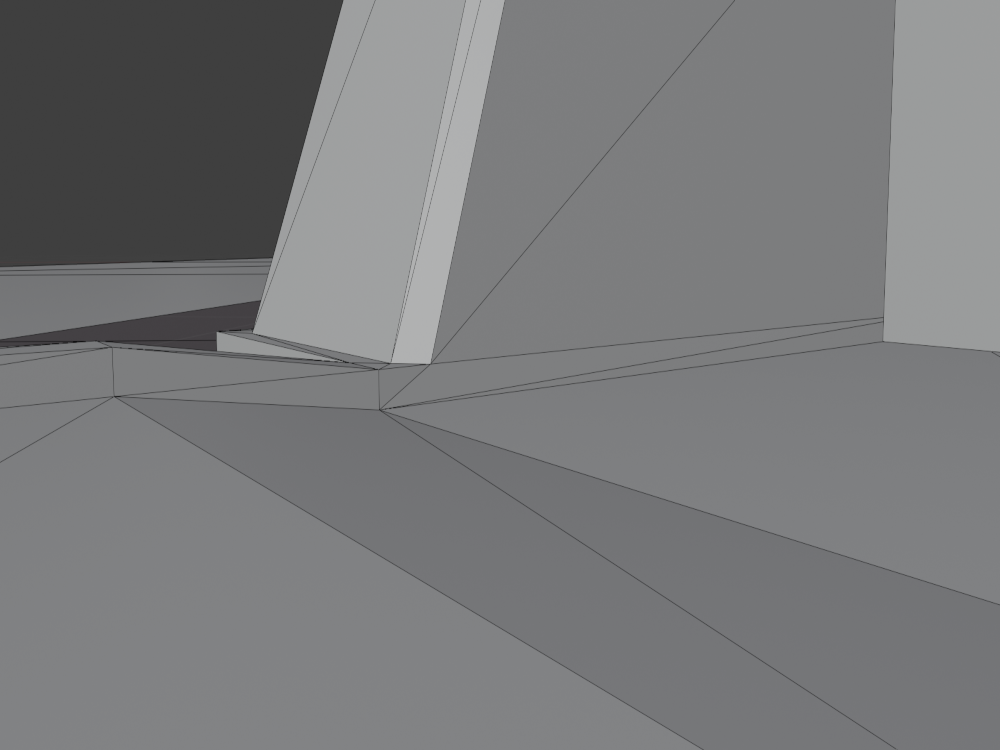
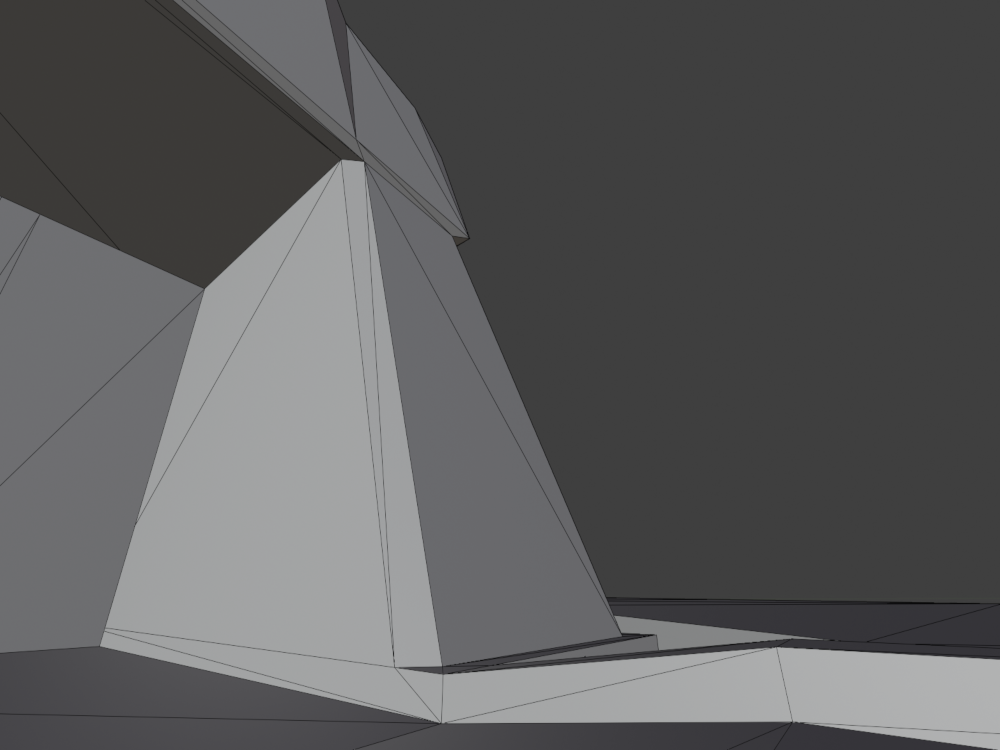
Link standing on a bridge leading to Hyrule Castle Town. The area was found in the July 2020 iQue source code leak, albeit untextured, revealing it to be an early version of Hyrule Field.
|
May 1997 |
iQue Collision |
|---|---|
|
|
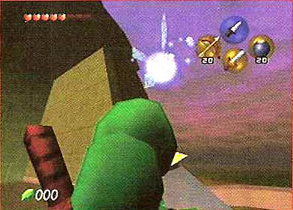
The developers seem to have a fondness for blue and pink skies.
Enemies#
Cuccos#
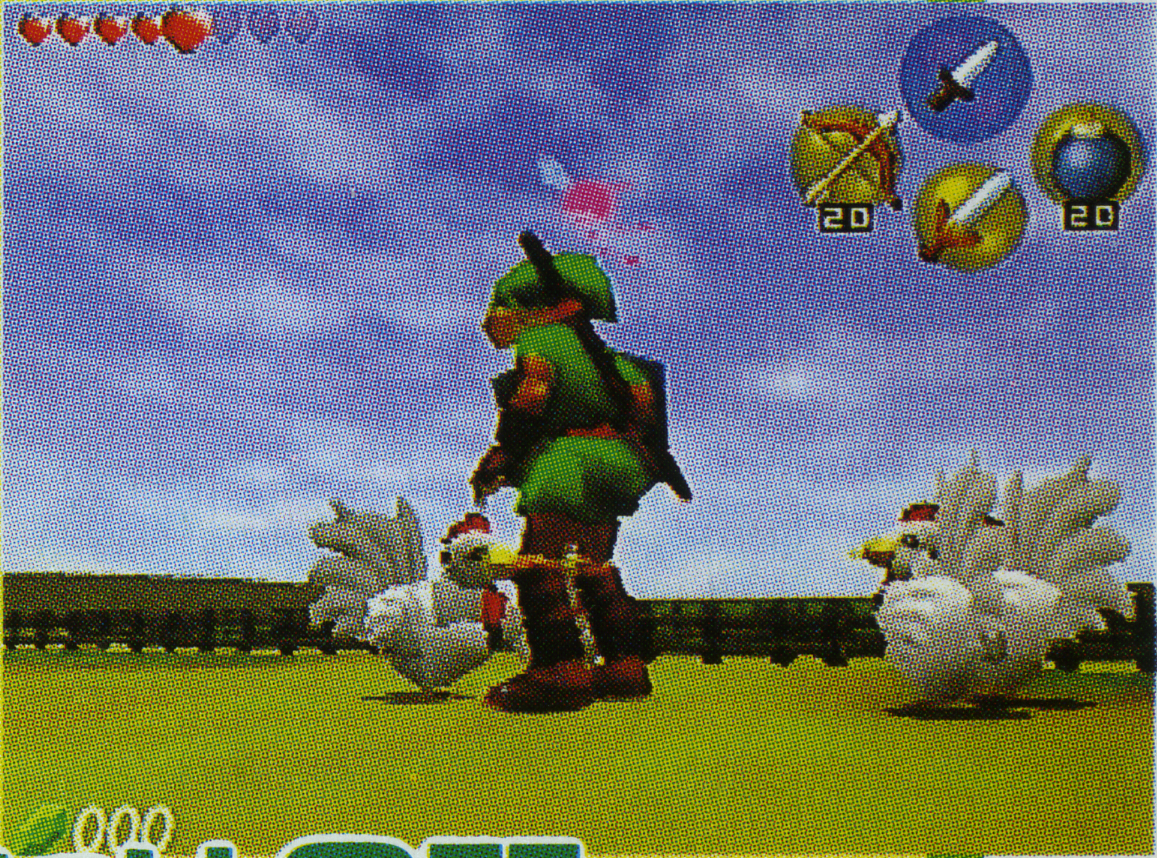
The Cucco model differed at this point and managed to survive in the leaked files.
They can be seen circling Link while having their heads turned to face him. Shigeru Miyamoto mentioned they used to follow Link in an interview with Famimaga 64 in issue 28.
Q37: Can you use the chicken as an item? Umm, unfortunately, that isn't possible. (Laughing) However, we've put together a variety of mechanisms that use the chicken. This stuff is top secret, so please play the game and see for yourself. We've created the chicken very realistically, so it's scary. The chicken just following you around like a stalker is scary enough. Don't try to mess with it or anything. |
(Source: Translation - GlitterBerri)
Tektites#
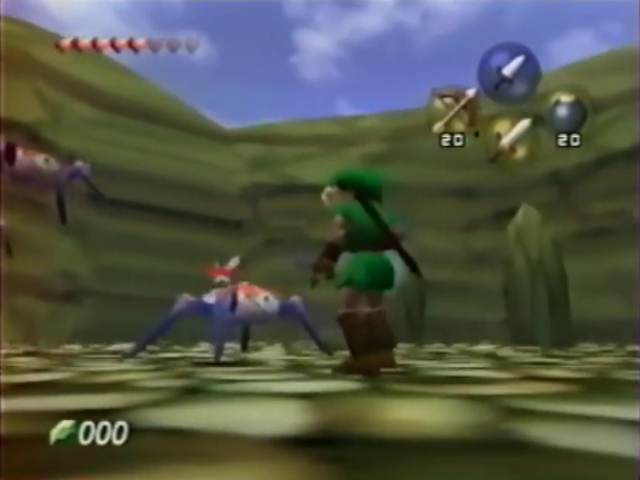
Tektites bounce around a rocky-bottomed valley after Link.
Leevers#
Link challenges a handful of Leevers. Interestingly, Navi does not change colors to indicate their presence in the final game.
Slimes#
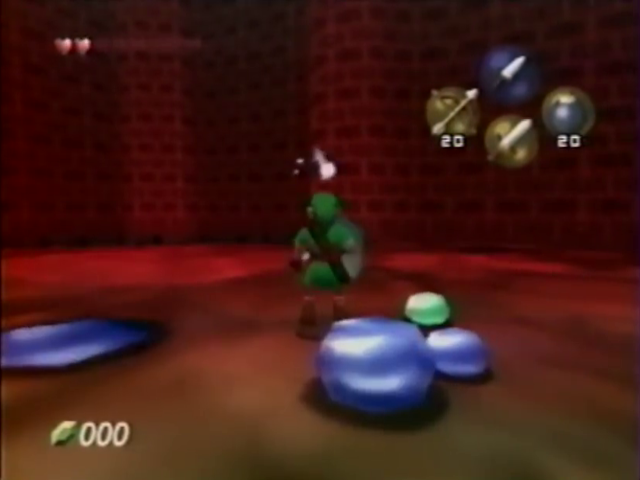
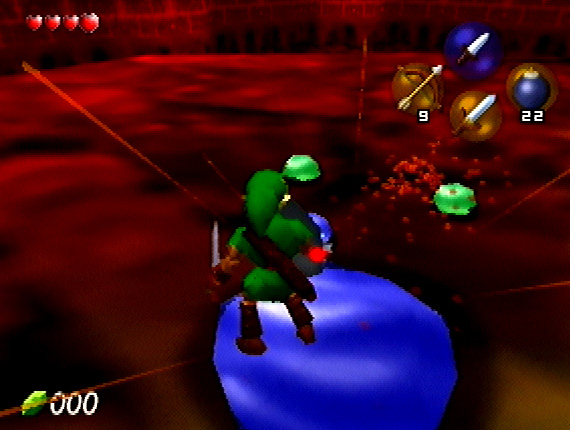
These enemies, no longer found in the game except for a single texture that requires hacking to find, resemble Gels from other Zelda adventures. The full model was found in the July 2020 iQue source code leak.
July, 1997
Specifications#
In July, Nintendo Power reported that Zelda 64 was 50-70% complete. The size was once again heralded at 128 Megabits.5
Once more, the magazine touted the North American release date for the game as early 1998.
Miyamoto mentioned in an interview that a U.S. localization of Zelda 64 would, at maximum, take only 4 months to complete. N64.com used this information to speculate that the game could potentially be released as early as April 1998.6
References
Index
|
Introduction |
|
|---|---|
|
A + B |
|
|
A + C |
|
|
Early Sword on A |
|
|
Sword on A |
October - December 1997 • January - March 1998 • April 1998 • May - June 1998 • July - August 1998 |
|
Sword on B |
|
References#
- Pg. 101 - Nintendo Power #97, Jun. 1997↩︎
- E3: Link Returns in Full Form! - N64.com, Jun. 18th, 1997↩︎
- https://web.archive.org/web/19980205102917/http://www.nintendo.co.jp/n01/n64/software/zelda/next/index.html↩︎
- Iwata Asks - Where the Name Navi Came From - Iwata Asks - Nintendo.com, June 2011↩︎
- Nintendo Power #98, July 1997, Page 56↩︎
- Zelda 64 Release Date Revealed? - N64.com, Jul. 22nd, 1997↩︎