 This article has a talk page!
This is a sub-page of Paper Mario: The Thousand-Year Door.
Unused Maps#

|
To do: |
The unused field maps don't exist in the world_data struct, unlike the used field maps.
(Source: Ralf@gc-forever (discovery of unused train maps), PistonMiner and Zephiles (info on the world_data struct))
Demo Movie#
|
|
To do: |
Watch on YouTubePresent only in the Japanese Gekkan Demo and the PAL release, the "dig" stage loads demo.thp from the disc root and plays it as the stage background. Random characters pop up at random intervals from the sides of the screen. If START is pressed, it brings you to the title screen - likely was used for an attract mode akin to the one in Paper Mario 64.
Pit of 100 Trials#
These unused maps are named with the Rogueport Sewers prefix ("tik"), but appear to be intended to be in the Pit of 100 Trials. The used Pit of 100 Trials maps all have the "jon" prefix, except for the entrance room which is under "tik".
(Source: Original TCRF research)
tik_09#
Early |
Final |
|
|---|---|---|
Render |
 |
 |
In-Game |
 |
 |
Early |
Final |
|
|---|---|---|
jon_kanban_0 |
 |
 |
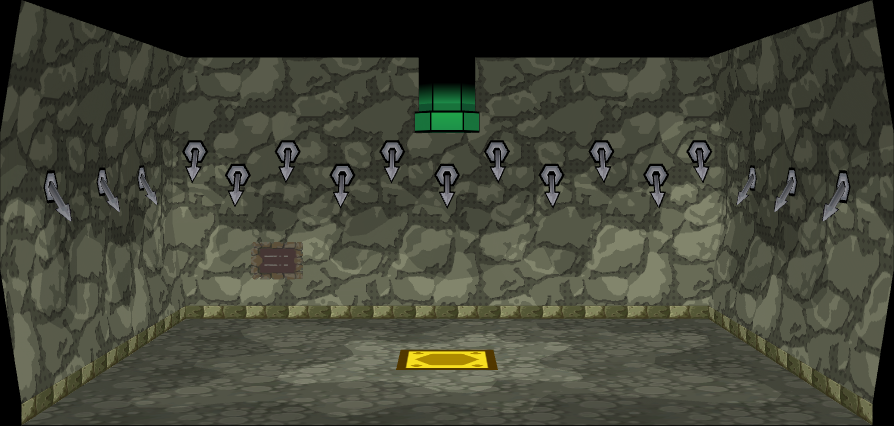
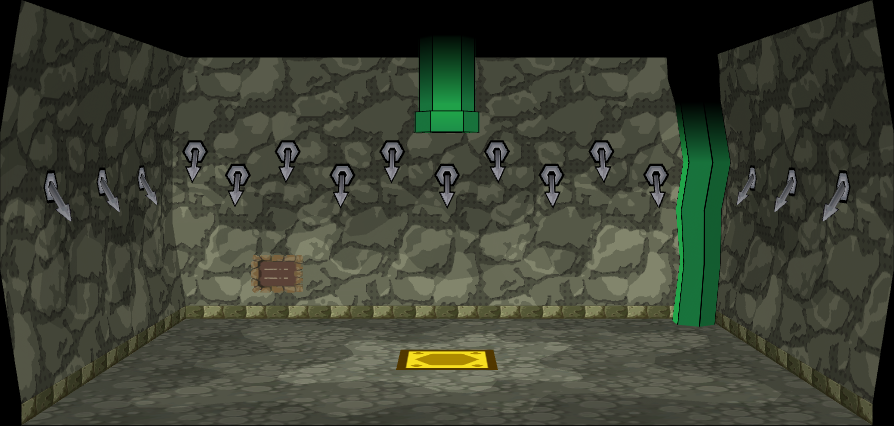
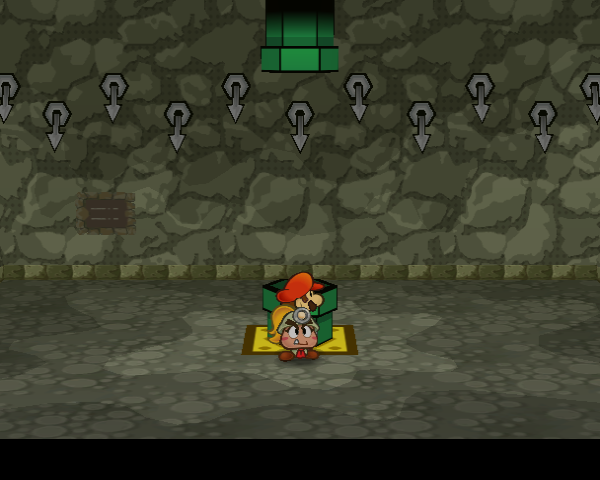
This appears to be an early map for the Pit of 100 Trials normal floors, which use jon_00 in the final game. The final game also uses differently-colored variations - jon_01 and jon_02. It has three warps in the form of pipes. It doesn't have any enemies in and the sign can't be read. The lower pipe activates itself, has glitchy collision, and doesn't seem able to be entered. Tattling produces the "no messages" error text. The only texture that differs is the one for the sign. Interestingly the sign texture is called "jon_kanban_0" in both maps. All the textures match between the early and final maps.
tik_10#
Early |
Final |
|
|---|---|---|
Render |
 |
 |
In-Game |
 |
 |
Early |
Final |
|
|---|---|---|
jon_kanban_0 |
doesn't exist |
|
tik_ganban_0 |
 |
 |
tik_renga_05.5_0 |
 |
doesn't exist |
tik_tex_02_0 |
 |
doesn't exist |
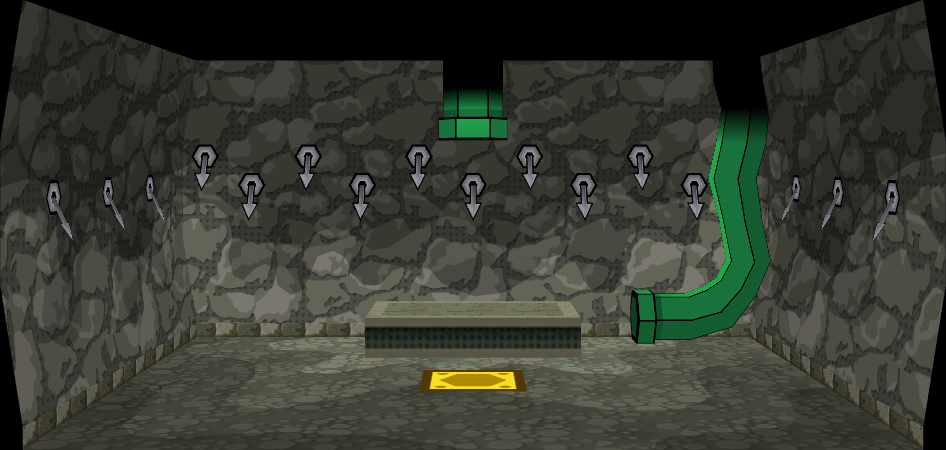
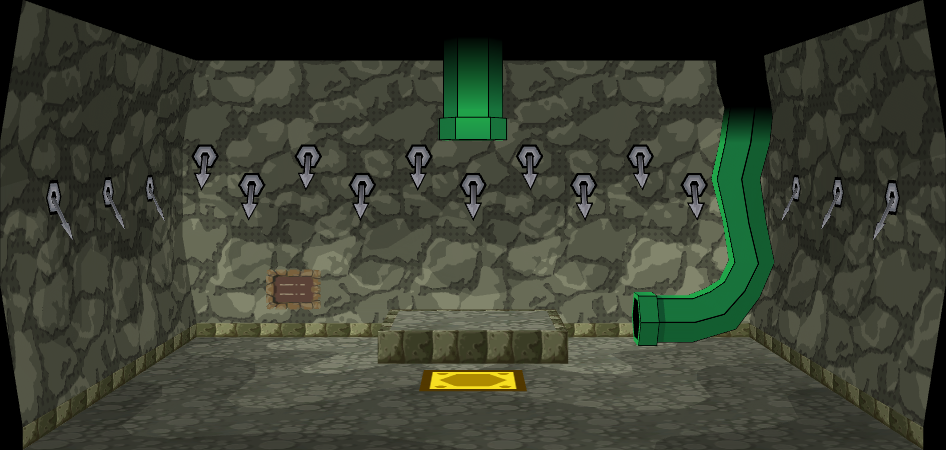
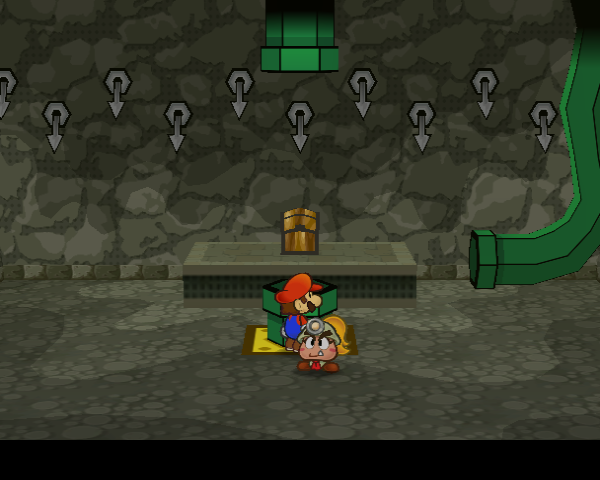
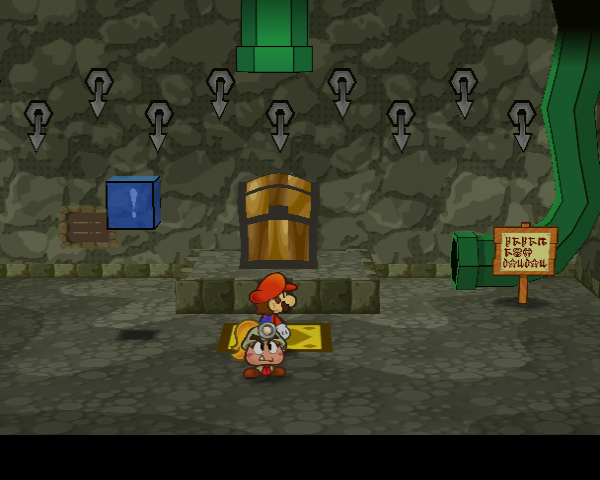
This appears to be an early map for the Pit of 100 Trials intermediate floors, which use jon_03 in the final game. The lower pipe is already activated when you enter the map, and goes to tik_14. The right-hand pipe goes to the used Pit of 100 Trials entrance map, like the final intermediate floors. The chest contains a Mushroom, and tattling produces the "no messages" error text. All the textures other than the ones compared above match between the early and final maps.
Internal Map Group Names#
|
|
To do: |
In addition to the short abbreviated map group names, Japanese map group names exist as Shift-JIS text in the dol. Only "Abbreviated Name" and "Japanese Name" in the below table are from the game data. The rest of it is supplementary. These aren't necessarily in any internal order. Unused ones are in bold.
Maps |
Abbreviated |
Japanese |
Romanisation |
Translation |
Notes |
|---|---|---|---|---|---|
Test maps |
kwb / tst |
テスト用 |
Tesuto-yō |
For testing |
No maps under these prefixes exist in the final game. "kwb" may possibly stand for "Kawabe", as in Chie Kawabe, the game's art director. |
Battle Stages |
bti |
舞台セット |
Butai setto |
Stage set |
|
Coloured Battle Stages |
stg |
背景セット |
Haikei setto |
Background set |
These exist, unused, in the final game. |
Mario's House |
aaa |
マリオの家 |
Mario no ie |
Mario's House |
Maybe it's called this because its the first location that you see in-game, and "aaa" is the first abbreviation if they are ordered alphabetical. |
Rogueport |
gor |
ゴロツキタウン |
Gorotsukitaun |
Rogue Town |
Same as the in-game Japanese name. |
Rogueport Sewers |
tik |
埋没した都市 |
Maibotsu shita toshi |
Buried city |
"tik" is likely from "chika" (underground), using the Kunrei-shiki romanization of "chi". The in-game Japanese name is ゴロツキタウンの地下 (Gorotsuki Town no chika, "Rogue Town Underground"). |
Hooktail Castle |
gon |
ゴンババ |
Gonbaba |
Hooktail |
In-game Japanese name of Hooktail. |
Petal Meadows |
hei |
平原 |
Heigen |
Plain |
|
Petalburg |
nok |
ノコ村 |
Noko-mura |
Koopa Village |
Differs from the in-game Japanese name of ハナハナ村 (Hanahana-mura, "Flowery Village"), but is similar to Paper Mario's Koopa Village (ノコノコ村, Nokonoko-mura). |
Boggly Woods |
win |
ウィンディん家周辺 |
Windi n chi shūhen |
Around Windy's house |
Flurrie is referred to as "Windy" in the game files. |
The Great Tree |
mri |
巨木の中 |
Kyoboku no naka |
In the big tree |
Possibly from mori (森), meaning "forest". 巨木 (kyoboku) differs from the Great Tree's in-game Japanese name of 大樹 (taiju), but is generally synonymous. |
Glitzville |
tou |
闘技場 |
Tōgijō |
Arena |
|
Twilight Town |
usu |
ウスグラタウン |
Usugurataun |
Gloomy Town |
Slightly different from the in-game Japanese name of ウスグラ村 (Usugura-mura), which refers to it as a village instead of a town. |
Twilight Trail |
gra |
ウスグラの道 |
Usugura no michi |
Gloomy Road |
Same as the in-game Japanese name. |
Creepy Steeple |
jin |
ダイム寺院 |
Daimu jiin |
Dime Temple |
Differs from the in-game Japanese name of オドローン寺院 (Odorōn Temple). |
Keelhaul Key |
muj |
無人島 |
Mujintō |
Uninhabited island |
|
Pirate's Grotto |
dou |
洞窟 |
Dōkutsu |
Cave |
|
Poshley Heights |
pik |
ピカリーヒルズ |
Pikarīhiruzu |
Pikari Hills |
Same as the in-game Japanese name. |
Excess Express |
rsh |
列車 |
Ressha |
Train |
|
Train travel cutscenes/outside Riverside Station |
hom |
途中駅ホーム |
Tochū-eki hōmu |
Enroute-station platform |
|
Riverside Station |
eki |
駅 |
Eki |
Station |
|
Fahr Outpost |
bom |
ボム村 |
Bomu-mura |
Bomb Village |
Differs from the in-game Japanese name of サイハテ村 (Saihate-mura, "Farthest Village"). |
The Moon |
moo |
月 |
Tsuki |
Moon |
|
X-Naut Fortress |
aji |
敵のアジト |
Teki no ajito |
Enemy hideout |
|
Palace of Shadow |
las |
ラストダンジョン |
Rasutodanjon |
Last dungeon |
|
Bowser Stages |
kpa |
クッパ編 |
Kuppa-hen |
Bowser sections |
|
The Pit of 100 Trials |
jon |
100階ダンジョン |
100-kai danjon |
100-Floor Dungeon |
Same as the in-game Japanese name. |
Pianta Parlor Minigames |
yuu |
遊技場 |
Yūgi-jō |
Amusement center |
Same as the Japanese name of the Toad Town Playroom in Paper Mario. |
Chuck Quizmo Quiz |
qiz |
はてなむしクイズ |
Hatena mushi kuizu |
Chuck Quizmo Quiz |
No maps under these prefixes exist in the final game, but a near-empty code file is present in the Japanese Gekkan demo and the PAL release. The presence of this entry suggests that Chuck Quizmo from Paper Mario was to appear in this game. He is referenced in the Japanese script and in translations other than English and French. |
Game Over screen/chapter prologues |
sys |
システム |
Shisutemu |
System |
|
Intro |
dmo |
オープニングデモ |
Ōpuningudemo |
Opening cutscene |
|
Demo Movie |
dig |
ダイジェスト |
Daijesuto |
Digest |
|
Ending credits |
end |
エンディング |
Endingu |
Ending |
(discovery: JasperRLZ)
(analysis: Original TCRF research)