 This article has a talk page!
This is a sub-page of Paper Mario: The Thousand-Year Door.
Paper Mario: The Thousand-Year Door received over a handful of changes for its international localization.

|
This page or section needs more images. |

|
To do: |
Title Theme#
|
Japan |
International |
|---|---|
The Japanese version has a slightly different melody for the first part of the title screen music. The drum roll is also more noticeable during the fade-out. The rest of the theme is the same.
Nintendo Logo#
It's tradition that the Nintendo logo is blue in Japan and red internationally.
|
Japan |
International |
|---|---|

|

|
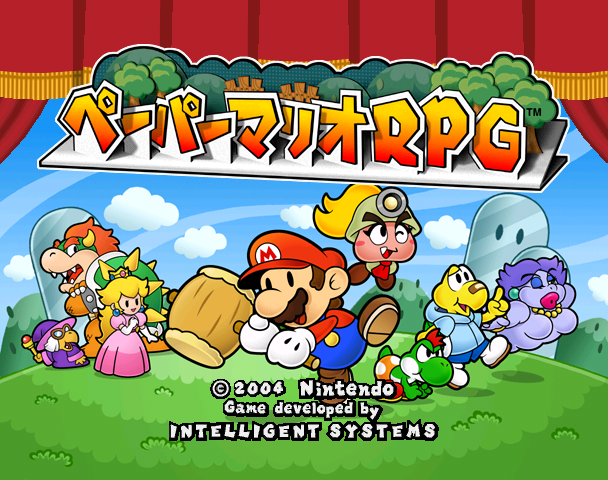
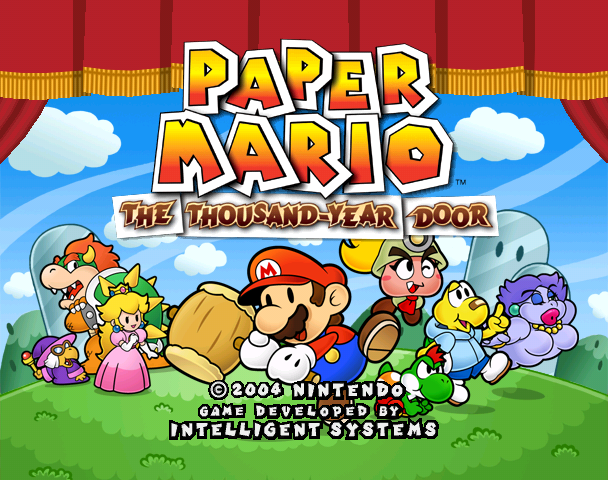
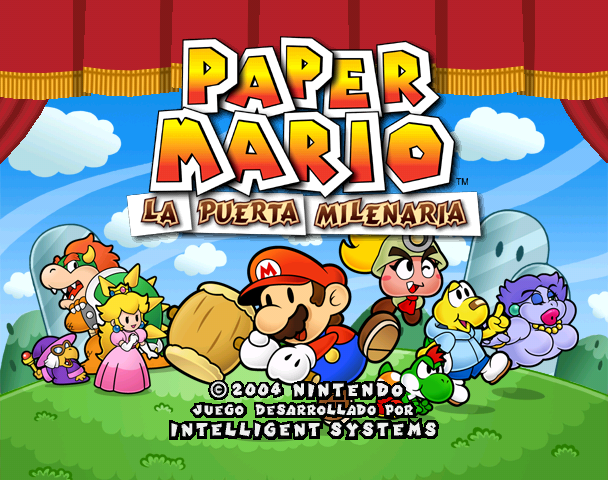
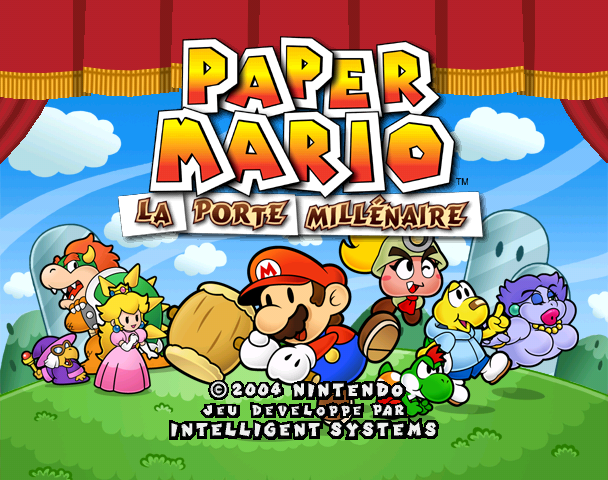
Title Screen#
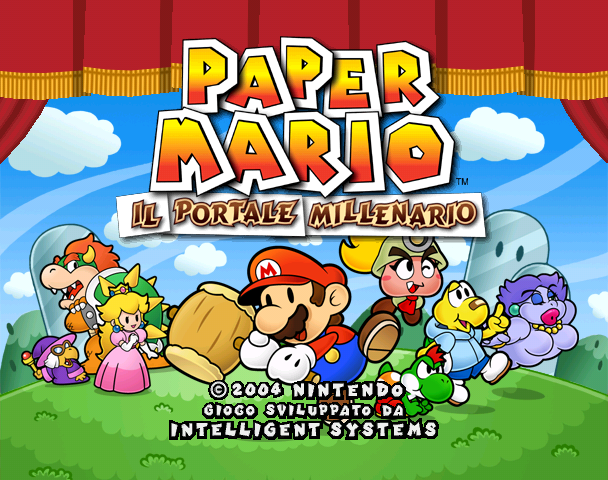
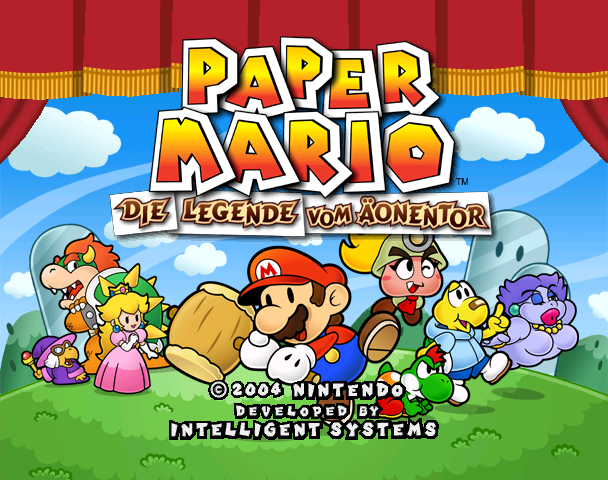
Not only is the title different, the layout of where each character is positioned is slightly different and the grassy hill is higher up in the Japanese version.
Japan |
English |
Spain |
|---|---|---|
 |
 |
 |
France |
Italy |
Germany |
 |
 |
 |
Technical Changes#
- There is no health warning screen when starting up the game in the Japanese version.
- In the Japanese version, Mario and his partners are fully healed at the end of Chapter 1, but at the end of all the other chapters, they do not get healed at all. In the international versions, Mario and his partners are fully healed at the end of each chapter except Chapter 8.
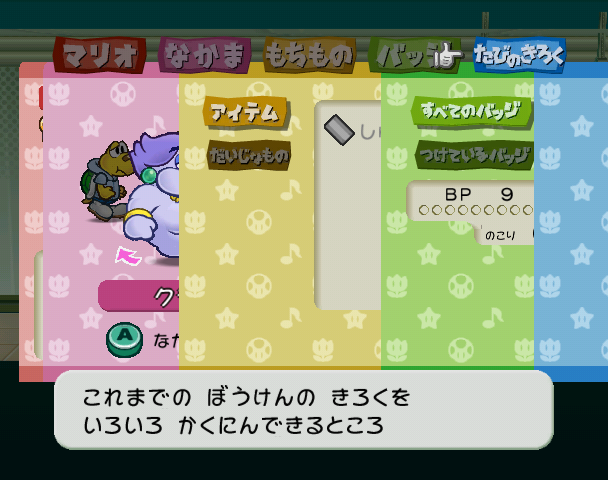
- Switching between Mario, Party, Gear, Badges, and Journal pause menu panels, the player has to wait for the left or right slide transition to complete before navigating to the next panel. In the Japanese version, the player can freely press left or right in the middle of the transition to load the next panel.
- In the Pit of 100 Trials, when you defeat an enemy, the pipes show up faster in the Japanese version.
- At the end of Bowser's levels, fireworks are fired in the Japanese version but not in the international versions.
- There's a Ratooey named Lumpy that hangs around at the east side of the Rogueport docks, and you can give your money to him so that he gives you more money later in the game. In the Japanese version, giving him 200 coins means you'll only end up getting back 500 coins. However, in the international versions, giving him 200 coins means you'll end up getting back 600 instead.
- In the Japanese version, the Multibounce Badge at Pianta Parlor is unlocked by obtaining the Gold Card. In the international versions, it is unlocked by obtaining the Silver Card.
- In the Japanese version, the "Can't flee from this fight!" text at the beginning of mandatory fights is unskippable.
- All enemy Fuzzies have horrible vision in the Japanese version, as they often don't even notice you when you go by them. In the international versions, the Fuzzies have better vision and thus notice you more quickly. In addition, the Fuzzies move slower in the international versions.
- The international versions have more Stylish moves than the Japanese version. For example, there is no second Stylish after a normal jump in the Japanese version.
- In the Japanese version, if you charge a Spring Jump or Hammer Swing while Mario is in the background, Mario will be in his angry expression position. In the international versions, he will stay in his neutral expression position.
- You can start spinning the stick in the air to charge a Spring Jump in the Japanese version, while in the international versions you have to land before doing so.
- In the Japanese version, when you are spinning the stick for any action that requires it, doing a jump will cause the stored spins to be reset back to 0.
- When entering or leaving Paper Mode while falling off of something, Mario will move downwards in the Japanese version, while in the international versions Mario will move left.
- There is no slowdown when moving up slopes on rooftops with Yoshi in the Japanese version.
- In the Japanese version, if you switch to a different partner in a battle and then leave the battle, the partner will always spawn directly behind Mario, even if there is no solid ground there and/or if that would spawn the partner out of bounds.
- Holding A when you don't have the Ultra Boots prevents Mario from moving in the Japanese version.
- Similarly, holding B when you don't have the Super Hammer prevents Mario from moving in the Japanese version.
- When performing the Flurrie Superslide glitch, Mario will move slightly up before going fully downwards in the Japanese version, while in the international versions you will go either left or right.
- When entering and leaving Paper Mode in the Japanese version, your direction and speed are locked until the animation is finished.
- In the Japanese version, failing certain Action Commands causes significantly less damage to be dealt compared to the international versions.
|
Japan |
International |
|---|---|
|
|
|
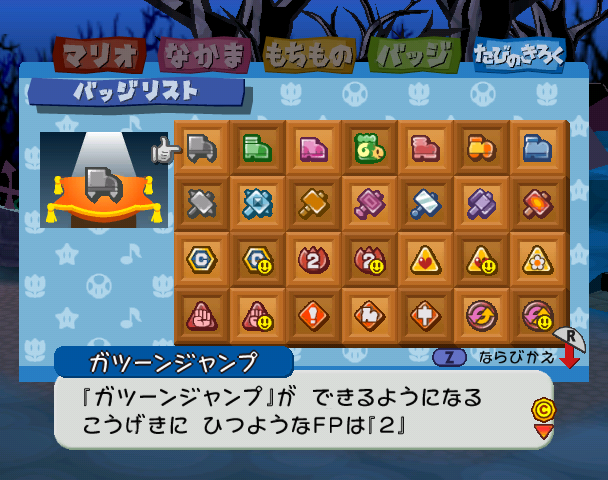
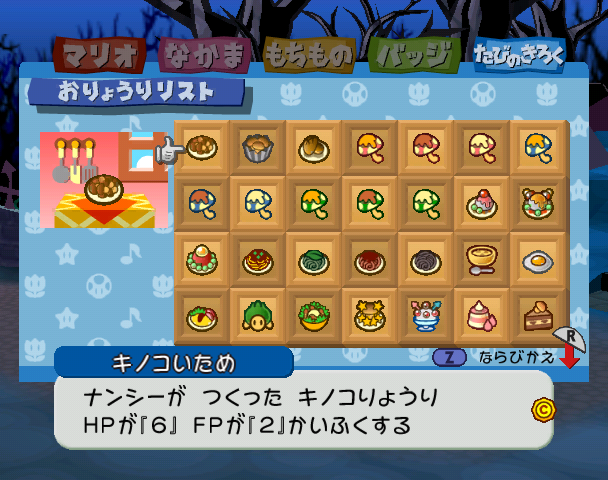
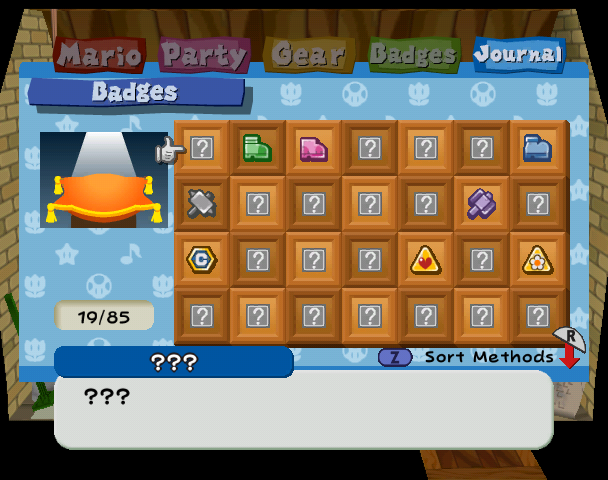
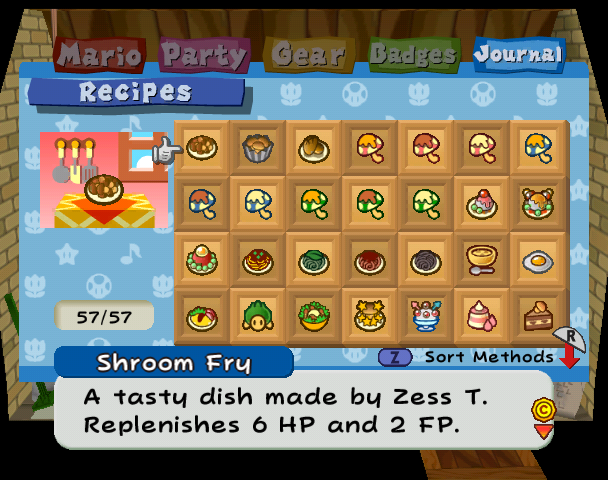
- In the Journal section of the start screen, recipes and badges aren't counted, only tattles. Internationally, all three are counted.
|
Japan |
International |
|---|---|
|
|
|
- In the Japanese version, some item combinations that are given to Zess T. give different recipe results. The Nintendo Switch remake reverts the recipe result for the Thunder Bolt + Thunder Rage back to its original Japanese version.
Item Combination |
Japan |
International |
|---|---|---|
Poison Shroom + Turtley Leaf |
Mistake |
Shroom Broth |
Mushroom + Keel Mango |
Mistake |
Zess Dinner |
[Mushroom/Life Shroom] + Peachy Peach |
Mistake |
Zess Dinner |
Ultra Shroom + Peachy Peach |
Zess Dinner |
Zess Special |
[Dried Shroom/Mushroom/Super Shroom/Life Shroom] + Fresh Pasta |
Zess Dinner |
Zess Special |
Ultra Shroom + Fresh Pasta |
Zess Special |
Zess Deluxe |
Poison Shroom + Point Swap |
Ultra Shroom |
Mushroom |
Slow Shroom + Jammin' Jelly |
Maple Super |
Jelly Super |
Mushroom + [Turtley Leaf/Golden Leaf] |
Life Shroom |
Shroom Fry |
Super Shroom + [Turtley Leaf/Golden Leaf] |
Life Shroom |
Shroom Roast |
[Life Shroom/Ultra Shroom] + [Turtley Leaf/Golden Leaf] |
Life Shroom |
Shroom Steak |
Thunder Bolt + Thunder Rage |
Trial Stew |
Mistake |
- In the Japanese version, some items sell for different prices (in coins).
Item Name |
Location(s) |
Japan |
International |
|---|---|---|---|
Couple's Cake |
All shops |
30 |
10 |
Healthy Salad |
All Shops |
10 |
5 |
Koopasta |
All shops except Niff T.'s shop |
25 |
60 |
Meteor Meal |
All shops |
20 |
40 |
Shroom Broth |
All shops |
33 |
20 |
Shroom Crepe |
All shops |
50 |
100 |
Spicy Soup |
All shops except Northwinds Mart |
10 |
5 |
Zess Dinner |
All shops except Souvenir Shop |
10 |
7 |
Zess Dynamite |
All shops except Deepdown Depot |
30 |
20 |
Zess Tea |
All shops |
10 |
6 |
- Many attacks cannot be Superguarded in the Japanese version:
- All attacks from Crazee and Amazy Dayzee.
- Putrid Piranha's poison breath.
- Ember's multitarget fire breath.
- Flower Fuzzy's magic attack.
- X-Naut PhD's multi-target potion attack.
- The laser attacks from Wizzerd clones, though not Wizzerds themselves.
- Blooper's ink attacks.
- All of Beldam's attacks except her basic punch.
- Magnus von Grapple's earthquake attack.
- The Iron Cleft's charge.
- Rawk Hawk's prop drop attack.
- Bowser's fire breath.
- All of Atomic Boo's attacks except its body slam.
- All of Cortez's attacks in Phase 1, and his charge attack from Phase 2.
- All of the X-Naut Platoon's attacks during the Keelhaul Key battle against Lord Crump.
- All of Smorg's attacks.
- All of Magnus von Grapple 2.0's attacks except its X-Punches.
- All of Grodus's attacks (though not those of his Grodus Xes).
- All of the Shadow Queen's attacks.
- All of Bonetail's attacks.
These attacks were made consistent with the international version in the remake, with all of these attacks being Superguardable.
Change of Positions#
Many things are positioned differently between the Japanese and international versions:
- On the Level Up screen, the cursor is set to FP by default in the Japanese version, while in the international versions you have to manually move the cursor to either HP or BP.
- In the sewers, to the right of the Plane Panel leading towards Blooper, the platform extends 25 units further to the left in the international versions.
- During pre-Chapter 5, Swindell the Bandit is moved to the far side of East Rogueport near the barrels. In the international versions, there is one less barrel, and Swindell's position is slightly altered.
- Koopook is moved to a different position (further to the left) in Hooktail Castle during his trouble in the Japanese version. The Nintendo Switch remake reverts him back to his original Japanese position.
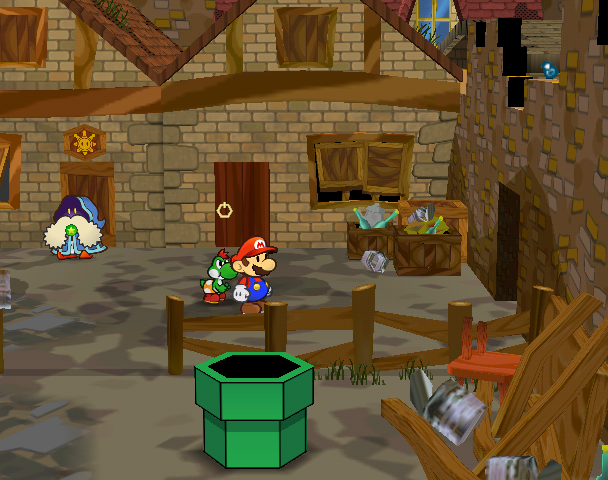
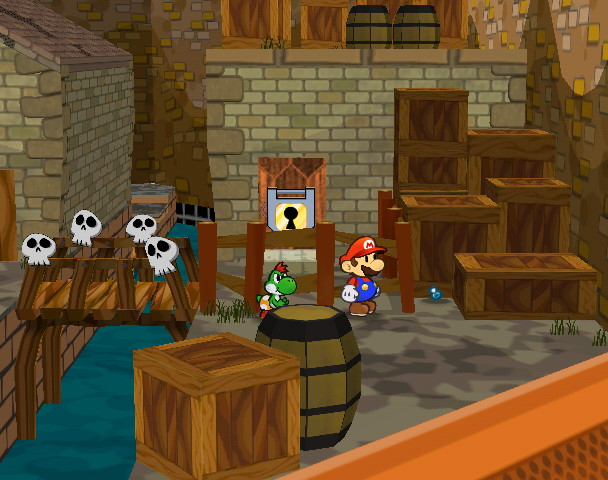
- The Wedding Ring for Frankie's trouble in Rogueport is in a different position in the Japanese version as opposed to the international versions. In the Japanese version, it is on top of the archway that Gus blocks in East Rogueport. In the international versions, it is instead located near a set of crates at the very east end of East Rogueport. The Nintendo Switch remake reverts it back to its original Japanese position.
|
Japan |
International |
|---|---|
|
|
- One of the plane panels in Hooktail's castle is 97 units further to the left in the Japanese version.
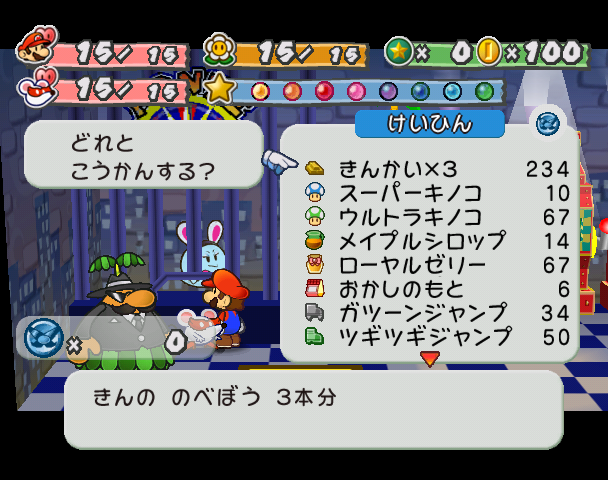
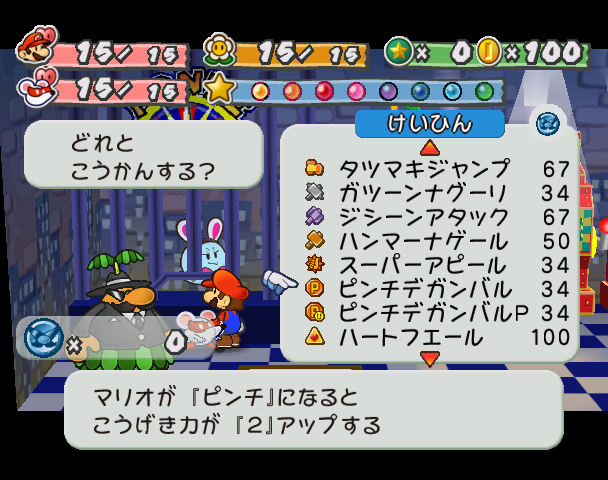
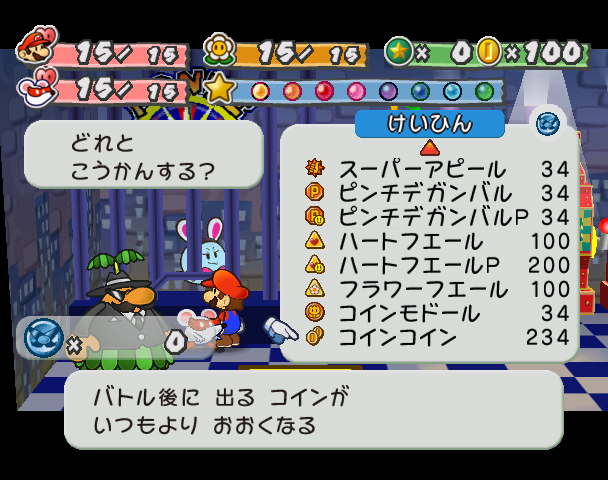
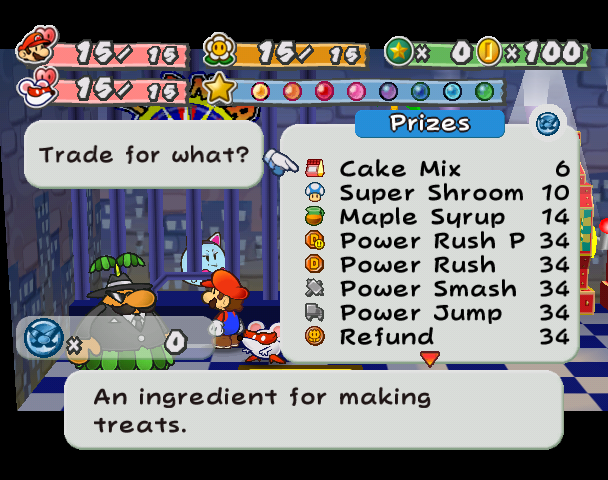
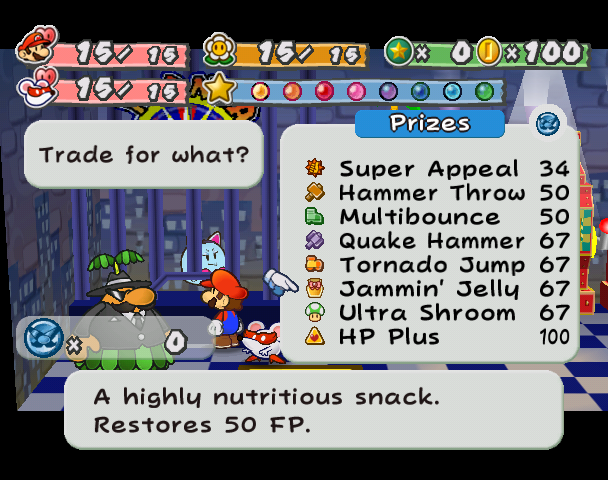
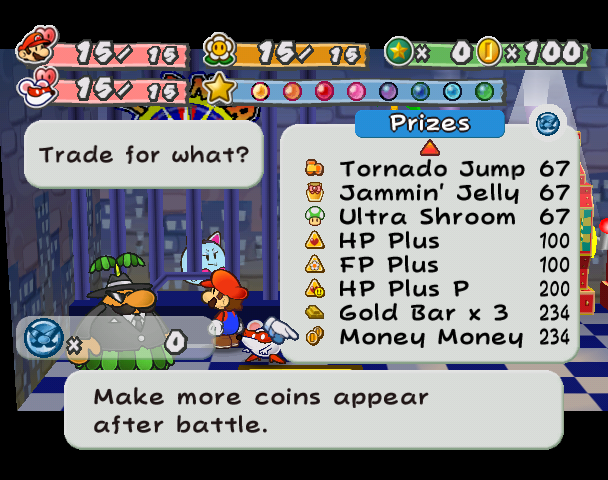
- The menu at the Pianta Parlor was rearranged. The Japanese version is organized by item type, with Gold Bars first, then consumables, then badges, with similar badges grouped together; international versions are organized by cost, from cheapest to most expensive.
|
Japan |
International |
|---|---|
|
|
|
Area Changes#
Several areas had some changes made between the Japanese and international versions.
Prologue#
- The X-Nauts who jump on you in the Prologue move faster in the Japanese version.
- In the Japanese version, the moving platforms in the Rogueport Underground (the one in the first area and the two in the room with the pipe to Petal Meadows) do not move as far to the left and right as the ones in the international versions.
Chapter 2#
|
|
To do: |
- In the Japanese version, the right Pale Piranha on the screen where you fight the Shadow Sirens in Boggly Woods acts differently from the one in the international versions.
- In the Japanese version, when unlocking the blue cage door in the Great Tree, the game checks for and removes the Strange Sack from your inventory if you have it (which will permanently prevent it from being obtained again as there is only one in the game). If the player has more than 10 items in their inventory when they lose the Strange Sack, they can get the normally unused Debug Badge to appear in their inventory. This doesn't happen in the international versions.
- In the Japanese version, Punio's textbox when he thinks about how to reveal the secret entrance does not pause in the Japanese version.
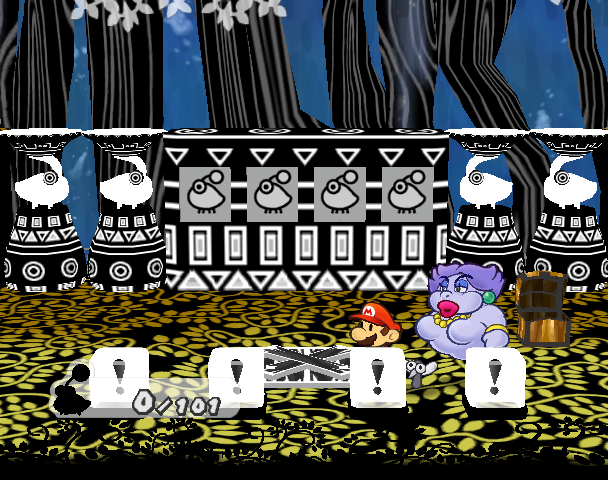
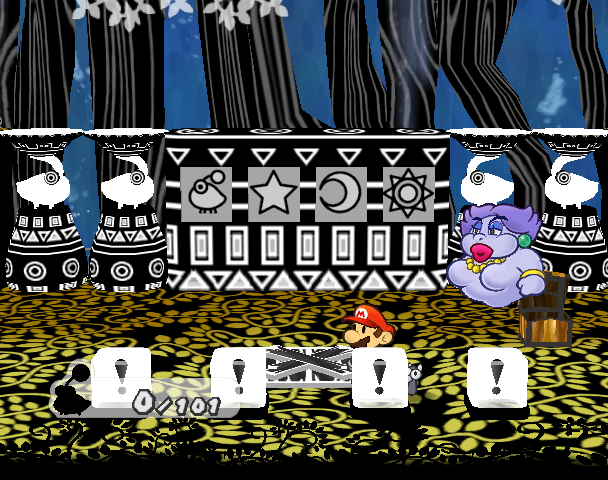
- In the room where you have to hammer the switches to gain access to the Super Boots room, in the Japanese version, the 4 statues all have Punis on them before hitting the switches, but in the international versions, the 4 statues have the following (left to right) on them before hitting the switches: Puni, Star, Moon, Sun. The Nintendo Switch remake reverts it back to its original Japanese position.
|
Japan |
International |
|---|---|
|
|
- In the Japanese version, after unlocking the blue cage door, there are several frames where you are able to move around freely. An example of this can be shown in the video below, in which the blue cage lock can be interacted with at the same time as entering paper mode, and after pressing A to select the blue key, the analog stick can be held in the direction of the loading zone while also holding R, which will cause Mario to walk towards the loading zone while the cutscene is playing. This will cause the cutscene to not finish properly, and thus will result in a softlock. If this is attempted in the international versions, the game will return Mario to normal while the lock is falling, and you will not be able to move at all before the cutscene starts.
- In the Japanese version there is a sound effect for pressing A too early on the Multibounce timing, but it only occurs if the jump is after the second enemy in a fight. This sound effect was removed in the international versions.
Chapter 3#
- In the Glitz Pit, all fights (excluding ones that start with special cutscenes, such as The Goomba Bros. and The Armored Harriers) start about 2 seconds faster in the Japanese version when compared to the international versions.
- In the Japanese version, when returning to Rogueport from Glitzville, the entire cutscene is about 7 seconds longer than in the international versions.
- During Peach's section right after Chapter 3, when leaving the dressing room to return to TEC after talking to Grodus, the player can move while the door is opening in the Japanese version.
Chapter 5#
- In the Japanese version, you can get the Keel Mango from the trees at Keelhaul Key at any time. In the international versions, you must complete the chapter first. This was most likely changed to ensure that the player gives Flavio a Coconut rather than a Keel Mango, as both items are tropical food and giving Flavio any food item that's not a Coconut will result in him asking for something more tropical. The Nintendo Switch remake allows you to get the Keel Mango at any time just like in the original Japanese version; however, now Flavio has a unique dialogue when the player tries to use Keel Mango in exchange for the Chuckola Cola, where Flavio will still reject Keel Mango claiming that "mangoes do not agree with Flavio".
- One Flower Fuzzy on the screen with the blue pipe in Keelhaul Key was removed in the international versions. The Nintendo Switch remake adds back the extra Flower Fuzzy.
- The Flower Fuzzy on the screen with the two Putrid Piranhas will continue to move around if it falls down in the Japanese version, while it will stay still in the international versions. The Nintendo Switch remake has the Flower Fuzzy continue to move around just like in the original Japanese version.
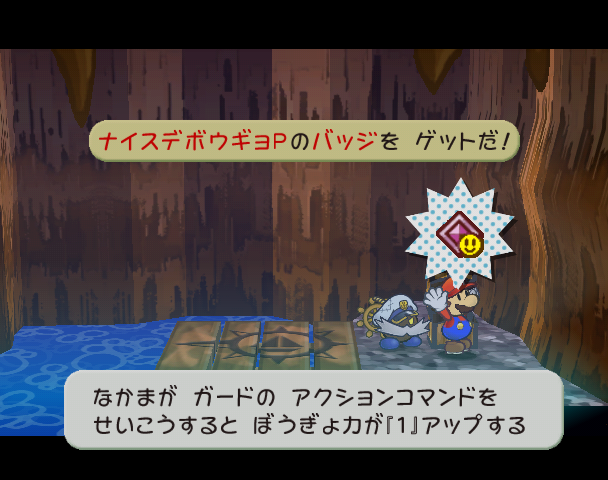
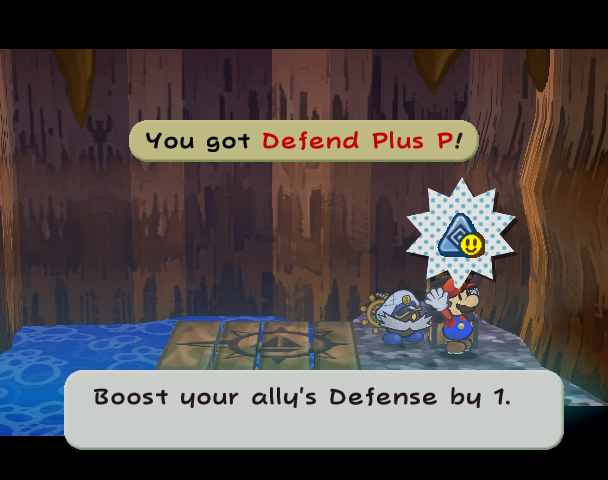
- In Pirate's Grotto, the chest behind the waterfall contains a Damage Dodge P badge in the Japanese version. In the international versions, this is a Defend Plus P badge, despite the official player guide claiming that the Damage Dodge P badge is found in that chest.
|
Japan |
International |
|---|---|
|
|
- In the black chest room in Pirate's Grotto, when you defeat the Embers, the key will randomly fall to the left or right in the Japanese version. In the international versions, it simply falls straight down.
Chapter 6#
- On Day 3 of the Excess Express, you get an email in the dining car in the Japanese version. In the international versions, you get this email to the right of Mario's room.
- The Smorgs gyrate a lot faster in the Japanese version.
- When the Smorgs appear when talking to the Engineer, they will not cover the right part of the window in the Japanese version.
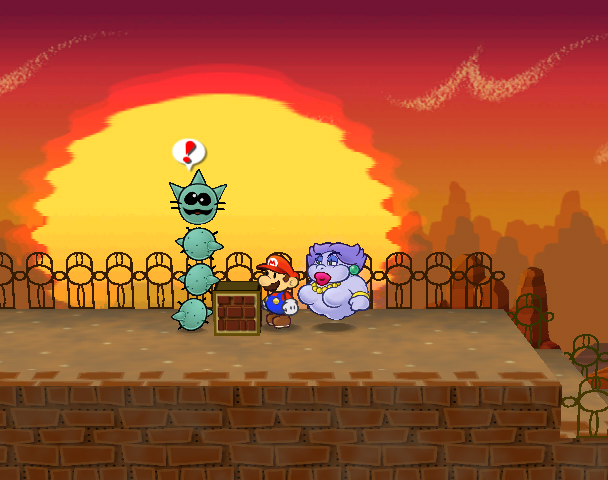
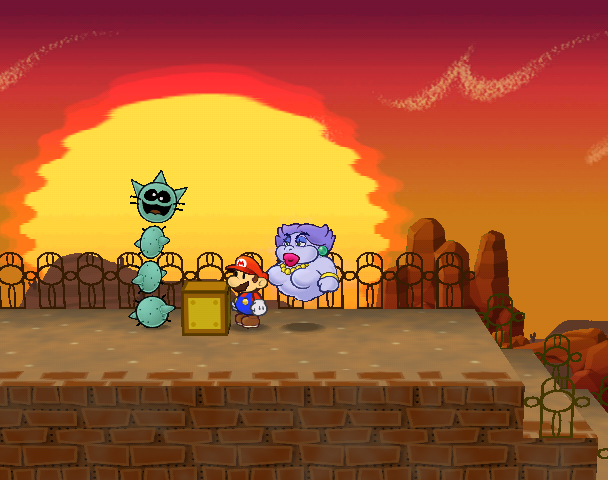
- In the outside room at Riverside Station with the Poison Pokeys and Ruff Puffs, there is a block that can be jumped on to hit a hidden block that contains a Thunder Rage. In the Japanese version, this block is a breakable block, and breaking it will cause it to stay broken until you leave Riverside Station. The international versions made this block unbreakable. Also the scenery background elements and rocks are different.
|
Japan |
International |
|---|---|
|
|
Chapter 7#
- The "safe path" in X-Naut Fortress's third puzzle room was lengthened from two to three squares long in the international versions.
- On the moon, on the screen with the pipe, blowing up the rock containing the pipe causes a small cutscene to play in the Japanese version. This cutscene does not occur in the international versions.
Chapter 8#
- During the first phase of the Shadow Queen fight, you need to do at least 39 damage to her in the Japanese version. In the international versions, you need to do at least 61 damage.
Graphical Changes#
|
|
To do: |
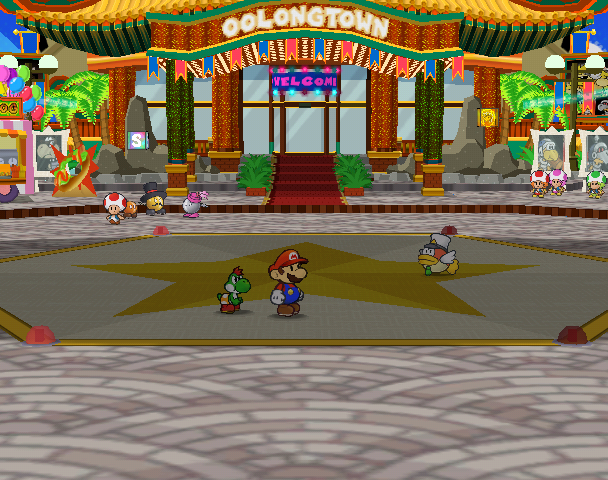
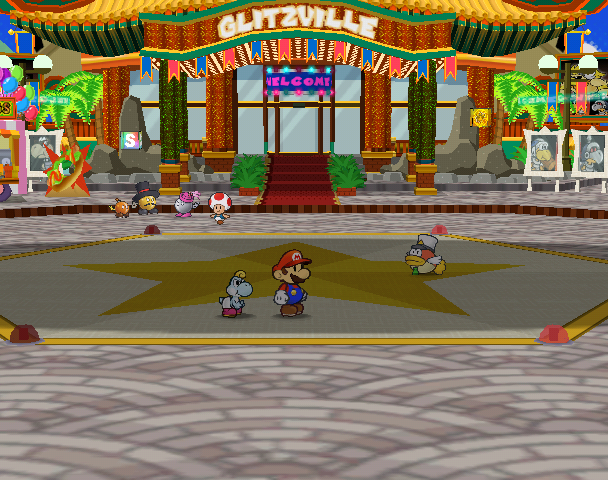
- In Glitzville, the sign above the main entrance says "Oolongtown" in the Japanese version rather than "Glitzville" in the English version. Each foreign localization of the game changes this sign appropriately.
- Welcome below the Glitzville sign and hot dog stand are also changed according to language.
|
Japan |
International |
|---|---|
|
|


- The sign above the Pianta Parlor says "Monte Game" in the Japanese version rather than "Pianta Parlor" in the English version. Like with Glitzville, each foreign localization of the game edits this sign appropriately.


- In the Japanese and American versions, Mario has two different talking animations, one involving him raising his hand and one involving him moving his mouth, and each one is used in different scenarios. Only the "mouth moving" one is used in the European version, however, to avoid an unintentional resemblance to the Nazi salute.
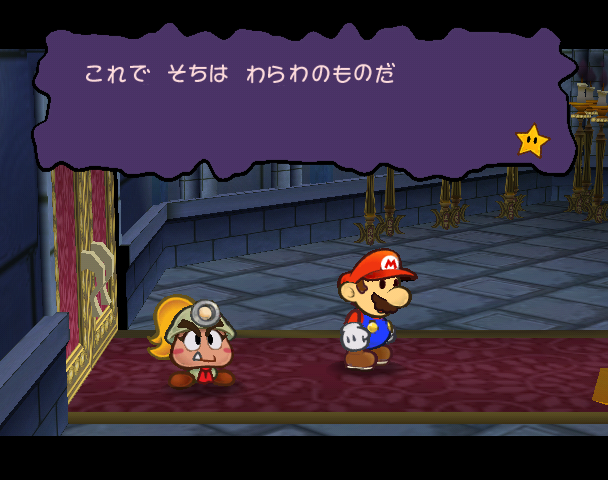
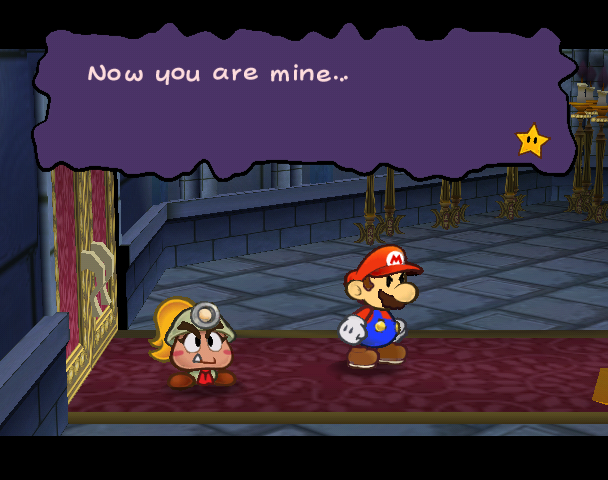
- In the Japanese version, upon agreeing to become the Shadow Queen's servant, Mario will do the animation that Doopliss uses when he has taken Mario's form. In international versions, he instead continues to have an angry expression, possibly because Doopliss's animation doesn't take into account the effects of the L and W Emblem badges. The flash of light that hides the models being swapped was left in. The Nintendo Switch remake leaves the original scene intact and properly displays with the L and W Emblem badges.
|
Japan |
International |
|---|---|
|
|
Banner#
When in the GameCube disk menu option, the banners are different for Japan and International versions.
|
Japan |
International |
|---|---|

|

|
Luigi's Book#
|
Japan |
International |
|---|---|

|

|
The cover was re-colored from orange-yellow to red-orange, and the outline was made a bit thicker.
Wrestling Magazine#
|
Japan |
International |
|---|---|

|

|
The Wrestling Magazine has some barely-visible Japanese text (プロレス, "Pro Wrestling") that was changed to barely-visible English text ("Wrestle") in the international version.
The remake bases it off the original graphic, but makes the text even more illegible.
Power Rush and Power Rush P Badges#
|
Japanese |
English |
|---|---|
|
|
|


The Power Rush and Power Rush P badges have a different letter for every language. The discrepancy is likely because of the regional names of the Danger effect; it is obviously called Danger in English, but is referred to as Pinch in Japanese. The U.S. ROM also contains the original P version, as well as K, A, and C versions, presumably for other languages (another example of this in the U.S. ROM is the Japanese, English, French, Spanish, Italian, and German versions of the "Good" message that appears when you successfully execute a timed attack in battle).
Peeka and Lahla#
|
Japan |
International |
|---|---|

|

|
Peeka and Lahla, the Boo sisters who run the Westside Goods store and Pianta Parlor, respectively, have bunny ears in the Japanese version. They instead wear cat ears in the international versions, likely to tone down the resemblance to the Playboy bunny. The Playboy bunny outfit is actually copyrighted, so this might have been for legal reasons rather than censorship. In the Nintendo Switch remake, this change is retained in all regions.
Chuckola Cola#
|
Japan |
International |
|---|---|

|

|
The Chuckola Cola, known as the Vintage Red in the Japanese version, was renamed and recolored from red to purple, probably to make it look and sound less like wine while also turning it into a Mario & Luigi: Superstar Saga reference.
Chapter 4 Doopliss Name#

|
'...But does it make sense?' |
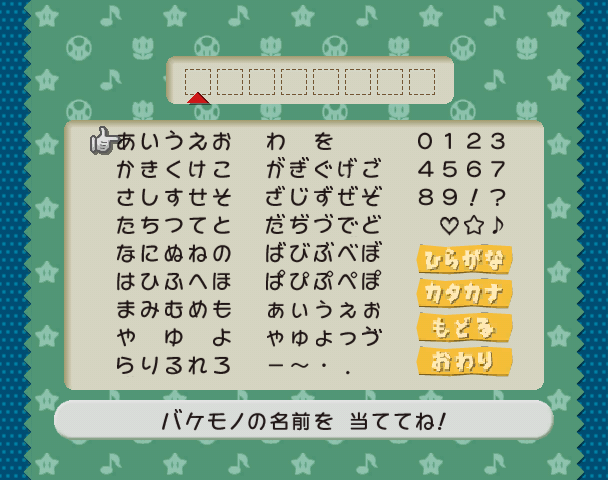
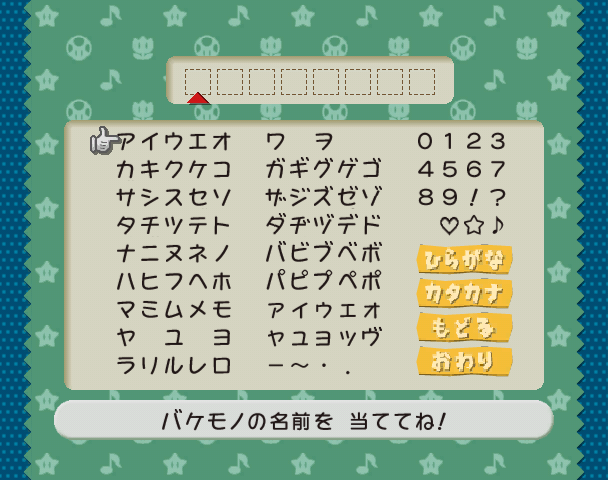
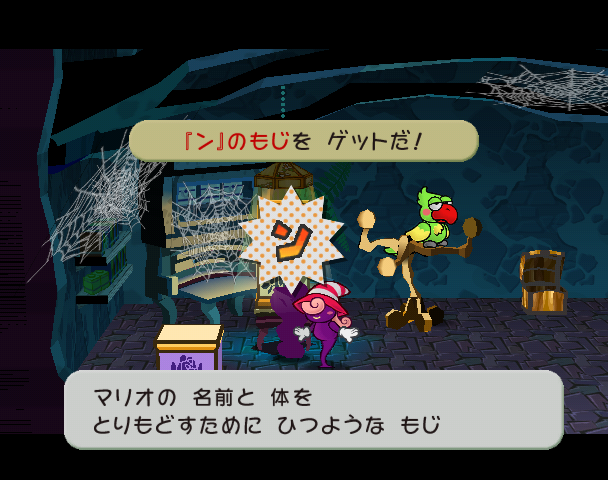
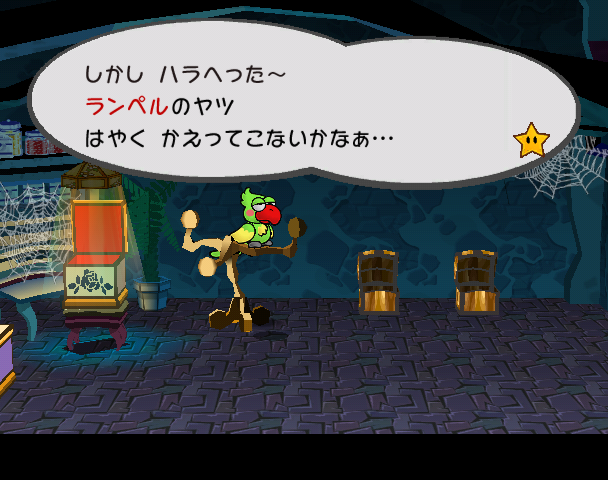
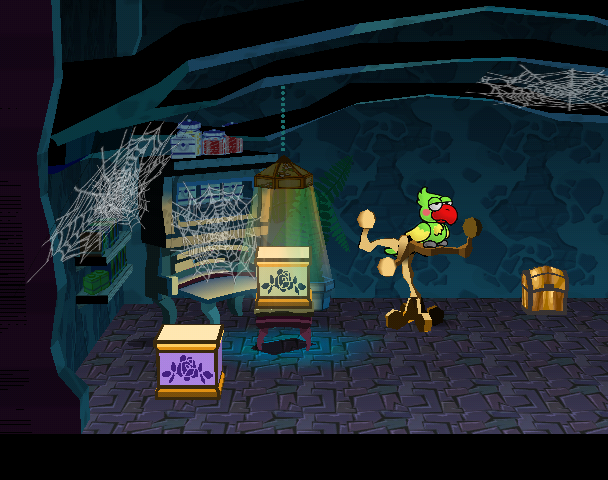
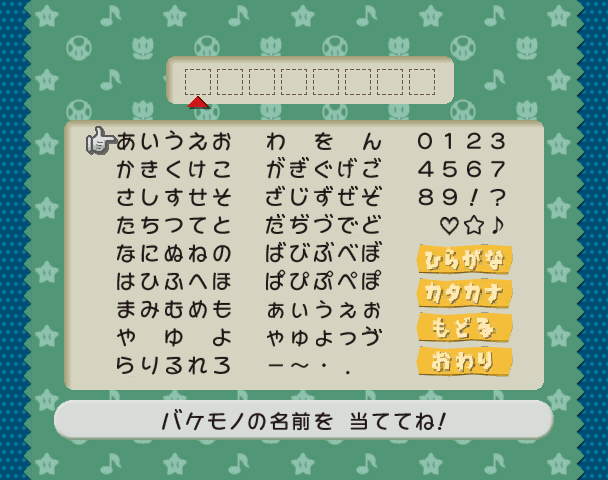
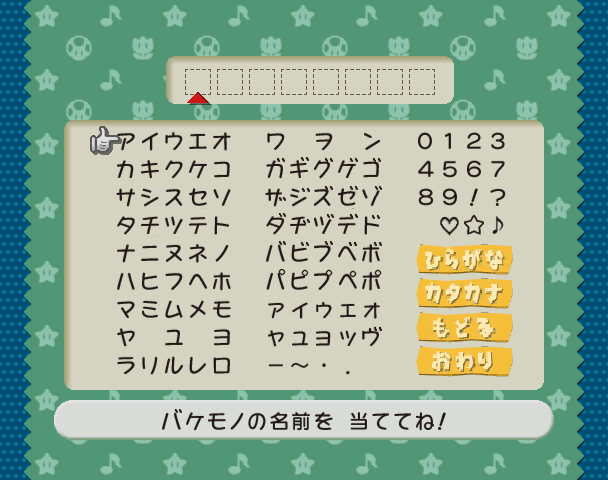
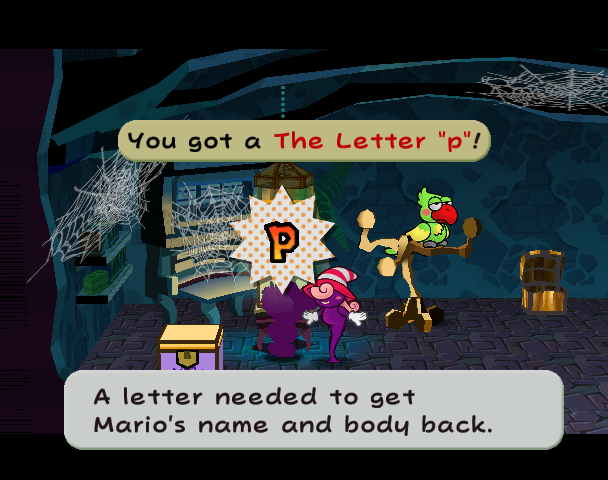
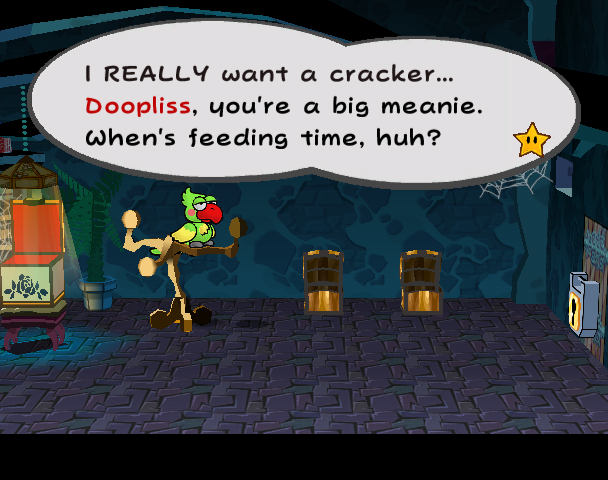
In the Japanese version, the character entry screen doesn't have access to the Latin alphabet, so katakana is used instead. Both ん and ン are disabled during the events of Chapter 4 when trying to guess the Duplighost's name, until the item in the same room as the parrot is collected in Creepy Steeple. In this game he is ランペル, transliterated "Ranperu", believed to be from the English pronunciation of "Rumpel," short for "Rumpelstiltskin." For the English release, only the lower case "p" is disabled, and all potential cultural references were dropped in favor of his name now being Doopliss, playing off of the generic enemy name from the previous game.
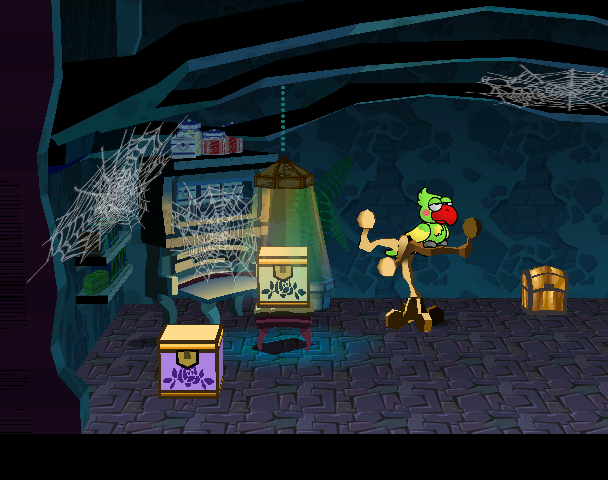
There are unique style treasure chests in this room. The international version appears to have locking latches while Japan doesn't have them and has a more sleek design.
|
Japanese |
International |
|---|---|
|
|
|




66th Annual Quirk Quiz#
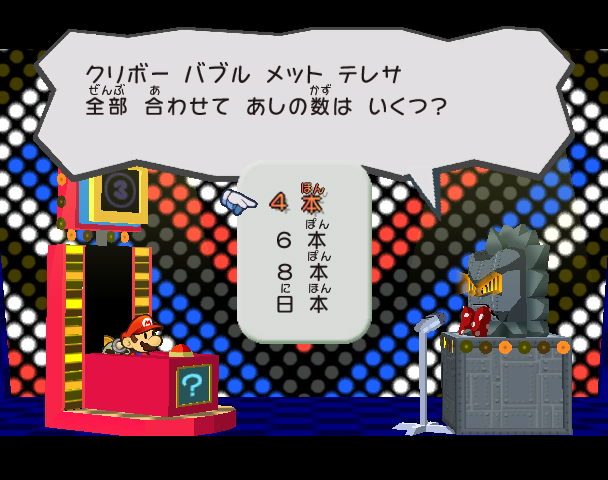
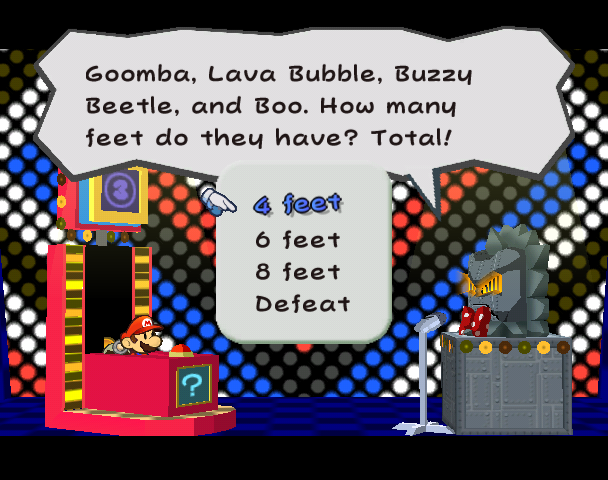
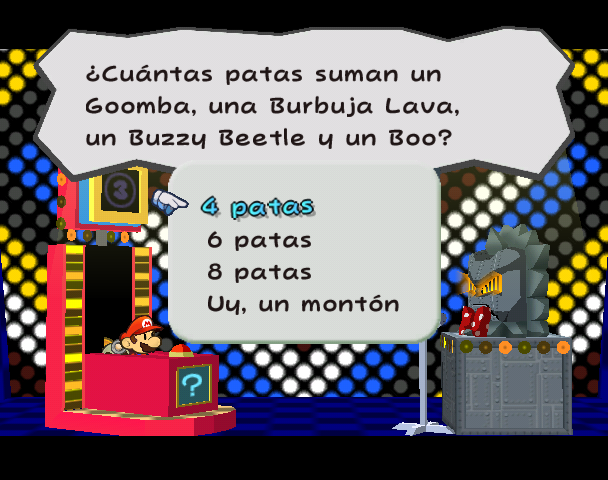
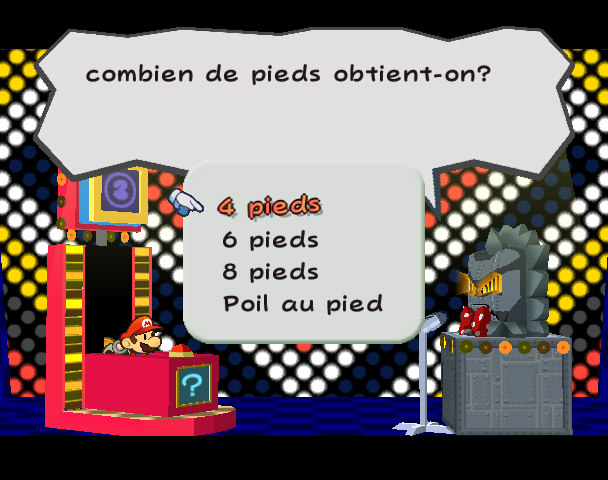
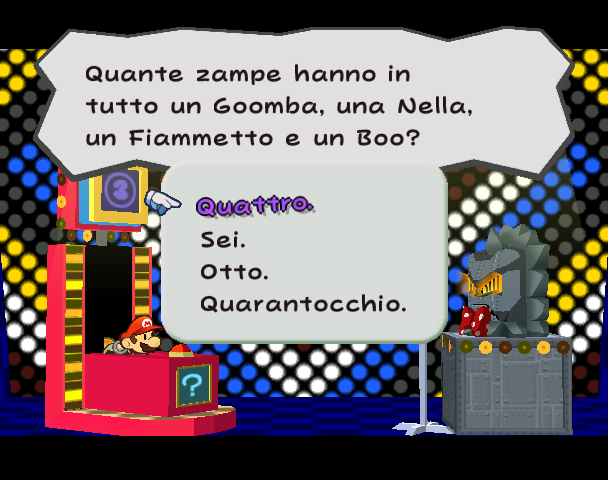
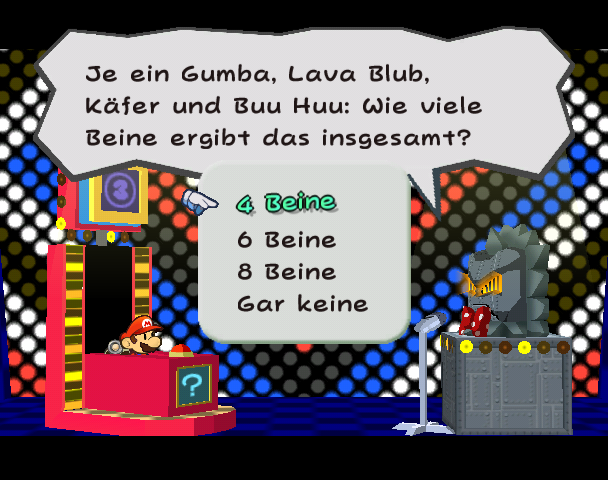
The host of the 66th Annual Quirk Quiz has a joke answer as the last option for the question of how many feet there are in total. The pun varies by region.
- In Japanese, a pun is used, and it is Japan (日本).
- In English, the joke answer is "Defeat", which rhymes with "feet".
- In Spanish, the joke answer is exaggerated and sarcastic, saying "oh, a lot" (Uy, un montón).
- In French, the joke answer is a childish rhyme used to express irritation or mockery, meaning "hair on the foot" (Poil au pied).
- In Italian, the joke answer is a nonsense word using "quaranta" (forty) with a made up ending reminiscent of a name, resulting in "Quarantocchio."
- In German, the joke answer rhymes with the other options, and it means "none at all" (Gar keine).
Japan |
English |
Spain |
|---|---|---|
 |
 |
 |
France |
Italy |
Germany |
 |
 |
 |
TEC#
|
Japan |
International |
|---|---|
|
|
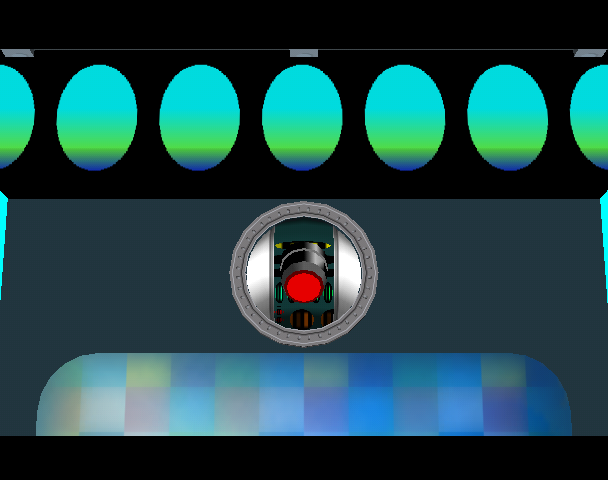
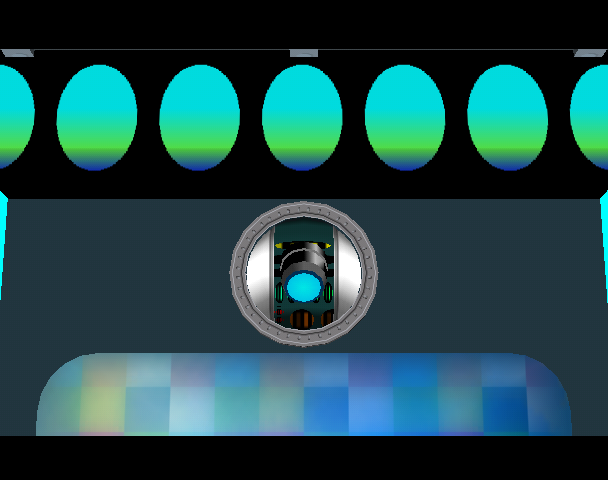
TEC's "camera eye" is red in the Japanese version, but was changed to blue in the international versions, possibly to avoid resemblance to HAL 9000 from 2001: A Space Odyssey. It does, however, make TEC resemble SAL 9000 from 2001's sequel, 2010: The Year We Make Contact.
The Nintendo Switch remake features TEC's original red eye in all regions.
(Source: Mario Wiki)
Messy Shed#
|
Japan |
International |
|---|---|
|
|
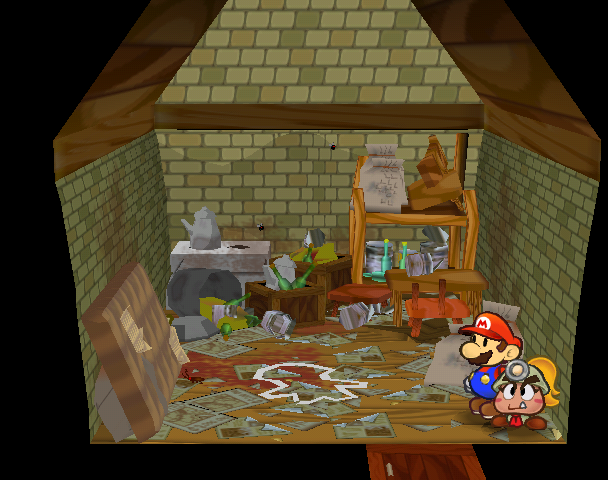
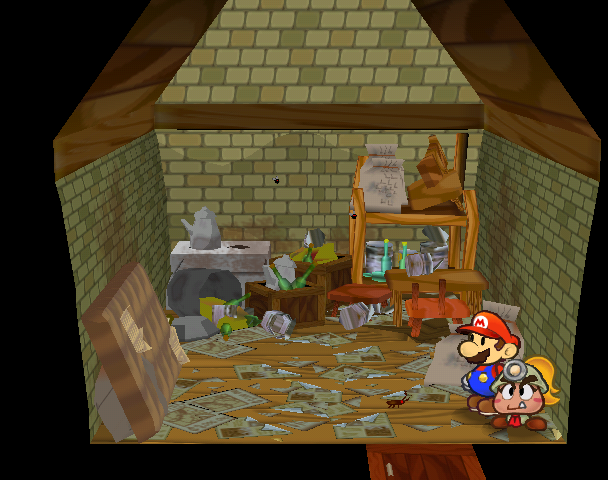
The messy shed in the back alley of Rogueport's central plaza (behind Podley's juice bar) has a Toad-shaped chalk outline with a puddle of blood lying nearby in the Japanese version, implying it to be a murder scene. These details were removed from all subsequent versions. This has also been removed even in the Japanese version of the Nintendo Switch remake.
Stylish Pose Differences#
Performing a stylish move with the regular jump has a different pose for Japan compared to the international version.
|
Japan |
International |
|---|---|
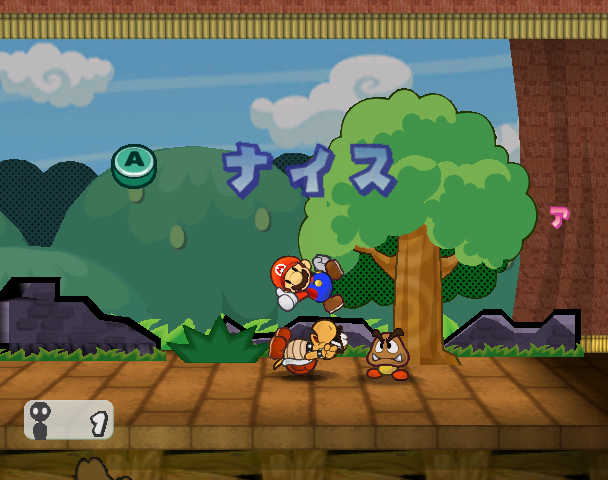
|
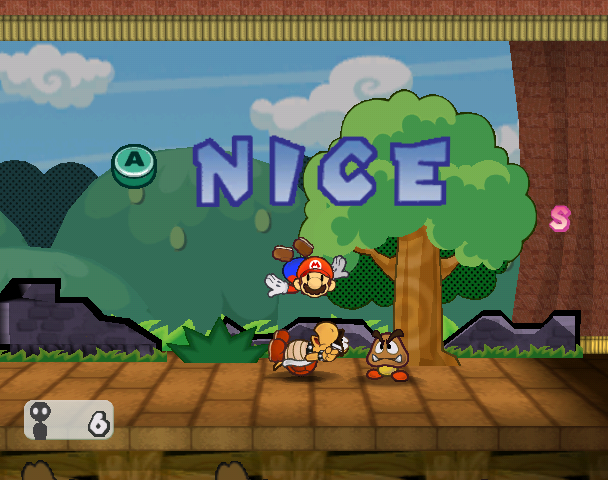
|
Added Texts#
There are some text lines that were added in the international versions:
- There is no "Thank you" message after buying something from a shop in the Japanese version.
- On the Level Up Screen, the "Select one to upgrade!" text isn't present in the Japanese version.
- The Shadow Sirens in Boggly Woods do not say anything when Mario is at 1 HP in the Japanese version.
Added Graphics/Animations#
There are some graphics/animations that were added in the international versions:
- In the Japanese version, after Bowser's swimming level in post-chapter 4, Bowser does not do some animations during the cutscene with Kammy: He doesn't do the animation of crossing his arms and closing his eyes, and he also doesn't do the animation of looking angry before blowing fire at Kammy.
- Peeka doesn't talk to the door during the part when she lets you into into the Pianta Syndicate's room in the Japanese version.
- In the Japanese version, there is no animation for giving the autograph to Bub in the Excess Express.
- When you are selling badges to the badge shop, the badges that you currently have equipped do not have a symbol next to them in the Japanese version.
Flashing Lights#
A few cutscenes involving flashing lights were edited down in the international versions, probably to reduce the chance of players getting epileptic seizures:
- The flashing lights during the first Shadow Queen cutscene were reduced.
- The flashing lights during the cutscene in the room that makes the Emerald Star appear were reduced.
Weirdly enough, the animation for Showstopper and the Black Chests cursing Mario, despite arguably being worse than any of these, weren't changed at all.
Character Differences#
Vivian#
|
|
To do: |
|
|
'...But does it make sense?' |
Vivian's gender identity is inconsistent between different language translations. In the Japanese version, Vivian identifies and presents as female, but is described as actually being an effeminate-looking boy, aligning with common media depictions of transgender characters at the time while not explicitly referring to her as such. The French version directly carry this over and additionally describes her as a boy pretending to be a girl; while the Spanish version describes her as a boy who looks like a girl.
The Italian version, meanwhile, explicitly describes Vivian as a trans girl; the localization additionally reconfigures her relationship with her gender identity and with her sisters, depicting Vivian as being openly proud of her identity and transition, with Marilyn and Bedlam's bullying of her being rooted in jealousy, traits which are absent in the Japanese script. The English and German versions remove any references to being transgender or gender nonconforming, implicitly portraying Vivian as a cisgender girl; instead of being bullied over her biological sex, her sisters instead belittle her for her appearance. Vivian's original depiction is retained in the Nintendo Switch remake's English and German localization.
- Excerpt from party member description (msg_menu_party_vivi):
Original |
Translation |
|||||
|---|---|---|---|---|---|---|
Japanese |
|
|
||||
English |
|
|||||
French |
|
|
||||
German |
|
|
||||
Spanish |
|
|
||||
Italian |
|
|
- Excerpt from Goombella's tattle (btl_hlp_vivian):
Original |
Translation |
|||
|---|---|---|---|---|
Japanese |
|
|
||
English |
|
|||
French |
|
|
||
German |
|
|
||
Spanish |
|
|
||
Italian |
|
|
- Excerpt from the Sirens' introduction to Mario and his party in Chapter 2 (win_00.txt):
Japanese |
Translation |
English |
Remake |
|||||||||||||
|---|---|---|---|---|---|---|---|---|---|---|---|---|---|---|---|---|
Beldam |
|
|
||||||||||||||
Marilyn |
|
|
||||||||||||||
Vivian |
|
|
|
|
||||||||||||
Goombella/ |
|
|
|
|
||||||||||||
Beldam |
|
|
|
|
||||||||||||
Vivian |
|
|
|
|
||||||||||||
Beldam |
|
|
|
|
||||||||||||
Vivian |
|
|
|
|
|
||||||||||||
- Excerpt from Goom Goom's trouble (dou_04.txt):
Japanese |
Translation |
|||||||||
|---|---|---|---|---|---|---|---|---|---|---|
Goom Goom |
|
|
||||||||
Vivian |
|
|
English |
Japanese (Remake) |
Translation (Remake) |
|||||||||||||
|---|---|---|---|---|---|---|---|---|---|---|---|---|---|---|---|
Goom Goom |
|
|
|
||||||||||||
Vivian |
|
Hooktail#
Hooktail's gender is inconsistent between different language translations. The English version refers to Hooktail as a female, but in some other translations, like the Spanish version, Hooktail is referred to as a male.
Also in the Japanese version, Hooktail's weakness is actually frogs and not crickets like in the international versions. This was likely changed due to the fact that the sound effect made by the Attack FX R badge, which weakens Hooktail if equipped, is based on the call of a Japanese Tree Frog, which sounds noticeably different (and indeed more cricket-like) compared to species of frogs western players would likely be more familiar with. The Switch remake changes the sound of the badge to that of a more traditional frog call in all regions, allowing them to revert her weakness to being frogs in the remake's international versions.
Bonetail#
Bonetail's gender is inconsistent between language translations as well. In most languages, Bonetail is referred to as a male. However, he is referred to as a female in the Japanese and German versions of the game, and his Italian name (Ossandra) comes from the Italian word for bone (osso) and the name Cassandra. Bonetail is now referred to as a female in the English version of the Nintendo Switch remake.
(Source: Mario Wiki)
Shadow Queen#
The Shadow Queen is more informal and down-to-earth in the Japanese version. She was rewritten to be more formal and condescending in the English script, possibly to play her up as more of a threat.
English Dialogue Difference#
Japan |
U.S. |
Europe |
||||||
|---|---|---|---|---|---|---|---|---|
|
|
|||||||
|
|
|
||||||
In the U.S. script, one of Koopie Koo's messages was accidentally made a duplicate of the one before it. The European version properly translated it.
Aside from this, the U.S. and European English scripts are exactly the same, bar some punctuation and enemy stat changes.
(Source: Original TCRF research)
Errors#
|
|
To do:
|
Unless noted otherwise, all of these errors were fixed in the Switch remake.
Battle Items#
- The description for the POW Block item in the English version mistakenly states that it only damages ground-bound enemies when in actuality it damages all enemies including flying enemies and enemies on the ceiling.
- The description for the Earth Quake item in the English version mistakenly states that it only damages ground-bound enemies when in actuality it also damages enemies on the ceiling.
- The description for the Shooting Star item in the English version states that it makes enemies confused which is false.
- The description for the Thunder Bolt item and the Thunder Rage item in the English version states that it makes enemies stunned which is false.
Enemy Stat Errors#
Every enemy's stats stayed the same between all versions. However, the American version's Tattle text mistakenly claims that the Red Spike Top has 5 defense instead of 4, and that Rawk Hawk has 3 attack and 1 defense rather than 4 and 0, respectively. These mistakes were not present in the Japanese version and were corrected in the European version.
Zess T.'s Recipes#
- The English text mistakenly says that the Zess Frappe and Icicle Pop recover 20 and 10 HP when in fact they recover 20 and 15 FP in all versions.
- The Japanese text mistakenly says in the Recipe page that the Snow Bunny, Koopa Bun, and Icicle Pop recover 30 HP, 20 FP, and 10 FP when in fact they recover 15 HP, 15 FP, and 15 FP in all versions.
Toadette#
In the German and Spanish versions, Toadette is erroneously referred to as Vanna T., a character from the previous Paper Mario game. This error occurred due to Toadette and Vanna T. sharing the same Japanese name.
Sky-Blue Spiny Eggs#
In the English version, Goombella's tattles for Dark Lakitu and Sky-Blue Spiny mistakenly state that Dark Lakitus throw "pipes" which spawn Sky-Blue Spinies. This is due to the Japanese name for Spiny Eggs, パイポ (paipo), being misinterpreted as "pipe", even though all other instances of Spiny Eggs are translated correctly.
(Source: Legends of Localization)
Lost in Translation#

|
This needs some investigation.
|
Being a sequel, The Thousand-Year Door has its share of callbacks to the original Paper Mario. While many of them remained intact, a few slipped past Treehouse's notice:
- After completing his trouble, Koopook sends an email to Mario and Koops telling them he's hiding in the Crystal Palace (クリスターしんでん, "Crystar Temple"). Unfortunately, the "Kuri" part of the area's name was misinterpreted as standing for "Goomba" (Kuribō) rather than "Crystal" (Kurisutaru), and so it was rendered as "Goomstar Temple" in the English version.
- Similarly, Pine T. states his dad has a new job taking care of "Bubu" in Toad Town. Būbū-san (ブーブーさん) is the Japanese name of the Li'l Oinks.
- The Chestnut King has the same name as the Goomba King (クリキング, "Kuri King"). Assuming this is meant to be the same character, it adds an extra layer of humor to Luigi's adventure, as he's essentially embarking on an epic quest to conquer the first game's tutorial boss.
- Notably, the remake retains the Chestnut King name. Either these were separate characters after all, or Treehouse just prioritized the food-themed naming scheme over continuity.
- One of the crows in Twilight Town mentions chatting with a friend in "Mushroom Town". This is a literal translation of Kinoko Town (キノコタウン), or Toad Town. Most other mentions of Toad Town in the script were translated correctly, so this stands out as particularly odd.
- Another one that wasn't was "Mushville" in one of the quiz questions at Shhwonk Fortress ("Where is the Crystal Star?"), which was also "Kinoko Town" in the Japanese version.
- Speaking of the quiz, question 3 ("What is the name of the mayor of Petalburg?") has "Nokojirō" (ノコジロウ) as the first answer, which is the Japanese name of Koopa Koot. It was translated as "Kooskoos" in the English version.
- Also, the Super Fun Quirk Quiz is itself the next iteration of the 64th Trivia Quiz-Off... hence it being the 65th (and later the 66th). Both are どきどきクイズ ("Heart-Pounding Quiz") in Japanese, though The Thousand-Year Door opts to render the dokidoki part in katakana instead of hiragana. The remake fixed this by reverting to the Paper Mario name.
Japanese |
GameCube |
Switch |
|---|---|---|
|
|
|
Translation |
||
- In all languages except for English, the final RDM email contains a special "secret" addendum that can be read by scrolling down long past the email's supposed end point. It contains a reference to Chuck Quizmo, the wandering quiz show host from the original game, and makes mention of the Point Swap's effect in recipes. Judging by the fact that the game's internal map list contains an orphaned entry for a Chuck Quizmo map, it can be assumed that Quizmo was going to make a reappearance in The Thousand-Year Door (hosting a slightly different type of quiz show from the one in Paper Mario), and that the content of the email is a sly allusion to this. It's unknown why this section was removed from the original English localization, but it's possible the translators just didn't catch it.
|
|
'...But does it make sense?' |
Japanese |
GameCube |
Switch |
||||||||||
|---|---|---|---|---|---|---|---|---|---|---|---|---|
|
|
|
||||||||||
Translation |
||||||||||||
|
- The Goomba Tattle is an oddity among the rest in that it ends immediately after the stat readout. Turns out Goombella does say something extra in the Japanese version, which for whatever reason was left out of the localization. The remake restored it, but incorporated it into the rest of the Tattle such that it no longer takes up a text box of its own.
Japanese |
Literal Translation |
English Localization |
||||
|---|---|---|---|---|---|---|
Paper Mario |
|
|
|
|||
The Thousand-Year Door |
|
|
|
- Also, the "underling of underlings" part is a direct reference to Goombario's corresponding Tattle from the previous game. This was lost in the English version, since the phrase was translated differently. Both this and the comment above would be referenced by Tippi in Super Paper Mario (and yet again translated into something else).
- Interestingly, given that Goombella specifically notes it came from the book, and Goombario is known for his rude personality in Japan, this vaguely implies that he was the one who wrote it-- or at least contributed that entry. What a twist!
Glitches#
Many glitches that were found in the Japanese version were fixed in the international versions.
Frankie's Ring Doesn't Despawn#
In the Japanese version, if Frankie's trouble is cancelled while the ring is currently spawned, it will not be despawned. If another trouble is taken and then the ring is collected, the ring will set a flag that is used by other troubles. This allows some troubles to be progressed simply by collecting the ring.
Vivian Softlock#
In the Japanese version, while in the ground with Vivian you are able to open the pause menu at any time, even when in a cutscene. If you do this during Vivian's tutorial, the game will softlock after the tutorial.
Clipping through doors with Bobbery#
In the Japanese version, by flipping into Paper mode with R while activating Bobbery's ability with X and then pressing A to open a door as soon as he explodes, you can clip outside the door.
Bubble Room Freeze#
In the Japanese version, it's possible for the game to actually freeze in the Bubble Room when blowing most/all of the 101 Punies over. This can be avoided by allowing the Punies to exit the bubbles before going to the right side of the area by the pipe.
Minor League Room Freeze#
In the Japanese version, breaking the large yellow block in the Minor League room with the Super Hammer can sometimes crash the game. This can be avoided by charging up a full hammer spin before releasing it, as opposed to releasing the spin immediately.
Sort Glitch#
In the Japanese version, the pause menu allows you to sort a list while closing the menu at the same time, which will cause the game to think you are still in the sort menu the next time you open the menu, but the normal cursor will still be available to use (although invisible). This allows you to sort any of those categories within the start menu every time the A button is pressed.
Storage Room Glitch#
In the Japanese version, it is possible to clip out of bounds in the Storage Room in Glitzville.
Invisible Shadow Queen Hands#
In the Japanese version of the game, the Shadow Queen’s hands sometimes fail to appear. This can occur in both phases of the fight. This is purely a graphical bug, so the hands still function as normal.
Partner/Follower Physics Glitch#
In the Japanese version, some function(s) that normally reset value(s) relating to partners don't work correctly, which leads to partners doing buggy things such as moon jumps and glitching out when Mario goes up and down stairs.
Partners Missing Animations When Upgrading#
In the Japanese version, when upgrading partners and a partner is chosen that is not currently out (so the game has to manually bring them out before continuing), all of the animations that the partner does during the cutscene will fail to play.
Localization Name Changes#
This game features many localization name changes, including puns & references. Some notable name changes include:
English Version#
- One of the Toads at Petalburg says he likes playing Fire Emblem on his GBA. In all other versions, he instead says that he likes playing Super Mario Bros. on his Famicom/NES.
- Question #1 of the Thwomp quiz in Shhwonk's Fortress has "Pickle Stone" as the fourth option in the English version. In all other versions, the fourth option of this question is "Luigi's underwear".
- Question #2 of the Thwomp quiz in Shhwonk's Fortress asks for the price of a Mr. Softener and a Fire Flower in the English version as opposed to the price of a Mushroom and a Fire Flower in all other versions. However, in the English Paper Mario: The Thousand-Year Door demo in GameCube Demo Disc Version 18, this question asked for the price of a Mushroom and a Fire Flower like in the other versions. Additionally, the official player guide states on page 29 that the second question asks how much a Mushroom and Fire Flower cost total. The Nintendo Switch remake uses the non-English question.
Spanish Version#
- Chapter 3's title name "Of Glitz & Glory" was changed to "El Rey de Los Luchadores", which translates to "The King of Fighters", a reference to The King of Fighters series.
- Rawk Hawk's name was changed to Hawk Hogan, a reference to the famous WWF/E wrestler Hulk Hogan. Notably, the Spanish version of the remake would end up changing his name again, this time to Halcomán, likely due to legal concerns with Hulk Hogan's estate.
- After defeating The Koopinator, Rawk Hawk says "The weaklings should stay home playing Super Smash Bros. Melee!". In all other versions of the game, he simply says "video games".
German Version#
- Chapter 7's Fahr Outpost is called Großfrostheim, a pun on Großostheim, the former residence of Nintendo of Europe, and "frost".
Italian Version#
- The two lovers, Frankie and Franchesca, are called Giuliano and Romoletta, a reference to Romeo and Juliet.
French Version#
- Vanna T. is referenced instead of Chuck Quizmo in the hidden part of the final RDM e-mail removed from the English version.