 This article has a talk page!

Unused Graphics#

|
To do: |
All unused art is found in both the original release and Plus.
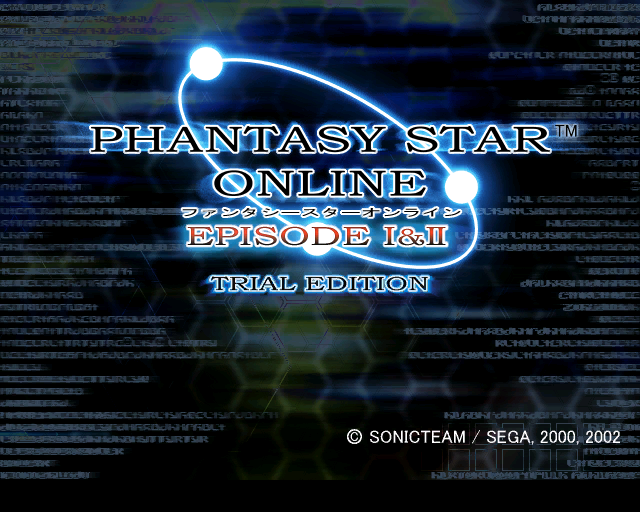
The title screen from the Japanese Trial Version of the game is present in all GameCube PSO builds, including Episode III. The title screen exists in both English and Japanese, although the Trial Version was never released outside of Japan.
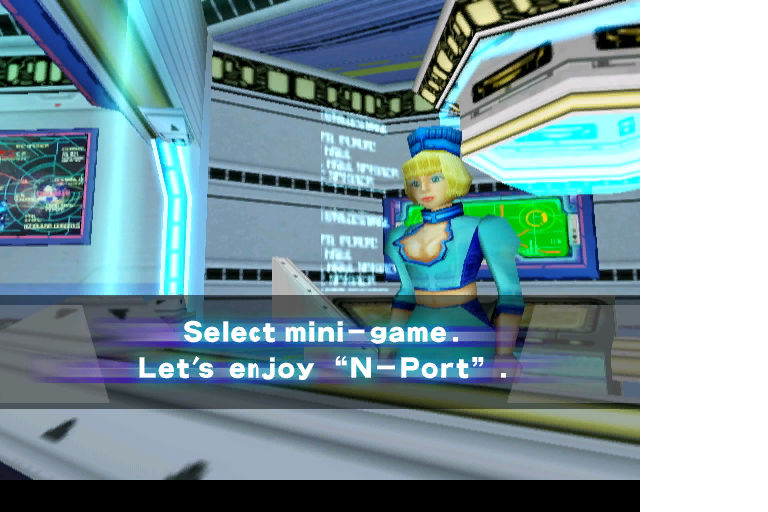
A file called f256_joyboot.gvm is present in all PSO GameCube releases (including Episode III), which references a feature called "N-Port". "N-Port" is a set of games that can be downloaded from a GameCube to a Game Boy Advance console.
(Source: N-Port Info via GameSpot)
Memory card file images#
GameCube memory card files have a small icon and a larger banner, which are shown in the system menu's memory card manager.
There are six types of save files in PSO: the system file, the character file, the Guild Card file, the snapshot file, download quest files, and the network information file. There is a set of icons for these file types, but the network information file uses an animated icon from a different set instead.
There is also a full set of banners for each file type, but the game uses only one of the banners for all file types. The used banner (top) has a slightly larger logo and the "Episode I & II" text was added.
Icon |
Banner |
File |
|---|---|---|
 |
 |
System file |
 |
 |
Character file (banner unused) |
 |
 |
Guild Card file (banner unused) |
 |
 |
Snapshot file (banner unused) |
 |
 |
Download quest files (banner unused) |
 |
 |
Network information file (banner and icon unused) |
Action icons#
These sheets contain the icons used in the Customize menu and action palette. The fourth icon in the top row doesn't appear anywhere in the game, nor does the gray icon next to the "Do not touch the Memory Card" text.


Unused splash screens#
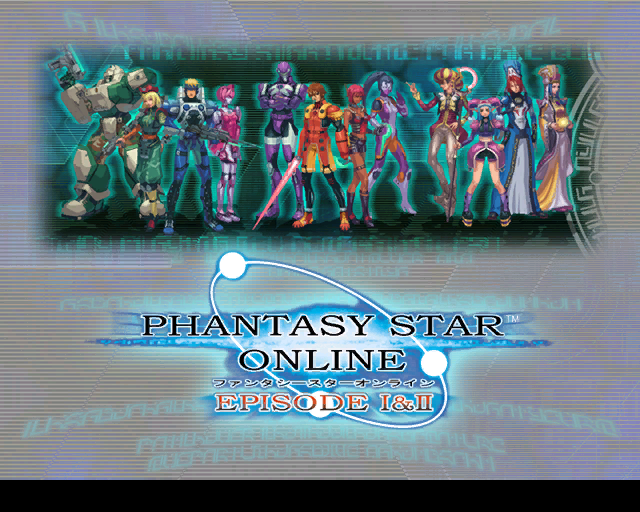
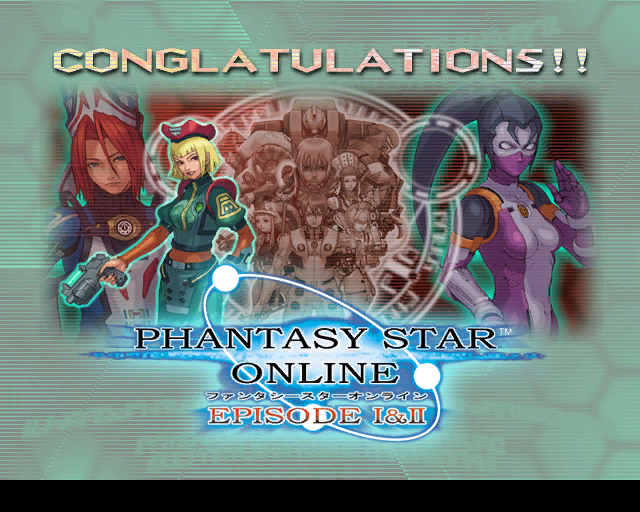
The file containing these images is named ending.gvm, these images were used in the Gekkan Nintendo Tentou Demo of the game, after having the time run out or beating the boss in the area respectively.
Dreamcast Leftovers#
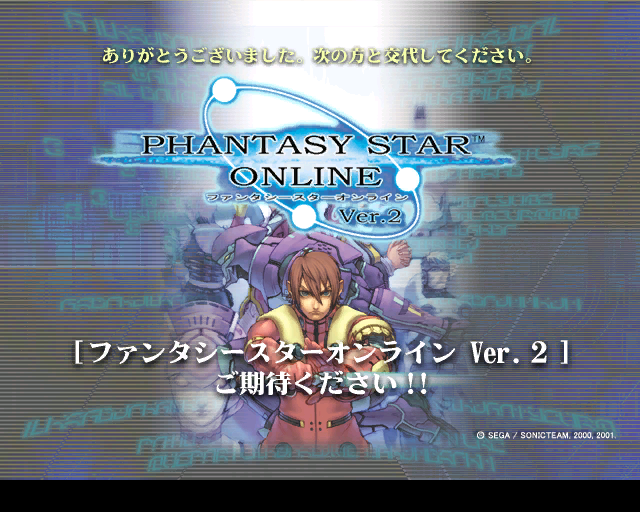
The game also has some leftover assets from the Dreamcast version, including a promotional image from the Sega GameJam demo of Phantasy Star Online Version 2 (2001).

Chat bubble colors#
Curiously, there are 16 colors for chat bubbles, even though the game assumes in most other places that there are no more than 12 players in any lobby or 4 in any game. The command number for chat messages the network protocol is very low, which combined with this finding, suggests that lobbies could hold 16 players instead of 12 early in development. The colors are:
Used in games and lobbies: |
Player 1 |
Player 2 |
Player 3 |
Player 4 |
Used in lobbies: |
Player 5 |
Player 6 |
Player 7 |
Player 8 |
Used in lobbies: |
Player 9 |
Player 10 |
Player 11 |
Player 12 |
Unused: |
Player 13 |
Player 14 |
Player 15 |
Player 16 |
Unused Menu#
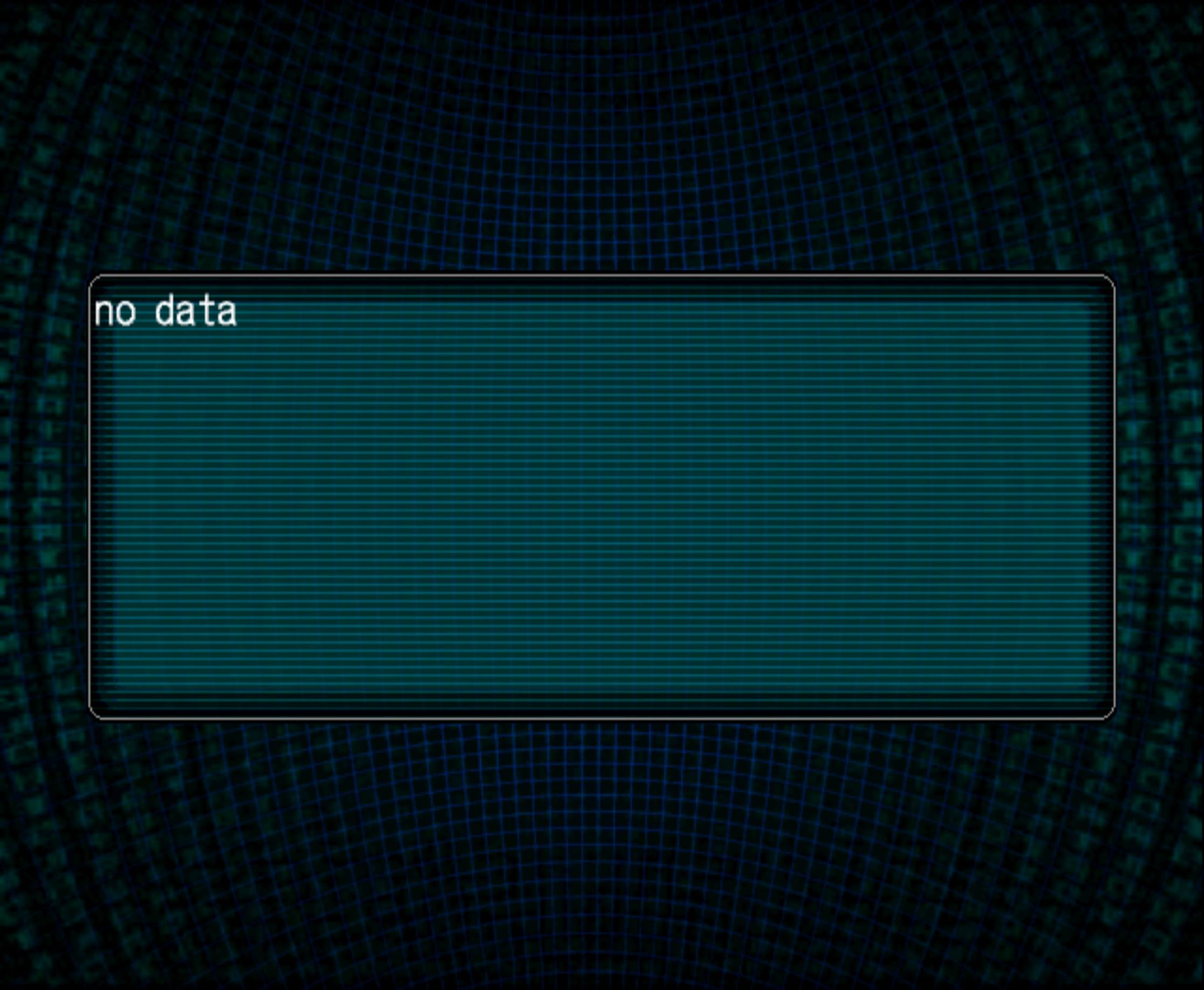
There is one very simple unused menu type in the game. This menu type corresponds to the error box that appeared in the Trial Edition if you didn't have a modem, but its text was deleted (probably because it was never translated to English), so it now just says this:
Debug Mode#
A large quantity of strings in the final game suggest that one or more debug modes are present.
The following strings are related to manipulating enemies. Several settings appear to be assigned to specific enemies:
STATE : NORMAL
STATE : DEAD
STATE : FALLEN
START NUM : %2d
TOTAL NUM : %2d
GROUP:%2d
L/M:LEADER
L/M:MEMBER
RAG-LAPPY
AL-LAPPY
TYPE:IN FIGHTER
TYPE:OUT FIGHTER
TYPE:UNKOWN
TYPE:LOW APPEAR
TYPE:HIGH APPEAR
APPEAR SPEED(+1.f Min:0.01f)
NEEDLE SPEED(+6.f Min:1.f)
MIRAGE:ENABLE
MIRAGE:DISABLE
TEX:GOLD
TEX:NORMAL
STELTH:ENABLE
STELTH:DISABLE
APPEAR:GROUND
APPEAR:ROOF
TECNIQ ATTACK % (+0.4f)
STELTH ON %
STELTH OFF %
The following strings suggest the presence of a model viewer, as well as player location and area warp-related test features:
EVT NO : %d
MODEL SELECT
<- SELECT COLOR
<- MODEL SELECT
SwitchMode:ON->ON
SwitchMode:ON->OFF
SwitchID:%3d
Param No
LINK : ON
LINK : OFF
SELECT TYPE NORMAL
SELECT TYPE VR
SELECT TYPE CTRL CENTER
GOVERNOR
CITY
LABO
<- DST POS X
<- DST POS Y
<- DST POS Z
<- DST ANG Y
<- MODEL TYPE
<- MESSAGE : %s
<- NEXT STAGE No.%d
<- KEY ID : %d
<- SELECT A MODEL
<- DAMAGE POWER
<- ENEMY NUMBER
<- MOTION TEST
ERROR
The test texture used by TIndirectEditor in Episode III is present here as well, but the code for TIndirectEditor was removed from the final build of Episodes I & II.

Unused Music#
Some music that is not used in-game.
Early Central Control Area#
An early version of Jungle A Lush Load.
Early Seabed#
An early version of Abysmal Ball Intermission.
|
The Phantasy Star series | |
|---|---|
|
Master System |
|
|
Genesis |
Phantasy Star II (Localization Prototype) • Phantasy Star III: Generations of Doom • Phantasy Star IV: The End of the Millennium (Localization Prototypes) |
|
PlayStation 2 |
Sega Ages 2500 Series Vol. 17: Phantasy Star generation:2 • Sega Ages 2500 Series Vol. 32: Phantasy Star Complete Collection |
|
Phantasy Star Online | |
|
Dreamcast |
|
|
GameCube |
Phantasy Star Online Episode I&II (Prototype) • Phantasy Star Online Episode III: C.A.R.D. Revolution (Prototype) |
|
PlayStation 2 |
|
|
Nintendo DS |
|
|
PlayStation Portable |
|
|
PlayStation Vita |
|
|
Xbox 360 |
|
|
Windows |
Phantasy Star Online • Phantasy Star Universe • Phantasy Star Online 2 • Phantasy Star Online 2: New Genesis |