 This article has a talk page!

|
This article is a work in progress. |

|
To do:
|
The ultimate kaiju arena brawler, Godzilla: Destroy All Monsters Melee is the first of three Godzilla fighting games developed by Pipeworks Software.
A remake, Godzilla: Destroy All Monsters Melee Remastered, is slated to release on 2026 November 3.
Unused Stages#
|
|
To do: |
Mothership Day#
MOTHERSHIP_day is, as the name suggests, a day variation of the Mothership stage, which was likely cut because the concept didn't really make much sense. The stage itself is mostly identical to its night counterpart, but the skybox is taken from Monster Island day. In the GameCube versions, the ground textures are missing, and the stage can only be accessed on Dolphin, with MMU disabled so it doesn't crash. The Xbox version seems more finished, as all the ground textures are present, and the buildings are retextured a brown hue with all the lights off, giving it a worn or run-down look. The stage loads in Cxbx-Reloaded, but not in Xemu or (presumably) a real Xbox.
Test City#
TEST_CITY is a map that was presumably used to test the various buildings found throughout the game's cities. It is a large flat plane with buildings of all shapes and sizes lined up in rows. It's likely this area was used to test the destruction mechanics, making sure each building type worked as expected. Unlike the other unused stages, the day and night variations of this stage have no functional differences. Test City appears to be based on San Francisco, as the shape of its coast can be seen near the edge of the stage. Also, the water found here is not actual water, but normal ground with a water texture applied. This fake water moves in the GameCube versions, but is static in the Xbox version.
Arena#
ARENA is a very simple test stage with two buildings and a reversed Pipeworks logo on the floor. This stage appears to be based on Test_City, as the shape of the coast can still be seen and the San Francisco lighthouse is still present behind the barriers. While the night variation is completely functional, the day variation of this stage has visibility issues on both platforms. The GameCube versions set the camera near the feet of the monsters, sometimes clipping through the ground, making it almost impossible to see the fight. The Xbox version is pitch black. The lighting seems to be broken, as only things which ignore lighting, like glow effects and beams, appear visible. On the rare occasions you can actually see anything, the camera is improved, as it is seemingly identical to the night variation.
Protoville#
Only found in the GameCube version, PROTOVILLE is pretty much just Arena without the buildings or Pipeworks logo. Both the day and night variations also have the same camera issue as Arena day, and the stage requires MMU disabled to avoid crashes like Mothership day.
Unused Cameras#
|
|
To do: |
This game has several unused cameras. Fixed cam stays locked on the same camera angle for the entire match, no matter where the monsters go. The helicopter camera shows the action from the perspective of a helicopter flying above the monsters. It is used as a replay angle, but never during gameplay. The free camera is what it sounds like, and it is controlled with the second controller. The left stick moves the camera forwards, backwards, left, and right. L moves the camera down, and R moves the camera up. The right stick changes the direction the camera is facing. Up and down on the d-pad increase and decrease the field of view, respectfully. Last and least, the playback camera doesn't allow you to see anything at all.
Baragon Leftovers#
Watch on YouTubeWatch on YouTube
Developer Simon Strange confirmed in an interview that Baragon was planned as an exclusive character for the canceled PS2 port of the game. The character was roughly 70% done at the time of the port's cancellation. The Xbox version contains some leftovers of Baragon's planned inclusion, including his weapon effect, unused audio files, and entries in monster_select.txt. Baragon was later finished and included in the game's sequel, Godzilla: Save the Earth.
(Source: Interview with Simon Strange])
Super X-3#
The Super X airstrike, which made its debut in Godzilla: Save the Earth, was supposed to appear in this game, but was cut before release. When asked about the Super X's removal, the game's producer, Kirby Fong, stated: "We couldn’t get the Super X to work the way we liked with the time we had." It's unknown if the ship would have spawned through a power up, like in Save the Earth, or if the ship would have spawned automatically when enough damage was done to an area, as early development rumors suggested. Visually, the ship looks identical to its appearance in Save the Earth. However, the ship's freeze laser weapon is unable to fire at the player, which could be the reason it was cut. The Save the Earth version doesn't use the freeze ray, and instead fires freeze missiles as its weapon.
(Source: Response from producer Kirby Fong)
Thrashburg#
A DLC arena for the Xbox version that was available for download via Xbox Live before the service was discontinued for original Xbox systems. It was also available on OXM Demo Disc 33 (July 2004). Like the rest of the game's cities, it has one large version and two smaller ones. Thrashburg 1 and Thrashburg 2 are the smaller versions, while Thrashburg 3 is the full-sized map. The map was complied on 2003 September 26, and is internally referred to as MegaCityOne. Strangely, a large amount of the map's assets are labeled NYC. It's possible that this map was originally intended to be New York, which would explain why there's an area resembling Central Park. The filenames of some assets suggests that this map uses assets from Save the Earth's New York stage (or vice versa).
Unused City Select Transition Video#
cityselect1.thp would have been used as a transition while going from the monster select screen to the city select screen. The effect can be seen in the Big Air freestyle demo when the missing bundles are copied over from the final build.
Unused Monster Select Animations#
Watch on YouTubeOn the monster select screen, after you have chosen your monster, you can press A + X (GameCube) or A + Y (Xbox) to taunt your opponent(s).
However, Rodan, King Ghidorah, and Mecha-King Ghidorah have taunt animations that aren't actually used, identical to their taunt animations used in gameplay. Rodan's taunt seems to have been accidentally disabled, as his ONTAUNT property points to the nonexistent animation RODAN_Title_Taunt instead of the correct RODAN_Taunt. Ghidorah and Mecha-Ghidorah's ONTAUNT properties point to their roar animations instead. Ghidorah's taunt may have been purposely left out, as the animation dips his heads below the screen in a somewhat awkward manner.
(Source: All Things Gaming 6)
Build Dates#
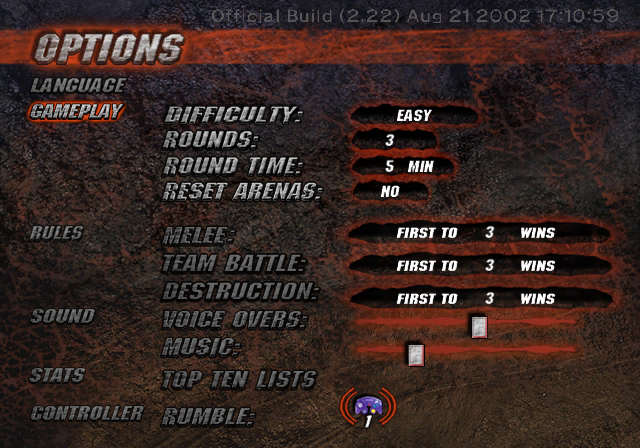
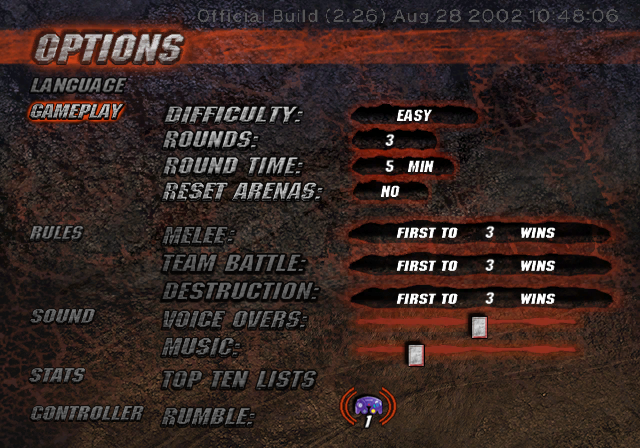
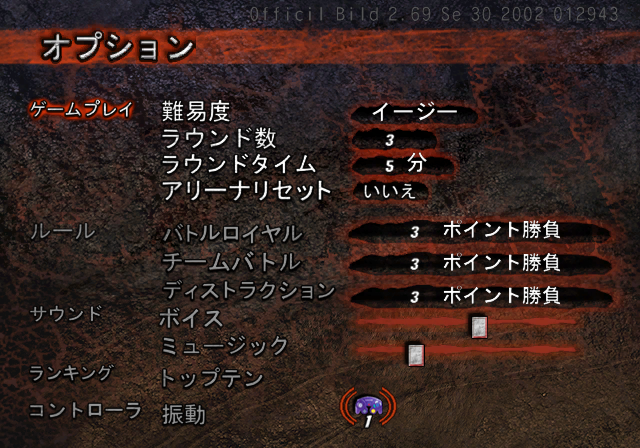
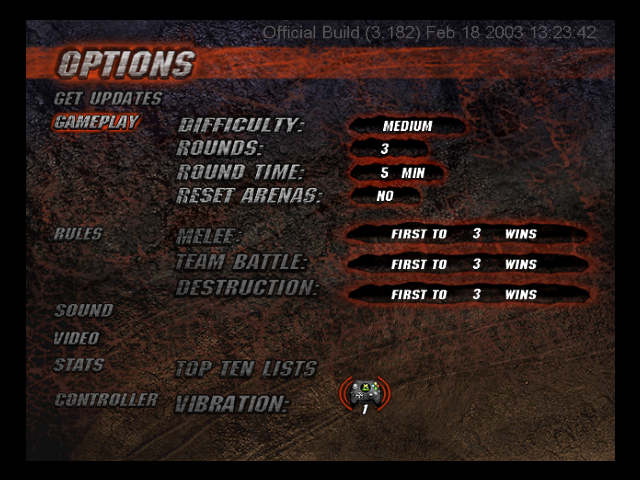
At the main menu, press and hold (one at a time) L, B, and R, then release (again one at a time) B, R, and L. The cheat box will appear. Enter 097401 as a code, and the game's build date will then be displayed in the options menu.
Version |
Screenshot |
Build Date |
|---|---|---|
GameCube (US) |
 |
|
GameCube (EU) |
 |
|
GameCube (JP) |
 |
|
Xbox |
 |
|
Regional Differences#
Title Screen#
|
US/Europe |
Japan |
|---|---|
|
|
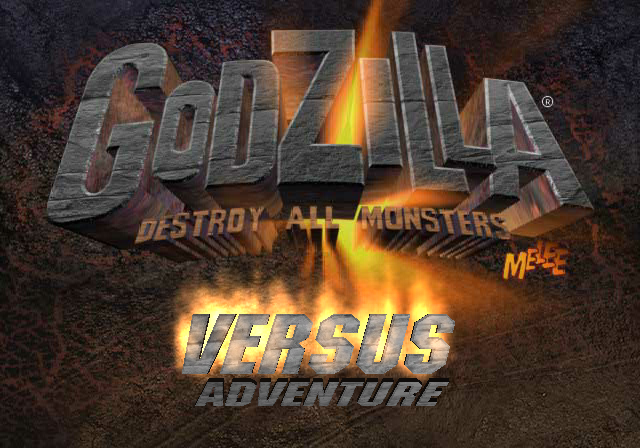
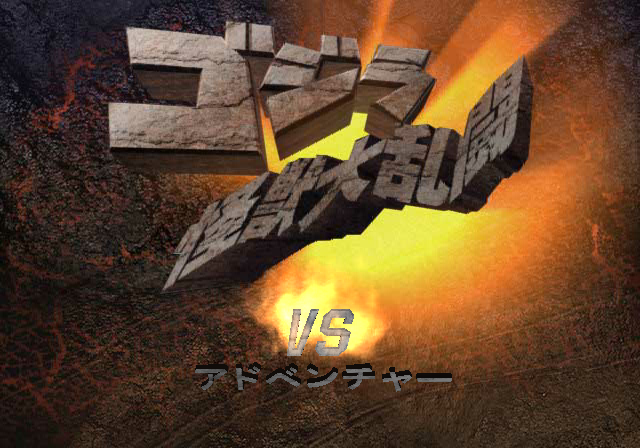
The game's logo was completely redesigned for the Japanese version. In addition to reflecting the game's different title, the Japanese logo is much more ornate and visually striking in comparison.
Banner#
|
US/Europe |
Japan |
|---|---|

|

|
The same logo change in miniature form. The Japanese banner cites Infogrames as publisher instead of Atari, likely due to the Atari brand's lack of success in Japan. All references to Atari within the game itself are intact.
Monster Select#
|
US/Europe |
Japan |
|---|---|
|
|
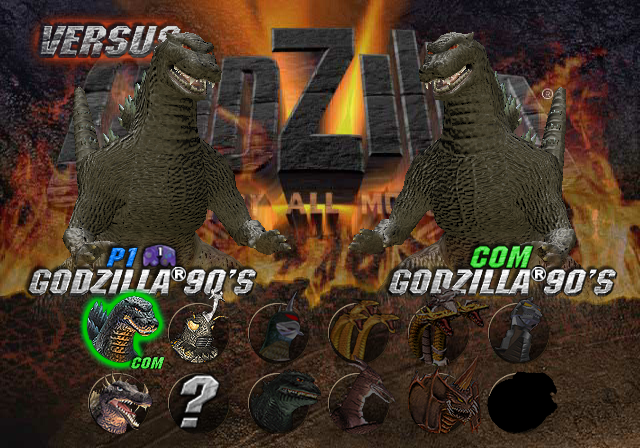
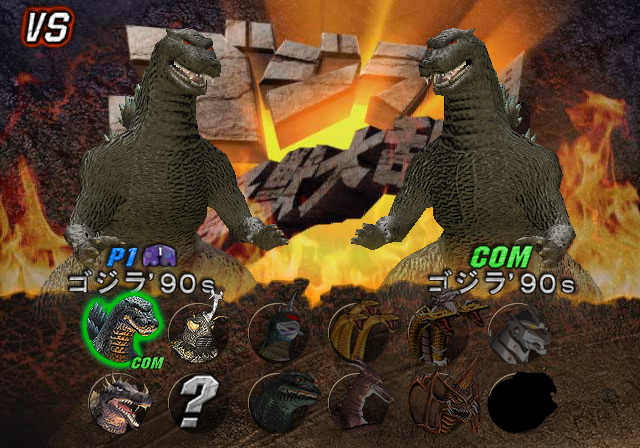
The logo was also changed here.
Mechagodzilla#
|
US/Europe |
Japan |
|---|---|
|
|
|

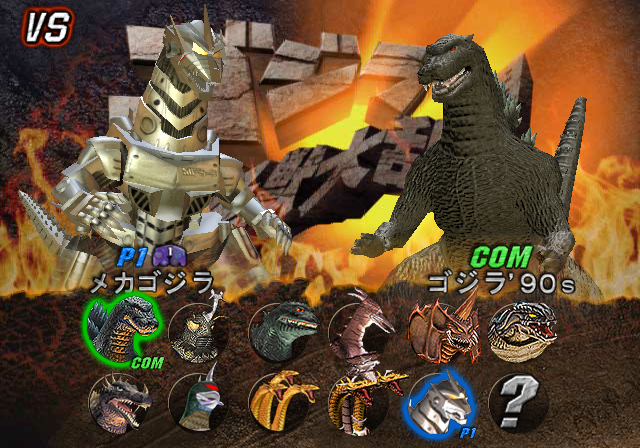

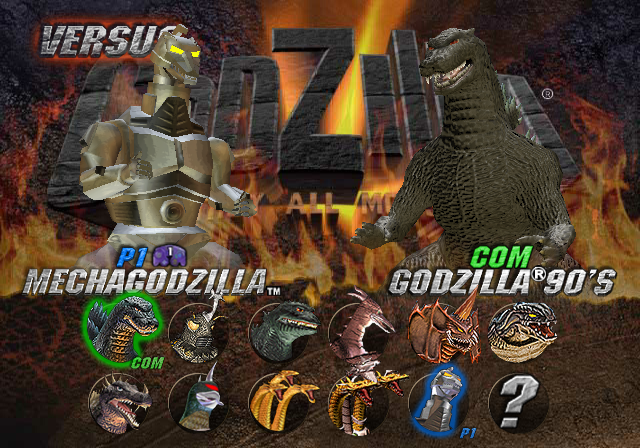
The Japanese version replaced the Heisei era Mechagodzilla with the Millennium era Mechagodzilla (aka Kiryu) to tie in with the film Godzilla Against Mechagodzilla, which started its theatrical run two days later. Kiryu's moveset is mostly the same as Heisei's, but with different fierce attacks.
City Select#
|
US/Europe |
Japan |
|---|---|
|
|
Options#
|
US/Europe |
Japan |
|---|---|
|
|
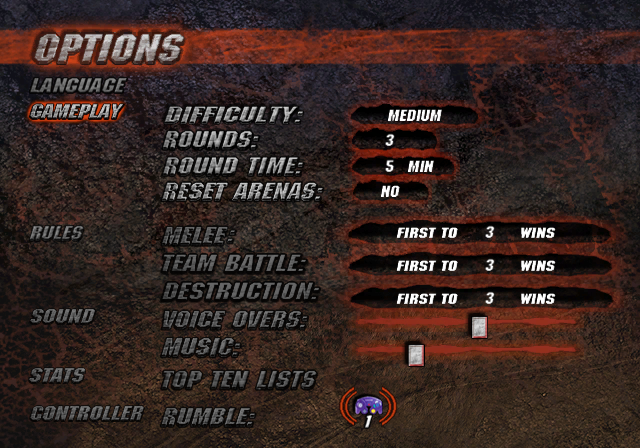
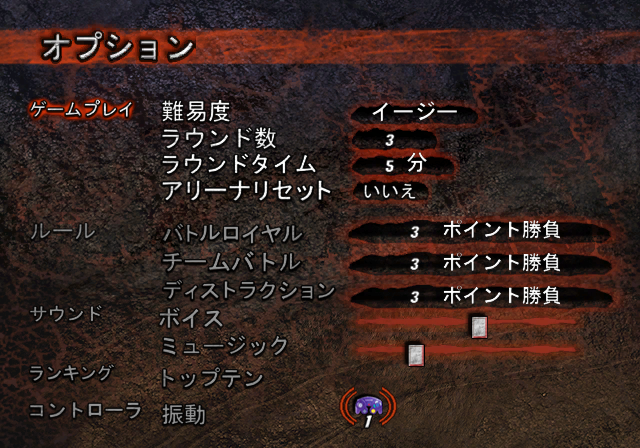
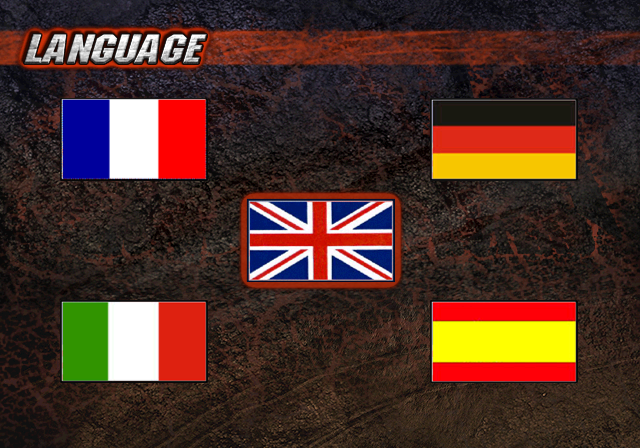
While the US and European versions offer English, Spanish, German, French, and Italian, the Japanese version removes the language option, leaving Japanese as the only accessible language.
Revisional Differences#
Mechagodzilla#
GameCube |
Xbox |
|---|---|
 |
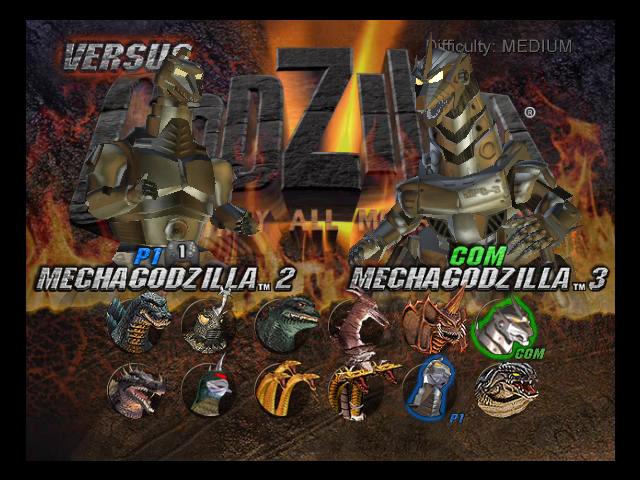 |
Unlike the GameCube versions (see above), the later Xbox port features both Mechagodzillas. The Xbox version also gives the pair unique names to distinguish them from each other. The Heisei era Mechagodzilla originally featured in the US and European GameCube versions is known as Mechagodzilla 2, while the Millennium era Mechagodzilla originally featured in the Japanese GameCube version is known as Mechagodzilla 3. These names reflect their status as the the second and third distinct incarnations of the character, respectively. Unfortunately, fitting them both onto the monster select screen means that random gets kicked out once all the monsters are unlocked.
New Arenas#
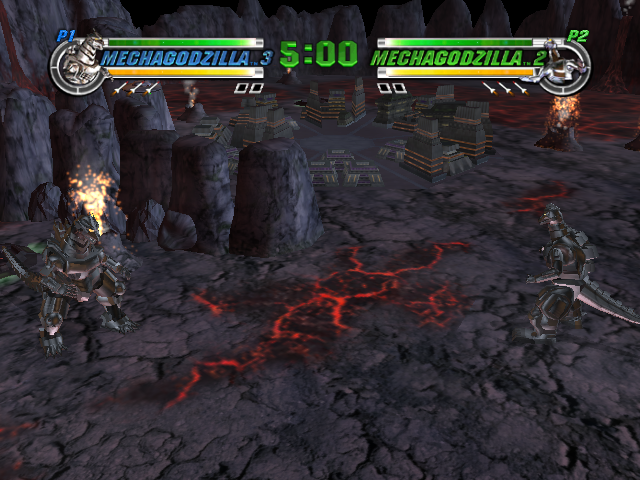
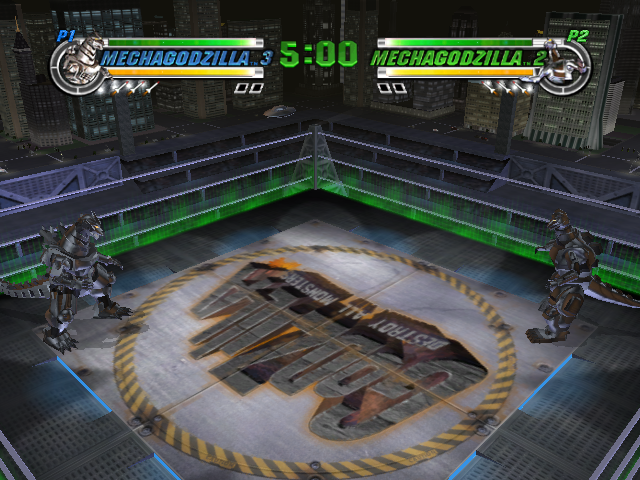
The Xbox version added two new stages: the Vortaak homeworld, which is unlocked by beating the game with Mechagodzilla 3 on any difficulty, and the Boxing Ring, which is only accessible with cheat codes.
Gameplay Changes#
A universal change: Crouch punches will now lead into another punch move. In the GameCube version, you could keep doing crouch punches as long as you were crouching. In the Xbox version, pressing punch a third time will instead do a grounded punch move. (usually down punch)
Anguirus#
- Canceling down fierce into crouch grab no longer works.
- Jump punch was changed from a sped up clone of up punch to a unique move.
- Now has a crouch block animation. Not that it matters, as Anguirus blocks automatically when crouching.
Gigan#
- Back Punch was changed from a hook sweep to a buzzsaw lunge.
King Ghidorah#
- Blunting Winds (up fierce) deals damage in the GameCube versions, but not in the Xbox version.
Orga#
- Jump kick was changed from a unique drop kick move to a clone of Godzilla's.
- Jump fierce no longer hits grounded opponents.
Top Ten#
GameCube |
Xbox |
|---|---|
 |
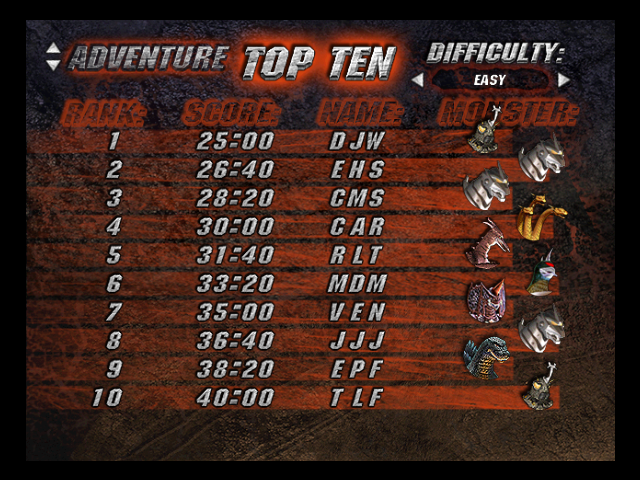 |
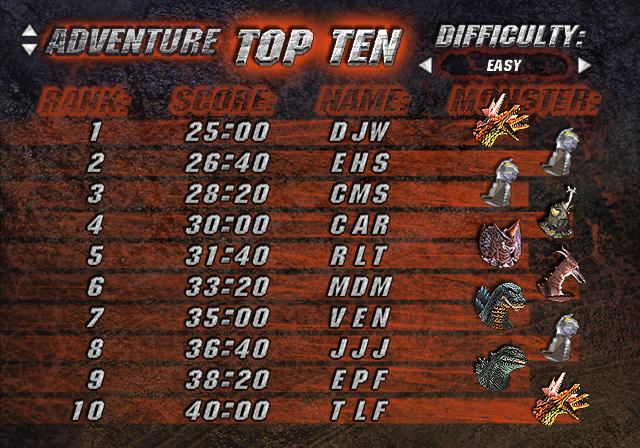
Although the high scores themselves did not change, the monsters supposedly used to achieve them did.
Destruction Mode#
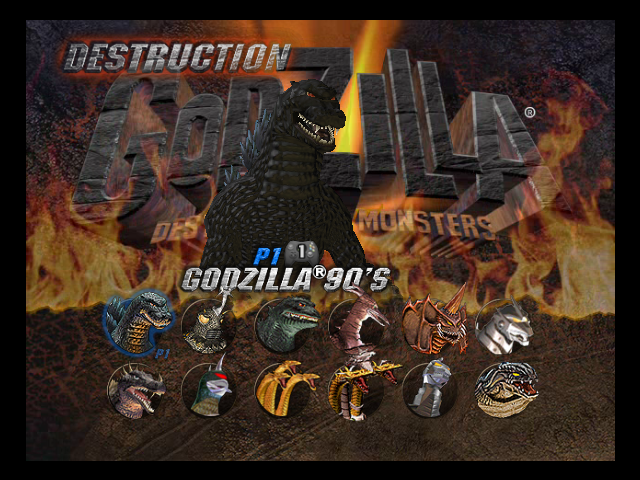
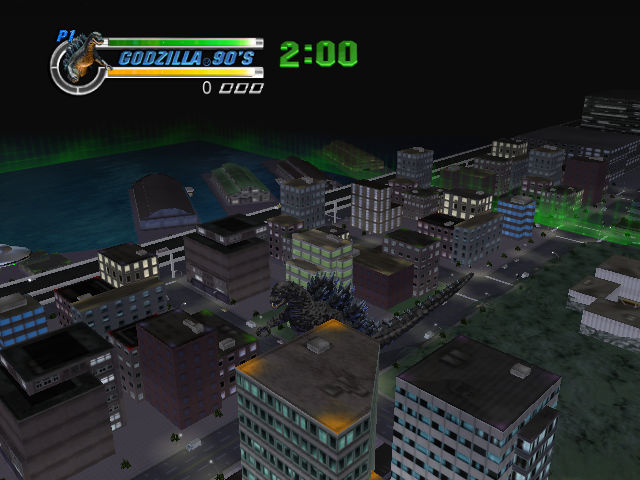
Destruction mode was originally exclusive to multiplayer. The Xbox version responded to fans by including single-player Destruction mode.
(Source: Interview with Simon Strange])
Menus#
For some reason, most of the Xbox menus display at a slightly lower resolution with a black border around them. This doesn't occur during gameplay or in the GameCube version.
Several multiplayer modes (Melee, Team Battle, Destruction) can now be played with bots.
Profiles#
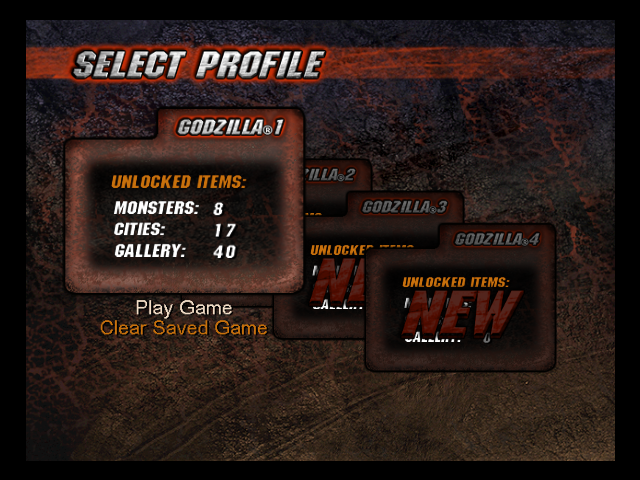
The GameCube version only has one savefile and no savegame management features. The Xbox version adds a profile system with 4 different save games.
Options#
|
GameCube |
Xbox |
|---|---|
|
|
|
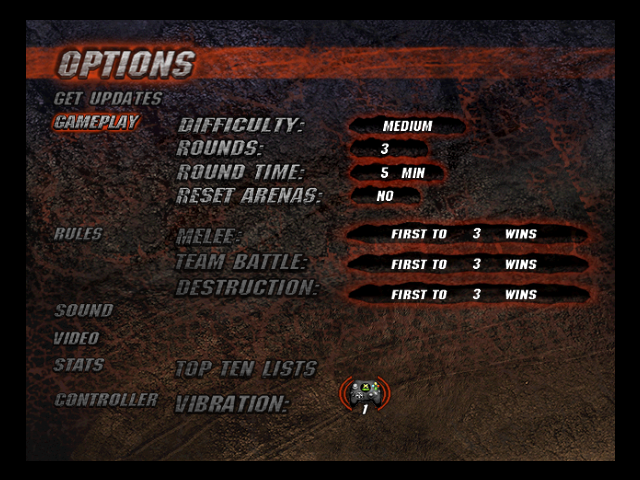
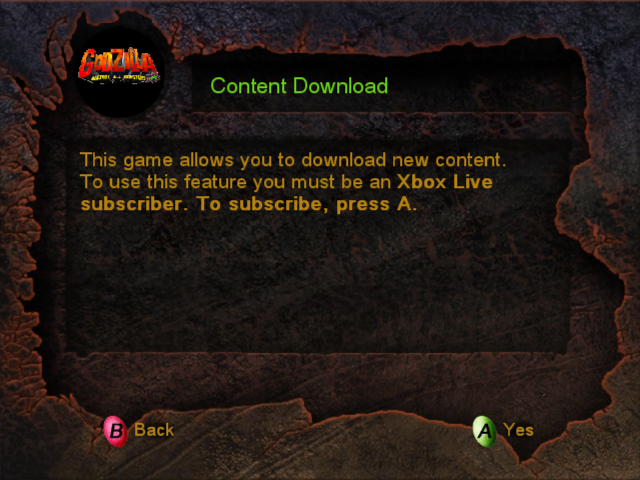
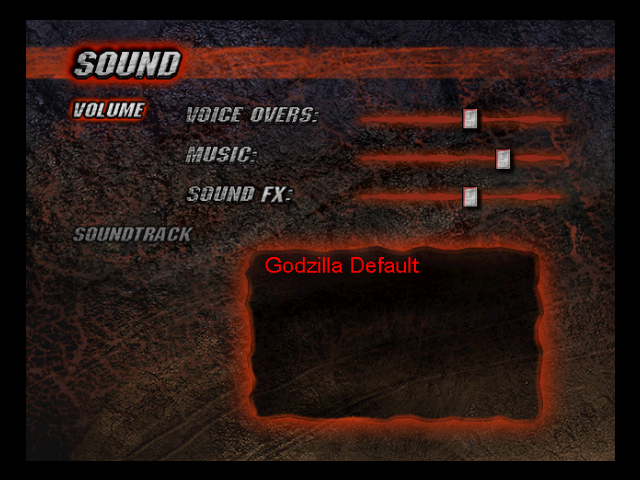
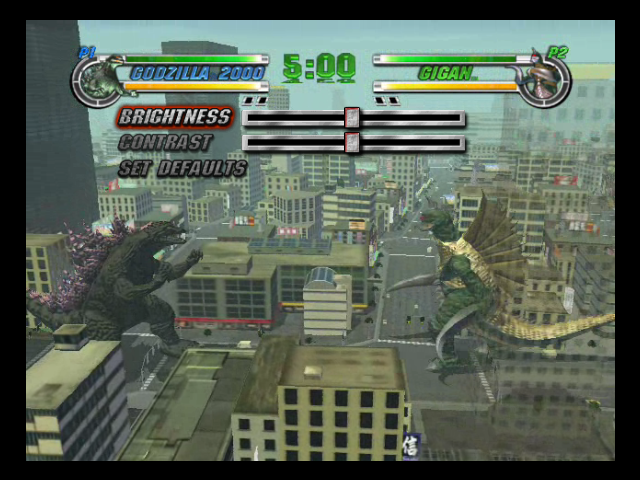
Quite a few options were added in the Xbox version. Get Updates let you download content from Xbox Live (Thrashburg) before the service's shutdown. The sound sliders were split off into their own submenu to accommodate the new custom soundtracks feature. The Xbox version also added a video adjust menu that lets you set the brightness and contrast, with prerecorded gameplay footage playing in the background. However, the language select was removed, as the game's language is automatically set to match the Xbox dashboard settings.
|
The Godzilla series | |
|---|---|
|
MSX |
|
|
NES |
|
|
Game Boy (Color) |
|
|
SNES |
|
|
Game Gear |
|
|
Dreamcast |
|
|
Game Boy Advance |
|
|
GameCube |
|
|
Xbox |
|
|
PlayStation 2 |
|
|
Wii |
|