 This article has a talk page!
This is a sub-page of Zelda II: The Adventure of Link.
The game was first released in Japan for the Famicom Disk System (FDS) on January 14, 1987; around 11 months after the Japanese FDS release and 7 months before the North American NES release of The Legend of Zelda. The NES version of Zelda II: The Adventure of Link was delayed multiple times in North America with the chip shortage of 1988 not helping things for Nintendo. It eventually released in North America for the NES in December 1988.
Several changes were made from the Japanese FDS version to the western NES version, largely thanks to larger capacity NES cartridges holding more data than FDS disks.
Title Screen#
Japan |
US |
Europe |
|---|---|---|
 |
 |
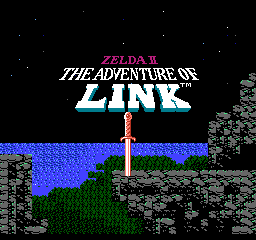 |
Besides the obvious name change, the title screen was changed from the large blocky characters of the Japanese version into a Star Wars-esque motif for the overseas releases. As a result of the larger title graphics, the "PUSH START" notice of the Japanese FDS version had to be removed. The lower half of the background appears one line higher in the European version; the screen split was most likely altered to remove the flickering graphics introduced in the US version.
Intro#
|
FDS |
NES |
|---|---|
|
SEVERAL YEARS AFTER GANNON |
AFTER GANON WAS DESTROYED, |
The intro in the FDS version features some strange English, and maintains the "Gannon" spelling from the first game. It also refers to "another sleeping Princess Zelda", in reference to the fact that (according to the manual) the Zelda seen in this game is an ancestor of the present-day Zelda, cursed with eternal sleep by an evil wizard.
The NES version's intro was completely rewritten, changing "Gannon" to "Ganon" (a spelling which would be retained in future Zelda games), correcting the spelling for Triforce, and removing the "another" Zelda reference.
Game Over#
|
FDS |
NES |
|---|---|

|

|
In the FDS version, the message is accompanied by the same audio heard in the Mazura, Volvagia and Thunderbird boss fights. A new Game Over screen featuring a laughing Ganon was created for the NES version (reusing Soda Popinski, Bald Bull, Mr. Sandman and Super Macho Man's laugh from Mike Tyson's Punch-Out!!), and these bosses no longer roar.
Game Over / Save Option Menu#
|
FDS |
NES |
|---|---|

|

|
The menu that follows the Game Over screen has the text shifted upward to make room for a warning message.
Link#
|
FDS |
NES |
|---|---|

|

|
Link's sprite was given a visible mouth in the NES version. The FDS sprite is used in all versions of Nintendo Badge Arcade.

In the FDS version, you collected items by stabbing them with your sword. In the NES version, you touch it and go through the now-standard mini-cutscene, so two new sprite variations of Link were created. (You still have to stab collectibles like keys, point bags, and magic pickups, though.) A somewhat cruder version of the sprite for Link holding items already exists in all versions, intended primarily for the ending sequence when Link is holding up the Triforce.
Due to this change, it is possible to collect items while in Fairy form in the international version, which was not possible in the Japanese version due to the Fairy form having no sword to stab things with.
Zelda's Chamber#
|
FDS |

|
|---|---|
|
NES |

|
Zelda's chamber looks vastly different in the NES version: the pillars continue all the way to the exit here, while they originally stopped after the stairs as the ceiling gets lower. In addition, torches near Zelda were added, though they're absent in the ending sequence.
Overworld#
There's some intermittent slowdown while traversing the overworld in the NES port. In the original FDS version, there is no slowdown while on the overworld map.
|
FDS |
NES |
|---|---|
|
|
|


In the original release, the roaming monsters resemble hitodama of various colors. These were changed in the NES version, possibly to make the difficulty of the encounters more obvious to the player. Some encounters were also changed, such as the NES version having less Bits (red blob monsters) that give more experience.


Trophy#
|
FDS |
NES |
|---|---|

|

|
Not only was the Megami Zou ("goddess statue") rechristened a "Trophy", it was given a different sprite.
Water of Life#
|
FDS |
NES |
|---|---|

|

|
Same case here: the Seinaru Mizu ("holy water") is now known as the "Water of Life" (no relation to potions) and has a new sprite.
Kidnapped Child#
|
FDS |
NES |
|---|---|

|

|
The Kidnapped Child is an item, and since items in the original version are collected by attacking them, the Child was sensibly bound by rope. In the NES release, you simply pick him up, hoist the poor thing over your head, and add him to your collection.
Treasure Bags#
- In the cave near Midoro Swamp, the bag contains 100 points (200 points on NES).
- In the small forest near Saria Town, the bag contains 50 points (100 points on NES).
- In the cave south of Nabooru Town, the bag contains 200 points (500 points on NES).
- In the desert near Ocean Palace, the bag contains 200 points (500 points on NES).
Dragon Quest Reference#

The FDS release contained a reference to Dragon Quest hidden in Saria: one of the graves reads "Here lies Loto, the hero" when translated, with Loto (Erdrick in the English Dragon Warrior translation) being the heroic ancestor of the protagonist of the first (and only at the time of the game's release) game.
Square even joined in on this little gag: Final Fantasy has text translated to "Here lies Link" in the original Japanese version, and "Here lies Erdrick" in the English release (though reverted at some point in the boundless sea of re-releases).
In the NES version, the text is replaced with "Nothing." which is not used in the game.
Church#
|
FDS |
NES |
|---|---|

|

|
The cross on top of the Church in Mido was changed in the NES version to have a unique appearance, instead of reusing the grave marker graphic. Also, the graphic seen above the doors is slightly different in all the towns.
The King's Tomb#
|
FDS |
|
|---|---|
|
NES |

|
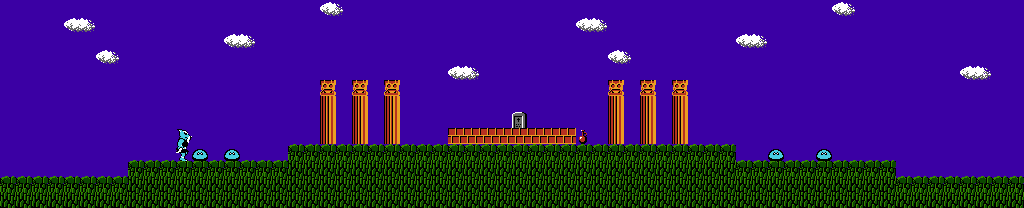
In the FDS version, the tomb of the ancient King of Hyrule is a large area with a few enemies and a red bottle of magic. While this same area does exist in the NES release, the pillars were removed and it was moved to a grave southwest of the king's tomb. Instead, the king's tomb of the NES version is instead a single enemy-free screen with an old lady NPC.
Also in the NES version's data is an unused second copy of the larger area that was probably meant to be "East Hyrule". This area contains several blue Moas. To enter this unused area, use the code 0561:B8 and 0706:02.
(Source: Dark Linkaël (code))
Water Movement#
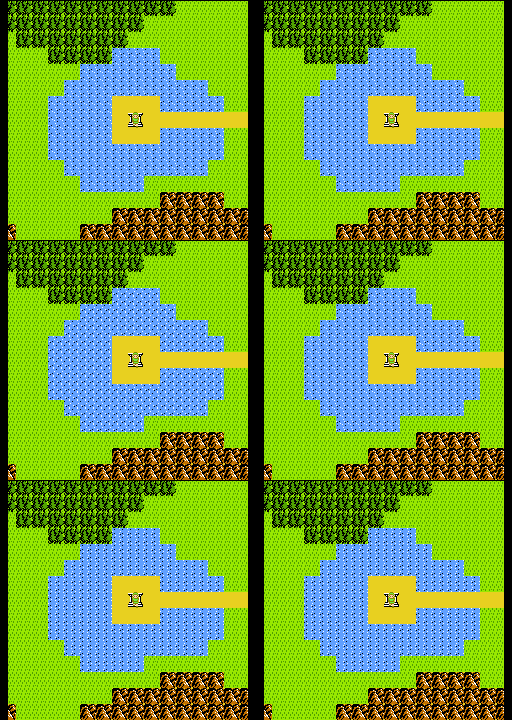
In the FDS version, every body of water on the world map is animated, as well as the lava at the Valley of Death. This was done by modifying the graphics in the FDS' VRAM in real-time. As the cartridge uses CHR ROM and a somewhat primitive mapper instead, they remain motionless.
Raft#
|
FDS |
NES |
|---|---|

|

|
Originally, the Link sprite always faced forward when riding the raft.
River Devil#
|
FDS |
NES |
|---|---|

|

|
Originally, the River Devil blocking the path to the sixth palace and Kasuto is represented by an oni. Presumably, the spider sprite was added with the new random encounter sprites.
Kasuto Secret Building#
|
FDS |
NES |
|---|---|

|

|
In the NES version, the tall building that emerges from the ground in the Hidden Village of Kasuto has a different texture for its "blocks".
Villagers#

For the NES version, three new characters were created, adding a bit more variation. In addition, the walking animation was improved on the "hurried bearded man" by increasing the animation speed to better match his quick pace.
Magicians#
|
FDS |
NES |
|---|---|

|

|
The magicians were given an animation for the NES version.
River Guards#
|
FDS |
NES |
|---|---|

|

|
The original sprite for the River Guards looks a lot like the "bearded man" villager, which may have been why it was changed.
Swordsmen#
|
FDS |
NES |
|---|---|

|

|
The Swordsmen originally just used a palette swap of the original River Guards, but the NES version received a palette swap of the new River Guards for one and a brand-new sprite for the other. Of course, the one holding a spear was probably specifically meant for the River Guards.
Palaces#
In the FDS version, every single palace uses the same brick graphic, making them quite repetitive! Of these, the first, second, and fifth palaces used the gray palette, and the third, fourth, and sixth palaces used the blue palette which later ended up being used for the NES version's second palace, and the final palace's gold was retained. Specifically, the NES release features totally unique wall patterns for each palace, plus three different column tiles (distribution: 1/4/7, 2/5, 3/6).


Enemy Properties#

|
To do: |
The FDS version did not have monsters that drained Link's experience, or those that could only be harmed by fire. These attributes were added to certain enemies for the NES version, as well as different experience point values for some monsters. For example, the experience value of Bubbles, the bouncing skull enemies which take a truckload of hits to defeat, was changed from a measly 10 to a more worthwhile 50.
Enemy Name |
FDS |
NES |
|---|---|---|
Bit |
1 exp |
2 exp |
Geldarm |
10 exp |
5 exp |
Lowder |
5 exp |
3 exp |
Blue Ache |
5 exp |
3 exp |
Megmat |
10 exp |
5 exp |
Moby |
1 exp |
2 exp |
Blue Deeler |
5 exp |
3 exp |
Orange Daira |
100 exp |
70 exp |
Blue Goriya |
50 exp |
30 exp |
Rock-Throwing Geru |
1 exp |
50 exp |
Orange Geru |
100 exp |
150 exp |
Purple Ache |
5 exp |
3 exp |
Aruroda |
100 exp |
150 exp |
Red Geru |
200 exp |
100 exp |
Red Stalfos |
20 exp |
30 exp |
Bubble |
10 exp |
50 exp |
Blue Parutamu |
100 exp |
70 exp |
Doomknocker |
200 exp |
100 exp |
King Bubble |
50 exp |
0 exp |
Red Eagle Knight |
100 exp |
70 exp |
Blue Eagle Knight |
500 exp |
100 exp |
Horsehead |
100 exp |
50 exp |
Helmethead |
100 exp |
200 exp |
Rebonack |
200 exp |
300 exp |
Carock |
200 exp |
300 exp |
Volvagia |
500 exp |
700 exp |
- Rock-throwing Gerus, Red Gerus, and Blue Gerus can drop Red Magic Jar/200 exp Point Bag in FDS but won't drop anything in NES.
- Bubbles (Great Palace) can drop Blue Magic Jar/50 exp Point Bag in FDS but won't drop anything in NES.
- Red Fokkas can drop Red Magic Jar/200 exp Point Bag in FDS but won't drop anything in NES.
- Blue Fokkas can drop can drop Red Magic Jar/500 exp Point Bag in FDS but won't drop anything in NES.
Flashing Projectiles#
|
FDS |
NES |
|---|---|

|

|
In the NES version, certain projectiles, such as Octorok rocks and Goriya boomerangs, flash Sprite Palette 0 (Link's colors) every six frames. The biggest difference this makes is that they can be seen in dark caves without a Candle, but this also has an unintended side effect of causing flipped and mirrored sprites to return to their default state for one frame, regardless of what they're doing.
Iron Knuckle Attacks#
Iron Knuckles in the FDS version will shoot a proper sword beam at Link, flashing and disappearing upon shield impact just like his own. Unlike Link, this is unaffected by vitality. For the NES version, this was changed to a throwing knife (which may be why Iron Knuckles use axes in later games), which mostly functions the same except it (obviously) does not flash and there is a light bounce off Link's shield.
Bosses and Mini-Bosses#
In the FDS version, Horsehead, Volvagia, and Thunderbird have a harsh and evil-sounding roar (also used for the Game Over screen in that version), similar to the bosses in The Legend of Zelda.
|
FDS |
NES |
|---|---|

|

|
The boss of the fourth palace, Carock, originally used a single symmetrical sprite that faced the screen. He was redrawn, given an animation frame, and given the ability to face left or right in the NES version.

Mazura (Horsehead) originally returned as a mini-boss in the fifth palace, just before the fake wall; in the NES version, this fight is against a blue Iron Knuckle instead. The NES version also removed the locked door after the fake wall.
|
FDS |
NES |
|---|---|

|

|
Originally, you just fought a stronger version of Jermafencer (Helmethead) as the boss of the fifth palace; in the NES version, this boss is only fought in the second palace (where it replaced the weaker variation), and a completely new creation called Gooma was added to the fifth palace of the NES version. Gooma is a sort of "boss version" of the similarly named "Guuma" enemies (whose artwork was mixed up, so the name may not be correct), which were never named in English sources, as well as the Hell Guumas (called Doomknockers in said sources).
|
FDS |
NES |
|---|---|

|

|
Volvagia, who became "Barba" in English guides, was based on an Eastern dragon as is apparent from the official artwork. He was changed to look more like a Western dragon for his NES showing, gaining some animations in the process. His attacks became somewhat slower and he no longer roars (like Horsehead from earlier).
The boss room was changed to fix an exploit: waiting for Volvagia to appear out of the leftmost lava pit and then jumping onto his head from right to left while performing the downstab provided an easy kill due to the screen boundary and the conveniently placed platform.
Palace Differences#
|
FDS |
NES |
|---|---|

|

|
Collapsing bridges in palaces use their own palette in the FDS version. In the NES version, they adhere to the palace's palette.
The original has blue Octoroks throughout the second and fifth palaces; the NES release replaced these with blue Anerus.
(Source: Zelda Dungeon)

The hallway which leads to the boss in the fourth palace had some enemies removed for the NES version, namely the Doomknocker/Hell Guuma and the object that drops liquid.
|
FDS |
NES |
|---|---|

|

|
The entrance to the Great Sanctuary / Palace looks a little different between versions; the barrier and the color of the ground were changed for the NES version.
Ending#
|
FDS |
NES |
|---|---|

|

|
The end credits are different between versions, both in colors and in animation. The drapes don't roll up properly in the NES version. Also, the typo on Executive Producer was fixed.
Magic Menu#
|
FDS |
NES |
|---|---|
|
REFLEX |
REFLECT |
For some reason, the Reflect spell was originally known as "Reflex". This doesn't seem to be a translation error, as the Japanese spelling reflex—er, reflects this.
Level System#
The level system was changed a lot: in the FDS version, all upgrades (Attack, Life, and Magic) are worth the same EXP values; in the NES version, they have different EXP requirements, with Life being the cheapest and Attack the most expensive. The NES version also has an option to "Cancel" a level up which lets the player keep its current EXP without leveling up. Additionally, an extra life can be gained at any time by "spending" a level on an already maxed level, which will continue the experience pattern (for example, if you were at the third part of 2500 points, the next level will require 4000 points). This could result in having level 8 in one stat and 1 in the others, and requiring 4000 EXP to level up, having gained 10 additional lives.
Further, the disk has it so that when you save and quit, all three levels are reduced to the lowest one you had of any of the three upgrades (for example, if you had Lv. 8 Attack, Lv. 5 Magic, and Lv. 3 Life, they would all be reset to Level 3). In the NES version, all levels are always retained between sessions.
FDS Version#
- First upgrade: 50 points
- Next two: 100 points
- Next three: 300 points
- Next three: 700 points
- Next three: 1000 points
- Next three: 1500 points
- Next three: 2500 points
- All remaining: 4000 points
NES Version#
Level |
Life |
Magic |
Attack |
|---|---|---|---|
2 |
50 |
100 |
200 |
3 |
150 |
300 |
500 |
4 |
400 |
700 |
1000 |
5 |
800 |
1200 |
2000 |
6 |
1500 |
2200 |
3000 |
7 |
2500 |
3500 |
5000 |
8 |
4000 |
6000 |
8000 |
Extra Life |
9000 |
9000 |
9000 |
Elevators#
Elevators in palaces have been sped up for the NES version.
Music/Sound#
|
|
To do: |
The FDS version makes extensive use of the hardware's extra sound channel, which means some music and sound effects had to be changed when porting to the NES. Some of them ended up being changed entirely, including ones that didn't make use of the extra sound channel.
The FDS version also lacks the vibrato effect found throughout the NES soundtrack, most noticeable in the town theme.
Title Screen Theme#
Both versions are essentially the same tune, but with different keys (FDS is in F, NES is in G) and different instruments. The notes at the beginning of the song are played using the FDS's extra sound channel and are much quieter and pluckier, but continue to play through the intro of the theme. The extra channel is later used as the main melody.
|
FDS |
NES |
|---|---|
Battle Theme#
The FDS card and NES cart have completely different tracks for the battle theme. The international theme is much longer and less repetitive than the Japanese theme and has a less menacing tone, fitting non-combat encounters better. The FDS version would later be remixed for The Legend of Zelda: The Minish Cap as a mini-boss theme and additionally reused as the boss music under the effects of the Master Sword power-up in all versions of Super Mario Maker 2.
|
FDS |
NES |
|---|---|
Ganon's Game Over Laugh#
As mentioned previously, the FDS version has the "roar" sound effect for the Game Over screen, while the NES release has a unique laugh for Ganon borrowed from Soda Popinski, Bald Bull, Mr. Sandman and Super Macho Man in Punch-Out!!
|
FDS |
NES |
|---|---|
Fight Woosh Noise#
When entering battle from the overworld, the FDS version plays a very loud, dramatic seven-note musical sting that was replaced with a sort of "whoosh" noise in the international versions.
|
FDS |
NES |
|---|---|
Boss Theme#
In the FDS version, the music played during regular boss battles consists of the same two bars looped endlessly. In the NES version, it was extended slightly to make it slightly less repetitive.
|
FDS |
NES |
|---|---|
Text Sound Effect#
The FDS text sound effect is a set of warbly sounds at various tones, again using the FDS sound channel. The NES text noise is typewriter-esque clicks with no variance in tone.
Fairy Warp Glitch#
Another error exclusive to the NES cartridge: if Link is on top of the screen and uses the Fairy spell, a glitch causes Link to warp as if he is falling down a pit, which sometimes takes Link to completely random places and can even result in him becoming trapped in the scenery. This is impossible in the FDS version.
Enemy Groups#
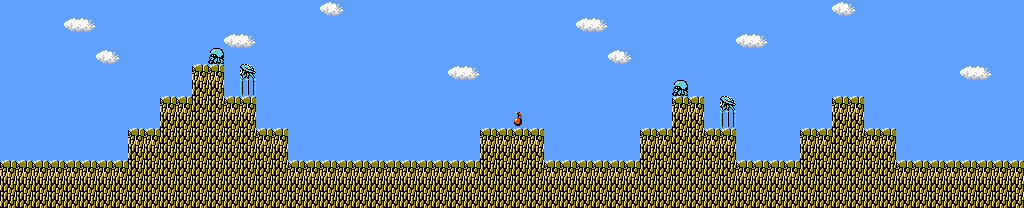
A number of overworld encounters, mostly those early in the game, were modified to be slightly easier.
Hyrule West#
|
FDS |

|
|---|---|
|
NES |

|
- FDS: Bot x2, Bit x6
- NES: Bot x2, Bit x3
|
FDS |

|
|---|---|
|
NES |

|
- FDS: Orange Moblin x2, Bit x4
- NES: Orange Moblin x2, Bit x3
|
FDS |

|
|---|---|
|
NES |

|
- FDS: Orange Goriya x2, Megmat x2
- NES: Orange Goriya x2, Megmat x1
|
FDS |
|
|---|---|
|
NES |
|
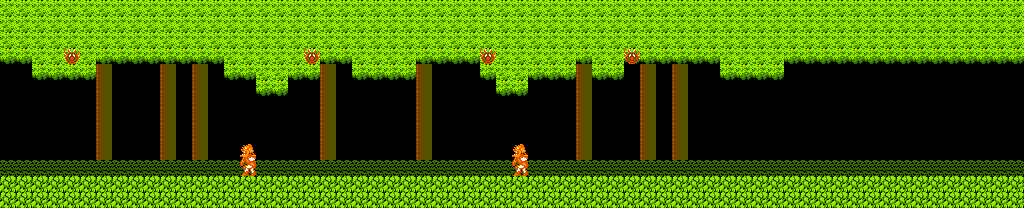
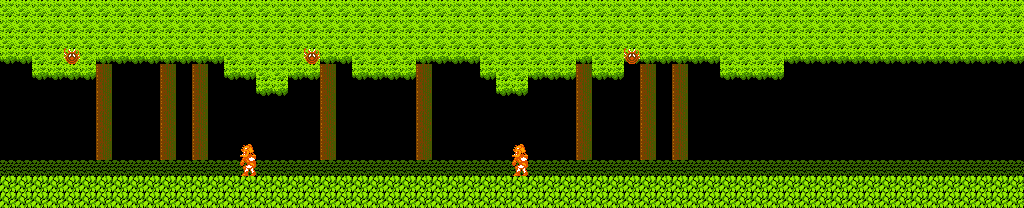
- FDS: Orange Moblin x2, Red Deeler x4
- NES: Orange Moblin x2, Red Deeler x3
|
FDS |
|
|---|---|
|
NES |
|
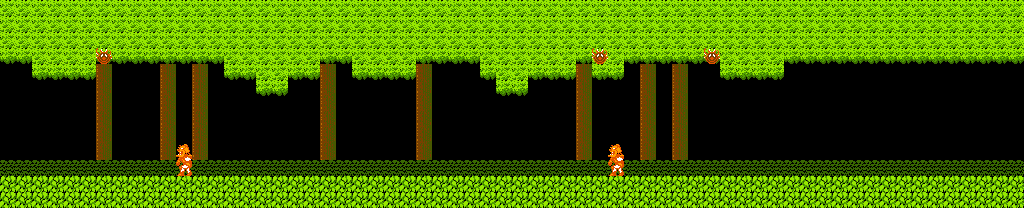
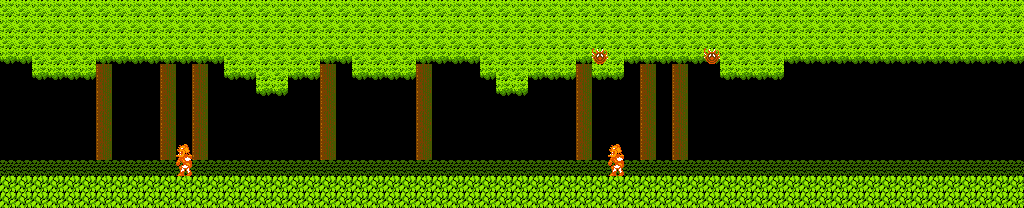
- FDS: Orange Moblin x2, Red Deeler x3
- NES: Orange Moblin x2, Red Deeler x2
|
FDS |

|
|---|---|
|
NES |

|
- FDS: Red Octorok x6
- NES: Red Octorok x5
|
FDS |

|
|---|---|
|
NES |

|
- FDS: Red Octorok x6, Moby x2
- NES: Red Octorok x5, Moby x2
|
FDS |

|
|---|---|
|
NES |

|
- FDS: Megmat x6
- NES: Megmat x5
|
FDS |
|
|---|---|
|
NES |

|
- FDS: Megmat x6
- NES: Megmat x5
|
FDS |
|
|---|---|
|
NES |
|
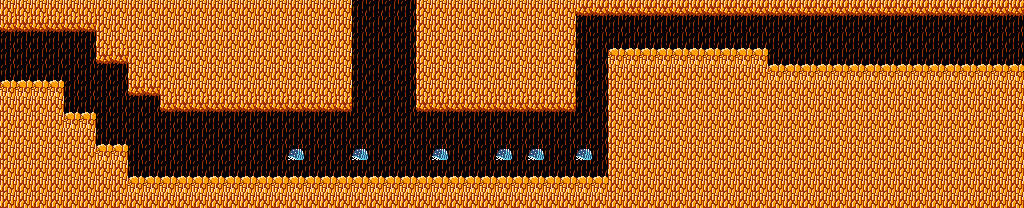
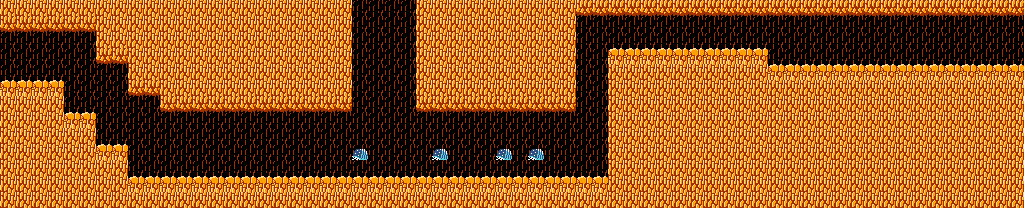
- FDS: Lowder x6
- NES: Lowder x4
Death Mountain#
|
FDS |

|
|---|---|
|
NES |

|
- FDS: Red Octorok x8
- NES: Red Octorok x6
|
FDS |
|
|---|---|
|
NES |
|
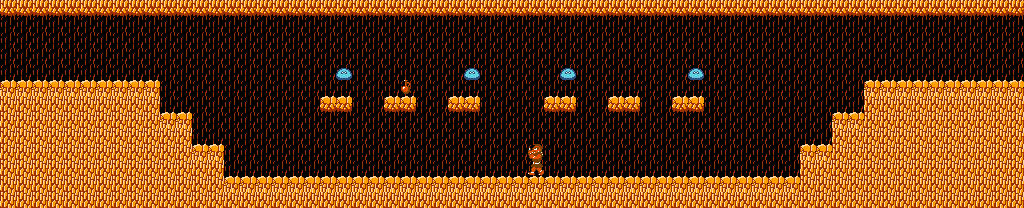
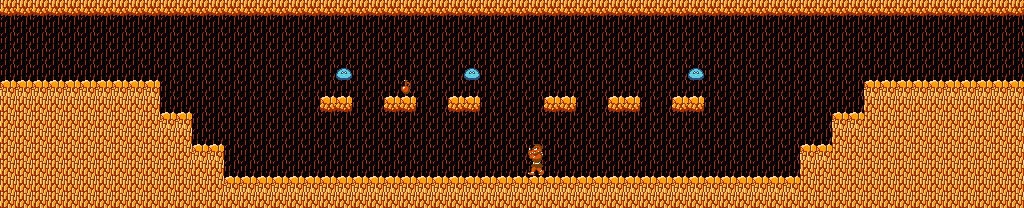
- FDS: Bot x4, Red Daira x1
- NES: Bot x3, Red Daira x1
Hyrule East#
|
FDS |

|
|---|---|
|
NES |

|
- FDS: Blue Octorok x4, Boon x1
- NES: Blue Octorok x3, Boon x1
Maze Island#
|
FDS |
|
|---|---|
|
NES |

|
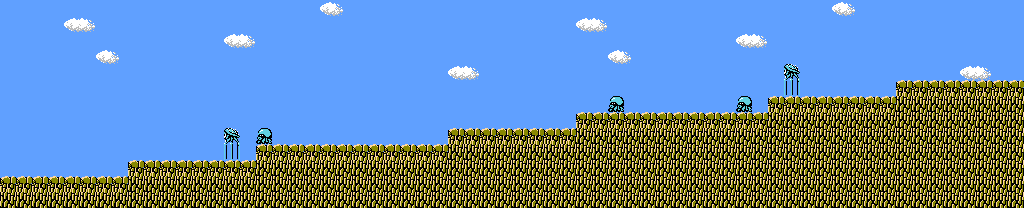
- FDS: Blue Octorok x3, Tektite x2
- NES: Blue Octorok x3, Tektite x1
|
FDS |
|
|---|---|
|
NES |

|
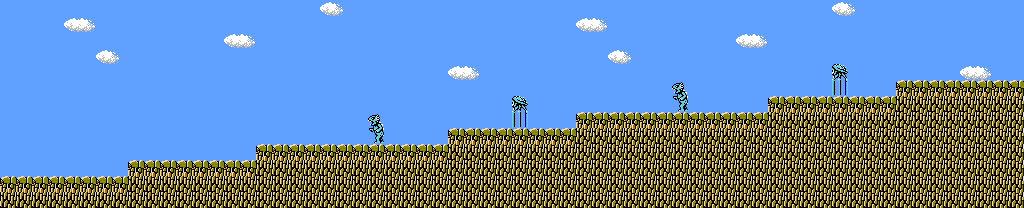
- FDS: Zora x2, Tektite x2
- NES: Zora x1, Tektite x2
|
FDS |

|
|---|---|
|
NES |

|
- FDS: Zora x2, Tektite x2
- NES: Zora x2, Tektite x1
|
FDS |
|
|---|---|
|
NES |
|
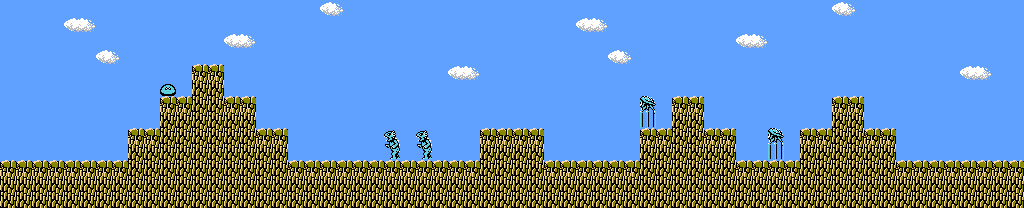
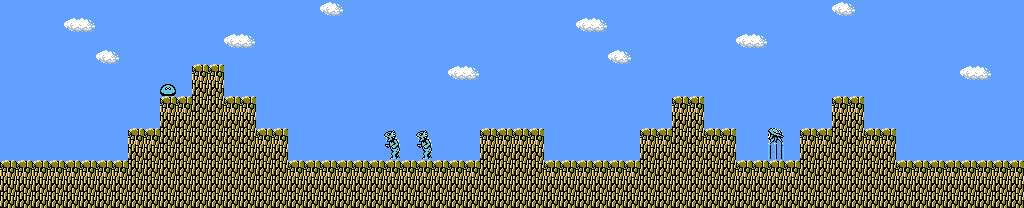
- FDS: Zora x2, Tektite x2, Bot x1
- NES: Zora x2, Tektite x1, Bot x1
|
FDS |
|
|---|---|
|
NES |
|
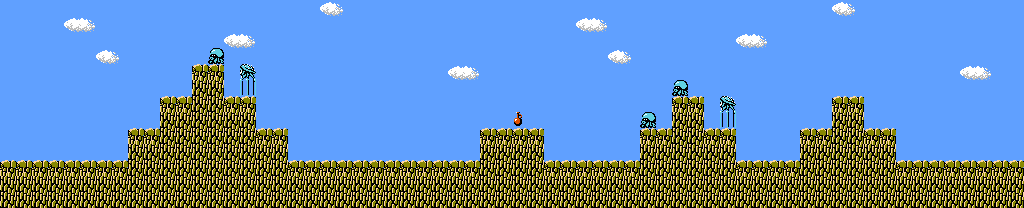
- FDS: Blue Octorok x3, Tektite x2
- NES: Blue Octorok x2, Tektite x2
|
FDS |

|
|---|---|
|
NES |

|
- FDS: Zora x3, Tektite x1
- NES: Zora x3
(Source: Dark Linkaël)