This is a sub-page of Kirby & the Amazing Mirror.
This game isn't too crazy about changing certain aspects for the international releases, but there are still some things to go over.
Level Names#
The Japanese version of the games uses English to display the level names. The European version translated these names into all supported languages.
Japanese & English |
French |
German |
Italian |
Spanish |
|---|---|---|---|---|
RAINBOW ROUTE |
ROUTE ARC-EN-CIEL |
REGENBOGENROUTE |
SENTIERO ARCOBALENO |
RUTA ARCO-IRIS |
MOONLIGHT MANSION |
MANOIR DE LUNE |
MONDSCHEINVILLA |
DIMORA SELENE |
MANSIÓN LUZ DE LUNA |
CABBAGE CAVERN |
CAVERNE DES CHOUX |
KOHLKAVERNE |
CAVERNA DE' CAVOLETTI |
GRUTA DEL REPOLLO |
MUSTARD MOUNTAIN |
MONT MOUTARDE |
SENFMASSIV |
MONTE MOSTARDA |
MONTAÑA MOSTAZA |
CARROT CASTLE |
CHATEAU CARROTE |
KARROTENKASTEL |
CASTELLO CAROTA |
CASTILLO ZANAHORIA |
OLIVE OCEAN |
OCEAN OLIVE |
OLIVENOZEAN |
OCEANO OLIVA |
MAR DEL OLIVO |
PEPPERMINT PALACE |
PALAIS MENTHE |
PFEFFERMINZPALAST |
PALAZZO MENTA |
PALACIO DE LA MENTA |
RADISH RUINS |
RUINE RADIS |
RETTICHRUINEN |
ROVINE DEL RADICCHIO |
RUINAS DEL RÁBANO |
CANDY CONSTELLATION |
ETOILES BONBON |
HONIGGALAXIE |
STELLE BONBON |
GALAXIA PASTEL |
Enemy Names#
Unlike every other game in the series, this game sports names on top of enemy health-bars. The names got changed quite a bit when translated from Japanese.
Regular Enemies |
|---|
Japanese |
Dockorn (ドッコーン) |
Batty (バッティー ) |
Big Waddle Dee (ビッグワドルディ) |
Blipper (ブリッパー) |
Burokkun (ブロックン) |
Bomber (ボンバー) |
Desshī (デッシー) |
Bronto Burt (ブロントバート) |
Chip (チップ) |
Kokkun (コックン) |
Annie (アニー) |
Droppy (ドロッピー) |
Flamer (フレイマー) |
Foley (フォーリー) |
Giant Rocky (ジャイアントロッキー) |
Glunk (グランク) |
Galeb (ガレブ) |
Gordo (ゴルドー) |
Hari (ハリー) |
Heavy Knight (ヘビーナイト) |
Hot Head (ホットヘッド) |
Jack (ジャック) |
Laser Ball (レーザーボール) |
Lip (リープ) |
Metal Guardian (メタルガーディアン) |
Mini (ミニー) |
Miran (ミラン ) |
Noddy (ノディ) |
Pengy (ペンギー) |
Prank (プランク) |
Rocky (ロッキー ) |
Kororon (コロロン) |
Scarfy (スカーフィ) |
Shooty (シューティ) |
Shotzo (シャッツォ) |
Sir Kibble (サーキブル) |
Biruge (ビルゲ) |
Soara (ソアラ) |
Sparky (スパーキー) |
Squishy (スクイッシー) |
Sword Knight (ソードナイト) |
Twister (ツイスター ) |
UFO (ユーフォー) |
Waddle Dee (ワドルディ) |
Waddle Doo (ワドルドゥ) |
Wheelie (ウィリー) |
Special |
Japanese |
Shadow Kirby (シャドーカービィ) |
Stoppy (ストッピー) |
Mid-Bosses |
Japanese |
Batafire (バタファイア) |
Aerostar (エアロスター) |
Bonkers (ボンカース) |
Bau Fighter (バウファイター) |
Boxy (ボクシィ) |
Master Hand (マスターハンド) |
Mister Frosty (ミスター -フロスティ) |
Phan Phan (ファンファン) |
Bosses |
Japanese |
King Golem (キングゴーレム) |
Moley (モーリィ) |
Kracko (クラッコ) |
Mega Titan (メガタイタン) |
Titan Head (タイタンヘッド) |
Gabriel (ガブリエル) |
Wiz (ウィズ) |
? ? ? |
Crazy Hand (クレイジーハンド) |
Dark Meta Knight (ダークメタナイト) |
Dark Mind (ダークマインド) |
Title Screen#
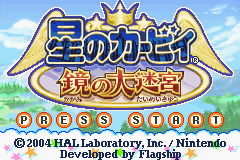
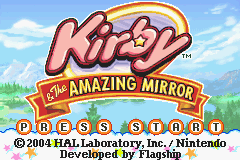
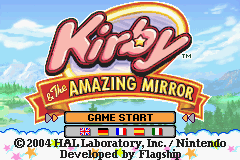
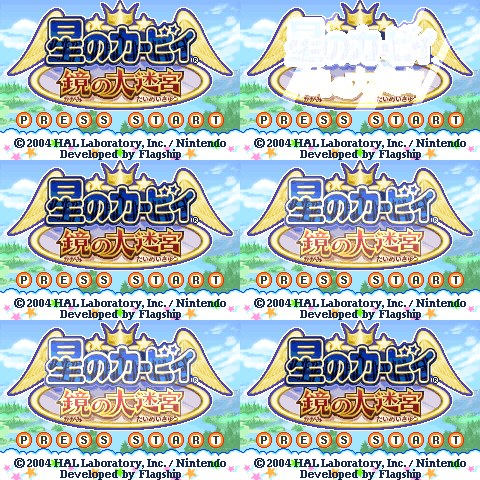
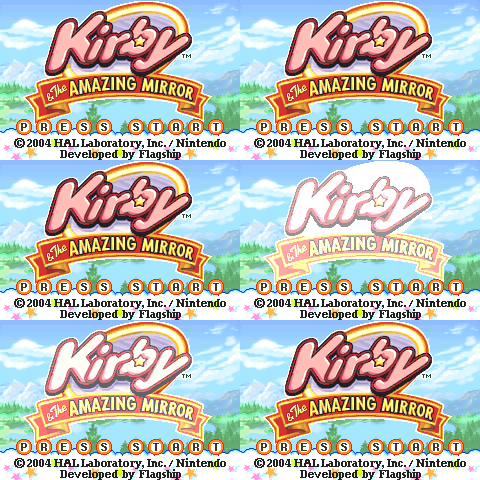
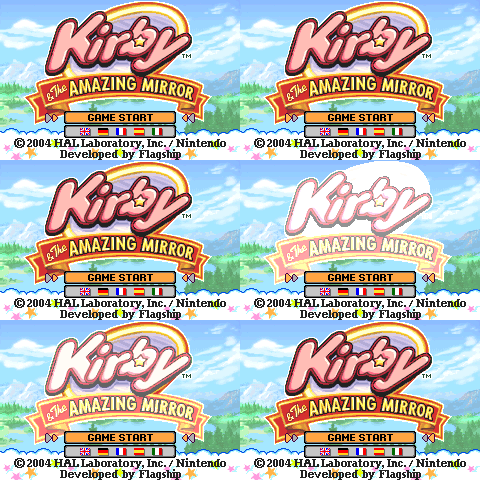
Aside from receiving a major logo redesign, the international versions change the copyright text's color from dark blue to pure black, and replace the "registered" symbol on the logo with a "trademark" symbol. The European version of the game also added the ability to switch between different languages, so the "PRESS START" graphics had to be removed. In addition, the color of the green stars on the ground was changed to yellow for the international versions. Finally, the "PRESS START" text was moved down in the American version to make space for the new logo.
Japan |
US |
Europe |
|---|---|---|
 |
 |
 |
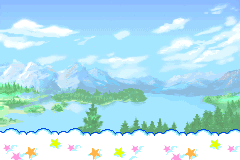

The change to the palette of the stars didn't carry over to any other background or place that uses the cloudy tileset.
Lastly, the flashing cycles of the logo were also altered to be slower in the international versions. The Japanese version's cycle happens very quickly, while there's a pause in between flashes in the international versions.
Japan |
US |
Europe |
|---|---|---|
 |
 |
 |
Missile Damage#
The Missile ability deals different amounts of damage depending on the game version. It deals 6 (direct hit) and 2 (explosion) in the Japanese version, versus 4 (direct hit) and 1 (explosion) in the international versions.
Screen Freeze Glitch#
In the Japanese version, if you use the mobile phone right before dying from falling into a pit or by touching dangerous surfaces (such as spikes or fire), the game will lock up. Instead of using the mobile phone, getting an ability roulette (when one of the other Kirbys uses Magic and the outcome is that everyone gets an ability roulette) will work the same way. This glitch was fixed in the international versions.
Multiplayer Order#
In the Japanese version of the game, the multiplayer file select displayed the players with a number followed by a "P". In international English releases, the order was reversed, as now the P comes before the number.
|
Japan |
International |
|---|---|

|

|
The graphics displayed while linking consoles have the same change.
|
Japan |
International |
|---|---|

|

|
Collection Room#
Graphics#
Some graphics for the Collection Room were changed from the Japanese version.
Firstly, the "A" button animation frames displayed when trying to change Kirby's color were changed. The first frame had its outline modified for the international releases to make it darker, while the second frame has different shades of blue altogether between versions.
|
Japan |
International |
|---|---|

|

|
Then, the text that's displayed when changing colors was changed from "COLOR" to "CHANGE COLOR" in international English versions.
|
Japan |
International |
|---|---|

|

|
Spray Paint Names#
For the most part, the names of the Spray Paints are the same between Japanese and English, with the Japanese version using transliterations of English words, and the English localizations adapting those words back into English. However, some names did have their names adjusted, as shown below.
Spray Paint |
Japanese |
Romanization |
Translation |
English |
|---|---|---|---|---|
 |
おまかせ |
Omakase |
"Up to you" |
Default |
 |
ソーダ |
Sōda |
Soda |
Ocean |
 |
モノトーン |
Monotōn |
Monotone |
Chalk |
"Omakase" is a Japanese phrase commonly used when ordering food at restaurants, literally meaning "I'll leave it up to you". It's used when customers lets the chefs pick the meal to be served. In this case, the phrase is directed from the game to the player, letting them know to pick whatever color they desire when entering the Collection Room. It was likely changed to "Default" in English to better indicate what this option does, as it changes Kirby to his default color when selected.
The Soda Spray Paint was changed to "Ocean", most likely due to blue carbonated drinks being uncommon outside of Japan. In said country, the word "soda/ソーダ" is more closely associated with cream soda, which often has a light blue color, reflected in the Spray Paint.
Pause Screen Buttons#
In the Japanese and American versions of the game, the pause menu buttons have small dots on each side. These were removed in the European version.
Japan |
US |
Europe |
|---|---|---|
 |
 |
 |
The same thing happened to the empty buttons.
|
US/Japan |
Europe |
|---|---|

|

|
Map Names#
For whatever reason, the Area names on the world maps that had the letters "B" and "R" were altered to replace the dark gray pixels from the Japanese version with pure black pixels in international English versions. This change is barely noticeable, and it is unknown why this was done.
Japan |
International |
|---|---|
 |
 |
 |
 |
 |
 |
 |
 |
 |
 |
 |
 |
Ability Icons#
Stone#
Stone Kirby's icon was slightly altered from the Japanese version to the international releases of Amazing Mirror. The first drop of sweat from Waddle Dee was redrawn.
|
Japan |
International |
|---|---|

|

|
Elemental Damage#
In the Japanese version, whenever Kirby gets hit by an elemental attack, his "NORMAL" icon changes to display different text that better suits the kind of damage he's suffering. His icon displays ビリビリ! (romanized as "Biribiri!" and translates to "Shocked!") when hit by an electric attack, ひゃっ!! (romanized as "Hya-!!" and translates to "Cold!!") when hit by an ice attack, and あちっ!! (romanized as "Achi-!!" and translates to "Hot!!") when scorched by a fire attack.  This cute detail was sadly removed from the localized versions, although graphics for the different languages of the European version were worked on but left unused. Instead of having unique text for every effect, the normal damage graphic is reused, just in different colors. There's no graphic for electric damage, but a mock-up is shown below alongside the unused ice and fire damage icons.
English |
German |
French |
Italian |
Spanish |
|---|---|---|---|---|
 |
 |
 |
 |
 |
These elemental damage icons are also present in Kirby Squeak Squad, another game developed by Flagship, and this time, they are used in all regions!
(Source: Vyroz)
Speed Eaters#
Speed Eaters' preview images had some gray pixels in their corner tiles in the Japanese version of the game. This was fixed for all other versions to blend better with the rest of the graphic.
Japan |
International |
|---|---|
 |
 |
 |
 |
Additionally, the button in its title screen had its colors altered in the international releases.
|
Japan |
International |
|---|---|

|

|
Crackity Hack#
The button in Crackity Hack's title screen was changed in international versions to be the same as Speed Eaters' international button.
|
Japan |
International |
|---|---|

|
|
Also in the title screen, the reticle was edited and re-colored to resemble the reticle used in actual Crackity Hack gameplay, but only in the European version of the game. In both the Japanese and American versions, the reticle was orange and lacked some details, which was inconsistent with the design of the actual reticle.
|
US/Japan |
Europe |
|---|---|

|

|
The dot in Crackity Hack's timer is changed to a comma when playing in French settings.
|
International |
French |
|---|---|

|

|
Also, the A Button in gameplay in the Japanese version has an orange palette with a green flash, while in every other version, the button is blue with an orange flash.
|
Japan |
International |
|---|---|

|

|
Kirby Wave Ride#
Like the other sub-games before it, the button in the title screen was adjusted in international versions.
|
Japan |
International |
|---|---|

|
|
The second title screen preview had one pixel edited in Kirby's eyes in international releases so they look more natural instead of red. In the European version, this only applies to the English locale of the game, as using any other language causes the graphic to revert back to its Japanese iteration.
|
Japan |
International |
|---|---|

|

|
Additionally, some elements of the title screen were adjusted in the international versions of the game. Mainly, the previews, text, and arrow on the left side of the screen were moved closer to the right, and the blue bar at the bottom was edited to include a 1-pixel-tall horizontal line at its top in a lighter shade of blue.


The Ls in the "EXCELLENT!" graphic in the Japanese version of the game are stylized as if they were in lowercase. The international English versions appropriately use capital Ls.
|
Japan |
International |
|---|---|

|

|
Boss Endurance#
The text on the victory screen in Boss Endurance differs between the Japanese and English versions.
|
Japan |
International |
|---|---|

|

|
Game Over#
The graphic that is displayed when a player loses in a Multiplayer Boss Endurance match is the same in every language, with the sole exception being French. While in the French locale, the Game Over graphic is translated as "PERDU", which means "LOST".
|
International |
French |
|---|---|

|

|
Credits Font#
The font used in the credits sequence of the game was altered in the American and European versions of the game to include the top halves of the letters Ë, Í, Ú, and Ö, as the names of the European localization staff have names and surnames that have those letters. Despite being in the American version of the game, these go unused since the European localization staff isn't credited there.
|
Japan |
US/Europe |
|---|---|

|

|
Text Localization Differences#
Intro Cut-Scene#
Some of the text in the intro cut-scene is a little different in the localized releases compared to the Japanese original script. Most notably, the localizations mention that a shadowy figure has invaded the Mirror World, while the Japanese version simply states there's trouble. Keep in mind that Dream Land and the Mirror World are known as "Pupupu Land" and "Mirror Land" in Japanese.
Japanese (Original) |
Japanese (Direct translation) |
English |
|---|---|---|
プププランドのそらのうえ!かがみのくにがだいピンチ! |
Above the skies of Pupupu Land! The Mirror Land is in a big pinch! |
High above the skies of Dream Land, the mirror world needs help! |
いきなり はじまっただいぼうそう! |
Disaster struck all of a sudden! |
A shadowy figure is unleashing chaos on the peaceful world! |
The rest of the lines are pretty much the same in localizations.
Ending Cut-Scene#
The first paragraph of the ending cut-scene in English was slightly modified from the original Japanese script. It includes a pun on mirrors shattering that is not present in any other version of the game.
Japanese (Original) |
Japanese (Direct translation) |
English |
|---|---|---|
カガミのくにからすべをしはいしようとしたダークマインドはたおされました |
Dark Mind, who tried to take over the Mirror Land, was defeated. |
And so, Dark Mind was defeated, and his dream of conquering the mirror world was shattered. |
This pun wouldn't work very well with any other language Amazing Mirror supports, so it's understandable why it wasn't included in the other localizations.
Additionally, the ending received minor touch-ups in localization.
Japanese (Original) |
Japanese (Direct translation) |
English |
|---|---|---|
これでかがみのくにのぼうそうもとまるでしょう |
This will end the disaster in the Mirror Land. |
Now, at last, peace will return to the mirror world... |
しかし ゆだんはできません |
However, we can't relax too much. |
But they remain on guard... |
わるいこころをもったものがふたたびおらわれるかもしれせんから⋯ |
Because another being with an evil heart may show up again... |
After all, who knows when another evil might arise? |
でもあんしんしてください |
But please rest assured. |
Don't worry, though... |
これからはかがみのくにのカービィがへいわをまもってくれるでしょう |
Kirby of the Mirror Land will be the one to keep the peace. |
Mirror-world Kirby will be there to keep them all safe! |
The Japanese ending also appears to give shadow Kirby a "title", that being "Kirby of the Mirror Land" (かがみのくにのカービィ), seemingly to tie in with Kirby's own title in Japan, being "Kirby of the Stars" (
German Ending Cut-Scene#
The German localization changes the last line of the ending cut-scene to state that Kirby keeps the peace in the Mirror World instead of Shadow Kirby.
German (Original) |
German (Direct translation) |
English |
|---|---|---|
Aber seid beruhigt... |
But stay calm... |
Don't worry, though... |
Kirby bewahrt den Frieden auch in der Spiegelwelt! |
Kirby keeps the peace in the Mirror World as well! |
Mirror-world Kirby will be there to keep them all safe! |
Italian Ending Cut-Scene#
The Italian localization does more or less the same thing as the German localization, but avoids mentioning the Mirror World, although it's still somewhat implied.
Italian (Original) |
Italian (Direct translation) |
English |
|---|---|---|
Anche se... |
Although... |
Don't worry, though... |
con Kirby nei paraggi, non hai nulla da temere! |
with Kirby around, there's nothing to fear! |
Mirror-world Kirby will be there to keep them all safe! |
Spanish Ending Cut-Scene#
The Spanish localization changes the final line of the ending cut-scene to avoid any mentions of Shadow Kirby and the Mirror World, instead stating that Kirby is protecting Dream Land, for some reason.
Spanish (Original) |
Spanish (Direct translation) |
English |
|---|---|---|
Aunque..., |
Although..., |
Don't worry, though... |
con Kirby protegiendo Dream Land, no hay nada que temer. |
with Kirby protecting Dream Land, there's nothing to fear. |
Mirror-world Kirby will be there to keep them all safe! |
The localizers really seem to hate Shadow Kirby...
English Localization Differences#
The American and European versions of the game have nearly identical versions of the same localization. However, there are some specific examples that still managed to differ between versions.
Single/Multi-Pak Multiplayer#
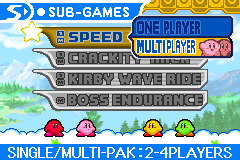
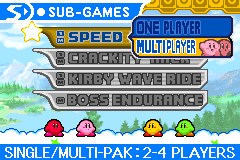
When highlighting the multiplayer option in the sub-games menu, the white text on the blue bar at the bottom of the screen shows a different layout depending on the version. While the text is the same, the words have better spacing in the European English localization.
|
American English |
European English |
|---|---|
|
|
|
Multiplayer Connection Screen#
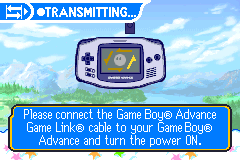
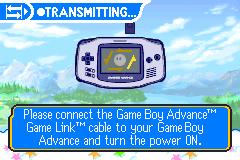
The multiplayer connection screen has mostly the same text when the game is awaiting connection. However, the American English localization uses the ® registered symbol when highlighting the hardware to be used, while the European English localization uses the ™ trademark symbol. The American English localization prefers to use the ® symbol after "Game Boy", while the European English localization uses the ™ symbol after "Advance". In addition, the European English localization omits a ™ symbol after the last mention of the console.
|
American English |
European English |
|---|---|
|
|
|
Pause Screen Differences#
The pause screens were heavily modified when developing the English localization. The Japanese version's wacky and creative screens were significantly toned down. Since every other localization uses the English one as a base, the changes documented below mostly apply for them as well.
Ability |
Japanese |
English |
Notes |
|---|---|---|---|
Normal |
|
Swallow enemies and |
The English pause screen is fairly similar to the original Japanese one. However, the red and blue highlights on the text were changed to be black like the rest of the text. |
Beam |
|
|
The English version of this screen replaces the "Anyway, beam!" part from the Japanese version with what's most likely an onomatopoeia of the Beam in-game, and changes the last three Beams to be one simple "Beam it!". |
Bomb |
|
|
The Japanese version of the game goes straight to the point about Bomb's business with a very colorful graphic. The English version prefers to plainly explain the controls to the player. The bombs from the original Japanese version are removed. |
Burning |
|
|
In the original Japanese screen for Burning, Kirby indicates that he won't stop his flaming tackle. The English version instead has Kirby daringly asking who's gonna stop him. It also lacks the prohibition signs. |
Cook |
|
|
The Japanese screen indicates that you can cook enemies with a large kanji pointing to various sprites of common enemies. The English version prefers to explain the ability with more text, but it surprisingly keeps the plate and cutlery in the background. |
Crash |
|
|
The Japanese screen is much more dramatic with its big, impactful kanji. The English version prefers to warn the player about only using the ability as a last resort option in a regular, boring way. |
Cupid |
|
|
The message stayed more or less the same in the English localization, although it also indicated what buttons to press and how to aim Kirby's bow. The Japanese version highlights the kanji for "arrow" in red, as well as "アクマ" (demon), and "テンシ" (angel) with blue. The last message from the Japanese version was omitted, but the wings and feathers from the background were kept. |
Cutter |
 |
|
This is one of the bigger changes made in localization, as while the English screen has instructions pertaining to Cutter's usage, the original Japanese screen had no text at all! It instead opted to convey its message via a simple drawing of the cutters and the Control Panel alongside the B Button. The cutters and the white impact graphic remained in the English version. |
Fighter |
|
|
The screen for fighter stayed shockingly similar to the original. Aside from the text being translated, the parentheses were adjusted to look better at their bottom. |
Fire |
|
|
The English version isn't stylized like the Japanese version, but it adds an extra line at the end. |
Hammer |
|
|
The original japanese version uses stylized kanji and opts to show the moves via simple images, while also telling the player they can hit stakes. The English version keeps the images but only indicates the player that they can use these special moves. |
Ice |
|
|
The message in the English version stayed somewhat the same, but there are no colored highlights on the words and nothing that resembles the big "COLD" part from the original Japanese screen. |
Laser |
|
|
The message in the English version uses the original acronym for the word laser as the opening sentence. The Japanese screen implies that the ricocheting lasers are a rumor, but the English version straight up states this as a fact. |
Magic |
|
|
The message in the original Japanese screen is pretty vague. The English gives the description a bit more mystery. Both versions have the doves and confetti. |
Master |
|
|
The original Japanese screen is much more dramatic with its stylized kanji and kana, telling the player that the sword will obliterate anything. The English version prefers to tell the player that it can be used on all puzzles (except this is a lie, since it can't do puzzles that require Mini or Wheel). The English screen keeps the lightning strike graphic. |
Mini |
|
|
The original Japanese screen emphasizes the tininess of the ability by having an arrow point towards a minuscule Kirby. The English screen prefers to explain the ability. |
Missile |
|
|
Similarly to the Mini screen, the Japanese screen is more playful with its description, while the English screen explains what the ability does and keeps the smoke clouds in the background. |
Parasol |
|
|
The Japanese screen is written like a Haiku, a form of short poetry from Japan. さして is used as a pun, as this verb is for the beams of the sun shining down and for poking or thrusting with the Parasol. The English version adapts this into a short, regular poem that retains most of the haiku's meaning. |
Sleep |
|
|
This screen also stayed pretty similar to its original Japanese counterpart. Kirby asks not to wake him up in the Japanese version, while in the English version he states that this is his beauty rest. The textbox also got widened a little in the English version thanks to the text being longer, and the "I", "R", and "B" letters in "DO NOT DISTURB" had a few pixels altered or added to look better. |
Smash |
|
|
The original Japanese screen references "スマブラ拳!!" ("Smash Bros. Fist!!", localized as "Smash Bros. DOJO!!"), the titles of the official Smash Bros. websites from 64 until Brawl. The English screen instead explains what the ability does while noting the familiarity of the moves. |
Spark |
|
|
Both screens use onomatopoeias for electric shocks, but the Japanese screen is much more chaotic. |
Stone |
|
|
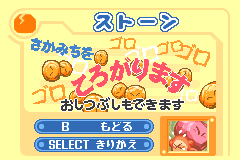
The Japanese screen is nothing but utter chaos, with onomatopoeias of something rolling and Stone Kirby himself roaming around the background. At least it tells you that you can roll down slopes and smash everything you find. The English replaces everything with a generic description of the ability, but it oddly calls Stone Kirby a "block" despite it being more of an oval shape. Kirby: Nightmare in Dream Land did feature a more blocky Stone Kirby, but it had a different pause screen description in that game. |
Sword |
|
|
Similar to Fighter, this screen is mostly the same between versions. The sprites had to be separated a little bit more to make space for the new "Cut" graphic. |
Throw |
|
|
The English screen was localized faithfully, but it removed the extra graphics of the arrow and Control Pad. |
Tornado |
|
|
Both screens convey the same spinning desires, but the Japanese screen, like others before it, is much more chaotic. |
U.F.O |
|
|
The English screen, like Throw, is also localized faithfully, but it no longer emphasizes on the word "lucky" as much, and it removes the confetti. |
Wheel |
|
|
The text from the English screen stayed nearly the same, but the stylization of the characters from the Japanese version didn't carry over. |