Bakugan Battle Brawlers is about playing a children's card game to save the world by throwing spherical monsters at each other. Surprisingly fun for a licensed game.
Bakugan#
Unused Bakugan#
In the game's internal list, there is space for every Bakugan that had appeared in the series thus far to be present. Unfortunately, in the final game, many of these were cut, with no remnants left at all besides their empty IDs. There are a handful that survived in some form, however:
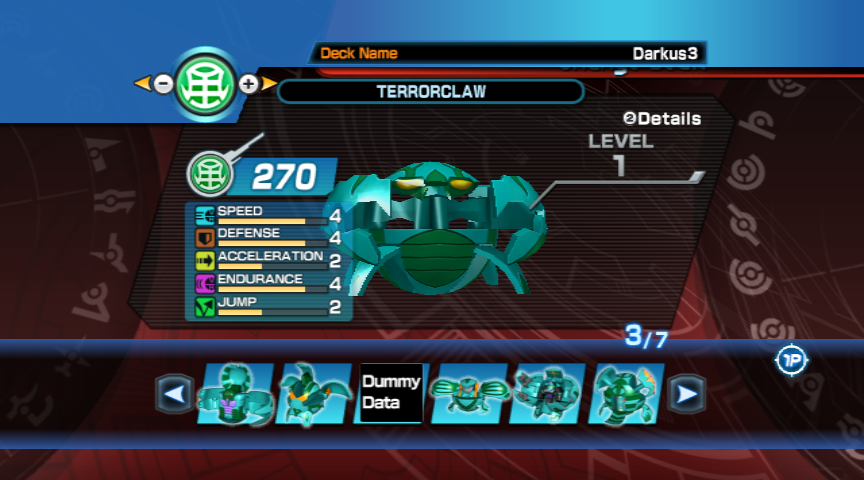
Terrorclaw normally comes in every element except for Ventus, but it does have textures for Ventus in ball form. In battle it re-uses its Aquos appearance, however, and there are no UI elements associated.
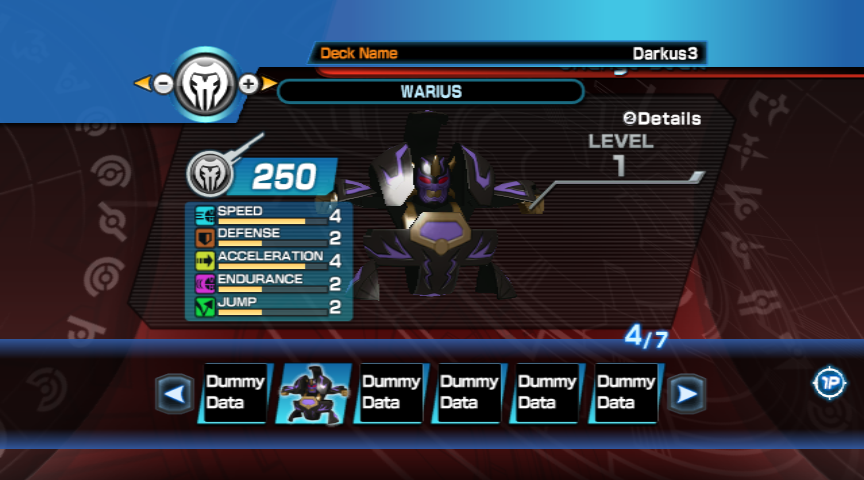
Warius was only ever officially released in Pyrus, but there exists fully functional variants of Aquos and Darkus Warius; notably, these lack the distinctive reflectiveness of the Pyrus one.

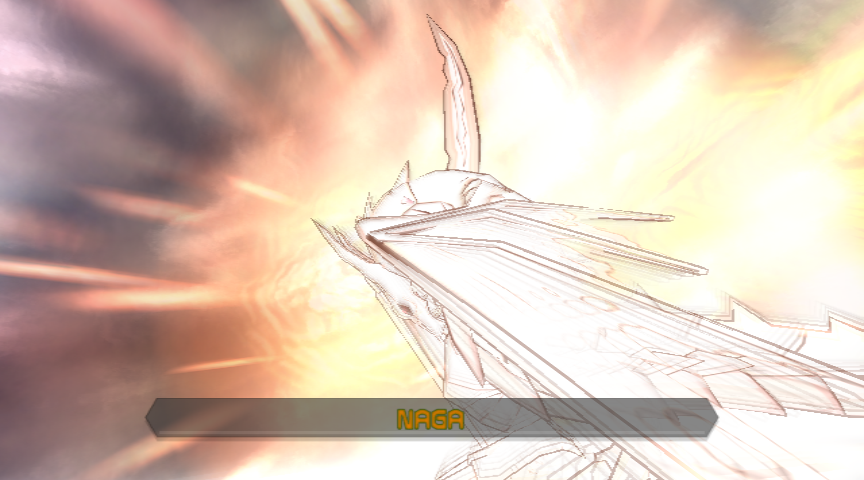
Naga appears in the game as one of the main villains, but remains unplayable. Despite that, he exists in the game's files as an (almost) fully usable Bakugan! His ball form is re-used from Dragonoid, but in battle he has a unique model and animations. Unfortunately, if you win while using him, the game will crash due to a lack of an attack effect.
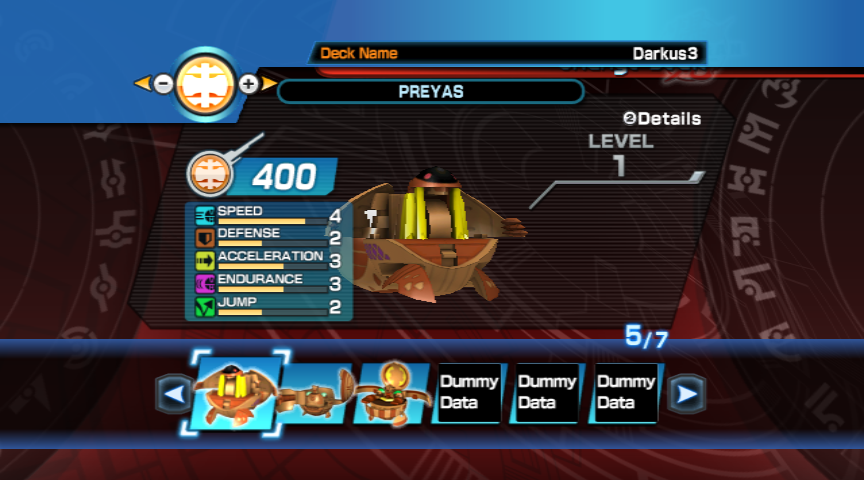
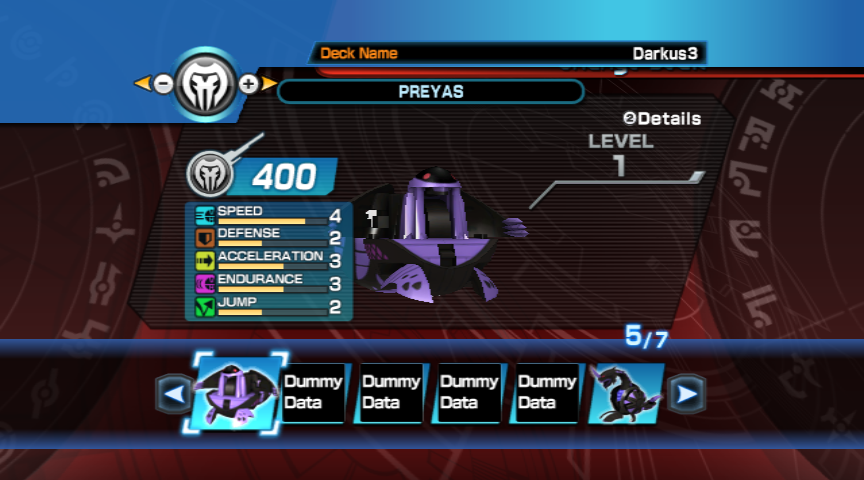
Preyas has a unique mechanic where he can change his element during battles to either Subterra or Darkus, from his base form of Aquos. You can never acquire these different elements of Preyas in your Bakugan collection, however. Despite this, he has full textures, UI files, and even unique stats for these two elements, clocking in at 400 G-Power (as opposed to Preyas' normal G-Power of 340).
Other Oddities#
Guardian Reaper#
The Bakugan Reaper is internally grouped with the non-Brawler Guardian Bakugan, implying it was originally meant to be Masquerade's Guardian Bakugan, as in the show; but these plans were apparently cut at some point in development, and it was turned into a regular Bakugan many characters use in different attributes. In the DS version, it is treated more like a Guardian Bakugan, being unlocked in the post-game and having its own ability card.
Duplicate Guardians#
Immediately following Naga in the Bakugan model list are several duplicates of the Guardian Bakugan from the Battle Brawlers. In addition, when viewing a Guardian Bakugan that belongs to a Brawler from your own inventory, it has different associated images, depicting slight changes to the design, such as Dragonoid lacking his horn, and having slightly distinguished descriptions. Despite this, and the ball models having duplicates as well, the ball models have no distinguishing features, including things such as Dragonoid's horn. Battle models do retain the changes, however.
Unused Brawler Description#
Alice features as a character in the game, but never participates in any battles. Despite this, she has a full Brawler description (only normally used when previewing opponents in tournaments) that goes unused in the files. It reads as follows:
Alice Gehabich, 14 years old
One of the Battle Brawlers. She does not participate in Bakugan battles, but usually gives advice to the other Battle Brawlers
She is living in Runo's parent's house and helps at their restaurant. She is pretty and very popular among customers.
Sometimes she goes away without telling anyone
Hidden Bakugan#
Any copies of the game purchased from Toys R Us would contain the extra Bakugan Ravenoid and Manion, not available in other copies of the game. Ravenoid comes in Pyrus, Haos, and Ventus flavors, while Manion comes in Subterra, Haos, and Ventus.
Notably, the Toys R Us version only existed for the Wii version, leaving Ravenoid and Manion completely unused in the PS2, PS3, and Xbox 360 versions of the game.
In addition, in any version besides the Toys R Us version, if you input the code 44982493 when naming your character, you will unlock a special Bakugan, a bronze Pyrus Warius.
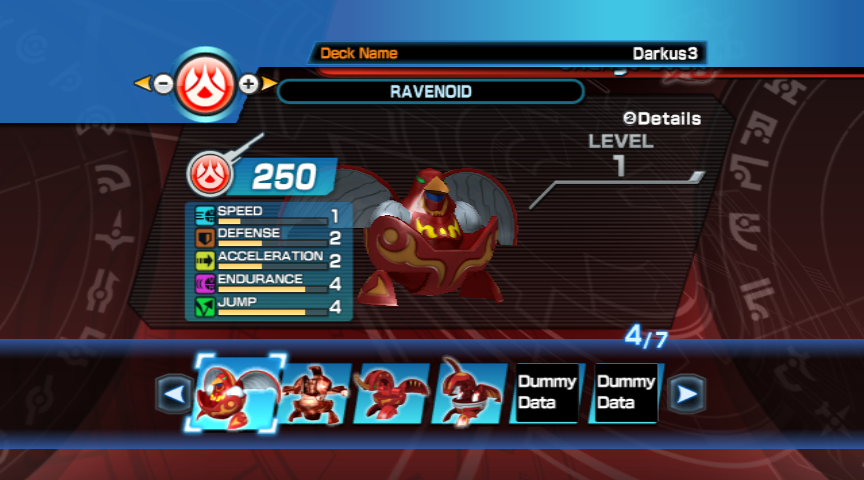
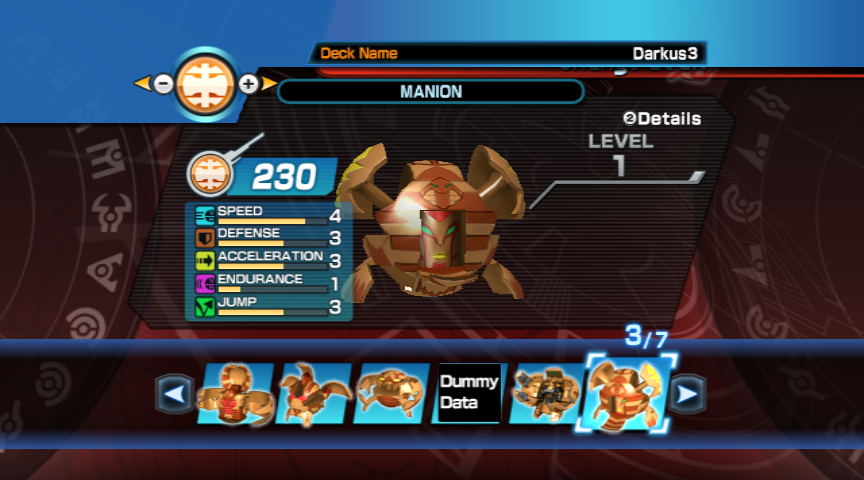
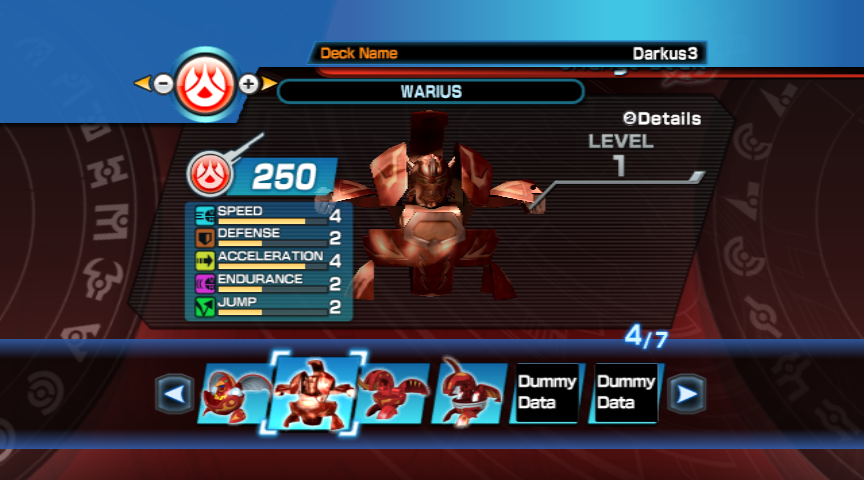
Despite these exclusivities, all these Bakugan exist in every version of the game, and can be cheated in.
Unused Audio#
Inside the game's files, there is audio for the bakupod which reads out "Hal-G's turn". Hal-G is not a playable character and is only seen in the cutscenes of the game, this may intend that in a early stage of the game there was a possibility for Hal-G to be playable or a potential boss in the game.
VO_NA_CPU36.wav
In a separate folder, there is audio for both Dan and Shun which may have been used in earlier development as the clips have been taken directly from the show with a echo filter applied to the duo's voice lines
Placeholder Cutscene Audio#
Inside of the game's files, audio for the voice lines and the background music for each cutscene is stored separately for each language supported by the game. Unused audio for several cutscenes can be found here. It appears that these were meant to be placeholders until the final voice recordings and music were ready. For unknown reasons, the placeholder versions of the cut scene audio are always split across two files, unlike the final version. For convenience, we have merged them here.
Voice Recordings#
For three cutscenes, placeholder voice recordings can be found. The voice lines of all characters are spoken by one person, and the recording quality is mediocre compared to the final version. These placeholders are exactly the same for each language available in the game.
VO_CUT_MEV005
VO_CUT_MEV022
VO_CUT_MEV027
Platform Differences#
While the game is identical on all platforms in terms of general gameplay, content and overall aesthetic, there are also some differences between platforms.
- Visuals are generally different across each version:
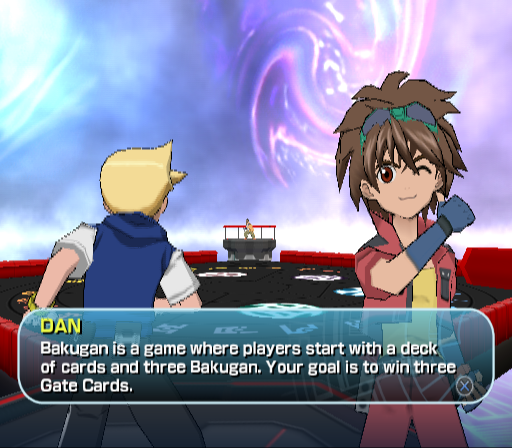
- The PlayStation 2 version renders at 512x448 and is missing several graphical effects (such as shadows and specular highlights), characters have lower-polygon counts, and texture quality is considerably lower than in the other versions.
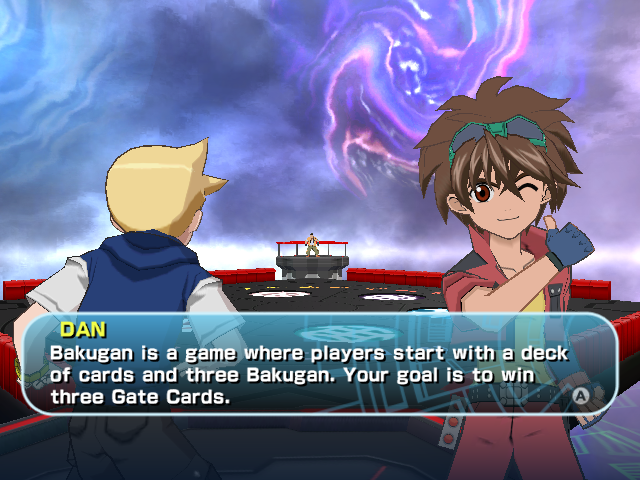
- The Wii version renders at 640x480, and the visuals appear to be a middle ground between the PS2 and PS3/X360 versions. The character models are higher-poly than on PS2 but lower-poly than on PS3/X360, and most of the additional post-processing effects that the PlayStation 3 and Xbox 360 versions (shadows, specular highlights, etc.) have are present, as well as higher-resolution textures than PS2.
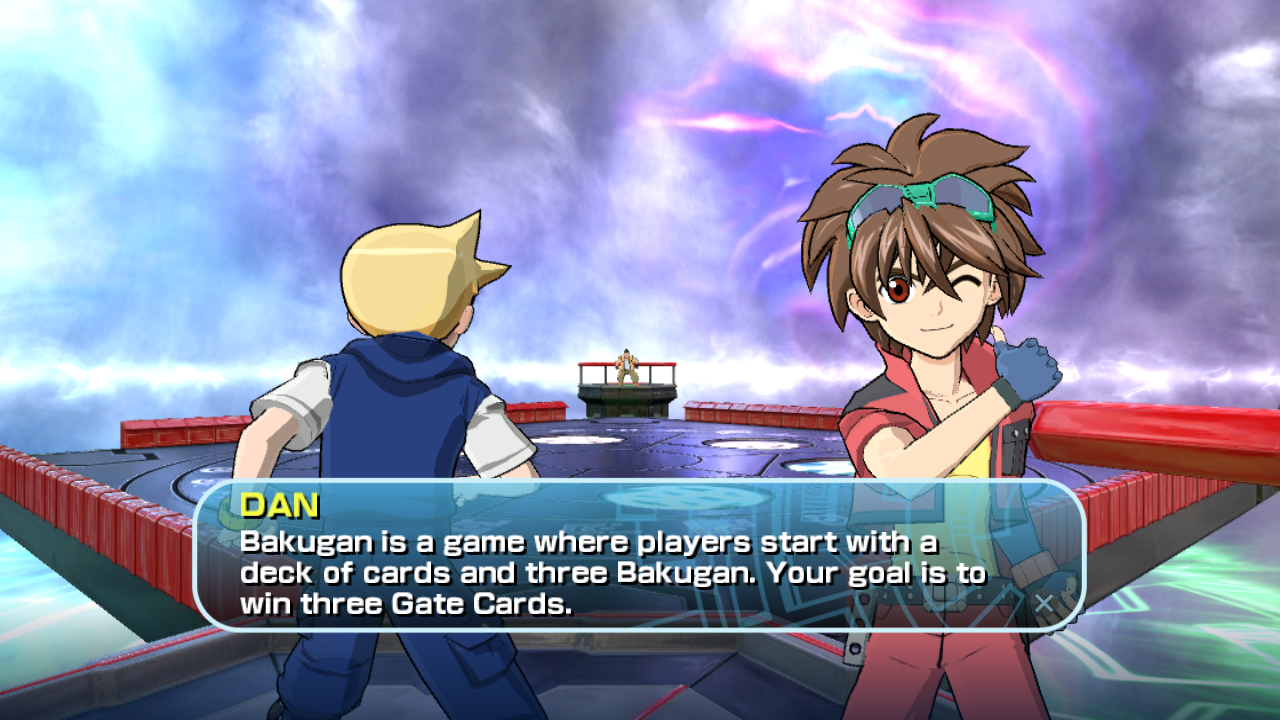
- The PlayStation 3 and Xbox 360 versions render at 1280x720, and feature higher-polygon character models, additional post-processing effects, normal maps, and considerably higher-resolution textures.
PlayStation 2 |
Wii |
PlayStation 3 |
|---|---|---|
 |
 |
 |
- Motion controls are utilized on the Wii and PS3 versions. As such, the minigames during brawls have their controls adjusted to accommodate for the different controls:
- Shooting battles on Wii involve pointing the Wii remote at the screen to shoot element symbols. The other versions instead have a circle of elements that are shot by tilting the left stick to select one and pressing a button to shoot.
- Timing battles can involve shaking the controller on PS3 and Wii, alongside pressing A/Cross and B/Circle. On Xbox 360 and PS2, the shake is changed to tilting the left stick.
- Shaking battles on Wii and PS3 involve shaking the controller. This is changed to tilting the left and right sticks rapidly on Xbox 360 and PS2.
- The 3D spinning models in the game's main menu are absent in the PS2 version.
References#
|
The Bakugan series | |
|---|---|
|
PlayStation 2 |
|
|
PlayStation 3, Xbox 360, Wii |
|
|
PlayStation Portable |
|
|
Nintendo DS |
|