 This article has a talk page!
Heading text#
This is a sub-page of Prerelease:Pokémon Red and Blue.
Conception#
The idea of Pokémon all started with the childhood of one man: Satoshi Tajiri. Born in 1965 in Machida, Tokyo, he spent his childhood roaming the then rural area, namely catching and collecting bugs, his favorite hobby. However, as the years went by, so did urbanization, forcing Tajiri to leave the dwindling insect population and find his next passion.1 Tajiri soon found himself sucked in the world of arcades and video games, this newfound obsession inciting him, due to the lack of media surrounding the topic, to create a fanzine which would share tips and tricks about certain games. This magazine, which he named Game Freak, slowly took off over time, which led to Tajiri meeting a young artist by the name of Ken Sugimori, who, unbeknownst to all, would also end up an essential aspect of what would later become Pokémon.
However, as Game Freak grew, so did Tajiri's frustration with the video games of the time, finding them generally unpolished. He then thought of creating his own game, which, as 1989 rolled around, finally started to take form as Nintendo released the Game Boy. Upon witnessing its technicalities, namely the connectivity brought about by the Link Cable, with Tajiri immediately thinking about living creatures traveling from one console to the other thanks to said cable. Soon after, Tajiri and Sugimori turned their self-published fanzine business into the eponymous video game company.
Originally geared toward puzzle games, the success of Square's Makai Toushi SaGa cemented Tajiri and his passion project of an RPG.2 Tajiri took his childhood love for critter collecting, as well as kaiju and superhero TV shows, and pitched the project he dreamed of for so long: Capsule Monster.
(Source: Pokémon Story)
Capsule Monster Pitch#
Capsule Monster was indeed the original name of the project, with the "Capumon" stored in "capsules" similar to ones found in gashapon machines, and clearly inspired by Ultraman's "Capsule Kaiju". However, the great similarity in both name and concept to the latter caused Game Freak to ultimately run into troubles when it came to copyrighting the project, prompting a renaming to "Pocket Monster", or "Pokémon" for short.
Pitched along the project was an illustrated booklet, also known as Capsule Monster, which provided numerous sketches, concept art, and even a concept pitch! This fabled folder was partially shown in the TV show Game Center CX, and later in a 2019 edition of Famitsu, and though dated to 1990 on both the cover and the Kanto layout map, this document is comprised of elements from visibly different stages of development. The contents of the booklet will be described below:
Project Overview#
Cover Art 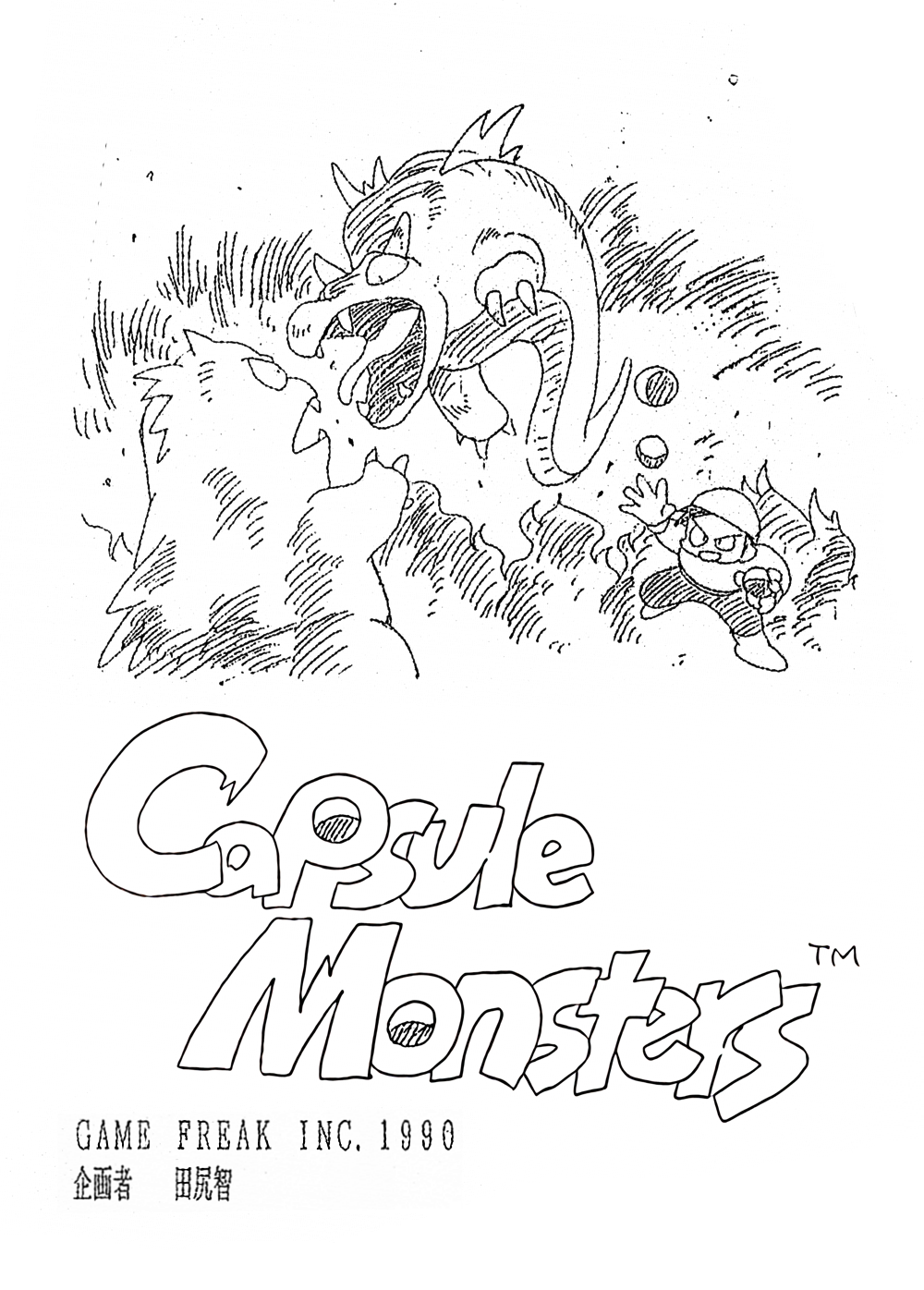
Caption: Game Freak Inc. 1990 – Producer: Satoshi Tajiri
The cover illustration, which depicts a trainer sending out a lindwurm-like creature to battle a stubby reptilian creature. These were likely one-off designs meant to showcase the look of a battle. This scene is also either an early look at, or an inspiration for the games' intro cutscene, which in the final release shows a Nidorino fighting a Gengar.
Technical Details
Project name     CAPSULE MONSTERS


Details
Nintendo Game Boy ROM package

Size
2M Bit ROM battery backup
64 K SRAM


●Aim
A game that makes the most out of the characteristics of the Game Boy, and one that is interesting because it is a Game Boy game. We want to make the most out of that concept.

① One of the characteristics and features of the Game Boy is its Link Cable. We use said Link Cable as the key to creating new ways to play while using it. We will purse new game mechanics that are unique to the system, rather than following the concept of the Famicom.

② Moreover, we propose new opportunities for children to communicate with each other beyond the LCD screen and to the world at large. Think of this as a proposal for communication in a broader sense, in the real world, not only in terms of game design, but also in terms of oral communication, interaction with friends, and game relationships.

③ We tried to reexamine the meaning of "money" in this hypothetical game world. We hope this will be a small hint for children to broaden their thinking from the exchange value to the value of "money" and "things" in the real world.
The aim of the project in its basic technical basis. A 1997 interview for Gold and Silver, then simply known as "Pokémon 2", goes into further detail on some of the points brought up here. Namely, in-game NPC trades were made to coexist with, and incentivize, the fact that one can link up with their friends to trade Pokémon. The interview also mentions that the idea of "trading Pokémon with money attached" was tossed around briefly, but never went anywhere. This likely ties into the mentality the devs were trying to convey, with Pokémon being friends and not just things that can be bought and sold to rack up even more cash.34
Concept Pitch
A (Hypothetical) Story Set in the Not-So-Distant Future...

It's been a month since the release of Capsule Monsters, a monster game that incorporates RPG elements into a dungeon-covered overworld. You know those vending machines that sit in front of candy stores and toy shops selling capsule toys called "gashapon", right? I guess I could describe the game as being similar to the excitement you get from collecting those capsules.

In Capsule Monsters, 200 types of virtual monsters live in equally virtual underground dungeons on the Game Boy. The game's hero can befriend these monsters and win them over to his side by increasing his Charisma, a game parameter not yet widely known among Japanese audiences. Charisma is featured in the Wizardry series, but it seems like Japanese games have yet to make use of it. Naturally, Capsule Monsters also allows you to capture creatures alive rather than defeating them in battle, as you've done in RPGs up till now.

The roster of over 200 types of monsters includes creatures that you won't necessarily encounter, creatures who will choose not to ally with you, and creatures who you'll miss the chance to encounter entirely, and thus never be able to catch. My friends and I call these "mirage monsters".

It just so happens that I have three Green Dragons, which only appear very rarely in the corner of an underground dungeon, four levels down. In order to catch just one of these mirage monsters, players of a certain level have to spend an average of two hours wandering around a particular area. My friend, Takuji, doesn't have any Green Dragons, but he is allied with two Fireflies instead.

In class, discussion about Capsule Monsters really heats up after the bell rings. Who has which illusory characters? How many? We're not just bragging, exactly. Once my friends and I come to an agreement, we connect our Game Boys via Link Cable and then we can use it to trade monsters. That's why we get excited, because we're negotiating which monsters to trade for what, and how many.

Takuji and I finally finished negotiating. He'd agreed to trade one of his Fireflies for two of my Green Dragons. But I still felt like our exchange was a little unbalanced. I asked if he wouldn't mind adding five Powerkings, monsters with the strength you might expect to see in soldiers, and we finally struck a bargain. Powerkings have a high encounter rate, and you'll quickly run into them if you wander around dungeons. They're strong, though, and the theory is that, if you have a lot of them, you can put them to work as soldiers when you run into other monsters. Takuji and I hooked up the Link Cable and traded monsters. The Game Boy plays sound effects as the monster data is being transferred, so we could hear the monsters' cries.

Word of mouth has turned Capsule Monsters into a hit. While I was riding the train to school, I discovered that students from other schools played too. I pulled my Link Cable out of my school bag as I addressed them. "Excuse me." I said. "I have a Firefly and a Green Dragon. What do you guys have? How about a trade?"
The concept pitch, which was meant to give off the cultural impact the game was aiming for. While things mostly line up, some peculiar differences can be noted. Namely, underground dungeon exploration seems to have been one of the game's main selling points, which eventually evolved into the idea of exploring the region to complete the Pokédex. The idea for the "Charisma" stat was scrapped, although the final game does have a mechanic where traded-in Pokémon will refuse to obey commands if they were traded from another user unless the player holds enough badges, being potentially a vestigial remnant of this concept. The concept of "creatures who will choose not to ally with you" was also scrapped, as all wild Pokémon in the game can be captured if encountered. Meanwhile, the idea of monsters "which only appear very rarely in a [dungeon corner]" was thankfully never implemented (with the only outlier being Generations III and IV's elusive way of catching Feebas). It appears that the player was able to trade multiple Pokémon at once, something completely impossible in the final releases. As for the number of Pokémon, it was revised a few times, from the original "more than 200" that were designed, to the 190 that were implemented, down to the final 150.
"Mirage Monsters" and "PowerKings" are also terms which are entirely missing from the final releases, with them simply corresponding to the idea of absurdly rare monsters and "powerhouses" respectively. Nevertheless, the Pokémon games would employ so-called Legendary and Mythical Pokémon, which share some similarities with these concepts. The placeholder critters "Firefly" and "Green Dragon" are also mentioned, and while the former are rather culturally-relevant insects in Japan, the latter are a common trope, with colored dragons being popular in JRPGs. Namely, here we have a direct reference to the Chromatic Dragons from Final Fantasy III, which are boss-like monsters that can only be found as rare encounters in a specific floor of the final dungeon; one such dragon even happens to be green. Funnily enough, while these "Pokémon" were likely never intended to be more than simple names, Generation III would later introduce fireflies (Volbeat and Illumise) and two green dragons (Flygon and Rayquaza).
(Translations: GlitterBerri)
Link Cable Functions
Proposal of a new way of playing using the Link Cable

"CAPSULE MONSTERS" proposes a new way of playing using the Gameboy's Link cable.

1 – Using a Link cable, you can trade Capsule Kaijus and items with your friends, or even sell and buy them. In general, there are many games for the Game Boy that share a world using the link cable. The proposal on how to use the cable in this game is slightly different from the traditional type; it's literally a "transfer". Imagine a standalone monster that crosses the borders of its habitat and moves to another ecosystem. "CAPSULE MONSTERS" will share and exchange time and experiences.

2 – As an option or as a second objective, there is also a "battleground" mode; a match mode using the cable. You can fight monsters your friends have in this fighting place.

3 – However, it is not the only thing that makes this game appealing. You will be engaged in collecting numbered Capsule Monsters and items. If you're missing a monster, you can exchange it with your friends, and it will surely be fun. Most children have a drive to collect things. Remember when you were a child in the old days, collecting Menko cards, bottle caps, baseball cards, chocolate stickers, Bikkuriman stickers, carddass, and so on? Actively collecting small items has always been a popular game among children.
Information regarding the different ways the Link Cable could be used. Mostly lines up, and while items can't be traded by themselves in the final games, Generation II would later allow you to trade a Pokémon holding an item. Moreover, while item collection never ended up becoming a defined aspect in the final releases, Pokémon: Let's Go, Pikachu! and Let's Go, Eevee! would later introduce little "nothing items" such as marbles, springs, nice rocks, shiny things, and the likes of it, all in order to convey the idea of a child picking up cool things found on the ground while on adventures.
Overworld and Battle#
Conceptual Kanto Landscape 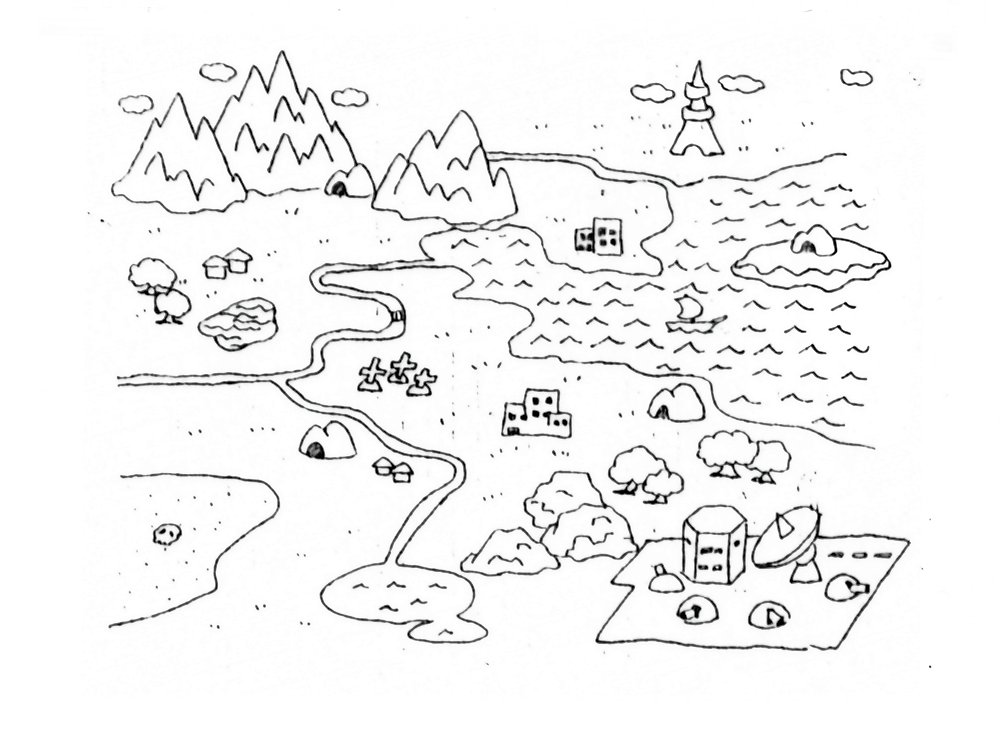
A really old sketch of what Kanto could look like, included below the paragraph describing the Link Cable functions. While appearing to be completely different, flipping the map upside-down reveals that it is indeed based on the Kantō region. In terms of locations, a cemetery, lake, desert, military base, and the Tokyo Tower can be seen, all places which never appear in the final games. The cemetery was repurposed into the Pokémon Tower, and the city of Tokyo into Saffron City, albeit without any tower. The desert, meanwhile, was likely based on the Tottori dunes, was planned to make a comeback in the games' follow-up, though it sadly once again got scrapped. The sailboat was also likely reworked into the S.S. Anne, a luxury cruise liner that travels between different towns in Kanto.
Kantō Map 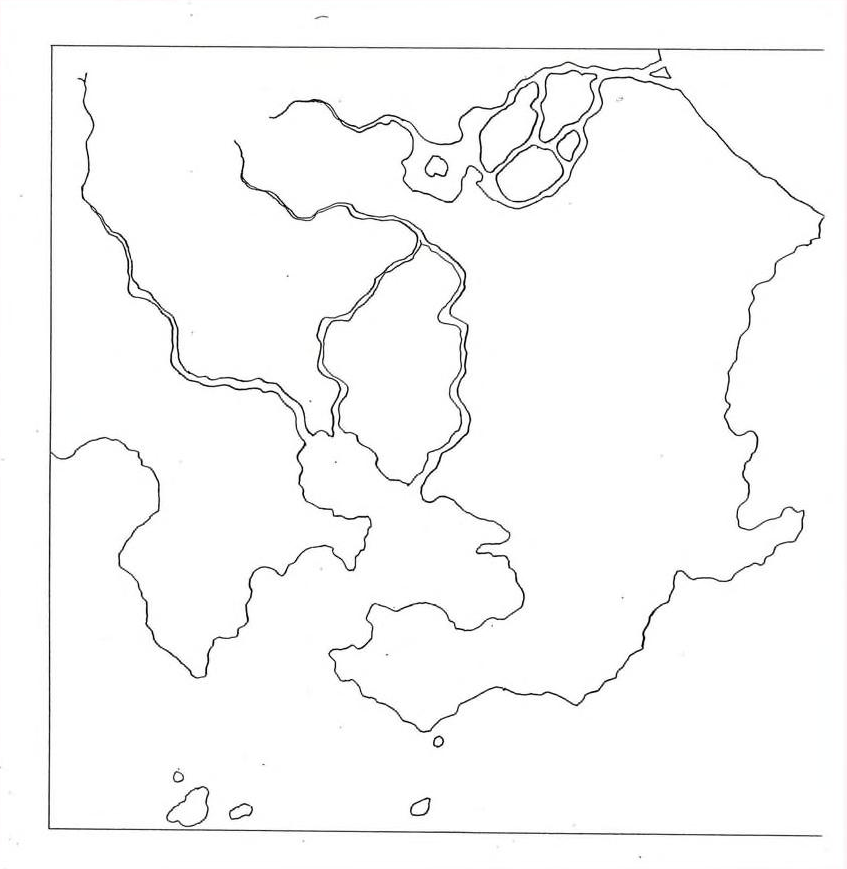
A simplified map of the real-life region of Kantō, the basis for the eponymous region in which the final games take place. Likely used as a reference to show the resemblance between the two, as seen by it being included close to the early Kanto map.
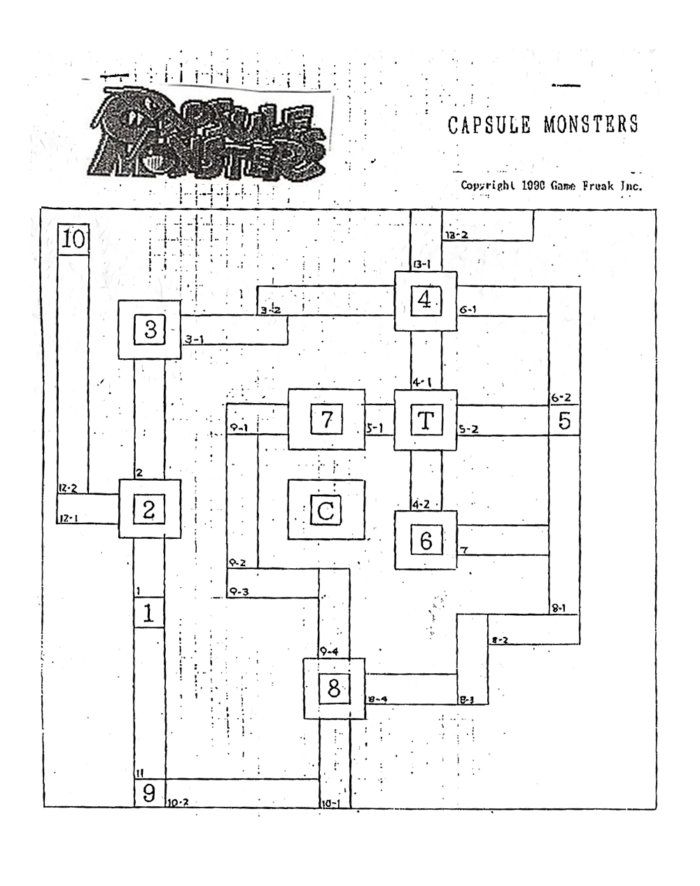
Early Kanto Map
Early Map |
Final Map |
|---|---|
 |
 |
Dated 1990 is this early layout for the region, atop of which sits an early game logo. While extremely close to the final map, a few interesting differences can still be noted:
- Routes were split up, going from the 13 denoted here to the 25 seen in the final games.
- Route 23 (12-2 here) is much longer, which actually matches up with its in-game equivalent. The final Town Map shows this route as being shorter than it actually is so that the name banner could be added.
- Route 17 (9 here) actually turns around and enters Fuchsia City from the north rather than the west. The Safari Zone is found north of the city in the final games, which may have caused the aforementioned re-routing. The progression of Cycling Road's real-world counterpart, the Tokyo Bay Aqua-Line, may also have been a factor, as construction only began in mid-1989.
- Saffron City is referred to as "T", possibly a reference to "Tokyo", this city's basis.
- An extra area is listed south of Celadon City. Known only as "C", it does not have any roads connecting it to other places. It appears to have been intended to be a rather large city, likely a seaside one given its positioning. This area was most definitely scrapped very early on, as its early in-game equivalent feels rather quickly slapped together.
Overworld Sketches 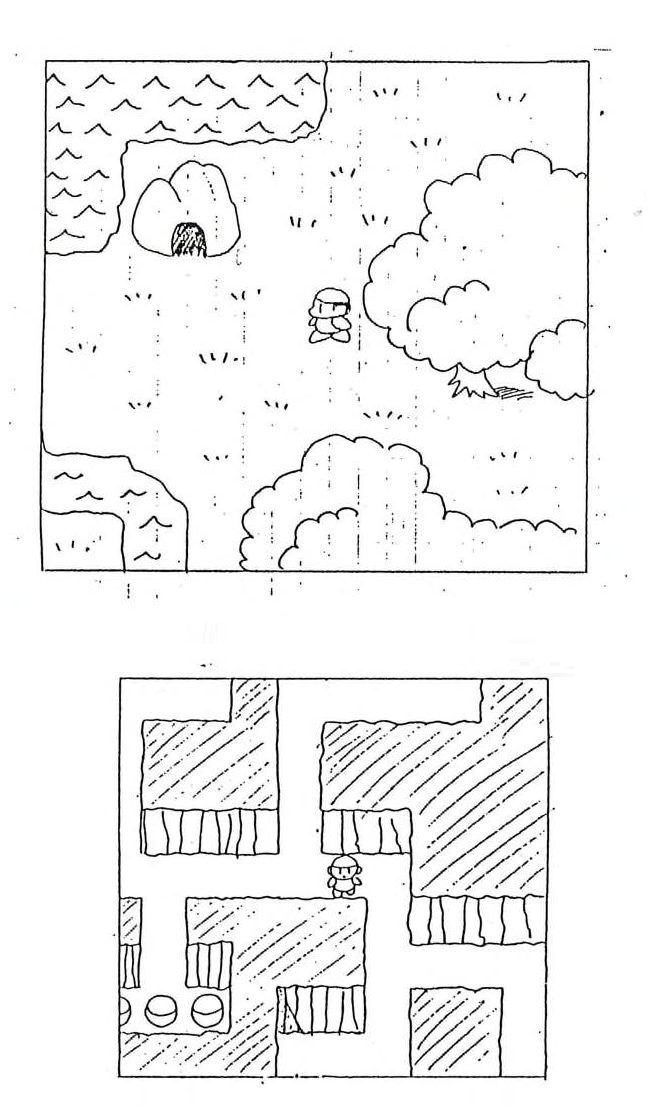
Sketches showing the player roaming the overworld, as well as exploring an underground dungeon. The former has a very old-school RPG vibe, with a player exploring a shrunken-down overworld map. Three item balls can also be seen in the dungeon, perhaps a Voltorb or two in disguise, which would make sense as it is based on Mimic-enemies and was among the first batch of Pokémon created.
Mock-ups 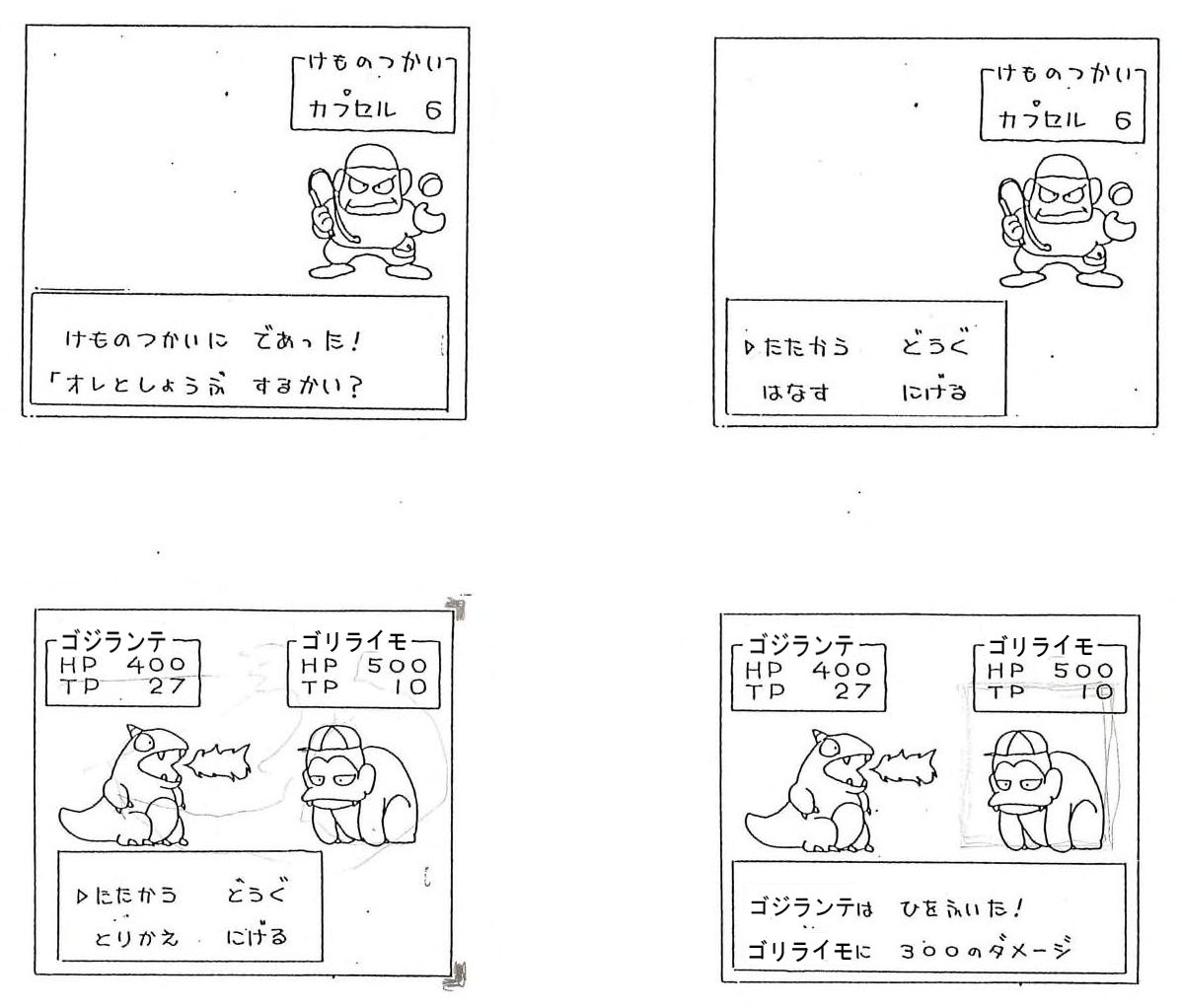
Various mockups used to explain certain gameplay mechanics. Here, a "Beast Tamer" (likely a precursor to the Tamer class, known in Japanese as "Wild Animal Tamer") with six "capsules" sends out "No. 23 Godzillante". Interestingly, the menu when facing the Tamer has the option "Talk" (はなす) instead of the "POKéMON" one. The fight itself is then shown, depicting two creatures with strong likenesses to Godzilla and King Kong, even being known as Godzillante and Gorillaimo. These are but mere placeholder designs created solely to showcase the early battle mechanic, which is evidenced by their kaiju basis. Interestingly enough, Gorillaimo's hat could be a reference to Ninten, the main character of Ape Inc.'s Mother. The battle screen itself is rather rudimentary, with the Pokémon being seen from the side rather than being front and back, the PPs (here known as TPs, likely standing for "Technical Points", similar to TMs) being shown, and the total damage of the used move being stated (Gorillaimo receiving 300 damage after Gozillante "breathes fire" on it).
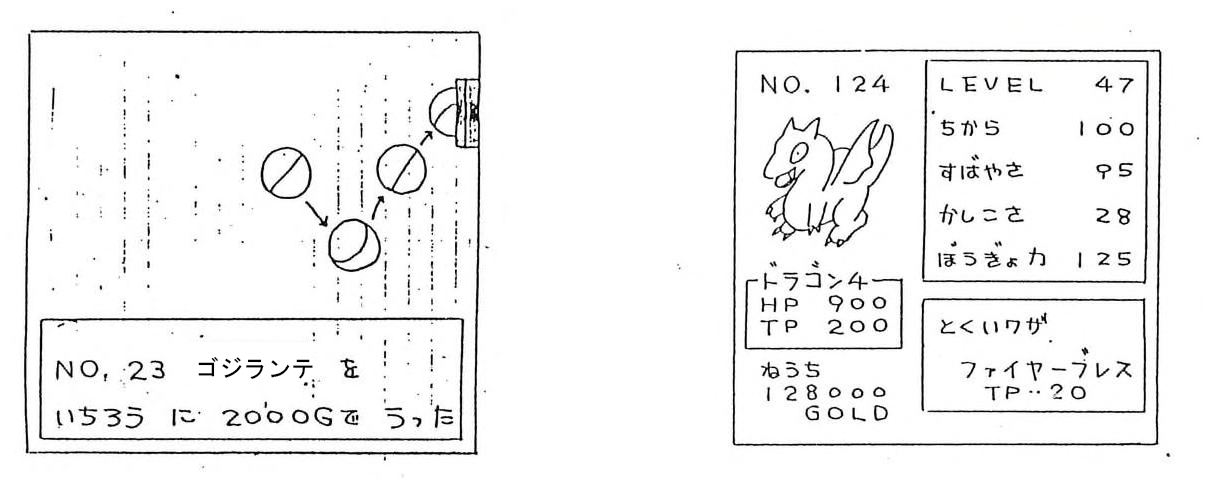
Below is a simple screen displaying the start of a "trade", the text translating to "No. 23 Godzillante sold to Ichirou for 2000G". This is interesting, as it reveals that one could sell their Pokémon as opposed to simply trading them. Gold, a staple in RPGs, is also listed here as a currency, the final games instead using yen. The trade animation, in itself, appears similar to final, though there the Poké Ball leaves from the top of the screen rather than the side of it.
Found last is a mock-up for the stats screen, starring "Dragon4" (ドラゴン4), a by-the-number cartoony dragon creature. Essentially everything is different here:
- PPs are again referred to as TP.
- The movepool section consists of a single attack, here a move called "Fire Breath" that requires 20 TP. This, alongside the battle mock-ups, may indicate that Pokémon were at first intended to only learn one move.
- The ID number, OT name, and status/type bar are missing.
- The word "Level" is written in English instead of Japanese.
- The four stats listed are "Attack – Speed – Intelligence – Defense" instead of "Attack – Defense – Speed – Special". It's unknown what "Intelligence" would have consisted of, though the stats here indicate that this dragon was definitely more brawn than brain.
- This creature is also listed with a "Value of 128000 Gold", indicating that each species had a certain price attributed to them.
Spritework#
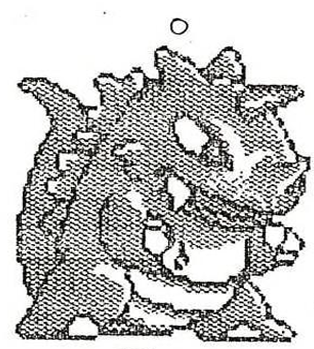
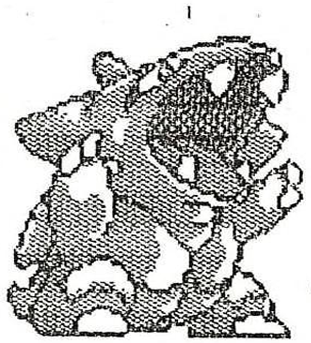
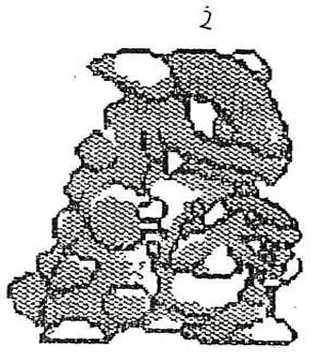
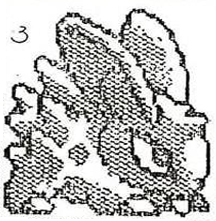
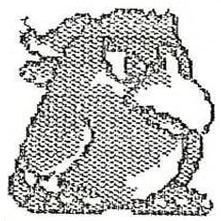
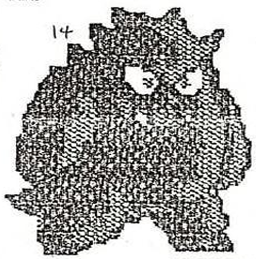
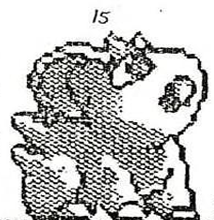
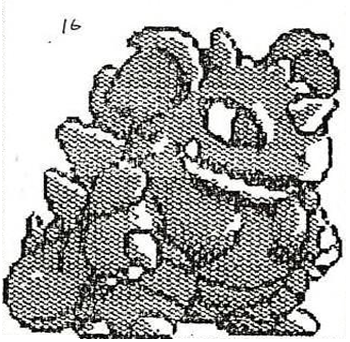
First Sprite Sheet Included after the storyboards are a series of three early spritesheets. For comparison sake, the first two will be split into individual sprites. The first sheet contains the first set of Pokémon that were created, going all the way up to Nidoqueen, which sits at index number 16.
Index No. |
Pokémon |
Early |
Final |
Notes |
|---|---|---|---|---|
0 |
Rhydon |
 |
 |
The front horn is smaller and connected to the face, lacking its drill spiral, as well as darker colored, sideways B-shaped chest plate. It also has sharper eyes, one less spike on its cheek decoration, and simpler ears. The final sprite's light is better shaded, including the tail, and softer shading indicating a rounder body. Notably, this Rhydon is also using index number 0, where in the final games 0 loads glitched data. |
1 |
Gyarth |
 |
/ |
An earlier version of Gyaōn (ギャオーン), a scrapped kaiju Pokémon which can be seen in the Satoshi Tajiri manga's popularity poll. This design is simpler compared to its older sprite. Its index number would eventually be used by Rhydon in the final games. |
2 |
Kangaskhan |
 |
 |
Her lower jaw is shorter, and there's more contrast used for the colors on the head. Her belly is lighter color, a feature missed on both Green and Blue's sprites, only added back in with Yellow. The joey has teeth, a feature not seen until its Mega Evolution, and its head design looks different, missing the white horns seen in all art. |
3 |
Nidoran♂ |
 |
 |
Has a larger sprite overall, smooth ears instead of spiky ones, and looks up rather than down. He also has a rounder inner ear, similar to Nidoran♀'s design, and unlike the triangular design used in all art. |
4 |
Clefairy |
 |
 |
The original design for Clefairy before it was reworked into a cuter Pokémon. Looks more reptilian or Kaiju-like, with some plating, claws, and lacking curls and other cute elements. Uses the same pose as in the final games. It may be seen in a piece of concept art depicting how Pokémon help with daily life, indicating it may have had spikes on its back. |
5 |
Spearow |
 |
 |
Most likely an early design for Spearow, as its using the same index number, 05. Much stockier, with a similar, hooked, shrike-like beak. Elements, like the head feathers, may have been used for Pidgeotto and Pidgeot instead. It also appears to have claws or fingers at the end of its wings, something dropped later. |
6 |
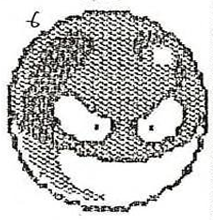
Voltorb |
 |
 |
Has a bigger sprite, with different shading on its upper half and a different facial expression. |
7 |
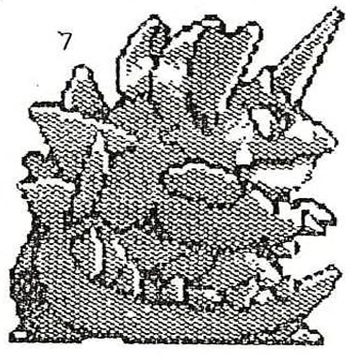
Nidoking |
 |
 |
Uses a completely different, back viewing pose. Design is similar enough, though this sprite has more detailed and varied backplates and spines compared to any later art, with the back spines also continuing down its tail. The inner-ear itself also appears to jut out, where in the final its convex and matches the rest of the ear. The jaw is also lighter colored, same colored as the belly, as opposed to colored as part of the head. |
8 |
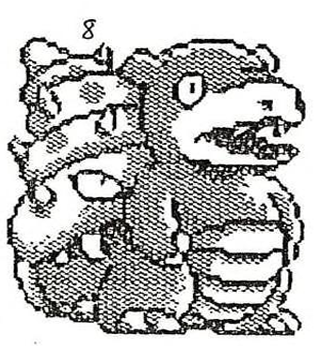
Slowbro |
 |
 |
Has a vacant expression, like Slowpoke's Green sprite, instead of a vague, goofy smile. Fittingly, its right arm isn't raised either. It's also lacking the spirals on its ears and tail detailing, with the final's sprite redrawing the Shellder's lower jaw for the smaller scaled sprite. |
9 |
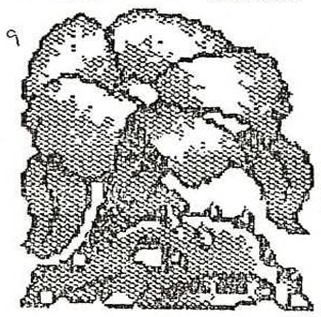
Ivysaur |
 |
|
While its name isn't shown, its index number corresponds to Ivysaur in the released game. The lower half of this sprite matches with Ivysaur's, while the stem and flower match with Venusaur's. |
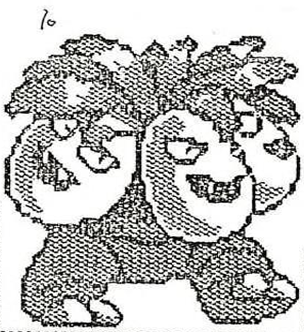
10 |
Exeggutor |
 |
 |
Same source, though completely redrawn for the final sprite. The left and center heads have different facial expressions, the toes on the final sprite are pointed instead of flat, and the final sprite details the midribs running along the palm leaves. |
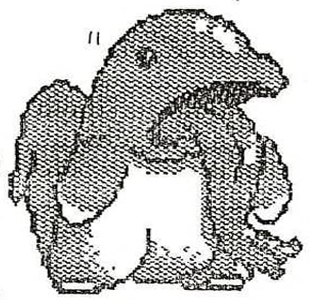
11 |
Lickitung |
 |
 |
Its arms aren't raised, it appears to have solid glove hands lacking distinct fingers or gloves, lacks the patterns on its knees and stomach, and the tongue is forked. |
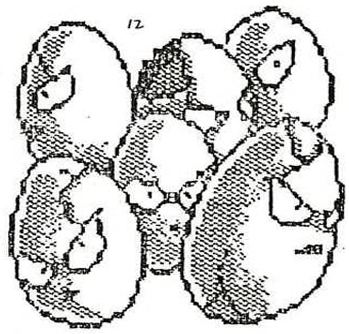
12 |
Exeggcute |
 |
 |
Has a bigger sprite, larger eyes, and uses different shading, dithering instead of pillow shading. |
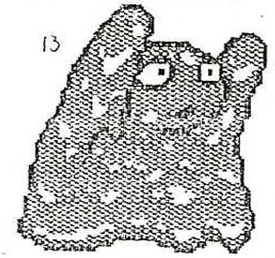
13 |
Grimer |
 |
 |
Larger sprite, with a closed mouth and neutral expression. Its lacks defined hands, and is textured in a different style. |
14 |
Gengar |
 |
 |
Has much shorter ears, a more Gastley like face with a smaller grin and fangs, and matching eyes, and appears to lack defined hands. The knees and legs appear to be bumpier, as well. |
15 |
Nidoran♀ |
 |
 |
Has a bigger sprite, smooth ears instead of spiky ones, a different eye, no visible nose or spot patterns, and no whiskers. |
16 |
Nidoqueen |
 |
 |
Has a bigger sprite, with spikes running along the center of the forehead, fangs in the back of her mouth instead of her front like sometimes seen in later, post-Gen 1 designs, better defined claws on its right hand, and less shading. |


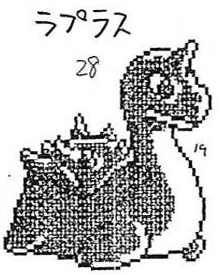
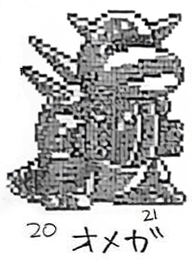
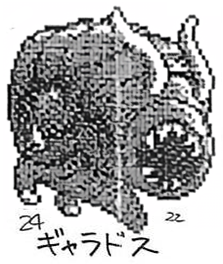
Second Sprite Sheet The second early spritesheet, this one going all the way up to Tangela, which sits at index number 30. On the topic of index numbers, all Pokémon from this sheet are listed with extra numbers beside their index ones, which correspond to their base cry ID.
Index No. |
Side No. |
Pokémon |
Early |
Final |
Notes |
|---|---|---|---|---|---|
17 |
26 |
Karakara (カラカラ) |
 |
 |
Cubone. Has a raised left arm, a white belly, and different shading on its skull. Its body also started out larger. |
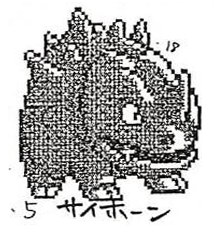
18 |
5 |
Sihorn (サイホーン) |
 |
 |
Rhyhorn. Looks far smoother, and was probably not intended to be covered by a rocky armor at this point. Also has different toes and a more surprised expression. Can be spotted in the piece of concept art depicting how Pokémon help with daily life, where it carries barrels around. |
19 |
28 |
Lapras (ラプラス) |
 |
 |
Has a bigger sprite. Lacks its curly ears, and has a more defined right flipper and muzzle. Is seen in a piece of concept art, where it is used to travel across the sea. |
20 |
22 |
Wing (ウイング) |
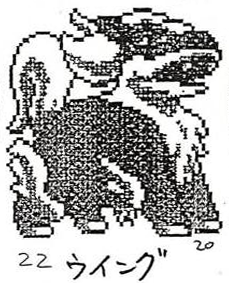 |
 |
Arcanine. Is known as "Wing" instead of "Windie" (ウインディ). Has a less hirsute fur coat, hooves instead of paws, a different posture and facial expression, and lacks its iconic stripes. Is evidently already based on a Kirin, though here on the more horse-like depictions of them. |
21 |
20 |
Omega (オメガ) |
 |
/ |
A scrapped Pokémon evidently based on Mecha-Godzilla. Name is likely a pun on "Ohm", a unit of electrical resistance whose symbol is Ω (capital Omega). This index spot was overwritten by Mew in the final games. May have later inspired Aggron, a metallic Kaiju-inspired Pokémon introduced in Ruby and Sapphire. |
22 |
24 |
Gyarados (ギャラドス) |
 |
 |
The original design for Gyarados before it was reworked into a sea-serpent inspired Pokémon. It has a vastly different design, depicting it as an eyeless leech/lamprey/tardigrade/sandworm. It does however have a similar base concept, being a fierce serpentine monster with a gaping maw. Bears some striking resemblance to the Sandworm from Final Fantasy II, which released in December 1988. |
23 |
25 |
Shellder (シェルダー) |
 |
|
Has a sprite whose design is clearly more akin to its evolution, Cloyster. Much like Ivysaur once being a Venusaur-like Pokémon, Shellder was once Cloyster, though lacking its main horn and large spikes. |
24 |
27 |
Ambler (アンブラー) |
 |
 |
Tentacool. Is known as "Ambler" instead of "Menokurage" (メノクラゲ), its early name potentially coming from the word "Umbrella", in reference to its shape. Much like Ivysaur and Shellder before it, it shares some traits which were reworked for its later conceived evolution, the extra tentacles and the squid beak going to Tentacruel (though the beak ironically enough ended up elongated into a crooked bird-like beak). Its head is also smoother than what can be seen in the final sprite. |
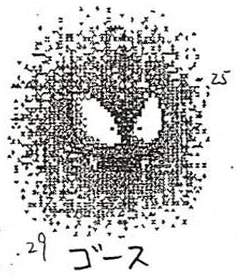
25 |
29 |
Ghos (ゴース) |
 |
 |
Gastly. Has a different facial expression, with it lacking the impish look of the final sprite. |
26 |
23 |
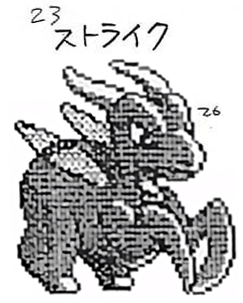
Strike (ストライク) |
 |
 |
Scyther. Basically went from a dragon with insect-like features to an insect with dragon-like features. |
27 |
31 |
Mimī (ミミー) |
 |
 |
Staryu. Is known as "Mimī" instead of "Hitodeman" (ヒトデマン), with this early name visible in the piece of concept art where a Staryu is fighting a Blastoise. Sprite is identical to final, aside from some extra pixels here and here dotting its lighter parts. An outline pixels also seems to be missing from its topmost arm. |
28 |
30 |
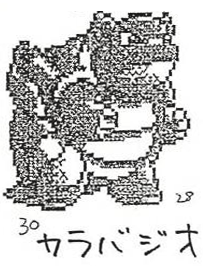
Karabajio (カラバジオ) |
 |
 |
Blastoise. Is known as "Karabajio" instead of "Kamex" (カメックス), with this early name visible in the piece of concept art where a Staryu is fighting a Blastoise. Interestingly, this early name appears to be a reference to the Italian painter Carvaggio, which could make it a reference to the Teenage Mutant Ninja Turtles franchise, whose titular turtles are also named after Italian artists. This would also be a nice nod to the word "Carapace", in reference to Blastoise's turtle basis. Sprite is identical to final, aside from some differently-shaped toes, smaller nostrills, and detailing in general. |
29 |
21 |
Kailos (カイロス) |
 |
 |
Pinsir. Identical to final aside from some of the shading and detailing. |
30 |
19 |
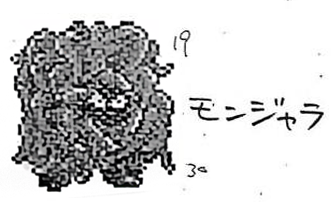
Monjara (モンジャラ) |
 |
 |
Tangela. Appears to have denser vines, slightly more refined feet, and a more mischievous expression. Less white highlights seem to be present on the sprite overall. |


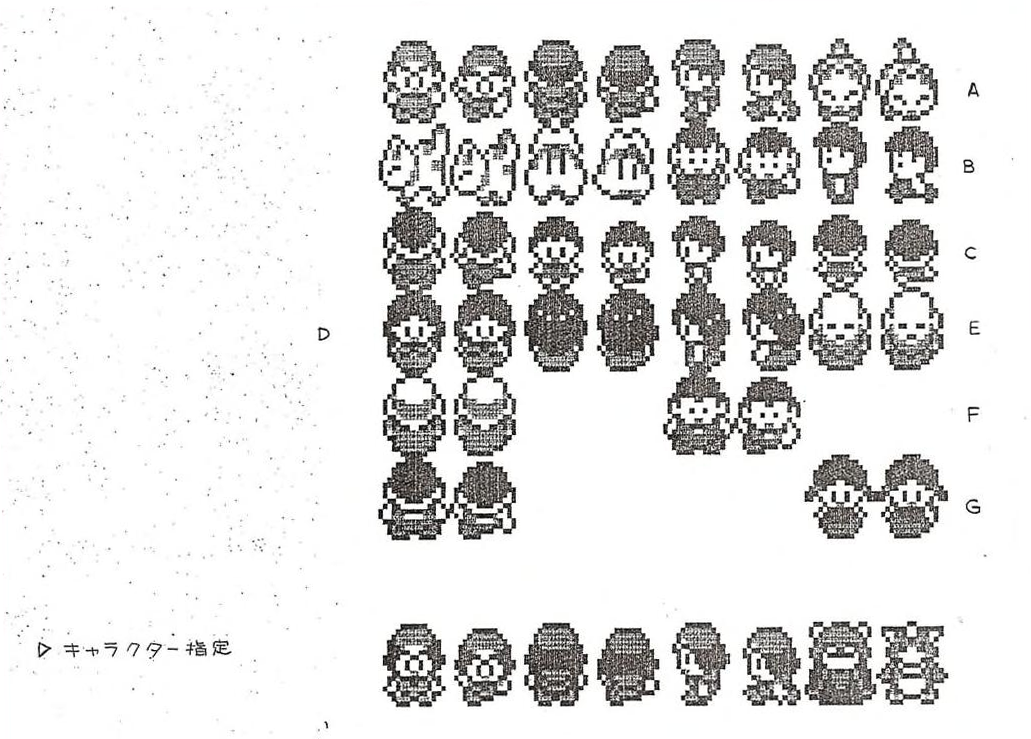
Overworld Sprite Sheet
Early |
Reconstructions |
Final |
|---|---|---|
 |
 |
 |
Caption: Character Sprite Sheet
What has to be the earliest spritesheet when it comes to overworld sprites, predating even the one from the asset leak. When compared to the latter, a few differences can be noted:
- Sprites are organized as having the walking animation beside the static one. Meanwhile, the two sheets included in the leak have the walking sprites separate in the lower rows.
- The Player's sprites are even more primitive, namely having a poorly stylized cap. Interestingly, the final games use a variant of this sprite when the player rides his bicycle.
- The sprites of the player riding his bike are missing.
- The heavyweight man NPC has a dark gray shirt with a neckline, as opposed to a bland solid black one.
- The Player's mother doesn't have walking sprites yet, nor do the chubby man and pigtails girl NPCs.
- The "Monster" sprite and the "mysterious character" are presented as full sprites, instead of having both halves stored atop each other.
- On the bottom row is a female NPC that was cut from the game, one that bears a resemblance to the player character in the final game. Despite theories, however, there is no evidence that this was meant to be a playable female protagonist, or that such a thing was ever planned to be in the game.
(Sprite Reconstructions: FrenchOrange)
Concept Art#
Monster Capsule#
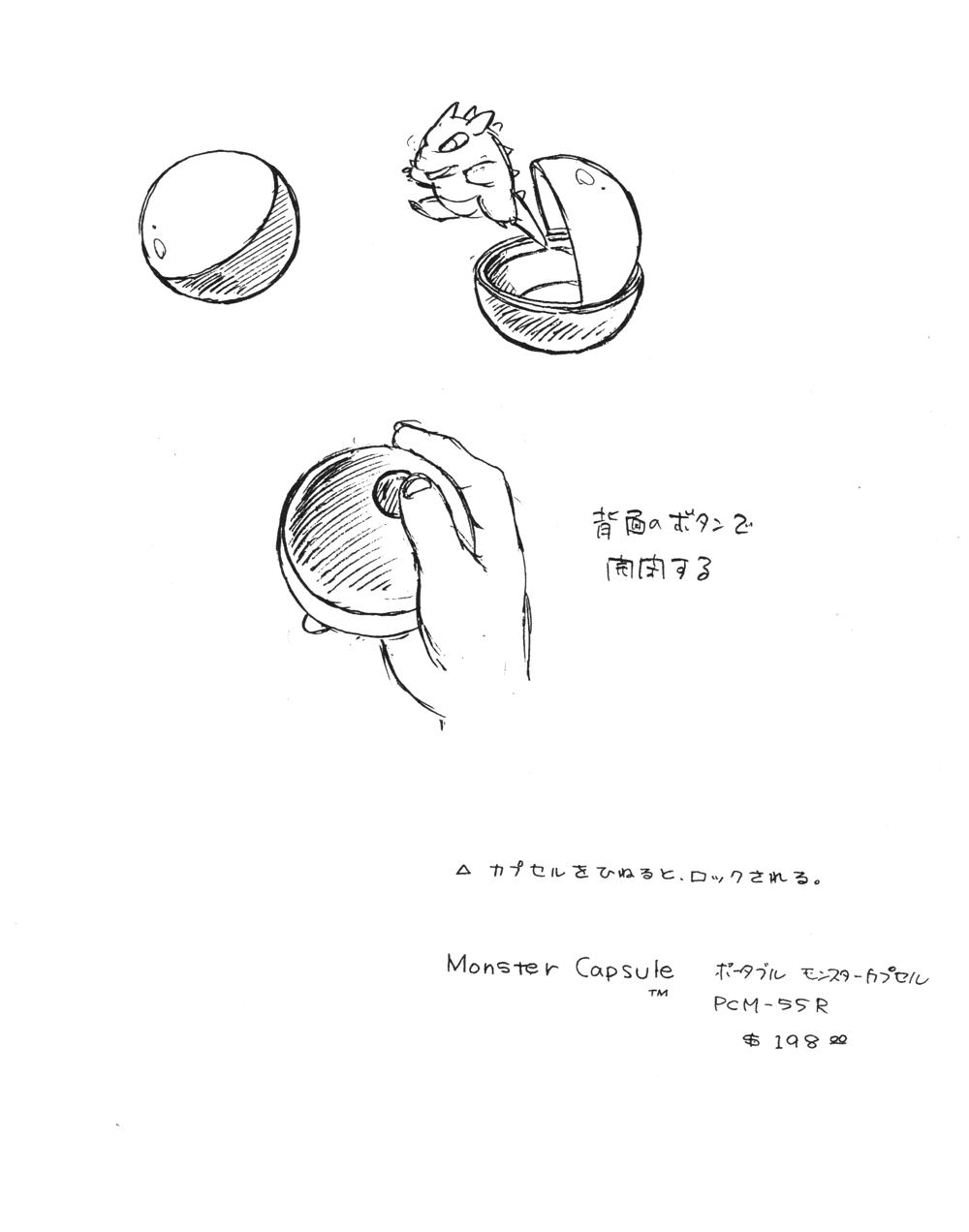
The capsule is opened and closed by a button on the back.


Twist the capsule to lock it.

Monster Capsule™ - Portable Monster Capsule
PCM-55R - $198.00
A small Rhydon seen emerging out of a precursor to the Poké Ball, with its button being found on its bottom rather than on its side, and its red and white parts being swapped. This latter aspect is interesting, as it reveals that Voltorb was initially conceived as an upside-down Ball. This sketch also showcases the idea of Pokémon shrinking down to fit inside their Ball, a concept which remains in the final games but is only rarely discussed (most notably in Pokémon Legends Arceus). This aspect is also prominent in the Pocket Monsters Special manga.
Pokémon Battle#
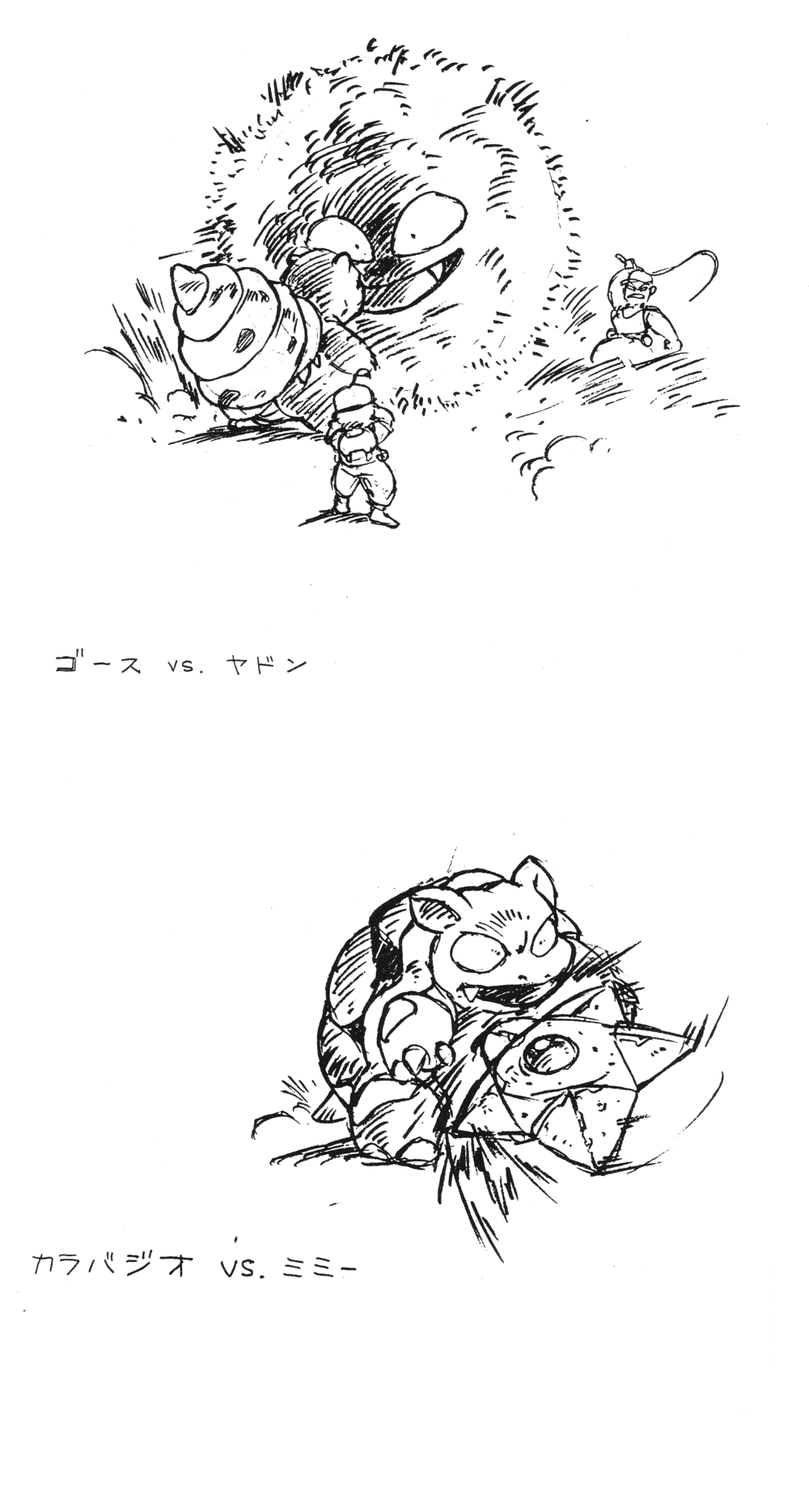
A stylized depiction of a two Pokémon battles. The first is captioned "Yadon VS. Ghos", which is interesting as "Yadon" is the Japanese name of Slowpoke, Slowbro being known as "Yadoran", suggesting that a renaming happened at one point in development. The ghost Pokémon appears to be a significantly large Ghastly.
The second fight, meanwhile, is captioned "Karabajio VS. Mimī", the early names of Blastoise and Staryu, the two Pokémon seen fighting. While these Pokémon's designs appear slightly different than in the final releases, with Staryu lacking its gold enameling and Blastoise missing its signature water cannons and having more defined ears, it's likely they are simply off-model. Indeed, one of the sprite sheets included in the pitch folder contains virtually identical sprites for these two Pokémon, suggesting it was just a simple design inconsistency.
Pokémon Trading#
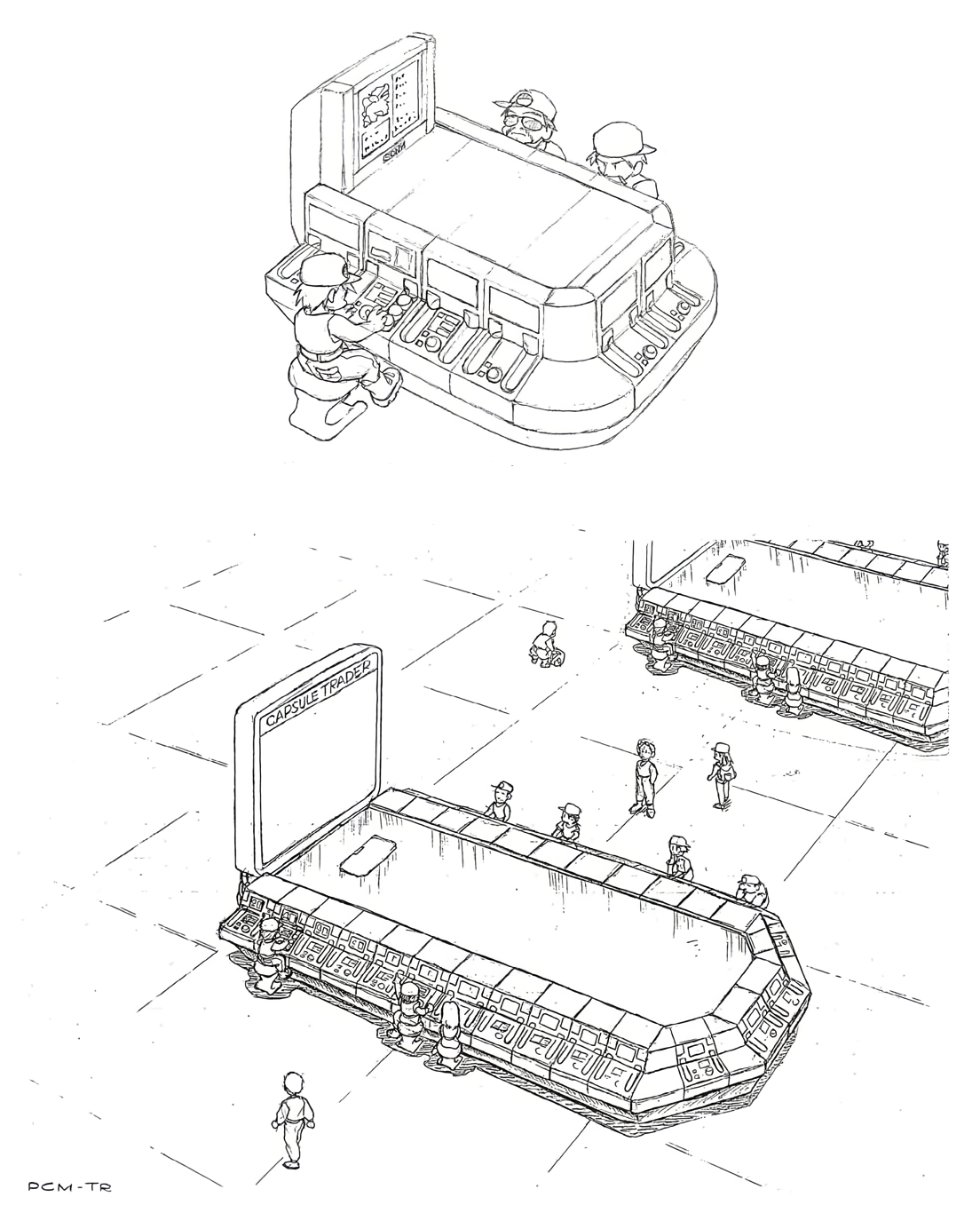
Two pieces of concept art depicting how trading is done, with a local trading device being shown, as well as an area, known as "PCM TR", which features two much larger machines. Funnily enough, the smaller one features not only a doodle of Arcanine, but more shockingly has very visible Sony branding on it. Moreover, while the larger public trading center never found its way into the final releases, Pokémon Crystal does feature a very similar area known as the "PokéCom Center", which during development even featured two large similarly-shaped machines to what is seen here!
Daily Life#
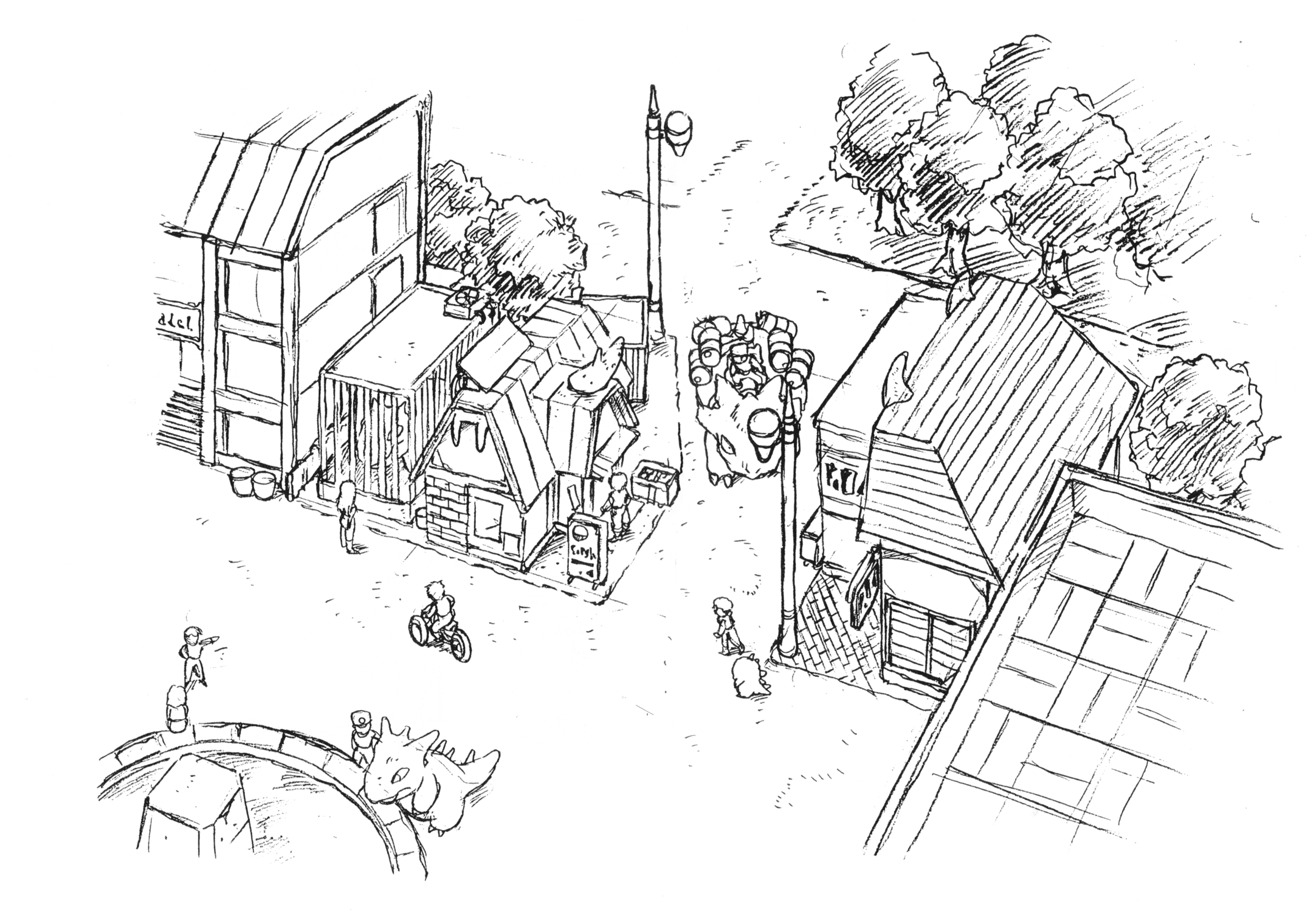
Concept art of how life was envisioned with Pokémon, with a trainer using his Rhyhorn to carry drums around, another taking what is likely Clefairy's original design for a walk, and another letting his nondescript Rhydon-like Pokémon drink from a nearby fountain. This all fits in with what Sugimori described in an interview5, with Pokémon having clear definite roles.
Hotel#
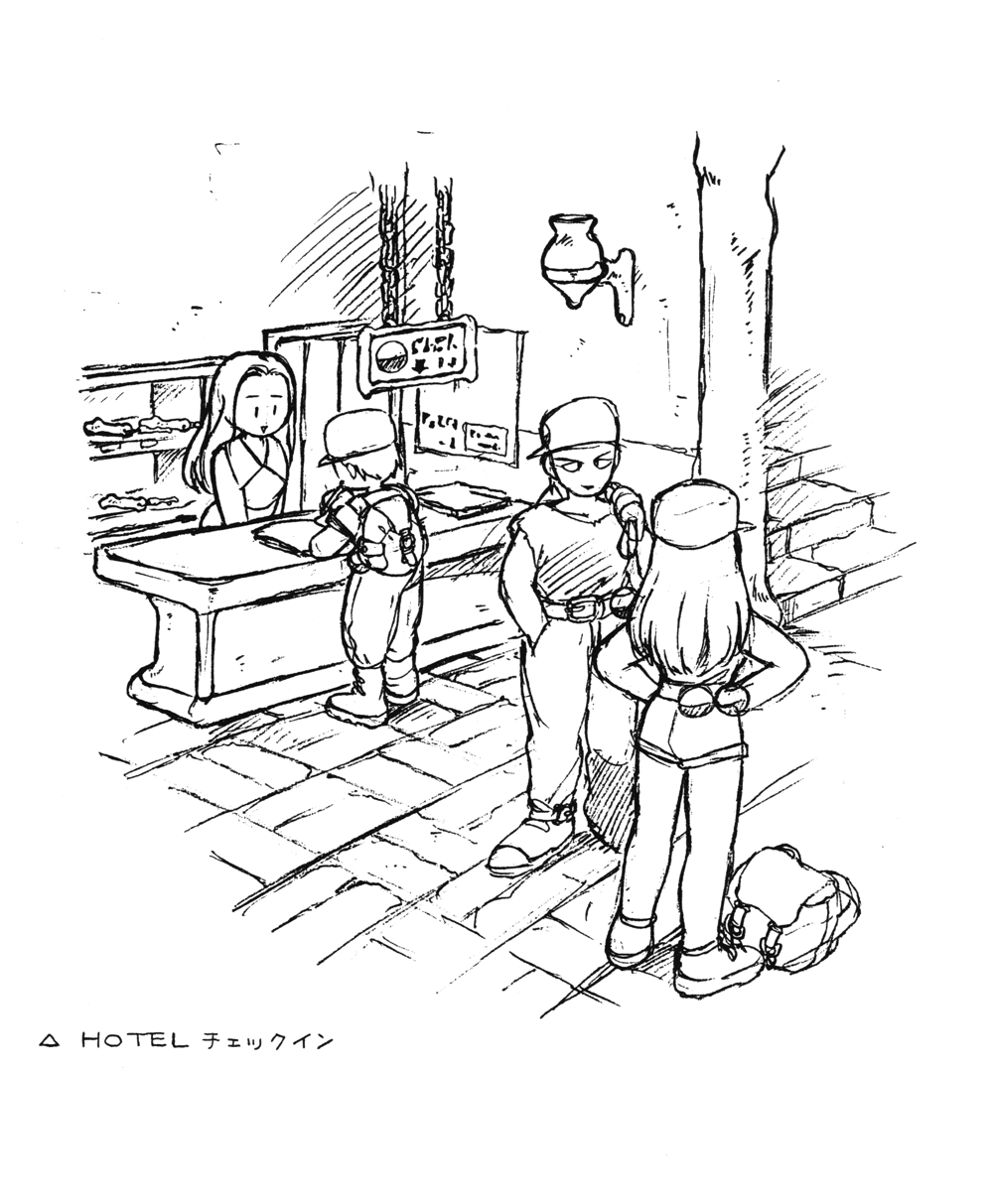
Caption: Hotel Check-In
A trainer checking into a hotel, a staple of classic RPGs. The final games would scrap the idea in favor of Pokémon Centers, which merely heals your team and does not offer any room for the trainer to rest in. While the final game does feature a hotel in Celadon City, it is purely decorative and only features a barebones half-empty lobby.
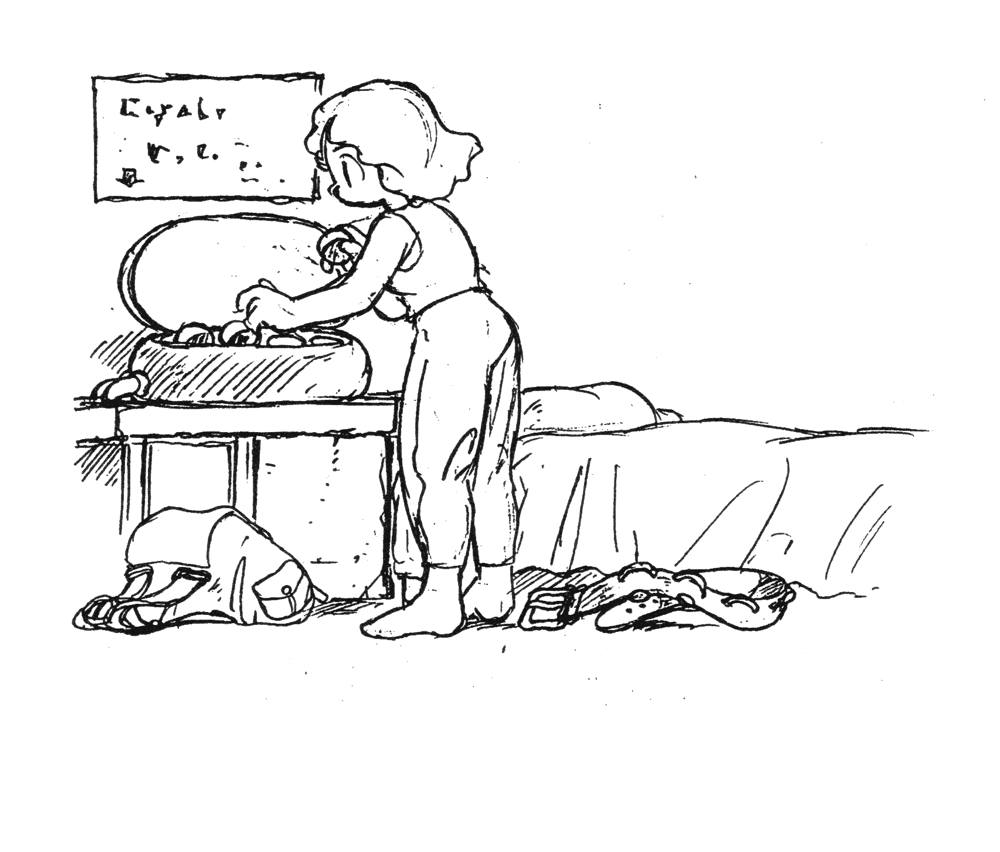
This second illustration links with the hotel concept, showing a female trainer healing her Pokémon in her hotel room, with the machine interestingly only featuring four slots, the final games allowing a maximum of six Pokémon to be part of your team.
Trade Request#
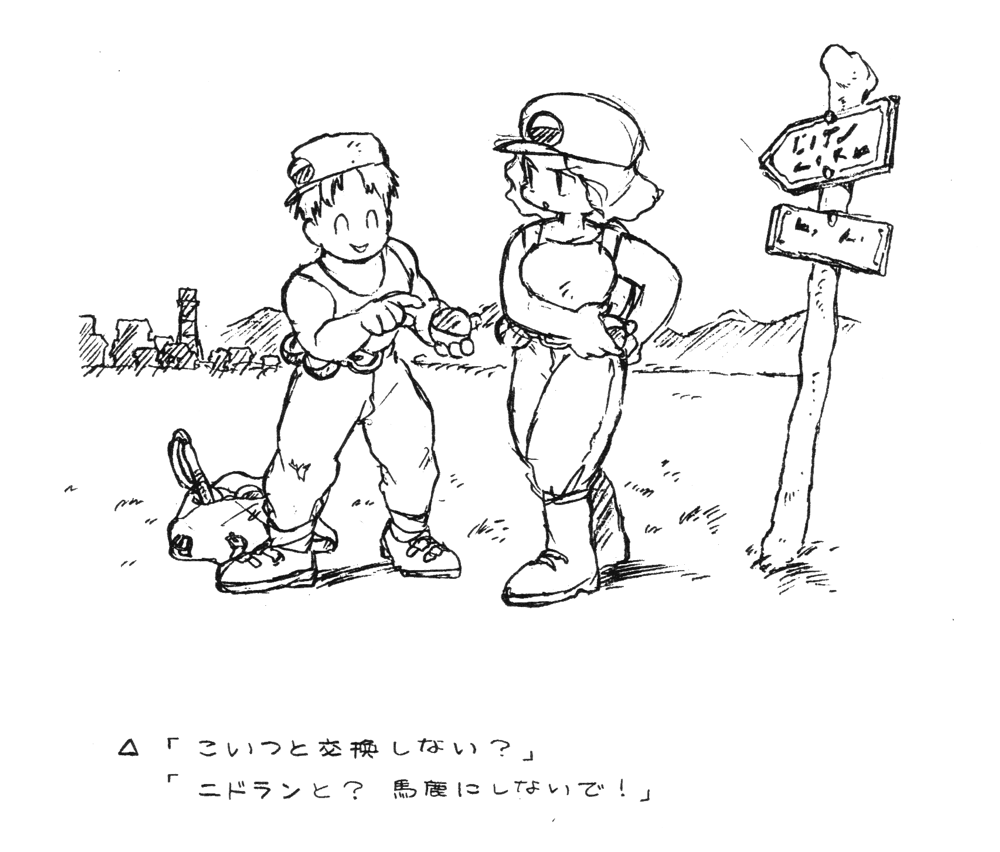
Caption: "Wanna trade for this guy?" "For a Nidoran? Don't be ridiculous!"
The aforementioned female trainer, this time walking about, only to be stopped by a fellow trainer looking for a trade.
Shopkeeper#
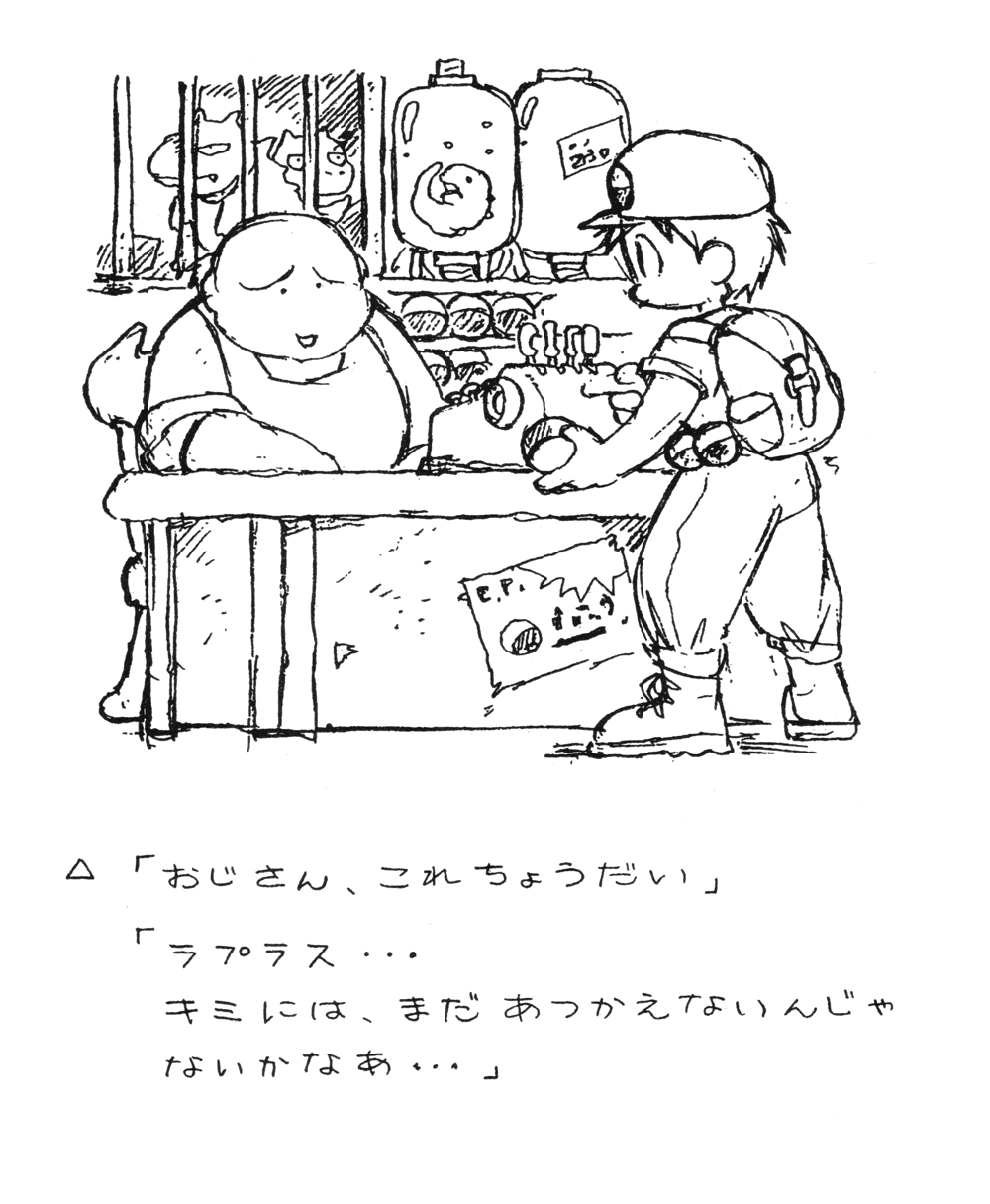
Caption: "Hey, Mister, I'll take this one, please." "Lapras... I dunno if you're tough enough to handle it yet, kid..."
A male trainer attempting to purchase a Lapras in what appears to be an early version of the Poké Mart. Interestingly, the shopkeeper resembles the sumo enemies from Game Freak's debut title Quinty. In comparison, Poké Marts in the final are held by shopkeepers with large glasses, and the shops only provide items. The "Pokémon" seen here in the background are once again simple placeholder designs, and not scrapped designs.
The idea of buying Pokémon was eventually made less prominent as Pokémon became less like pets and more like friends, though in Generation I you can still "buy" some in exchange for tokens at the Celadon City Game Corner's prize exchange booth (indeed, this is the only way to obtain Porygon in Gen I). The route to Mt. Moon also contains a con man who tries to convince you to buy a Magikarp from him.
Transportation#
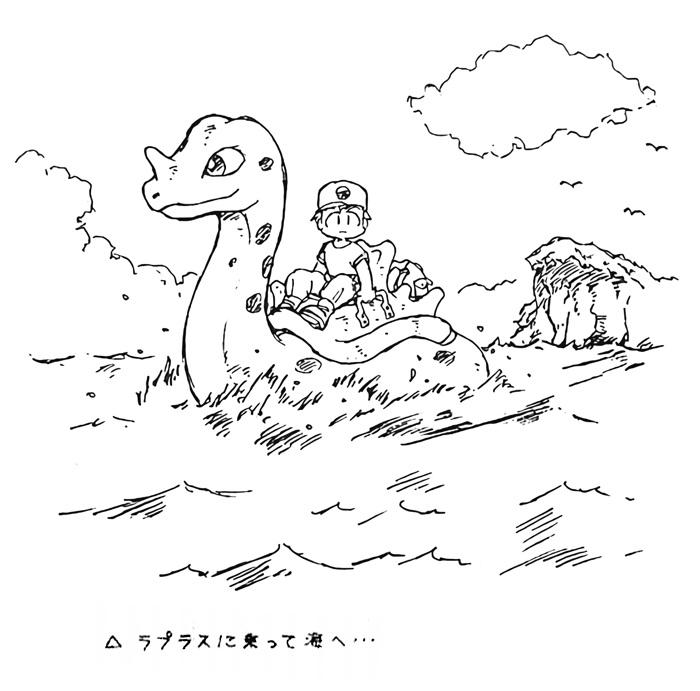
Caption: Heading for the harbor atop Lapras...
The male trainer from before riding on a Lapras, whose design matches the early sprite seen in the pitch folder. Interestingly, while the final game opts for a non-descript fish-like silhouette for the Pokémon the player surfs on, Gold and Silver always display a Lapras.
Exploration#
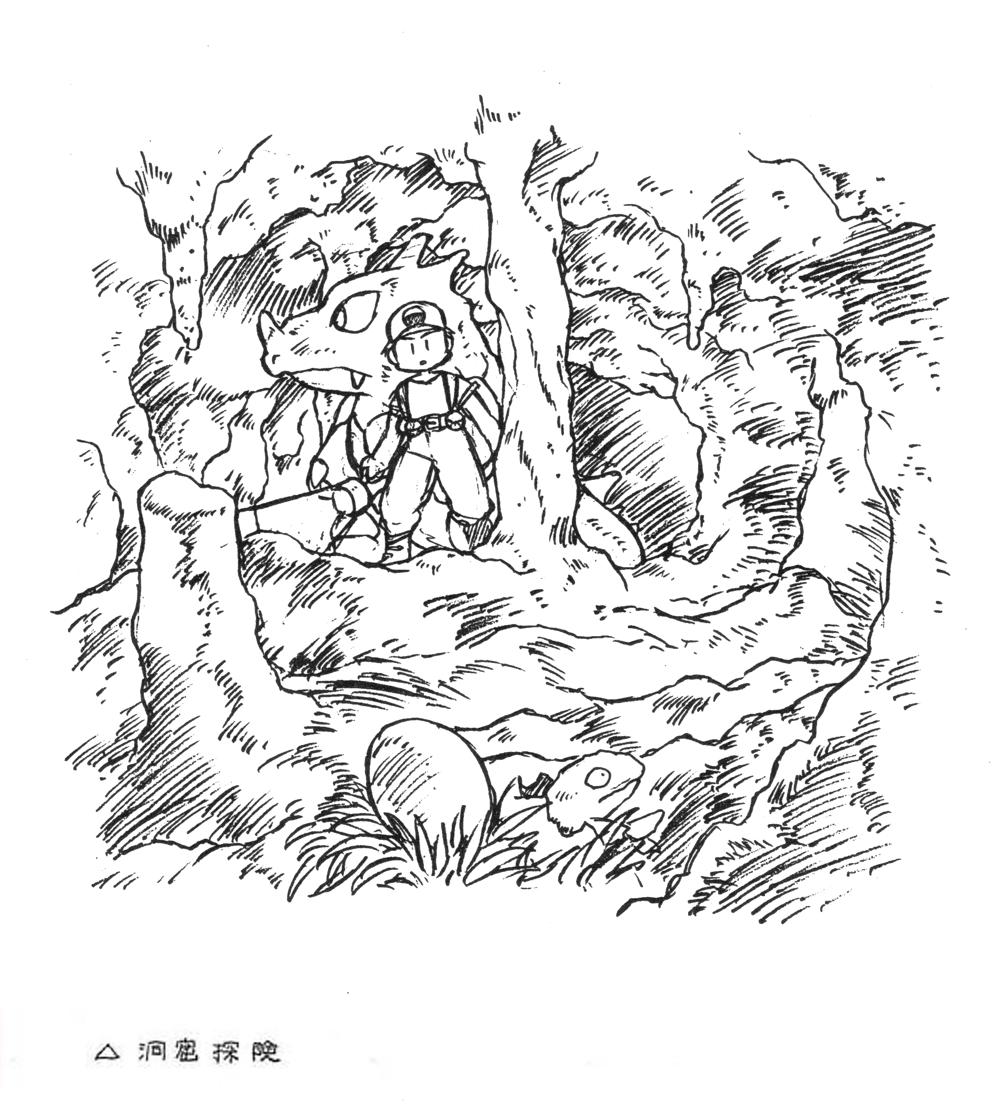
Caption: Cave exploration
The male trainer again, this time exploring a cave with his Rhydon, encountering a small reptilian hatchling which can be seen taking its first steps away from its nest. Once again a simple one-off design meant to showcase the idea of exploring remote areas, discovering new Pokémon in the process. The concept of Pokémon laying and hatching from eggs would later find its way into Gold and Silver, where it became a series staple.
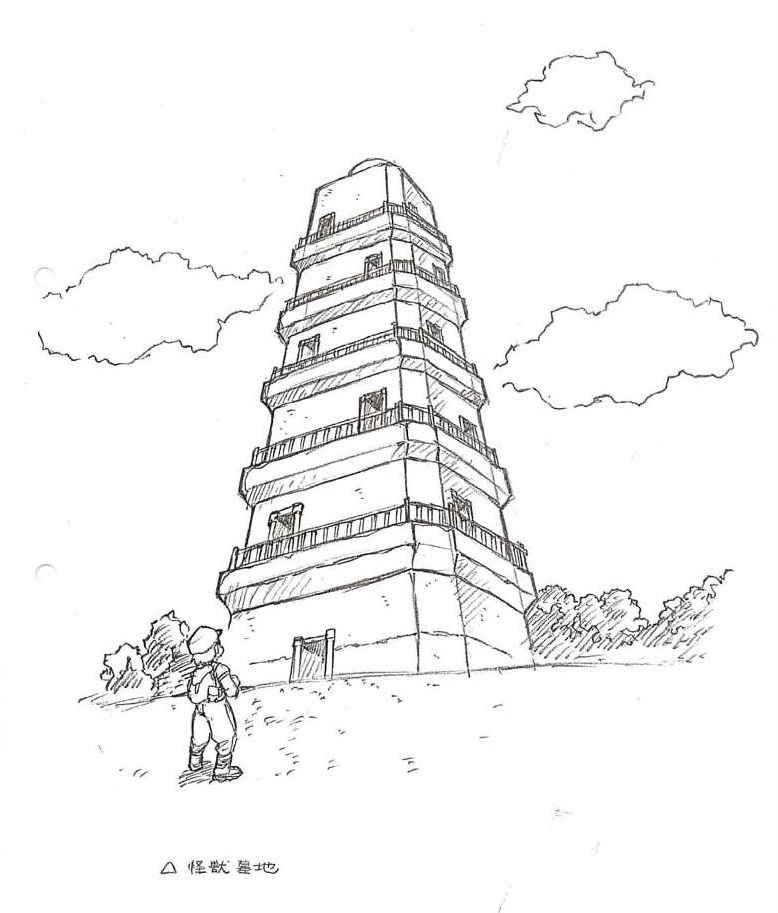
Caption: Grave of the Mythical Beasts
This second illustration links with the exploration concept, showing the player at the foot of a tower, multi-level dungeons being a staple of RPGs. The caption refers to this place as a tomb, revealing it to be a precursor of Lavender Town's Pokémon Tower. This is likely where Gastly and Gengar were intended to reside.
(Source: Enhanced scans provided by Famitsu and Hi-Res Pokémon Art)
Developer Interviews#
Alongside the aforementioned concept document, developer interviews later revealed some more insight as to what went into perfecting the soon-to-be Pokémon formula:
Badges#
Akihito Tomisawa: The development staff decided humans should have 'ranks' as monster trainers. The initial idea was that as the player's Pokémon reached a certain level of strength, they would earn 'belts' like a martial artist. […] Not just white belts and black belts like in Judo, there should be more colors. Well if you can receive a belt, what if you could use it as a training whip? Like a red whip, or a black whip. Or a yellow whip.
Ultimately, it was too cruel to make the player whip their Pokémon, so the idea got scrapped. Their relationship with the player should be friendlier, like a pet owner. So eventually it was decided you'd earn badges [instead].
Early ideas for how to denote a trainer's rank. The various belts were dropped in favor of badges, tokens awarded to those who can defeat dedicated "boss" trainers. Internal data does show leftovers of a an early ranking system, though it was ultimately scrapped altogether. The idea of "different colors of belts" may have gone on to inspire the stat boosts that are awarded by some badges. Nevertheless, certain characters in the game (such as Team Rocket grunts) are still displayed as using whips in the final game, and even an earlier rendition of the player character's sprite showed him using a whip.
(Source: GAME FREAK: The Creative Group Rewriting The Rules In The World Of Play)
Types#
Sugimori: It first started with designs of dinosaurs and monsters in a super-deformed style. They had fangs and long tails, and spikes jutting out all over their bodies. It started with Pokémon like Rhydon and Nidoking, for example. And when we looked at them all together, the designs felt rather uniform [...] As the games' development progressed we added the idea of "types" to the game system, and so we added in changes like the flame on Charmander's tail or having a plant growing on Venusaur's back.6
Interviewer: There are lots of different types of Pokémon, like Water and Grass. Did that concept exist from the very beginning?
Sugimori: No, we came up with the idea for types in the middle of development. Battles would be monotonous if Pokémon were simply 'strong' or 'weak,' so by adding types we were able to add a new level of depth. Later, we even created some Pokémon based on the types themselves.
Interviewer: So some of the Pokémon created early in development were designed without any concept of types?
Sugimori: That's right. Pokémon were originally a lot more dinosaur-like. Choosing between three types of Pokémon at the start of the adventure also came about mid-development. It's pretty common for our games to change significantly during development. Even just for the beginning of the game, we must have changed it about ten times.
The idea of typing turns out to have been a later addition, with the team later retroactively adding elemental attributes to older designs. In comparison, Pikachu, which was created further on during development, was explicitly conceived out of the need for an Electric-type Pokémon.78
Roster#
Interviewer: How did you arrive at the number of Pokémon being 151?
Sugimori: Originally, we planned for it to be more like an RPG. It wasn't until the middle of development we came up with the idea that filling up your Pokédex would be the goal of the game. So from there we had to work on getting the perfect number of Pokémon while keeping in mind our data limitations. We ended up cutting about one-third of the Pokémon we'd created.
Interviewer: Why did the objective of the game shift from a standard RPG-style game to completing the Pokédex?
Sugimori: As we were writing all the Pokédex entries, we realized it would be fun for players to collect Pokémon. We wanted to break away from the standard format of fantasy RPGs from the very beginning. Instead of a hero defeating an evil villain, we decided a story about a kid traveling around to complete his Pokédex was more fitting for modern times.
As seen in the concept pitch, early plans called for a total roster size of around 200 Pokémon, which can be seen in the final games' internal index list, which has a total of 190 entries. Some of these scrapped Pokémon were later seen in the manga "The Man Who Made Pokémon", as well as the April 2020 Nintendo leak. A few of those designs, namely the cut pre-evolutions and Kotora, were later retooled in early builds of Pokémon Gold and Silver.
Nishino: […] First I'd look at the Pokémon's design and wonder 'How strong does it look?' Then we'd put it in the game and test it out — and if it didn't feel right, I'd make some adjustments. That took me a long time, doing it over and over again until it felt right. There were also times where we decided some of the stats and designs based on what was needed for the story.
Morimoto: Sometimes the planners would ask us something like, 'We want a Pokémon for blocking a path, can you create us a Pokémon for that?
The idea of revising a Pokémon's design as to ensure "player satisfaction" was also brought up in a 1997 Game Freak interview, which showed dorkier final evolutions for Weedle and Poliwag. This quote also tells us that Snorlax was designed as the dedicated roadblock creature, a concept which was repeated in Generation II with Sudowoodo's creation.
(Source: Nintendo Online Magazine – July 2000 Issue)
Battles#
Interviewer: In most RPGs the protagonist grows and levels up, but in Pokémon the protagonist level ups the Pokémon they're traveling around with. Why is that?
Sugimori: Well, there was a point in development when we had the protagonist fighting alongside their Pokémon, but we started to wonder, 'If the protagonist can fight, what are the Pokémon for?
Masuda: At first, the relationship between Pokémon and their trainer was more like pets and their masters. But during the creation process we thought maybe it would be better to make them more like friends and companions. From there it transformed into a story where the protagonist grows together with their Pokémon. [...] It's something we came up with so players would feel like their Pokémon are their friends and their Pokémon.
As hinted in the pitch, it appears that catching Pokémon worked similarly to recruiting party members in standard RPGs, with the player being an active fighter. This can also be seen in the fact that trainers in both concept art and the final games can be seen wielding whips, the protagonist even doing so early on In development.
Interviewer: Had you already decided all the details from the very beginning, or were some things added during development?
Masuda: It's our style here at Game Freak is to continue adding things as we break down the game into its final product. For example, at one point we removed the in-battle HP bar and replaced it with phrases like 'That hurt' and 'That really hurt.' But we realized that actually made battles less interesting, so we brought back the HP bar. We don't just come up with ideas and stick to them, we all brainstorm as a team to make sure we end up using the best idea.
Masuda: We didn't have any experience making RPGs. We kept putting certain things aside to come back and fix later, but they kept piling up. For example, in the final game, HP is displayed with a meter, but at one point in development it was represented with text. We came up with 16 different status descriptions like 'they're still okay' or 'it's gonna get bad pretty soon,' but it wasn't very interesting, so we scrapped it.9
Mentions of a short-lived different sort of battle flavor text, the final games using a simple mention of the Pokémon using its move, though a similar idea to the early one is that of "This move was super effective!"
Further changes to the actual battle system, meanwhile, were discussed in the book Pokémon Taught Me The Meaning of Life, which contains a closing interview with producer Tsunekazu Ishihara. There, it is revealed that during the debugging process, the game was programmed so that walking in a trainer's line of sight always triggered a battle, regardless of whether or not they had already been defeated earlier. The wild Pokémon encounter rate was also significantly higher earlier on. The Trainer rebattling was omitted from the final release and the wild Pokémon encounter rate was significantly reduced.10
Versions#
Interviewer: Different Pokémon appear depending on if you own the Red or Green version of the game - what was the inspiration for that idea?
Tajiri: We got the idea from Mr. Miyamoto actually. A while ago he came to look at the game, and suggested we 'give people more reason to want to trade.' So we thought if we make two different color versions with different Pokémon appearing in them, that will get people excited about trading. It only happened because it was suggested by Nintendo, the idea had never even occurred to us before that.
Oota: We also considered having each game generate a random ID number the first time it was booted up, and that number would determine which Pokémon appeared in the game. But that was just an early idea.
Tajiri: In the beginning, the original Pokémon didn't have different variations such as Red and Blue. I took the advice of Miyamoto and split it into two, something that was a first for us. [...]
Miyamoto: I didn't suggest splitting the games because it would allow us to sell more copies of the same thing. I just thought it would be more fun for the players if, say, there were 3 siblings and they all owned something unique. That way, they'd be able to communicate. I didn't want to release separate versions of the games just to increase the marketability.
Tajiri: ''The shape of a forest, the Pokémon that appear - I wanted to make a game that would be different for everyone, but it was difficult. So I went to consult with Shigeru Miyamoto from Nintendo, and we ended up deciding to make it so depending on the color - whether Red or Green - the worlds would be parallel but different."11
Tajiri: ''I talked to Miyamoto about how we'd make players understand that every cartridge is different when they buy one, and he told me the system sounded interesting, but it was a bit difficult to grasp. He said if players can't tell just by looking at it, then it won't work out, and it would be better if the games' color or appearance were different. [...] So it was from trying to differentiate ID numbers that the idea to symbolically change the colors came about. I thought we should do it, but alter the colors for real. We needed to do more to make the different color games have all kinds of details in them that were a bit different."12
Pokémon's now iconic dual-version release went through quite a few hurdles, as the devs battled grand ambitions and the harsh reality that mirrored them. Namely, the Trainer ID that is assigned at start of each game would have actually had an impact on what Pokémon the player may encounter, and seemingly even the layout of dungeons. The latter was clearly outside the dev team's scope, as a randomized dungeons system was extremely rare to see in the Game Boy's library (with notable examples being 1996's Shiren the Wanderer GB, and 1998's Dragon Quest Monsters: Terry's Wonderland).
The plan then shifted to having dedicated, pre-made versions of the same game, as opposed to one game that would have more than 65,000 variations (the Trainer ID system having up to 65,535 unique combinations).
Miyamoto: I came up with the slogan "The game begins when you choose a cartridge!", and we made models for three colors: Red, Green, and Blue. Then later in development, we narrowed it down to just two versions, and it looked like we were going to use Red & Blue. But we ultimately decided that Venusaur's design was so good that we released Red & Green instead.13
In the "Pokémon Story" interview, Tajiri then went on to say that he still wished to have between 5 or 7 different "color versions", though this was limited to just two to spare on development resources and manufacturing redundancy. Each version would go on to have differing GBC palettes, their own exclusive wild Pokémon, and different Game Corner prize Pokémon. Later entries in the series would also have slightly different stories based on version, with each one being assigned a given legendary Pokémon starting in Generation II.
As for the actual colors chosen, red and blue was the pair first considered, though Venusaur was preferred over Blastoise. Nonetheless, a special Blue version was later made to celebrate 1 million Pokémon game sales, said revision featuring revamped graphics and tweaked wild encounters. Blue would also become paired overseas with Red, as marketing thought it would appeal to US audiences more, given the colors of the American flag.14
Junior#
Found within the 2024 Game Freak leak was a transcript from one of the initial meetings for Diamond and Pearl15. In it, programmer Shigeki Morimoto reminisces about a scrapped character from the development of Red and Green (whose trainer sprite was found in the 2020 Nintendo leak's data). Ultimately, this twist concept for the "Junior" was merged with the rival, with him becoming the Champion at the end of the game.
■■■■■■■■■■■■■■■■■■■■■■■■■■■■■■■■■■■■■■■■■
Morimoto's Idea Presentation 1: The Junior Becomes The Champion
■■■■■■■■■■■■■■■■■■■■■■■■■■■■■■■■■■■■■■■■■

An idea dating back to Red and Green. There is a protagonist, a rival, and a junior.
The junior grows to become the Champion.
In the end, you defeat the cocky Junior.
It would be interesting because of the surprise factor. (Morimoto)References#
- QNA with Satoshi Tajiri and Tsunekazu Ishihara - Page 4↩︎
- QNA with Satoshi Tajiri and Tsunekazu Ishihara - Page 2↩︎
- Interview in anticipation of Pokémon 2's release↩︎
- Interviews from the 1996 book "An Illustrated Book of POCKET MONSTERS"↩︎
- Interview regarding the creation of Pokémon↩︎
- USUM National Pokédex Guide↩︎
- Siliconera Pikachu Interview↩︎
- Game Freak Staff Secrets↩︎
- Interview regarding the history of Game Freak↩︎
- "Pokémon Taught Me the Meaning of Life"↩︎
- Satoshi Tajiri interview - November 1997 issue of Famimaga 64↩︎
- Satoshi Tajiri interview - Pokémon Story↩︎
- Shigeru Miyamoto interview - The Man Who Made Pokémon↩︎
- POCKEMON JOURNAL - January 1999 issue↩︎
- ~/HaveSomeFun__RandomFromBoxEnt/DP/DP仕様/dp資料/会議議事録dp/040827ポケモンdp企画議事録 (2024 Game Freak leak)↩︎