 This article has a talk page!
This is a sub-page of Development:Super Mario 64 (Nintendo 64).

|
To do:
|
Mario#
Directories: "sm64/shape/Player/Mario_old" "sm64/shape/Player/old"
Early |
Final |
|---|---|
 |
 |
 |
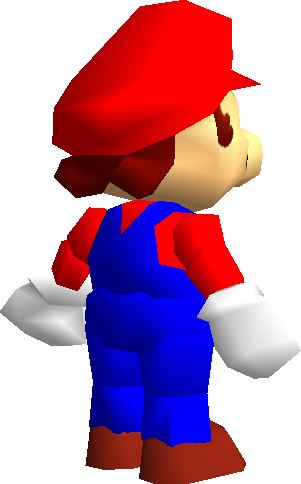 |
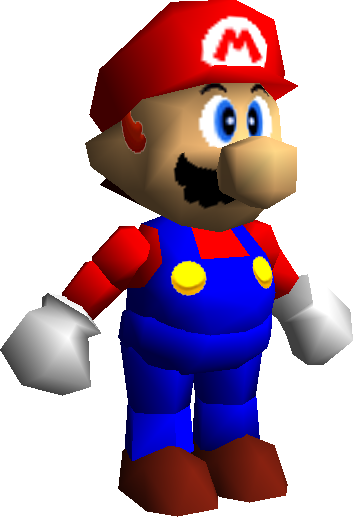
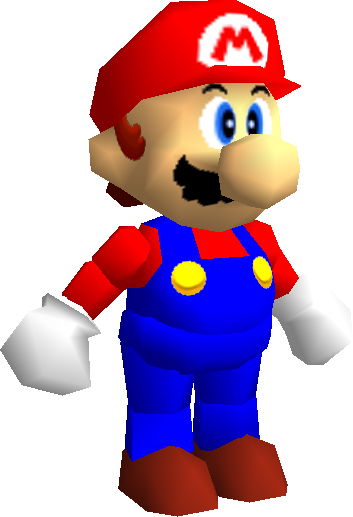
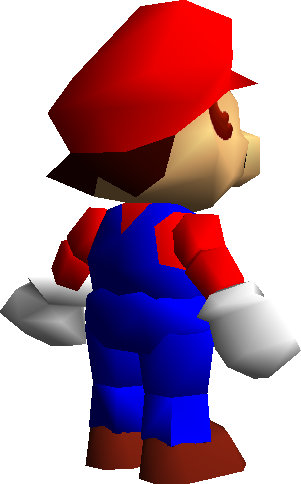
Found in the Player directory next to the final Mario are the folders Mario_old and old, which collectively contain an earlier version of Mario. Differences to the final include a lower-poly head, harsher lighting, darker hair, and a slightly brighter sideburn texture. The early head can be seen in some prerelease builds of the game, like the Shoshinkai '95 demo. This version of Mario also lacks many features from the final, mostly powerup and hatless head variants—though his LOD models are still present. The files in old feature the date December 7, 1995.

m_momi_txt
Unused Hierarchies#
[[File:SM64 RCP TitleMario.png|thumb|right|250px|
RCP_MarioTitle
]] Two unused Hierarchies—data structures used for assembling geometry—exist for Mario in both hms_mario.c and hms_mario.sou called RCP_TitleMarioHierarchy and RCP_MarioTitle. The first one is basically just a simplified version of the high-poly Hierarchy, with the second one existing only to call the former Hierarchy and scale it properly. As indicated by their names, they were meant to be used somewhere on the title screen.
Luigi#
Directory: "sm64/shape/Player/Luigi"
High-Poly Model |
Medium-Poly Model |
Low-Poly Model |
|---|---|---|
 |
 |
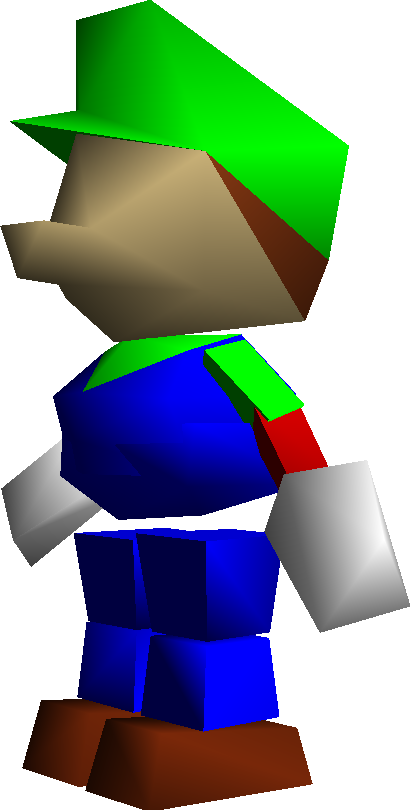 |
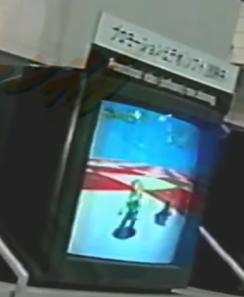
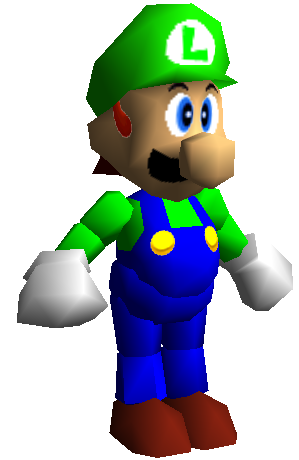
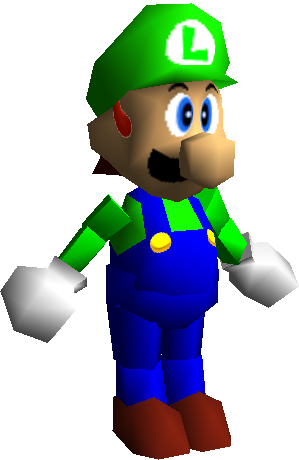
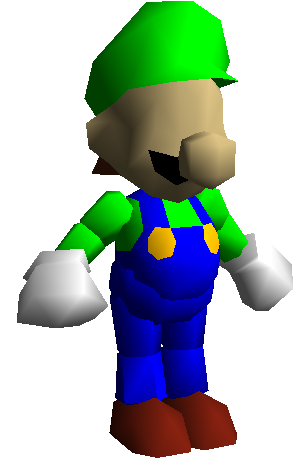
The aforementioned Player directory also contains a folder containing various unused Luigi models with textures. This is likely the same Luigi that can briefly be seen in the background of this video taken during Shoshinkai 1995, featuring what appears to be Mario and Luigi running around a test map. This all lines up with reports by development staff that Luigi once existed in the game as a part of a planned 2-Player mode. According to Shigeru Miyamoto, it was ultimately scrapped due to technical issues and the lack of a second controller bundled with the console.
Like Mario, Luigi has three LOD models, being the high-poly, medium-poly, and low-poly variants. The high and medium-poly models have textures applied and are in a relatively complete state (though they appear to float during certain animations), while the low-poly model completely lacks textures and is by far the most broken and unfinished of the three. His right hand also seems to be misaligned on all the models. Luigi features unique textures for his mustache, sideburns, and hat emblem, but reuses Mario's eye and button textures. The file luigi.c contains the date June 20, 1995, which indicates that he's based on an even older version of Mario than the one found in Mario_old.


Unused Segments#
Segment names: "RCP_luigi_near12, RCP_luigi_near13, RCP_luigi_mid12, RCP_luigi_mid13"
High-Poly Model (with Unused Head and Torso) |
Medium-Poly Model (with Unused Head and Torso) |
|---|---|
 |
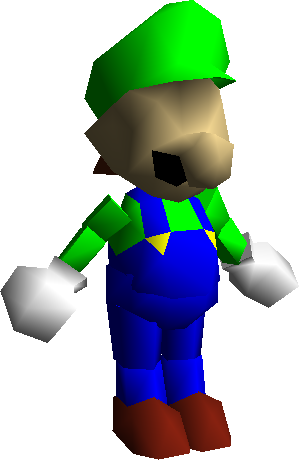 |
Unused vertex-colored head and torso segments exist for both the high and medium-poly models. There's evidence to suggest these once existed for Mario as well, but were later removed. The unused medium-poly head suggests both Luigi and Mario were planned have unique heads for their medium-poly models, rather than borrowing the head from their high-poly models. The lost medium-poly head for Mario possibly found its way into Mario Artist Polygon Studio.
Unused Hierarchies#
[[File:RCP TitleLuigiHierarchy.png|thumb|right|250px|
RCP_TitleLuigi
]] Like Mario, there exist Hierarchies called RCP_TitleLuigiHierarchy and RCP_TitleLuigi, which were intended for the title screen.
NPCs#
Peach#
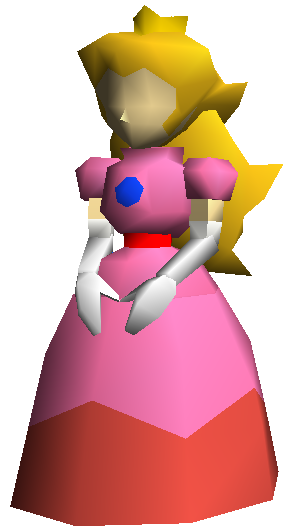
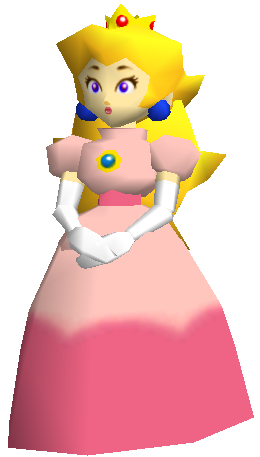
Directory: "sm64/shape/EnemyTest/old/peach.sou"
Early |
Final |
|---|---|
 |
 |
|
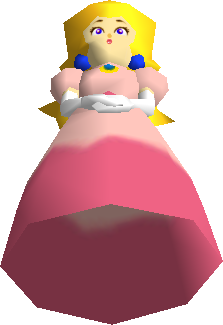 |
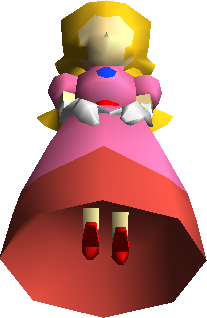
peach.sou is an early, textureless version of Peach. Unlike in the final game, she actually has legs below her dress. The legs were likely scrapped due to how they'd never be seen during cutscenes, making them unnecessary to include.
Animations#
peach_basic_skelton_anm |
peach_hello_anm |
|
|---|---|---|
 |
 |
 |
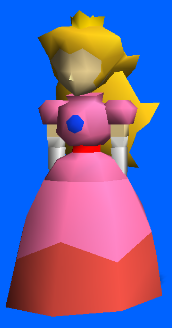
There are 3 animations present for this model: a static standing pose, a walking animation, and another where she walks before stopping to wave at something, presumably the camera.
Yoshi#
Directory: "sm64/shape/EnemyTest/old/yoshi.sou"
Early |
Final |
|---|---|
 |
 |
 |

|
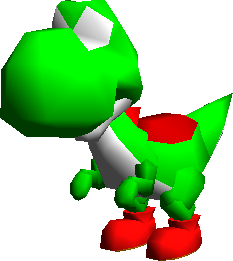
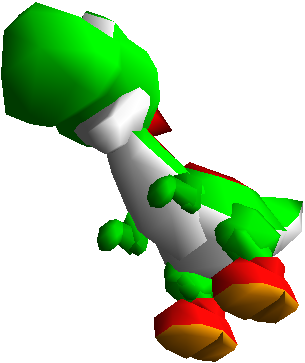
yoshi.sou is Yoshi. The main difference other than the lack of textures are the shoes, which feature fully modeled soles that were completely removed from the final version. Notably, this model was later repurposed for Mario Artist Polygon Studio.
Animations#
yoshi_base_data_anm & yoshi_basic_skeleton_anm |
yoshi_run_anm |
yoshi_wait_anm |
|---|---|---|
 |
 |
 |
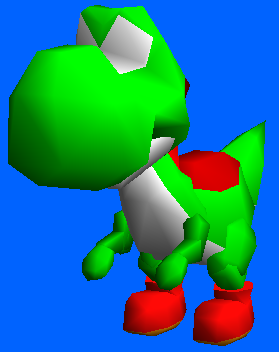
It has a few animations; the first two are static standing poses, with the other two being running and idle animations. He also floats in all of his animations, due to the model offset in the joint data.
Rabbit#
Directories: "sm64/shape/keep/OLD/etc/rabbit.sou" "sm64/shape/keep/OLD/etc/rabbit.hms"
|
Early |
Final |
|---|---|

|
|
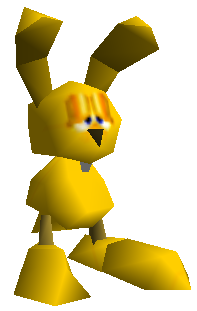
rabbit.sou is an early pink MIPS instead of the final yellow. It has a slightly different armature setup, causing the final animations to not play correctly on the early model. Pink rabbits were later seen in the DS remake.
Animations#
newrabbit_wait_anm |
newrabbit_run_anm |
newrabbit_down_anm |
newrabbit_waitcome_anm |
newrabbit_hold_anm |
|---|---|---|---|---|
 |
 |
 |
 |
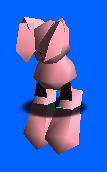 |
Five animations are included in the model's .sou file, most of which are early drafts of the final's animations. newrabbit_down_anm is an earlier draft of the unused falling animation left in the final game's data.
(Source: Alieneer/DerpDerp from "The Preservation Project" Discord server)
Ping#
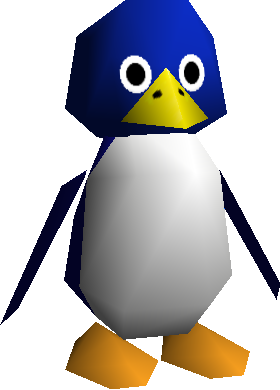
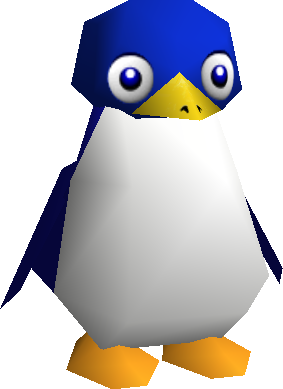
Directory: "sm64/shape/keep/OLD/etc/ping.sou"
|
Early |
Final |
|---|---|
|
|
An early penguin model which can be seen in most prerelease builds, like the Shoshinkai '95 demo.
Strangely enough, this design seems to have been used as reference for the odd-looking penguins used in Kellogg's 1996 Frosted Mini-Wheats promotion.


Enemies#
Amenbow#
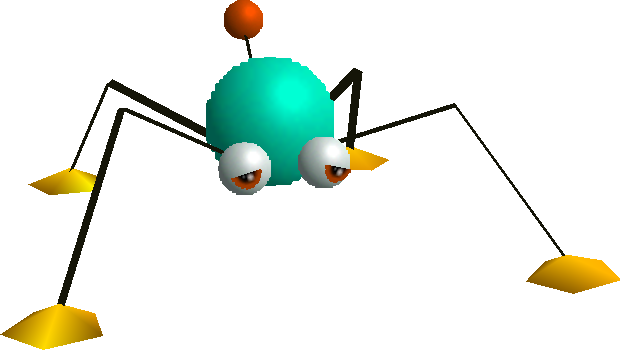
Directory: "sm64\shape\enemy2_d\amembow/amenbow.sou"
Early |
Mockup with Unused Vertex Colors Applied |
Final |
|---|---|---|
 |
 |
 |
[[File:SM64-animated_dash_anm.gif|thumb|right|200px|

animated_dash_anm
]] amenbow.sou is an early Skeeter, which is fully 3D and lacks any lighting whatsoever. The 3D spheres and feet are the same as the unused geometry left over in the final game's data. The pupils are different as well, lacking lighting along with the rest of the model. Like the unused model parts from the final, vertex-colors exist but just aren't applied for some reason. Its animations are duplicates of the final's, except that the dashing animation is set to continuously loop as opposed to playing once.
Killer#
|
|
To do: |
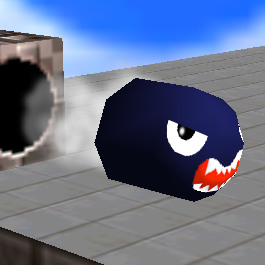
Directories: "sm64/shape/keep/OLD/etc/killer.sou" "sm64/shape/keep/OLD/etc/killer.hms"
A Bullet Bill, which is exactly the same as the final, only missing a shadow. The Bullet Bill shown in the 1995 B-Roll footage also lacks a shadow, so this might be the one from that build. Dated Sept 8, 1995.
Early |
|---|
 |
Walker#
|
|
To do: |
Directories: "sm64/shape/EnemyTest/walker.shape" "sm64/shape/EnemyTest/old/walker.sou"
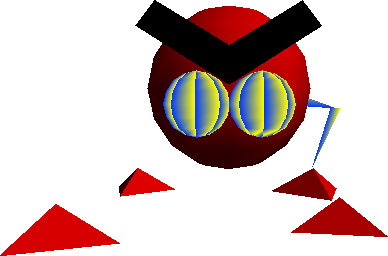
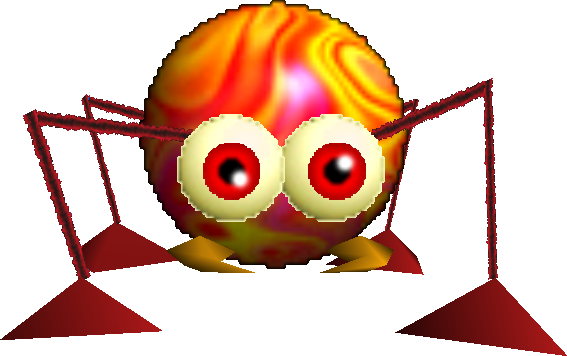
walker.shape and walker.sou both contain an early Scuttlebug, which can briefly seen in footage from a Pre E3 1996 build. Like in the footage, it sports big, angry eyebrows, strangely-colored eyes, and also lacks fangs. Its body and eyes are fully 3D spheres as well, something difficult to make out in the footage. The oddly colored eyes and legs are actually due to them calling for an invalid vertex color, making this an error. The legs are only visible from one side, as back-face culling isn't disabled for them.
Early |
With Patched Vertex Color |
Final |
|---|---|---|
 |

|
 |
Wallman#
Directories: "sm64/shape/keep/OLD/etc/wallman.sou" "sm64/shape/keep/OLD/etc/wallman.flk"
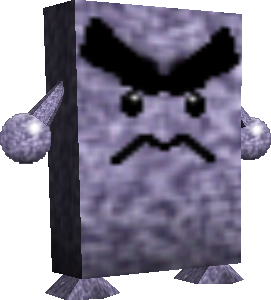
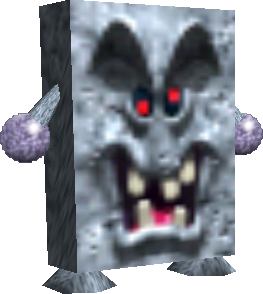
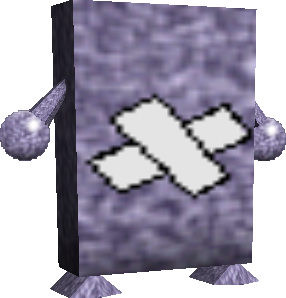
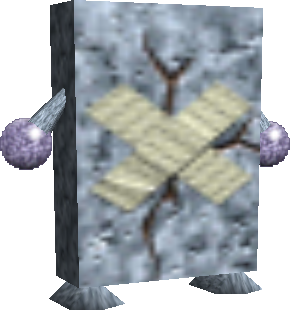
wallman.sou is an early Whomp seen in the Shoshinkai '95 demo. Its textures are much simpler than the final's, and also lacks a shadow. Due to differences in the position of its armature and mesh, it is offset in certain animations. It is internally referred to as "wallman", while the final Whomp is called "ichiro". The final Whomp's hands texture is the same as the early version.
Early |
Final |
|---|---|
 |
 |
 |
 |


Ichiro/Ichiro_falldown/Ichiro_walk#
|
|
To do: |
Directory: "sm64/shape/enemy2_e/wallman"
The folder containing the final Whomp has several duplicates of another early Whomp iteration, which go under various names. They're all missing vertex colors, their attack animations loop awkwardly, and the ones with armature data have a circular shadow type instead of a square type like the final. Despite the original .sou file no longer existing, animation source files still contain the model.
With Patched Vertex Color |
|---|
 |
Dosun#
Directories: "sm64/shape/keep/OLD/etc/dosun.sou" "sm64/shape/keep/OLD/etc/dosun.hms" "sm64/shape/keep/OLD/etc/dosun.flk" Dated Oct 23, 1995.
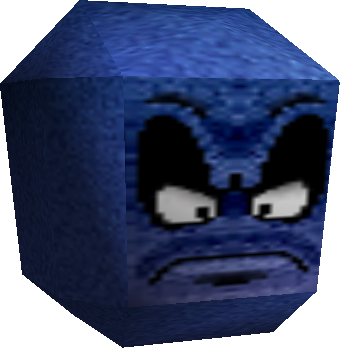
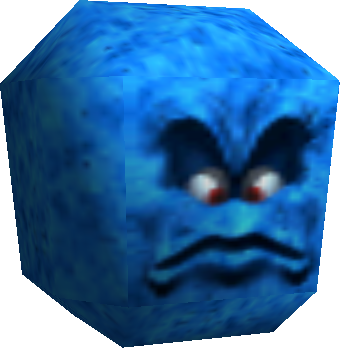
An early Thwomp seen in the Shoshinkai '95 demo and the '96 B-Roll build. Like in the Shoshinkai demo, its shadow type is circular instead of square.
|
Early |
Final |
|---|---|
|
|


Otos#
Directory: "sm64/shape/keep/OLD/etc/otos.sou"
Early |
With 3D Body |
Final |
|---|---|---|
 |
 |
 |
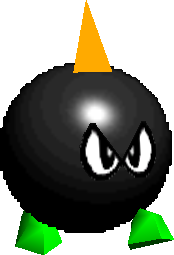
otos.sou is an early Bully with a single horn, like the Chill Bully from Snowman's Land. It has an optional 3D body, just like the final.
RCP_HmsEnemyotos_basedata |
RCP_HmsEnemyBigotos_basedata |
|---|---|
 |
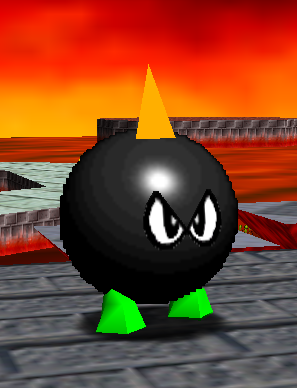 |
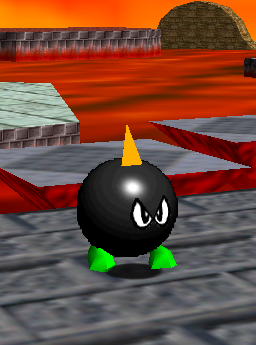
Like the final model, there are two Hierarchies included, one for small Bullies and another for big Bullies. The small variant can be seen in the Shoshinkai '95 demo.
otos_back_down_anm (Early) |
otos_back_down_anm (Final) |
ice_otos_back_down_anm |
|---|---|---|
The knockback animation (#3 otos_back_down_anm) is different in the early model. The Bully only shakes back and forth with no hopping. While the horn wasn't changed for the Chill Bully, the knockback animation was updated to match the final Bully.
Pakun#
Directory: "sm64/shape/keep/OLD/etc/pakun.sou"
Version |
pakun_angry_anm |
pakun_down_anm |
pakun_sleep_start_anm |
pakun_sleeping_anm |
|---|---|---|---|---|
Early |
 |
 |
 |
 |
Final |
 |
 |
 |
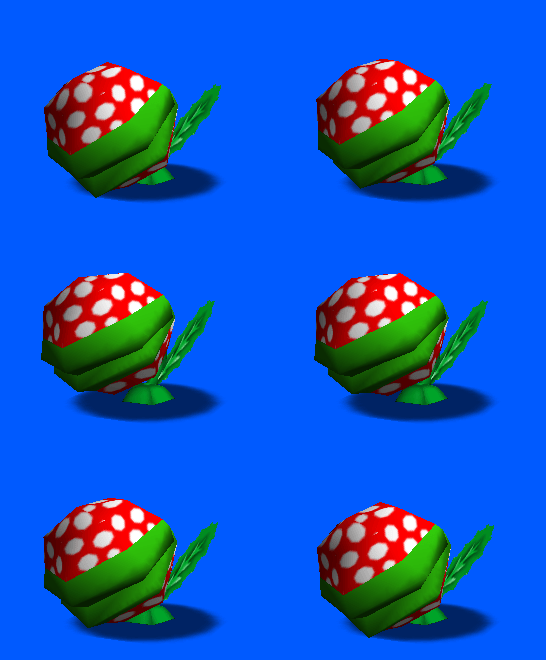 |
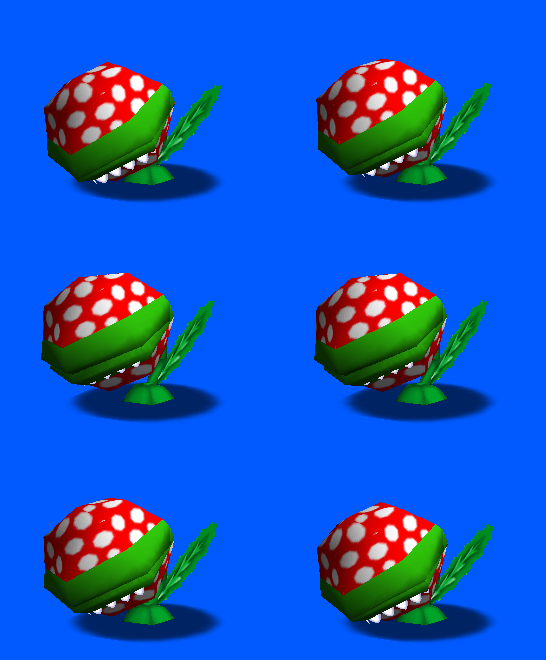
pakun.sou contains older variants of Piranha Plant's animations, with an identical model to the final game. These animations have the teeth clipping out of the mouth, which was fixed for all of the used animations, the unused ones still have the teeth clipping even in the final. The fire spitting animation (#4 pakun_eating) also wasn't updated, but that one doesn't have teeth clipping even in the older variant. These animations can be seen in many prerelease builds of the game.
Hana#
Directory: "sm64/shape/EnemyTest/old/hana.sou"
Early |
With Patched Vertex Color |
Final |
|---|---|---|
 |
 |
 |
[[File:SM64_WigglerOldWalking.gif|thumb|right|200px|

hana_walk_anm
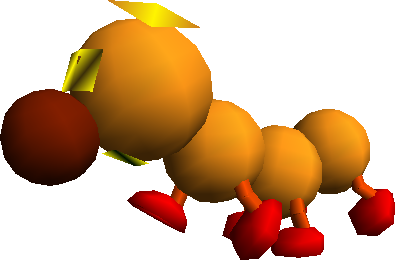
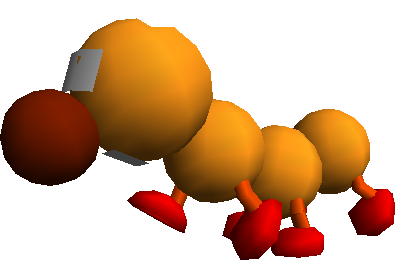
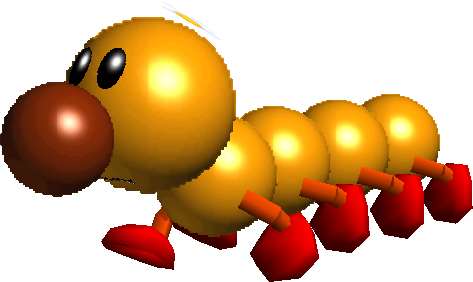
]] An early Wiggler from Tiny-Huge Island, featuring fully 3D body parts. It may have only been a generic enemy at this point though, as suggested by the file tag.cnf located in sm64/map/. It has just one animation, being its walk cycle. The model consists of a series of duplicate body segments joined together into one Hierarchy, while the final version works by having the head object spawn a series of other "body" objects behind itself. It also features three body segments instead of four.
Utubo#
Directory: "sm64/shape/enemy1_d/ubboo/utubo.sou"
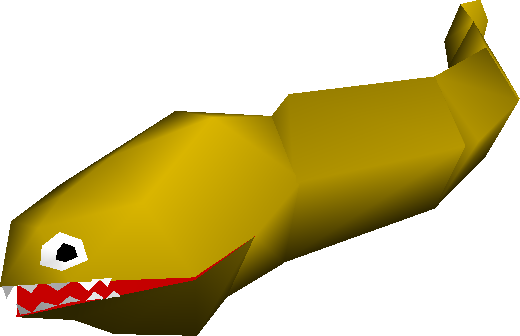
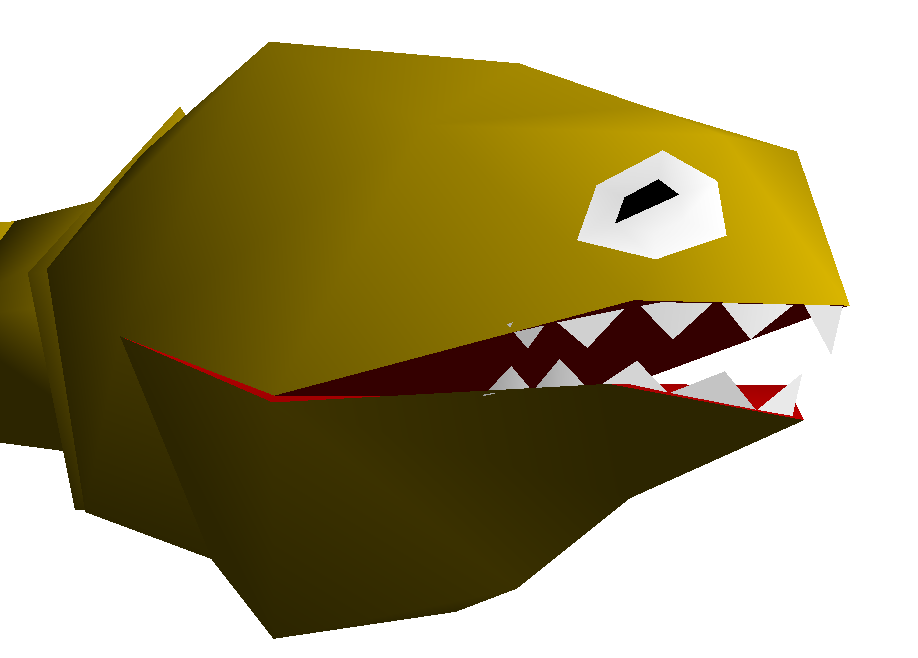
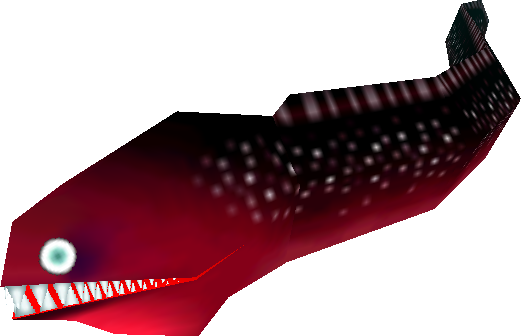
utubo.sou is the Unagi, sporting a different color scheme and an overall less menacing appearance. It only has two animations, which are swimming and idling. The eyes and teeth of this model are also commented-out in the final model's data.
Early (Left Side) |
Early (Right Side) |
Final |
|---|---|---|
 |
 |
 |
Monkey#
Directories: "sm64/shape/keep/OLD/etc/monkey.sou" "sm64/shape/keep/OLD/etc/monkey.hms"
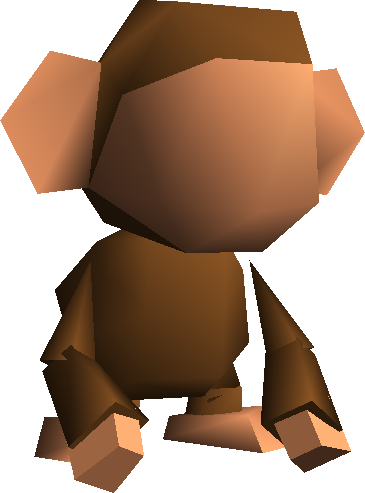
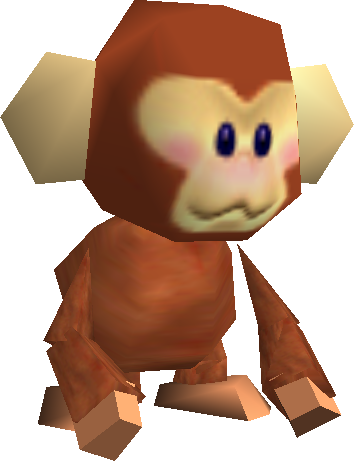
An early, textureless Ukiki. He lacks the "being held" animation, as well as the option for wearing Mario's hat. His drop shadow is also slightly larger in-game.
|
Early |
Final |
|---|---|
|
|
Manta#
Directory: "sm64/shape/EnemyTest/old/manta_old/"
|
Early (with Final Eye and Tail Parts) |
Final |
|---|---|
|
|
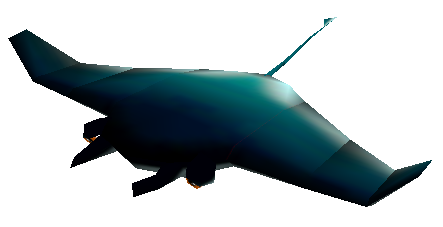
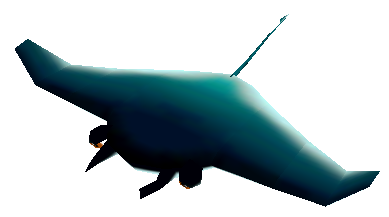
The manta_old directory contains an incomplete Manta Ray model with harsher lighting. It was reconstructed with the final's eye and tail segments, as well as with the final's armature data. The main body texture also features red coloring not present in the final texture, which causes what looks like a cut on the left pectoral fin.

manta_body_txt
Bom_king#
Directory: "sm64/shape/enemy1_c/bom_king/bom_king.sou"
bom_king.sou |
bom_king.sou (fixed vertex color) |
Final |
|---|---|---|
 |
 |
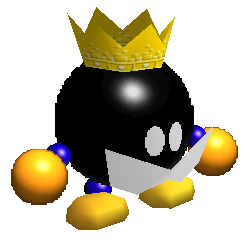 |
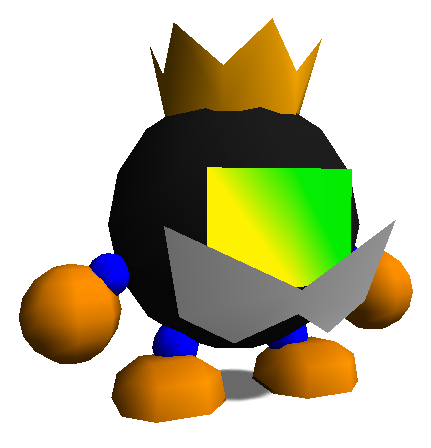
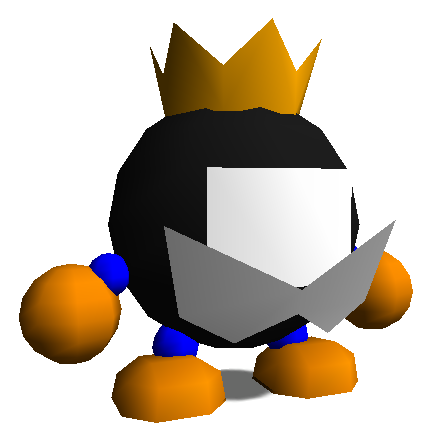
bom_king.sou is the Big Bob-omb seen in Bob-omb Battlefield. At this point, he is textureless, has fewer animations, bigger eyes, and is rendered with polygons instead of billboards.
Furafura#
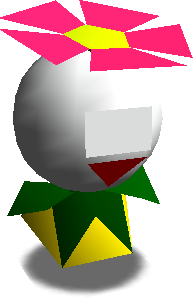
Directory: "sm64/shape/enemy1_g/furafura/furafura.sou"
furafura.sou |
Final |
|---|---|
 |
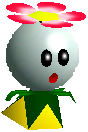 |
furafura.sou is the Spindrift. Its model matches the final except for different arms, a happy 3D mouth being present, the lack of eyes, and it being rendered with polygons instead of billboards. Interestingly, a more complete leaf and smiling mouth are hidden within the final model's transparent pixels.
Bat#
Directory: "sm64/shape/enemy2_h/bat/bat.sou"
bat.sou |
Final |
|---|---|
 |
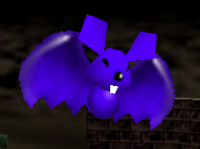 |
bat.sou is a Swooper. Its model matches the final except for it being rendered with polygons instead of billboards, as well as slightly different arrangement of vertices.
Shell#
Directory: "sm64/shape/enemy1_d/big_shell/shell.sou

shell.sou is a blue vertex-colored clam.
Snow_man#
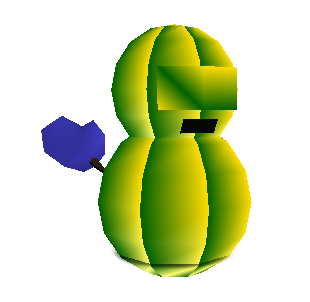
Directory: "sm64/shape/enemy1_g/snow_man/snow_man.sou"
Unpatched |
Patched vertex color |
Final |
|---|---|---|
 |
 |
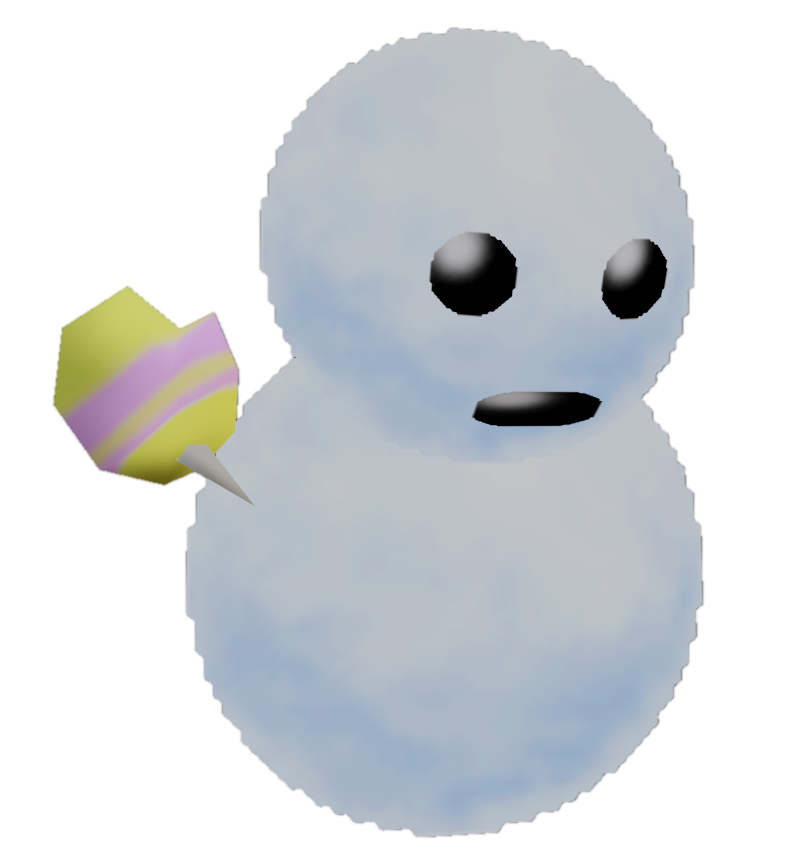 |
snow_man.sou is Mr. Blizzard. His model matches the final except for it being rendered with polygons instead of billboards and, notably, having a blue mitten.
Wanwan#
Directory: "sm64/shape/enemy2_e/wanwan/wanwan.sou"
Unpatched |
Patched vertex color |
Final |
|---|---|---|
 |
 |
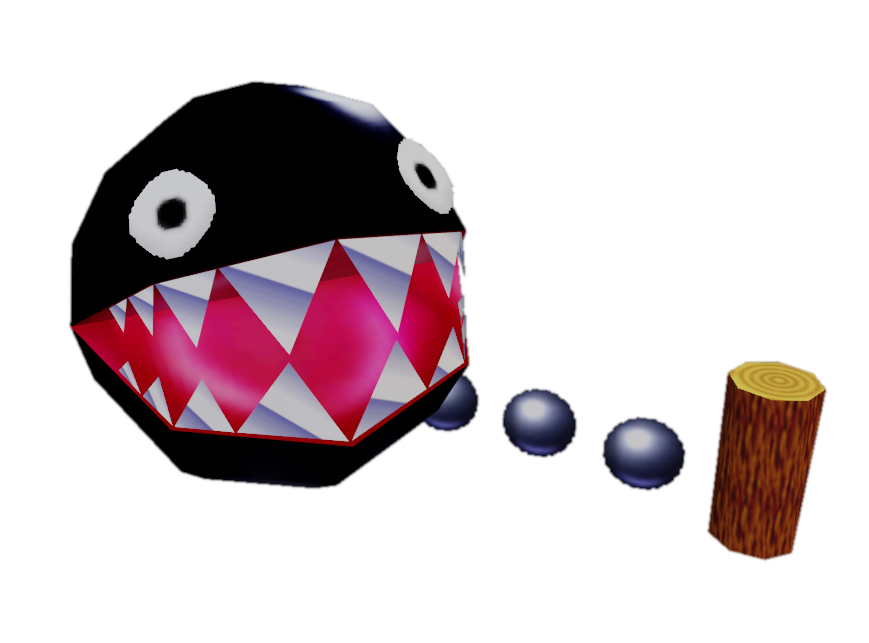 |
wanwan.sou is the Chain Chomp seen in Bob-omb Battlefield. It lacks textures and the eyes are slightly closer to the body.
Shark#
Directory: "sm64/shape/keep/OLD/etc/shark.sou"
|
shark.sou |
Final |
|---|---|
|
|
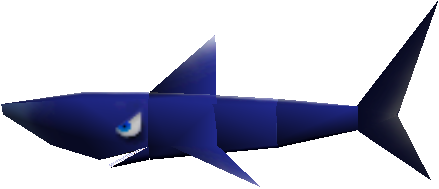
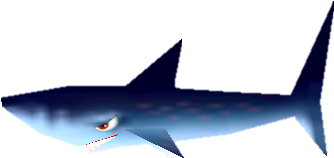
shark.sou is the Sushi seen in the Shoshinkai 1995 build. Its model is much darker and has a white line from the top of its head to its fin. The model boasts seven unique textures, rather than the final only needing three.


Omurobo#
Directory: "sm64/map/Stage32/omurobo.shape"
|
omurobo.shape |
Final |
|---|---|

|
|
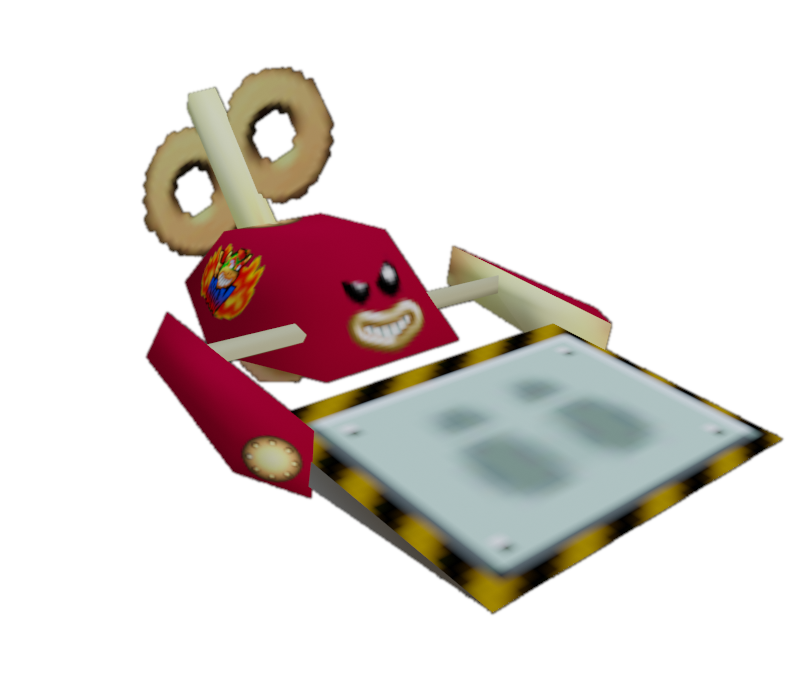
omurobo.shape is the Heave-Ho. In addition to lacking textures, it has a flag on its back instead of a wind-up key, and has a slightly different shape compared to the final model. The filename for this early version is a portmanteau of "omurice" (a type of Japanese omelet) and "robot," playing off of its appearance.
Carry_boy#
Directory: "sm64/shape/basic_enemy/carryboy/carry_boy.sou"
|
carry_boy.sou |
Final |
|---|---|

|
|
carry_boy.sou is a textureless, fully 3D version of Chuckya with a similar color scheme to the early Heave-Ho design. The geometry for the eyes is slightly bigger than the final's. The animation source files still exist for this model.
Bom#
Directory: "sm64/shape/keep/OLD/etc/bom.sou"
bom.sou (2D body) |
bom.sou (3D body) |
Final |
|---|---|---|
 |
 |
 |
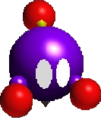
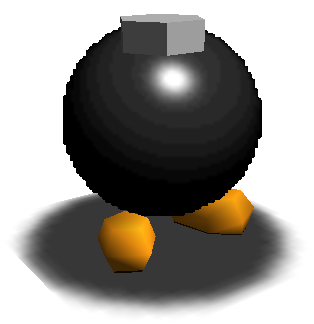
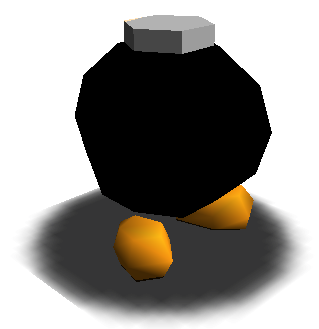
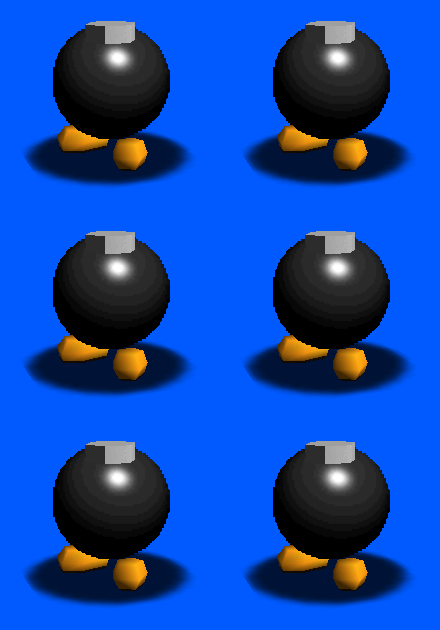
bom.sou is an early Bob-omb. It lacks eyes, is much smaller and can switch between using a 2D Ball or a 3D Ball in the header. The 2D Ball textures are the same as the Bullies (otosu_body0_txt & otosu_body1_txt) which don't have bounce lighting at the bottom.
Animations#
bom_basedata_anm |
bom_explosion_anm |
bom_help_anm |
bom_walk_anm |
|---|---|---|---|
 |
 |
 |
 |
new_bom_walk_anm |
new_bom_help_anm |
|---|---|
 |
 |
Four animations are included in the .sou file: bom_basedata_anm shows the Bob-omb motionless, used as a base for creating animations, bom_explosion_anm shows the Bob-omb rapidly shaking before exploding, bom_help_anm shows the Bob-omb being held and bom_walk_anm shows the Bob-omb walking. The final Bob-omb model only has animations for walking (new_bom_walk_anm) and being held (new_bom_help_anm), which look completely different.
Nokonoko#
Directory: "sm64/shape/EnemyTest/old/nokonoko.sou"
|
nokonoko.sou |
Final |
|---|---|
|
|
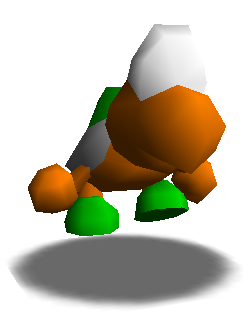
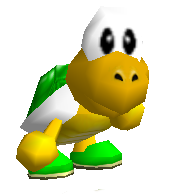
nokonoko.sou is a Koopa Troopa, dated June 16th, 1995. The biggest difference is the shell. The shell, shoes, and head can still be found in the final game's data.
Objects#
Dokan#
Directory: "sm64/shape/keep/OLD/unused/dokan.sou"
dokan.sou |
Final |
|---|---|
 |
|
dokan.sou is an early Warp Pipe. It doesn't have a date in its header; however, the model is referenced in a very outdated model list (include/shapedef.inc) from March 22nd, 1995, making this one of the oldest leftovers in the source code. There are many differences compared to the final model, dated "Feb 19, 1996": it lacks any textures, is much larger, doesn't have a modeled inside, and has an extruded rim. The early pipe also has a different shape; it's a hexagon instead of an octagon, most noticeable when looking at it from above.
Door#
Directories: "sm64/shape/keep/OLD/etc/door.hms" "sm64/shape/keep/OLD/etc/door.sou"
Early |
Early (Low-Poly) |
Final |
Final (Low-Poly) |
|---|---|---|---|
 |
 |
 |
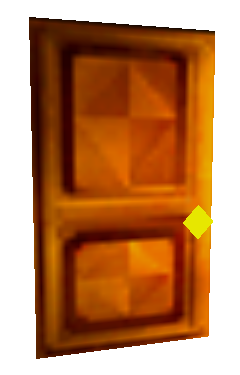 |
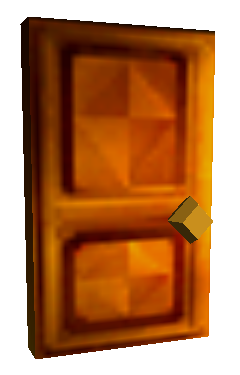
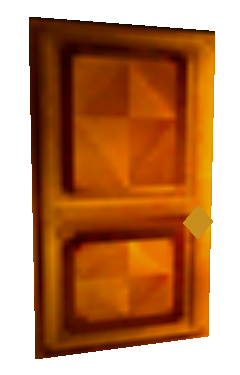
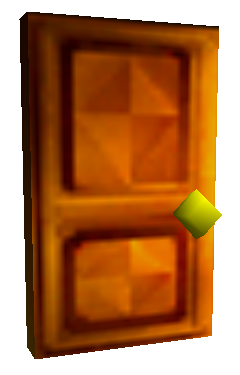
door.sou is an early variant of the door model, dated "Jun 16, 1996", likely a typo as the game was already finished at that point. The main door is slightly smaller than the final and has a differently colored, flat-shaded knob. Another difference with this early model is that the camera needs to be much closer to the door for the high-poly model to show up, 2000 units instead of 3500. Lastly, the low-poly door's size was only changed to be 2 units thinner on the left, still having the smaller size of the early variant.
Version |
RCP_HmsMainroomDoorA |
RCP_HmsMainroomDoorB |
RCP_HmsMainroomDoorC |
RCP_HmsMainroomDoorD |
|---|---|---|---|---|
Early |
 |
 |
 |
 |
Final |
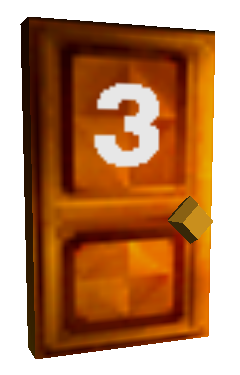
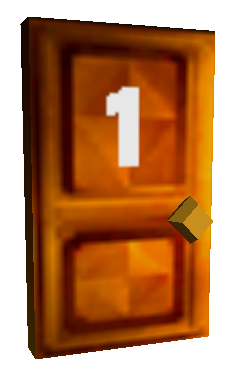
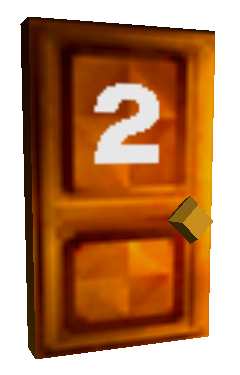
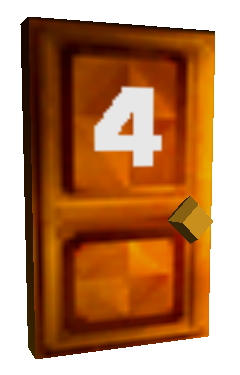
An additional 4 variants of the model are included in the .sou file; each of these has a number on it, ordered as 3, 1, 2 and 4. The doors are listed left to right, in the same order seen in the Shoshinkai '95 demo's castle. The 3 is listed first, as the 3 door would've been on the far left, and would have once led to Cool Cool Mountain. Number 1 would have led to Whomp's Fortress, 2 would have led to Lethal Lava Land, and 4 to Dire Dire Docks, on the far right. These numbers were not used as star requirements, they were instead used to label each of the stages based on the demo's Stage Select.
The final door model still has the A-D variants, but they were changed to be the 0 star, 1 star, 3 star and key doors respectively. The final door model also has one more variant for the main door not included in door.sou, the "OneWay" variant, which is the regular door missing the knob in one of the sides. It's used in the Cool Cool Mountain cabin's exit.
Version |
RCP_HmsDoor1 |
RCP_HmsDoor2 |
RCP_HmsDoor3 |
RCP_HmsDoor4 |
RCP_HmsDoor5 |
|---|---|---|---|---|---|
Early |
|||||
Final |
Doors 1-5 are also included in door.sou, with the same size and knobs as the final model. The main difference with these variants lies in the textures they use: door 2 uses duplicates of the metal door textures in the early model, while it reuses the wood door textures of door 1 in the final model; doors 4 and 5 don't have unique textures in the early model and, like door 2, use duplicates of the metal doors instead. Doors 1 and 3 are identical to the final models, besides having the same draw distance difference as the main door.


The textures of the door numbers.
Autodoor#
Directory: "sm64/shape/EnemyTest/old/autodoor.sou"
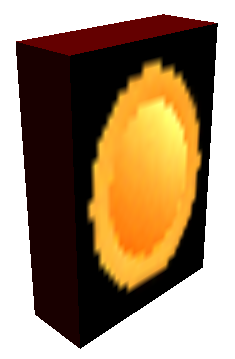
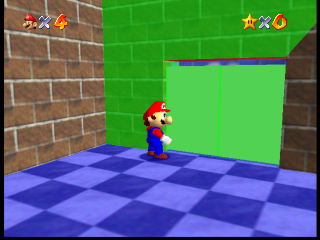
What appears to be an even earlier door model. All of its sides are red, except for one cyan face. Also contains a duplicate early coin texture, used in a commented-out display list (using #if 0's). It appears the collision model for the final door object wasn't updated after its visual model changed, having the same shape as autodoor.sou.
Default |
Commented-Out DL |
Final Door's Collision Model Overlaid w/Autodoor |
|---|---|---|
 |
 |
 |
Mariotitle_cube#
Directory: "sm64/map/title/shapes/title_cube.sou"
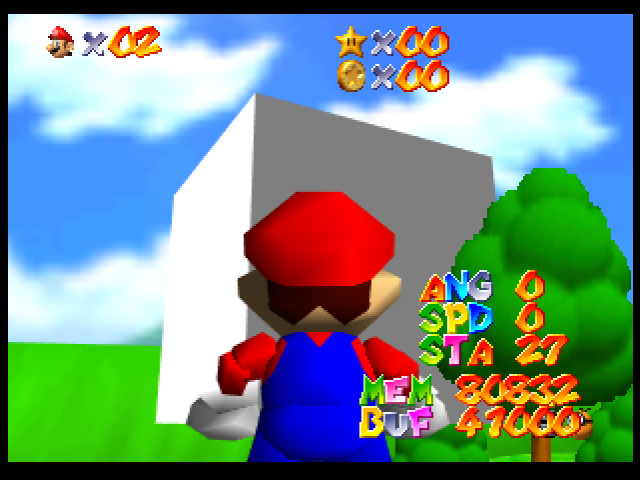
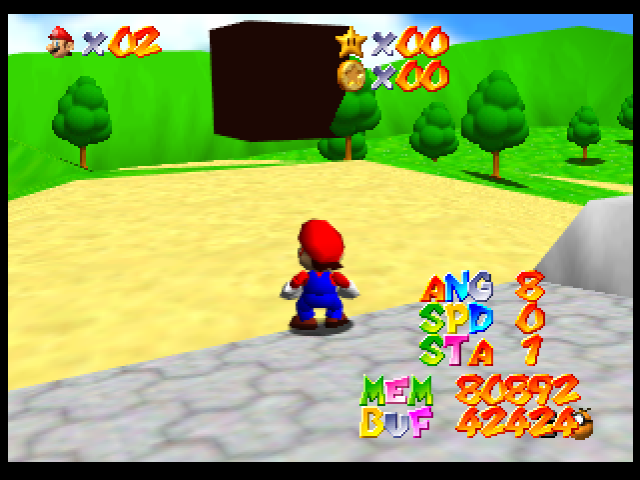
A large cube, used as a test model for testing the title screen animation. Its colors change when viewed from a distance, possibly either to test color-change shading or to give it the effect of it "fading" into view on the title screen.
Animed#
Directory: "sm64/shape/enemy2_e/goal_flag/animed.sou"
animed.sou is an earlier goal flag from the Koopa the Quick races. Interestingly, animation source files are intact for this model.
Ana#
Directory: "sm64/shape/keep/OLD/unused/ana.sou"
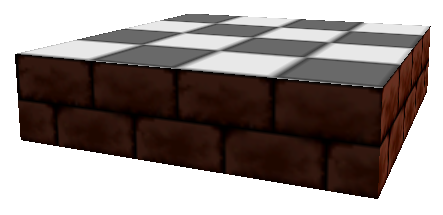
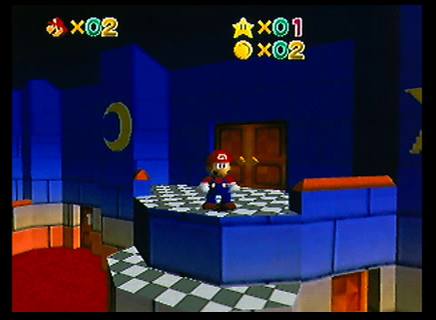
ana.sou is a rectangular platform with only 3 textures associated with it. There is no collision data found within this model, so it may have been deleted. The name of the brick texture, "obakabe00_txt", indicates it was originally meant for Big Boo's Haunt (or "Ghost House", as it was called at the time). f3yuka_txt also seems to be the same texture used for the castle steps in prerelease material. Dated Oct 3, 1995


.
B_tree#
Directory: "sm64/shape/keep/OLD/unused/B_tree.sou"
B_tree |
Commented-Out Data Re-Enabled |
Final |
|---|---|---|
B_tree.sou contains the earliest version of the main tree model, dated "Aug 29, 1995". It uses a single 64x32 texture, where the tree is laid out horizontally, instead of two 32x64 halves like the final game. The texture also uses a different render of the tree that is darker and with harsher lighting. The model's differently mapped texture makes the tree look flipped horizontally compared to the final one.
The model also has some commented-out data: an earlier texture (where the tree is offset one pixel to the right and has a lighter green alpha layer), different texture filtering (G_TF_POINT instead of G_TF_BILERP, which makes the texture sharp), and a standard shadow geo command on the hierarchy. The shadow geo command is particularly interesting, as it indicates the developers initially experimented with giving trees shadows calculated in real time, like nearly every other object in the game, but quickly scrapped the idea and made tree shadows part of the level geometry instead.

Sugitree#
Directory: "sm64/shape/keep/OLD/unused/sugitree.sou"
The second earliest version of a tree model, dated "Sep 14, 1995". Like B_tree, it uses a single 64x32 texture with the tree laid out horizontally, instead of it being laid out vertically in a 32x64 texture like the final game's single texture trees. Unlike B_tree, this texture is mapped normally, so the tree isn't mirrored horizontally compared to the texture. This tree is pretty different visually from all others as it's not a pre-rendered image.

Tree#
Directory: "sm64/shape/keep/OLD/etc/tree.hms" Directory: "sm64/shape/keep/OLD/etc/tree.sou"
Version |
RCP_HmsMainTree |
RCP_HmsTree02 |
RCP_HmsTree03 |
RCP_HmsTree04 |
RCP_HmsTree05 |
|---|---|---|---|---|---|
Early |
|||||
Final |
tree.hms and tree.sou contain earlier versions of all tree variants, dated "Jan 25, 1996". The main tree has the same design as the final game, but uses a different render with harsher lighting; this earlier main tree can be seen in most pre-release builds of the game, such as the Shoshinkai '95 demo. The numbered trees, however, have completely different designs from the final game, particularly tree 05, which is not a palm tree. Tree 04 has a unique texture in tree.sou, while the final game's tree 04 reuses tree 02's texture. The numbered trees are also much shorter than the final equivalents, short enough to where Mario can stop touching the visuals entirely when reaching the top of them.
There are some slight technical differences in how the numbered trees are implemented in tree.sou. Trees 02-05 all share the same common display list (gfx_tree) and vertex data (vtx_tree), only changing which texture is used, while the final tree model (tree.shape) has different display lists and vertex data for each one. The display lists of the final numbered trees are all identical, besides the texture and vertex data calls, and the vertex data is identical for trees 02-04, with only tree 05 (the palm tree) having slightly different horizontal vertex positions (making the palm tree a bit wider than the others), so it strangely ends up being less optimized than the earlier model.


Chair#
Directory: "sm64/shape/EnemyTest/old/chair.sou"

A vertex-painted version of the chair seen in Big Boo's Haunt.
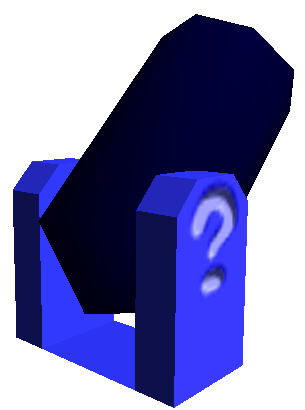
Cannon#
Directories: "sm64/shape/keep/OLD/etc/cannon_base.sou" "sm64/shape/keep/OLD/etc/cannon_base.hms" "sm64/shape/keep/OLD/etc/cannon_body.sou" "sm64/shape/keep/OLD/etc/cannon_body.hms"
|
Early |
Final |
|---|---|

|
|
An older cannon model, dated October 23rd, 1995 (the final model shares this date; it seems the developers didn't update the header). The barrel is the same as the final, while the base is much shorter and wider, with the inner sides not modeled. Both sides of the base are not connected at the bottom like the final version. This model can be seen in footage of the Shoshinkai 1995 demo.
Directories: "sm64/shape/keep/OLD/unused/cannon_base.flk" "sm64/shape/keep/OLD/unused/cannon_body.flk"
cannon_base_info |
cannon_body_info |
Combined |
|---|---|---|
Collision models for the cannon base and the barrel. It's unknown where they would've been used for, if they ever were. The base matches the older visual model exactly.
T_box1 & T_box2#
Directories: "sm64/shape/keep/OLD/unused/t_box1.sou" "sm64/shape/keep/OLD/unused/t_box2.sou"
t_box1.sou |
t_box2.sou |
Combined |
|---|---|---|
 |
 |
 |
gfx_t_boxA (Final) |
gfx_t_boxB (Final) |
Combined |
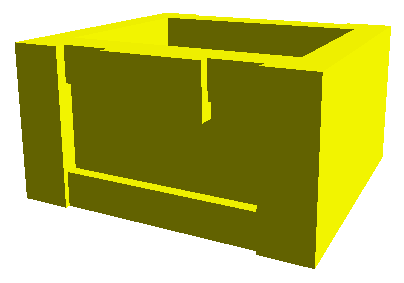
t_box1.sou and t_box2.sou form the treasure chest model without its textures and with a simple, yet utterly crude design. The model is much larger than the final one.
T_boxA & T_boxB#
Directories: "sm64/shape/keep/OLD/unused/t_boxA.flk" "sm64/shape/keep/OLD/unused/t_boxB.flk"
t_boxA_info |
t_boxB_info |
Combined |
|---|---|---|
Collision models for the treasure chest bottom and lid. Unlike t_box1 and t_box2, these are an exact match for the final visual models. Their inclusion in the "unused" folder indicates they were likely scrapped fairly early, with the final treasure chest objects using a simple radius-based hitbox instead.
Box#
Directory: "sm64/shape/keep/OLD/unused/box.sou"
RCP_box |
Misplaced Vertex |
|---|---|
A simple box model, used for testing. The Hierarchy (RCP_box) is included in an outdated model list from May 11, 1995 (include/shapedef.h). One of the vertices in the back of the cube is misplaced by 8 units.
Cube#
Directory: "sm64/shape/keep/OLD/unused/cube.sou"
[[File:SM64_cube.sou_size_comparison.png|thumb|250px|

The 3 models next to Mario
]]
While the file is just called cube.sou it contains 3 separate models: RCP_jet, RCP_MTXtestcube and RCP_MTXtestswing. As the names imply, they were used for testing, like box.sou. Also like box.sou, the three Hierarchies are included in the May 11, 1995 model list. All three models are very small compared to Mario.
RCP_jet |
Commented-Out Stripe |
|---|---|
RCP_jet is a long cube. It has vertex data for a floating pink stripe commented out with "#if 0".
RCP_MTXtestcube is a thin and tall cube.
RCP_MTXtestswing |
Commented-Out Top |
|---|---|
RCP_MTXtestswing is possibly a seesaw platform test. It has alternate vertex data for the top commented out, which is the same top rotated 90 degrees.
Vanime#
Directory: "sm64/shape/keep/OLD/unused/vanime.sou"
A large and thin gray platform with a red top. Like box.sou and cube.sou, the Hierarchy (RCP_HmsVanime) is included in the May 11, 1995 model list.
UI#
Title_face#
Directory: "sm64/map/title/shapes/title_face.sou"

A model of a Mario head cut-out in the same shape of the HUD's health meter. Considering the folder it's in, it may have been meant for the title screen. This uses an early version of the GBI of the N64, but it's much easier to convert it to a usable format. The normals in the model are broken.
Early Title Screen Name#
Directory: "sm64/map/title/shapes/" 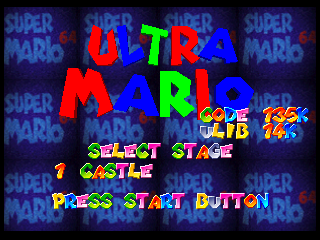
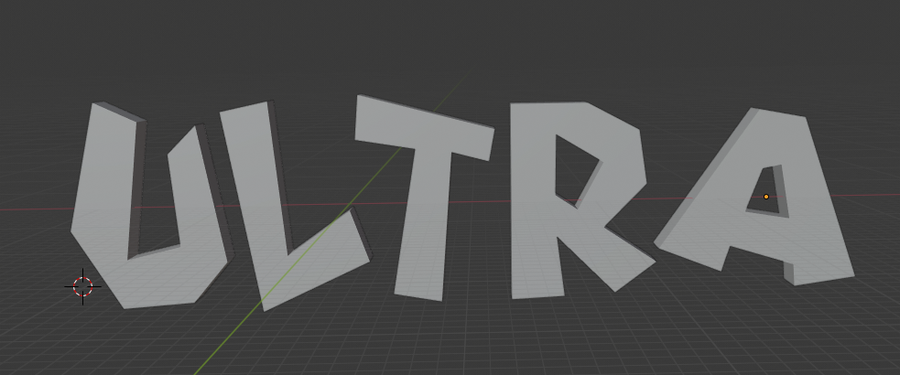
sm64/map/title/shapes/ contains models related to an older design for the title screen. These models were later reused for the debug level select screen; however, ULTRA is not referenced at all in the final level select screen. This could be a reference to the older "Ultra 64" name.
Nintendo_logo#
Directories: "sm64/sm_logo/multigen/mario/ninten/display/nintendo_logo/" "sm64/sm_logo/multigen/mario/ninten/display/nintendo_logo.nin"
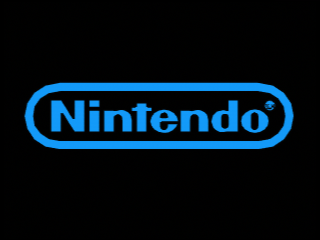
The blue Nintendo logo seen in the background of a Shoshinkai 1995 video. It has a revision date of "Tue Nov 7 18:48:28 1995" in the .nin file's header.
Mario64_title#
Directory: "sm64/sm_logo/multigen/newmario/nin/objects/mario64_title.nin"
|
Mario64_title |
Final |
|---|---|

|
|
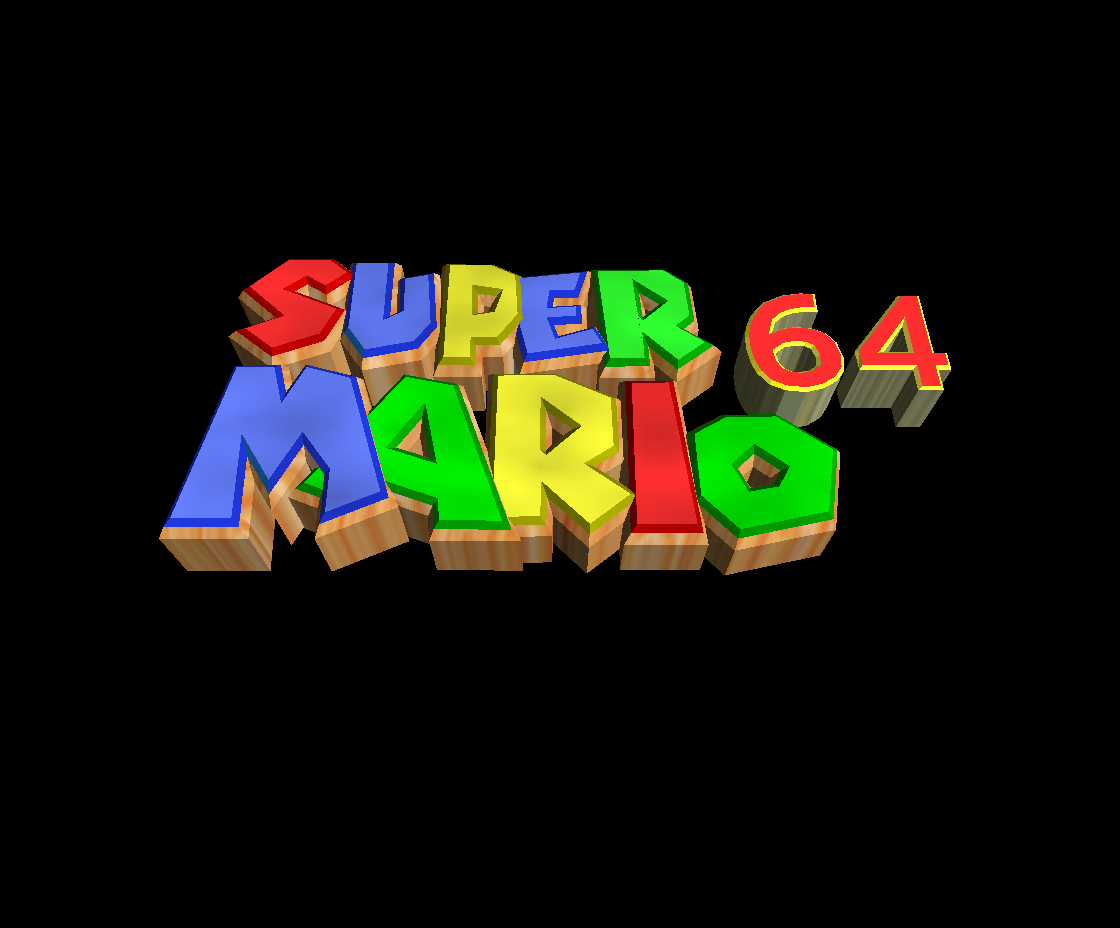
A much older rendition of the title screen. It has a revision date of "Tue Mar 26 14:40:21 1996" in its header. The model is more crude (the bottom of the A clips through the M in "MARIO"), with very subtle shading and more saturated colors. It's also a bit off-center compared to the final version. The trademark symbol is part of the model instead of a sprite, a difference that persists in all following revisions.
Mario_title#
Directories: "sm64/sm_logo/multigen/newmario/nin/objects/mario_title.nin" "sm64/sm_logo/multigen/newmario/ninten/objects/mario_title/"
|
Mario_title |
Final |
|---|---|

|
|
A slightly updated version of the title screen with a revision date of "Tue Mar 26 19:46:53 1996" in the header. The shading has been made more noticeable, the colors toned down, the clipping on the bottom of the A was fixed, and the model was moved a bit left.
64mario_title#
Directory: "sm64/sm_logo/multigen/newmario/nin/objects/64mario_title.nin"
|
64mario_title |
Final |
|---|---|

|
|
A third March 26 1996 backup, with a revision date of "Tue Mar 26 21:05:16 1996". The shapes of the "SUPER MARIO" text have been tweaked compared to the last version (most noticeable are the larger gaps in the letters), and the logo has been rotated to stand upright.
Mario64_logo (March 28 1996)#
Directories: "sm64/sm_logo/multigen/newmario/nin/objects/mario64_logo.nin" "sm64/sm_logo/multigen/newmario/ninten/objects/mario_title/"
|
Mario64_logo (March 28 1996) |
Final |
|---|---|

|
|
An older title screen model seen in E3 1996 B-roll footage. Its revision date is "Thu Mar 28 10:47:46 1996". It's positioned higher compared to the previous variants, closer to the final placement. It has been tilted again (though not as much as the previous or final models), and the shade of red is slightly more saturated than the last 2 versions. Additionally, the "SUPER MARIO" text received further tweaks in this version; all letters except the R and I in "MARIO" were adjusted, with the U and P in "SUPER" being the most noticeable.
Mario64_logo (May 12 1996)#
Directory: "sm64/sm_logo/multigen/newmario/nin/objects/mario64_title/mario64_logo.nin"
|
Mario64_logo (May 12 1996) |
Final |
|---|---|

|
|
The first title screen model from May 1996, with a revision date of "Sun May 12 19:37:14 1996". It only has the 64 and trademark symbol, edited from the previous version. The 64 is red and now has a bevel (which can't be seen due to the model's lack of shading), and the trademark symbol is larger.
M64logo#
Directory: "sm64/sm_logo/multigen/newmario/nin/objects/mario64_title/m64logo.nin"
|
M64logo |
Final |
|---|---|
|
|
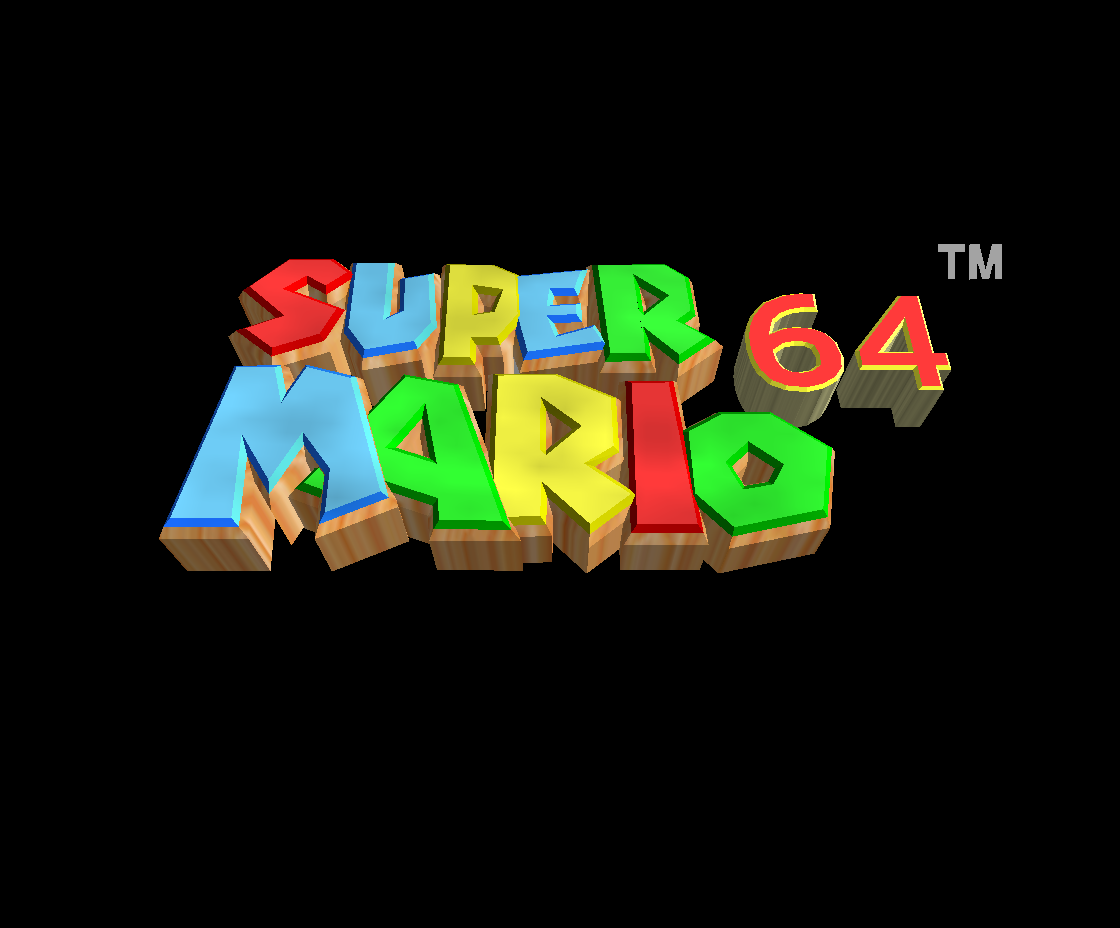
A near-final title screen. Its revision date is "Mon May 13 14:45:37 1996", only a day before the final title screen (which has a revision date of "Tue May 14 11:38:18 1996"). Compared to the final version, the E and R in "SUPER" and the O in "MARIO" are placed differently; it has a lighter shade of blue, and the lighting is different. Lastly, the trademark symbol, while still modeled instead of a sprite, resembles the final symbol much more closely.