
|
This article is a work in progress. |
Dropping in less than half a year after its predecessor, and bringing fine-tuned gameplay and more quality-of-life features, International Superstar Soccer Deluxe quickly displaced it to become the definitive 16-bit soccer experience for those who played it.
Regional Differences#
Just like with its prequel, quite a few things were changed when bringing Fighting Eleven to the West.
Opening Cutscene#
This time, the opening cutscene stayed on; however, all references to "Fighting Eleven", the original title, were changed to "International Superstar Soccer" (frame count was reduced in the animations to mitigate flashing effects).
Japan |
US/Europe |
|---|---|
|
|






In addition, the credit to radio DJ Mark'E (Masayuki Taniguchi), who is again the match commentator in the Japanese version, is replaced with a generic "WE LOVE SOCCER!" message on the static screen at the beginning of the cinematic, after that first screen.
Japan |
US/Europe |
|---|---|
 |
 |
Title Screen#
Japan |
US/Europe |
|---|---|
 |
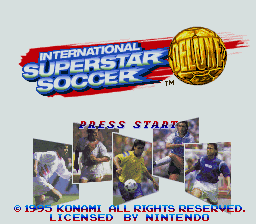 |
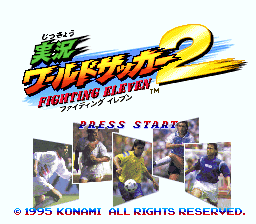
The international version again adds the "licensed by Nintendo" notice, and the screen is considerably less bright.
Main Menu and Game Modes#
Japan |
US/Europe |
|---|---|
|
|

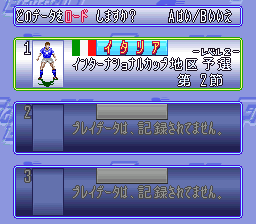
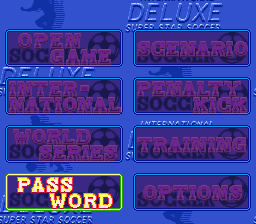
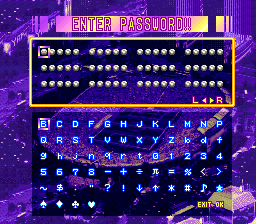
No exclusive modes this time, but again, Fighting Eleven uses an in-game battery system, which ISS Deluxe replaces with a (rather unwieldy) password system. Both when you enter Data Load and when you enter Scenario mode, the game asks you to select a save file; in the latter case, in the Western versions, you get into Scenario straight away and are given a password for each Scenario you clear.
The background is also changed, not only by making a new logo for the game's new title, but also by giving it a deeper, much more vibrant shade of blue, while the brand-new password screen is given its own background, not seen anywhere else in the game.
Japan |
US/Europe |
|---|---|
 |
 |
When you start International Cup, the game displays an intro screen showing the competition you're about to play. Fighting Eleven is gracious enough to use the full title (and also transcribe it in Japanese at the top of the screen; something that is done for all other tournament modes as well), while ISS Deluxe cuts it down only to "International".
Japan |
US/Europe |
|---|---|
|
|


The quick, customizable tournaments inside Open Game also had a change of name: Mini League and Mini Tournament became Short League and Short Tournament, respectively. World Series remained the same, but Japan divides it in stages rather than seasons (although stages would be more correct given that you play home and away).
Japan |
US/Europe |
|---|---|
 |
 |
Once you start the International (Cup), you play a qualifying round (like what happens in real life, but in a condensed form). If you pick a team from Europe, South America or Asia, the Japanese version allows you to see other groups in your continental qualifying zone (as seen by the arrow tip at the bottom right), but not in the Western version, where you can only see your group. The same thing happens after you qualify for the tournament proper.
Scenarios#
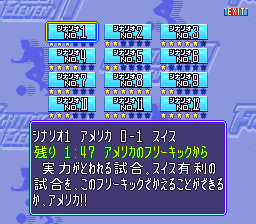
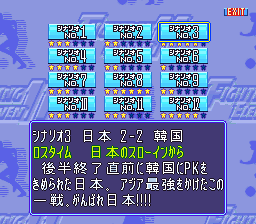
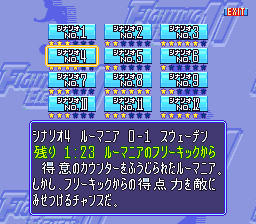
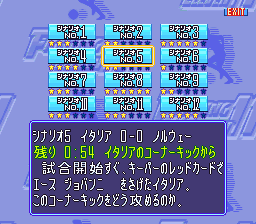
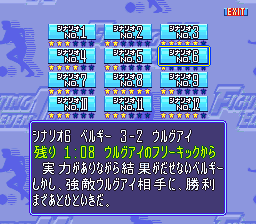
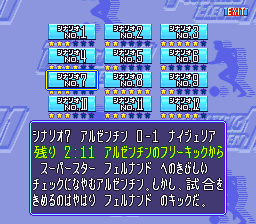
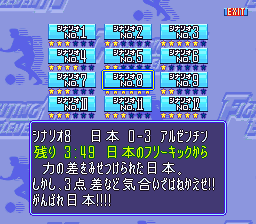
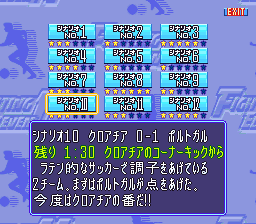
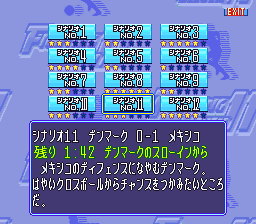
All 12 Scenarios are completely different between versions this time around.
Screenshot |
Translation |
|---|---|
 |
|
 |
|
 |
|
 |
|
 |
|
 |
|
 |
|
 |
|
 |
|
 |
|
 |
|
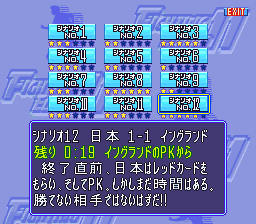 |
The players named Giovanni (Italy) and Fernando (Argentina) in the texts above are known, respectively, as Galfano and Redonda in the Western versions.
Scenarios in the international version |
|---|
|
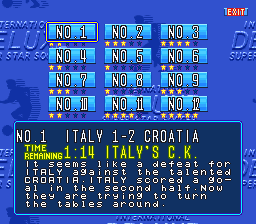
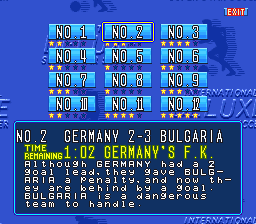
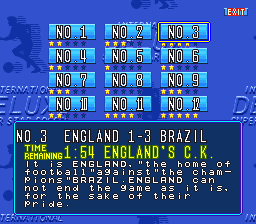
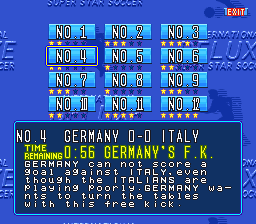
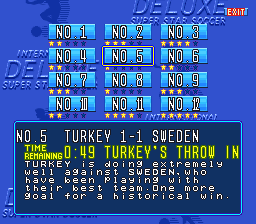

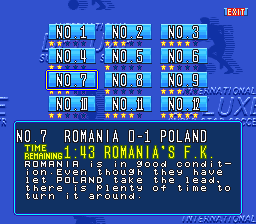
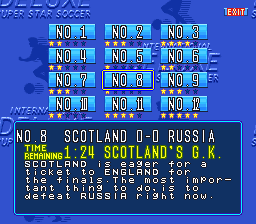

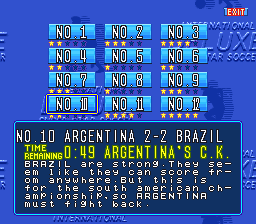
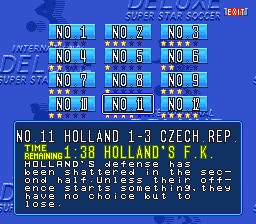
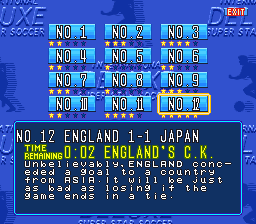
Do note how Scenario 12 is basically the same match, but it flips the script from Japan trying to achieve a heroic victory to England trying to avoid a shameful non-win.
Options#
Japan |
US/Europe |
|---|---|
|
 |

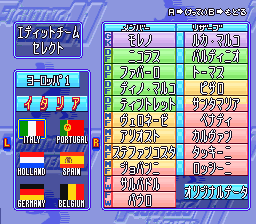
Again, we have a Japan-only name editor. In addition, the option to toggle play-by-play commentary on and off is also exclusive to the Japanese version; ISS Deluxe has a limited form of commentary, which is on at all times but pops up only in punctual moments.
Plus, by default, Fighting Eleven's difficulty is set to Level 2 rather than 3 (thus making the game considerably easier) and its sound to Stereo rather than Mono.
Teams#
Japan |
US/Europe |
|---|---|
|
|
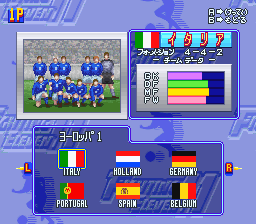

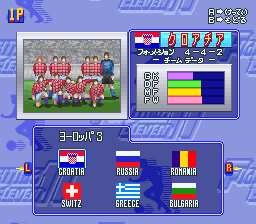

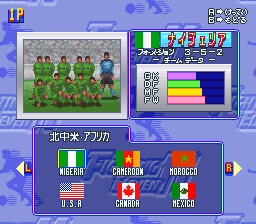
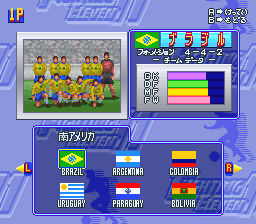


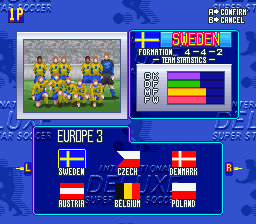
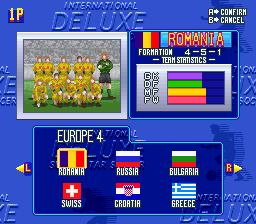


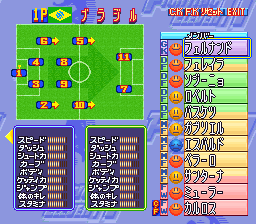
Both versions have 36 teams divided in continental zones, but they have been heavily shuffled around between Fighting Eleven and ISS Deluxe, with some countries excised and others added. Europe goes from having three blocks to four (and thus, from 18 to 24 teams), while Asia and South America, which each had one 6-team block all for themselves, had their representations reduced to 3 and 4 teams, respectively, and thus they have to share their blocks with other zones (something which only happened to Africa and North America in the original version). Noteworthy is that Turkey was newly added in the Western versions, but in Asia (in real life, the team plays in the European zone).
Also, some flag captions were altered: Switzerland is changed from "Switz" to "Swiss" (they would not have their name rendered in full until International Superstar Soccer '98), South Korea reads "S.Korea" in the international versions, changed from the original's "R.Korea" (for Republic of Korea), and inexplicably Colombia is changed to "Columbia" in ISS Deluxe.
Japan |
US/Europe |
|---|---|
 |
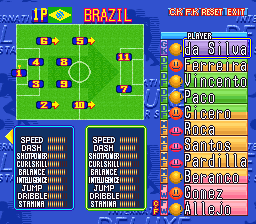 |
And the players' names, again, are different between versions, as noted in the Japanese Scenario descriptions above, but also seen here.
General Single-Player Content#
Japan |
US/Europe |
|---|---|
|
|


Both in International Cup and World Series, Fighting Eleven keeps track of the teams' goal difference, since it is a common tie-breaking criterion (especially noteworthy in World Series, where games cannot end in a draw and must be decided on penalties if there's no winner after regulation and extra time). For some reason, ISS Deluxe forgoes this and, on the International Cup, replaces the goal difference column on the ranking table with a simple points column (3 points for a win, 1 for a draw, zero for a loss).
Japan |
US/Europe |
|---|---|
 |
 |
International Cup |
|
 |
 |
World Series |
|
 |
 |
The "Rankings" option in the pre-match menus (which appears starting with your second match in International Cup or World Series), aside from having its placement swapped with the Uniform/Team Colors option, is much more detailed in Fighting Eleven than in ISS Deluxe. Where the latter only shows tournament standings, the former also has a top scorer ranking...

...and detailed data on your team.
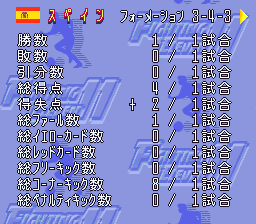
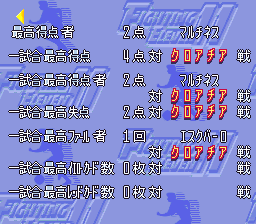
(Player's Team) FORMATION (most frequent formation until that point)
Wins X / X Matches
Losses X / X Matches
Draws X / X Matches
Total Goals X / X Matches
Goal Difference X / X Matches
Total Fouls X / X Matches
Total Yellow Cards X / X Matches
Total Red Cards X / X Matches
Total Free Kicks X / X Matches
Total Corner Kicks X / X Matches
Total Penalties X / X Matches
Top Scorer X Goals (Player Name)
Most Goals in a Single Match X Goals vs. (Opponent)
Top Scorer in a Single Match X Goals (Player Name) vs. (Opponent)
Most Goals Conceded in a Single Match X Goals vs. (Opponent)
Player who Committed Most Fouls in a Match X Times (Player Name) vs. (Opponent)
Most Yellow Cards in a Match X Cards vs. (Opponent)
Most Red Cards in a Match X Cards vs. (Opponent)
In addition, from your second match onward, the "Edit Player Skills" option is removed from the menu in the Japanese version, meaning you only get one chance to buff your team before you start playing.
Oddities#
Players who have been following football games for a good while might notice, looking at the teams lineups, that some of the names in the Japanese version were straight-up lifted from FIFA International Soccer. Compare this screenshot from this game (taken from the better-known Sega Genesis version) to the Brazil lineup in Fighting Eleven:
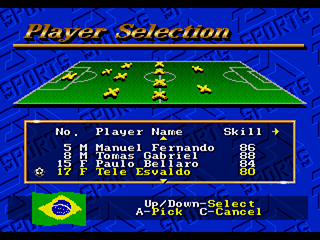
The names "Gabriel", "Esvaldo" and "Bellaro" can be seen as the first three midfielders, while "Fernando" is the name of the goalkeeper. Other names in the right screenshot that are present in the original FIFA are "Santana" (from "Ricardo Santana") and "Muller" (from "Peter Mueller").
References#
|
The International Superstar Soccer series | |
|---|---|
|
Genesis |
|
|
SNES |
International Superstar Soccer • International Superstar Soccer Deluxe |
|
Nintendo 64 |
International Superstar Soccer 64 • International Superstar Soccer 2000 |
|
PlayStation 2 |
|
|
Game Boy Advance |
|