 This article has a talk page!


Cheat Menu#
There are leftovers of debugging functionality related to the Cheat Menu, a menu option that was accessible in pre-release builds via a button combination, before being dummied out in the final game.
Leftovers include a selectable option in the pause screen.
Unused Graphics#
Level Select Text#

A prompt graphic that's loaded in the VRAM whenever the player is in the first warp room. Possibly used as a placeholder when a player approached a minigame in Adventure Mode.
Early Opening Credits#


There are a few unused startup splash screens, which are leftovers from demos and earlier builds.
Crate#

This image of a crate is loaded in a LOT of places for the game, but it's never used. Crates in the game don't even look like the one pictured here!
Possible Placeholder Bearminator Icon#
|
Placeholder |
Final |
|---|---|

|

|
A crude drawing of a smiling yellow face wearing sunglasses is found in very close proximity to Bearminator's icon in the files for the game, so it can be inferred that this image was a placeholder for Bearminator's icon that was used when the level was still in development.
Early Fonts#
Variation 1#


Variation 2#
Variation 3#
Variation 4#
Letter 'Z'#

At one point, 'Z's would come out of the penguin in Snow Bash while it was sleeping.
El Pogo Loco Tiles#


Three unused tiles exist in El Pogo Loco: one is a slightly zoomed out tile with an X written over it, one is a smaller-than-normal green paint blot tile, and one is a yellow paint blot tile that looks the exact same as the used version.
Pogo-a-Gogo Tiles#

Pogo-a-Gogo has a cracked tile texture with an unknown purpose. Logically, it would make the player unable to color the tile.
Pogo Padlock Tiles#
Pogo Padlock has 2 duplicates of the locked red tile in both the trophy challenge and the crystal challenge. The red tile duplicates use the crystal challenge textures and the trophy challenge textures from their respective challenge texture sheets.
Pogo Painter Tiles#
These colored tiles are loaded in Pogo Painter... and Mallet Mash for some reason.
"Diner" Text#
This text is actually used in Pogo Padlock's crystal challenge, but it is also present in the regular version of Pogo Padlock's textures... and Mallet Mash for some reason, again.
Helicopter#


A colourful helicopter with a derpy face that was probably used as a placeholder for the supply plane in Tank Wars levels.
Grey Face#

A grey character's surprised face that doesn't match up with any of the characters used ingame. This image is found among some assets for Tank Wars levels.
Chicken Run Leftovers#
Chicken Run is one of the only known scrapped minigames, and was replaced with Keg Kaboom a few months before the game went gold. It is supposedly fully present as a level but not playable in the July 26, 2000 prototype as it crashes the game. According to Jon Williams, the minigame had to be removed because Universal felt it was too cruel.
“I remember one of our first ideas was for chicken kickin' where players had to kick the greatest number of chickens into their basket! The level didn't really work as well as we hoped so it wasn't developed. However, we did use the exploding chickens in a different level before having to remove them as it was considered too cruel by Universal.”2
— Jon Williams
There are no prototypes with a functioning version of the minigame, so the true nature of its gameplay remains unknown. Despite its removal, several purported assets for it still appear in the game's data:
Chocobo#


Three pictures of a chocobo from the Final Fantasy series. The different phases it goes through (normal -> red -> black) indicates that the texture was supposed to have a burning animation.
Chicken Egg#


Two chicken eggs, one intact and one cracked.
Mouse#

An image of a wind-up mouse toy, for some reason.
Chicken Textures#


Textures of the chicken itself.
Unused Music#
A short looping track with a similar composition to the infamous "Loading" theme.
Test Level#
Using GameShark code 8009CBFC 002C in the European version allows you to access a test level once you've entered a minigame.
Pressing Circle plays an animation of an explosion, and pressing it again while the animation is still playing, will stop it until it is pressed one more time.
Unused Items#
Dash Levels#
It seems a TNT crate and a walking egg were originally planned to be used in the dash levels. The visual effect of the egg varies depending on the level. These can be seen in the video here.
These can be activated by changing the current weapon value in memory (4 bytes):
0 = No weapon
1 = Missile
2 = TNT
4 = Egg
Hidden Widescreen Mode Toggle#
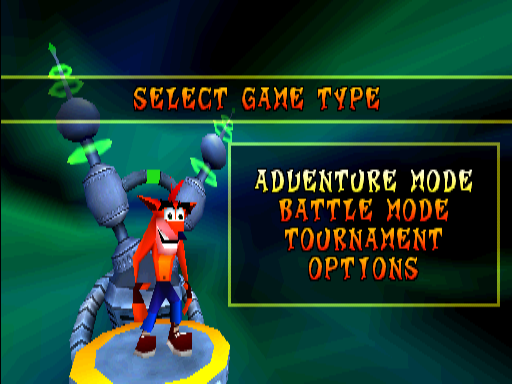
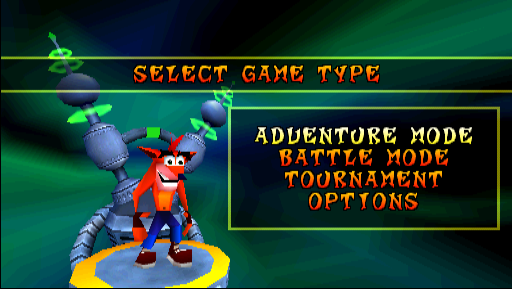
There is a hidden cheat code to enable widescreen support for the game, that must be executed in quick succession (2 seconds). While difficult, going in and out of the menus in between attempts seems to help the success rate.
- Press Right + Left + Left + Right + Left + Left + Right + Left + Left + Right + Left + Left + Left + Right + Left to enable the cheat code, a chime should play afterwards.
Interestingly, an identical widescreen cheat is present in both the Nintendo 64 and PlayStation ports of Disney's Tarzan, which was also developed by Eurocom.
4:3 |
4:3 with code |
16:9 with code |
|---|---|---|
 |
 |
 |
Regional Differences#
Europe#
- You are redirected to a language selection menu after the title screen. Languages available are English, French, German, Spanish and Italian. The characters are fully dubbed, but the level names stay the same.
- The memory card save icon is static.
Japan#
As expected, there are numerous differences in the Japanese version besides the language change.
|
International |
Japan |
|---|---|

|

|
- The screen with the Universal Interactive logo had its legal notice revised to include the Japanese name, proper ™ and © symbols, and a developer credit for Eurocom.
|
International |
Japan |
|---|---|
|
|
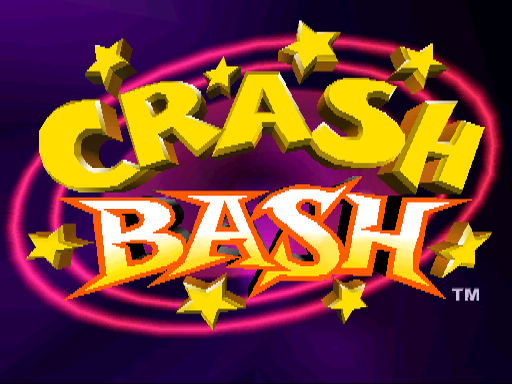
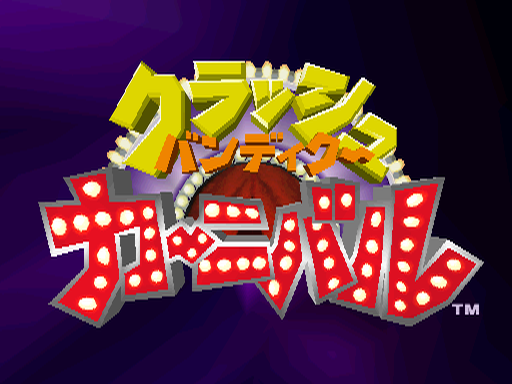
- The title screen was changed to the Japanese name, Crash Bandicoot Carnival, and its logo.
|
International |
Japan |
|---|---|
- The main theme is replaced with "Crash Banjy-Kyusuu ~Carnival 2000 Mix~", a remix of the theme song for Crash in Japan.
Icons |
|
|---|---|
International |
|
Japan |
|


- All the characters and bosses have different icons to appeal more to Japanese audiences.
- All of the voices except for Koala Kong's were redone by the Japanese actors from previous games.
- The "TNT" label on TNT boxes has been replaced with an image of a bomb, and the "Nitro" label is written in Katakana.
- Tiny Tiger, Koala Kong, and Rilla Roo now have a taunt animation in Polar Push levels.
- The music for Dot Dash, Splash Dash and Oxide Ride, which was a remix of Dingodile's theme from Crash Bandicoot: Warped, is replaced with a modified version of the famous Can Can music.
- Both the background and "LOADING" text on the loading screens move at a slower speed.
- Finishing Adventure mode shows an epilogue message for your character and an accompanying picture.
Fake Crash#
Fake Crash is a secret character exclusive to the Japanese version. He is a neutral character and is only available in the Battle and Tournament modes by holding down R1 + R2 + Down + Left on the character select screen. He plays and moves just like Crash, but has his own separate voice samples.
Bonus Videos#
Like previous Crash games released in Japan, there are two hidden bonus videos in the Japanese version. To access them, press and hold the following button combinations while booting up the game:
- Hold Up + Triangle + L2 + R2 or use GameShark code D0010404 0003 + 80010406 1043 to play the first video.
- Hold Down + X + L2 + R1 or use GameShark code D0010420 0004 + 80010422 1043 to play the second video.
Like before, you must reset your console after each video has finished playing.
(Source: Hacc)
Anti-Piracy#
The North American and Japanese versions of the game use anti-modchip/Red Hand Protect copy protection. If a (non stealth) modchip is detected, the game will hang to the "Software Terminated/Red Hand" screen, upon reaching the title screen.
The European version is LibCrypt protected. If the protection is tripped, the player is locked in a semi-playable state. The player can play through available Battle Mode levels. However, the game will crash at the loading screen shortly after the first Adventure Mode cinematic. Additionally, the game will hang on a black screen if the player selects any of the tournaments other than the first one, Crate Crush, or if the player lets the game go into attract mode in main menu by not selecting any of the options.
This unfortunately prevents the PAL version from being played on a PlayStation 3 due to the software emulation config not having an entry for the game thus setting off this measure.
(Source: Copy Protected PlayStation games list, MVG's video about copy protection schemes on PS, tested through Mednafen emulator)
References#
|
The Crash Bandicoot series | |
|---|---|
|
PlayStation |
Crash Bandicoot (Prototypes) • Cortex Strikes Back (Prototypes) • Warped (Prototypes) |
|
PlayStation 2 |
The Wrath of Cortex (Prototypes) • Crash Twinsanity (Prototypes) • Crash of the Titans • Mind Over Mutant |
|
Xbox |
|
|
Xbox 360, Wii |
|
|
GameCube |
|
|
Game Boy Advance |
|
|
PlayStation Portable |
|
|
PlayStation 4, Xbox One |
|
|
Nintendo Switch, Windows |
|
|
PlayStation 5, Xbox Series X |
|
|
Android, iOS |
|
|
Racing Games | |
|
PlayStation |
|
|
GameCube, Xbox, PlayStation 2 |
Crash Nitro Kart (Prototypes) • Crash Tag Team Racing (Prototypes) |
|
Game Boy Advance |
|
|
PlayStation Portable |
|
|
PlayStation 4, Xbox One, Nintendo Switch |
|
|
Party Games | |
|
PlayStation |
|
|
Nintendo DS |
|
|
Misc. | |
|
Game Boy Advance |
Crash Bandicoot Purple: Ripto's Rampage • Spyro Orange: The Cortex Conspiracy |
|
Nintendo DS |
|
|
Adobe Flash |
|
|
Adobe Shockwave |
|