 This article has a talk page!
This is a sub-page of Proto:Half-Life (Windows)/September 1997 Prototype.
Entities Relations#
In 0.52, entities will never fight each other. In fact, enemies can and will unofficially team up to kill you, it seems that the coding for the relationship tables was yet to be finalized.
Health and Healing#
The player can only heal by using wall-mounted health cabinets. These cabinets heal a set amount of HP, from 25 points to 100. When used, they'll slightly open, then automatically close a few seconds later.
Unlike the final's health chargers, these can be used as much as one wants, making it easy to recover from any non-fatal damage.

Looking Up#
The player cannot look all the way up in this prototype, a behavior inherited from Quake. This is changed in the final game so that the player can look straight up.
|
Prototype |
Final |
|---|---|
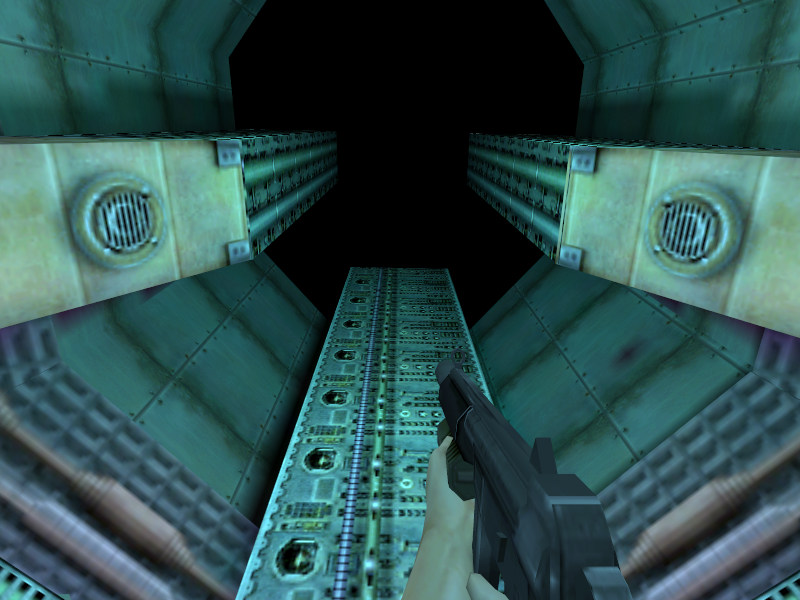
|
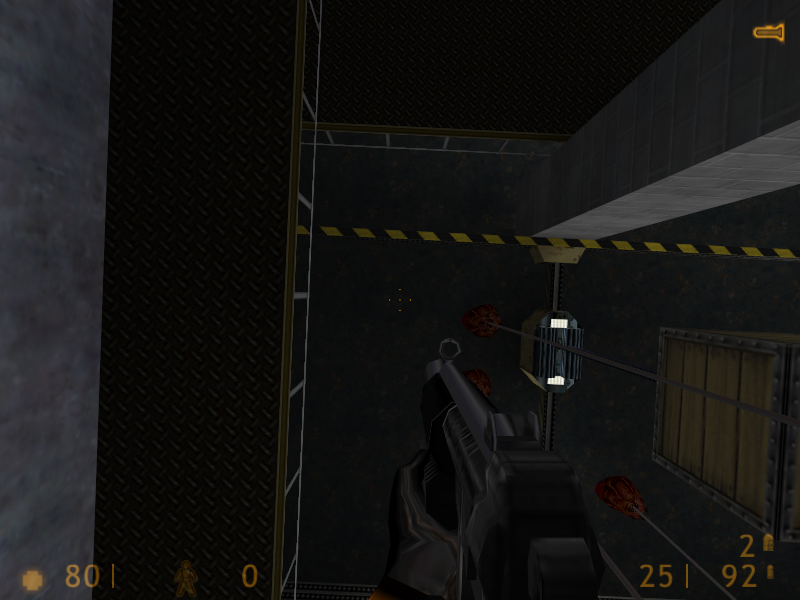
|
Saving Map States#
The game does not save a map's state once another one is loaded. This means if one exits a map and then returns to it, all enemies and puzzles will be reset. This does not happen in the final game.
Climbing Ladders#
When going up a ladder, the screen will tilt left and right while playing pain sounds to simulate the motions one can make while climbing up a ladder.
This was completely replaced in the final game. It has the player slide up or down ladders without any special effects instead.
Headshots#
Extra damage is not inflicted if the player hits a target in the head in this prototype.
OpenGL#
The Prototype's OpenGL mode requires a 3DFX Voodoo graphics card to be installed, which no modern system will have. One workaround for this is to remove OpenGL32.dll from the prototype's main folder, so that Windows' built-in OpenGL implementation is used; however, this will cause projectiles and various decals to not work properly, and decals will start flashing violently after a weapon is fired. To make the OpenGL mode fully work, an application named nGlide must be used, which emulates the 3DFX Voodoo graphics cards. This requires OpenGL32.dll to not be removed in order to work.
Software Renderer#
The prototype also comes with an executable that runs in software mode, but it only works if the computer is set to use 16-bit color. This can be done in Windows versions prior to Windows 8 by setting the color depth to 16 bit in the Display options.
Maximum Screen Size#
The game has issues if it is run in any screen size larger than 800 x 600. When running the game with the software renderer while using a screen size greater than 800 x 600, the game will crash with a hunkaloc error if the player transitions from one map to another.
The OpenGL renderer will refuse to run the game at any size larger than 800 x 600. It will revert to 640 x 480 if the player specifies a size like 1024 x 768 via a config file. If forced to run with a larger screen size via command line parameters, it will crash while booting up.
Included Demos#
The disc includes a series of 15 demo files recorded by the person who mapped the area, and showcases each of the disc's levels. A playback of all of demos can be seen to the left. Notably, the demos show several features that don't actually work in the build, including the Human Assault enemy.
Crosshair#
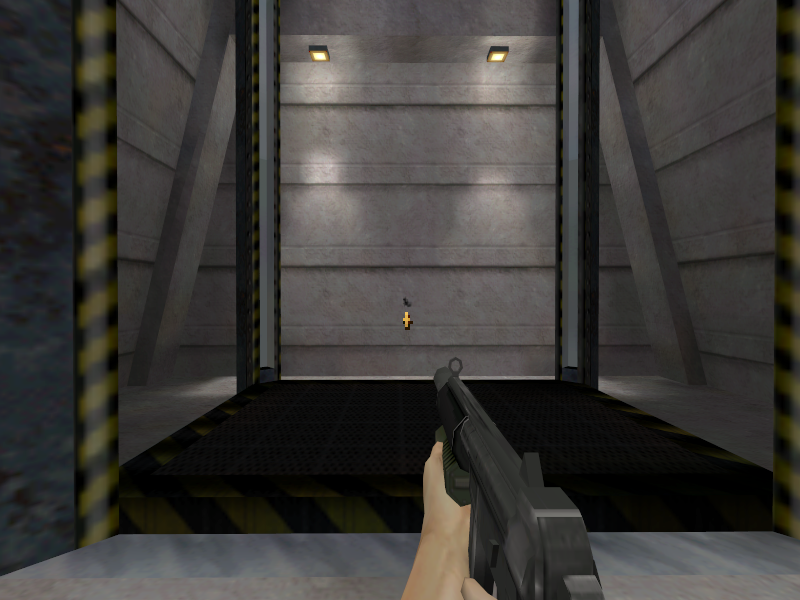
The prototype has a "+" crosshair not found in the final game. It does not match where bullets are actually fired from, making it difficult to use.
Sky#

|
This needs some investigation. |
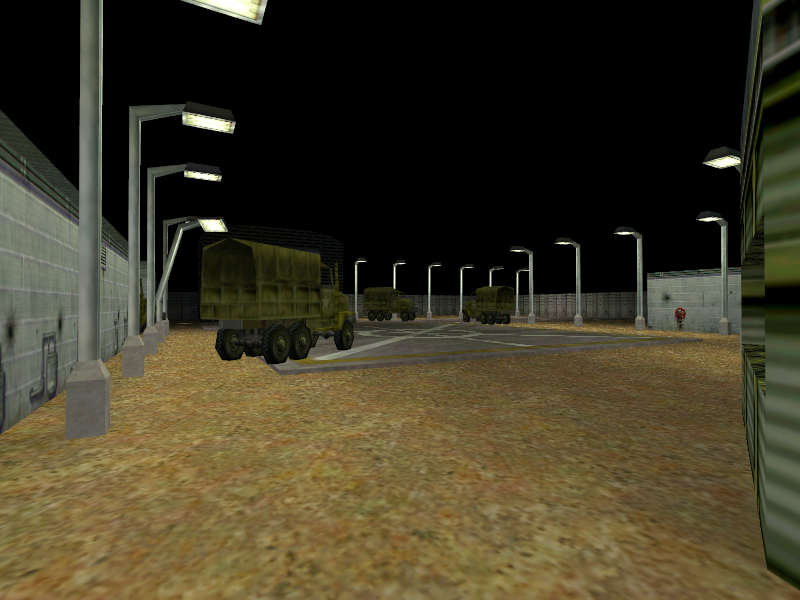
The prototype doesn't seem to have support for skyboxes. Areas that look like they should be (or are shown as having the sky in pre-release footage) are either jet black or use a clearly temporary texture where the skybox texture should be. Despite this, the prototype engine has support for rendering skies in both Software and OpenGL mode. Software mode uses Quake-style skies albeit with broken colours, and OpenGL mode uses the current map's lightmap data as its skybox.
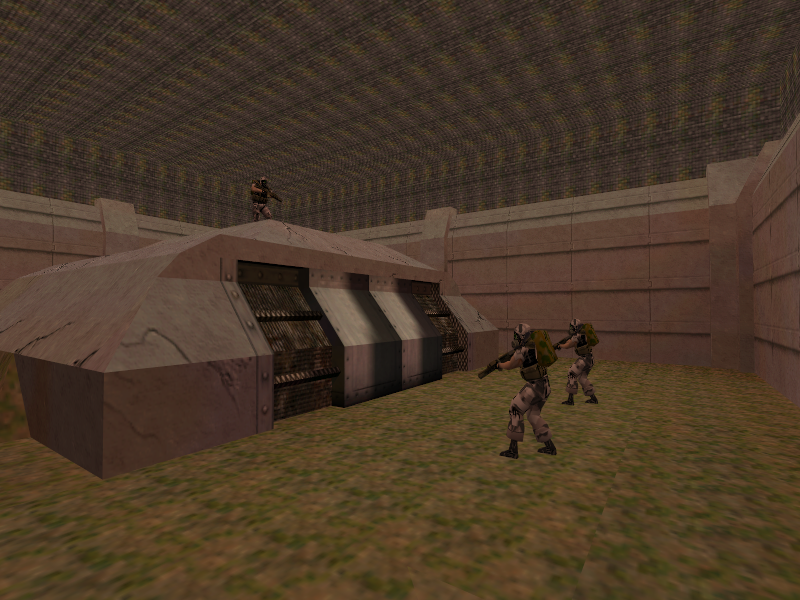
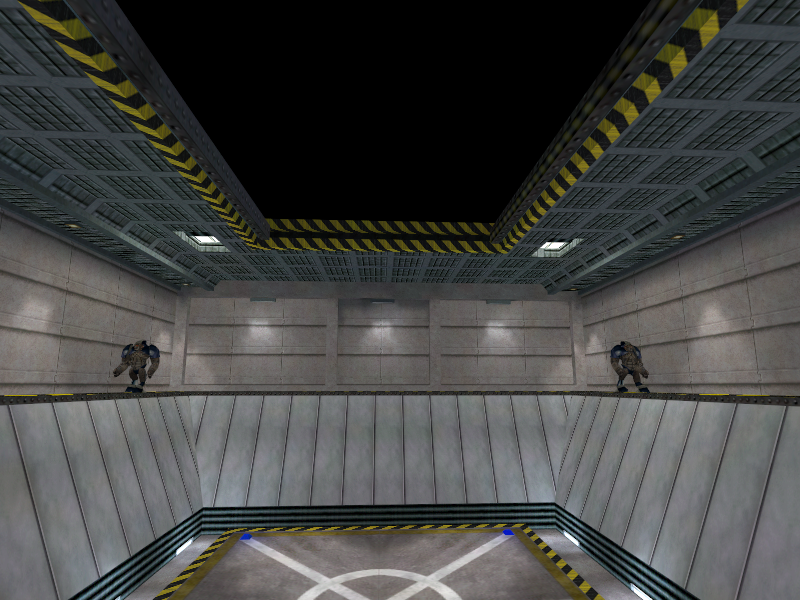
|
Prototype |
Pre-release screenshot, showing the same area with a sky |
|---|---|
|
|

|
Console Message Header#
Whenever console messages are visible on-screen, the string "half-life, by valve l.l.c." will be shown above them. Presumably meant as some kind of copyright watermark for press demo builds, though why it would only appear when console messages are visible is unclear.
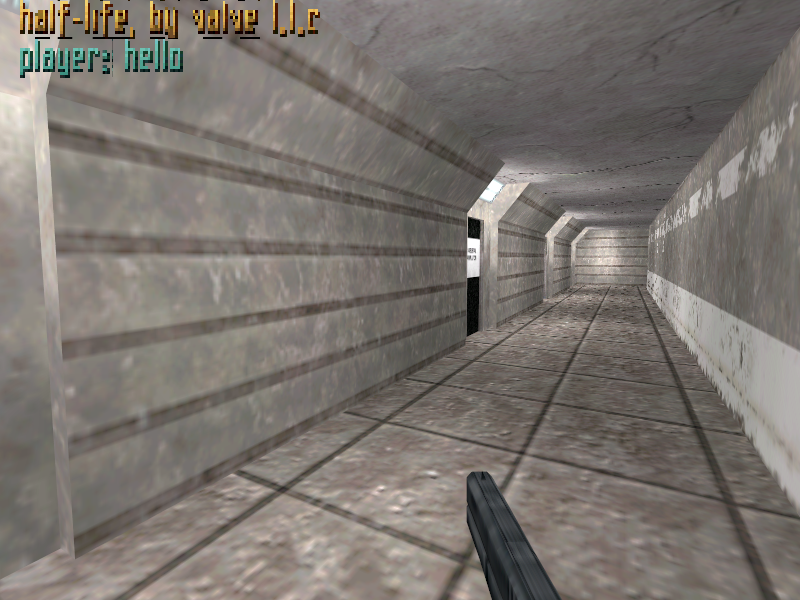
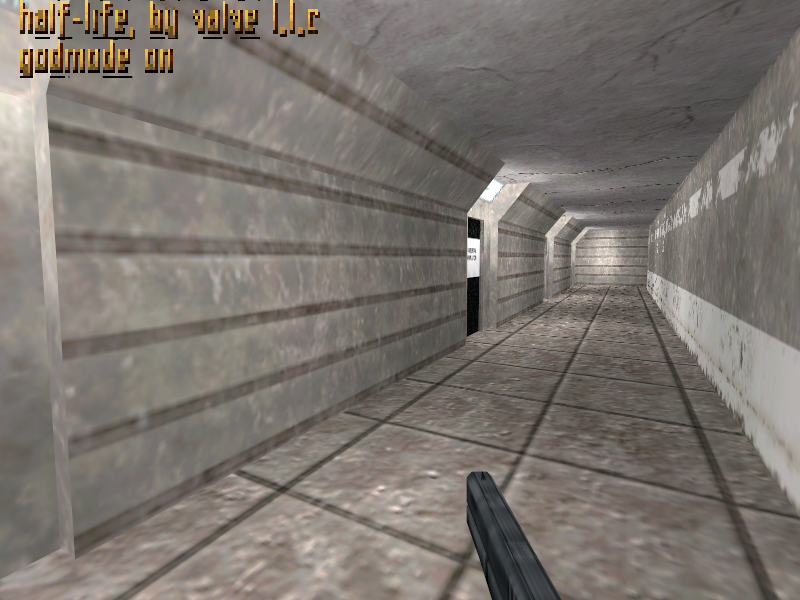
Message Placement#
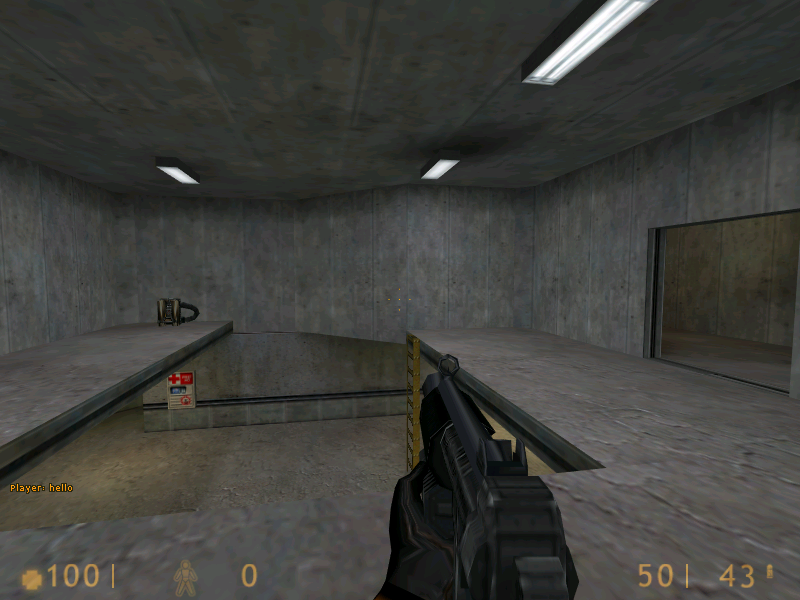
The prototype places player-typed messages on the upper-left corner (like in Quake), while the final game puts them somewhat near the lower left-hand corner.
|
Prototype |
Final |
|---|---|
|
|
|
Prototype Maps in the Final Game#
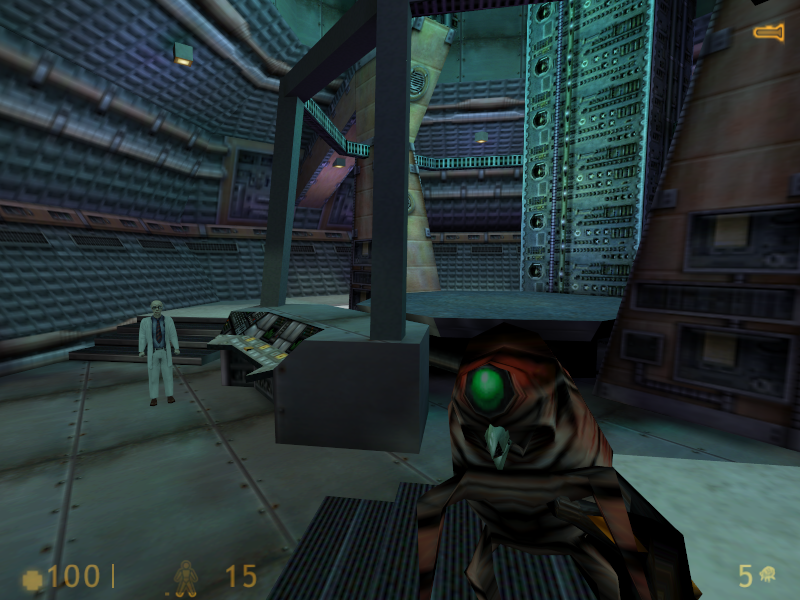
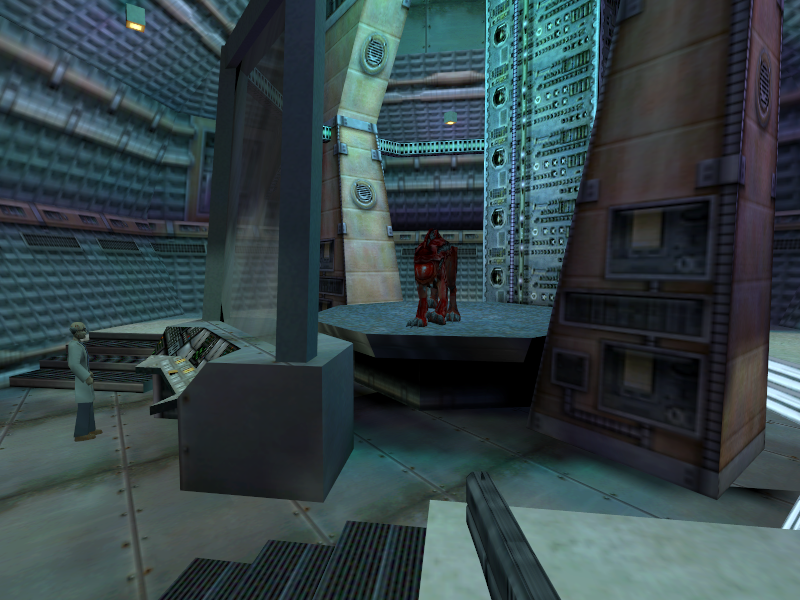
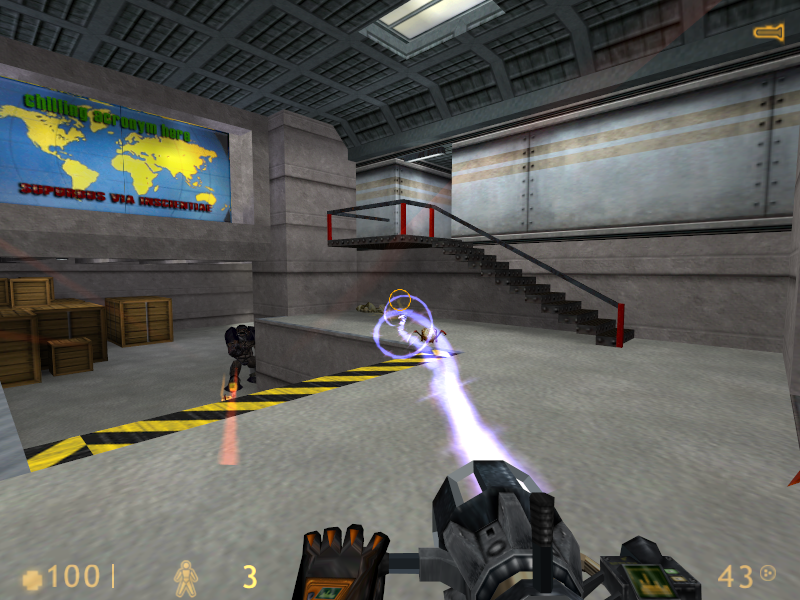
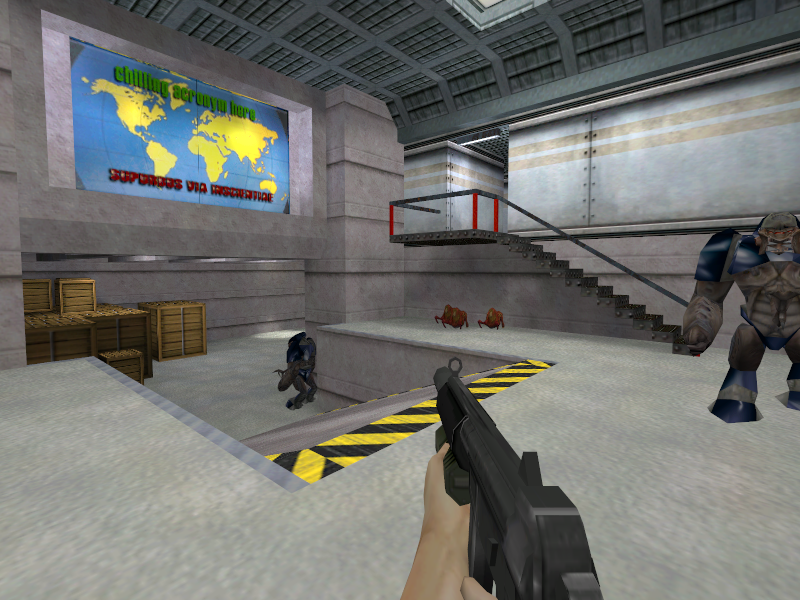
The prototype's maps can load and will work in the final game just fine. Almost everything will load and be displayed properly.
|
Final game |
Prototype |
|---|---|
|
|
|
Final game |
Prototype |
|---|---|
|
|
Prototype Maps in Quake#
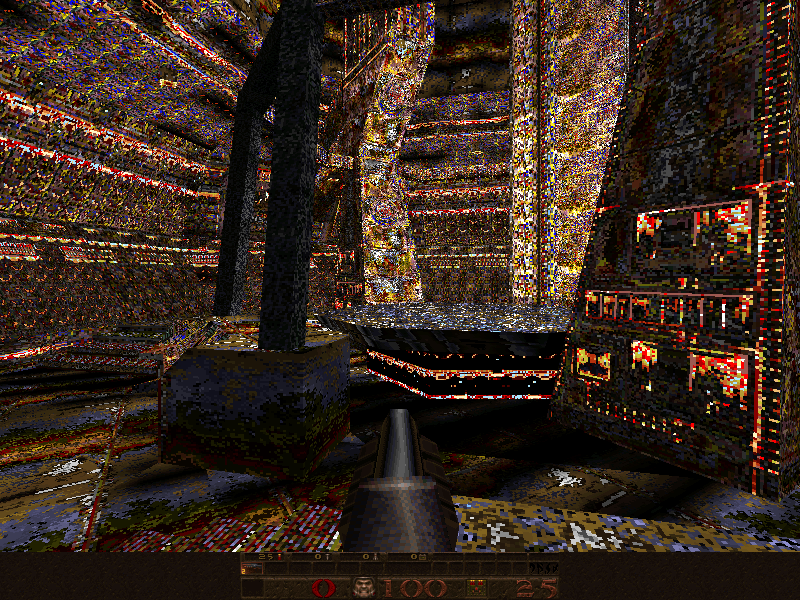
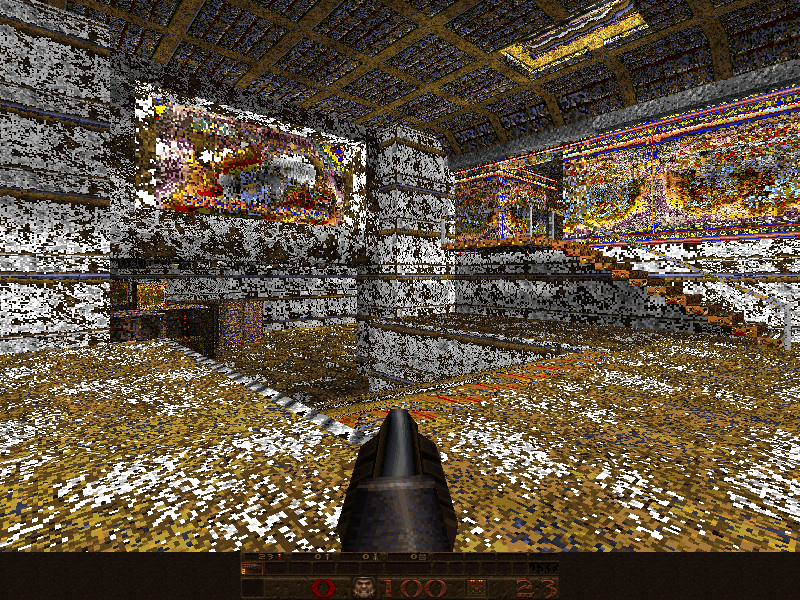
The prototype's maps can also be loaded in Quake, though the game will spew out a lot of errors related to entities unsupported in Quake when loading.
|
Quake |
Prototype |
|---|---|
|
|
|
Quake |
Prototype |
|---|---|
|
|
Quake Version#
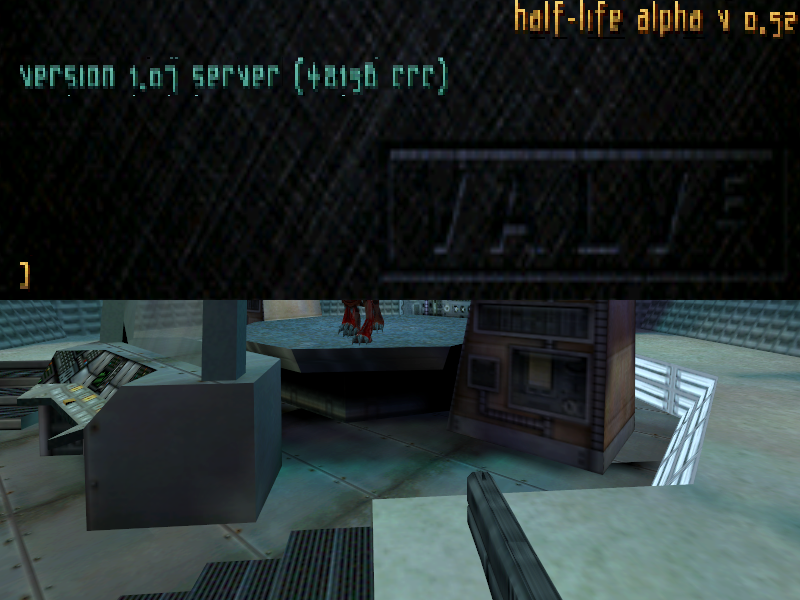
The message that appears when loading states that Half-Life is built on version 1.07 of Quake. 1.08 is Quake's final version, which shows that Half-Life is built on a slightly-older version of Quake.
|
Prototype |
Quake |
|---|---|
|

|