For many years, Sonic the Hedgehog 3 had almost no concept art released, outside of some pieces in MTV's Rock the Rock special. This would change in June 2022 with the release of Sonic Origins, which includes never-before-seen concept art from Sonic 3's development.
Note that none of this seems to be from when it was developed as "Sonic 3D", and only from when it was developed as a 2D game.
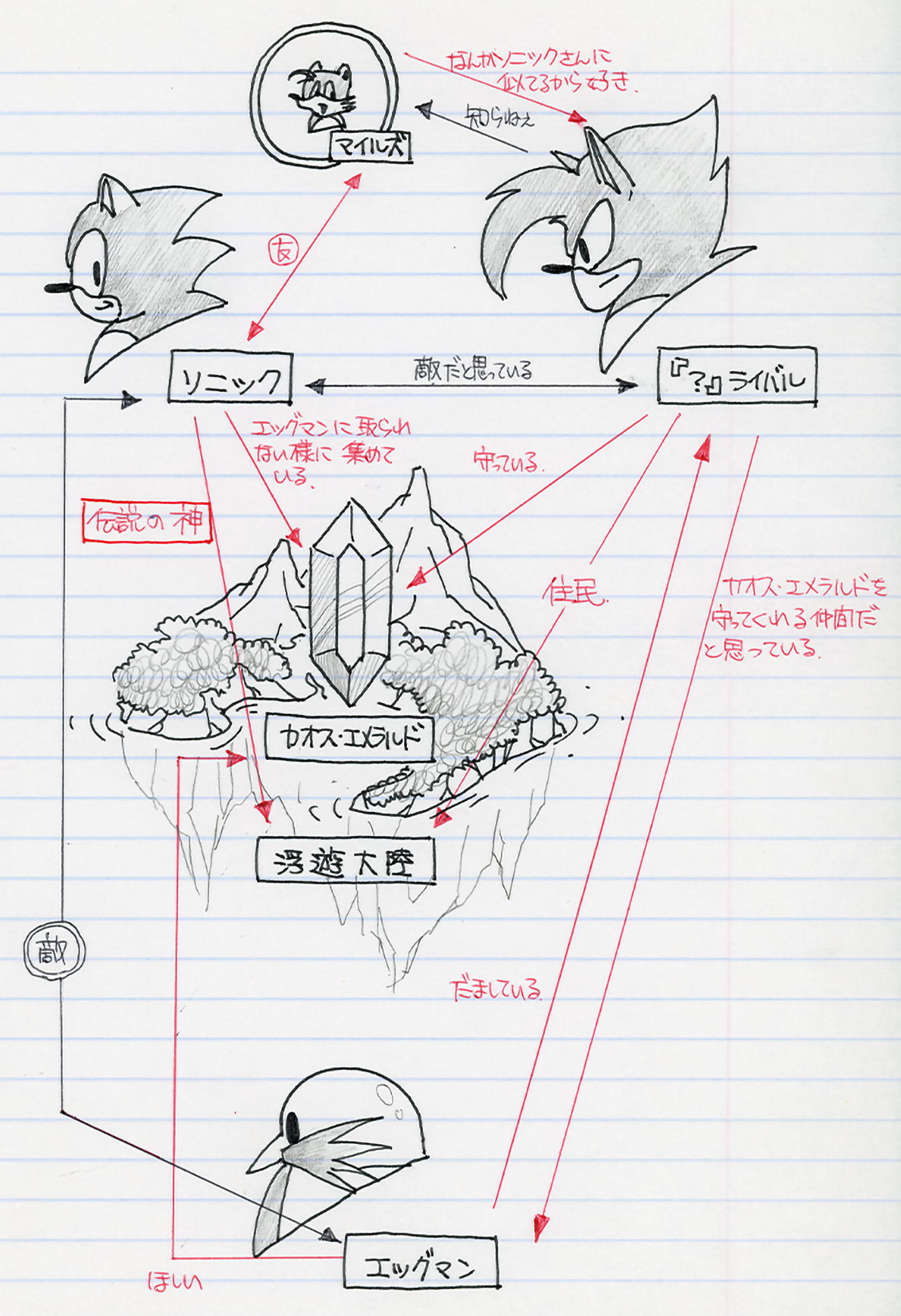
A chart showing the main central characters and their relationships. On the top-right is the earliest known version of Knuckles, originally a hedgehog without a name (his name box simply says "? Rival"). Also included is early concept art of Angel Island (known as "the Floating Island", later used as its name in the US and European manuals for the game) and the Master Emerald (known simply as the "Chaos Emerald" at this point).
Sonic and the Rival think of each other as enemies, while the Rival assumes that Eggman is his partner in protecting the Chaos Emeralds.
The Rival protects the Chaos Emeralds and lives on the Floating Island.
Sonic is seen as the Legendary God of the Floating Island, and is trying to get the Chaos Emeralds before Eggman can, who also wants it.
Eggman is tricking the Rival.
Miles likes the Rival because he looks like Sonic.
The hedgehog design seems to have been kept for a long while, as all the level concept art still features the hedgehog design, but it would eventually be changed.
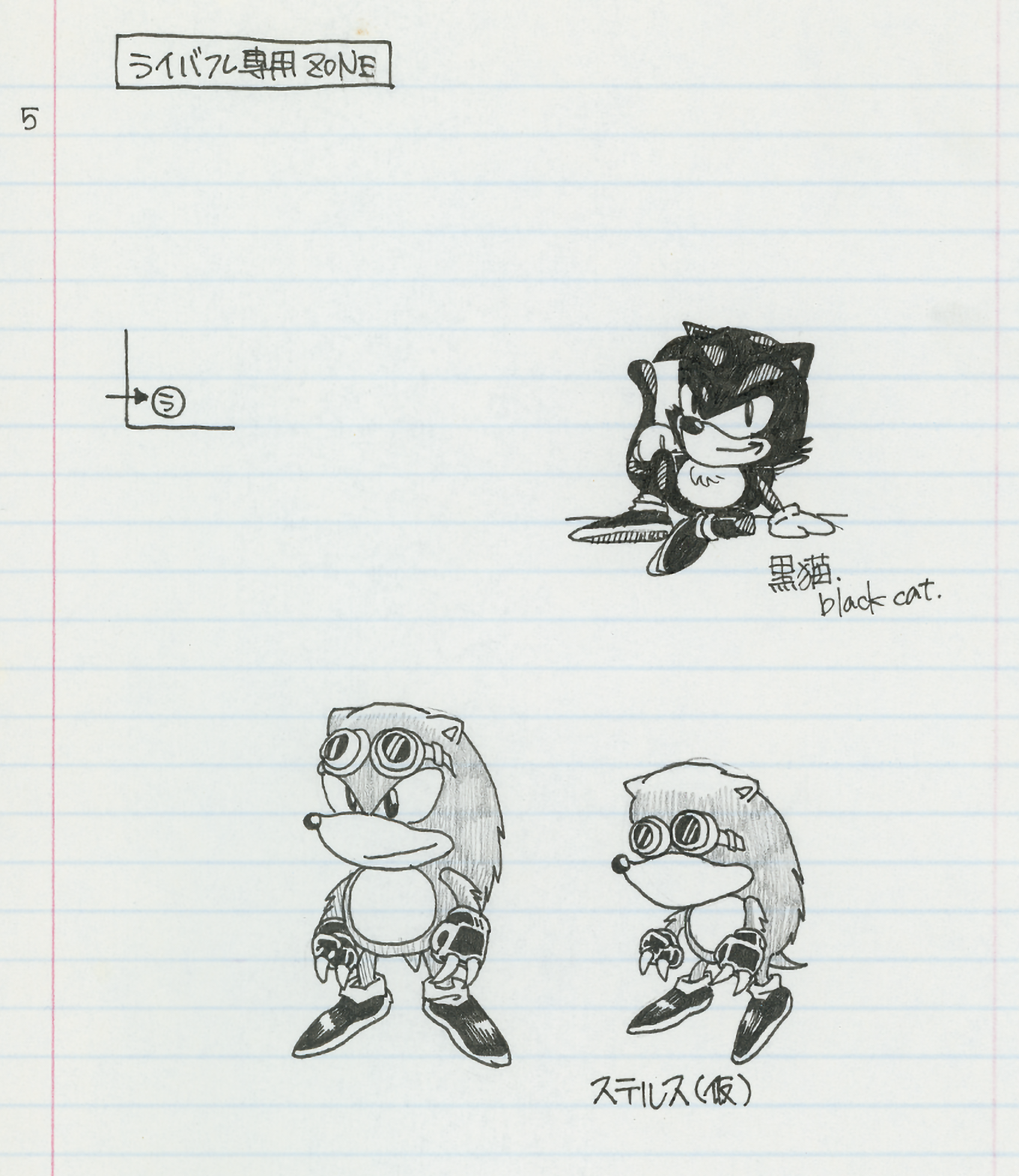
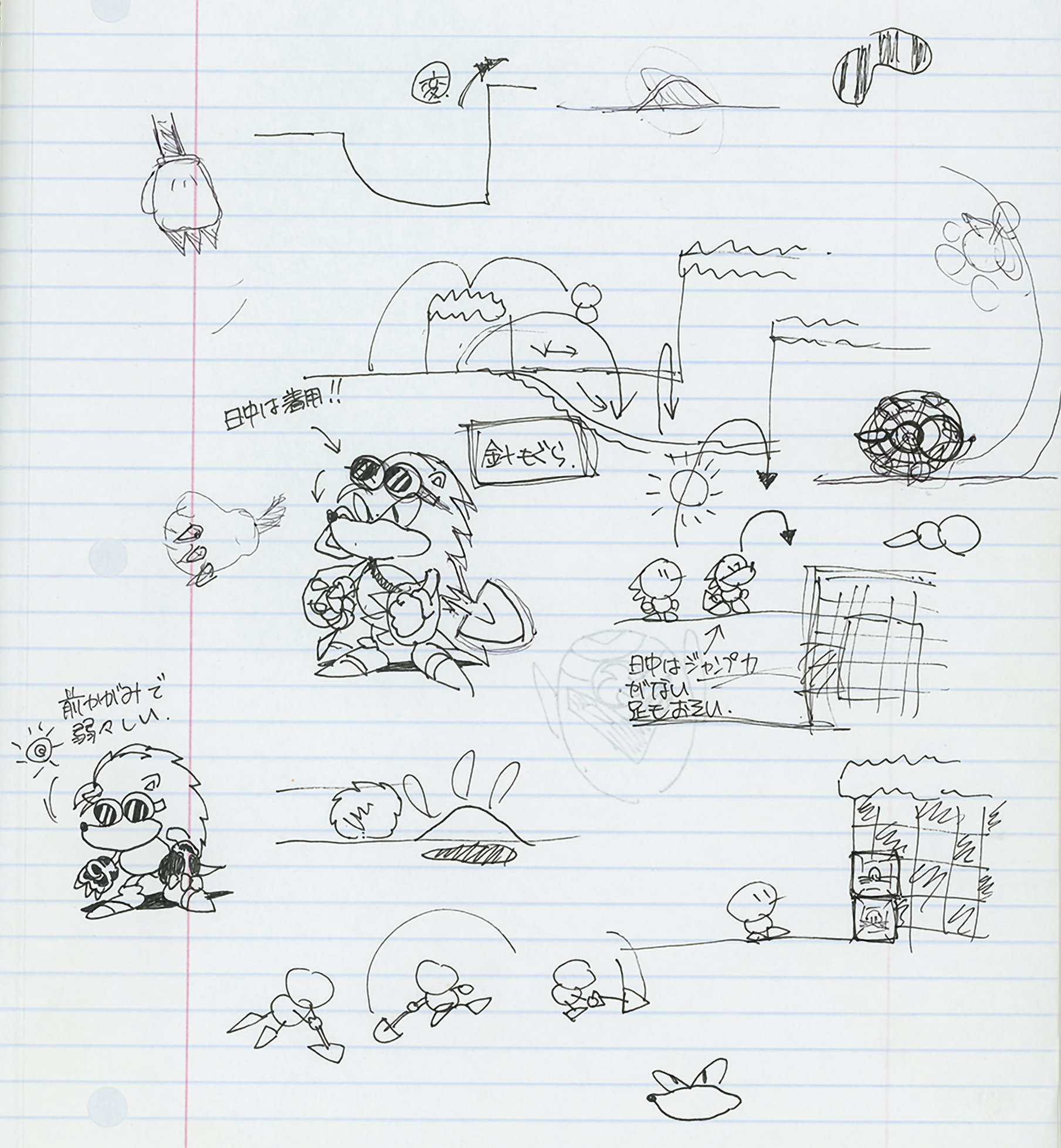
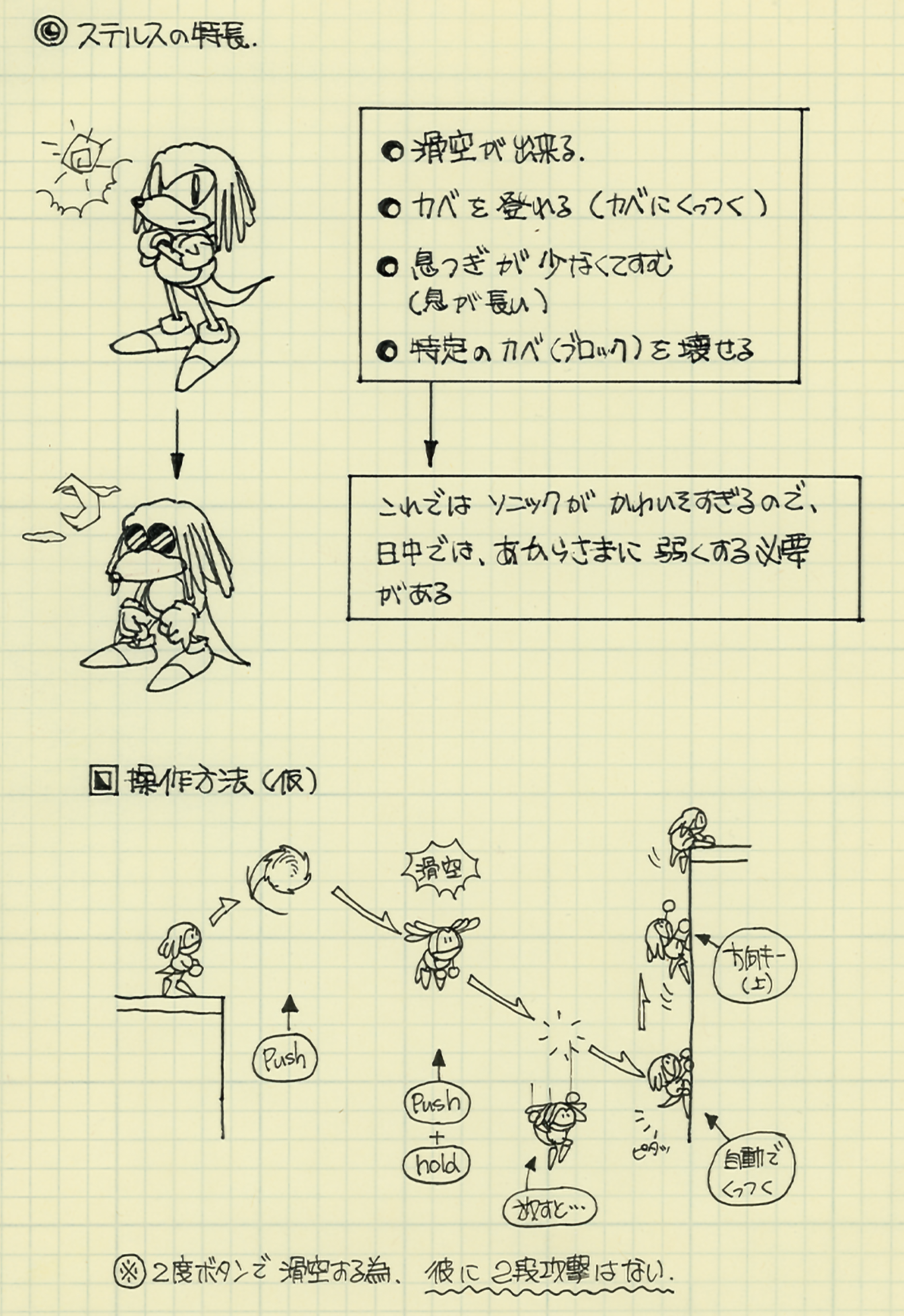
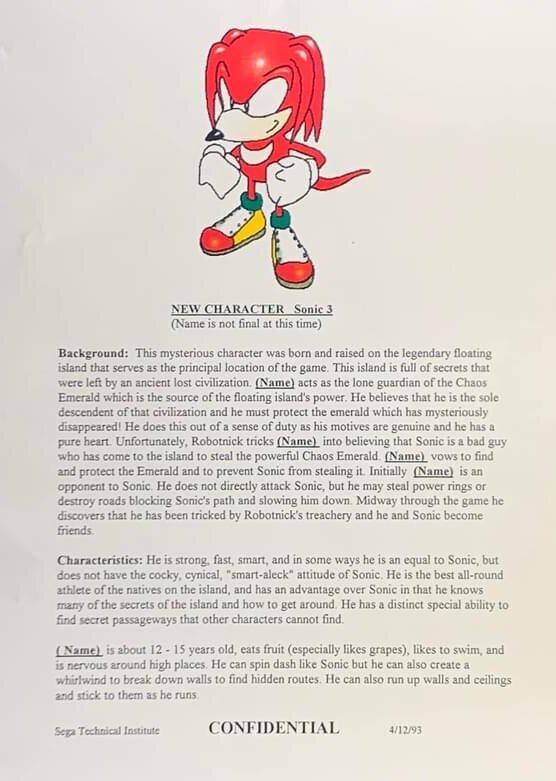
Two potential designs for Knuckles, with the bottom one, named "Stealth", being chosen out of the two. It seems that he would wear his glasses depending on the environment, like if the sun is out. As detailed in the next section, these sketches appear to have been drawn on a sheet intended for a Knuckles-exclusive Zone 5, though the design had barely been started before the sheet was used for character designs instead.The echidna design is expanded upon, featuring a shovel that seems to be used as an attack. There is an idea that he will have a lower jump height and speed during the daytime.This is where the game characteristics of "Stealth" were decided, including his gliding and wall climbing capabilities. It's stated that these abilities make Sonic look pitiful, so he'll have to be weak during the daytime to balance this out. His inability to use shield attacks was also established here. Another interesting part is the ability to glide with his dreads.A pre-final Knuckles dated April 12, 1993, matching his final design closely (except for his dreads and eyes). This was given to STI developers to introduce them to the character, featuring a plot matching the final Japanese manual, but also mentions an unused move to run up walls and create whirlwinds (which was, oddly enough, seemingly used as the basis for his Sonic 3 McDonald's Happy Meal toy, wherein Knuckles spins around rapidly whilst surrounded by white clouds, while the ability to run up walls would be repurposed for Espio in Knuckles' Chaotix). This design would be used at the start of Angel Island Zone Act 1 in the November 3rd prototype.
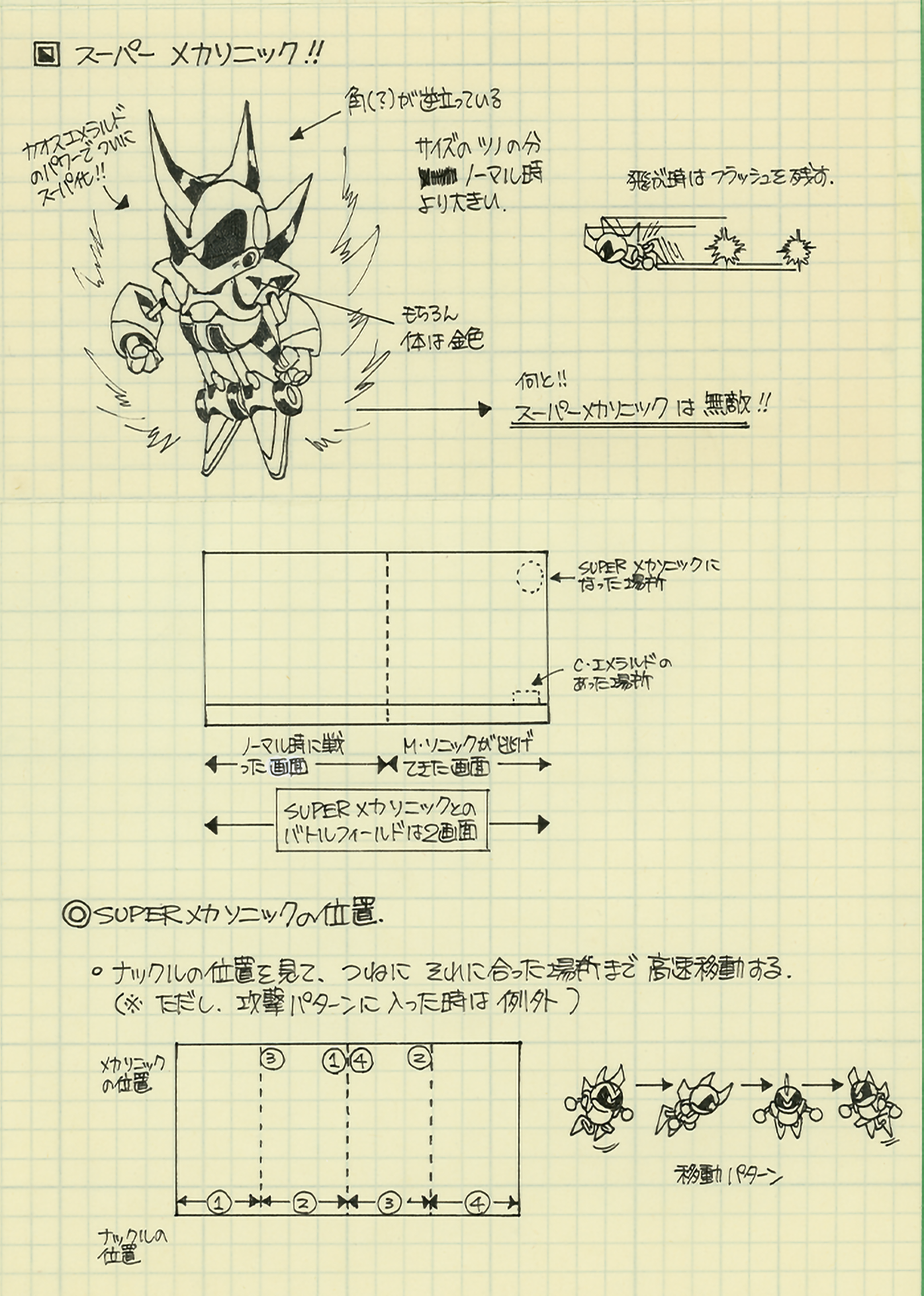
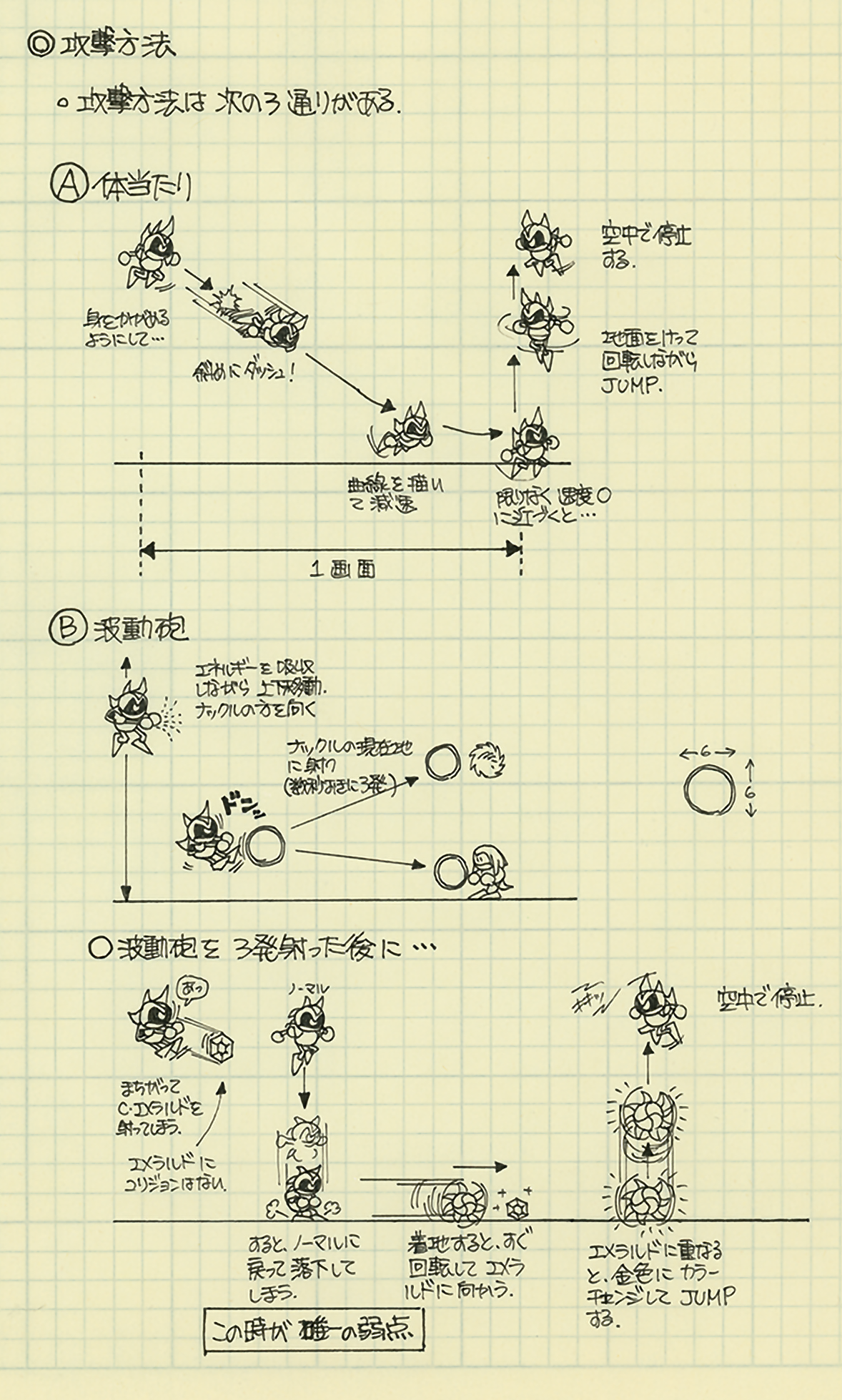
Two pieces of art showcasing an early design for Super Mecha Sonic, with a design that more closely matches the original Mecha Sonic design seen in Sonic 2. By this point in time, the rival's name has been finalized as Knuckle(s).
The sketches only show plans for the encounter with Super Mecha Sonic specifically, which is the second phase of Knuckles's battle against Mecha Sonic in the finished game. Instead of absorbing the energy of the Master Emerald, Mecha Sonic uses the Chaos Emeralds as his energy source. During the energy ball attack, he would accidentally fire off an emerald, causing him to have to retrieve it to regain the ability to transform.
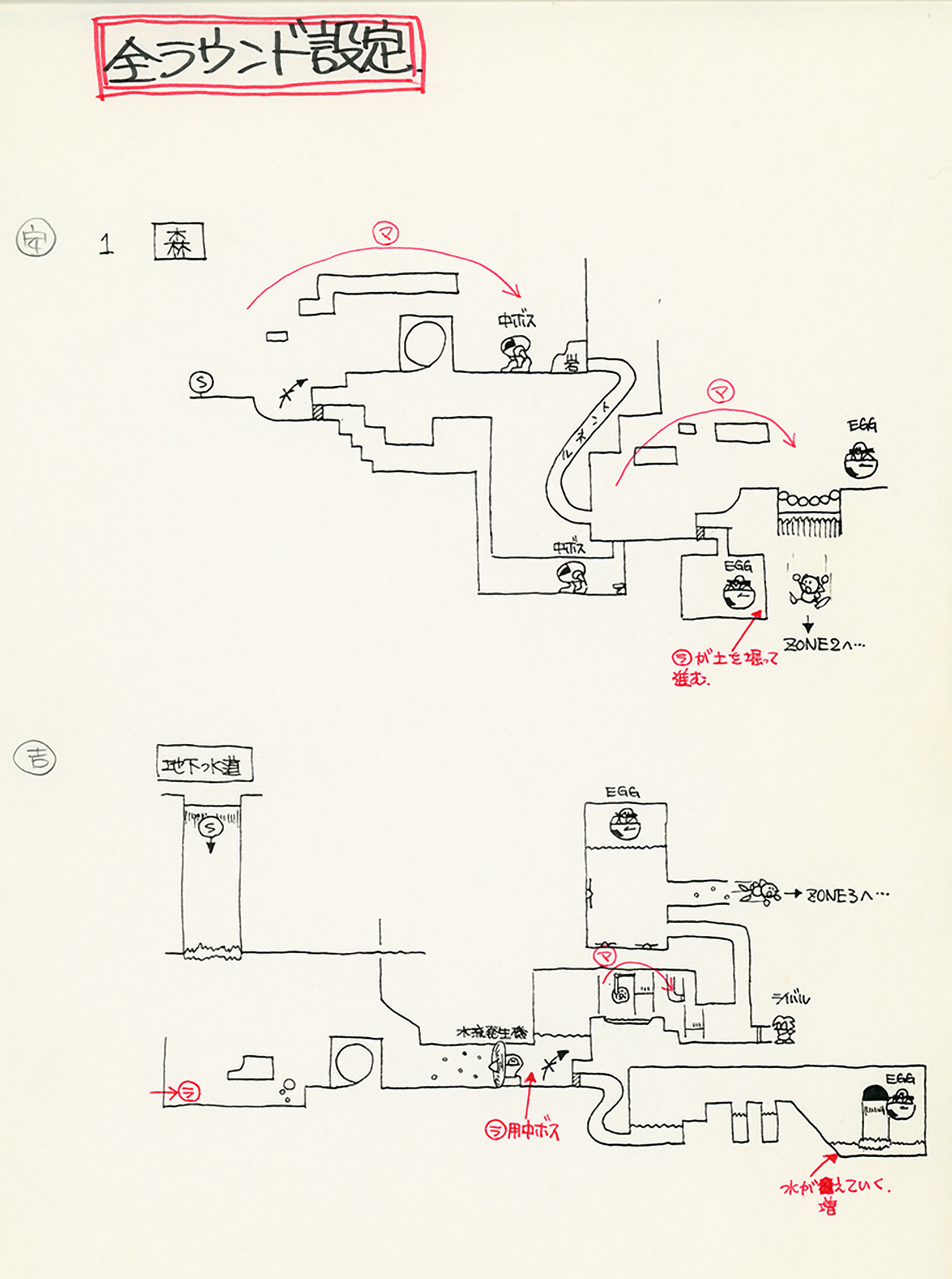
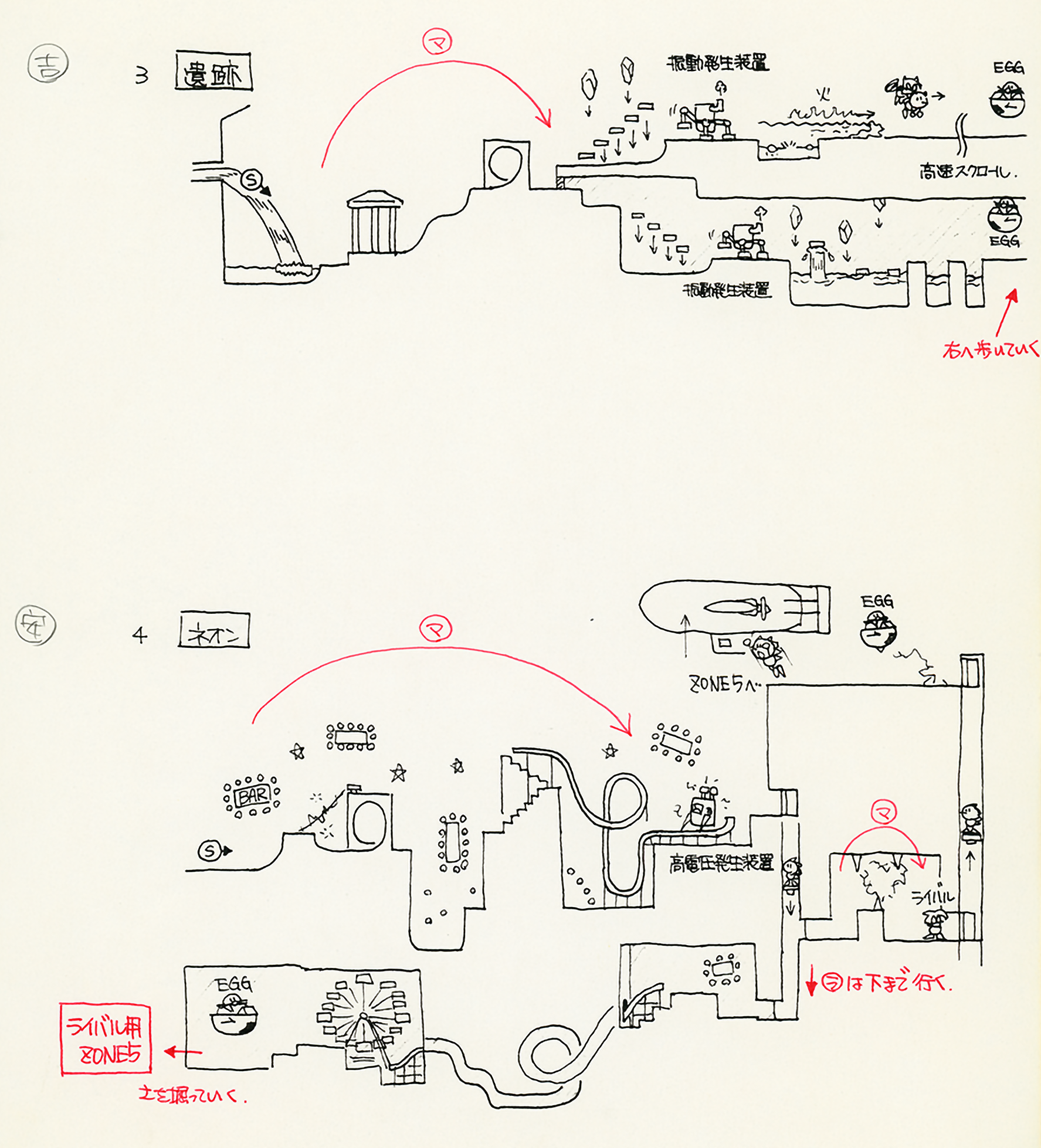
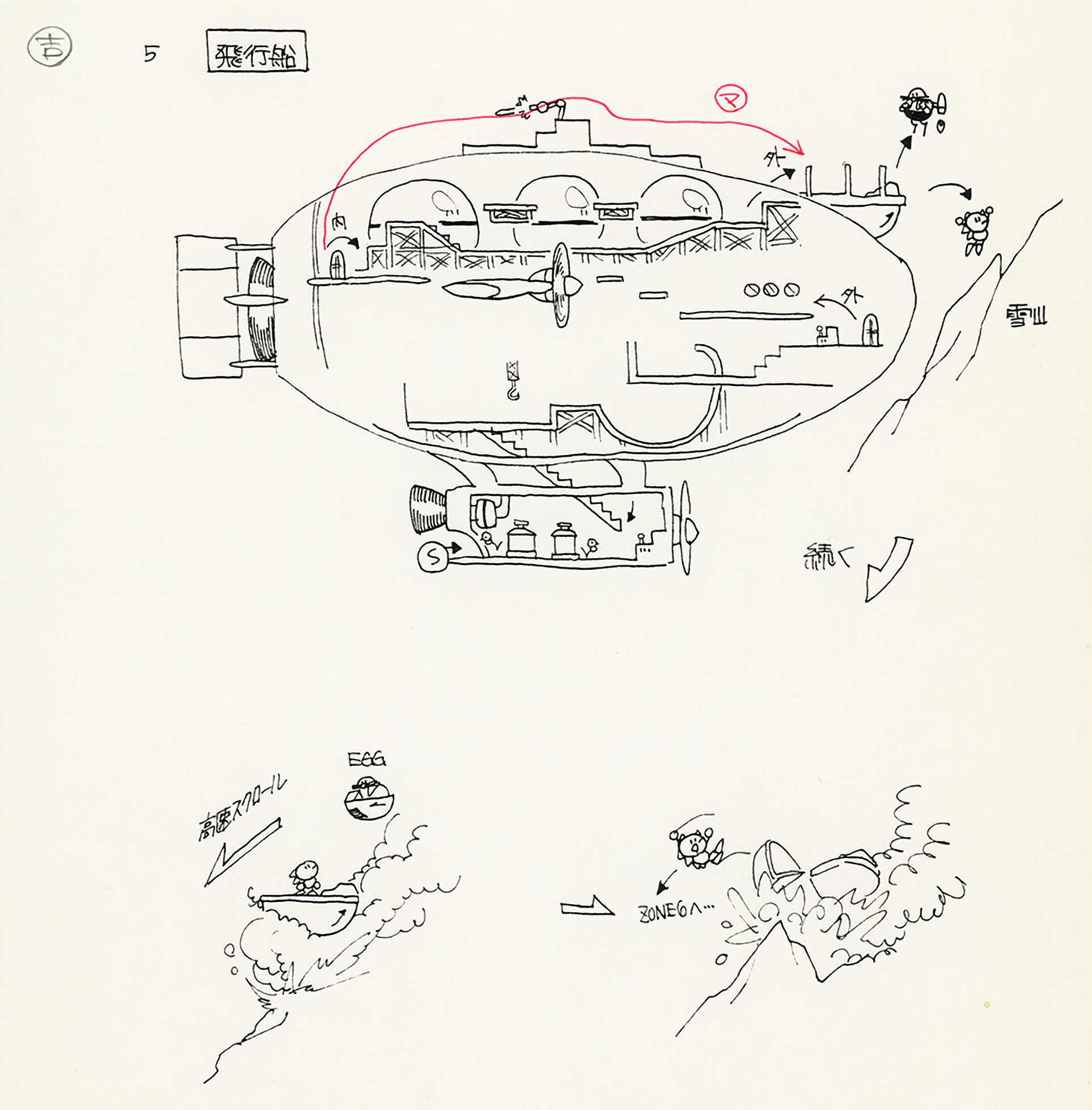
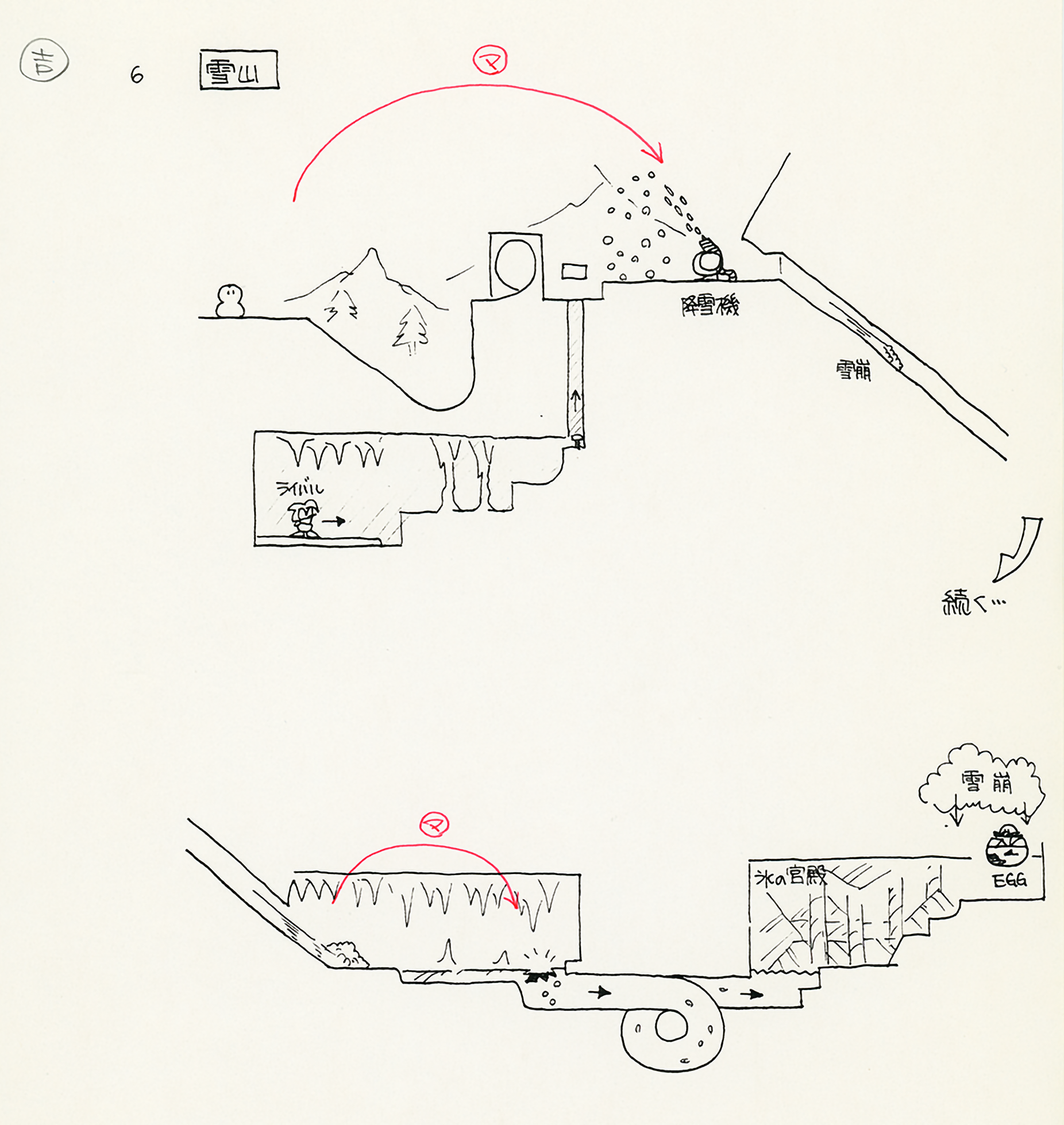
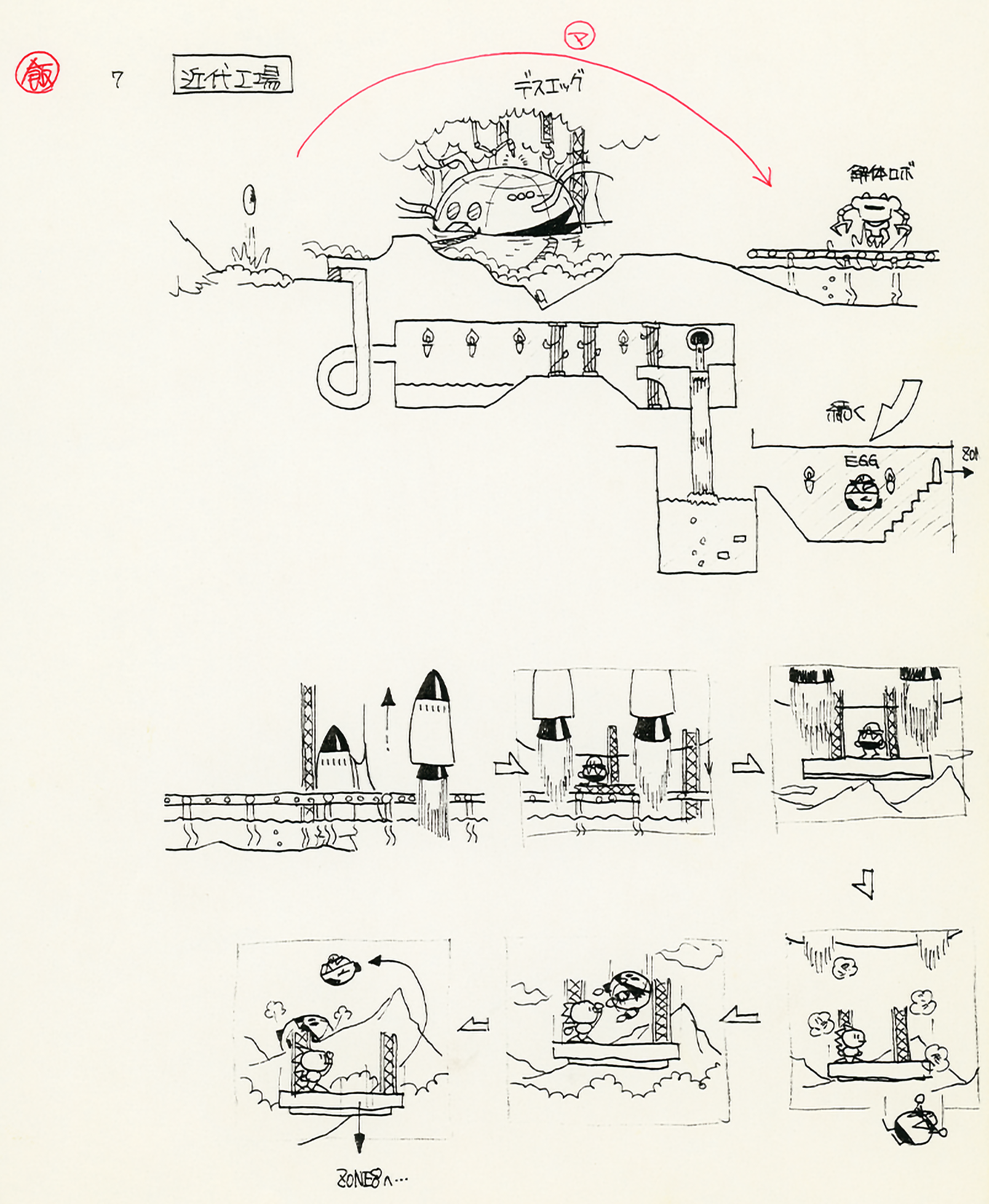
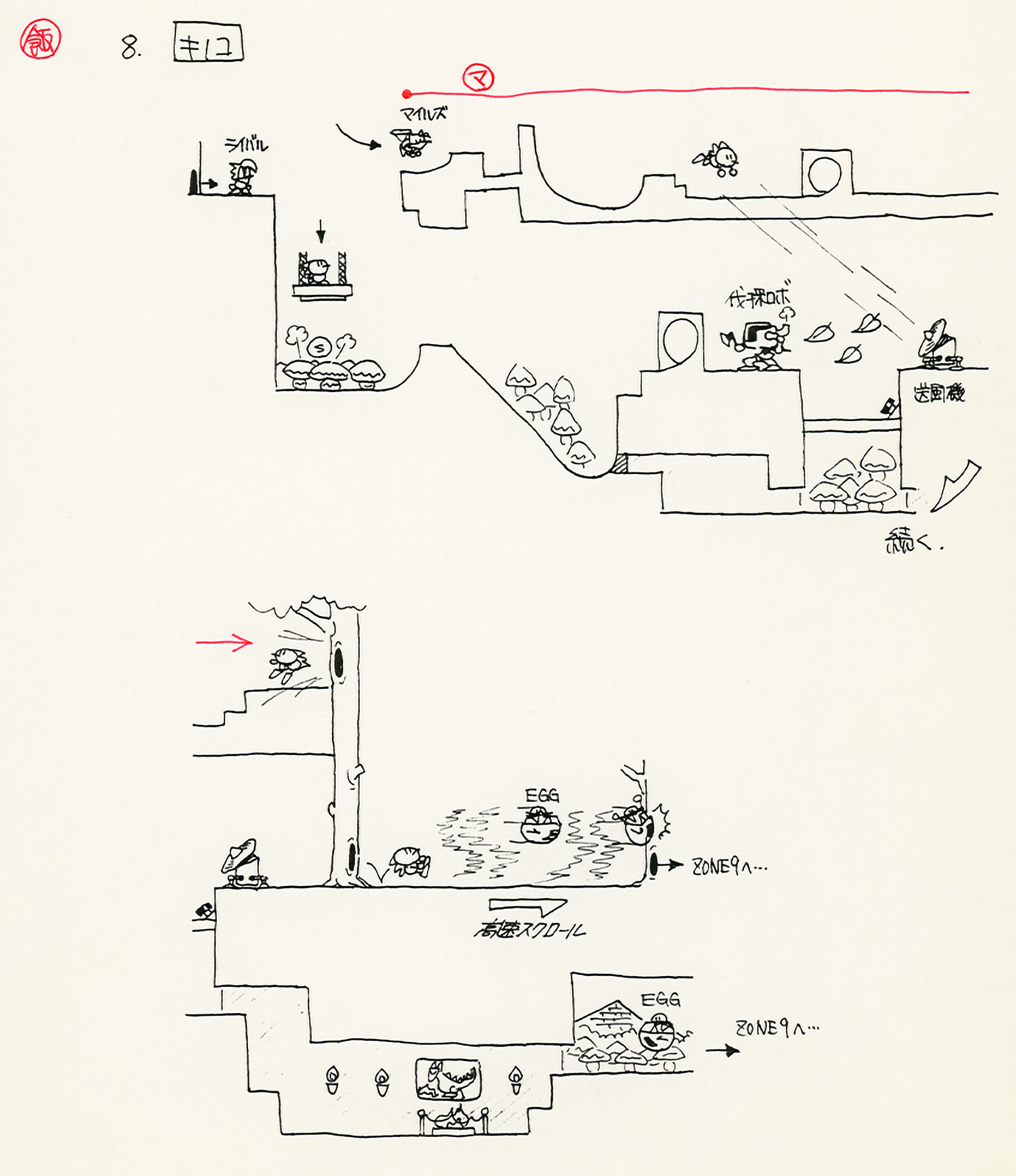
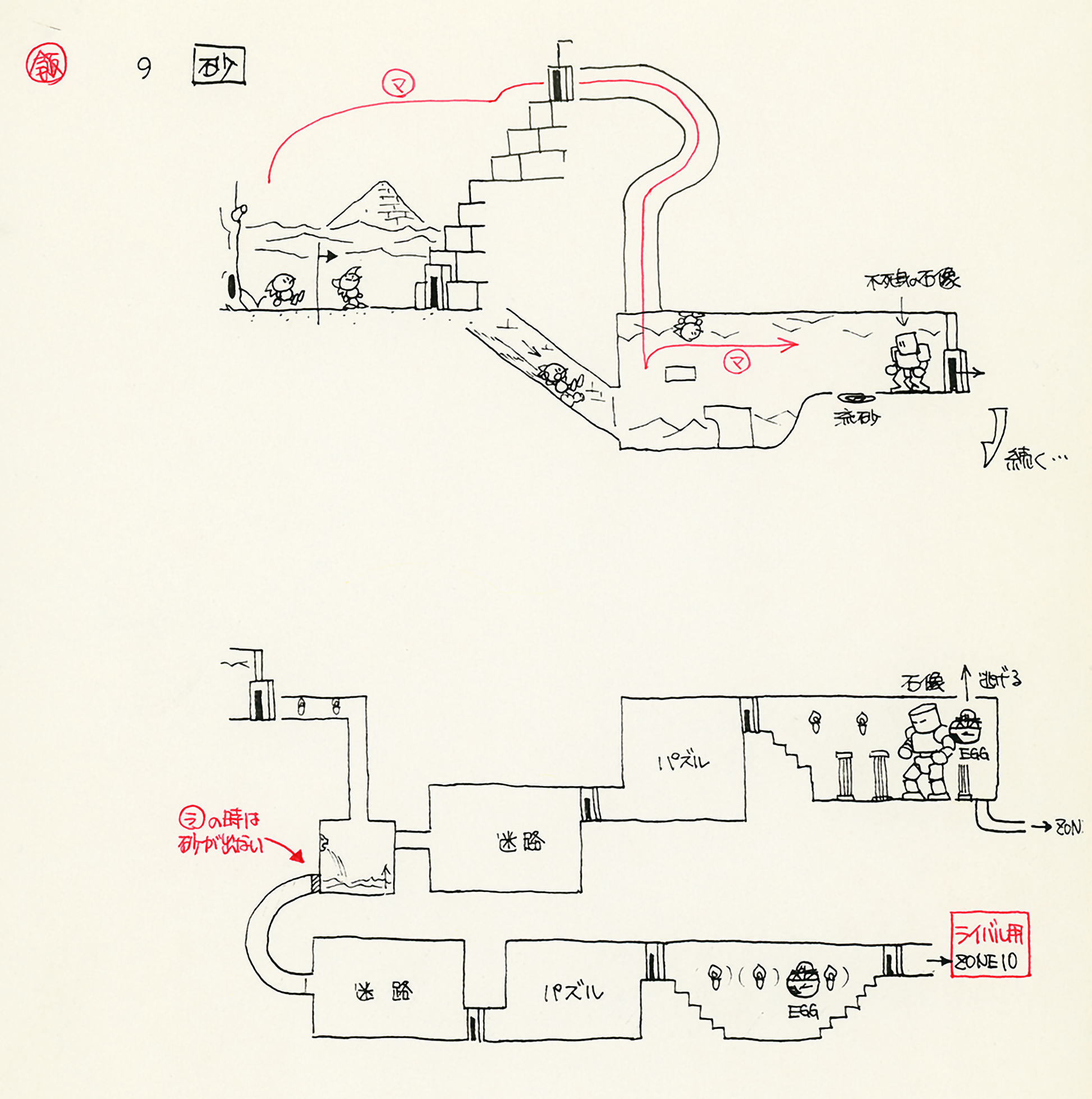
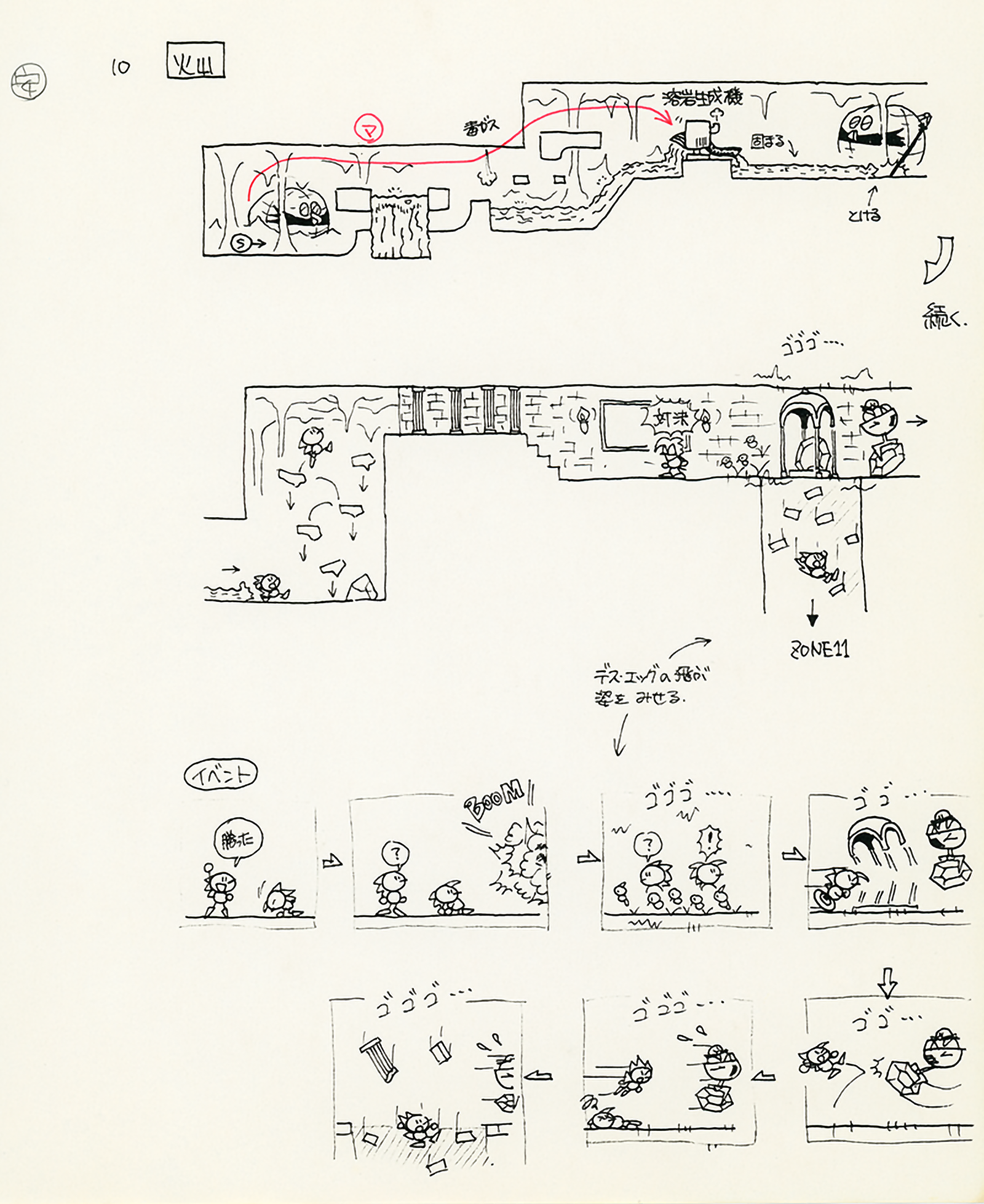
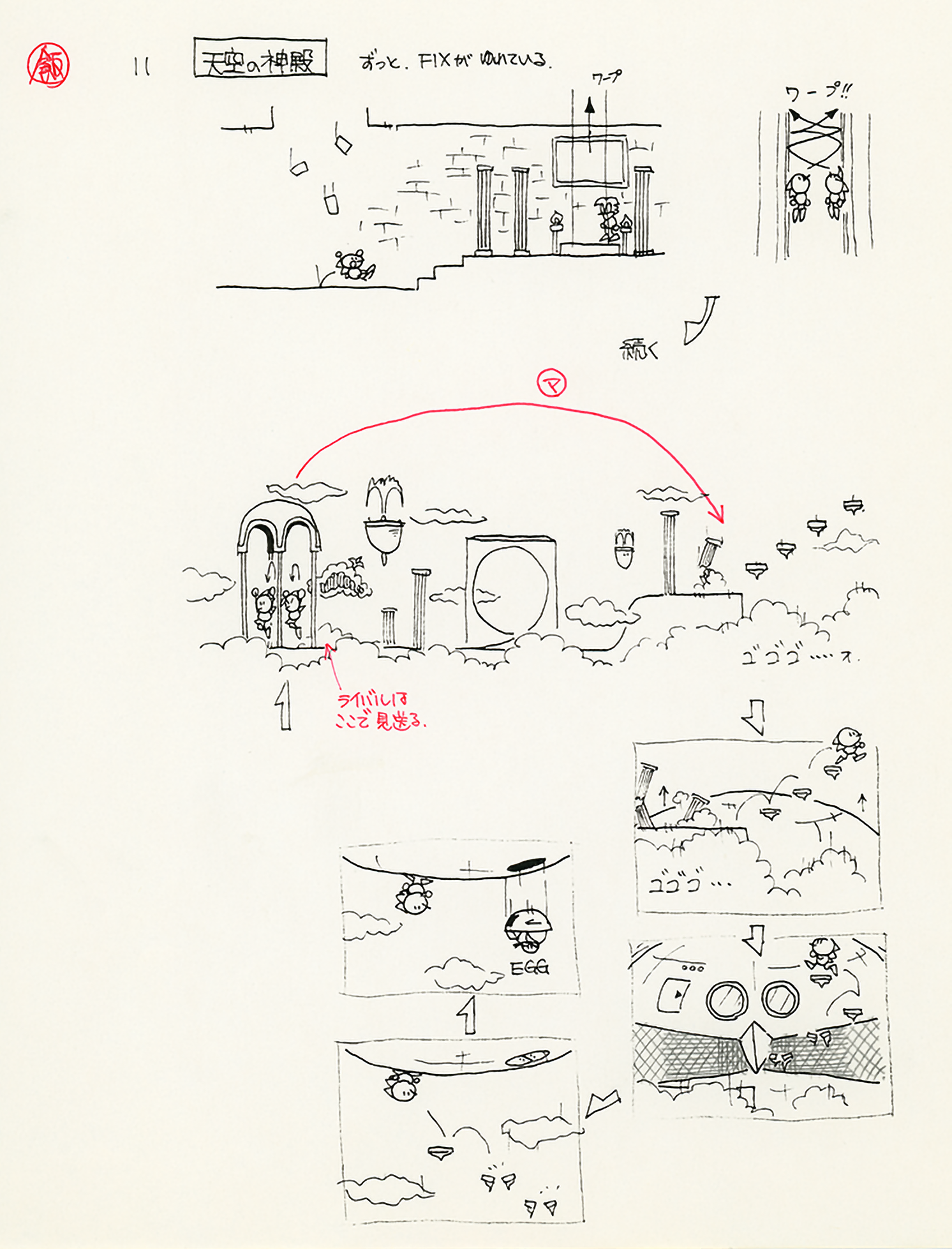
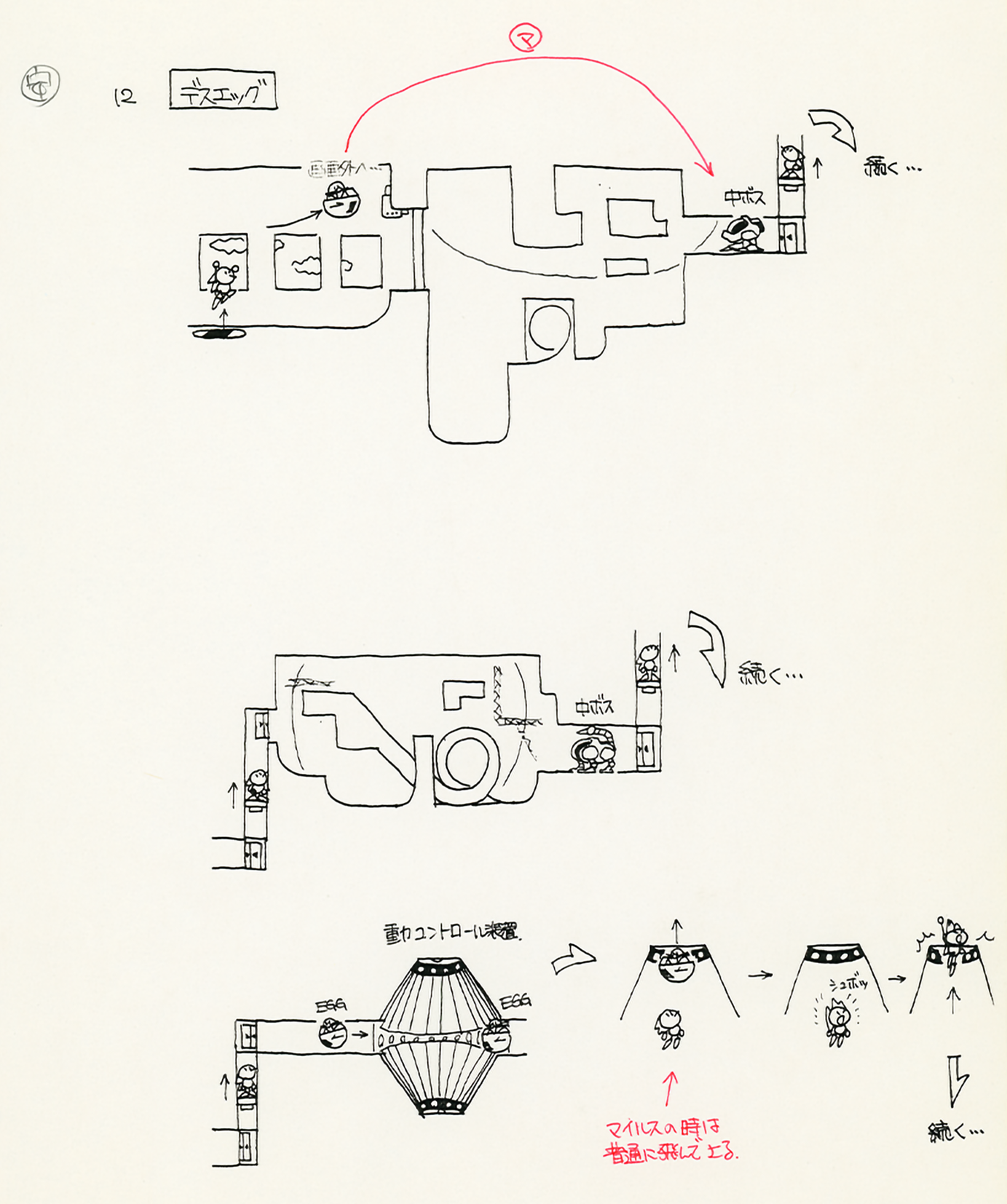
Very early pieces exhibiting basic progression layout ideas for all the levels. Proper Zone names had not been conceived at this early stage, so each Zone merely has a basic description - these have been matched with the final Zone names in the text below for added clarity as to which Zone each sketch relates to. This document uses Knuckles' earliest known design from when he was still an unnamed hedgehog (referred to as simply "Rival") and features all 2D levels.
It seems a lot of elements seen in the final game were already planned at this point, such as having two bosses per Zone and Knuckles' playthrough featuring unique pathways through many stages and taking place at a different point in time to Sonic's. Some of the bosses have basic sketches showing a rough idea of the form they were intended to take; others don't seem to have been fully conceptualised yet, and just show a generic Eggman riding in his Egg Mobile as a placeholder for the encounter.
"Woods" (Angel Island Zone) and "Sewer" (Hydrocity Zone) Interestingly, Angel Island is described as a wooded area rather than the tropical jungle seen in the finished game. The Rival's transition between Angel Island and Hydrocity was different, using an ancient ruined doorway to pass between the Zones; this idea is used in a few Zones at this point in development, but was scrapped in the final game. The level transition from Hydrocity to Marble Garden originally happened from the side instead of the top."Ruin" (Marble Garden Zone) and "Neon" (Carnival Night Zone) Marble Garden originally started with a waterfall, while Carnival Night seems to have originally been more of a theme park than a carnival, including elements such as a Rollercoaster and a Ferris Wheel. Interestingly, the Rival's path ends with a note stating he'd dig into the ground to transition to "Zone 5 for Rival", suggesting that he would originally have a unique Zone 5 rather than traversing Flying Battery. The sketches of the early cat and mole character designs seen above have a note at the top saying "Zone for exclusive use of Rival" with a 5 in the margin, along with a very basic starting point sketched in the style of these level sketches. These would suggest the sheet was originally intended to be used to draft out the Rival's unique Zone 5, before being used to further develop the character's design instead."Airship" (Flying Battery Zone) Originally intended to be after Carnival Night in the level order. At this stage of development, the ship was intended to take the shape of a more traditional blimp. Consistent with the notes on the previous sheet, there is no alternate path planned for the Rival as he was not intended to traverse this stage, which may explain why the stage lacks any Knuckles-exclusive pathways even in the final game. At the end of the stage, a piece of the blimp breaks off and starts sliding on a mountain, where an auto-scrolling boss battle would take place. After the boss battle, the platform is wrecked by a bump on the mountain, and the player is led directly into the next Zone. We can also see Eggman using a jetpack."Snow Mountain" (Icecap Zone) Originally started with a platforming section outside, eventually leading deep underground. It seems the Rival would've started in a small underground cave filled with icicles."Modern Factory" (Launch Base Zone) The Rival's path takes them through ancient underground ruins which Eggman's base has been built over. The boss in Sonic's path, labelled "Demolition Robo" (解体ロボ) bears some resemblance to the Giant Eggman Robo used in Death Egg Act 2. Interestingly, the ending to Sonic's path shows an animation of Eggman flying away to the falling Death Egg, for which an unused animation can be found in the final game."Mushroom" (Mushroom Hill Zone) The Rival would've gone through a hole from the ruins in Launch Base, while Sonic would've arrived from the falling Death Egg platform. The most interesting element here is the Dragon mural in the Rival's path, which matches up with the story presented in the final game's Japanese manual, where Knuckles confuses the Death Egg for the egg of the legendary dragon depicted in murals on the altar. At this point in development, the Zone was intended to transition directly to Sandopolis: Sonic's route would see him entering a hole in a tree in Mushroom Hill and falling down to exit the trunk via another hole into Sandopolis, and the Rival's route would see them exit the pyramid into a boss area where the mushroom forest has grown up around the surrounding pyramids."Sand" (Sandopolis Zone) Originally intended to follow directly from Mushroom Hill. This early layout suggests that the stage would've primarily taken place inside the Pyramid, as all the level layout here (including what might be the mini-boss) is depicted inside it rather than just Act 2 as in the finished game. The path was intended to split in a chamber which fills with sand in Sonic's playthrough, forcing him onto an upper route; an annotation states that for the Rival's playthrough, "at that time there is no sand", forcing him to take the lower route instead. The lower route seems to have been planned to feature a different boss fight, as rather than the Golem from the top route the bottom route features a generic Eggman placeholder. Once again, the Rival's path ends with the note "Zone 10 for Rival", again suggesting another Rival-exclusive Zone might have been considered. Although this is consistent with the next sketch featuring no Rival-exclusive path, unlike Zone 5 there's currently no evidence that corresponding sketch for the Rival's unique Zone 10 exists. It's possible Zone 10 would have been the Rival's final stage, as no stage from this point on features paths for the Rival, consistent with Knuckles' playthrough being shorter in the final game."Volcano" (Lava Reef Zone and Hidden Palace Zone) Presented as a single Zone at this point in development, with the Emerald altar and subsequent cutscenes all contained within the main stage rather than a short separate Zone as in the final game. Consistent with the previous sketch, no exclusive path for the Rival is present, suggesting they weren't intended to traverse this stage. There's a platforming section on falling rocks. The fight with the Rival is already here, including the rough draft of the cutscene. In it, Eggman uses the Master Emerald as a weapon to knock down the Rival, leading to the floor to collapse once Sonic tries to intercept. Sonic falls into the pit and appears to transition to the next stage, unlike the final game; while similar events play out in Hidden Palace, the events after the floor collapses still take place within the same stage. Animals are also present in the area. The altar and Master Emerald use earlier designs, the latter shaped more akin to the Chaos Emeralds from the previous two games."Temple of the Sky" (Sky Sanctuary Zone) The opening of the stage takes place underground, with Sonic falling in from above per the transition depicted in the previous sketch. Sonic quickly encounters the Rival, and the two take the portal to the above-ground portion of the stage at the same time. These events are similar to the latter portion of Hidden Palace's ending cutscene in the finished game, though in that case the characters teleport separately and the teleporter itself is used as the transition to Sky Sanctuary. The stage's ending cutscene features Sonic jumping on crumbling debris to reach the Death Egg, with him ending up drawn into its gravity and standing on the bottom of it, leading to a boss upside-down on the underside of the ship's hull. Mecha Sonic isn't shown here, possibly meaning that his appearance wasn't planned at this point."Death Egg" (Death Egg Zone) The only Zone to use its finalized nomenclature at this point, though this isn't surprising since the setting was already established in the previous game. The Zone takes place mostly inside the Death Egg, with windows showing the outside world. The ending features a cutscene showing Sonic transforming into Super Sonic and chasing after Eggman, which would've led into The Doomsday Zone. This sequence has no equivalent in the finished game, with Death Egg having no proper transition to The Doomsday. Whether plans for The Doomsday were any different at this stage of development cannot be ascertained, as the available sketches end here - the annotation at the end of the scene simply says "To Be Continued..."
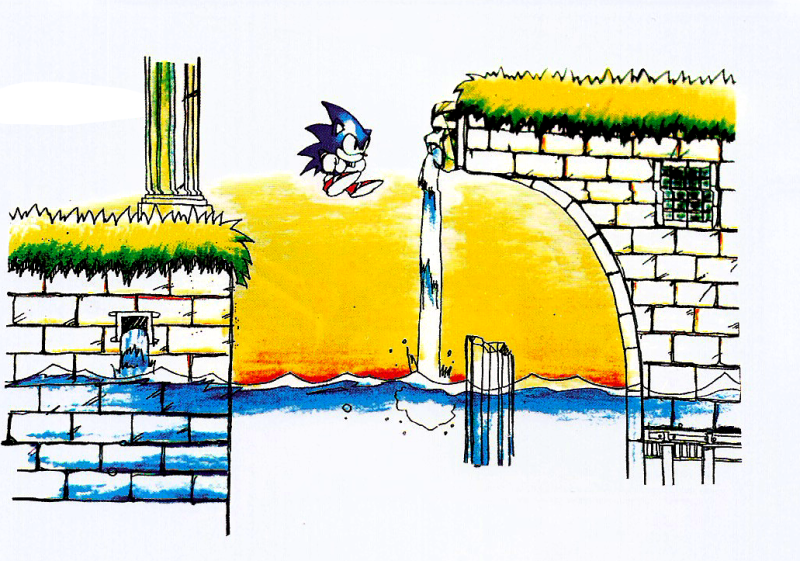
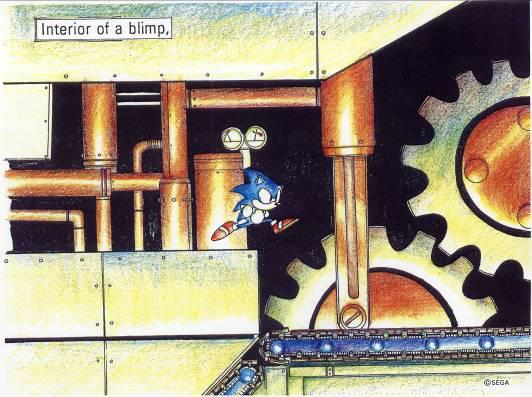
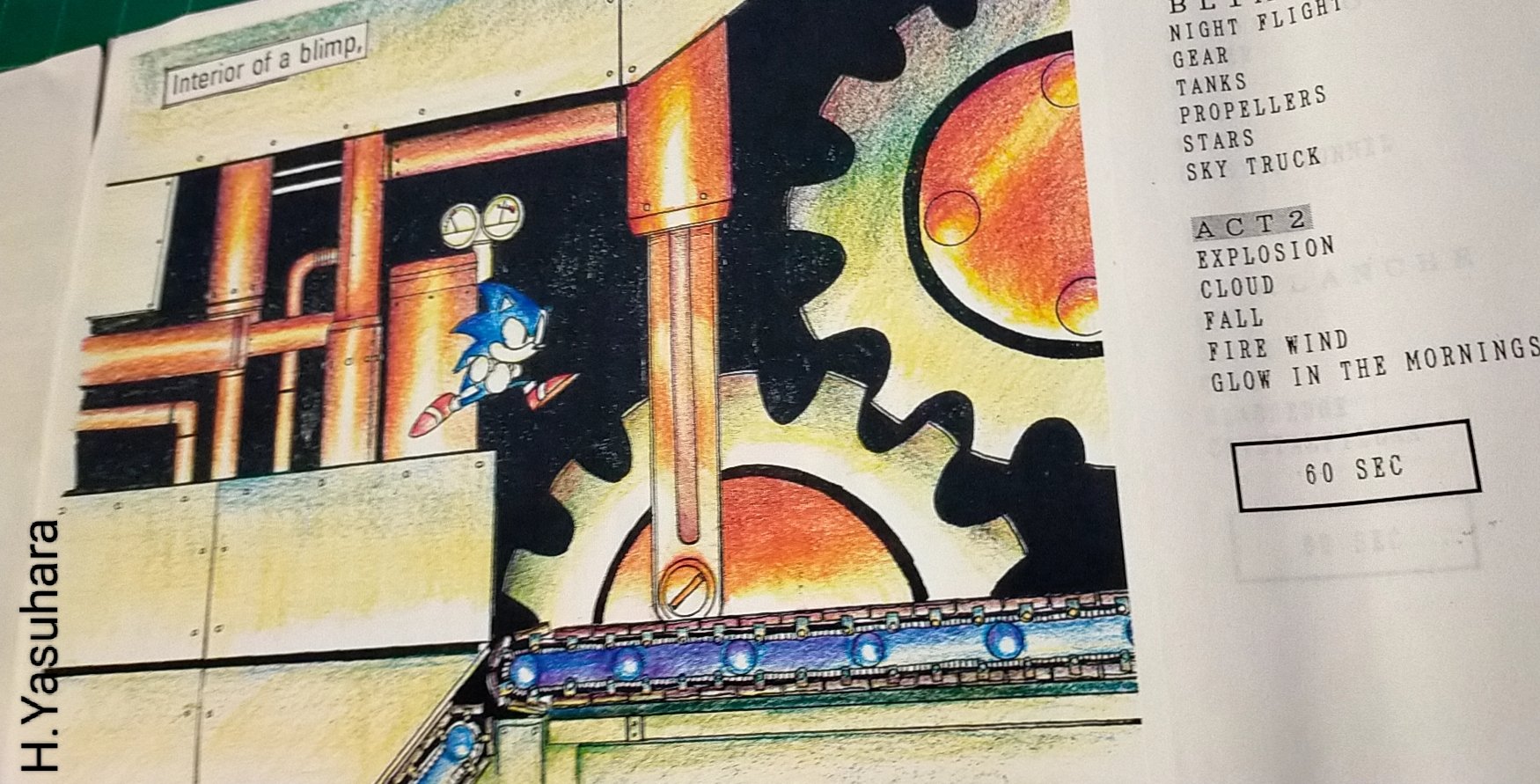
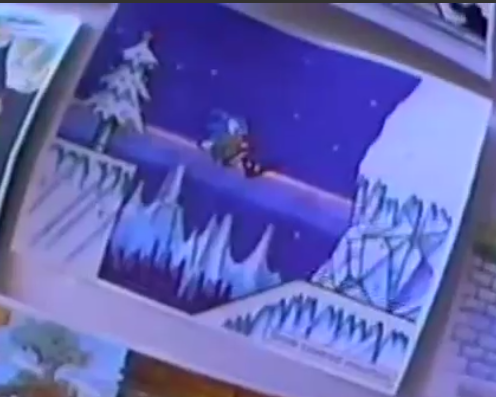
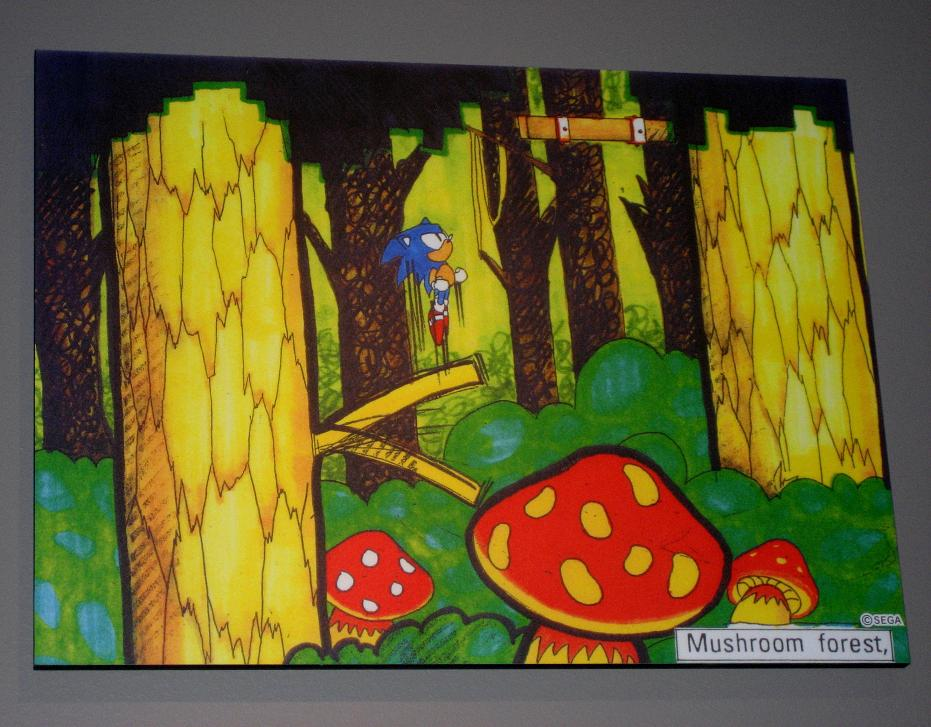
Pieces that were made to help give a level its look and feel. While there are some new pieces, a lot of it is actually modified pieces of Sonic 2 concept art; any such cases will be noted below. Most of the images are screengrabs from a brief glimpse of a wall full of concept art in the MTV special Rock the Rock, and as such the quality of the images varies greatly. Based on the number of artworks shown, each stage received one colored concept art.
A piece for a tropical stage featuring a waterfall. Although very blurry, a direct comparison shows this concept art is modified from a piece of Sonic 2 concept art for "Tropical Sun". This version was possibly intended to depict Angel Island Zone, which shares many of the elements seen here.A piece showing a pipe expelling water. Possibly meant to depict Hydrocity Zone, which is described simply as "Sewer" on its early layout sketch.A piece for a stage that has a rustic feel, with a lot of water. This appears to be for Marble Garden Zone, as the Zone's early layout sketch depicts a waterfall leading to a small pond at the beginning. The concept art is modified from a piece of Sonic 2 concept art for "Emerald Isle". The lower half of the original depicted a second route underneath the water; this has been blanked out in the modified version, suggesting the stage this was for had no underwater routes planned, again consistent with Marble Garden's early layout sketch.A piece depicting supports, rails, and minecarts, implying this piece was a modified version of a previously-unseen Mystic Cave Zone concept art. Potentially meant for Carnival Night, as the early layout sketch for the stage shows a giant Rollercoaster-esque platform at the beginning.A piece titled "Interior of a blimp", a description which matches the design of Flying Battery seen in the early layout sketch for that stage. The concept art is modified from a piece of Sonic 2 concept art for "Metropolis".An alternate image of the previous concept art. Interestingly this image shows design notes for both acts prior to the split, as well as what time each act took place at. Act 2 is also described to have some of fire happen during that act. Text for Icecap can be barely seen under the page.A piece depicting an ice-themed stage. The text is barely visible and reads "Snow Covered Mountain", a near-exact match for the description on the early layout sketch for Icecap Zone. The scene depicted also matches up with the layout sketch somewhat, showing Sonic about to enter the caves.Another piece of concept art, though the available source is too blurry to make out any details clearly. Seeing as all other stages are here and accounted for minus Hidden Palace (Originally Sky Sanctuary Act 1), it could be possible that this is Launch Base Zone.A piece titled "Mushroom Forest", which would become Mushroom Hill. The concept art is modified from a piece of Sonic 2 concept art for "Secret Jungle". Unlike many of the reused Sonic 2 concepts which were simply recolored, this one has also been partially redrawn, increasing the amount of foliage in the lower half to obscure a platform and a hole in the right-hand tree from the original version of the artwork, and also adding the stage's signature giant mushrooms.A piece with a similar color to Sandopolis. Possibly intended to depict the pyramid's interior, which is the setting for the vast majority of the stage in the early layout sketch. The concept art is modified from a piece of Sonic 2 concept art for "Madness Mountain".A piece featuring a cave like environment with several stalactites, possibly intended to depict Lava Reef Zone.A piece that shows a stage with floating platforms in the sky linked by small bridges, which matches well with the early layout sketch of Sky Sanctuary.A piece depicting an outer-space stage. Although difficult to make out, a direct comparison shows this concept art is modified from a piece of Sonic 2 concept art for "Death Egg", suggesting it was likely reused for the Sonic 3 stage of the same name.A piece showing Super Sonic fighting a Dragon in space, most likely an early concept for The Doomsday Zone, though no early layout sketch exists for comparison in this instance. The Dragon shown here is possibly the same one seen in the mural depicted in Mushroom Hill's early layout sketch, which is also mentioned in the Japanese manual for the finished game.
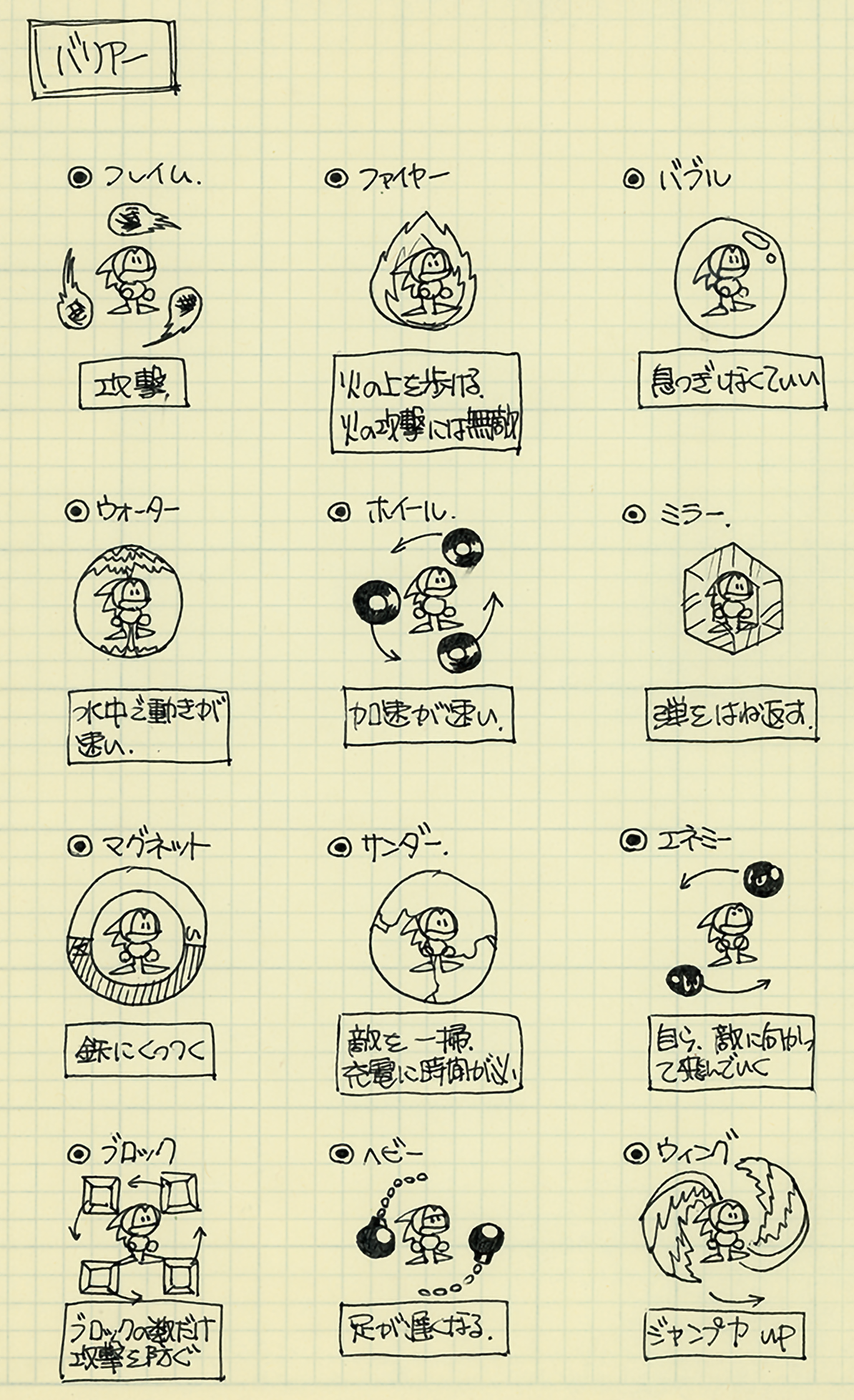
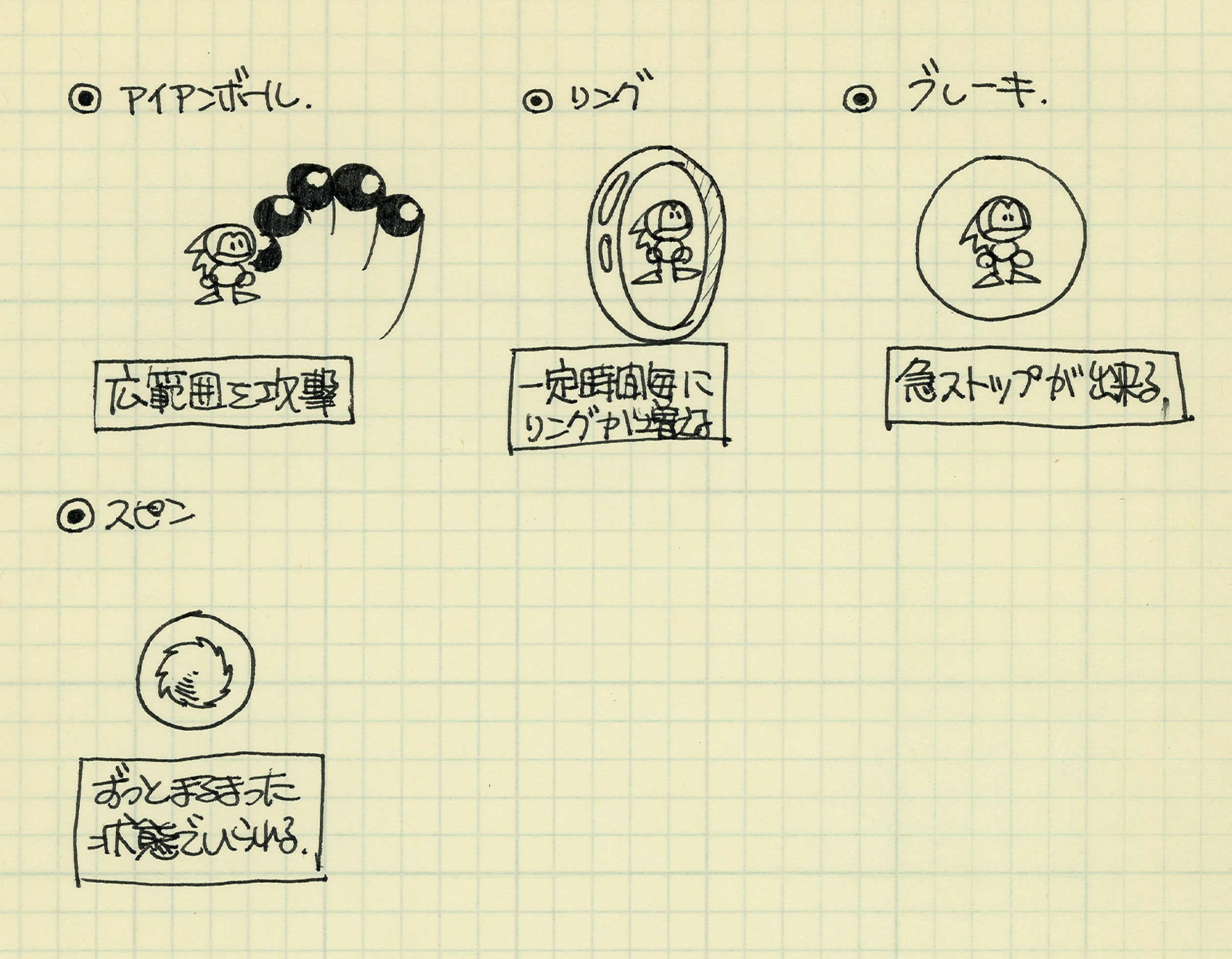
Sheets showcasing 16 potential shields for the game. Many of these were merged into each of the three shields in the game.
Flame - Attacks
Implemented into the Fire shield.
Fire - No attacks. Can walk on fire
Implemented into the Fire shield.
Bubble - Don't hold your breathe
Implemented into the Water shield.
Water - Better underwater movement.
Wheel - Fast acceleration
Implemented as a non-shield powerup, Super Sonic, and Hyper Sonic.
Mirror - Repel bullets
Implemented into all shields.
Magnet - Sticks to iron
Implemented into the Lightning shield. Notably, sound ID $40 in the game seems to be a sound effect for this shield, meaning this might've been in the game at some point since it follows between $3F (Bubble Shield) and $41 (Lightning Shield).
Thunder - Wipes out enemies. It takes time to charge
 This article has a talk page!







 Sheets showcasing 16 potential shields for the game. Many of these were merged into each of the three shields in the game.