 This article has a talk page!
This page details pre-release information and/or media for Sonic the Hedgehog 3.
Unlike its direct predecessor, Sega opted not to release any significant preview material of Sonic 3 as it was being developed, likely due to the frantic nature of its production and the many predicaments unfolding behind closed doors. This made people question whether builds were given out to magazines, though the November 3rd prototype confirms at least one build was sent out.
Rather, Sega instead sent out VHS tapes that the magazines would write up about; one was used in several magazines and an EPCOT Innoventions commercial, while another was seemingly used internally to report bugs, both coming from late in development.
Development Timeline#
Late 1992 - Early 1993
- The Sega Technical Institute division that developed Sonic 2 is split into two teams: one team comprising of the American developers and the other team comprising of the Japanese developers. The team comprising of Japanese developers developed Sonic 3.
1993
- January - Development begins with the working title "Sonic 3D". The game is intended to use the Sega Virtua Processor (SVP) chip to allow for 3D polygonal graphics. The game is given a deadline of February 1994, to coincide with a McDonald's Happy Meal promotion.
- March - Various Japan-based developers are moved to America, joining development at Sega Technical Institute.
- June - It becomes clear that the SVP chip will not be finished in time for February 1994, so development comes to a halt. Since the game must be released by February 1994 no matter what, the decision is made to restart Sonic 3 as a more conventional side-scroller built off of the Sonic 2 engine.
- September/October - The developers realize that the game's scope and size are far too large to make it possible to complete before the deadline. Not wanting to compromise their ambitious vision, the decision is made to split the game into two parts: Sonic 3 Part 1 and Sonic 3 Part 2.
- November 3 - The Sonic 3 prototype is dated to this day. Though the header indicates that its data is actually from the previous month, suggesting November 3rd to be the date the game data burned onto the EEPROM cartridge, rather than when it was actually last worked on.
- November 20 - The first part is completed as Sonic the Hedgehog 3.
- December 10 - The first issue of the UK Sega Magazine (cover-dated January 1994), containing the most extensive preview coverage of Sonic 3 prior to its release, is published. The screenshots published in the issue are later discovered to have originated from the aforementioned November 3 prototype.
1994
- February 2 - Sonic 3 is released in North America. Development on the second half, to become Sonic & Knuckles, continues, as well as Limited Edition for release in Japan as a singular game.
- May 27 - Due to the importation and selling of foreign copies, Sonic 3 is released in Japan as-is.
- Late-May/June - Sonic 3: Limited Edition is scrapped.
(Source: Hidden Palace, Sega Magazine)
Sub-Pages#
General


Post Final
Production Cycle#
Sonic 3D#
Sonic 3 was originally developed under the working title "Sonic 3D", and was planned to be a drastically different game compared to its predecessors. Unlike the side-scrolling Sonic 1 and Sonic 2, Sonic 3D was to be an isometric game using pre-rendered 3D graphics, while the Special Stages featured a polygonal Sonic in a figure eight-shaped stage. This was to be accomplished using Sega/Samsung's SSP1601 chip, the Sega Virtua Processor (SVP).
Development on this initial version of the game lasted until June 1993, when the developers were informed that the SVP wouldn't be available in time, which would result in a long delay. Even then, a delay was not possible because Sega had signed a promotional deal with McDonald's that mandated that Sonic 3 be out in February 1994. Due to this, the developers scrapped all their work and decided to build Sonic 3 off Sonic 2. In the end, the SVP would only be used for Virtua Racing, which it was initially developed for.
Not all the work on Sonic 3D went to waste: the character renders were re-used for the title screens of Sonic 3 and Sonic & Knuckles, plus the "No Way!" screen; the in-game sprites of Sonic, Tails, and Knuckles were also designed to resemble these renders. The isometric concept also ended up getting used in Sonic 3D Blast in 1996.
Final Version#
Due to the success of the previous two games, Yuji Naka was given more creative freedom and wanted Sonic to go through a large game, essentially doing what they wanted to do with Sonic 2. Early on, the developers had already planned all the stages for the final game, spanning 14 zones, however Sega had a cross-promotion with McDonald's that required the game out by February 1994. Many of the stage concept art was reused from Sonic 2's development, with Metropolis Zone's hilariously being changed to "interior of a blimp" (most likely referencing Flying Battery).

Due to the short development time left, the developers decided to essentially split the game in two; the first seven zones would be polished and released as Sonic 3, so that the final seven zones could be worked on and released as a second part. Flying Battery Zone was planned to be the fifth Zone, following Carnival Night and preceding IceCap, however it was later moved to Sonic & Knuckles due to time constraints. During this, Sonic Spinball was created so that a new Sonic game could be released in time for Christmas 1993.
The Michael Jackson Conundrum#
For what is one of the most infamous behind-the-scene stories in the entire Sonic franchise, Sega contracted Michael Jackson to compose the soundtrack for Sonic 3. Masato Nakamura, who composed the first two entries, was highly successful and popular in Japan, and with his name and band becoming more well-known through the then-lucrative Sonic brand internationally, his asking price for Sonic 3 became significantly higher as a result. As such, Sega chose not to renew him for Sonic 3's soundtrack. It was then that Michael Jackson, who was at the height of his fame and was a Sonic fan, approached Sega and was contracted to write tracks for the game, with allegedly the entire game's soundtrack having been composed by Jackson and his production team.
However, Jackson left before the game was completed and is not credited in the final game. The extent of his contributions - or whether his contributions remained in the game at all - remained a source of debate. Historically, over the years, the people involved or connected to the production of Sonic 3 would typically shy away from providing any details on the collaboration. Whenever they did, they would provide conflicting reasons for his exit. Sega Technical Institute head Roger Hector, who first revealed Jackson's involvement in 2005, has stated that Sega "fired" Jackson following the initial, sensationalized child sexual abuse accusations, which arose during the game's production. Sonic's character designer Naoto Ohshima, who was not actually involved in the game's development, alluded to this in 2018, upon recollecting the beat-box demo tape received by Jackson's team that was sent to Sega of Japan to be digitized for the Genesis' YM2612 sound-chip 1. Additionally, a number of Sega staff, including then-Sega of America president Tom Kalinske, have said that no contracts or agreements were ever signed. These individuals assert that Jackson and his work was dropped due the scandals.
"Ohshima: Michael Jackson was kind enough to make some music for the game. He sent us a demo tape, and we all gathered around to listen to it. And it was music, but… Michael Jackson had made all of it with his mouth.
It was like that, but layer after layer of it, complete with oohs and aahs, a drum track, simulated trumpets - all simply hummed by Michael Jackson. And of course his trademark "Wow!" A multitrack recording in which every track was hummed by Michael Jackson - we could not believe it. Ultimately, due to various incidents which took place, we were not able to use the Michael Jackson songs. But Sega probably still possesses that phantom Michael Jackson tape! " John Szczepaniak: Was there a working prototype with his voiced music?"
Ohshima: I don't know. But even if there was, I'd think it would pale in comparison to the value of a never-released tape of Michael Jackson doing a cappella recordings."- Naoto Ohshima discusses Michael Jackson on Sonic 3 2
In contrast, Brad Buxer (one of Sonic 3 's composers) stated that Jackson left because he was unsatisfied with how his music sounded on the Genesis. Jackson's Japanese correspondent at that time, Mayumi Nina Sakazaki, credited in-game under Special Thanks, substantiated this with her recollection of Sega persuading Jackson to prevail with his work, under the understanding that it would be the best of what could be achieved on the hardware 3. In addition to affirming Jackson's displeasure with the sound quality and his resulting departure, composers Doug Grigsby, Cirocco Jones, and Buxer have proclaimed repeatedly that Jackson's contributions remained. This, once again, was corroborated by an anonymous source who spoke to GameTrailers in 2013 - and was cited as being directly involved in the development of Sonic 3 - stating that Jackson himself had chosen to exit the game's production prematurely and go uncredited; this developer specified Carnival Night Zone, by name, as having music that Jackson contributed, which contains identical notes to "Jam", as well as a sample that was later confirmed to have originated from "Jam". Buxer also claimed that the credits theme for the game is what later became the basis for Jackson's 1995 single, "Stranger in Moscow". All these sources confirm that Jackson's exit from Sonic 3 's production was voluntary.
"Oh, it did get in the game... The stuff we handed in, the stuff we did, made it. To. The game."- Doug Grigsby 4
With the multiple sources asserting his involvement, as well the abundant empirical evidence and facts supporting them, some skepticism pertaining to the degree of Michael Jackson's involvement remain. The current main puzzle being which composers did what tracks. Ten tracks are commonly believed to be composed by Michael Jackson and/or an associate, primarily due to their extensive reliance on sampling and sharing elements from Jackson songs. They are:
- Carnival Night Zone: The level themes use samples from Jackson's eighth album Dangerous: a heavily compressed vocal sample of Heavy D saying "jam" from "Jam", glass breaks from "In the Closet", and Jackson's beatboxing from "Why You Wanna Trip on Me". Additionally, it includes a musical cue (a horn-based "downwards fall") from "Jam".
- IceCap Zone: This level's themes were derived from "Hard Times", a track recorded by Buxer's band the Jetzons in 1982 but not released until 2008. Act 1 additionally features a vocal sample of James Brown from the 1968 single "Say It Loud - I'm Black and I'm Proud".
- Launch Base Zone: This level's themes sample the "go" chants from Run-DMC's "Peter Piper", the opening track of their 1986 album Raising Hell. Act 1's bassline additionally mimics that of the 1983 song "Wild Ambitions (Instrumental)" by Japanese synth-pop band Yellow Magic Orchestra, who have their own storied history with Jackson.
- Credits: Buxer confirmed in a 2009 interview that he composed this track, and that it served as the basis for Jackson's 1997 single "Stranger in Moscow". It includes samples of Jackson beatboxing that would later appear in Space Channel 5, in which Jackson is a character.
- Knuckles Appears: This track shares a four-bar drum beat with Jackson's single "Blood on the Dance Floor" from 1997. Although present, the four-bar beat was not added until the final version, as it's missing from the original demo from 1991. It also includes the aforementioned James Brown sample.
- Act 1 Boss: This track incorporates the drum beat from Knuckles Appears as well as the James Brown sample. It also samples Shinehead saying "Woo!" from "Rainbow", the third track of his 1992 album Sidewalk University, and the "Come On!" from Rob Base & DJ E-Z Rock's 1988 single "It Takes Two".
- 2P vs. Menu - 2 Player Select: Associated with Jackson's tracks because it has never appeared outside Sonic 3 and was replaced in subsequent rereleases.
It's worth noting that the tracks for the Act 1 Boss theme and Knuckles's theme use different compositions in Sonic & Knuckles, which extends to Sonic 3 & Knuckles. The 1997 PC version of Sonic 3 included in Sonic & Knuckles Collection ended up using different songs in place of all of these themes (with the Act 1 Boss music using the Sonic & Knuckles version). It was originally believed that either licensing issues or limitations of the MIDI format (which couldn't reproduce the samples used in those tracks) forced Sega to hastily compose new tracks; however, Hidden Palace's 2019 release of a prototype debunked those theories, instead revealing that the aforementioned "replacement" tracks were most likely the originally intended compositions the entire time. Since that prototype is dated around October/November, this means that Jackson's music was likely implemented at the last minute. The next remaining puzzle being, why did these ten tracks by Jackson and his team make it to the final game in the first place?
Post-1103 Prototype Level Changes#

|
To do: |
Angel Island Zone#
November 3rd, 1993 Prototype |
Post-Sales Promotion Build |
Pre-Final Tape Build |
|---|---|---|
 |
 |
 |
Very Late Prototype |
Final |
|---|---|
 |
 |
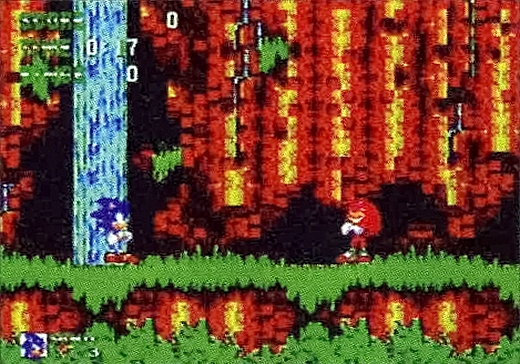
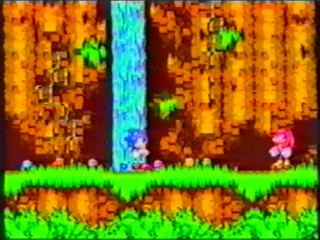
The intro went through three main variations after the November 3rd prototype; In the build just post-dating the Sales Promotion one Sonic's sprites have been finalized, but Knuckles still wears green socks, clashing with the HUD palette (due to both using the same palette), which has also been finalized. The camera is also way further locked to the right than the final game. It's also a little hard to make out, but Sonic's Super palettes remain unaltered from 1103.
The Pre-Final Tape build's intro has Sonic and Knuckles' final palettes, lack of HUD and the camera is more centered on Sonic but swapped the purple and blue Chaos Emeralds so they could be better seen in front of the waterfall. The left boundary for this stage is also nearly final but is at X position $1300 in this build.
The last build's intro is exactly the same as the previous one except that the left boundary for the stage is now in its final position at X position $1308.
Early Sprites#
|
|
To do: |
For some bizarre reason, certain sprites of Sonic, Tails and Knuckles in the Game.com version of Sonic Jam are based on sprites from earlier builds of Sonic 3. This went unnoticed until 2020, after the release of the November 3, 1993 prototype. One set of sprites that differ from the final's (Tails' hanging sprites) are the same as they were in Sonic 3C 0408, and the early whistling sprite.
Sonic Jam |
Restored |
Sonic 3 |
|---|---|---|
 |
 |
 |
The second of Knuckles' three skidding frames is drawn like his November 3rd design, which is quite odd given that the other two sprites match the final version.
Sonic Jam |
Restored |
Sonic 3 |
|---|---|---|
 |
 |
 |
An early laughing animation. The Sonic Triple Trouble version of Knuckles' laughing animation appears to be based on this one. It was replaced in the final with a chuckling animation.
Sonic Jam |
Restored |
Sonic 3 |
|---|---|---|
 |
 |
 |
Knuckles' pushing animation is more static, which matches up with Sonic and Tails'. While frames two and four are the same, one and three were redrawn to add more motion. Looks similar to Knuckles' walking animation in Sonic Blast.
Sonic Jam |
Restored |
Sonic 3 Competition Mode |
Sonic 3 |
|---|---|---|---|
 |
 |
 |
 |
Sonic's arms in his "hurt" frame are more straight, and his right foot is slightly more to the right. This lines up with the competition sprites, indicating that this is sourced from an early build of the game.
(Source: Chainspike)
Sonic Jam |
Restored |
Sonic 3 |
|---|---|---|
 |
 |
 |
Tails appears to still feature the hands from the original Sonic 2 sprite, alongside the same shoes as the Sandopolis Zones abseil sprite, and has no garbage pixels near the hand.