 This article has a talk page!
This is a sub-page of WarioWare: D.I.Y..

|
To do:
|
A number of changes were made that replaced distinctly Japanese elements with ones that would be more familiar to international players. Additionally, all instances of "1Up" were replaced with "1-Up" in the international versions.
General Differences#
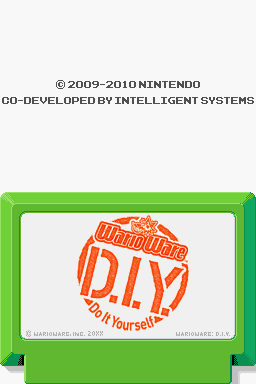
Japan's stamp on the title screen is more straight looking compared to US/Europe slanted look.
Europe spells out "Do It Yourself" in full at the bottom of the stamp, as well as the game title on the Nintendo DS menu. Also, the stamp has a more saturated orange.
Japan |
US |
Europe |
|---|---|---|
 |
 |
 |
In all versions, the player cannot exit Mona's stage when playing it for the first time. However, in the Japanese version, this is achieved by removing the pause button altogether. The US version restores pause functionality but removes the "exit" button from the pause screen.
|
Japan |
US |
|---|---|
|
|
|


The icon for hum mode was changed from a music note with nostrils to a hummingbird.
|
Japan |
US |
|---|---|
|
|
|


The icon for the text stamper changed from a nice stamp image (which resembles a hiragana じ (ji)) to a less impressive "ABC" icon.
Style |
Japan |
US |
|---|---|---|
Factory |
 |
 |
Spooky |
 |
 |
8-Bit |
 |
 |
Three of the maestro's "style" icons changed between versions.
|
|
To do:
|
|
Japan |
US |
|---|---|
|
|
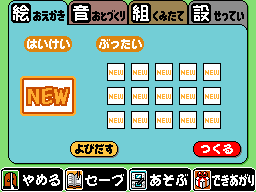
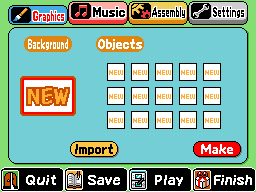
In the Japanese version, the buttons at the top of the Game MakerMatic's main screen have a flatter design, appearing as tabs attached to the main area instead of being shaded, three-dimensional buttons with icons.
|
Japan |
US |
|---|---|

|

|
The buttons also have an animation for being pressed that the tabs do not.
|
Japan |
US |
|---|---|
|

|
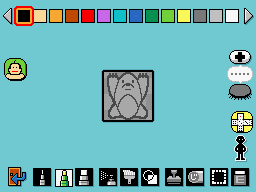
The first Job Center assignment, a Whack-a-Mole style game, gives you a mole template in the Japanese version, and a rabbit template in the international versions. This was most likely changed due to trademark concerns, as Mattel acquired the Whac-a-Mole trademark in 2008 and began aggressively enforcing it shortly after.
|
Japan |
US |
|---|---|
|
|
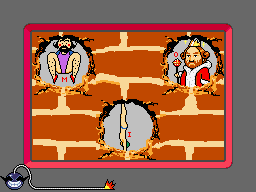
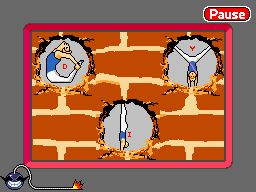
As the game has two different titles, the letters and images revealed in Mona's "Breakdown" microgame differ between versions.
|
Japan |
US |
|---|---|
|
|
|
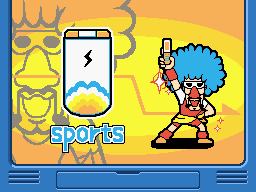
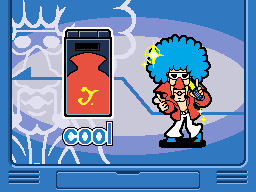
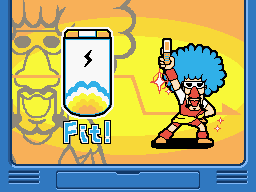
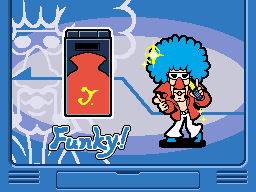
After defeating a boss stage while playing Jimmy T.'s microgames, Jimmy has different words of encouragement between versions.
|
Japan |
US |
|---|---|

|

|
"True Skewer", one of Ashley's microgames, features bouncing steaks instead of the konjac seen in the Japanese version. The gameplay remains exactly the same, however, and even in the Japanese version, the food will occasionally spawn with a face.
|
Japan |
US |
|---|---|
|
|
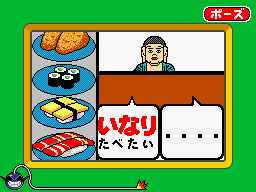
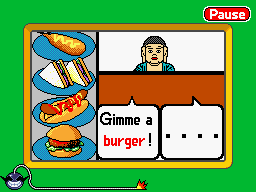
The sushis in "Double Order" were changed in international versions to western-style food.
|
Japan |
US |
|---|---|
|
|
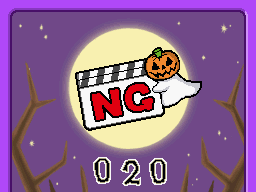
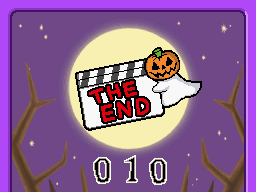
The Japanese version has the abbreviation "NG" on the clapperboard after losing on Ashley's stage. "NG", an abbreviation of "no good", is sometimes used in the Japanese film industry to refer to a mistake while filming a scene for a movie or TV show. The international versions use "The End" instead.
Japan |
US |
UK |
Europe |
|---|---|---|---|
 |
 |
 |
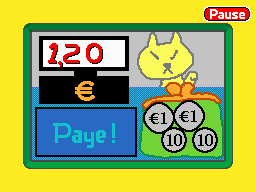 |
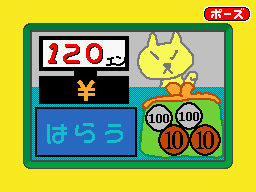
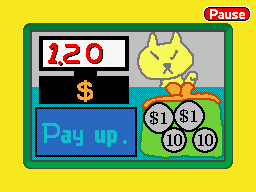
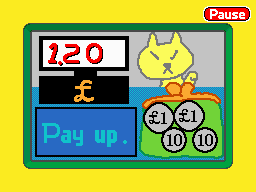
The microgame "Coin Cat" uses yen coins in the Japanese version, and $1 coins and dimes in the U.S. version. The British version uses £1 and 10p coins, while the other European versions use €1 and 10 euro cent coins (the French version is shown here). The currency symbol is changed accordingly.
|
Japan |
US |
|---|---|

|

|
The peach object in the microgame "Mind the Gap" is a different color between versions.
Japanese: [あいうかきくさしす] あい, いか, うし, かさ, きす, くし
English: [ABCEMOTWX] BAT, BOX, CAT, COW
French: [ABCEILNOR] ANE, ARC, BOL, ROI
German: [EHIKRSTUÜ] EIS, HUT, KUH, TÜR
Italian: [ABDEGOPSU] AGO, APE, BUS, DUE
Spanish: [AEIJLOPRY] AJO, OLA, PIE, REY
The problems that appear in the microgame "Whuzzat?" differ through all the available languages.
{| class="wikitable" style="margin: auto;" !Japan !US !Europe |- |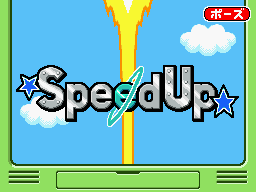 |
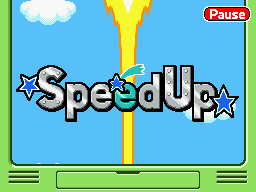 |
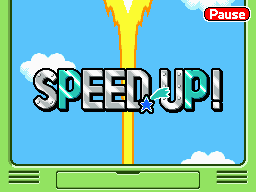 |} During Orbulon's stage, "Speed Up" has different decorations around the letter e between versions, possibly because it resembled the Internet Explorer logo. The European version of the stage has the text capitalized.
Version Exclusive Microgames#
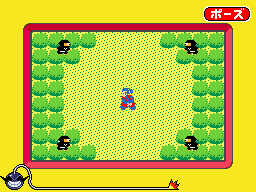
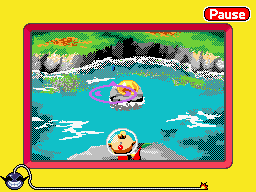
While these four microgames can be played in any version via DS Wireless Communication, they are all completely different gameplay-wise.
|
Japan |
US |
|---|---|
|
|
One of 9-Volt's microgames in the Japanese version is "Murasamejō" ("Murasame Castle") which, as the name implies, is based on the Famicom game Nazo no Murasamejō (The Mysterious Murasame Castle). This was replaced with a microgame based on Pikmin in the international versions.
|
Japan |
US |
|---|---|
|
|
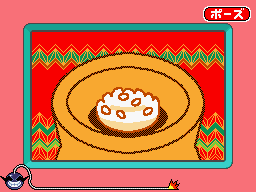
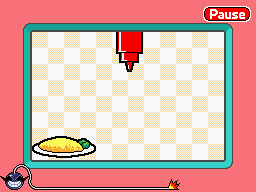
Ashley's microgame "Mochitsuki" ("Rice Pounder") was replaced with a microgame involving ketchup, titled "Ketchup Down".
Comic Differences#
Japan to US#
Most of the comics that are shipped each day were mirrored between the Japanese and international versions, as Japanese comics are read from right to left. Besides this, some comics had graphical features added or removed.
|
Japan |
US |
|---|---|

|

|
Kotobuki Shiriagari's icon was changed entirely between versions.
|
Japan |
US |
|---|---|
|
|
|

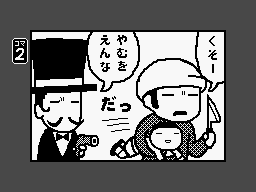

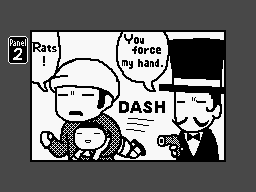
The criminal in Ta-Da! has his knife removed between versions.
|
Japan |
US |
|---|---|
|
|
|
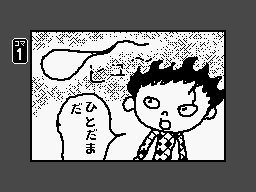
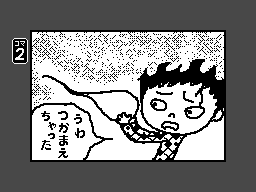

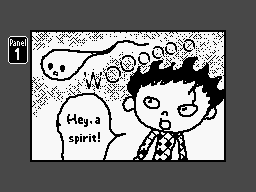
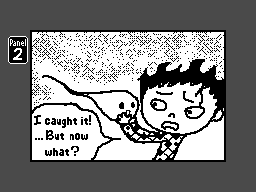

The spirit in Sally's Tip has a face drawn on it in the international versions. This spirit appears to be a hitodama, a type of wandering soul which are traditionally depicted as a featureles flying sphere. As such, the face was added so it would read more as a "ghost" to overseas players.
|
Japan |
US |
|---|---|
|
|
|


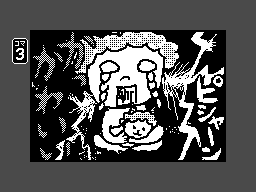
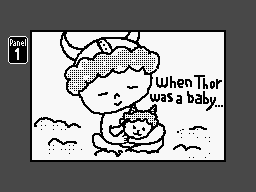
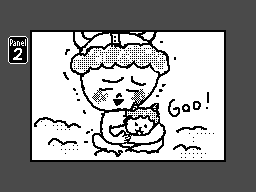
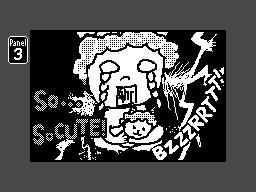
Origin Story adds a stereotypical Viking hat to Thor's caregiver in the international versions. The comic's story was also adjusted, since the original dealt not with the Norse god, but with a mother oni and her child. The main takeaway is the same though, with both entities being associated with lightning, and the joke being that instead of the baby's first word, we witness their first storm.
|
Japan |
US |
|---|---|
|
|
|
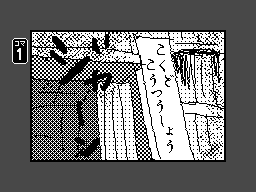
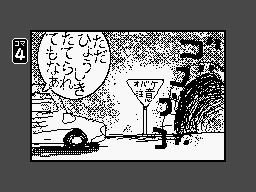
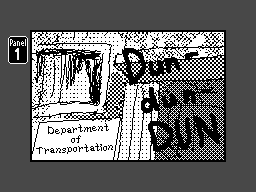
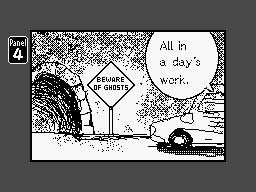
Polter-guys has the shape of the signs changed, likely to make room for the English text.
|
Japan |
US |
|---|---|
|
|
|

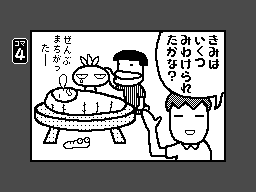

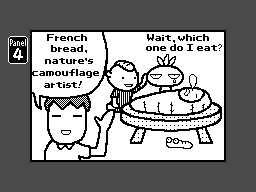
Similarities changes the features of the man who is being compared to French bread.
|
Japan |
US |
|---|---|
|
|
|
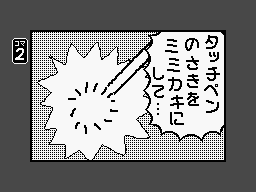
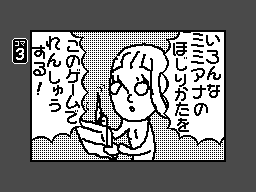
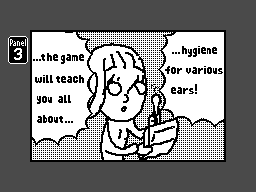
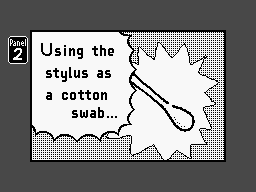
In New Game! #2, the object used to clean ears is slightly different. In Japanese, this comic involves using the stylus as a cotton swab, which was very likely changed overseas to avoid having children stick it up their own ears. Despite this, the second panel's translation was not updated to match the change, and so it remains faithful to the original text.
Incidentally, cotton swabs are also dangerous, in fact, to insert into one's ears.
|
Japan |
US |
|---|---|
|
|
|
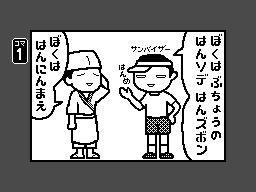
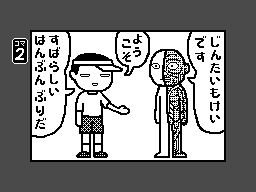
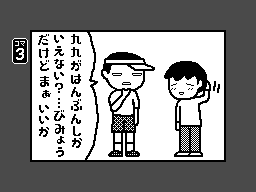
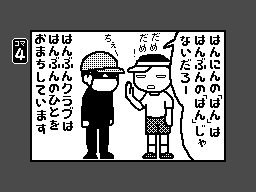
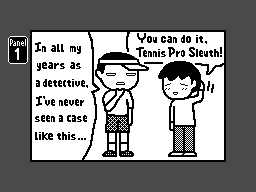
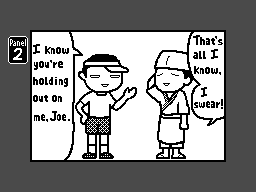
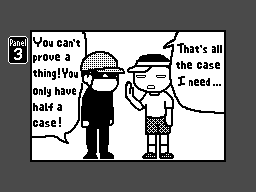
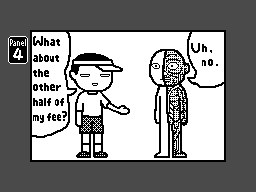
The panel order of Half Back is completely different in the international versions. The original story makes extensive use of a pun with the Japanese character for "Half" (半), and tells the tale of the "Half Club" and its members. Internationally, this was changed to the story of a tennis-man detective solving a case.
Japan |
Translation |
US |
|---|---|---|
|
|
|
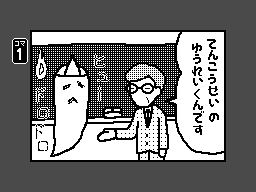
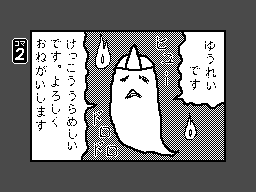
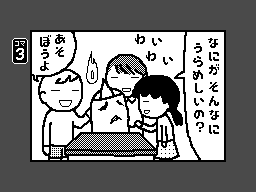

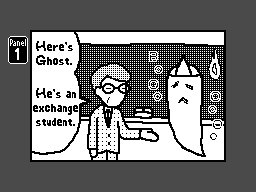
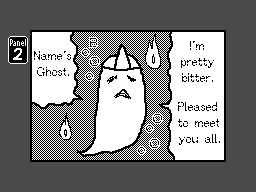


Rei Betsuyaku's first comic is completely different in the Japanese version. The original story, titled "Ghost-Kun" (ゆうれいくん), is about a ghostly transfer student getting annoyed at his classmates being so friendly, as opposed to scared of him.
Japan |
Translation |
US |
|---|---|---|
|
|
|
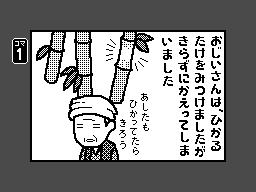
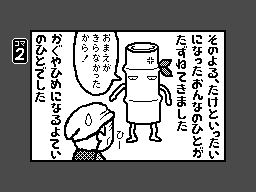
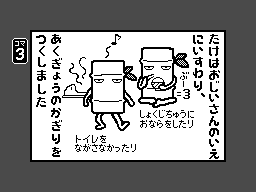
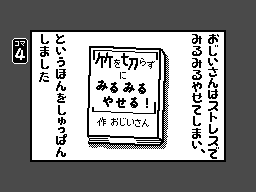
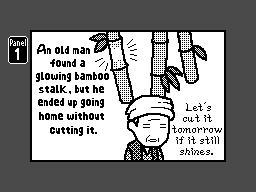
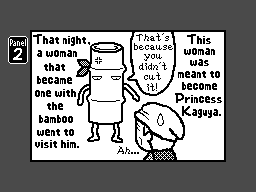
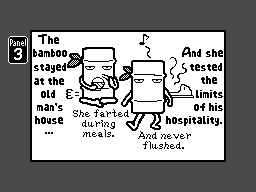


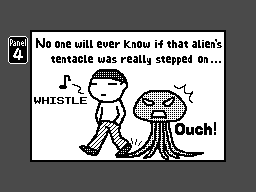
The War is completely different in the Japanese version. The original story, titled "Princess Kaguya" (かぐやひめ), is a spin on the classical folktale where the old man is instead left to deal with a sentient, freeloading piece of bamboo.
Japan |
Translation |
US |
|---|---|---|
|
|
|
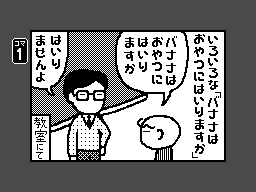

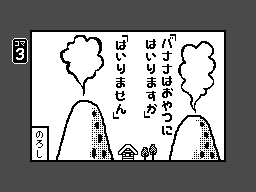

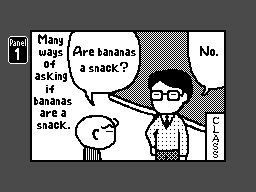


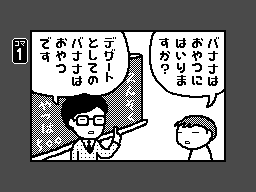
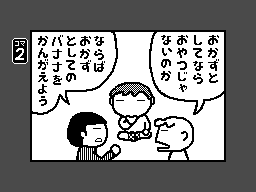
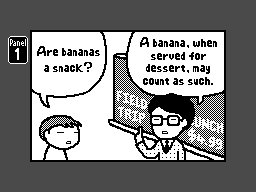
Both Smelltone comics are completely different in the Japanese version. The first, originally titled "Question Method" (しつもんほうほう), is about a schoolboy repeatedly asking his teacher whether or not bananas count as a snack. This goes on in class, on a precursor to internet forums, through smoke signals, and even telepathy.
Funnily enough, the student protagonist has the username "えんそくくん", which translates to "Field Trip-Kun), likely teasing the events of the sequel strip, "Banana".
Japan |
Translation |
US |
|---|---|---|
|
|
|

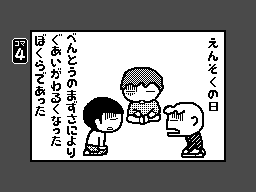


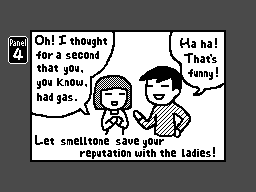
The second Smelltone comic, meanwhile, was originally titled "Banana" (バナナ). It was also a sequel, with the student and his friends now getting ill from questionable homemade banana treats. Those include bananas used as a dumpling filling, mushed in a riceball, served with tsukudani, or simply grilled in salt.
Japan |
Translation |
US |
|---|---|---|
|
|
|
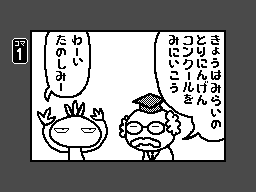
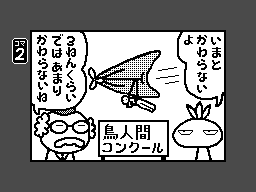
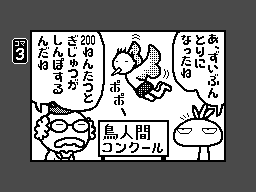
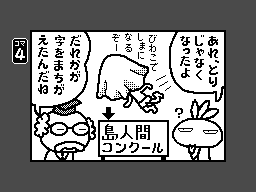
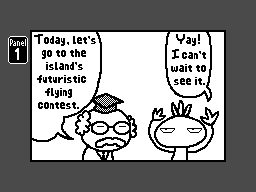
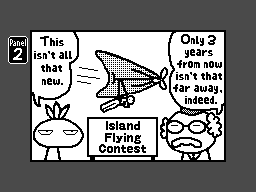
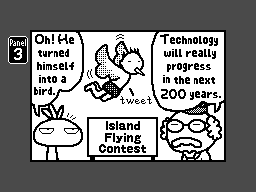
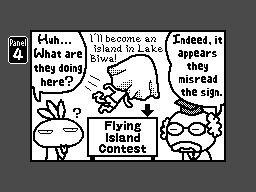
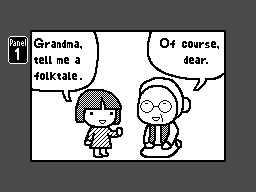

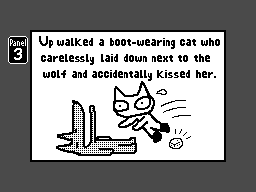

Gran's Tale started out as a comic titled "Birdman" (とりにんげん), which is about a "Birdman" competition, where the contestants make use of futuristic flying technology. The crutch of the joke involves the third contestant, a man with an island for a head, misreading the character for "bird" (鳥) with that of "island" (島). Said island-man also states he wishes to become an island in Lake Biwa, which is Japan's largest freshwater lake.
Japan |
Translation |
US |
|---|---|---|
|
|
|
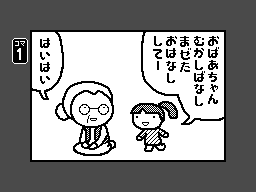
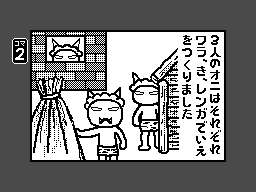
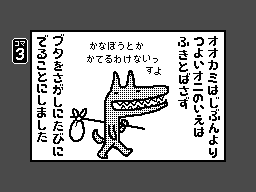
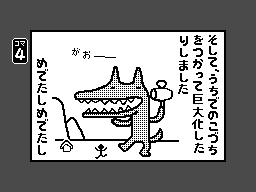

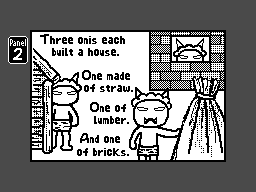
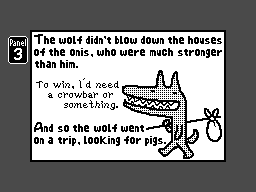

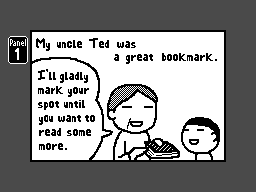
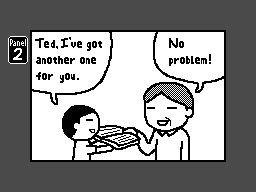

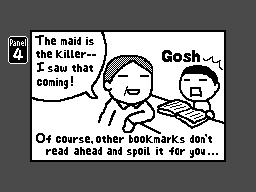
Lastly, the original Uncle Ted comic was the inspiration behind the overseas-exclusive Gran's Tale, even reusing the same character design for the most part. The mallet referenced here is the one from the tale of Issun-bōshi (aka "The One-Inch Boy"), where the main character uses a magic hammer to grow himself to the size of a 6ft tall man.
(Source: Translation - Fiolsvinn, Lettering - FrenchOrange)
US to Europe#
A number of panels received slight tweaks in the European version.
US |
Europe |
|---|---|
 |
 |
 |
 |
 |
 |
 |
 |
 |
 |
 |
 |
 |
 |
These panels from the Arrested and Our Hero series as well as World Class simply had words changed to their British English spelling.
US |
Europe |
|---|---|
 |
 |
 |
 |
 |
 |
 |
 |
Larry, the dad in the ...Dog? series, was renamed Steve in the European version.
|
US |
Europe |
|---|---|
|

|
The cotton swab in New Game! #2 is a cotton bud in the European version. The two objects were swapped around in the US version, which was fixed in the European version.
|
US |
Europe |
|---|---|

|

|
Dad's DS acronym in DS Dad #2 was changed from "Dandy and Swell" to "Dainty and Sweet".
|
US |
Europe |
|---|---|

|

|
The old lady's response in Hard Sell was made quite a bit ruder in the European version.
|
US |
Europe |
|---|---|

|

|
Our Hero #7 had a sentence reworded to accommodate the different British term.
|
US |
Europe |
|---|---|

|

|
Kenny went from dropping to flubbing his lines in Our Hero #13.
|
US |
Europe |
|---|---|

|

|
In Smelltone #2, one man's gas is another man's wind.
|
US |
Europe |
|---|---|

|

|
The only one of these not related to word changes; in panel 4 of Zombie Abs, the font style of the two textboxes was swapped around. The two were mistakenly swapped in the North American release, with the original Japanese comic instead assigning the wispy font to the zombie, and vice-versa.
Miscellaneous#
|
US |
Europe |
|---|---|
|
|
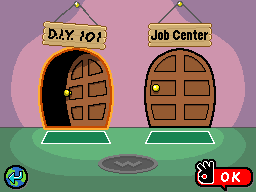
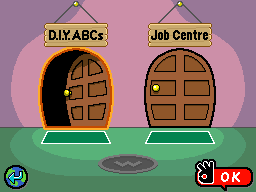
Inside WarioWare Inc., they changed the text on the doors in the European version. "D.I.Y. 101" is now "D.I.Y. ABC's", and "Job Center" is now "Job Centre".
|
US |
Europe |
|---|---|
|
|
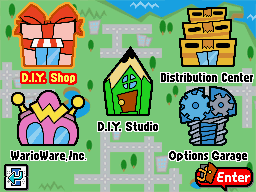
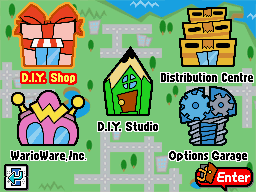
The main menu also changes "Center" to "Centre."
|
US/Japan |
Europe |
|---|---|

|

|
The microgame "Shaped Like" uses checkmarks in the European version, and circles in the U.S. and Japanese versions.