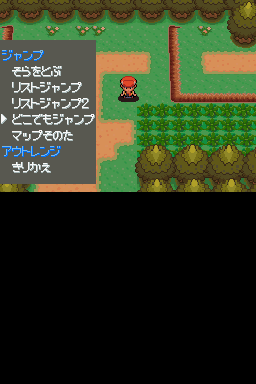
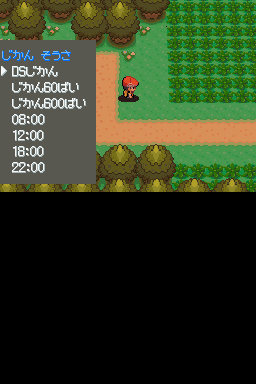
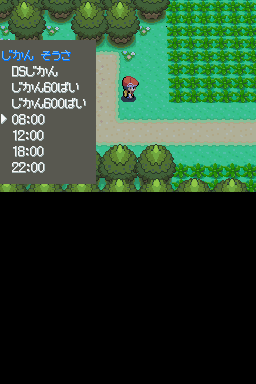
Much of the music and many of the Pokémon sprites differ from the final game (see the file information section for more information).
Only 21 of the Generation IV Pokémon are present in this build, in an order that is presumed to roughly reflect their creation order, rather than matching their final Pokédex order.
The Firmware banner identifies the game as Pokemon DP 06.2.17ver GAMEFREAK.inc.
The Rival cannot be named, having a placeholder name of "Pearl" (パール), rather than Barry (ジュン Jun) in the final.
A lot of the sound effects are different:
The sound for the inventory would be used as the countdown timer for the Poffin-making minigame in the final.
The sound effect for a fainted Pokémon is played in reverse.
The jingle for obtaining a Gym Badge has not yet been implemented, using the item collection jingle instead.
All interiors in this build are 3D view, which is replaced by a flat view in the final.
The animation for the player entering interiors aren't present.
All Gym Badges received from beating Gym Leaders are simply called Gym Badge (ジムバッジ) rather than having specific names.
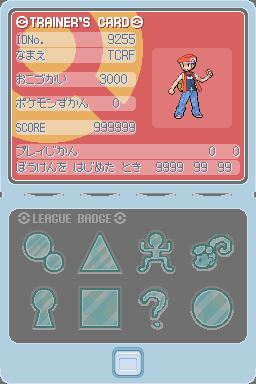
The Trainer Card received some changes:
Gym Leaders are always silhouetted, rather than being fully present in the final.
Gym Badges can be polished but are missing the sound effects for that, and will always catch dust again after the menu is closed.
The Gym Badges in the Trainer Card are completely different in design;
The Coal Badge had two circles rather than a stylized rock.
The Forest Badge was simply a triangle, likely representing that of a cedar tree. The motif itself would make its way into the final badge design.
The Cobble Badge was completely different, shaped like a person instead. Differently-shaped Gym Badges would appear in X & Y.
The Fen Badge was a profile view of Jill from Drill Dozer.
The Relic Badge was originally shaped like a keyhole.
The Mine Badge was simply a square.
The Icicle Badge was a...question mark. The gym's theme may not have been decided at that point.
Running Shoes are usable from the start, but the running sprites for Lucas and Dawn were not implemented yet.
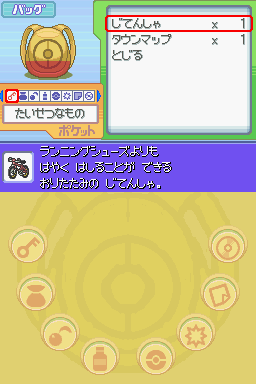
The bicycle is also usable from the start.
The Mystery Zone is named なまえのないばしょ (Nameless Place) instead of なぞのばしょ (Mystery Place).
Pokémon Battles work a little differently;
There are only two effects for Wild Pokemon and Trainer battles, one of them being used in the final for fighting Palkia, Dialgia and Giratina.
All Pokémon Trainer battles start with the grass transition effect, which is strictly used for Wild Pokémon in the grass in the final.
No matter where Pokemon battles are held, they will always take place in the tall grass background.
The transition for the Pokémon Trainers move slowly like in the Generation III games.
The Pokémon Cries for Sinnoh Pokémon had not yet been implemented, using Bulbasaur's Cry as a placeholder.
The music drowns out the sound effects for attacks.
The Poké ball transition effects vary in battle, like how Seals work in the final.
After completing a wild battle in the tall grass, the grass rustles with Pokémon much like the PokéRadar.
Pokémon can obey orders no matter how many Gym Badges the player has.
The player can run from Pokemon Trainer battles.
Water doesn't have collision programmed in yet, meaning it can just be walked on.
Honey trees have not been implemented yet.
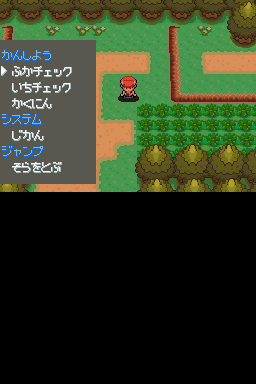
The Underground features different mechanics, the player has to dig in the floor with dig spots being revealed for a split second immediately after tapping the touch screen. There are two dig spots around the area you land in: one directly on the tile you end up on, and another one tile below.
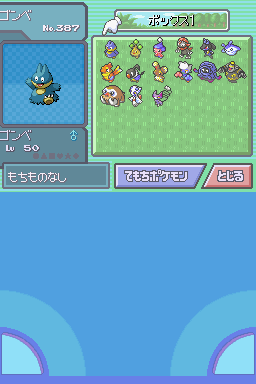
The player's PC is pre-stocked with 15 Level 50 Pokemon.
When the player leaves the house, they are immediately greeted by Professor Rowan, who visits the player's mother, and then goes to Lake Verity.
The player can exit Twinleaf Town immediately and head for Lake Verity, as the player's rival blocks the grass on Route 201.
Upon arriving at the lake, the player has to talk to Professor Rowan manually, who then gives the player a choice of the three starters and leaves. Afterwards, the player's father appears to tell the player they should deliver the Pokédex Rowan forgot, to his lab.
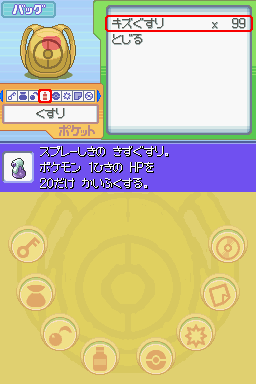
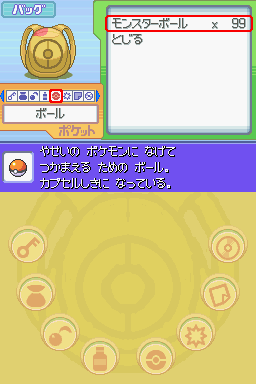
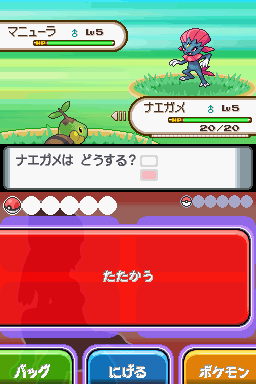
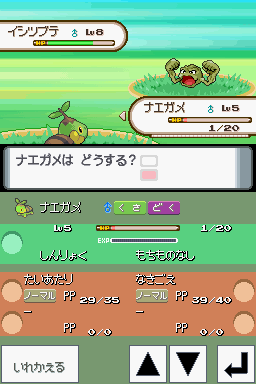
The player is stopped by their rival who challenges them to a battle as soon as they approach the grass on Route 201, he uses a level 5 Weavile as a placeholder, making him quite hard to beat, especially since healing items can't be used in battles yet.
When entering Sandgem Town, Prof. Rowan immediately guides the player to his lab, and gives them the Pokédex.
While the plot ends here, the rival battle on Route 203 is already present, but uses the first battle's team as a placeholder.
The hiker inside Oreburgh Gate doesn't stop the player to give them HM06.
Roark can be battled, but the Oreburgh Mine segment was not implemented yet.
The gameplay ends at Valley Windworks, as the warp to the building is missing entirely.
To do:
Cover areas past Jubilife, add screenshots.
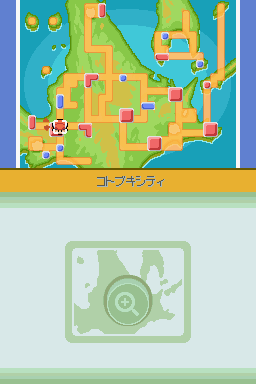
Many dungeons and some overworld areas have not been implemented yet. Outside of dungeons, only Lake Verity, Oreburgh Gate and Ravaged Path are implemented, while overworld maps like Pastoria City, Route 223, and the Pokémon League maps have headers, but no contents/are test maps and the postgame island, areas to the east of the Pokémon League, Iron Island, Fullmoon Island and Newmoon Island have no names or map data besides placeholders. All of these areas are recognized as their proper type (Route/Town/City) on the town map, however the text that shows up is just a placeholder.
The Mystery Zone is named なまえのないばしょ (Nameless Place) instead of なぞのばしょ (Mystery Place).
Many signs and item balls are flat out missing, with more NPCs having different (and often, incorrect) locations.
A big chunk of tilesets appear to be taken from Pokémon Ruby and Sapphire.
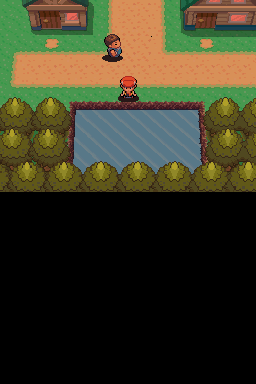
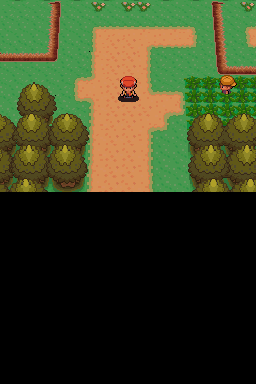
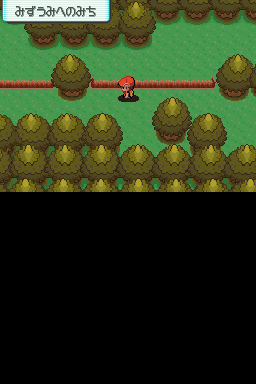
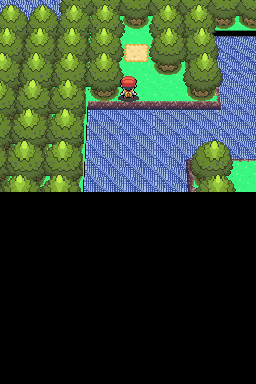
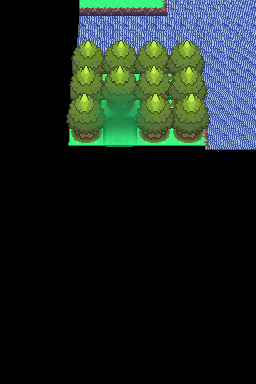
The long ledge on Route 201 and Verity Lakefront is split into two, with the lake side being accessible from there. Trees are also at different positions and one of the trees is offset compared to the rest.
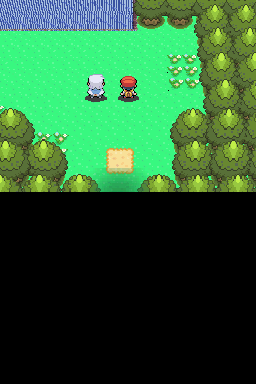
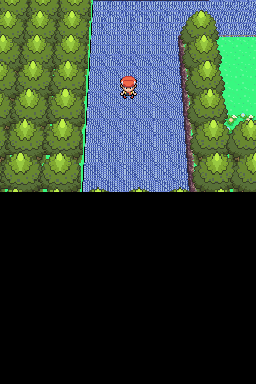
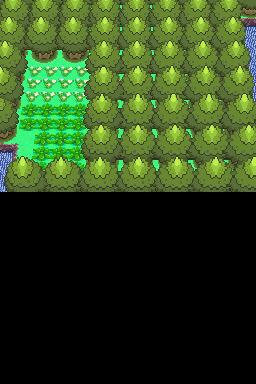
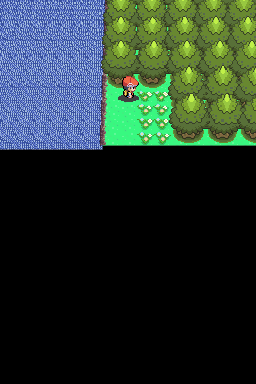
Lake Verity uses a completely different design, featuring water on the same level as the ground, and a forest entrance instead of a cave. No warps are present however. The area's chunks also seem to be scrambled in-game, with only the bottom-left chunk loading correctly, and walking to certain areas of the map will crash the game. No Wild Pokémon are present on this map.
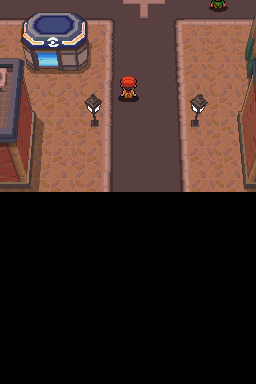
Jubilife City has plus-shaped patterns on the intersections, the locations and models of certain buildings have also been swapped and the path to the Global Terminal is longer and starts from beneath the Pokétch Co. building instead of starting next to the Trainers' School.
The Trainers' School plays the Mystery Zone music, implying that it was going to have a specific theme but the Jubilife City music is used instead in the final.
The design of the Jubilife Condominiums interior is drastically different, and it plays the Gym theme (explaining why the Gym theme plays on the scrapped top floor in the final). The scrapped floors are also accessible normally.
Though the layout is the same, many of the buildings and structures are unfinished, appearing as placeholder white blocks. The tileset is also unfinished.
Grass and trees are present at the bottom of the map with some water in a pond, rather than rocky grounds.
There is also an unusual-looking pond present at the bottom-right and bottom-left part of the map, using the tileset from Ruby and Sapphire.
 This article has a talk page!