 This article has a talk page!
This is a sub-page of Prerelease:Spyro the Dragon (PlayStation).
A collection of insights directly from the developers about the changes made to this game early on in development.
Various Insights#
Dragon News Network#
In late 1998, Insomniac Games created a website1 based on Spyro's in-universe news channelː the "Dragon News Network". Featured on this website was a page describing the game's technical marvels and what the player could expect from it, yet a few things are mentioned here but never actually seen in-gameː
- The "moveset" section references a Fireball power-up, which would only make its debut in the game's sequel. It may imply that it was originally planned to be in the first game.
- This may just be an odd interpretation of the enhanced flame ability given to the player by the fairies, however.
- Gnasty's World is referred to as "Machinists", its earlier name. Several early builds of the game still refer to this world as the Machinists.
- Listed among the ways to discover hidden areas are "flaming a rock" and "running around a tree". While no areas in the final game can be unlocked by doing those things, this concept may have inspired the concept of the hidden Skill Points present in the game's sequels.
NextGen Interview#
Mark Cerny, then President of Universal Interactive, mentioned some unused ideas for the game in an interview2 from the 48th issue of Next Generation magazine. According to him, most of the ideas for the game ended up on the cutting room floor, namely missions (which would later appear in Spyro 2 and 3), the use of items, and long-distance shooting (which reappeared in a way in Spyro 2 in the form of the spitting mechanic, as well as actual shooting in the third game's Agent 9 sections).
Swimming#
One of the developers, Craig Stitt, also confirmed3 that it was at first planned for Spyro to be able to swim. This feature ended up being removed due to a lack of time. According to Stitt, no swimming-based levels were planned but small secret underwater areas were supposed to be found in some levels. Allegedly, "quick and dirty" solutions were found to remove any reference to these secret areas.
Pitch Video#
A couple tweets45 by former Cerny Games designer and producer Michael "MJ" John confirm the content of Spyro's initial pitch demo:
Stone Hill was the first level built*. [...] *In fact, a version of MagicCrafters was made as a demo first in order to sell the project to Sony, but it wasn't very playable
The demo for Sony was edited into a video and set to “Take California” by The Propellerheads. If someone could find a copy of *that* video, that would really be something.
Color Testing#
Watch on YouTube1997 VHS footage of a color test was released by Craig Stitt in early 2020. The video shows several design ideas for Spyro - while they all match the general design of his final appearance, a few different color schemes were considered for the character.
Concept Art#
Gnorcs#
Judging from concept art, the basic Gnorcs enemies were at first planned to have a more humanoid body shape and wore more medieval-inspired clothing, as opposed to the final design which is rounder, simpler, and usually either "naked" or wearing nondescript metallic clothing. The reason for this change was likely motivated by the PlayStation's graphical limitations, and the Gnorcs' design from later Spyro games - namely Spyro: A Hero's Tail - more closely match the early concept art.
Fodder#
There exists concept art for some fodder which were unseen in the final game: some sort of fuzzy animal, a strange horse-like creature, and two sorts of birds. The latter two have a more toon-like aesthetic, which contrasts with more realistic / less stylized fodder found in the final game.
Enemies#

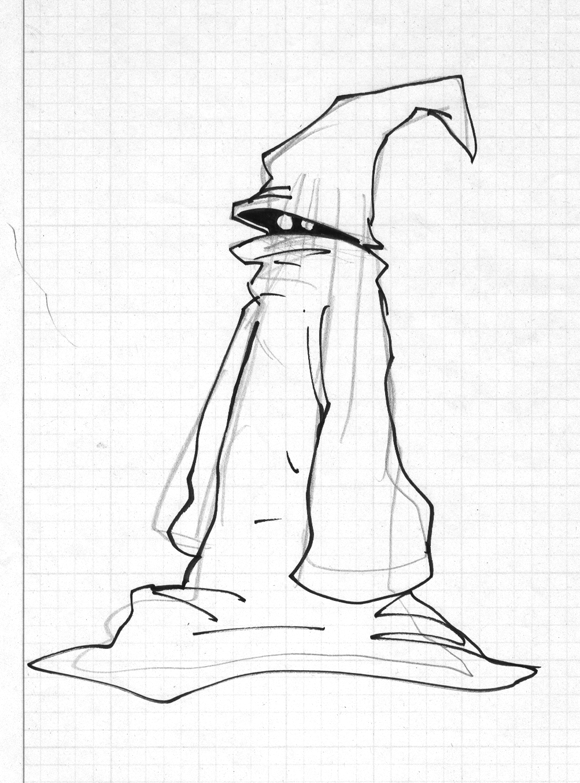
Conceptual sketch for a cut enemy called a "Flying Monk", which bears a striking resemblance to the Green Wizards from the final games. It is unknown whether this enemy was a sub-specie of the Green Wizards or if they simply inspired / evolved into them (which could be supported by the existence of the second artwork, which appears to be a fusion between a Flying Monk and a Green Wizard).

A rough early sketch of a Tin Soldier informs us that in order to defeat them you would have to "push him sideways until he drops", which was changed probably due to the Armored Gnorcs in Ice Cavern requiring a similar method in order to defeat them. The design of the armor itself was also later refined, the feather on the helmet being replaced by three spikes and the sword by a shield.
Unknown Creature#

There exists a piece of artwork featuring a bizarre troll-like creature. Said creature has a large nose, shaggy black hair tied in a braid, greasy skin, and a disproportionately small body with a light stomach pattern. It may have been an enemy design which was ultimately scrapped. Another theory is that it may have been a sort of fodder (hence the small body and apparent lack of ways of attack) that was scrapped because of its unsettling appearance.
(Source: The Animation Academy)
(Source: Misc. Concept Art)