 This article has a talk page!
This is a sub-page of Prerelease:Pokémon Gold and Silver.
1996#
July#
Pokémon 2 was first announced in the August 1996 issue of CoroCoro Comic, with Ho-Oh being the first new Pokémon shown. Ho-Oh is described as a legendary Pokémon that "only appears before a genius who will go down in history." It features an interview with Satoshi Tajiri about the basics of the game, including that there would be a total of over 200 Pokémon, with new ways to evolve Pokémon, and that the games could connect and trade with Red and Green. The games were intended to be for Game Boy, with Super Game Boy support. There is also a hint at a branched evolution for Poliwag, implying Politoed, although Politoed really evolves from Poliwhirl.1
October#
There was a letter sent into CoroCoro by a reader, asking when Pokémon 2's release date was, and what color editions the game will be in. In the Pockemon Club section of the November 1996, they are answered with a probable release date in the Spring of 1997, because "development seems to have advanced considerably," but says that the color versions can't be revealed just yet.2
November#
Nintendo initially announced that Pokémon 2 would be exhibited at Nintendo 64 Space World ’96. The game was revealed to be released in two versions, titled Pokémon 2 Gold and Pokémon 2 Silver, both scheduled for release in March 1997 at a price of ¥3000. 3 However, it was reported the following week that Pokémon 2 would ultimately not be featured at the event, although its planned March 1997 release window remained unchanged.4
December#
The Pokémon anime is announced in the January 1997 issue of CoroCoro Comic, which was on sale in December 1996, speculating that Ho-Oh and other elements from Pokémon 2 will be featured in the show.5
1997#
Pokémon 2 Interview#
In early 1997, an interview for Pokémon 2 was held with Shigeru Miyamoto, Satoshi Tajiri, and Tsunekazu Ishihara.6 It went on to describe some of the new features players could expect to see, as well as some tidbits from the development of the first generation games.
We’re currently fine-tuning all the Pokémon we made. We designed more than 200 Pokémon for the first games, then whittled them down to 150. This game will exceed 200 Pokémon, but we already have over 350, which leaves me wondering which ones I should keep. [...] The way we’ve approached things is to develop whatever we want without paying any heed to how much memory is available, cutting down on Pokémon we can’t fit in later on.
The final release of Gold and Silver would go on to feature 251 Pokémon. That number was already set in stone by the time of the Spaceworld 1997 demo, though the members of this new roster clearly needed some additional fine tuning. The "over 350 designs" part is corroborated by a leaked internal sprite archive, showing off a large amount of scrapped Pokémon designs.
As for the Pokédex, we tried making a number of different prototypes with different functions. In order for an electronic organizer to be useful, it has to be able to increase your knowledge, right? We thought up several ideas, such as being able to search Pokémon by name and categorize them by type, but I wanted to combine all these features into one. We’ve added new functions, of course, but I think the end result will be convenient and lighten the users’ burden.
The revamped Pokédex would go on to be extensively showcased at the 1997 Spaceworld event, which was held in September. By then, "A to Z" mode and "Type Search" had already been implemented as new options, with the final games later adding a "regional" Pokémon listing, a special "Unown Mode", and the option to print Pokédex entries using the GB Printer accessory.
In the game world, there’s a magazine about Pokémon called Pokémon Journal. If you investigate the bookshelves in the game, you can find copies of Pokémon Journal and read the articles published in it. About why Slowking is the way it is, for example. That way you can learn things while you’re playing.
The Pokémon Journal can be accessed from the player's PC in the 1997 demo, and doing so reveals a blurb about Skarmory's discovery. This interview states that a print version could also be found in various bookshelves, but nothing of this sort exists in the build we have access to (and the unused Pokémon Journal text in the final games only mentions the web version). Worth noting is that "Pokémon Journal" (ポケモンジャーナル) was also the name of a news column in the old Game Freak website.
Much like how it was in Generation I, interacting with bookshelves in Gold and Silver does say that they are full of Pokémon books and magazines, though it's impossible to actually read any of them in-game. However, readable "magazines" later appeared in the Generation 3 games, with FireRed and LeafGreen even featuring one by the name of "Pokémon Journal" (though this one gives flavor text relating to people, not Pokémon).
April#
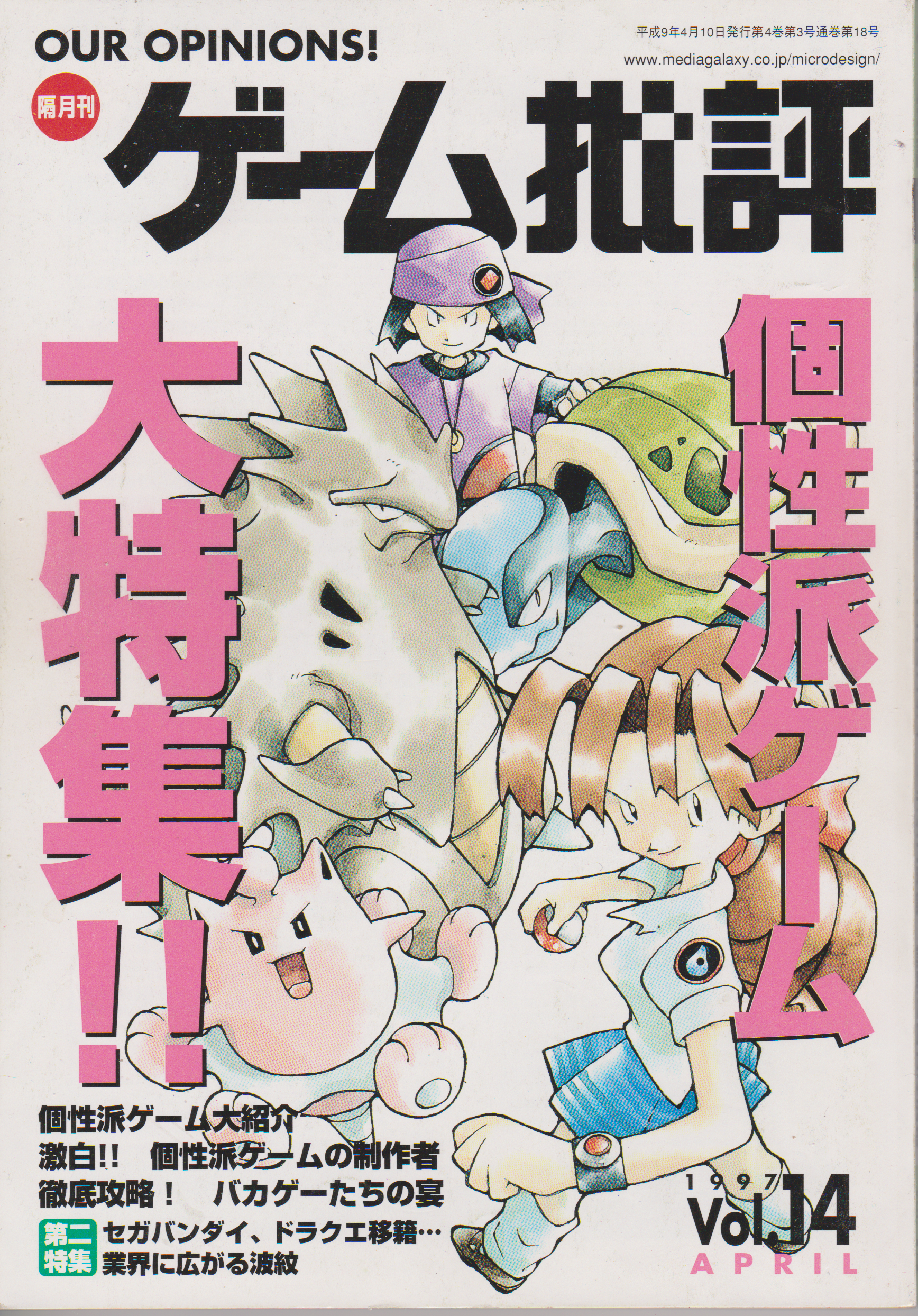
In April 1997, an issue of the magazine MicroGroup Game Review was published, featuring an interview with Ken Sugimori. For the front cover, he composed official artwork specifically for that issue. In the interview, Ken Sugimori described the cover art as taking place in a Pokémon-like, but non-Pokémon, separate world, implying that they should be considered non-canon and are unrelated to "Pokémon 2".7 Outside of this, the interview details Ken Sugimori's philosophy of designing creatures with easily identifiable silhouettes, dream projects, and other subjects.
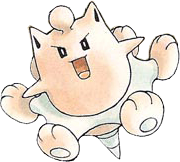
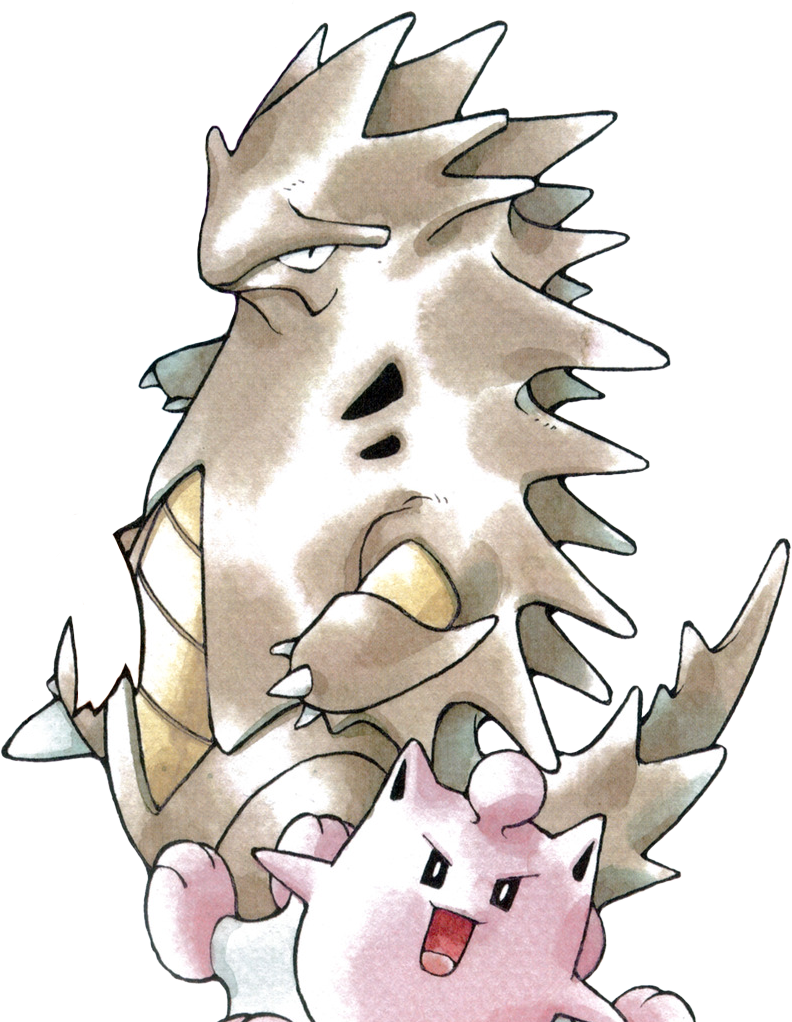
While the cover image is seemingly non-canon, two of the three "Pokémon" shown bear resemblance to ones found in the final version of Gold and Silver. In Sugimori's own words in the interview, his creativity would often arise from him disdainfully revisiting his own works. Considering one strongly resembles Tyranitar, it's very likely that these designs influenced Gold and Silver's development.
"Hitmontop"
MGR Cover |
SpaceWorld '97 demo |
SpaceWorld '99 demo |
Final Games |
|---|---|---|---|
 |
|
|
|


This pink, top-inspired creature has a rather unusual appearance, sharing characteristics with both the SpaceWorld '97 version of Cleffa, chiefly the pinkish color and antenna, and Hitmontop's overall aesthetic. The concept of a spinning-top Pokémon possibly influenced Hitmontop, whose design underwent significant changes throughout Gold and Silver's development.
"Tyranitar"
MGR Cover |
6/13/99 Build |
Final Games |
|---|---|---|
 |
 |
 |
This early version of Tyranitar is incredibly close to the final design found in Gold and Silver, with a few differences:
- Its body is brown, instead of green, and its belly is beige instead of blue
- It's overall bulkier, with a droopier face
- The body and arms feature extra hollow indents, not seen in the final design
- The tail is longer, with a longer, spinier second section
Of note, Tyranitar and its associated evolutionary line are missing from the SpaceWorld '97 demo, with their earliest traces in the game's data being name outlines from April 3, 1999, as well as an internal sprite archive dating to June 13 of that same year. Therefore, there is a two-year gap between this design and its first appearance in Gold and Silver.
(Source: Scan of the cover provided by Plague von Karma, translations by Obskyr)
May#
At some point in early 1997, the games' titles would be revealed as Pokémon 2: Gold and Silver.
On May 20th 1997, a guide called Pocket Monsters Official Fanbook was published by Shogakukan. It contained new details about the upcoming Pokémon titles, including an interview with director Satoshi Tajiri and producer Tsunekazu Ishihara.8
Story#
In the Fanbook interview, Satoshi Tajiri gave a few details about the games' story:
The protagonist begins collecting Pokémon after hearing rumors of a certain boy in the Kanto province who completed his entire Pokédex. That's where the story starts.
This basic, early plot can be seen in Professor Oak's monologue in the Spaceworld '97 build, though this event is normally inaccessible due to the Story Mode being locked out for the Demo mode, where the Professor instead tasks you with putting together a new Pokédex.
Something to note about the early plot's description is that it names Kanto as 関東州, spelling the name with Kanji. Typically, the region is named カントー地方
Gameplay#
The Fanbook confirms that it is possible to trade between Gold and Silver and Generation I games.
Characters#
In response to the question "Will characters such as the protagonist and trainers from the previous titles make an appearance?", Tajiri had this to say:
There's a different protagonist, but the story takes place in the same setting, so there's a strong possibility that you'll meet characters from the previous titles. You'll definitely be seeing Ash and Professor Oak again! Giovanni also left to go train in the last games, so... [laughter] Look forward to that.
Red, mistaken for Ash, and Professor Oak did, indeed, go on to appear in Gold and Silver. Meanwhile, while Giovanni appears like he was intended to return, with him being found in the Radio Tower alongside Rocket Grunts in the Spaceworld '97 demo, and making an appearance as an Elite 4 member in the Spaceworld '99 demo. He ended up being absent from the final version of the games, though much of the plot centers around his disappearance.
Pokémon#
Tajiri stated that, while the number of Pokémon that would appear in the games was not yet officially decided, he wanted there to be over 100 new monsters. He also mentioned that players would be able to evolve some of the Pokémon that didn't have evolutions in the previous games.
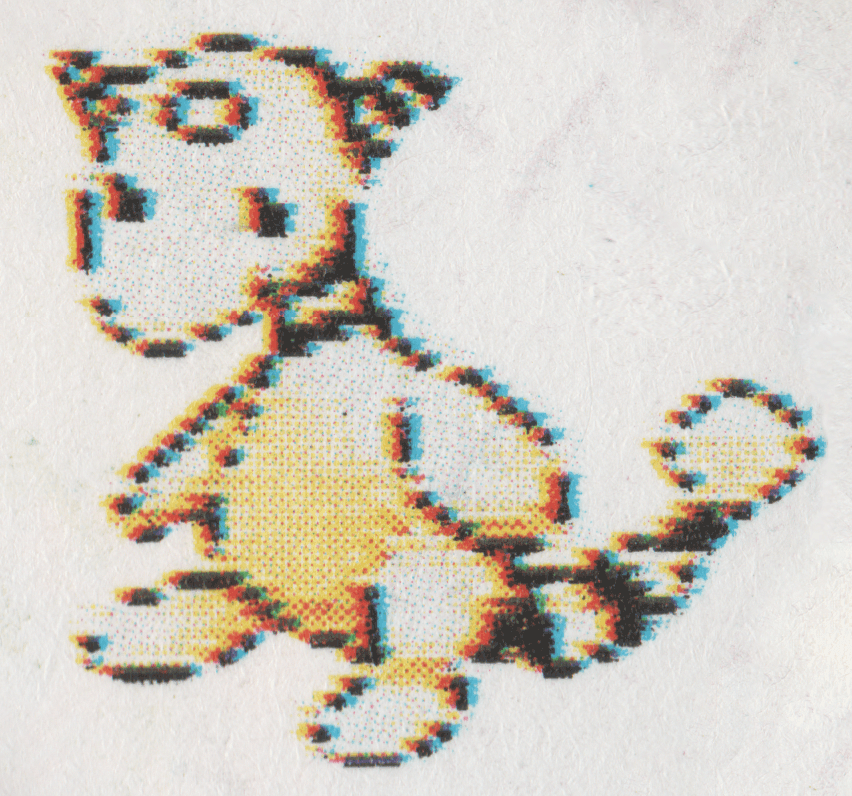
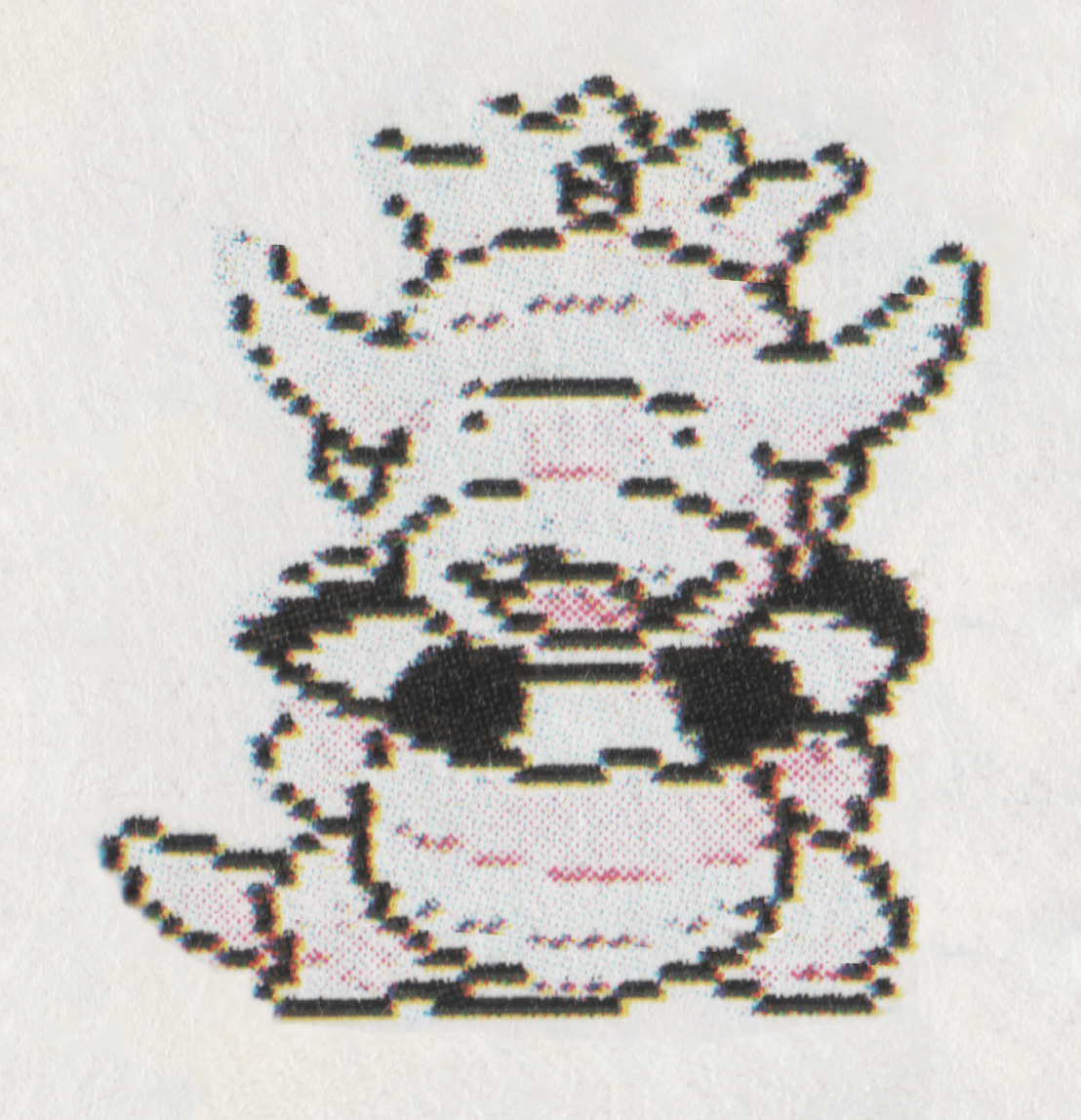
The cover of the Fanbook featured official art for Donphan, Ampharos, and Slowking. These three Pokémon, along with Ho-Oh, were described in greater detail inside the book, with screenshots of their sprites.
Donphan
Early Sprite |
Spaceworld '97 Sprite |
Final Sprite |
|---|---|---|
 |
 |
 |
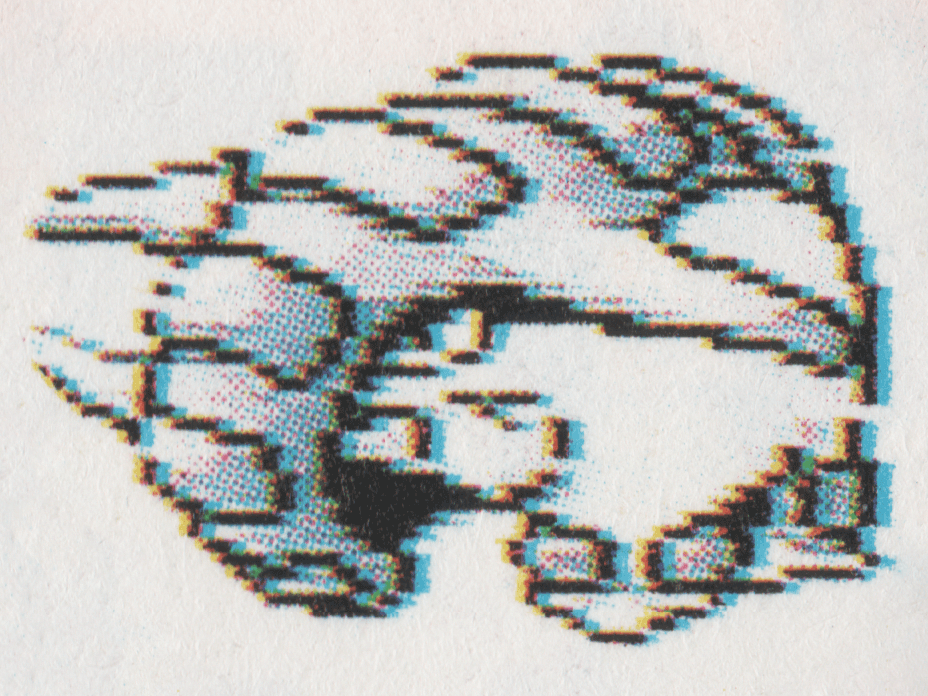
This powerful-looking new Pokémon seems like it could really pack a punch. The details are still unknown, but it looks like a Rhydon-type Pokémon, doesn't it?9
This initial screenshot of Donphan seems to match the sprite found in the data for the Spaceworld '97 demos, shown to the public the following November. However, at this point in development, it apparently used a blue Super Game Boy palette, which was changed to a brown palette by the time the demo was released. This design seems to have stayed fairly consistent throughout development, as even the final Gold sprite is very similar, just with Game Boy Color enhanced shading.
Ampharos
Early Sprite |
Recovered Sprite |
Spaceworld '97 Sprite |
Final Sprite |
|---|---|---|---|
 |
 |
 |
 |
This new Pokémon looks as though it came from outer space. The name suggests that it might be an Electric Dragon Pokémon? Its true nature is not yet known.
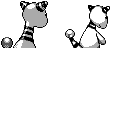
The Japanese name for Ampharos is デンリュウ, which is a homonym for both 電流, and 電竜. Unlike Donphan, Ampharos' sprite is unique to these scans, and offers a look at some of the changes Ampharos' design went through during development, like having smaller horns and a shorter, rounder body. By November's Spaceworld '97 demos, this sprite was replaced by a completely different sprite that served as the basis for its final Gold sprite, though it was heavily redrawn and had its shading enhanced for the Game Boy Color.
This early design for Ampharos can be found in a directory of the Korean section of the April 2020 source code leak. There, the sprite is labeled as PM2F_DEN, sporting a different naming scheme from the other sprites, the abbreviation likely standing for Pokémon 2 Front Denryu. As for this sprite's early back sprite, it can be found in the leaked Gold and Silver CBB scratchpads, in the sheet labeled PM2B 181.CBB.w128.png.
Slowking
Early Sprite |
Spaceworld '97 Sprite |
Final Sprite |
|---|---|---|
 |
 |
 |
Secret Data on Slowking
Slowpoke, a very stupid Pokémon, was out fishing for bait when a Shellder clamped onto on its tail, causing it to evolve into Slowbro. However, it is said that, in 1 instance out of 10,000, a Shellder will clamp down on a Slowpoke's head instead of its tail. As the Shellder bites down, its essence penetrates the Slowpoke's listless brain cells, bestowing upon it extreme motivation. Slowking has quickly become a hot topic among Pokémon collectors. How its evolution takes place is still unspecified, but it has been established that it evolves from Slowpoke!10
In the final games' Pokédex entries and the anime, Slowbro's description is similar to the one given by Tajiri, but in game Slowpoke evolves into Slowking when it is traded while holding a King's Rock. Its front sprite appears to be the one used in the Spaceworld '97 demos, which is nearly identical to the final games' sprite.
Ho-Oh
Ho-Oh was the first of the creatures appearing in Pokémon 2 to be revealed. It's said that this legendary Pokémon will only reveal itself to a genius...
In Pokémon Crystal and Pokémon Y, Ho-Oh's Pokédex description states that "It will reveal itself before a pure-hearted trainer by shining its bright rainbow-colored wings." There is no mention of whether the pure-hearted player's potential referred to their intelligence (as implied above) or the method in the final Gold and Silver to make Ho-Oh reveal itself. Additionally, no sprite was provided for Ho-Oh.
Overworld#
These screenshots give a glimpse into an earlier version of the original overworld that's seen in the Spaceworld '97 demos, both greatly differing from the final games' Johto region.
May 1997 Fanbook |
Spaceworld '97 Demo |
Final Games |
|---|---|---|
 |
 |
 |
This image was captioned "The starting town, Silent Hills", and depicts the original first town, which in November's Spaceworld '97 demos was actually renamed to Silent Hill (this predates the PlayStation game of the same name, which only released in Japan in January 1999). This early name is not to be confused with Route 1's forest dungeon, which is also called Silent Hills, though written as Japanese native しずかなおか, instead of the English loanword サイレントヒルズ.
As for the town itself, its layout differs significantly from the demo's version:
- The map is heavily forested, with a large grove of trees surrounding the town.
- Oak's Lab is much closer to the water, with no fence between the two.
- A house sits directly adjacent to Oak's Lab, and is single story. The Spaceworld '97 demo of Silent Hill only has two story houses.
May 1997 Fanbook |
Spaceworld '97 Demo |
Final Games |
|---|---|---|
 |
 |
 |
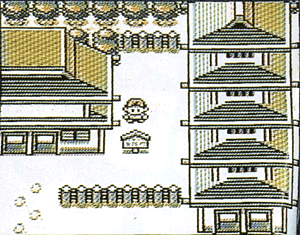
The town in this image was captioned オールドシティ. The Spaceworld '97 demos shows this was a traditional-style town positioned to the northwest of Silent Hill, with a route connecting the two. Compared to Silent Hill, this map bears a much closer resemblance to the version found within the demo ROM, though there are still visible differences:
- The tileset is in an earlier state, lacking some of its unique features, like the traditional-styled wooden doors, vertically slatted window shutters and more detailed trees.
- The area of ground to the left of the large tower extends further north than in the demo's version of the map.
- The Fanbook screenshot is missing trees left of the tower, and the fence was moved down for the Spaceworld '97 prototype.
- The south fenceline south is unbroken in the Fanbook version. In the later demo, the third fence tile is replaced with another signpost.
TV Gamer#
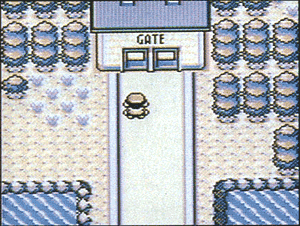
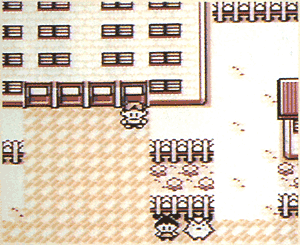
Two unique screenshots from the May 1997 issue of Weekly TV Gamer feature different locations in Gold and Silver. These also appear in the third edition of ポケットモンスターを遊びつくす本 赤 (Pocket Monsters Play Book - Red), published on February 20, 1998.
TV Gamer May 1997 |
Spaceworld '97 Demo |
Final Games |
|---|---|---|
 |
 |
 |
The first screenshot appears to be Route 2, just south of Old City, which is the final area in the playable portion of the Spaceworld '97 demos. Quite a few differences are visible in this screenshot:
- The gate building is smaller than the version seen in the demo.
- The ground is covered in grass and flowers.
- There are no fences lining the route.
- The pathway across the water is thinner, and leads up to the gate. In the demo version, the water doesn't reach as far north, the pathway is wider, and the road has been removed.
- There are different tree arrangements, featuring different tree designs and a single small tree on the left side.
- In the demo, this is the final playable area, with Silver blocking the gate entrance. However, no characters other than the player are present in this screenshot.
- There is tall grass behind the gate, which isn't present in the demo. Given its positioning, it was probably intended to be used as decoration.
TV Gamer May 1997 |
Spaceworld '97 Demo |
Final Games |
|---|---|---|
 |
 |
 |
The second screenshot appears to be from West City, an area found within the demo ROM's data.
- Like Silent Hill above, no area exactly matches the area depicted in the Fanbook screenshot. The large building resembles the Department Store seen in the Spaceworld '97 version of the map.
- The pavers use a different, diagonal pattern.
- This area's tileset appears incomplete, lacking some unique features found in the Spaceworld '97 demo, like glass doors. The flowers look identical to the ones found in a pre-release screenshot for Red and Green.
- This area looks to use a pink Super Game Boy palette, where the version in the demo uses a grey palette instead.
- The fence's shadows are also red, hinting that the palette isn't using a blue water color yet.
June#
Official Website

June is around the time when Nintendo's official Pocket Monsters 2: Gold and Silver page is launched, along with new info, further screenshots, and a new logo.
(Source: Nintendo’s official website - June 1997.)
Skateboard
Found on the official site, as well as contemporary gaming magazines, is a mention of a skateboard, a cut mode of transportation:
A new mode of transportation debuts in the form of the Skateboard! In Pokémon Red, Green, and Blue, Red used a Bicycle as a handy mode of transportation on his Pokémon-catching adventure. In addition to the Bicycle that appeared in Red, Green, and blue, Pokémon 2 will feature a Skateboard as a new mode of transportation. Riding it may even allow players to reach unexpected locations in the world of Pokémon 2."
While only the Bicycle can be found in the final games, the Skateboard was actually present in the Spaceworld '97 demo, albeit inaccessible during the demo portion. Using the debug menu to access it reveals that it wasn't fully programmed by that point.
Also worth noting is the mention of it "[allowing] players to reach unexpected locations," a concept which would be reused for the Acro Bike and Mach Bike in Pokémon Ruby and Sapphire, each bike letting the player access otherwise unreachable areas.
September#
The October 1997 issue of Monthly CoroCoro Comic magazine, published in mid-September, carried an advertisement for Spaceworld 97's Mew giveaway event, in which 100,000 players would be given the opportunity to insert their game cartridge into a machine that would upload Mew into an empty slot in their party, provided they'd received the Pokédex. The advertisement stated that this Mew could be traded to Pokémon 2.11
October#
In October, the November 1997 issue of monthly CoroCoro Comics showed off three new types of trainers, along with their official art, leaving the editors to speculate on what role they played and what kind of Pokémon they would use. These three were Firebreather, Schoolboy, and Lass.12
November#
In mid-November, the December 1997 issue of CoroCoro was published, continuing on the theme of introducing three characters per issue. These characters were Kurt, a Fisherman, and a Kimono Girl. Kurt was specifically described as a non-trainer character, but his role in the game was still unknown.13
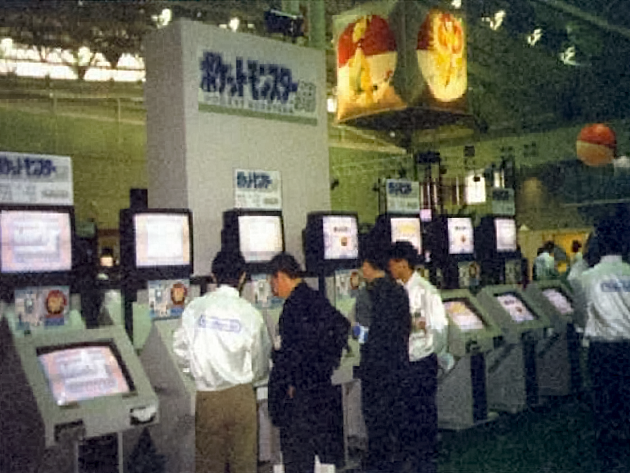
In addition, the first publicly playable demos of Pokémon Gold and Silver were featured at Spaceworld '97, a showcase event held in Tokyo from November 21-23. Attendees could try the games out for about 10 minutes, which was reduced to 5 minutes at some point.14 A promo video was on display, and an event guidebook was distributed.
Official Guidebook#
The official guidebook for Spaceworld '97 featured two full pages dedicated to Pokémon Gold and Silver.15 The contents of these pages are described below.
Specifications The official guidebook described the game as a Link Cable-compatible Game Boy RPG that was scheduled to be released in the last third of March 1998, for a price of ¥3,500. It was said to be 80% complete.
The held item mechanic, new to Generation II, was introduced in the guidebook with a quote from Professor Oak himself:
Big news! It seems that some of the Pokémon set to debut in Pokémon Gold and Silver have been found to carry items themselves. What's more, I hear that there are occasions when, if the Pokémon is intelligent enough, it will use the item it's holding to give it an advantage in battle. It also appears that when you trade Pokémon with a friend, you'll also be able to exchange items. I'm sorry, but that's all the information I have right now...
The Professor also advertised a number of new Pokédex features:
I also had a hand in revising and improving the latest version of the Pokédex. Pages can now be flipped through 10 at a time, and it will even automatically search by Pokémon type - Water, Fire, Grass, etc.
Characters The guidebook introduced the protagonist, as well as mentioning that he has an older brother. This sibling, named Ken, doesn't exist in the final games and only makes an appearance in the debug version of the Spaceworld demos, where he can even be interacted with.
A boy living in a certain town. He has a brother who is 3 years older. These days, his primary hobby is toying around with a hand-me-down computer that was given to him by his brother.
The rival's description follows. Interestingly, this description mentions the rival character as living in the same town as the player, which is only true in the Spaceworld '97 demo.
The boy's rival. He lives in the same town. His appearance and personality differ from the rival in the previous games.
Pokémon Names and official art for Ho-Oh, Slowking, Ampharos, and Donphan were published in the guidebook. No specific new details were provided about the Pokémon.
Trainers The guidebook also listed some antagonist trainers, and included art for each. These were Schoolboy, Lass, Firebreather, Kimono Girl, and Fisherman. It's also worth noting that this artwork of the Lass is based on the early design she sported in the Spaceworld '97 demo, as can be seen in her hair, clothes, and pose.
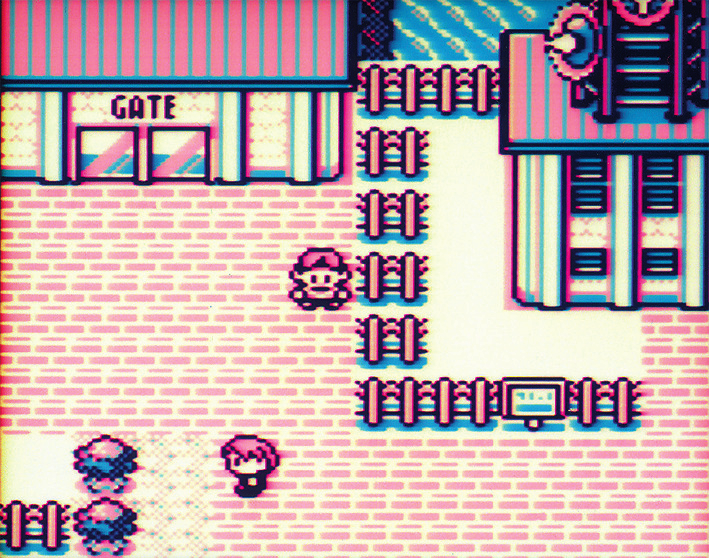
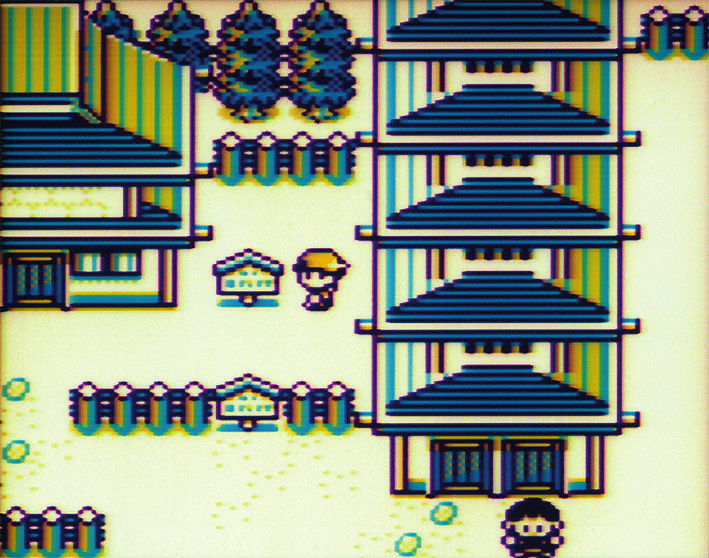
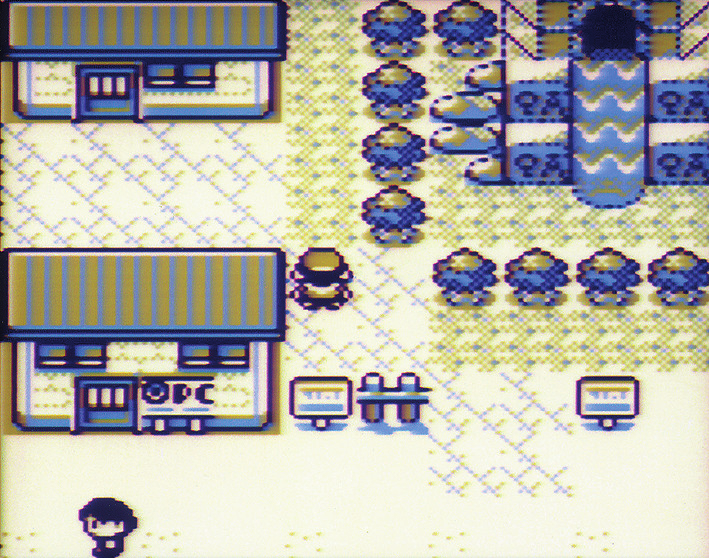
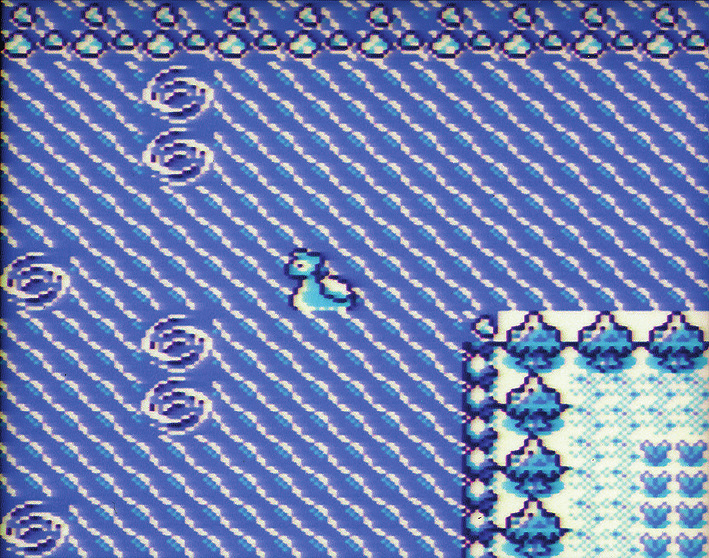
Screenshots Four screenshots of the overworld were included on Page 35 of the guidebook, as well as in the Space World 1997 press CD. These locations were not normally accessible in the demo, but can all be found within the ROM data for the Spaceworld '97 demo. While the tileset and layouts seem to match, the Super Game Boy palettes assigned to each area appear to differ from the data found within the demo ROM, possibly suggesting these screenshots originate from slightly earlier in development.
|
Spaceworld '97 Guidebook |
Spaceworld '97 Demo |
|---|---|
|

|
- Compared to the previous screenshot, the pink Super Game Boy palette has a blue shade added, so the water can display correctly. In the data found within the demo ROM, West City uses a grey palette, with the pink palette applied to High-Tech City instead.
|
Spaceworld '97 Guidebook |
Spaceworld '97 Demo |
|---|---|
|

|
- Old City appears to use a yellow-green Super Game Boy palette, rather than the brown palette seen in both the demo and the earlier screenshot.
- A male NPC stands in front of one of the tower doors. This NPC is not present in the demo ROM.
|
Spaceworld '97 Guidebook |
Spaceworld '97 Demo |
|---|---|
|

|
- A screenshot of Font, another area which can be found within the demo ROM. In this screenshot, it seems to use a brown Super Game Boy palette; in the demo's data, it's assigned an orange palette instead.
|
Spaceworld '97 Guidebook |
Spaceworld '97 Demo |
|---|---|
|

|
- The player Surfs across a stretch of ocean, avoiding newly found whirlpools. From looking at the map data found within the demo ROM, this area is situated to the west of the Blue Forest area. In the Guide screenshot, it uses a blue Super Game Boy palette, while in the demo, it's assigned a brown palette instead.
Playable Demo#
At Spaceworld '97, the Pokémon Gold and Silver demo kiosks were separated into two large rows,16 and players were able to choose which version they wanted to try. Playtime was limited to around 10 minutes, and when the event lasted into the evening, players returned to the game demo to find new night-exclusive Pokémon.1718 The contents of the demo are described below. The ROMs have since been acquired, and you can find the main article here.
The following Pokémon were mentioned in accounts of Spaceworld '97, but do not exist in the prototype ROM. Given how the build we have available appears to be the exact one that was available at the event, the following table serves as a way to give a likely explanation for these "mystery Pokémon."
Alleged Name |
Final Equivalent |
Notes |
|---|---|---|
ワタコ(Jumpluff) |
Jumpluff |
A misspelling by the person who wrote the account, as Jumpluff's name in the demo ROM is ワタネコWataneko. |
エレキング(Eleking) |
Unclear |
Poor recollection by the person who wrote the account, likely conflating Elekid, whose proto name is エレべビーElebaby, and Crobat, whose proto name is エクシング. This is also supported by "Eleking" being a kaiju from the Ultraman franchise, adding to the idea that the person who wrote the account might have only caught a quick glimpse at a Pokémon name, and misremembered it later. |
ネタモン(Netamon) |
None |
This Pokémon, whose name is very similar to Ditto's Japanese name, メタモン, could allegedly be a wild encounter. An evolution of Ditto, アニモン, can be found in the prototype's files, so "Netamon" is likely a misspelling or misinterpretation of the name, which is further supported by another account saying that Animon's name appeared in a promotional video. |
ブクー(Bukū) |
Qwilfish |
This Pokémon could allegedly be encountered at night on a route near the player's house and was described as resembling a flying squirrel. Originally assumed to be an early version of Sentret, whose final Japanese name is オタチ, this Pokémon actually does not appear in the demo ROM and, neither does any sort of early iteration of Sentret or Furret. Instead, it appears that "Bukū" is a Qwilfish whose sprite had been misinterpreted and whose name had been misread, which is supported by プクー being an early name for Qwilfish in the prototype ROM, and by another account correctly referring to this Pokémon as "Pukū". |
Promotional Video#
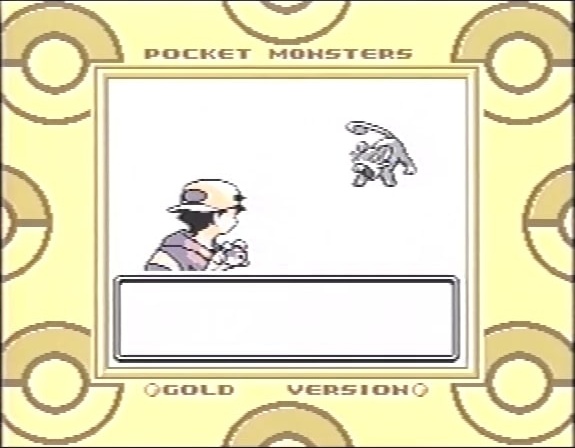
Watch on YouTubeFootage of the demo (at 20:26) is interspersed with footage of a slightly different and older build of the game, from a video shown at the event. The difference between the demo and the promotional video can be noted by the Super Game Boy border. The video has the almost finalized Gold border, while the demo itself has unique borders for Gold and Silver.
A different promotional video was also shown, though it doesn't appear to have been archived. According to attendee accounts, it was called Introduction to the Pokédex's New Features,19 and in it you got to see a Ampharos, Skarmory, Smeargle, Snubbull, a Poliwhirl demonstrating the new weather system by using Rain Dance, as well as a Pokédex revealing (albeit in name only) Aqua, Aquaria, Animon, Unown, and Ikari. Professor Oak also made an appearance, mentioning the existence of eggs. Gendered Pokémon were also one the last things shown, where you could view whether your Pokémon was male or female by checking its status. One thing to note is that two different accounts refer to Snubbull as a "fairy Pokémon",20 its species name, but since those weren't programmed in this build of the games it's likely this promo video directly labeled it as such.
Intro
Spaceworld '97 B-roll |
Final Games |
|---|---|
 |
 |
While the Spaceworld '97 demo features unique Super Game Boy borders, the borders used in the retail games exist internally. The build in the b-roll footage, though, features an earlier design of the final's border with a few differences:
- The Poké Ball graphics are spread further apart vertically.
- The ridge around the screen is gold instead of silver. This coloration would be used in the final Silver version's border, however.
- There is more space between the words GOLD and VERSION.
Spaceworld '97 B-roll |
Spaceworld '97 |
|---|---|
 |
 |
The copyright info still says 1996, which by the time of the actual demo had been updated to 1997. The rest of the intro plays the same as in the demo, until the title screen sequence.
Spaceworld '97 B-roll |
Spaceworld '97 |
|---|---|
 |
 |
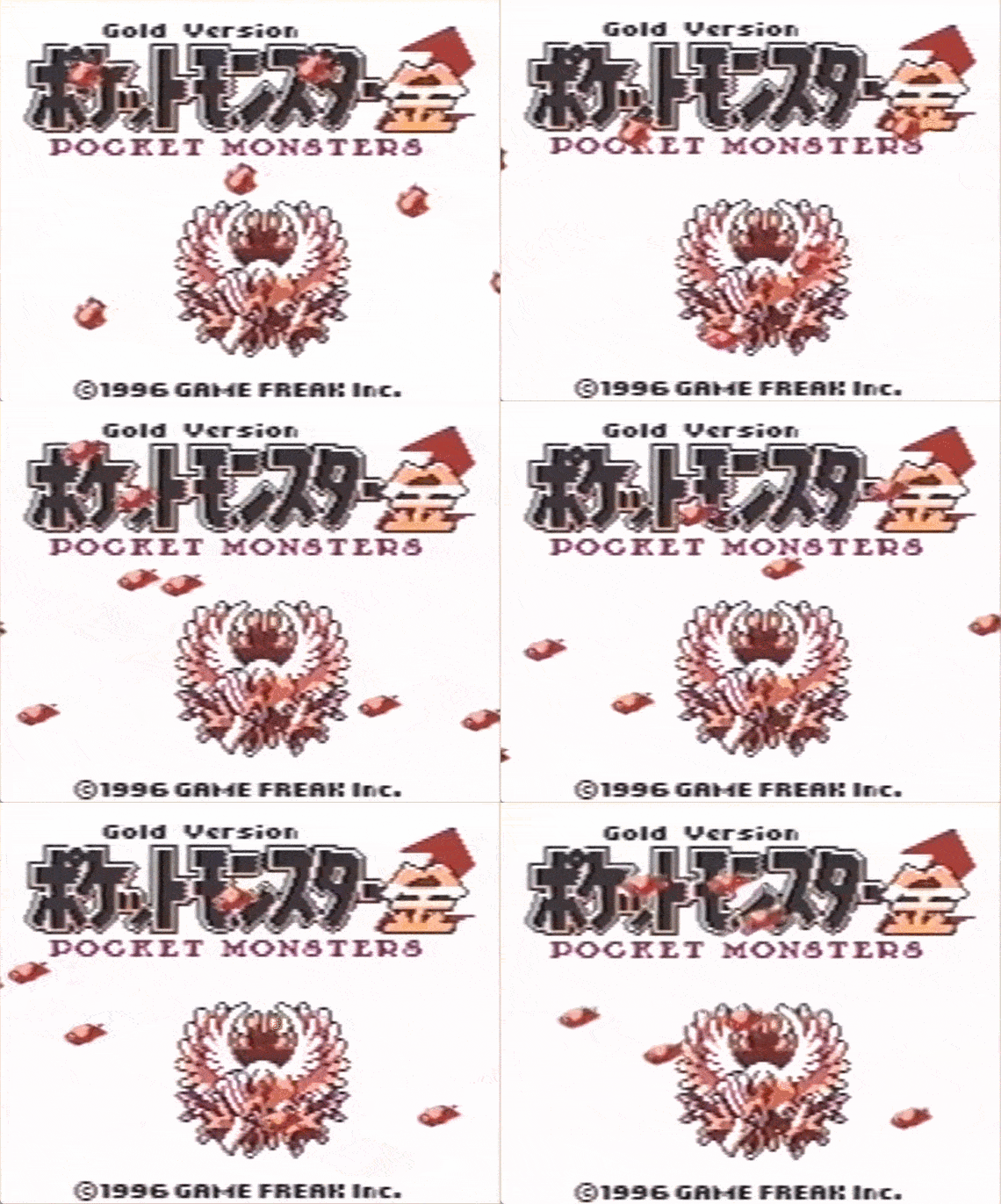
The title screen is quite different:
- After Charizard blasts fire at the screen, here the screen stays red longer, with more embers flying across it. The screen then flashes and only then do the title assets flash in sequentially. In the demo, the Japanese logo instead scrolls from right to left while the screen is red, and only then does it flash.
- The copyright date also states "1996", as seen earlier. A stylized "2" is partially visible behind the kanji for "Gold", which was removed once the games pivoted away from being a plain numbered sequel. The English "Gold Version" text is spaced differently between the b-roll and the demo.
- The background dither framing above and below Ho-Oh is missing. Ho-Oh's sprite itself is also wildly different, no yet being silhouetted, and having a different head position (as well as more curled-up tip feathers).
Overworld
|
B-roll |
Spaceworld '97 |
|---|---|
|

|
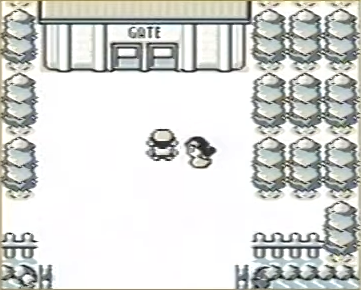
After sitting on the title screen for a little bit, the b-roll then fades into the player exiting the forest dungeon, on the Route 2 side. Of note is that the warping behavior is unrefined in this build, with the player character briefly turning to face down when being warped in a direction other than facing down.
Walking further up, we notice that the static Kimono Girl trainer normally found by the bridge is missing, in her place being a roaming female NPC (also using the "teacher" spriteset). Silver also isn't at the gate to tell the player that the demo is over.
|
B-roll |
Spaceworld '97 |
|---|---|
|

|
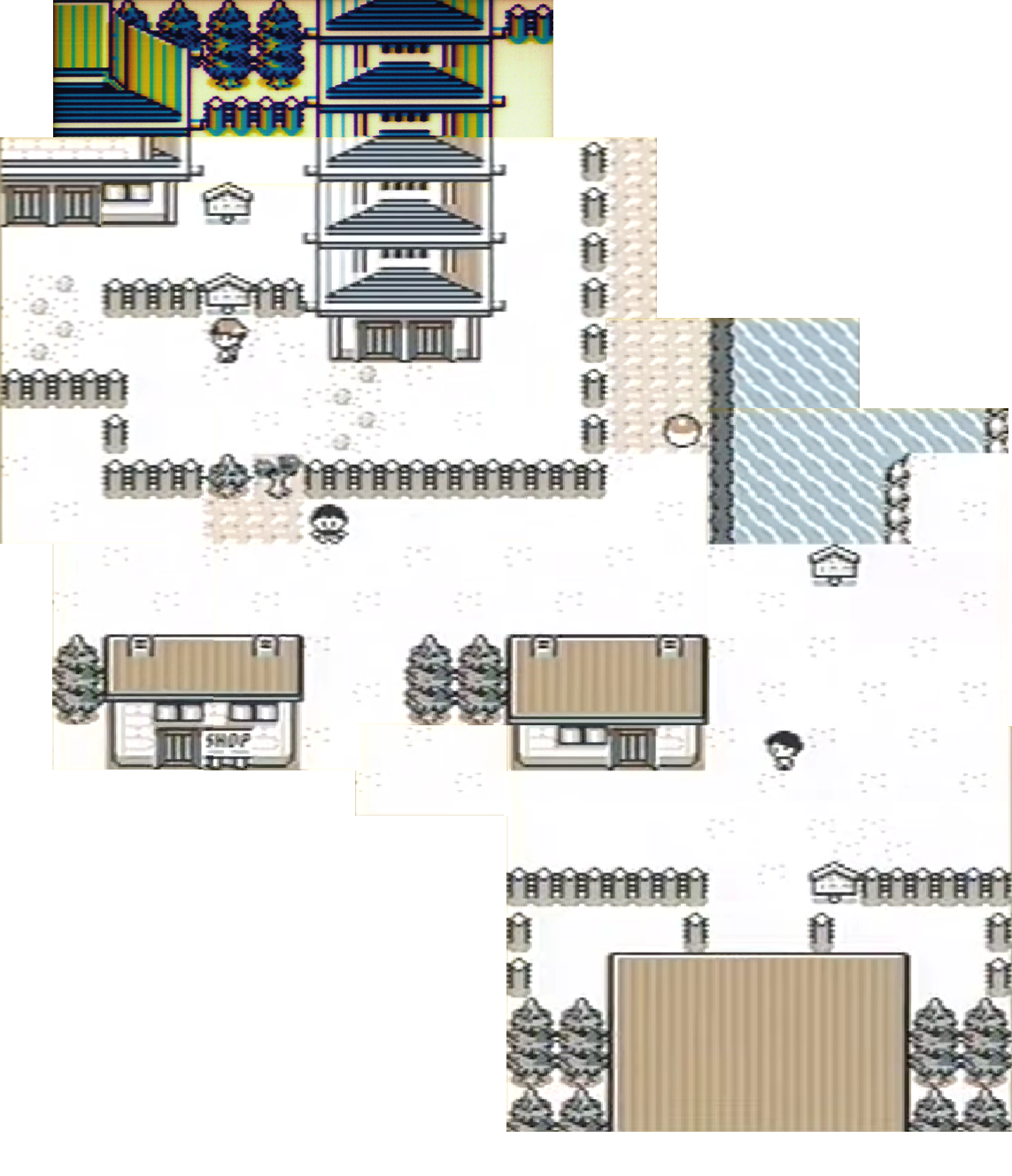
Traversing the Route 2 gate, the player explores an earlier version of Old City. The central row of houses is shifted further to the right, and the gaps between said houses are larger, with them also flanked by a tree each. The trainer school is either missing or off-screen, and the guidebook's boy who stood in front of the pagoda is nowhere to be seen.
In the clip, you can also see the player "phasing through" the Cuttable tree, which was likely accomplished with the debug menu’s built-in walk-through-walls function.
|
B-roll |
Spaceworld '97 |
|---|---|
|

|
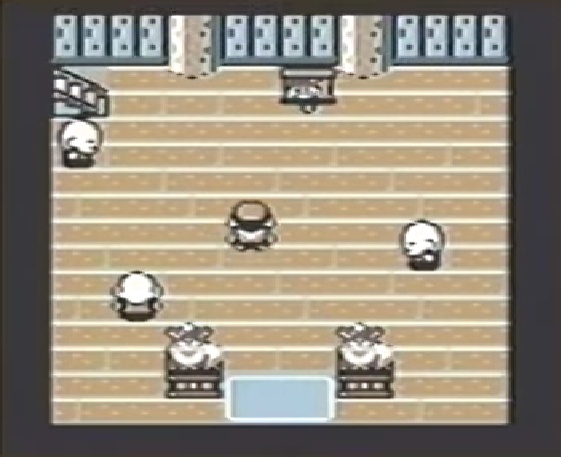
The first floor of Old City’s pagoda, which is missing one of the sage at the back of the room.
|
B-roll |
Spaceworld '97 |
|---|---|
|

|
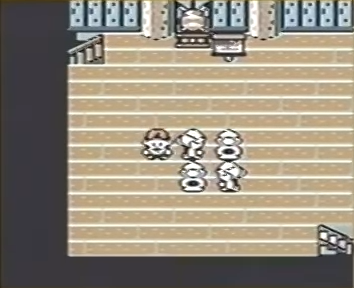
On the second floor, the quatuor of Mediums are positioned differently. In the b-roll footage, the two in the upper row spin randomly, while the two in the bottom row are static. In the demo ROM, they were spread further apart, and now it's the Mediums in the upper right and lower left corner of the formation who spin around.
|
B-roll |
Spaceworld '97 |
|---|---|
|

|
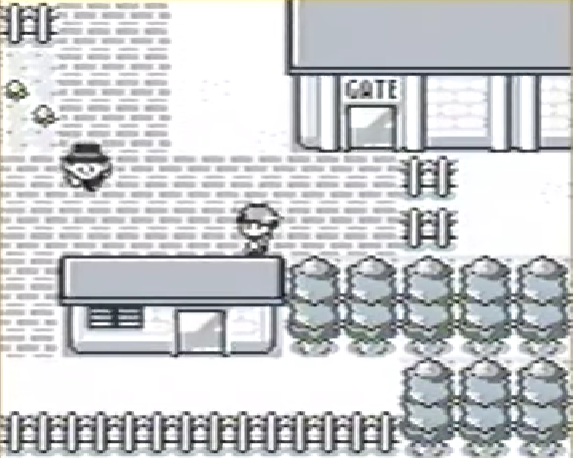
After taking the stairs in the pagoda, the scene cuts to West, outside its eastern gate. Here, the spinning Lass and her Clefairy are instead a Gentleman walking up and down. While this NPC was removed by the time of the demo proper, West's overworld map group still contains an unused entry for a Gentleman.
B-roll |
Spaceworld '97 |
|---|---|
 |
 |
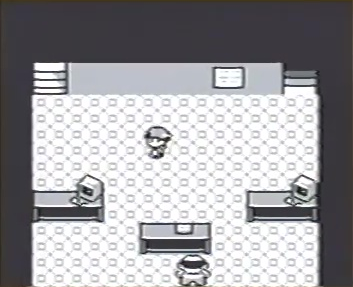 |
 |
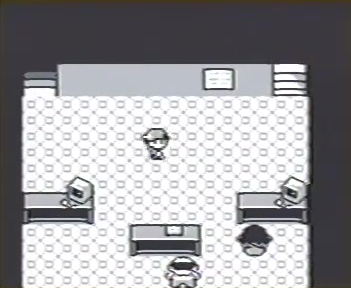 |
 |
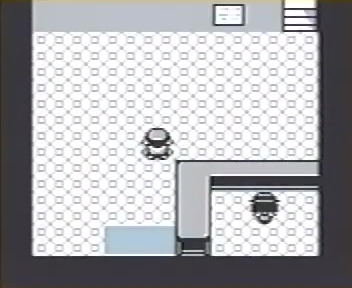
West's Radio Tower was significantly emptier in the b-roll when compared to the demo build. The two middle-aged men were changed to a gym guide and a Super Nerd respectively, and the Teacher to a Beauty.
The tileset of the area itself is also rougher. The carpet has stripes further on the edges, the tiled floor is different, and the computers use the tilted design from Gen I. The lobby lacks potted plants, the PC, and the desk uses different base tiles. On the following floors, the desks lack drawers, chairs, and have computers instead of phones.
Battle
In the aforementioned video, a handful of differences can be seen during the two showcased wild encounters:
- The Battle Intro transition wipe shown here matches the Poké Ball-shaped transition described in some accounts.
- Meowth is seen using Sand Attack, a move it can't learn in the final games.
- There is a fade-in effect for Pokémon the player sends out. In the prototype, this effect is only assigned to Hoothoot, and was scrapped in the final games.
- The tune that plays after catching a Pokémon was changed between the footage build and the Spaceworld '97 demo. The early one is still present in the demo's data, but goes unused. The demo version uses the same sound effect as the Gen I games, with a slightly faster tempo (it's a bit slower in the final games).
1997 B-roll |
1997 Demo |
Final Games |
|---|---|---|
 |
 |
 |
An earlier iteration of the player's back sprite, sporting a different hat design, and with his jacket having a white band on the sleeve's forearm. A matching Trainer Card sprite of this early design was found within the source code leak of 2020.
By the time of the Spaceworld 1997 demo, the player's back sprite was already finalized.
Generation I |
Spaceworld '97 Video |
Spaceworld '97 Demo |
Final Games |
|---|---|---|---|
 |
 |
 |
 |
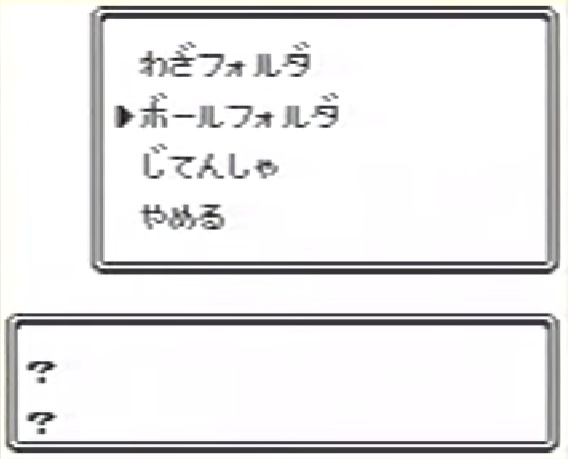
The item menu is in the middle of being redesigned. Shown here in an unrefined, transitional version compared to its Spaceworld '97 equivalent, it looks instead like a barely edited version of the in-battle item menu from Red and Green. Namely, the background is blanked out, the two windows are separate, and the item descriptions are already programmed.
Interestingly enough, however, the わざマシンホルダ and ボールホルダ sections were originally known as the わざフォルダ and Ball Folder ボールフォルダ respectively. The Key Item pocket also seemingly didn't exist yet, leaving the Bike awkwardly out in the open, and the pockets didn't yet have unique icons assigned to them. More evidence of the different bag sections not being finalized yet comes from their missing descriptions, prompting the game to reuse that of the last item viewed- here the Mail- and then print a placeholder message, "? ?", once you select a different pocket.
The way items were sorted also was tweaked by the time the demo came around, as in this footage the Ultra Balls and the Poké Balls are in the Ball Holder, while in the demo it is empty, with these two Ball types instead found among the rest of the miscellaneous items. Moreover, in this early footage it appears that the standard items would have been on one page, while the TM and Ball folders were on another, the Bike on yet another, and then the Cancel button. In comparison, the demo has the pockets and miscellaneous items on a main page, with the left and right directional pad only letting you access the Key Item pocket for some reason.
Miscelleaneous#
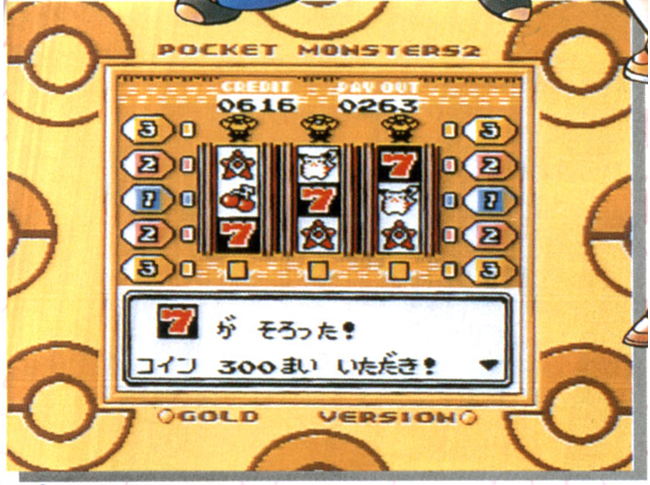
Published in 1998, the January issue of the Game Boy Encyclopedia Young Selection magazine featured a three-page article on Gold and Silver. Interestingly, the screenshots are of a build that predates the Spaceworld '97 demo, which is evident by the earlier border.
Border
Game Boy Encyclopedia |
Spaceworld '97 B-roll |
Final Games |
|---|---|---|
 |
|
|
As mentioned previously, the border seen here is an earlier one. Though compared to the B-roll build, the "POCKET MONSTERS" text at the top has a "2" appended to the end. It's then very likely that this build pre-dates the one from the B-roll. An early SGB border very close to this one can be found within the leaked Gold and Silver source code.
Slots
Game Boy Encyclopedia |
Spaceworld '97 Demo |
Final Games |
|---|---|---|
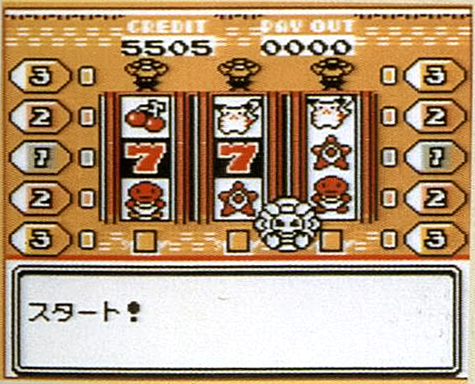 |
 |
 |
- Most graphics are identical, save for the transition to color mode.
- The border around the slots is connected, instead of using a simple dash pattern.
- The buttons have different shading.
- Golem is shaded in the final, and a pixel highlight was removed.
- PAY OUT was changed to PAYOUT in the final.
Poker
Game Boy Encyclopedia |
Spaceworld '97 Demo |
Final Games |
|---|---|---|
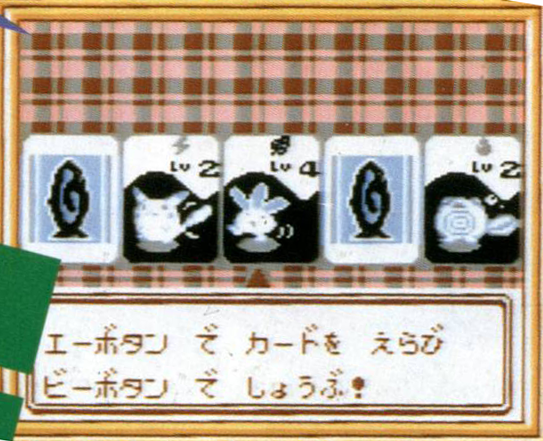 |
 |
 |
A picture of the poker minigame which debuted in the Spaceworld '97 Proto, and would later evolve into the card-flip minigame from the final games.
- Compared to the Spaceworld '97 demo, the lights border around the upper half of the screen has yet to be added, and there's no score counter.
- The cards are spread farther apart on the board, and the card faces feature a different design.
- In the final games, the card game was completely changed to resemble a betting table, instead of using a pink gingham background.
(Source: Julioointment on Imgur)
December#
In December 1997, CoroCoro revealed the official art for the player character and the rival, as well as information that was already revealed at Spaceworld '97: descriptions for both characters, an upgraded Pokédex, Professor Oak's presence, held items, the release date and price, and the four previously seen in-game screenshots.21
1998#
January#
Famimaga 64
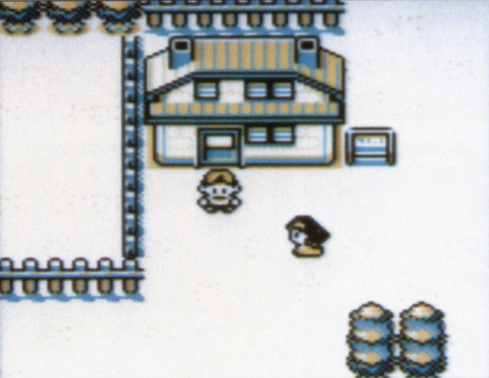
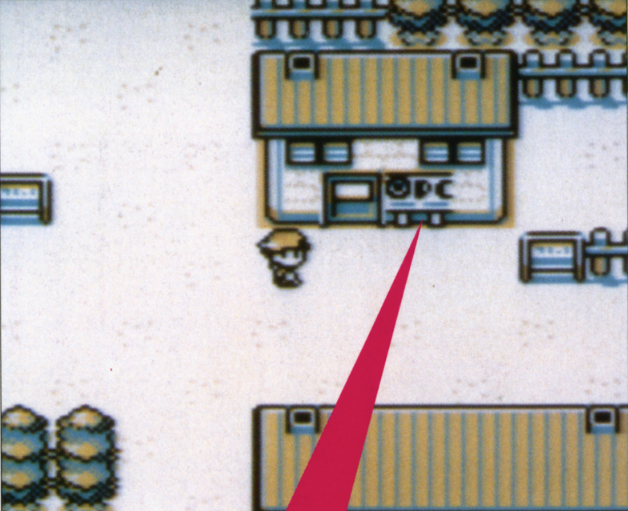
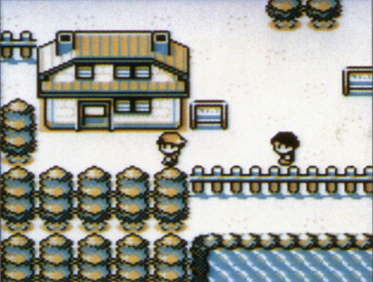
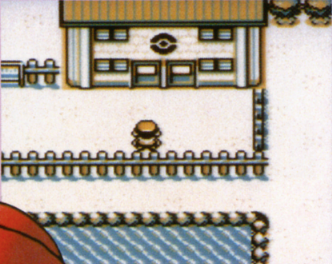
Four screenshots that were published in the January 1998 issue of Famimaga 64 magazine, showing the player in different spots of Silent Hill.
World Hobby Fair
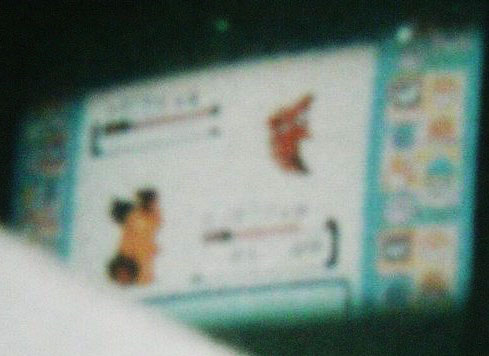
Gold and Silver were playable again at the January 1998 World Hobby Fair.22 Only one image survives from the demo showcased at this event, showing Honooguma fighting a Metapod. Assuming that this demo contained the same content as Spaceworld '97, this battle would have been against a wild Metapod in the forest dungeon on Route 1. This picture shows an orange-red palette, indicating that the game's own Super Game Boy palette was disabled with the X Button.
1997 Footage |
Recreation |
|---|---|
 |
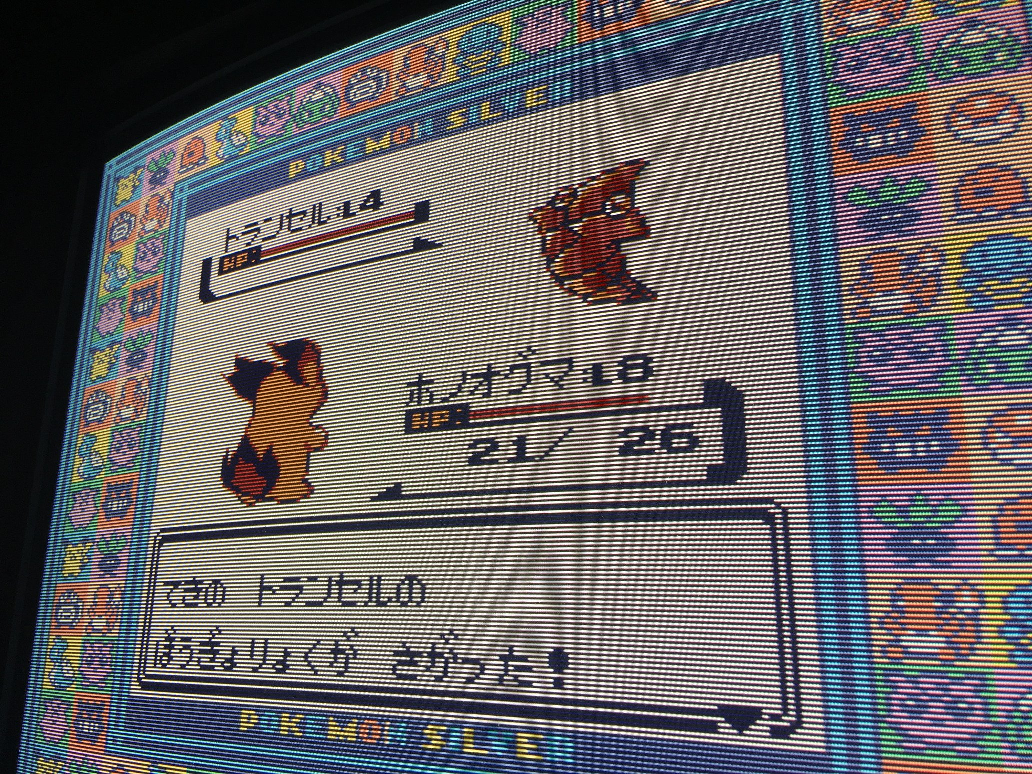 |
(Source: Catstorm - Discovery, @Katsu_Nagao - Original Photograph, @obskyr - Photograph Recreation.)
The January 1998 issue of the Game Boy Encyclopedia Young Selection also included some previously unknown details, as well as screenshots of the various minigames. It advertised that there were more than four different minigames, which is actually how many can be found in the Spaceworld '97 build of the games.
One paragraph in the article also alludes to a pre-evolution for Clefairy, and another says that bug Pokémon may show up in the morning, and bird Pokémon at night, most likely hinting at the time of day where Ledyba and Hoothoot can be caught.
February#
World Hobby Fair

CoroCoro covered another World Hobby Fair event on February 15th for their March issue. A photo of a player using Honooguma in battle is included, although its sprite is barely visible, only recognizable by its black ears and tail. No other new information about the games was provided or included.23
Official Website

Nintendo's official page for the games received a small update, showing an updated logo for Pocket Monsters: Gold and Silver.
March#
The games were shown once more at the March World Hobby Fair. New information came to a halt as a webpage on the official Gold and Silver site appears confirming that the games will be delayed for an unknown amount of time, in order to 'power up' the games.
References#
- CoroCoro August 1996 - July 1996↩︎
- CoroCoro November 1996 - Oct. 1996↩︎
- Famimaga Weekly Issue 02 1996 11/08 - Nov. 1996↩︎
- Famimaga Weekly Issue 03 1996 11/15 - Nov. 1996↩︎
- CoroCoro January 1997 - Dec. 1996↩︎
- Interview in anticipation of Pokémon 2's release; the original interview.↩︎
- Annotated & translated interview scan; the scanner's notes.↩︎
- Pokémon 2 Staff Interview - Pocket Monsters Official Fanbook - May, 1997↩︎
- Pokémon Bios - Pocket Monsters Official Fanbook - May, 1997↩︎
- Slowking Bio - Pocket Monsters Official Fanbook - May, 1997↩︎
- CoroCoro October 1997 - Sept. 1997↩︎
- CoroCoro November 1997 - Oct. 1997↩︎
- CoroCoro Dec. 1997 - Nov. 1997↩︎
- Nintendo Spaceworld '97 Report↩︎
- Spaceworld '97 Official Guidebook - Nov. 21st, 1997↩︎
- Compilation of pre-release Gold and Silver information and accounts.↩︎
- Kouichi Hiwasa's Spaceworld '97 account.; the original account.↩︎
- Official guide for Spaceworld 1997''.↩︎
- Spaceworld '97 promotional video info 1.↩︎
- Masato's Spaceworld '97 account.↩︎
- CoroCoro January 1998 - Dec. 1997↩︎
- CoroCoro World Hobby Fair 1998.↩︎
- CoroCoro March 1999 - Feb. 1998↩︎


