 This article has a talk page!
This page details pre-release information and/or media for Cocona World.
Subpages#

Timeline#
- May 1986 - SOFEL signs licensing deal with Nintendo (source: sofel.co.jp)
- September 19, 1986 - Famimaga begins reporting a December release date for Cocona World
- October 17, 1986 - First preview in Famitsu #9
- November-December, 1986 - Various magazine previews
- December 26, 1986 - Release date pushed back to January 20, 1987 (source: Famitsu #14)
- January 9, 1987 - Release date pushed back to February 1987 (source: Famitsu #15)
- February 20, 1987 - Release date pushed back to March 7, 1987 (source: Famimaga)
- March-April 1987 - More magazine previews
- March 3, 1987 - Date of publication for instruction manual
- March 20, 1987 - Release date pushed back to April 4, 1987 (source: Famitsu #20, Famimaga)
- March 20, 1987 - Nintendo marks date on Cocona World master disk (source: Gigaleak)
- April 3, 1987 - Release date pushed back to unspecified date in April 1987 (source: Famitsu #20; Famimaga)
- April 10, 1987 - Date of release, according to Famitsu
- April 11, 1987 - Date of release, according to Famimaga and a promotional flyer from SOFEL
- June 5, 1987 - Cocona World scheduled for Disk Writer kiosk release
- November 1, 1987 - Cocona World withdrawn from Disk Writer kiosks (source: pony.velvet.jp)
Title Screen#
Famicom Hisshoubon #12 |
Manual, pg. 9 |
Final |
|---|---|---|
 |
 |
 |
Source |
Japanese |
Translated |
|---|---|---|
Prerelease |
|
|
Final |
|
|
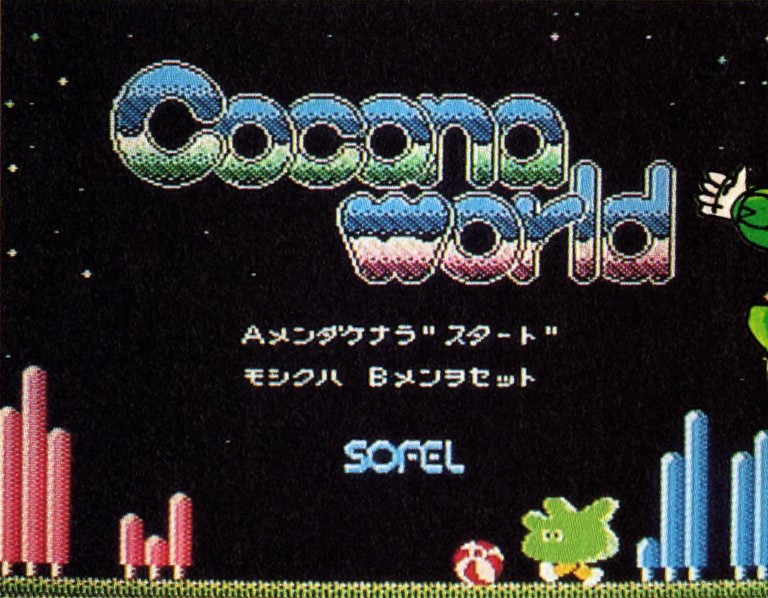
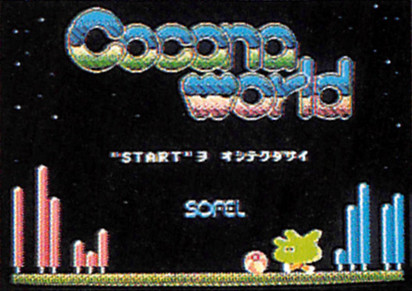
The final game loads the menu screen into memory on start-up, so there's no longer a need to make sure the correct disk side is set before pressing Start. Interestingly, the final also changes the word "START" from kana to the more culturally video-gamey English word.
The manual shows a different revision, where the some of the trees in the background are moved to the right one tile. It also redraws the ball sprite to have a more pronounced ring on the top, a change that carries over to the final.
In addition, both of the pre-release screenshots show the walking bush and the ball in the exact same location and frame of animation, both of which are impossible to have occur simultaneously in the final version. This suggests the the title screen wasn't animated until fairly late into development.
Menu Screen#
The menu screen underwent a drastic overhaul. Whereas before it was a list of modes to choose from, in the final the only option is to change your name, make a new file, or play Cocona World. Magazine coverage seems to treat the mode selection menu as a feature instead of a development tool or a placeholder. The early menu also features an unknown star character whose graphics remain in the final, but are unused.
|
Famitsu #18 |
Final |
|---|---|

|

|
Prerelease:
Japanese |
Translated |
|---|---|
|
|
|
|
|
|
|
|
|
|
|
|
Final:
Japanese |
Translated |
|---|---|
アナタノ オナマエハ。。。? |
|
|
|
|
|
|
|
|
|
|
|
|
|
Overworld#
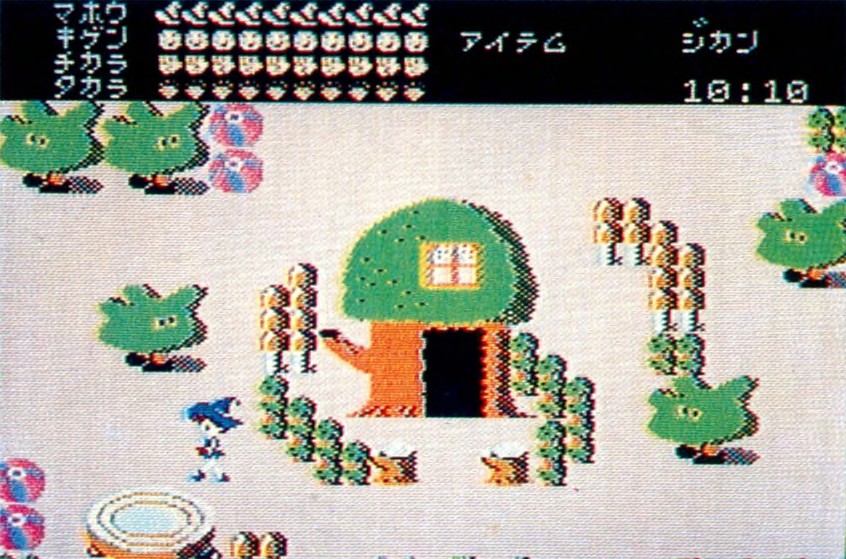
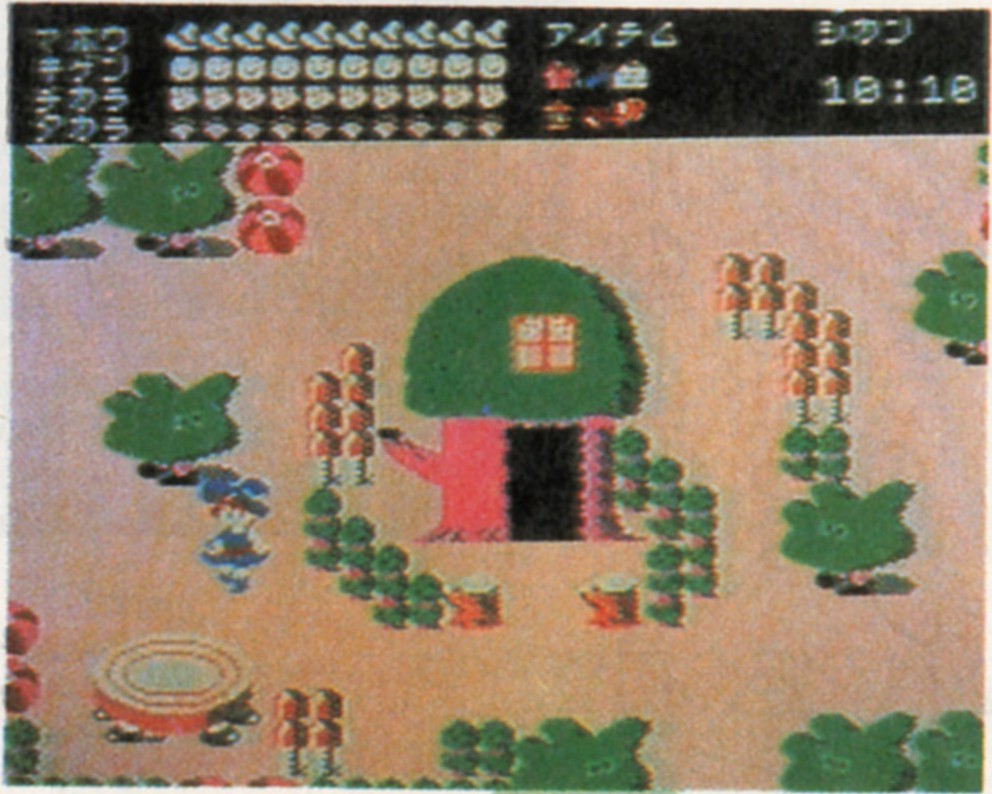
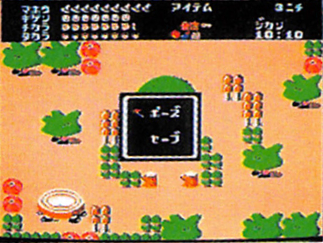
The HUD as well as Cocona's sprites went through some dramatic changes over time.
Famitsu Issue 9 |
FamiMaga Issue 24 |
Manual |
Final |
|---|---|---|---|
 |
 |
 |
 |
During 1986, the HUD was an obvious placeholder with max stats, all items (once implemented) and the time stuck at 10:10. The day counter was not implemented at this time. Interestingly, the "Items" header and the clock seem to be sporadically shifted up or down a tile seemingly at random during this time. Cocona's sprites were finalized by December 1986, the font, the HUD layout, and possibly the NPCs were likely finalized by February of 1987. The manual still shows a 10:10 time, for whatever reason. A later section of the manual that covers all the HUD elements individually shows the old font and a 10:10 time, with no mention made of a day counter.
In addition, NPCs weren't added until January or February of 1987. As a result, early marketing for this game seems to heavily play up the idea of playing with Cocona like a doll and tending to her needs, and at least one magazine writer was amused at the idea of a care-free video game with no enemies. The final version of Cocona World did include hostile NPCs, and given the game's obvious Zelda influence, was likely always intended to have them.
Map#
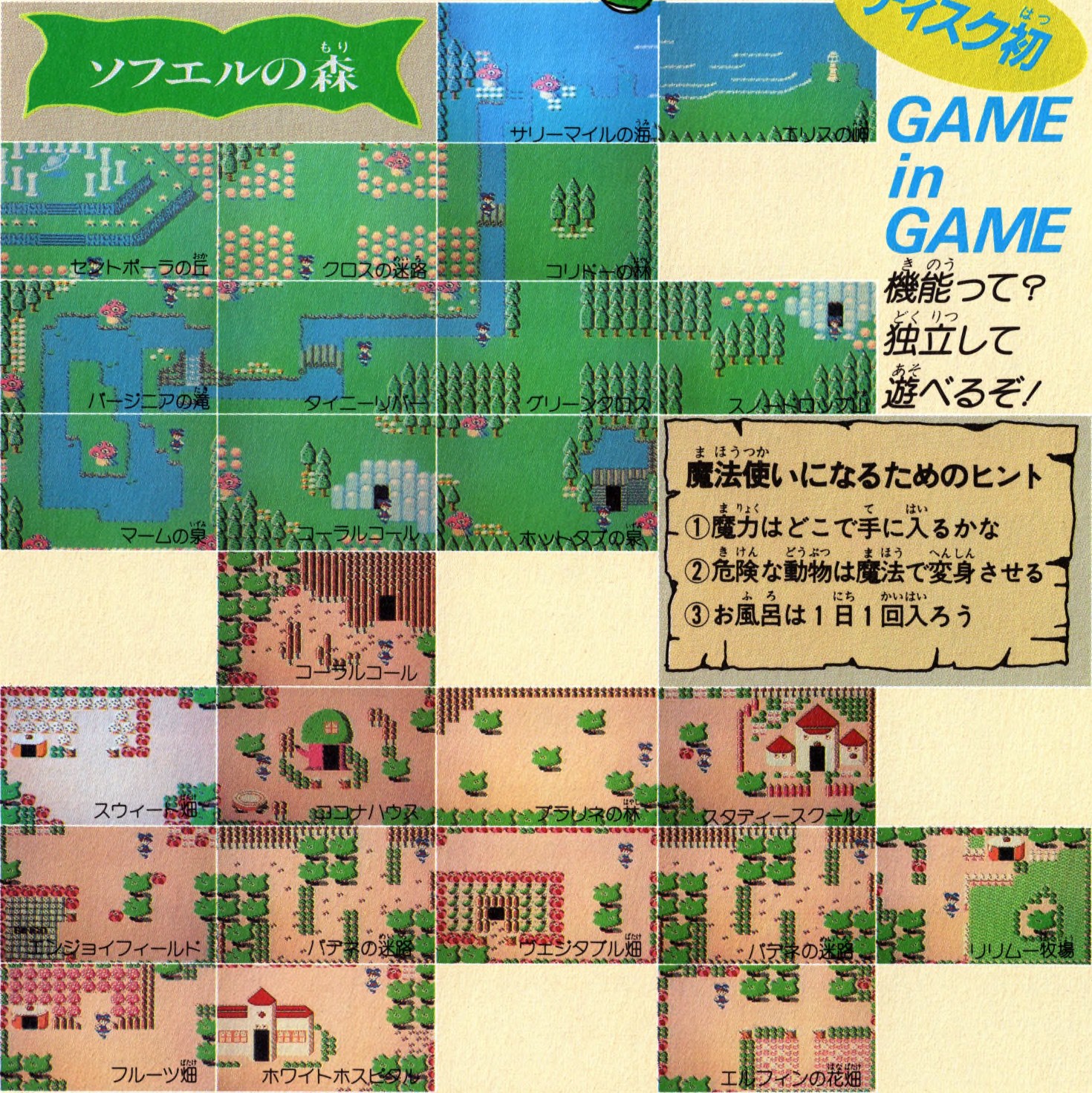
The entire game world is small enough to print in a magazine, and so it was. This makes it possible to see its progression over time.
Famicom Hisshoubon #12 |
Final |
|---|---|
 |
 |
 |
(Note that the palette differences in Marshland are due to the game's day/night cycle.) The only new room is the top-most room, "Flower Power". Aside from that, some rooms were edited to ensure that Cocona can only enter events from the bottom.
These maps (as well as simplified maps in Famitsu and Famimaga from March/April 1987) also give official names for every room in the game:
Japanese |
Translated |
|---|---|
チャッピィランド |
Chappyland |
フラワーパーワ |
Flower Power |
サリーマイルの海 |
Sari-Mairu Sea |
イリスの岬 |
Irisu Cape |
セントポーラの丘 |
St. Paul's Hill |
クロスの迷路 |
Cross Maze |
コリドーの林 |
Korido Forest |
バージニアの滝 |
Virginia Falls |
タイニーリバー |
Tiny River |
グリーンクロス |
Green Crossing |
スノードロップ山 |
Snowdrop Mountain |
マームの泉 |
Maamu Springs |
ホツトタプの泉 |
Hot Tab Springs |
コーラルコール |
Coral Call |
マツシュランド |
Marshland |
スウィート畑 |
Sweet Fields |
ココナハウス |
Cocona's House |
プラリネの林 |
Praliné Woods |
スタディスクール |
Study School |
エンジョイフィールド |
Enjoy Field |
パデネの迷路 |
Padene Labyrinth |
ヴェジタブル畑 |
Vegetable Garden |
リリムー牧場 |
Ririmuu Ranch |
フルーツ畑 |
Fruit Orchard |
ホワイトホスピタル |
White Hospital |
エルフィンの花畑 |
Elfin Flower Field |

|
To do: |
Boxart#
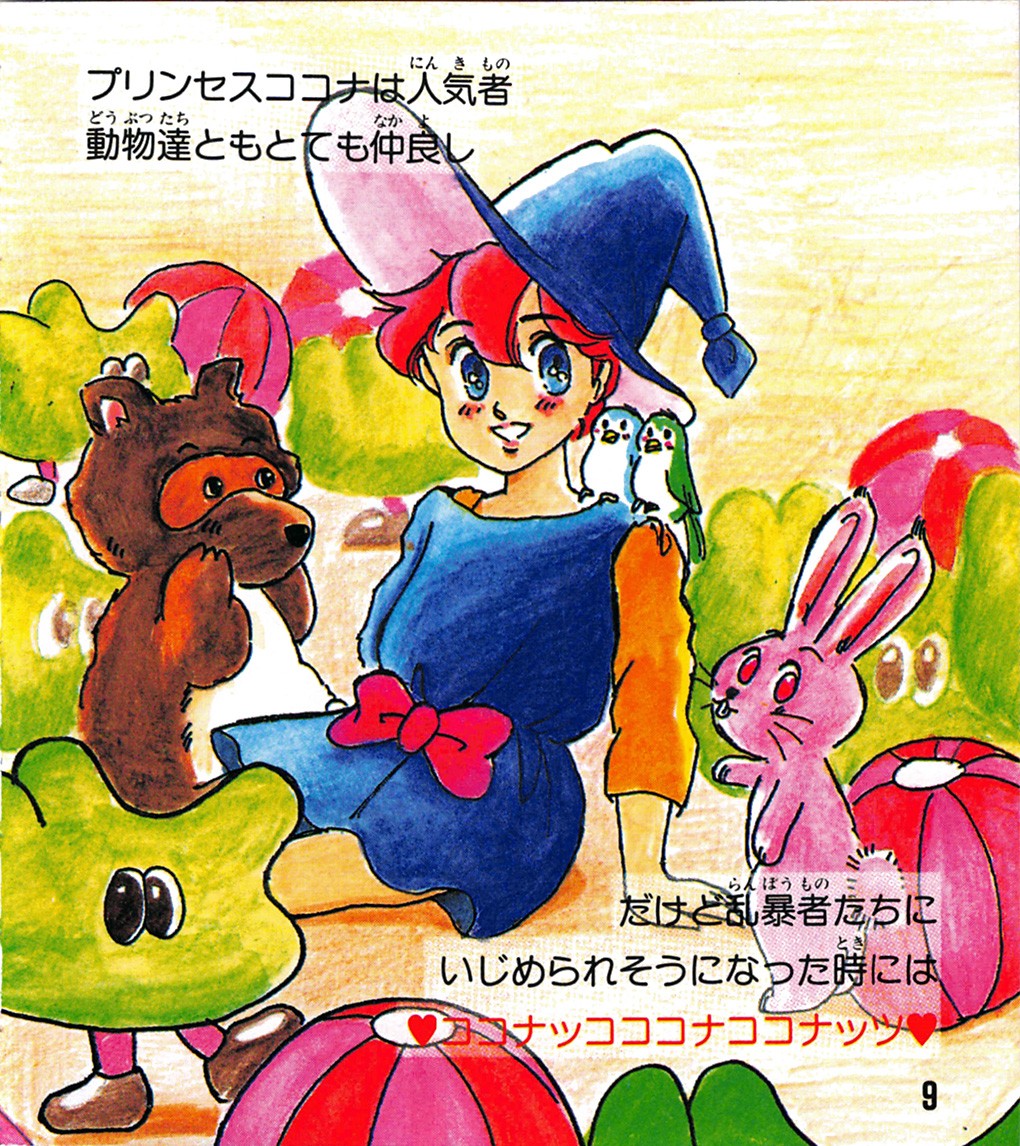
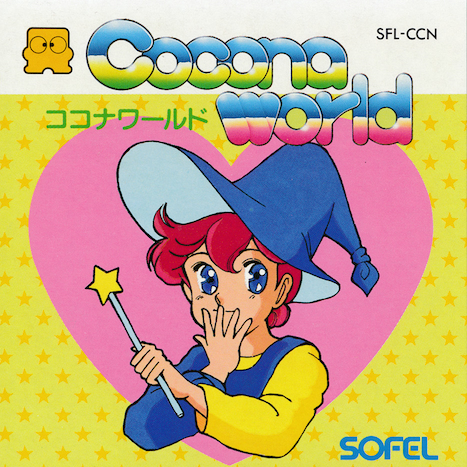
Famitsu Issue 19 from March of 1987 features a different box art than the final game. Instead of the final art, it uses an un-inked illustration from the manual.
Famitsu Issue 19 |
Manual, pg. 9 |
Final box art |
|---|---|---|
 |
 |
 |
Bingo#
|
Famitsu #18 |
Final |
|---|---|
|

|
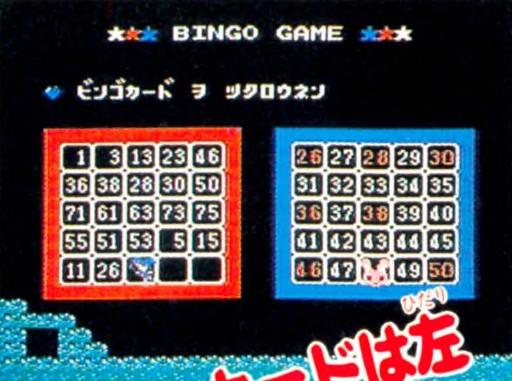
In addition to the use of the early font, no free space is present.
The screenshots in the manual seem to match the final, but an illustration of Cocona playing Bingo does not show a free space present on her board.
Horoscope#
|
Famicom Hisshoubon #12 |
Final |
|---|---|

|

|
- The early font is used.
- Kana for year/month/day are used instead of kanji.
- The cursor appears to be absent entirely.
|
Famitsu #18 |
Final |
|---|---|

|

|
- The developers seem to have been experimenting with a different screen layout at this time, before reverting to the earlier layout from 1986.
|
Manual |
Final |
|---|---|
|

|
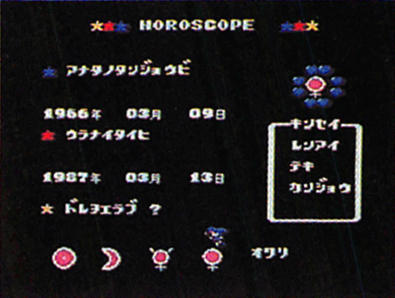
- Text spacing differences.
- The Cocona cursor's idle pose has her wand raised, instead of lowered like in the final.
|
Manual |
Final |
|---|---|
|

|
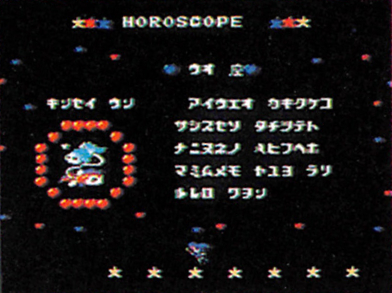
- Text spacing differences.
- At this time, the horoscope seems to be placeholder text consisting of all the katakana used by the game in order.
- Cocona's animation at the bottom seems to be unfinished.
Scribblebook#
Famicom Hisshoubon |
Famitsu Issue 18 |
Famitsu Issue 18 |
Final |
|---|---|---|---|
 |
 |
 |
 |
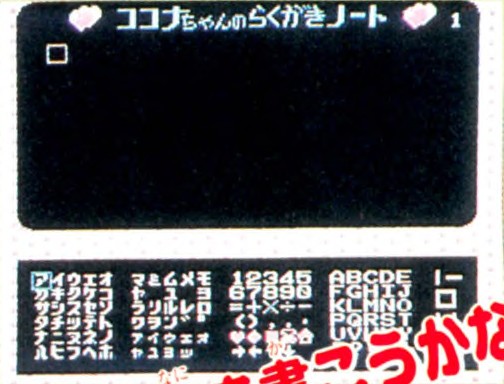
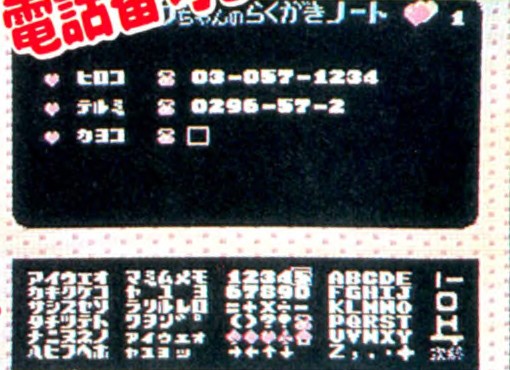
For whatever reason, Famitsu included screenshots of two different versions of the game side-by-side, showcasing the change in fonts.