Tamagotchi Classic, part of the "Tamagotchi L.I.F.E." initiative, was the first Tamagotchi release since the TamaTown Tama-Go two years earlier. It was later succeeded by the Tamagotchi Angel app.
Version Differences#

|
To do: |
Due to the long and turbulent release cycle of Tamagotchi Classic, the app released in many different forms in different regions of the world.
Tamagotchi L.I.F.E.#
Initially releasing in the USA and Canada to accompany the "Tamagotchi L.I.F.E." apparel brand, it adopted the brand’s name. The app was updated a number of times and was unique in that it featured both 1st generation and 2nd generation characters. The app was also free but offered in-app purchases to remove ads. It was later taken off the app store when the apparel line was discontinued.
Tamagotchi Classic (International)#
Shortly after the US release, the rest of the world received a similar app with a different name (so as to not associate with the America-exclusive L.I.F.E. brand). Unlike the original release, however, the app only featured the first-generation Tamagotchi characters and subsequent updates did not return this feature. Furthermore, the app was significantly more expensive than its American counterpart, though it did not contain ads. Later, the app was updated to include Apple Watch support.
Tamagotchi Classic 2nd Gen.#
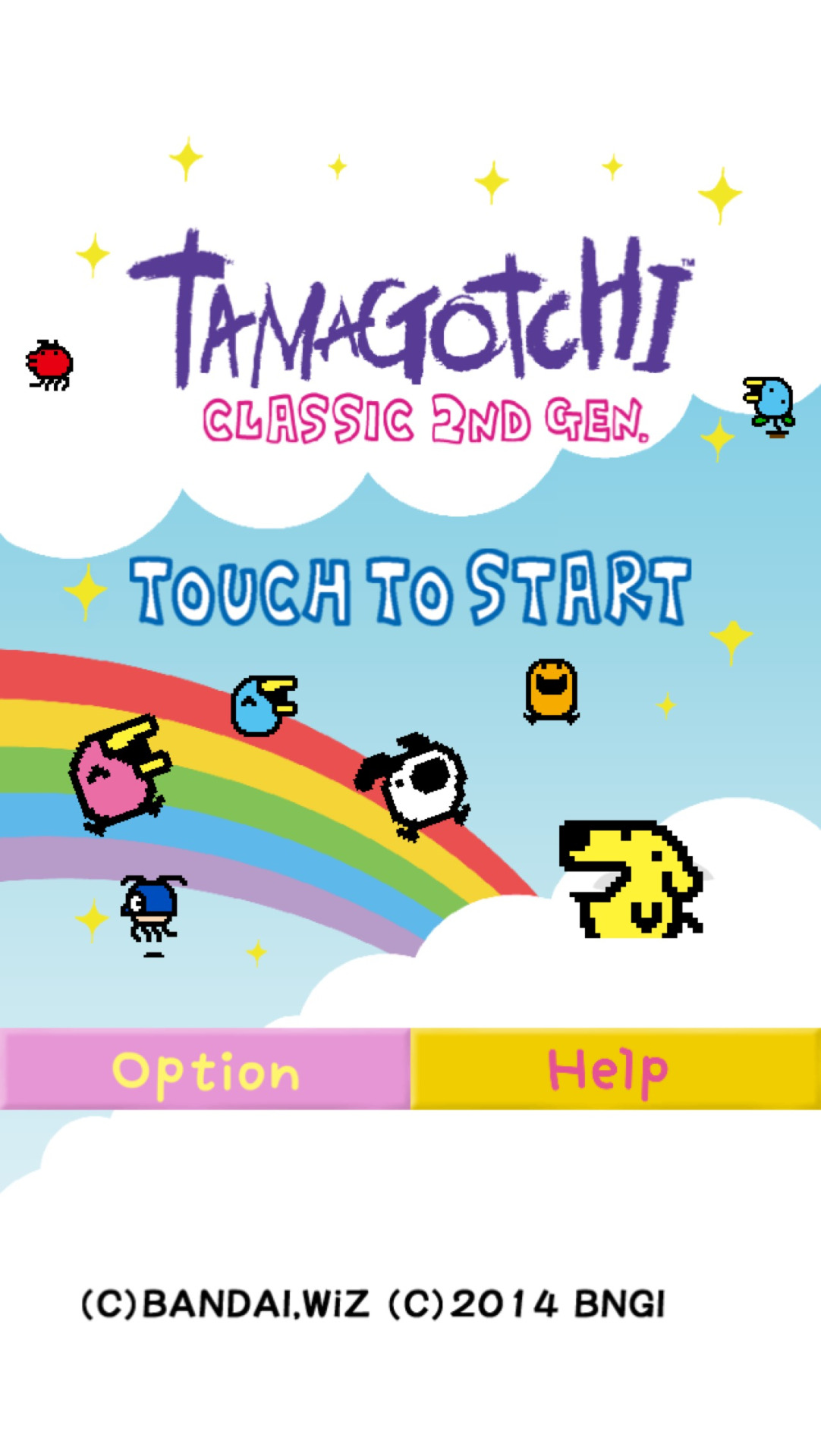
Later on, a variant of the Classic was quietly released internationally containing the 2nd generation characters. The title screen also matched that of the later versions of Tamagotchi L.I.F.E.’s title screen, though it had different characters. Presumably the app was split in two because the popularity of the app suggested there would be a lot of money to be made - given the relative obscurity of the 2nd gen app, however, it would be safe to assume it did not pan out that way.
Tamagotchi Classic (Re-release)#
Eventually, when Tamagotchi L.I.F.E. was discontinued and the apps were removed from American app stores, a variant of the Tamagotchi Classic re-released in the US. While mostly identical, the date on the title screen is given as 2015 instead of 2013.
App Icons#
Each release used a different icon.
Tamagotchi Classic |
Tamagotchi Classic 2nd Gen. |
Tamagotchi L.I.F.E. V1.0 |
Tamagotchi L.I.F.E. V2.0 |
|---|---|---|---|
 |
 |
 |
 |
Title Screen#

|
This page or section needs more images. |
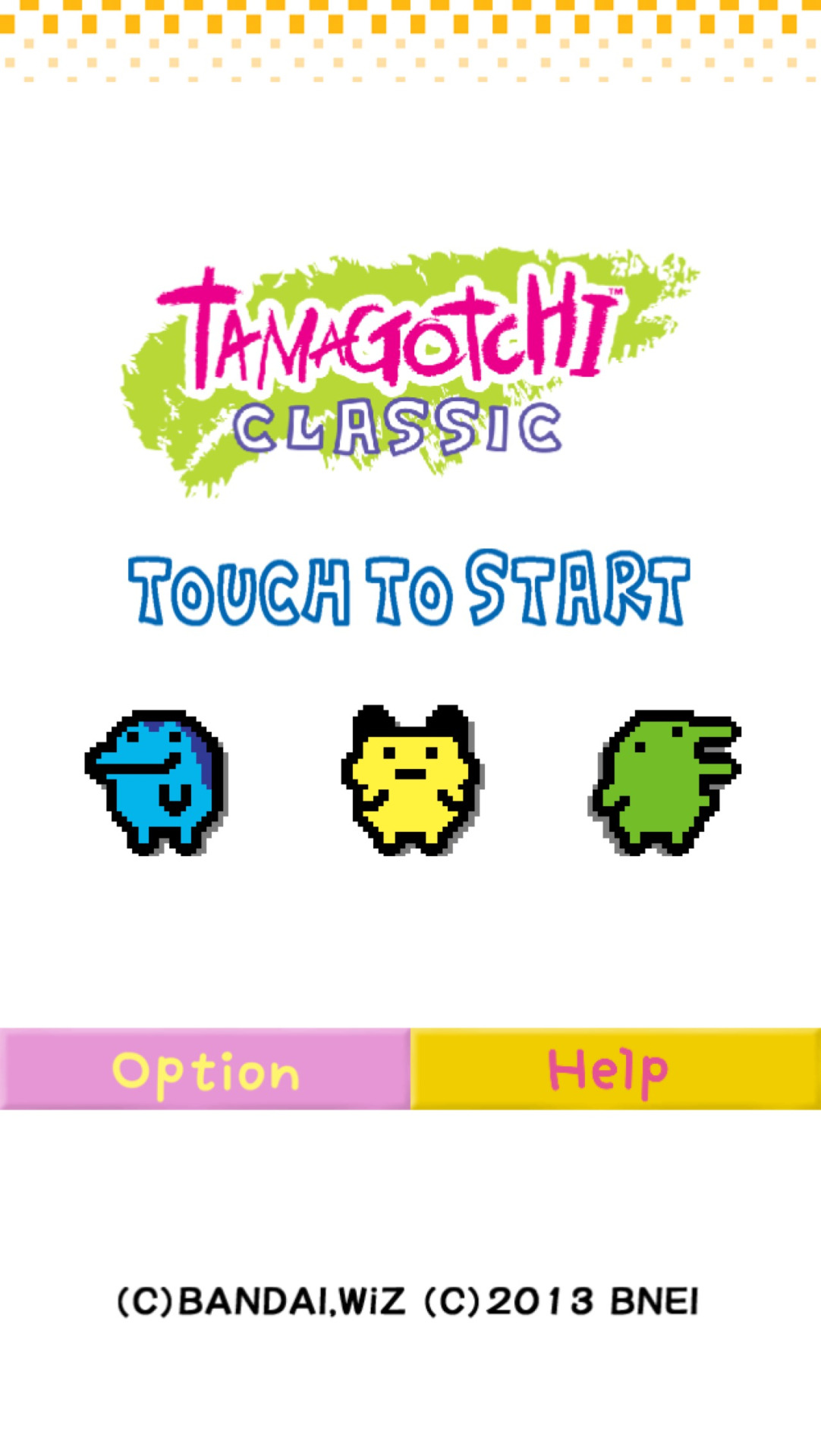
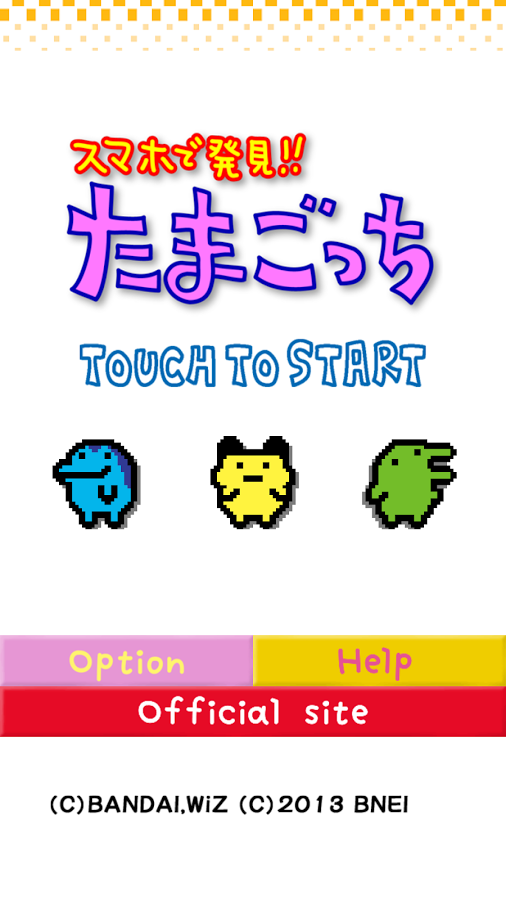
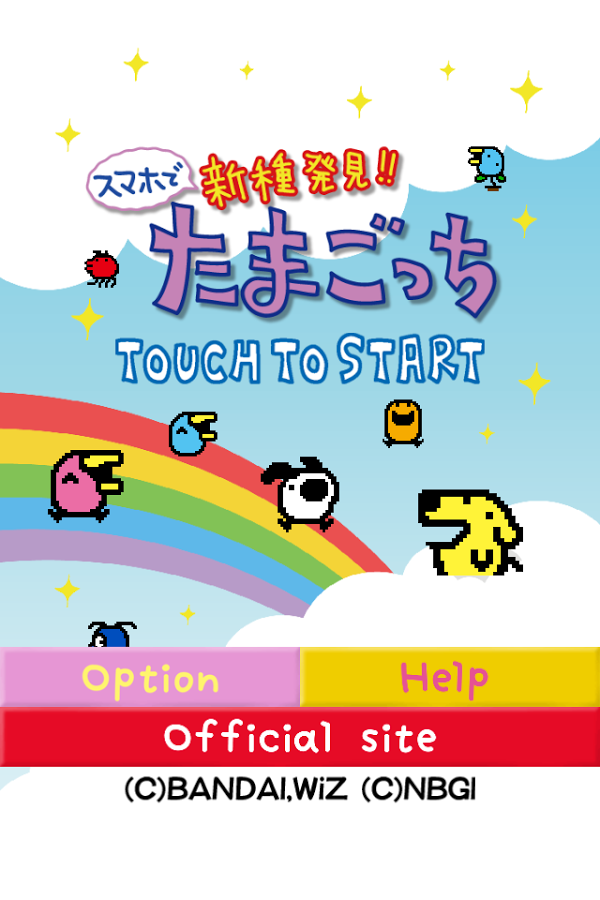
Each release differed slightly in the presentation of the title screen.
Tamagotchi Classic |
Tamagotchi Classic (USA) |
Tamagotchi G1 (Japan) |
Tamagotchi Classic 2nd Gen. |
Tamagotchi G2 (Japan) |
|---|---|---|---|---|
 |
 |
 |
 |
 |
Revisional Differences#
|
|
To do: |
Tamagotchi Classic (International, iOS)#
v1.0.0#
The original release.
v1.1.0#
Released October 2, 2013. Has a few minor bug fixes.
v1.1.1#
Released April 23, 2015. Adds Apple Watch and iOS 8 support.
v1.1.3#
Released April 27, 2015. The differences weren’t specified.
v2.0.1#
Released May 8, 2015. Has a few minor bug fixes.
Unused Graphics#
General Unused Graphics#
Image |
Description |
|---|---|
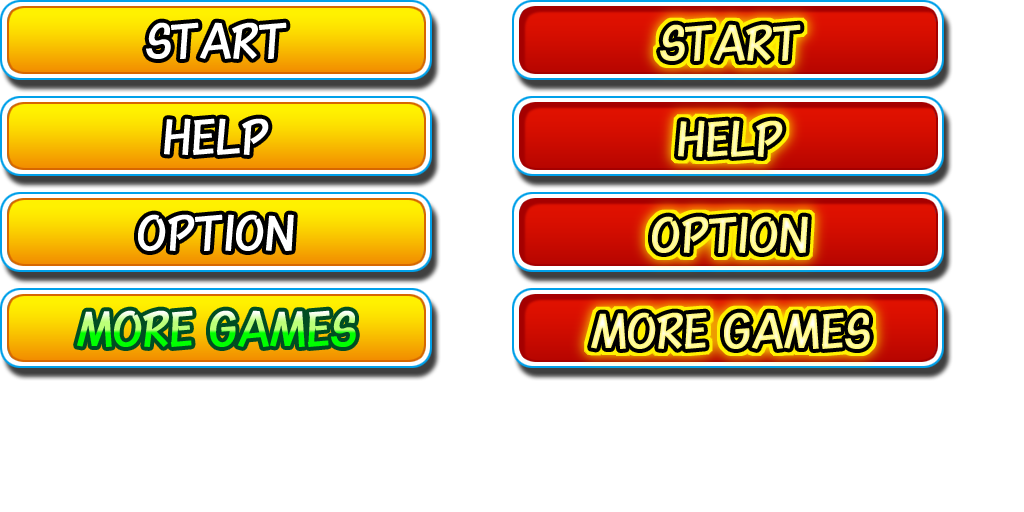 |
Graphics for unused title screen buttons. |
|
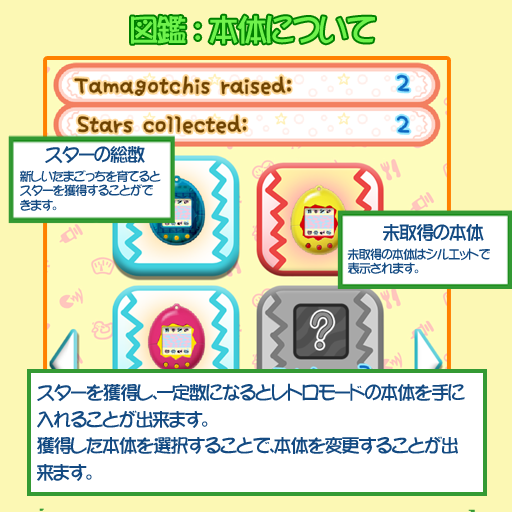
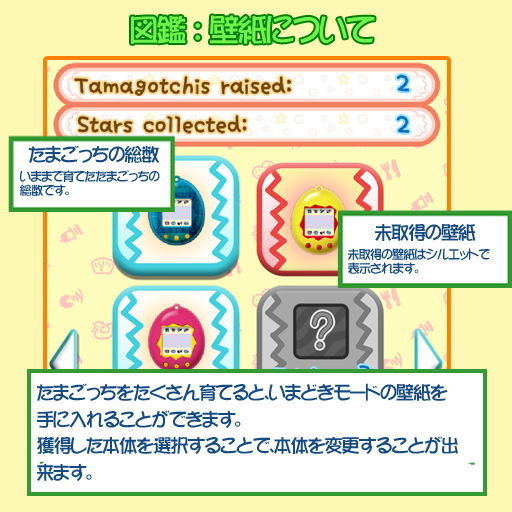
Unused tutorial images. It's possible that they're leftovers from the Japanese version of the app. Bizarrely, not only is the background colour completely different to the English tutorial images, but it seems the English tutorial doesn't cover this part of the app at all, and their filenames suggest that these images are meant to come after the rest of the images in the tutorial, so perhaps they just didn't get translated in time, or the translation was seen as unnecessary. Noticeably two of the images are almost identical bar a few character changes. |

Unused Character Sprites#
Image |
Description |
|---|---|
 |
Unused sprites for Oyajitchi. Like the original Tamagotchi, it is only obtainable in Japanese versions. |
 |
More unused sprites for Oyajitchi, found in the Tamagotchi L.I.F.E. variant of the app. Its filename suggests that it would replace the Zachi character in Japanese versions of the app, instead of Charitchi or Sekitoritchi like the original Japanese Tamagotchi (depending on whether it's a P2 Version 1 or a P2 Version 2). It's possible that this was chosen to avoid having to make a choice between either of the two original secret characters. Curiously it is the only such sprite to have a green outline instead of a black one. |
 |
The image used for Marutchi in the character menu contains two colours of Marutchi which cannot be raised - normally only adult characters have different color variants. |
 |
Full animation sets for red and blue variants of Babytchi exist, though neither of these characters can be raised. |
 |
Full animation sets for light pink and blue variants of Marutchi exist, though neither of these characters can be raised. For some reason these don't perfectly match the unused menu colours for Marutchi, but they do match the unused colours for Babytchi. |
 |
Full animation sets for light pink and blue variants of Kuchitamatchi exist, though once again neither of these characters can be raised. It's possible that these were just placeholder colours as they perfectly match those of Marutchi and Tamatchi. |
 |
Full animation sets for light pink and blue variants of Tamatchi exist, though once again neither of these characters can be raised. It's possible that these were just placeholder colours as they perfectly match those of Marutchi and Kuchitamatchi. Tamatchi is also unique in that it has a single animation frame for a red sprite, where a light pink Tamatchi should technically be. This could just be an error, however, as the red doesn't seem to match that of the unused Babytchi and Marutchi sprites. |
|
The Tamagotchi series | |
|---|---|
|
Handheld LCD |
|
|
SNES |
|
|
Nintendo 64 |
|
|
Nintendo DS |
|
|
Adobe Shockwave |
Devil Mametchi wo Sagase • Kabutotchi no Kiri Kabu Jump Game • Otototchi no Takara Sagashi Game • Santaclautchi no Present Haitatsu Game |
|
Android, iOS |
|