
|
This needs some investigation.
|
The GBA Spirits & Spells is the better-regarded portable version of Kalisto's last-ever game, released after they became spirits themselves, and because it features a cute witch it is ridiculously expensive on all platforms outside of Europe. Also, hope you like that 54-second piano loop...
Hidden Text#
The game features a large amount of debug text that is shared (with some slight variation) with many Magic Pockets GBA games.
Build Info#
Version |
ROM Address |
Text |
|---|---|---|
Europe |
0x3F89B0 |
|
US |
0x3EAAF0 |
|
Japan |
0x3F19D4 |
|
These strings are similar to other games by Magic Pockets. Notably, the European version was compiled two months before the original PlayStation 2 version was released. This reveals that, despite being the first to release, the Japanese version is the latest build of the game. Also of note is that all three strings use the game's original title of "Halloween".
Alongside the build dates is this message that was likely intended for prototype builds:
WWW;MAGICPOCKETS;COM
NOT FOR RELEASE OR PUBLIC PERFORMANCE
PRESS ANY KEY TO CONTINUE
Developer Credit#
Present at the end of the ROM in all versions, and repeated numerous times afterward as padding.
* Engine by www.MagicPockets.comInternal Level Names#
A list of internal level names can be found starting at 0x3F81B0 (Europe)/0x3EA168 (US)/0x3F0EE8 (Japan). Possibly these are intended for a debug menu. Presumably the first digit indicates the level, second digit the world, and B indicates its a boss level.
Level H011
Level H012
Level H013
Level H014
Level H01B
Level H021
Level H022
Level H023
Level H024
Level H02B
Level H031
Level H032
Level H033
Level H034
Level H03B
Error Messages#
A number of cache-related error messages are present starting at 0x3EA794, though only in the American version (the other releases replace all of the text with random characters):
CACHEVERIFY: INVALID END OF XLATSPRITE
CACHEVERIFY: MORE THAN 1024 BLOC
CACHEVERIFY: INVALID END OF FATSPRITE
CACHEVERIFY: INVALID SIZE
CACHEVERIFY: LRU PREVIOUS TOO LONG
CACHEVERIFY: LRU PREVIOUS TOO SHORT
CACHEVERIFY: LRU NEXT TOO LONG
CACHEVERIFY: LRU NEXT TOO SHORT
CACHEVERIFY: LRULINK TOO BIG
CACHEVERIFY: LRULINK BROKEN
This string is present at 0x3F807C (Europe)/0x3EA034 (US)/0x3F0DB0 (Japan), near the internal level names:
INITLEVEL: LEVEL ERRORThis string is repeated several times in different locations near the end of the ROM, alongside the build date and debug text:
Link disconnected Game pausedUnused Graphics#
Hidden Images#
Present in all versions are a set of four JPEG images that are never used in-game. It is not known if there is any code that would cause the game to display these images or if they are simply for padding or testing for the JPEG format this and other Magic Pockets games use.


The first two images also appear in Road Rash: Jailbreak, while the second image also appears in Baldur's Gate: Dark Alliance. The third and fourth images are unique to Spirits & Spells. The first picture has クレモン (KUREMON) written in Katakana, according to the game's credits and one of the hidden images from F1 2002, the man in the photos is Clément Cordé, the lead programmer of the game.
For whatever reason, only 21 of the game's 25 images can be extracted from the European version. The ones that cannot be extracted are the first three hidden images and, oddly, the background used in the training and difficulty select menus.
Title Screen Backgrounds#
While these graphics are used, the bottom of the mountains and the far right of the entrance can't be seen normally due to the former being obscured by the latter and the screen not scrolling fully to the right. The mountain background has a hidden portion at the bottom left that looks like the sky background used in the title screen.


Unused Sounds#
Audio |
Comment |
|---|---|
An alternate death sound for Greg. Judging from the background bubble noises, it was likely intended for drowning, which uses a different sound. |
|
An alternate attack sound for Greg. |
|
A grunt. Likely intended for an enemy or boss. |
|
A strange monster death sound. |
|
A weird wind or growl sound. |
|
A short mechanical noise. |
|
The piston sound from the console version. This version doesn't feature any pistons. |
Hidden Areas#
Using the following CodeBreaker codes for the European version to be able to jump infinitely, it's possible to reach parts of levels the player was not intended to see.
Master Code |
Unlimited Jumps |
|---|---|
000036CE 000A |
D0000020 0001 |
The Endless Corridor#


In the first room the player can get out of bounds and see all the rooms in the level outside of them. The final room can be found by going all the way to the right. Under it there is a random assortment of switches, background elements that use two layers (doors, broken walls, and broken floors), and the doors used in the main "Hub".
These were likely used for testing and/or for the developers to quickly copy-paste.
|
Off |
On |
|---|---|

|

|
The switches can be turned on, which transforms them into door tiles. However, they don't seem to do anything.
The Robot Factory#

Several long metal platforms can be found at the top of the level, over the section with lava drops. Getting on top of them will soft lock the player.
|
Off |
On |
|---|---|

|

|
Just like "The Endless Corridors", some random interactable background objects can be found and interacted with at the top of the level, near the conveyer belts section. The switch here also appears to do nothing. Like the metal platforms, standing on top of the switches will soft lock the game.
The Mad Scientist#

At the very top of the arena, some glitched tiles can be seen.
Regional Differences#
Company Logos#
|
US |
Japan |
|---|---|

|

|
|
Europe/US |
Japan |
|---|---|

|

|
- The American and Japanese versions have their respective publisher's logo before the Wanadoo and Magic Pockets logos.
- In the Japanese version the copyright date on the Wanadoo logo screen was updated to 2003.
Language Select#
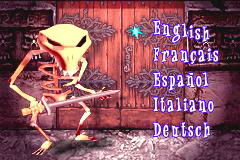
- The European version has a language select screen that is completely absent from the US and Japanese ones, which only have English or Japanese text respectively. While the background image is present in all versions of the game, only the European version uses it.
Main Menu#
Europe |
US |
Japan |
|---|---|---|
 |
 |
 |
|
Europe/US |
Japan |
|---|---|
|
|
|
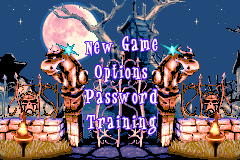
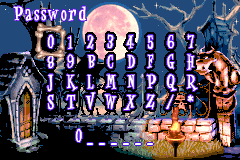
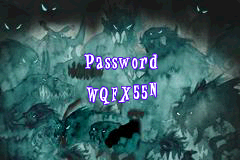
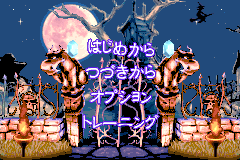
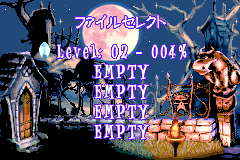
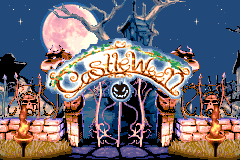
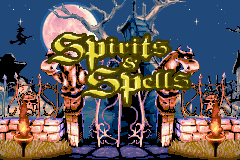
- Aside from the logo changes, the Japanese version adds a new sprite for its subtitle. This sprite is completely static, unlike the main title which has a scaling effect, and appears once the main title is normal sized.
- Password/Load Game and Options switched places in the Japanese version.
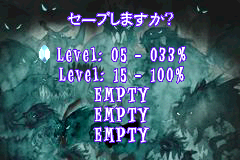
- The Japanese version ditches the password system from the European and American versions in favor of a battery save system. Strangely, the Load Game sub-menu is completely lacks sound effects and the text animation, although the Save menu does have sound effects.
Training Mode Prompts#
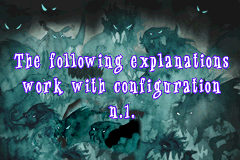
- The Japanese version makes the button prompts in the training mode intros change depending on the current button configuration, while in the European and American versions they only use the default button configuration. Because of that, this message at the start of the training mode is not present in the Japanese version.
Cutscenes#
|
Europe/US |
Japan |
|---|---|
|
|
|
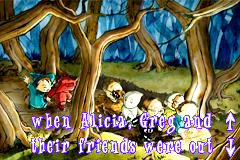
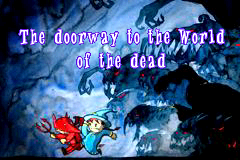
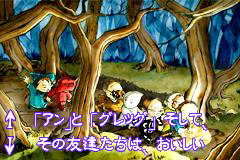
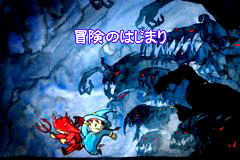
- Text scrolling is over 2 times slower in the American version and has minor graphical issues not present in the other versions.
- In the Japanese version the arrow prompts were moved to the left and are 2 pixels higher than the European and American versions.
- Alicia's name was changed to Anne in the Japanese version, perhaps so it was easier to pronounce by Japanese audiences.
- Some levels have completely different titles in the Japanese version, such as the new name for "The Doorway to the World of the Dead", which roughly translates to "The Beginning of the Adventure". Other levels, such as "The Haunted House", use direct translations of the original names.
Level Differences#
|
Europe/US |
Japan |
|---|---|
|
|
|


- The Japanese version replaces the sparks that were a carryover from early versions of the console game with the crystals from the final version.
- The Japanese version replaces the Normal mode with Beginner mode, which gives you 5 lives instead of 2 at the start and the levels have fewer enemies.
- "The Doorway to the World of the Dead" has a slightly different starting position in the Japanese version.
- The European version suffers from slowdown in certain sections of some levels, which was fixed for the other releases.

- In the European version, "The Frozen Crypts" has a wall you can go through in the second hidden room under fake pits by positioning yourself at the left edge of the moving platform, then moving left at the right time. If you get here it is impossible to get back out without dying. This was fixed in the American and Japanese versions.

- In the European and American versions "The Endless Corridors" has what appears to be an invisible glitched chest in the window at the bottom right of the left-most door. Hitting it freezes the game, although the music and sound effects keep playing as normal. This bug was fixed in the Japanese version, with the hidden chest being removed.
|
Europe |
US/Japan |
|---|---|

|

|
- One platform in "The Tall Tower" has a missing tile in the European version, making the background visible. This was fixed in the American and Japanese versions.
|
Europe/US |
Japan |
|---|---|
|
|
|


- In Normal mode it appears the developers accidentally removed the yellow bounce-pad creatures used in "The Endless Corridors" and "The Robot Factory" to get hidden extra lives and sweets. Due to this oversight the player can only get 73/75 and 35/46 sweets in these levels respectively, thus it is impossible to 100% the game in this mode. This issue was fixed in the Japanese version, and doesn't occur in any version on Hard mode (and Time Attack, since it is the same as Hard mode).
Credits#
Europe |
US |
Japan |
|---|---|---|
 |
 |
 |
|
US |
Japan |
|---|---|
|
|
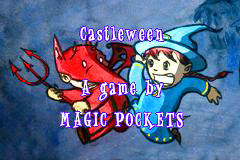
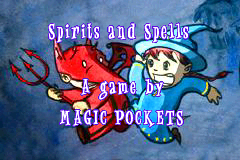
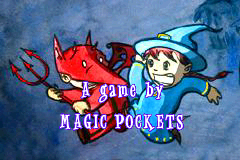
- The European and American versions have their respective names at the start of the credits, while the Japanese version rather clunkily removes it.
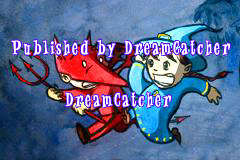
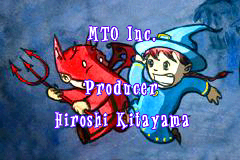
- The American and Japanese versions add their respective publishers' credits before the Wanadoo credits.