 This article has a talk page!
This is a sub-page of Game Boy Camera.

|
To do: |
Title Screen#
|
Japan |
US/Europe |
|---|---|
|
|
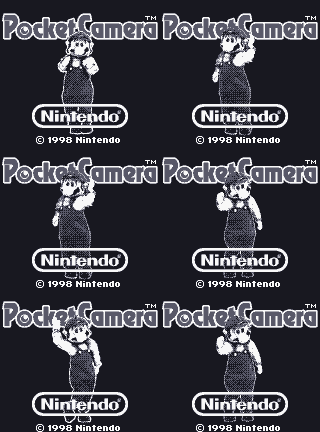
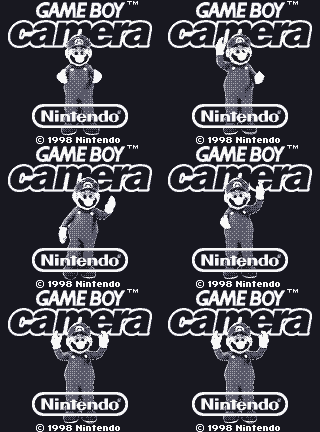
The name and dancing Mario were both changed for the international releases.
Menus#
Main Menu#
|
Japan |
US/Europe |
|---|---|

|

|
The Pocket Camera logo was removed and "SHOOT" and "VIEW" switched places for the international releases. The menu names also aren't in bubbles in the international releases and are in rectangles instead.
View#
|
Japan |
US/Europe |
|---|---|

|

|
The text "SPORADIC VACUUM", a developer's (Hirokazu Tanaka) nickname, got removed from international releases, probably because most gamers outside of Japan wouldn't know what it means.
Space#
Japan |
US/Europe |
Description |
|---|---|---|
 |
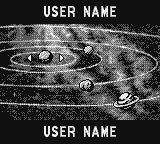 |
"OWNER NAME" was changed to "USER NAME" for the international releases. |
 |
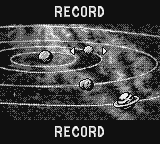 |
"REPORT" was changed to "RECORD" for the international releases. |
 |
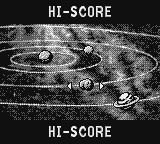 |
"SCORE" was changed to "HI-SCORE" for the international releases. |
 |
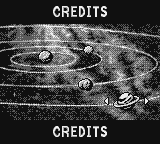 |
"STAFF ROLL" was changed to "CREDITS" for the international releases. |
In the US/European version, the top of the screen is covered with a duplicate of the text (with the black overlay) at the bottom, apparently, because someone was too lazy to bother erasing the text from the background image. The black overlay also means that it is no longer possible to see the top portion of the space background, however the tiles that make up that portion are still present in VRAM; just unused.
Animation#
|
Japan |
US/Europe |
|---|---|

|

|
This menu was completely changed for the international releases, with a Western animation style rather than a Japanese anime style.
Link#
|
Japan |
US/Europe |
|---|---|

|
|
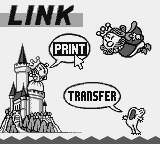
This menu was renamed from "ACCESS" to "LINK".
Print#
|
Japan |
US/Europe |
|---|---|

|
|
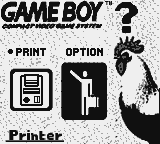
The image of a printer ink refill syringe was changed to an image of the Game Boy Printer, probably to avoid confusion with a medical syringe based on Nintendo's censorship policies. The trademark symbol was moved and made clearer to read.
|
Japan |
US/Europe |
|---|---|

|

|
"LINE" was changed to the plural "LINES". Curiously, the Japanese version already uses the plural "PHOTOS". "POCKET PRINTER" was localised to "PRINTER". There are two ellipsis next to "CANCEL" rather than the original four next to "やめる" probably to account for space. Rather than translating "かんかく" to "SPACE", the English version uses "MARGIN". Additionally, ごうけい means "TOTAL", but to avoid redundancy this was changed to "PRINT".
|
Japan |
US/Europe |
|---|---|

|

|
The screen that appears as a picture is printing was edited slightly. The big "Love" graphic was removed, as was the name of the bear enemy from Super Mario Land 2 (Tamanoripu).
Transfer#
|
Japan |
US/Europe |
|---|---|

|

|
The "stand by" screen that appears when transferring pictures between two Game Boy Cameras is different between both versions. The international versions uses art of Peach and Wario from Mario Kart 64. In the Japanese version, there is an inverted picture of two people in an Ukiyo style, and Nintendo's first logo and text which translates to "full of ideas". The original Nintendo logo fades in and out.
Nintendo produced various products with Ukiyo-e, primarily Hanafuda playing cards. It's unknown if this image is taken from one of their earlier works, but it's entirely possible.
Special#
|
Japan |
US/Europe |
|---|---|

|

|
The strange image in the Japanese release was changed to an image of Mario for the international releases.
Album B#
These are pictures that come pre-loaded with the device. Since they were all rearranged for the international releases, they've been organized by region exclusives.
Unlocked#
Picture |
Description |
|---|---|
 |
B05 |
 |
B06 |
 |
B07 |
 |
B08 |
 |
B11 |
 |
B12 |
(Translations: RahanAkero, divingkataetheweirdo)
Picture |
Description |
|---|---|
 |
B03 |
 |
B08 |
 |
B13 |
 |
B14 |
 |
B15 |
 |
B16 |
Unlockable#
Picture |
Description |
|---|---|
 |
B17 |
 |
B19 |
 |
B22 |
 |
B23 Chansey is actually an early version of its sprite from Pokémon Gold, released nearly two years later! The early version seen here can also be found in the game's Space World 1997 demo, dated three months prior to the release of Pocket Camera. |
 |
B24 |
Picture |
Description |
|---|---|
 |
B17 |
 |
B19 |
 |
B22 |
 |
B23 |
 |
B24 |
 |
B25 |
 |
B26 |
 |
B27 |
 |
B28 |
 |
B29 |
 |
B30 |
Games#
These are a few minigames you can play. They have a "game face" feature that allows you to implant your face into the game. The faces shown here are optional pre-loaded ones you can play with.
Space Fever II#
A supposed sequel to Nintendo's early Space Invaders knockoff for arcades.
Japan |
US/Europe |
Description |
|---|---|---|
 |
 |
The "II" in the middle of the title graphic was made a bit taller for the international releases. |
 |
 |
This is the first boss of the game. The second one is identical. |
 |
 |
Upon beating the third boss (your own game face), this message is displayed, and the game loops back to the beginning (but a bit faster this time). The grammar in the message was fixed for the international versions. |
Ball#
A remake of the Game & Watch game of the same name.
Japan |
US/Europe |
Description |
|---|---|---|
 |
 |
This is the first face option. |
 |
 |
This is the second face option. |
 |
 |
The face that appears when you lose got changed for the international releases. |
DJ#
Not really a game but a music-making application.
Japan |
US/Europe |
Description |
|---|---|---|
 |
 |
Some of the main menu's text was changed for the international releases. The Japanese version also starts you off on the "Save Data" icon, while the international versions starts on the "Sample" icon. |
 |
 |
This is the first face option. The second one is identical. |
 |
 |
The name of the program was changed from TRIPY-H to TRIPPY-H. The "frequency" abbreviation was also changed from "FEQ." to "FRQ." |
 |
 |
Another instance of the name change. |
Run! Run! Run!#
An unlockable game that involves racing a bird and a mole by doing a lot of button mashing.
Japan |
US/Europe |
Description |
|---|---|---|
 |
 |
The title screen was completely changed for the international releases and actually represents what the game is about. |
The music that plays on this screen was also changed. In both versions of the game, these two songs can also be heard in the game's Animation mode as song No. 04 (International version) and song No. 28 (Japanese version). |
||
|
 |
This is the first face option. The Japanese version reuses a face from Ball. |
|
 |
This is the second face option. The Japanese version reuses a face from Space Fever II. |
Frames#
Normal#
Japan |
US/Europe |
Description |
|---|---|---|
 |
 |
No. 01 |
 |
 |
No. 02 |
 |
 |
No. 07 |
 |
 |
No. 09 |
Wild#
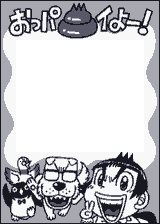
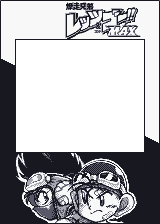
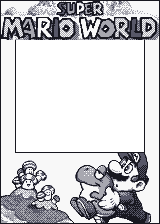
Tall frames that can only be selected when printing a picture.
Japan |
US/Europe |
Description |
|---|---|---|
 |
 |
No. 02 |
 |
 |
No. 03 |
 |
 |
No. 05 |
 |
 |
No. 06 |
 |
 |
No. 07 |
 |
 |
No. 08 |
Stamps#
You can paste these into your photos.
Japan |
US/Europe |
Description |
|---|---|---|
 |
 |
The "small face" stamps are mostly identical, except for one. A stamp of a bulging eyeball was replaced with a big nose. |
 |
 |
The number of big stamps, however, was considerably reduced for the international releases. The ringed bull nose and curly mustache are international exclusives. The ghost's face was also slightly edited. |
 |
 |
The Pokémon Red/Green stamps were also heavily cut down. The first 10 stamps in the Japanese version are available from the start, while the last 10 are unlocked by scoring 500 points in Ball. Interestingly, in both versions, the Pikachu stamp is actually from the early development of Pokémon Gold, which released two years after Pocket Camera. Until the game's Space World 1997 demo was leaked onto the internet in 2018, this connection was completely unknown, as its sprite was completely redrawn between the demo and the final game. |
x |
 |
These Mario stamps are exclusive to international releases. |
 |
 |
The Japanese postal marker (〒) and yen (¥) stamps were removed. There are now stamps for the cent sign (¢) and pound sign (£). Specifically, the stamps in the fourth row (top to bottom) 〒$¥, become $¢£. Four stamps from the Japanese version (from left-to right), were originally three particles (suggesting the player should look where the glove is pointing), a pointing glove, "check" (チェック) and "look, look!" (みてみて!). These were replaced with indifferent, sad, happy faces and the copyright symbol (©) respectively. Two rows of stamps were added to the bottom of the symbols stamps for the international releases. Row one: Some small stamps occuping only the top portion of the tile space; two diagonal lines (lower and upper respectively), a curve, a straight line, as well as an at symbol (@). Row two: four spray-paint like effects (lighter (completely white) through to darker), and possibly the five dot punctuation symbol (⁙). |
Misc#
Hot-Spot#
|
Japan |
US/Europe |
|---|---|

|

|
The text "PICTRIP" was changed to "HOT-SPOT" for the international releases.
In the Japanese version, if you press B while a song is playing, the music will continue to play outside of the Hot-Spot selection menu. The international versions will stop the music after exiting the menu.
If you attempt to set a Hot-Spot in any of the Album B pictures, only the exit menu will appear. GameShark code 01??D8D5 ID 1E-3B will allow you to access the Album B photos.
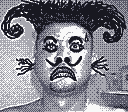
Error Faces#
Two of the three faces that appear when an error happens (or when you select Run in one of the menus) were changed for the international releases.
|
Japan |
US/Europe |
|---|---|
|
|
|



User IDs#
|
Japan |
US/Europe |
|---|---|

|

|
The Japanese User IDs begin with PC, e.g. PC-12345678, but in the international releases the PC was changed to GC, e.g. GC-12345678, because of the device's regional name change. The Japanese version allows you to record your blood type. Interestingly, the Pocket Camera logo was outright removed instead of being replaced with the Game Boy Camera logo as seen in previous examples.
Credits#
|
Japan |
US/Europe |
|---|---|
|
|
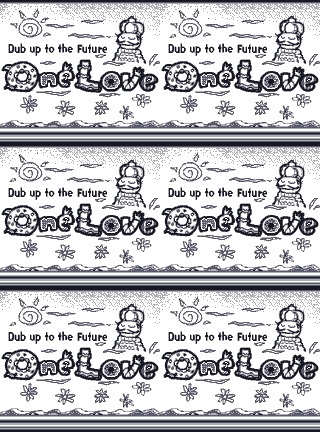
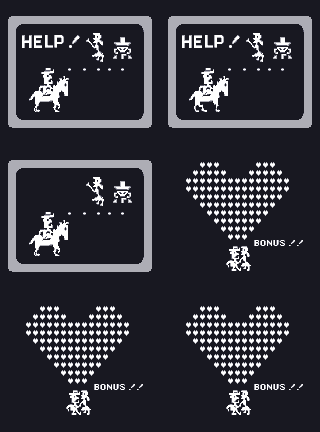
The intro animation of the credits was changed to scenes from Sheriff for the international versions.
|
Japan |
US/Europe |
|---|---|

|

|
The sentence "Don't butter me up!" was removed from the ending picture of the (real) credits sequence.
Super Game Boy Borders#
The logo on the border for the Super Game Boy has changed accordingly.
|
Japan |
US/Europe |
|---|---|

|

|