This is a sub-page of Clubhouse Games.

|
To do:
|
Title Screen#
|
Japan (both) |
North America/Europe |
|---|---|

|

|
Like in many other video games, the Nintendo logo is blue in Japan but red in the west. The Japanese logo is also slightly wider.
Japan (original) |
North America |
Europe |
Japan (re-release) |
|---|---|---|---|
 |
 |
 |
 |
Besides the name change, the artwork was replaced entirely between Daredemo Asobi Taizen and Clubhouse Games. The Japanese release of the international version changes the layout slightly for the bigger title, removes the category list while adding the shogi tiles and bowling ball, and updates the copyright year.
Menus#
Japan (original) |
International |
|---|---|
 |
 |
 |
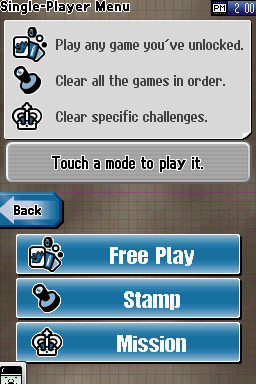 |
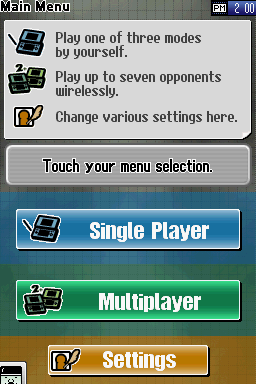
All of the game's menus were redone from scratch with completely different graphics; keeping only the layout intact.
Japan (original) |
International |
|---|---|
 |
 |
 |
 |
 |
 |
 |
 |
 |
 |
 |
 |
 |
 |
N/A |
 |
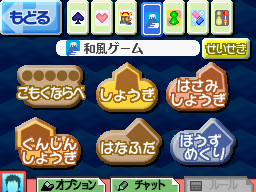
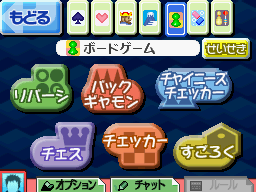
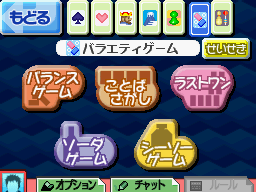
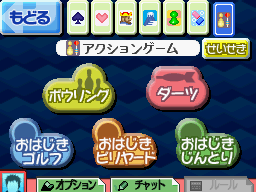
When changing pages in Daredemo Asobi Taizen, the icons have a dramatic "drop-in" effect that isn't present in the other versions. The icons themselves are different between versions. Compared to Daredemo Asobi Taizen, the international versions have 8 pages instead of 7 – despite removing the "Japanese Games" category, "Board Games" was split into "Basic Board Games" and "Advanced Board Games", and the "Single-Player Games" category was added. The order, and in some cases location, of the games was altered as well.
Games#
|
Japan (original) |
International |
|---|---|
|
|
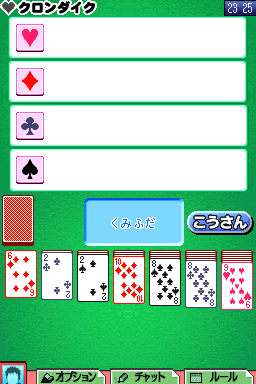
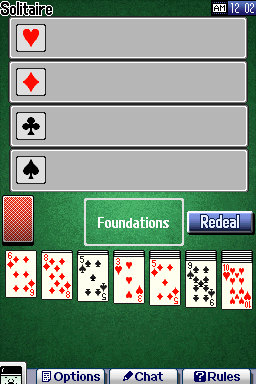
The cards in all card games look different in Daredemo Asobi Taizen, with more strongly-colored borders. The international version also turned boxes where the cards are placed from solid light blue to hollow and chalk-like, and made the mat a darker shade of green.
|
Japan (original) |
International |
|---|---|
|
|
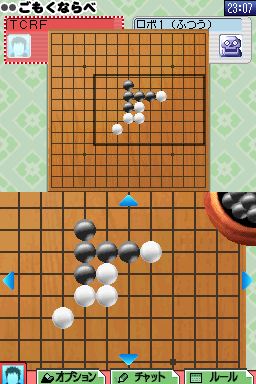
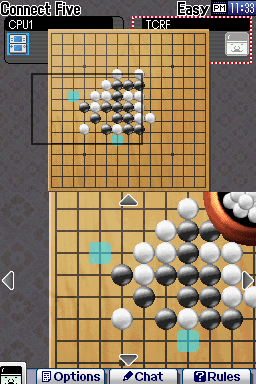
The wooden board was made lighter, and the background went from light green to gray.
|
Japan (original) |
International |
|---|---|
|
|
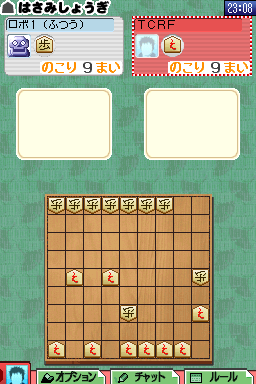
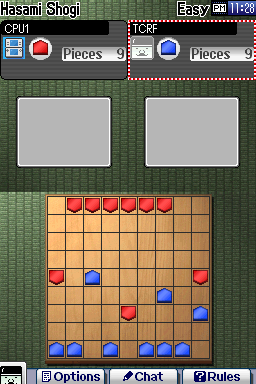
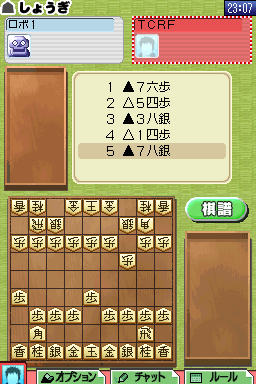
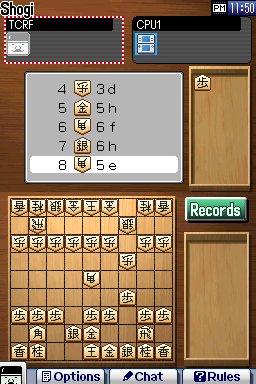
Besides the change to the pieces' design (see "Graphics" section), the wooden board was made lighter, and the design of the background went from leaf prints to a bamboo-esque texture.
|
Japan (original) |
International |
|---|---|
|
|
The wooden board and box were made lighter, and the background was changed from a greenish texture to wood.
|
Japan (original) |
International |
|---|---|
|
|
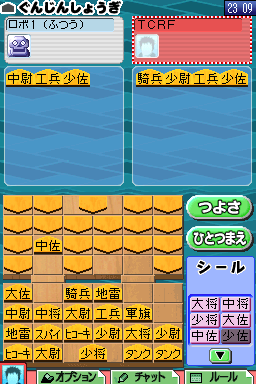
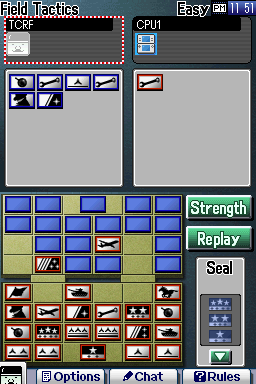
Besides the change to the pieces' design (see "Graphics" section), the board's wooden texture was turned stony, the background was redone completely, the "captured pieces" box was made solid, and the box of seals shows three of them at a time as opposed to six, with the seals themselves being changed from a purple rectangle that doesn't fit the pieces to a bluish, semi-transparent label that fits them pefectly.
|
Japan (original) |
International |
|---|---|
|
|
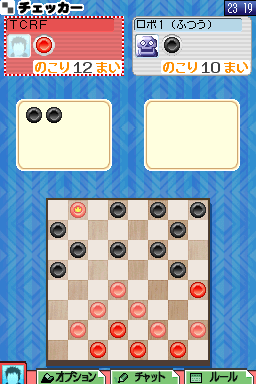
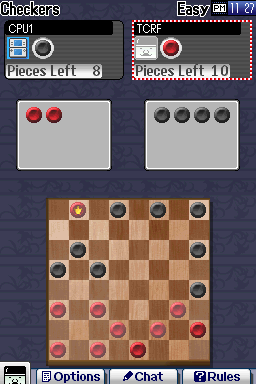
The colors of the board were altered, as was the shading of the pieces. The background changed from blue diamond shapes to some kind of weird print. The crown shape in the queens was completely redrawn.
|
Japan (original) |
International |
|---|---|

|
|
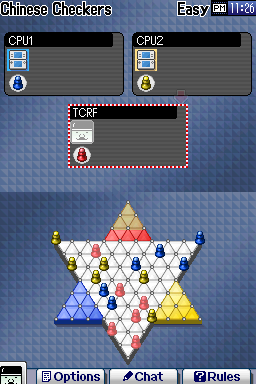
The background was changed from a plaid cloth to small dark blue squares. The UI shows which pieces belong to which player.
|
Japan (original) |
International |
|---|---|

|

|
The board and box of pieces was made a duller shade of green, the pieces themselves are shaded differently, and the background changed from checkerboarded to abstract stripes.
|
Japan (original) |
International |
|---|---|
|
|
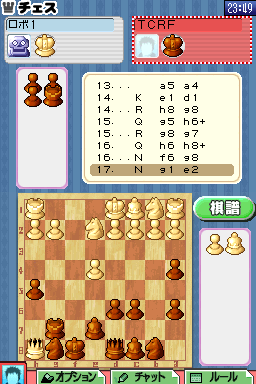
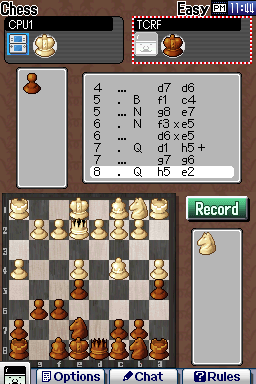
The colors of the board went from two shades of brown to black and white. The background was changed from blue to brown.
|
Japan (original) |
International |
|---|---|
|
|
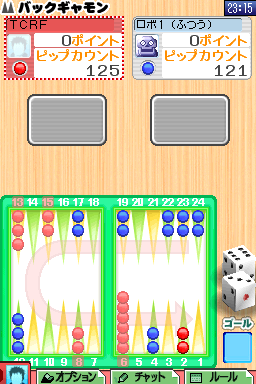
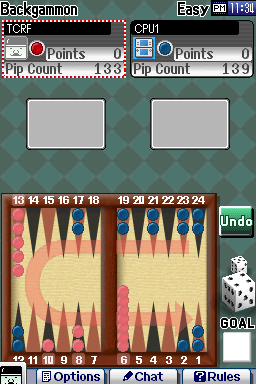
Besides the change to the pips' design (see "Graphics" section), the board was redone completely, using softer and more realistic colors. The background went from wooden to checkerboarded.
|
Japan (original) |
International |
|---|---|
|
|
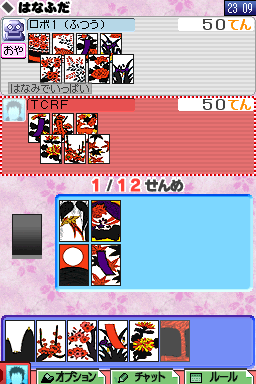
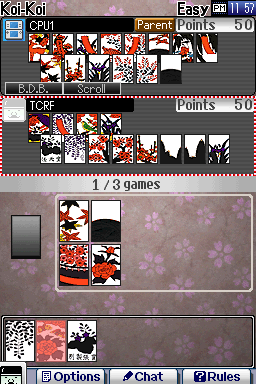
Besides the previously-mentioned change to the boxes, the back of the cards is now brighter and the background colors were altered.
|
Japan (original) |
International |
|---|---|

|
|
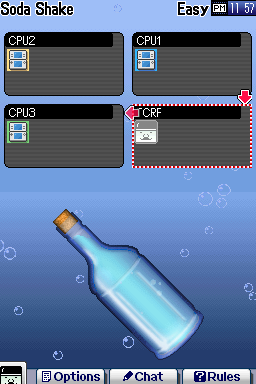
The bottle was recolored to look more realistic, and the background was changed from circles to a gradient.
|
Japan (original) |
International |
|---|---|
|
|
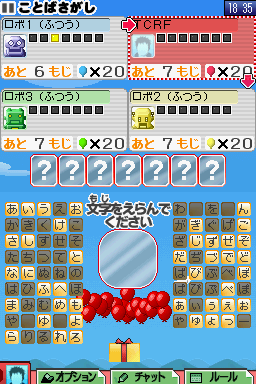
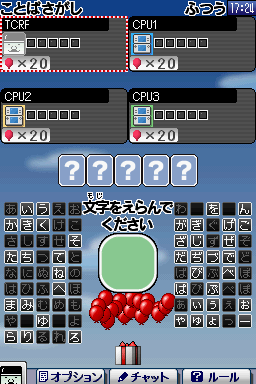
The color of the ? cards, the characters, the answer box and the present were altered. The balloons received minor shading touch-ups. The background was replaced for a more realistic-looking one.
|
Japan (original) |
International |
|---|---|
|

|
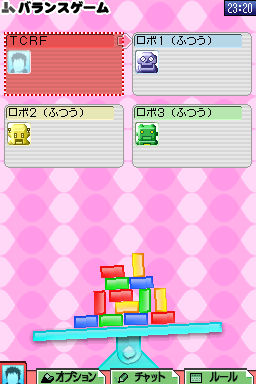
The background went from pink shapes to green and checkerboarded. The balance is now a duller shade of cyan/blue. The pieces were of each player's color in Daredemo Asobi Taizen, but are all white in the international versions.
|
Japan (original) |
International |
|---|---|
|
|
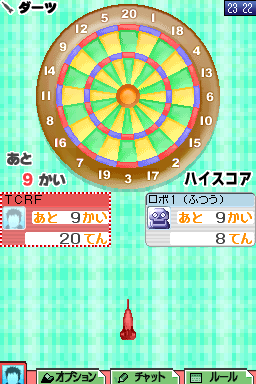
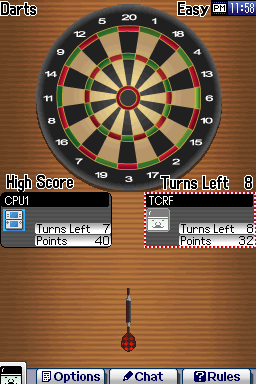
Besides the change to the darts' design (see "Graphics" section), the board uses softer and more realistic colors and the background was changed from abstract and turquoise to a more believable-looking wall.
|
Japan (original) |
International |
|---|---|
|
|
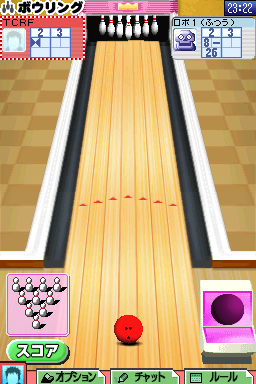
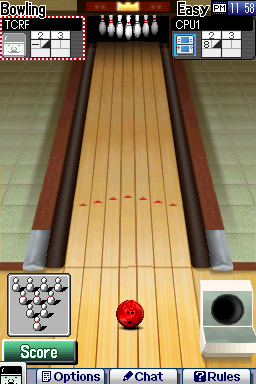
The lane and bowling ball now have shadows, and the colors of the score card, the machine, the close-up of the pins and the crown sign were altered. The tiles to the sides of the lane went from wooden, checkerboarded shades of brown to solid white stone.
|
Japan (original) |
International |
|---|---|
|
|
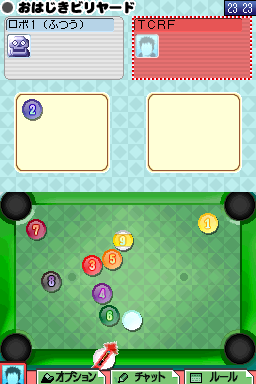
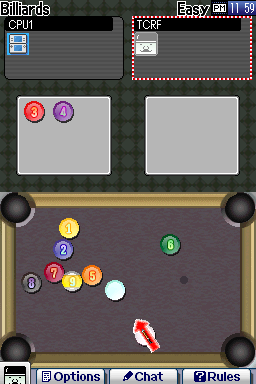
The table went from green and colorful to dull and realistic. The background was changed from diamond shapes inside squares (mimicking the design of the table) to circles.
|
Japan (original) |
International |
|---|---|
|
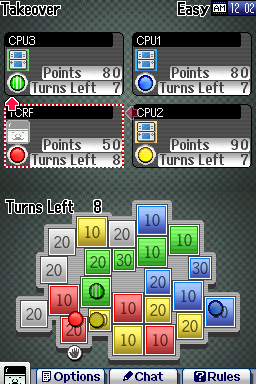
|
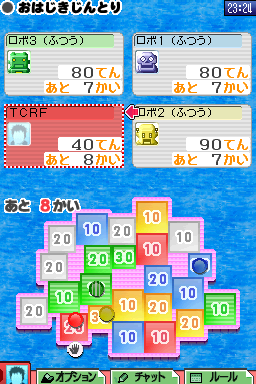
The board was redone completely, with softer colors, the empty areas going from pink to gray, the numbers redone and other minor touch-ups. The background was changed from ocean blue to abstact and gray.
Graphics#
|
Japan (original) |
International |
|---|---|

|

|
Daredemo Asobi Taizen 's icon on the DS' startup screen shows an image of hands, like in its title screen. The international versions instead show objects from the various minigames.
|
Japan (original) |
International |
|---|---|

|

|
The cursor in the international versions is simpler and has less shading than in Daredemo Asobi Taizen.
|
North America/Europe |
Japan (re-release) |
|---|---|

|

|
The backspace key is the classic left-pointing arrow in North America and Europe, which was replaced with descriptive text in the Japanese version.
|
Japan (original) |
International |
|---|---|

|

|
The player icons containing faces or kanji were changed to be more cartoonish and emoticon-esque in the international versions.
|
Japan (original) |
International |
|---|---|

|

|
Each of the CPU icons in Daredemo Asobi Taizen contains a different image of a robot. In the international versions, they all instead use the same image of a Nintendo DS, but with a different background color each.
|
Japan (both) |
North America/Europe |
|---|---|

|

|
The American and European versions of Hasami Shogi replace the kanji for solid colors. The pieces also have slightly different shapes.
|
Japan (original) |
International |
|---|---|

|

|
The symbol used to mark an illegal move during Connect Five/Gomoku contains descriptive text in Daredemo Asobi Taizen but was changed to a "forbidden" sign in the international versions.
|
Japan (original) |
International |
|---|---|

|

|
The pips from Backgammon were completely redone, receiving more realistic shading in the international versions.
Japan (original) |
North America/Europe |
Japan (re-release) |
|---|---|---|
 |
 |
 |
The descriptive text on each piece in the Japanese versions of Field Tactics/Gunjin Shogi is replaced by a visual representation in the North American and European versions, with the pieces' shape getting changed from shogi-like to rectangular. Compared to Daredemo Asobi Taizen, the Japanese re-release alters the colors.
|
Japan (original) |
International |
|---|---|

|

|
The graphics for the darts in the eponymous game were redrawn completely, which also alters their hitboxes.
Unlock Screen#
|
Japan (original) |
International |
|---|---|

|

|
The pop-up that appears when the player unlocks a new game or design was redone completely between versions, changing the layout, formatting, and design. Of note is that the pop-up in Daredemo Asobi Taizen covers the entire screen while its international equivalent does not, instead being semi-transparent in its top half.