 This article has a talk page!
This page details pre-release information and/or media for Teenage Mutant Ninja Turtles II: The Arcade Game.
Box Art and Manual#
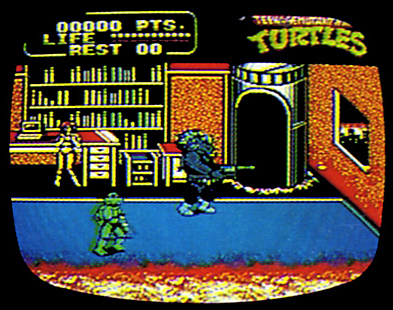
This screenshot is on the back of the American and European boxes, as well as in the manual. It shows an early version of Rocksteady with different-looking sprites and palette. In addition, the score contains leading zeroes unlike the final game, something that's seen in other pre-release screenshots. The number of lives also has a leading zero.

A screenshot from the game's manual. The roadblocks with spikes were used in the arcade version but aren't in the NES one, though their sprites are still present in the final game's data.
Nintendo Power#
Volume 16 (September/October 1990)#
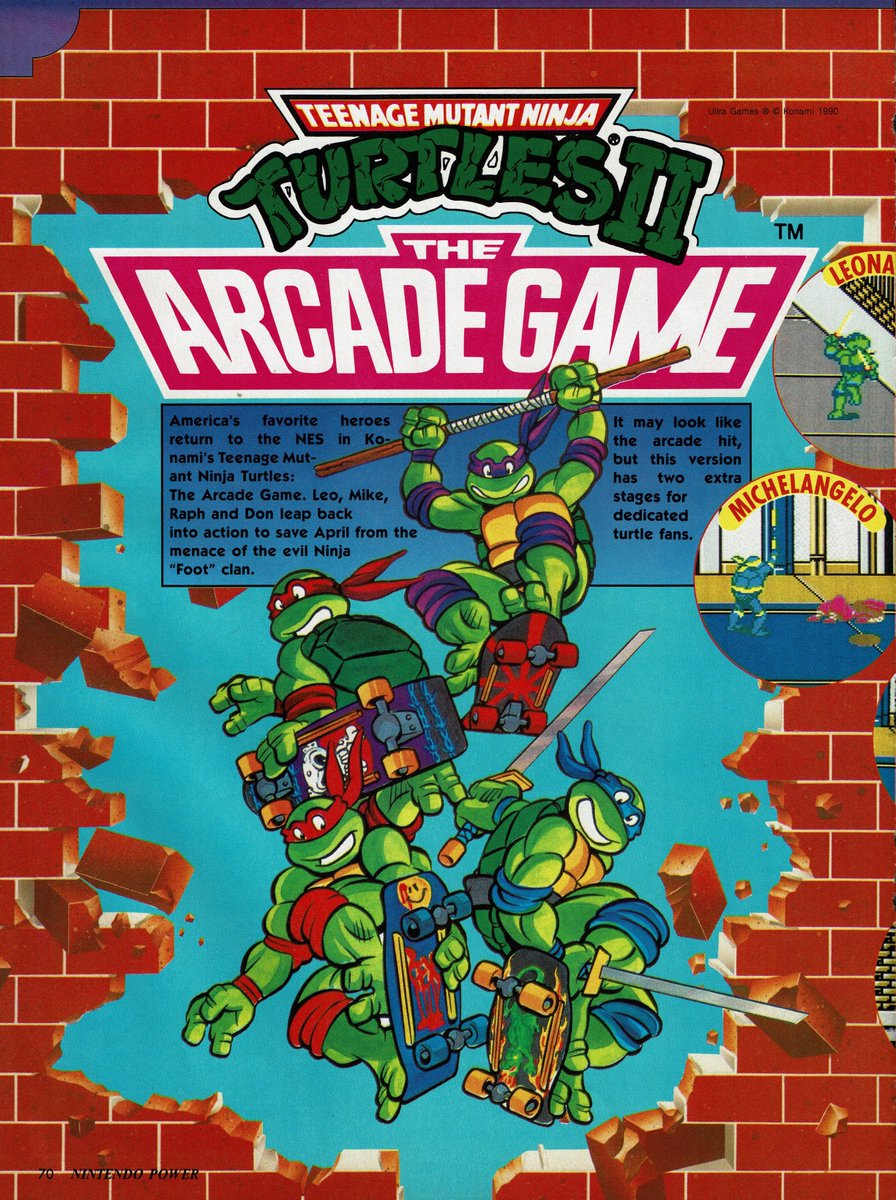
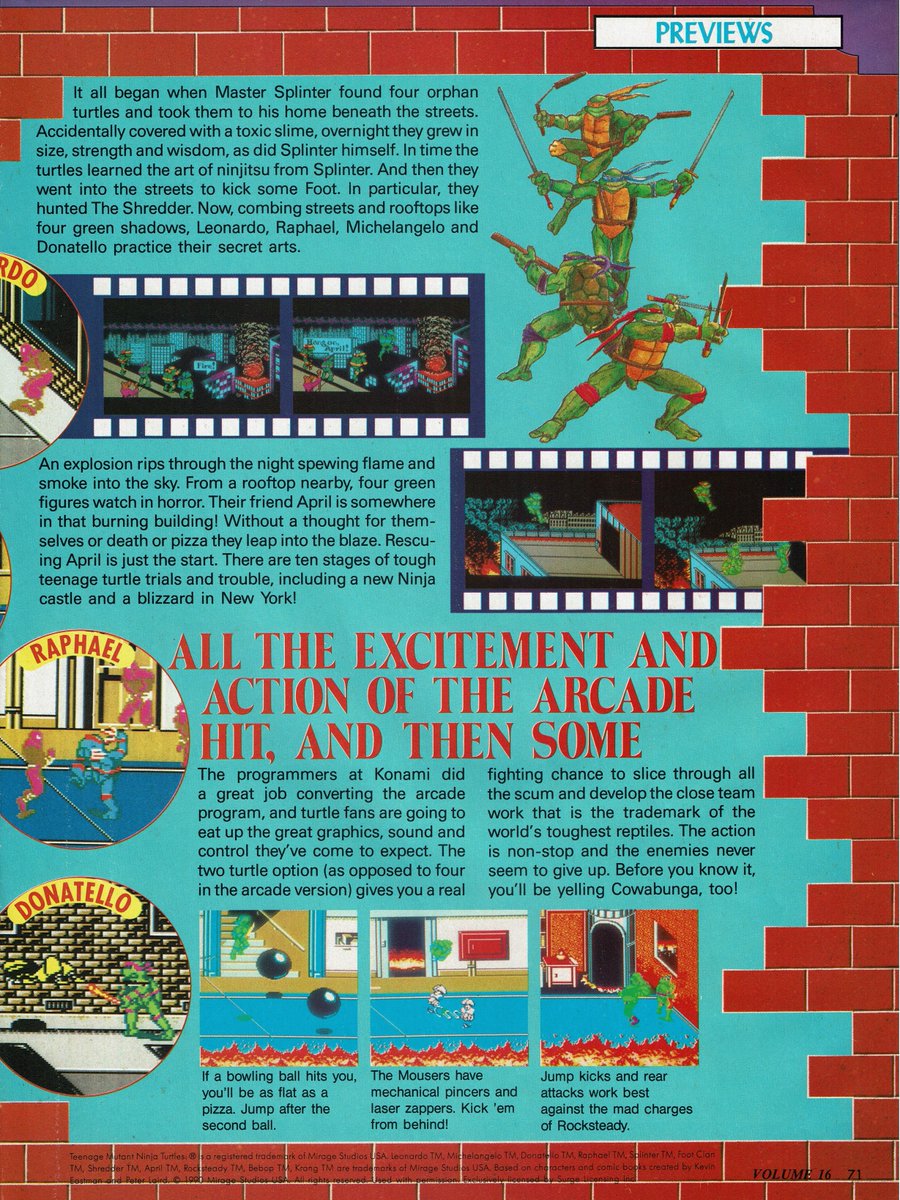
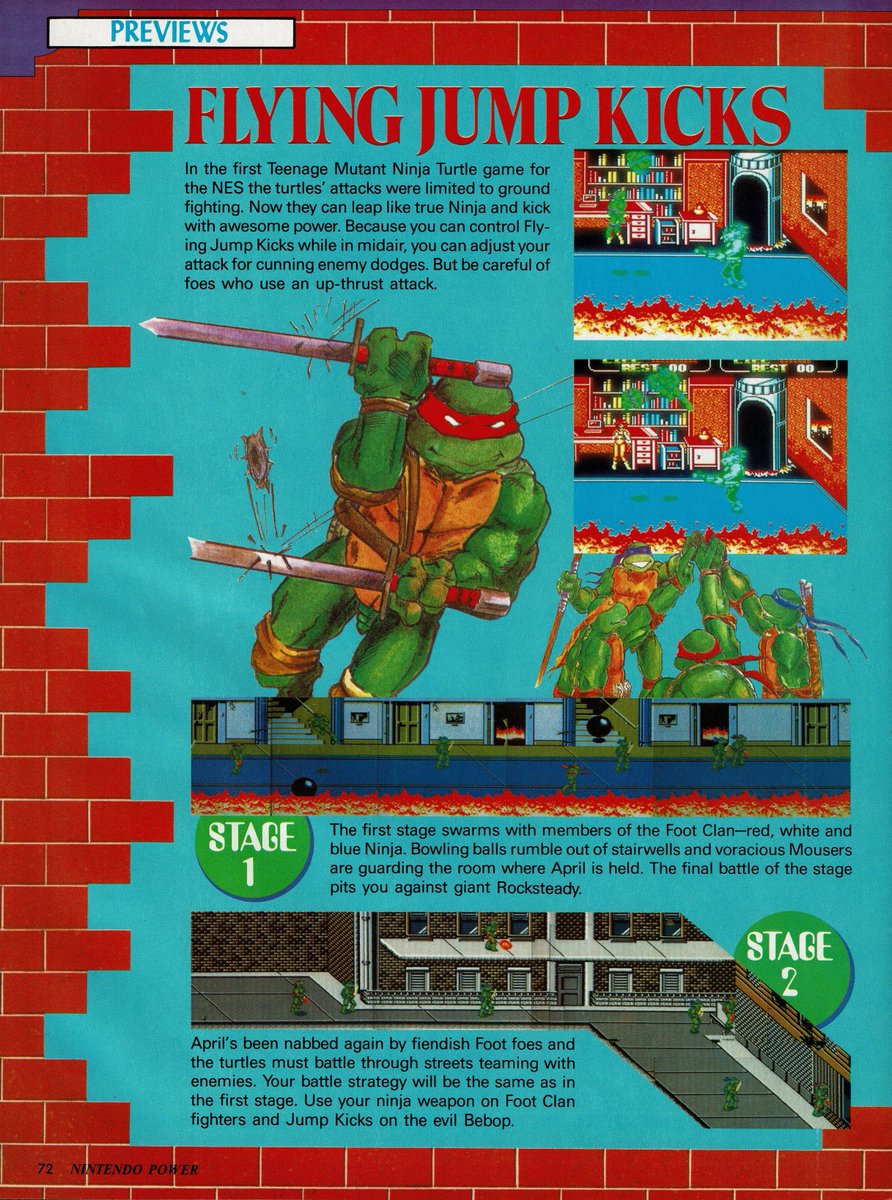
A preview of the game. Points of interest:
- The Pizza Hut promotion doesn’t seem to be in place yet, as the Japanese version’s painting is present in the first stage rather than the Pizza Hut logo.
- Another frame of the earlier sprite of Rocksteady (bottom of page 2).
- The pizza pick-up sprite used to be a whole pizza rather than a slice (bottom of page 3).
- At the end of the scroll, a slab of cement blocks the road, not present in the final version (bottom of page 3).
- Just below where the road goes down, only a couple of parts of the walls of the building appear blown up. In the final version, a lot more of it is blown up.
Electronic Gaming Monthly#
Issue 13 (August 1990)#
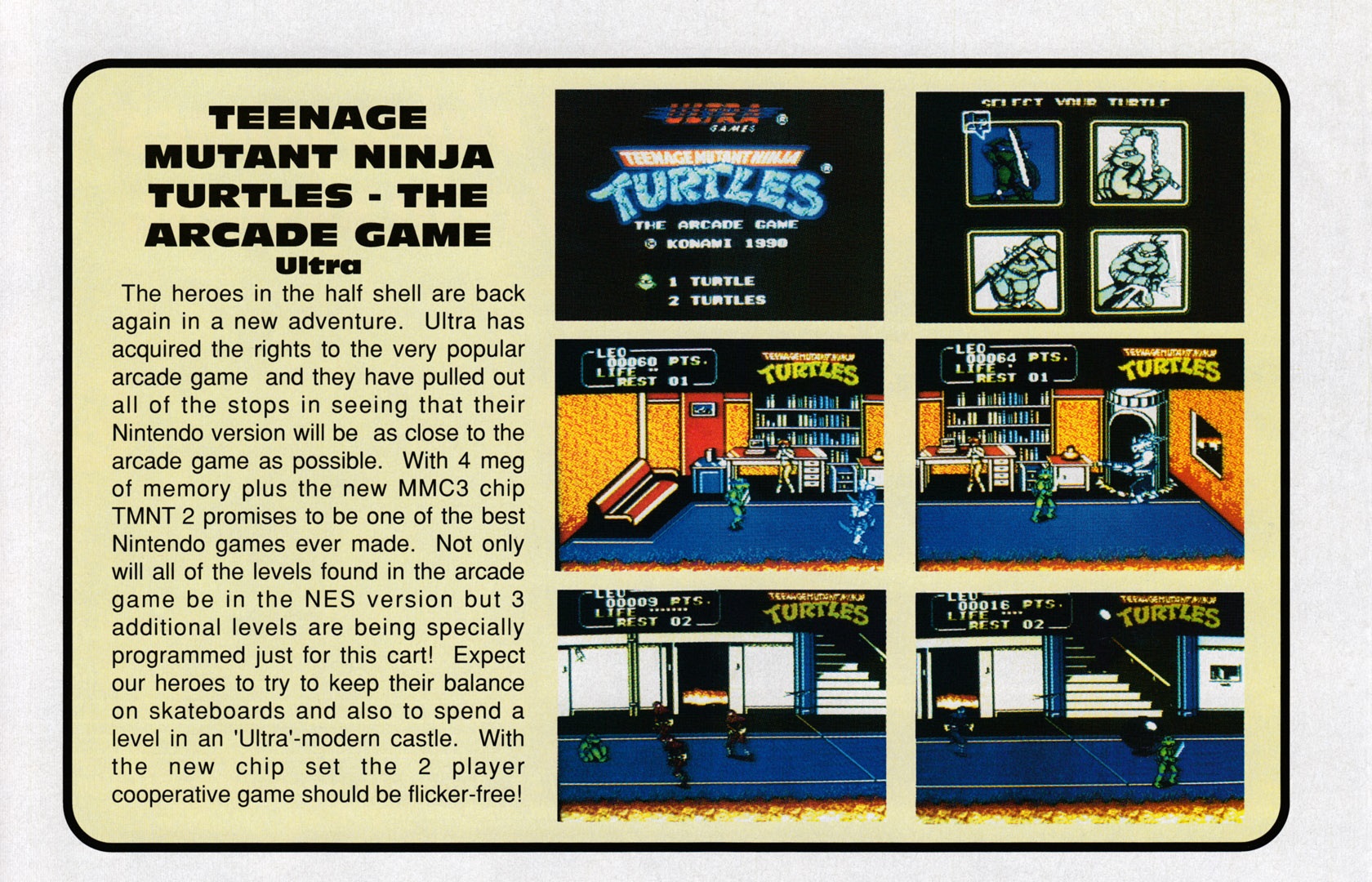
A preview shown on Page 48.
- The title screen is a variant that does not match any released version: the logo is that of the Japanese version, though it may have the wrong color, yet the publisher logo is that of the American version. "The Arcade Game" is also spelled out using the game's regular font as opposed to a unique graphic.
- On the character select screen, the background of the "1P" cursor appears to be transparent, while it is black in the final version.
- Clearer picture of early Rocksteady.
- The first stage has Foot Soldiers with a red palette. There is no Foot Soldier with such color in the final version of the first stage.
- The player's score when entering the room April is in is 60. Score depends on how many enemies have been defeated. In the final western versions, the score at this point is 65, indicating that there were five less enemies in the first scroll of the first stage at this point in development.
Issue 17 (December 1990)#
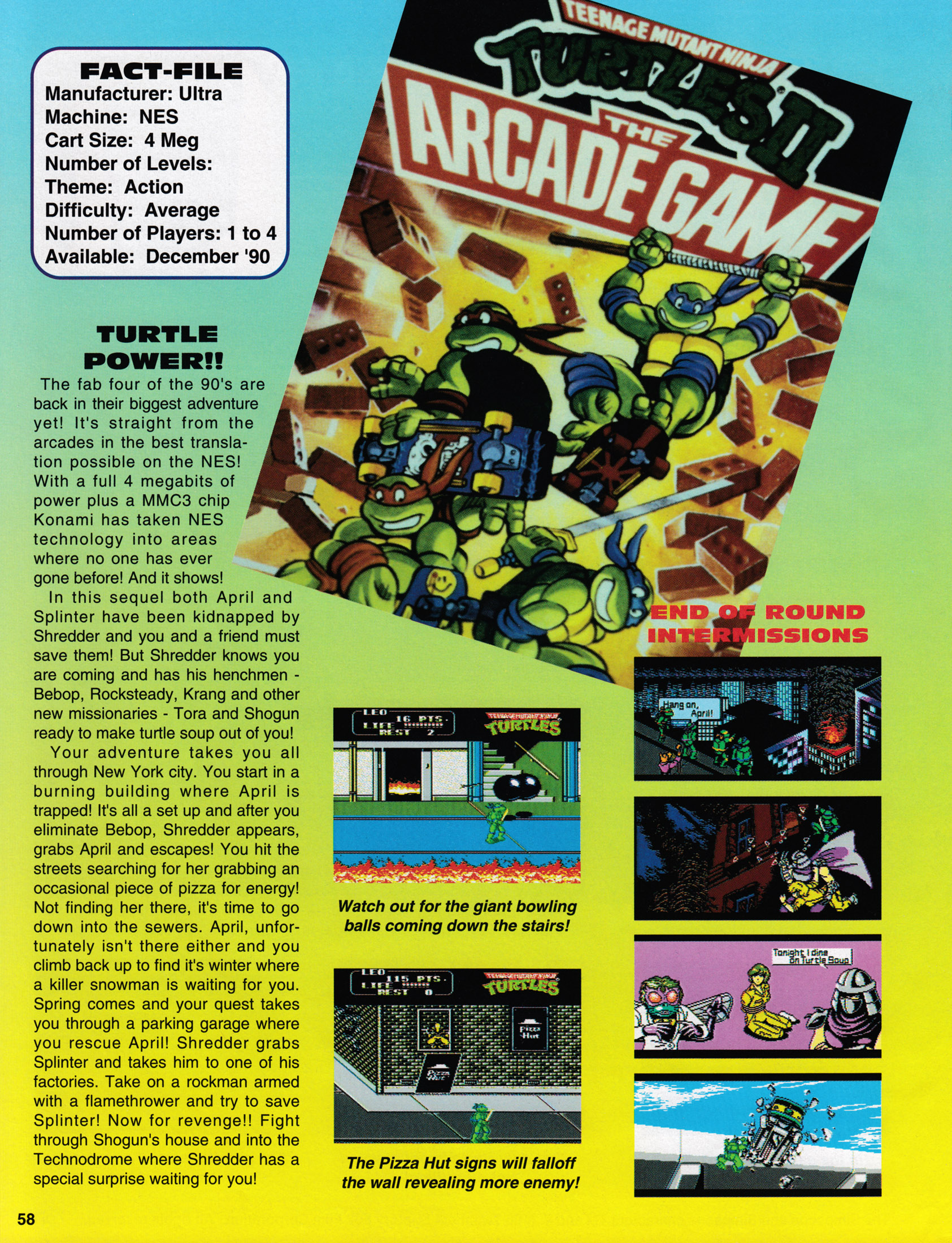
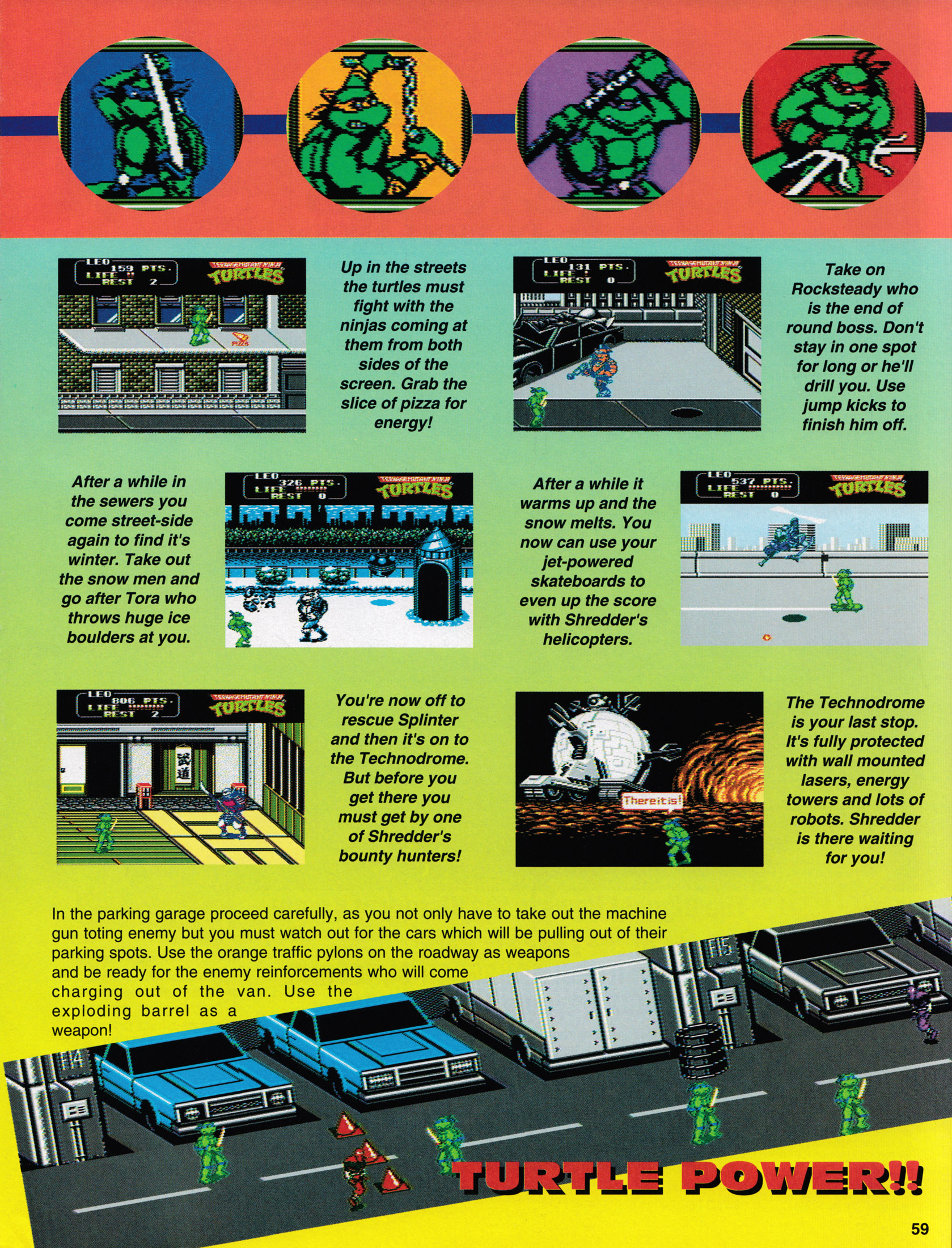
Of note is that the Fact-File mentions the game supports 4 players, which is most likely an error and not a sign that a 4-player mode was planned.
- The leading zeroes have been removed from the score, matching the final version.
Issue 19 (February 1991)#
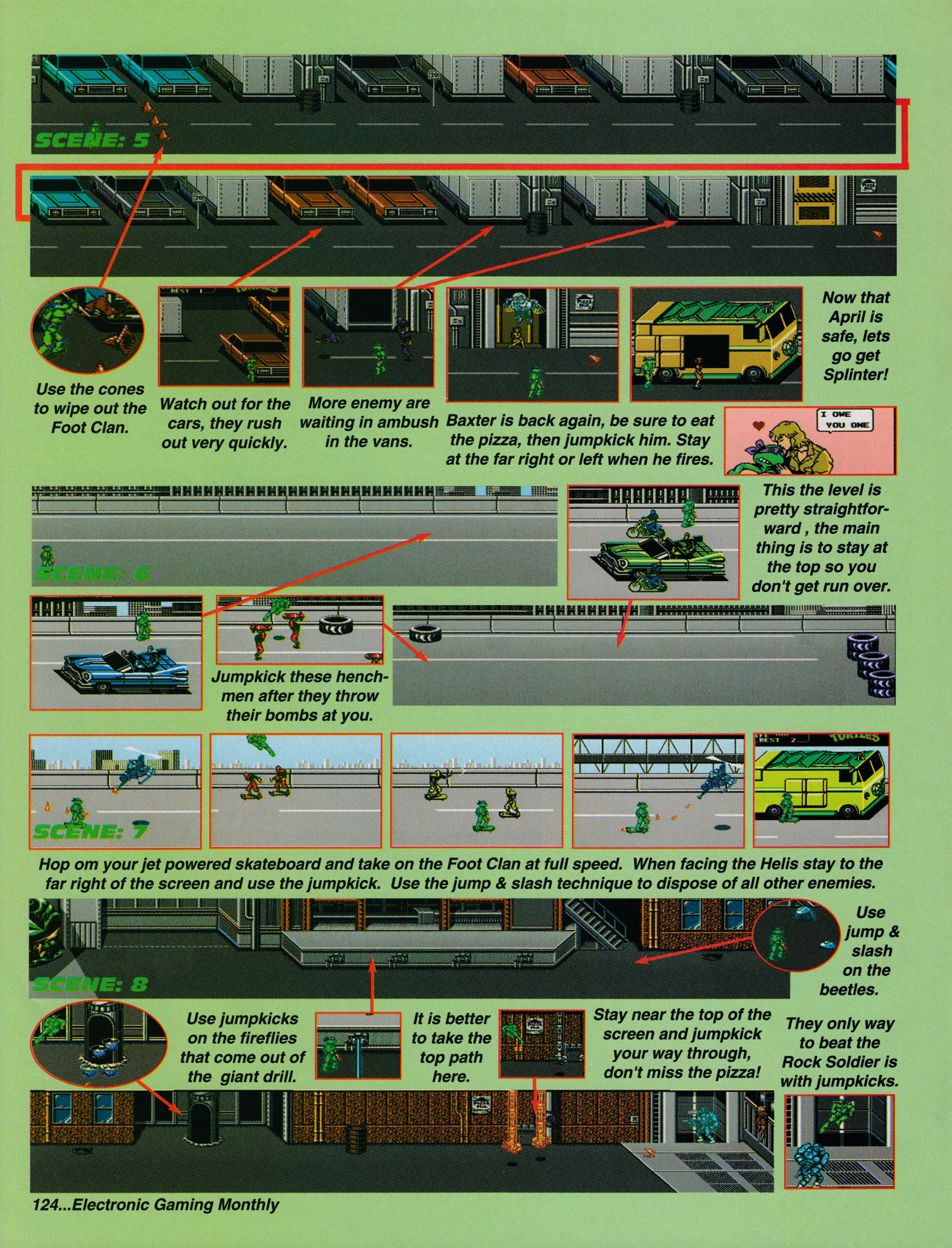
- In Scene 6, the two cars driven by Foot Soldiers are blue and green respectively. They are red and brown in the final version.
Advertisement#
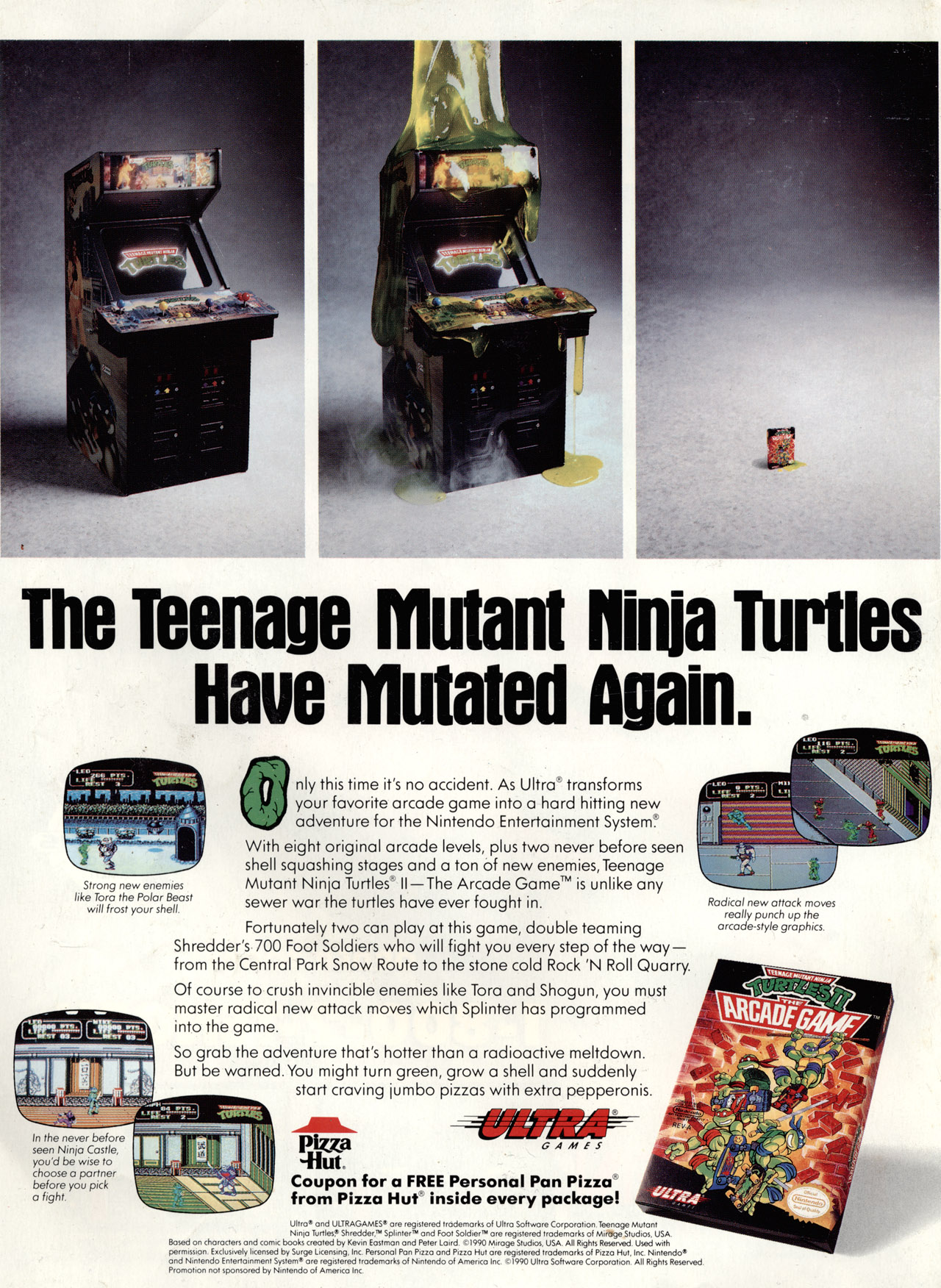
An ad from GamePro #018, January 1991.
|
Pre-release |
Final |
|---|---|

|

|
- In this screenshot from Scene 2 (top right), the wall in the background doesn't look as blown-up as in the final version, just like in the Nintendo Power preview. Furthermore, the score is 116; in the final western versions of the game, in single-player, the score at this point is 110 or 111 depending on whether you hit the skateboarder or not. Notice also how, on the top-right of the screen, the ® symbol is missing in the pre-release version.
- In the screenshot from Scene 6, the one with the tigers in the background, a purple Foot Soldier can be seen. In the final version, there is no Foot Soldier in this part of the stage. The number of characters for the score seems to indicate that this screenshot is from an earlier version, although the score itself is hard to make out.
- In the screenshot with Shogun (bottom left), the door on the top-left of the screen is closed. It is opened in the final version. Furthermore, the score seems to be 84. In the final international versions, in single-player, if you use the stage select to start from this scene, the score is 94.