 This article has a talk page!
This page details pre-release information and/or media for Sonic Championship.
Development Timeline#
- 1995
- Mid - Developer adds a "Sonic and Tails" character to Fighting Vipers during development out of personal amusement.
- November - Fighting Vipers releases in arcades. Sometime during or before this, the Sonic and Tails character is discovered by Sega AM2 head Yu Suzuki. This prompts a series of developments leading to Sonic The Fighters being approved for development.
- Late - Sonic The Fighters is revealed to the public with screenshots of some mockups and a very early gameplay build.
- 1996
- February - A "50% complete" build of Sonic The Fighters is showcased at the AOU Show 1996.
- May - Sonic The Fighters is released in arcades in Japan.
- July - A slightly altered build of the game under the name Sonic Championship is released in North America.
Conception#
[[File:Prerelease-SonicTheFighters-SonicAndTailsVF.png|thumbnail|right|320px|The "Sonic and Tails" character as it appears with its Player 1 palette in Fighting Vipers.]]Sonic Championship'sdevelopment can be traced back to Sega AM2's previous major arcade release, Fighting Vipers. As that game neared completion, developer Masahiro Sugiyama, who notably designed the character Honey for the game, had spare time on his hands with which he decided to implement some secret characters into the game for a laugh. Among these was a "Sonic and Tails" character, a single entry featuring crude models of the eponymous characters from theSonic the Hedgehog'' series as its two colour palettes each. As a joke inclusion made on his own time, this character was never fully finished nor made playable in the game, nor did it even make it to the game's Saturn port.

The story may have ended there had this activity not caught the attention of Sega AM2's head Yu Suzuki. Upon inspection, he found the idea of Sonic fighting in a 3D space appealing, enough so that he conceptualized a full Sonic 3D fighting game which he proposed to Hiroshi Kataoka. When presented with the idea Kataoka was initially concerned that Yuji Naka wouldn't approve of the project given its concept of making Sonic characters beat each other up. On the contrary, Naka was very receptive to the concept, and thusly signed off on its creation.
From there, the game that would become known as Sonic The Fighters began development. The initial design approach was to take the engine they had created for Fighting Vipers and alter it from there to better replicate the look and feel of the Sonic series. This provided a convenient starting point, but Sega AM2 still came across several struggles when developing the game. Chief among those was the task of translating the Sonic characters into a polygonal 3D space, which Sega had yet to officially accomplish by this point (Though not for a lack of trying). Fortunately, aside from the model they already had made from Fighting Vipers, they also had access to a reference model created by the original Sonic game's artists, apparently provided by Naka's then-recently reformed Sonic Team to provide a sufficient reference point.
Early Development#
Not too long after the project began, Sega AM2 would reveal it to the public with some initial screenshots. A total of three separate builds seemed to have been shown off at this point:
Build 1 (Showcase 1)#
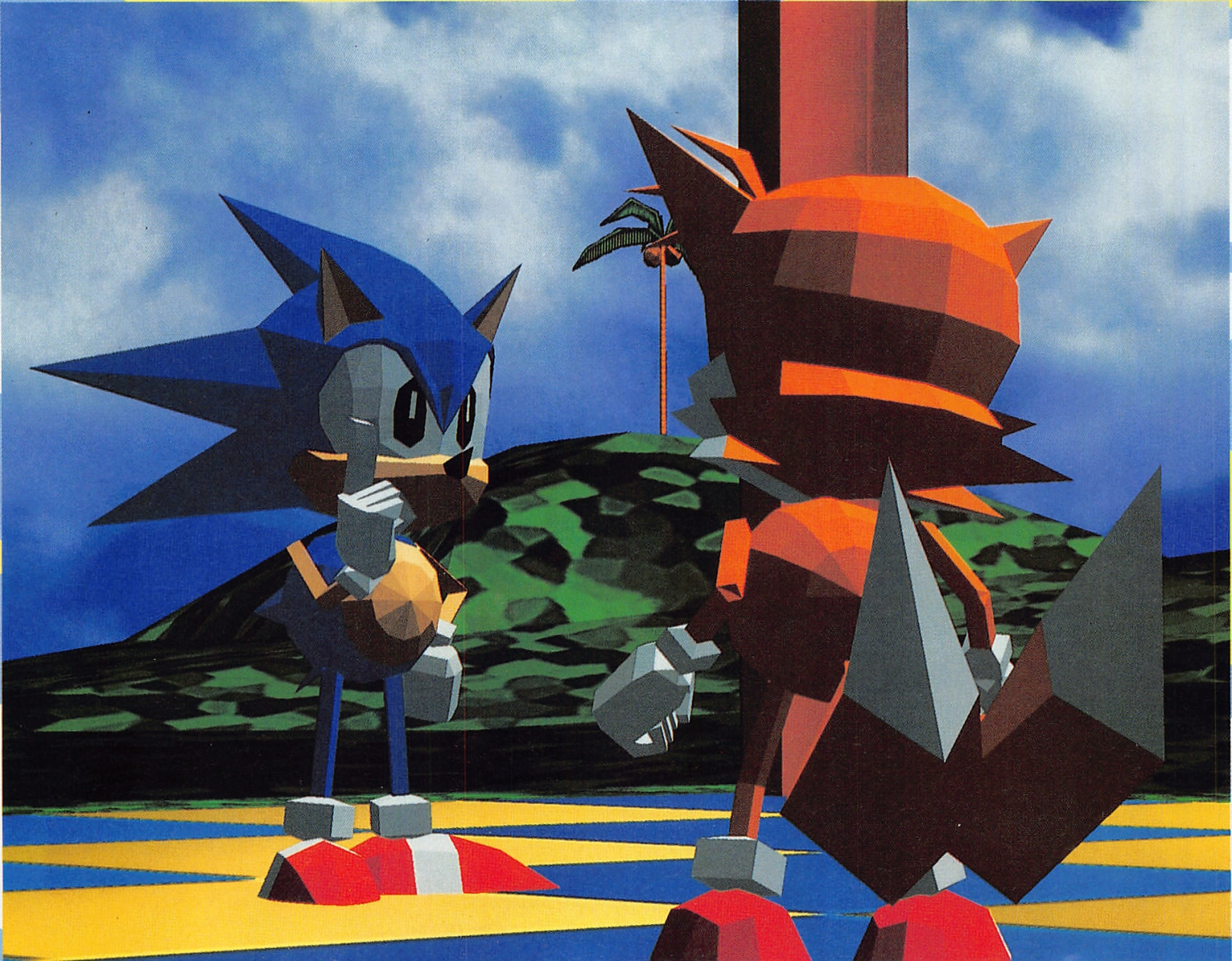
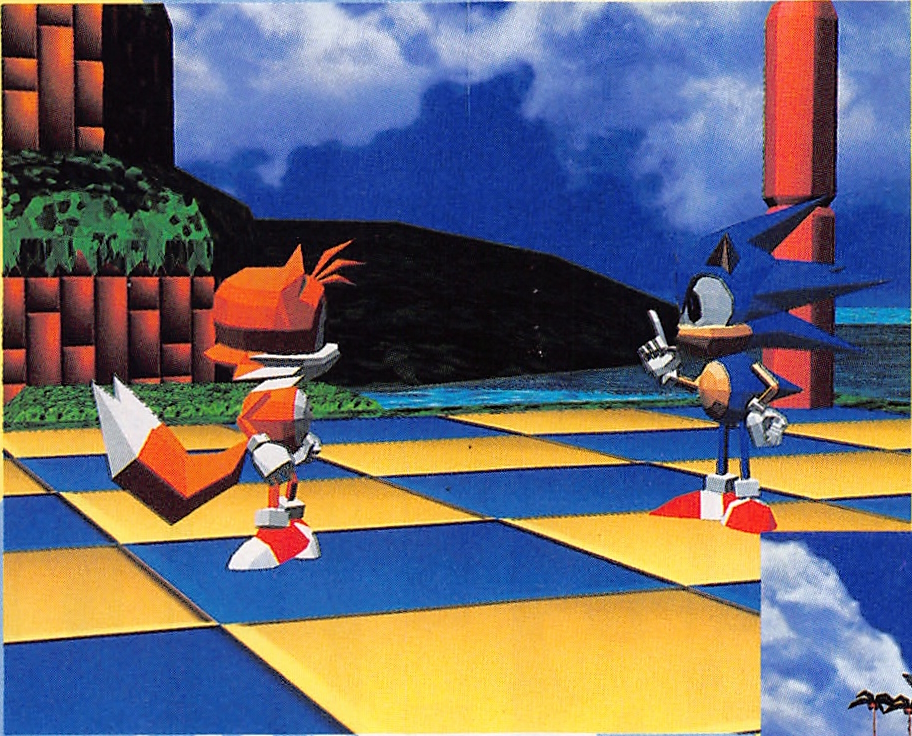
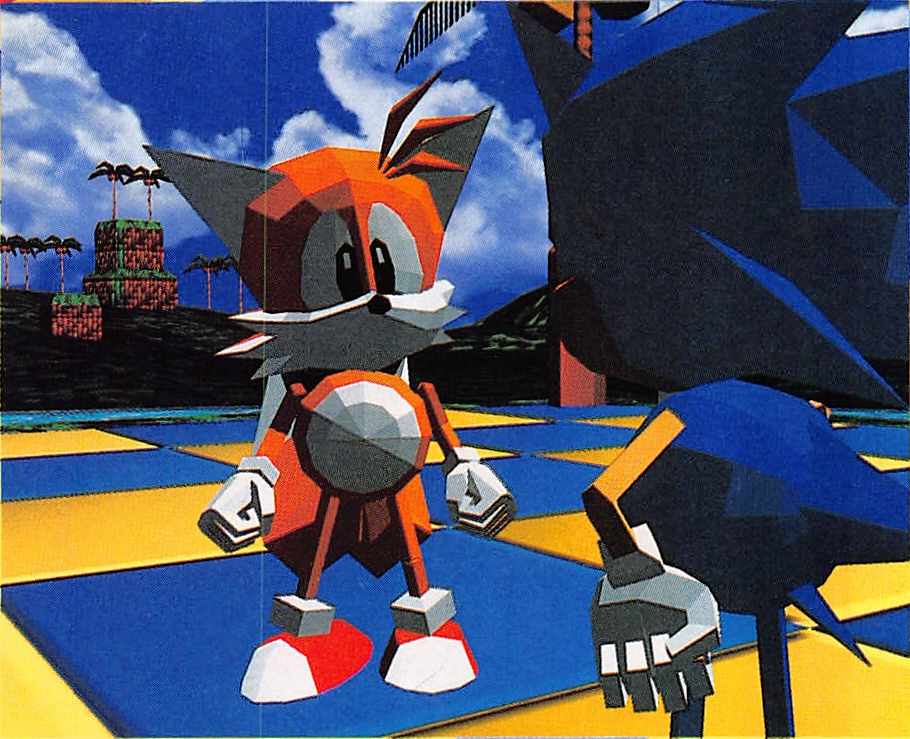
A mock-up build featuring Sonic and Tails in a backdrop that would form the basis for the final game's South Island stage. Multiple screenshots were taken showing the same scenario and poses from different angles, as will be the case with the following builds as well.
The aforementioned characters here are re-using their Fighting Vipers models wholesale, bar some updated tail models for Tails. Said tail models would be replaced with new ones for the final game, though these early ones still exist unused in the files. The South Island stage also appears different, with the characters are standing on a placeholder checker-board ground model that isn't seen in the final game.
Build 2 (Showcase 2)#
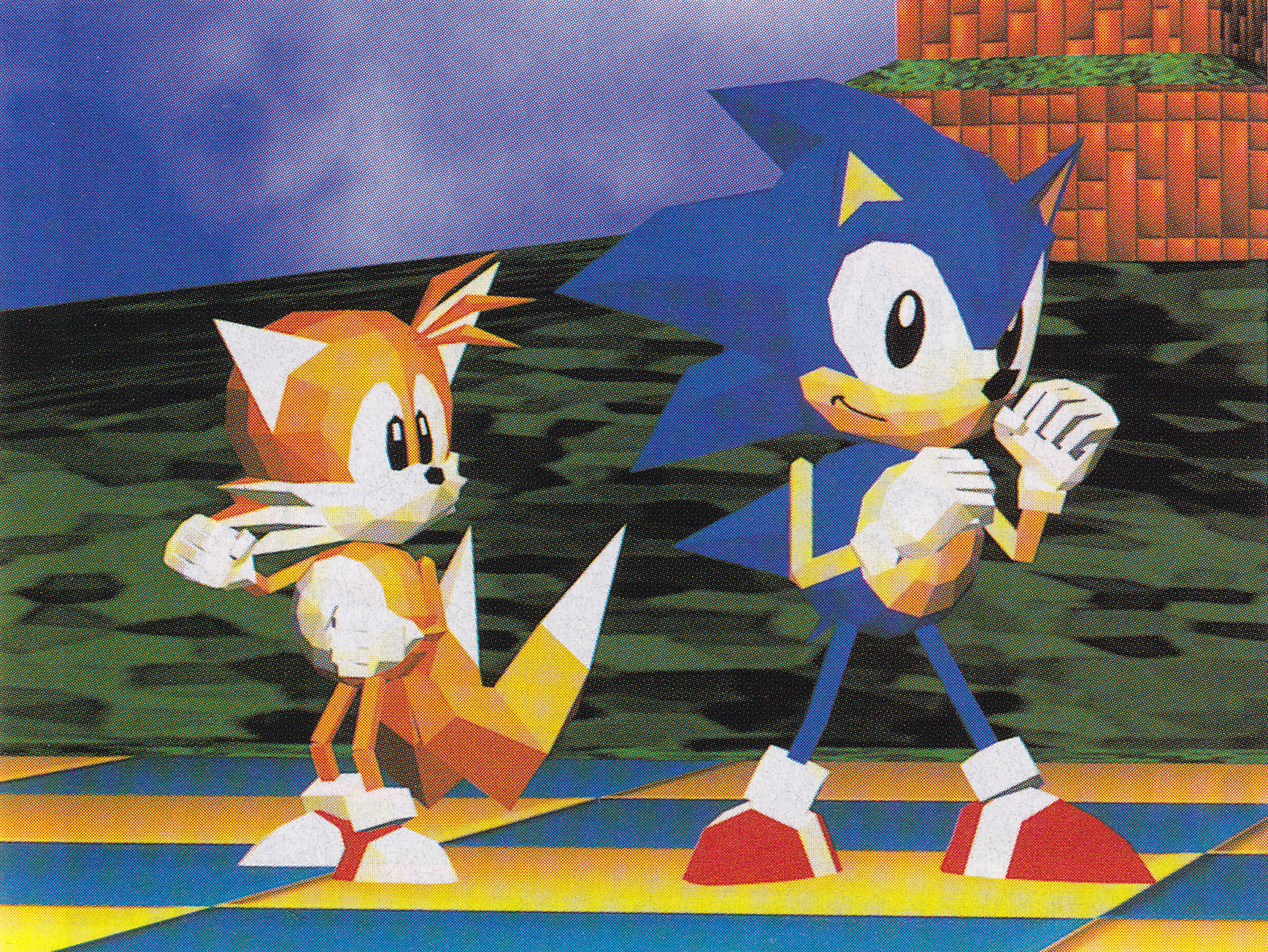
Another mock-up build similar to the previous featuring the duo in different poses. Looks to be functionally the same as before, though an updated model for Sonic is shown that looks close to the final version.
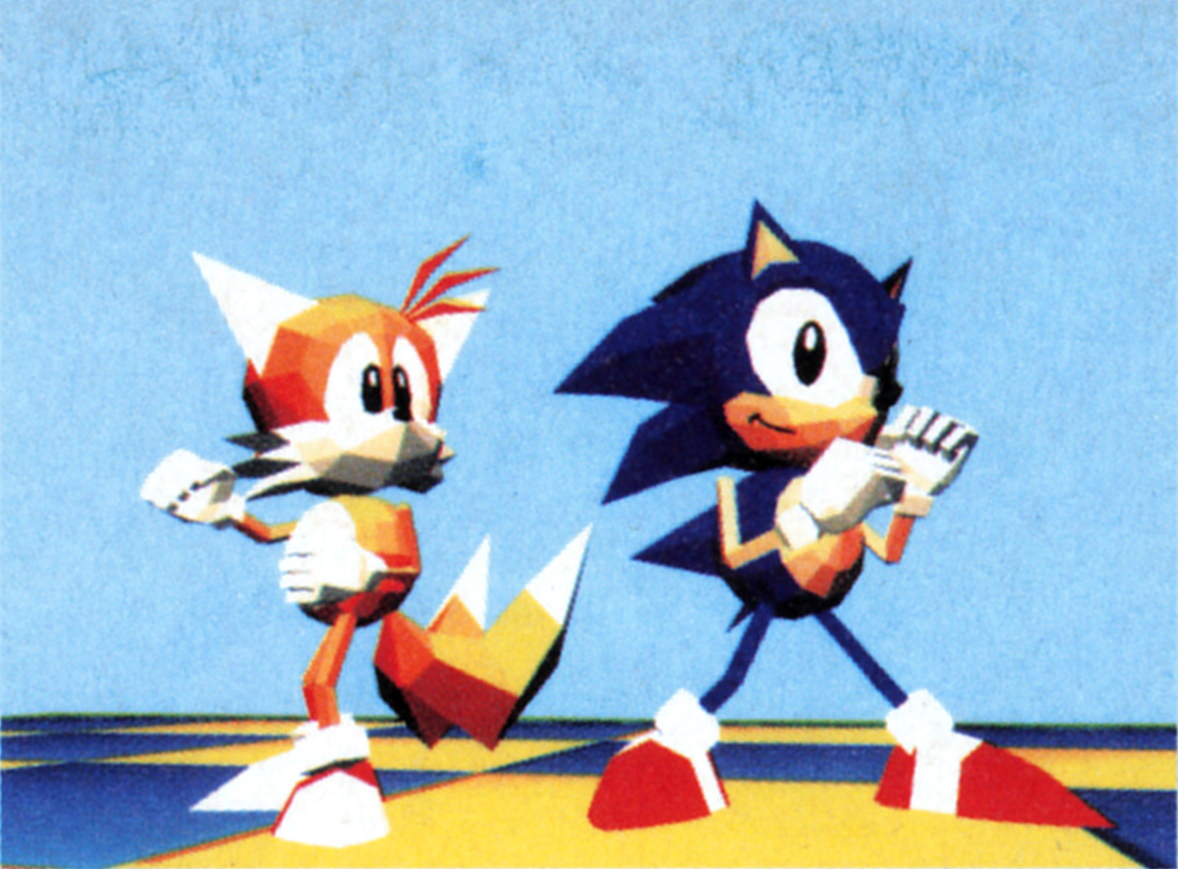
A variation of the build's scenario was also shown that lacks the background. The resulting view of the blue placeholder background bears a curious resemblance to an unused stage in the final game.
Build 3 (Gameplay)#

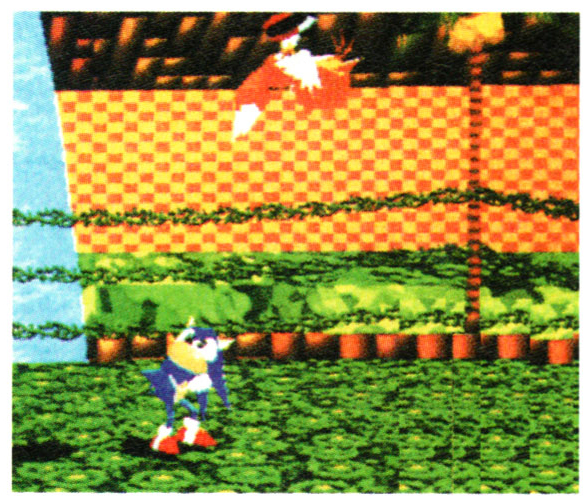
A gameplay build showing Sonic and Tails fighting. At this point, the game hadn't been adjusted much at all from Fighting Vipers besides adding an early version of the South Island stage. Besides that, the gameplay, character move sets and even the character select appear to be unchanged.
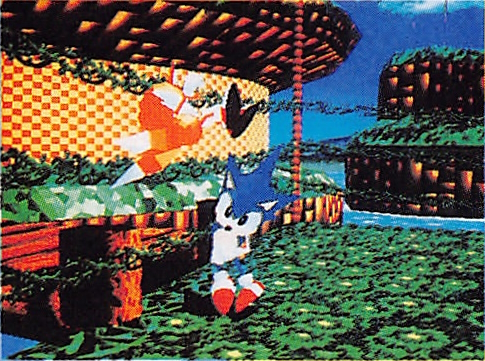
The aforementioned stage is noticeably different from the final game, featuring a grass floor instead of the Sonic staple checker-board floor, as well as vines for the ring's ropes instead of the more traditional-appearing ropes used in the final version.
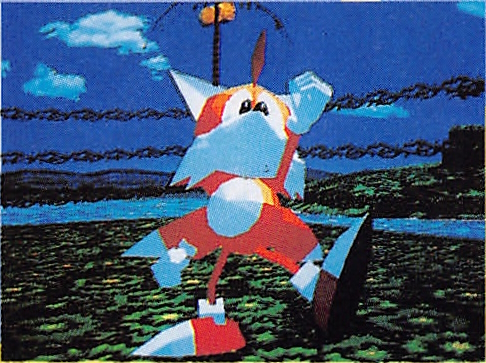
Tails is also seen performing one of his victory animations from Fighting Vipers. This animation is curiously absent from the final game entirely, not even existing in an unused state unlike some other Fighting Vipers leftovers.
Following this, more screenshots would later be revealed of a couple revised builds of the game, showcasing additional characters and stages.
Build 4 (Knuckles)#
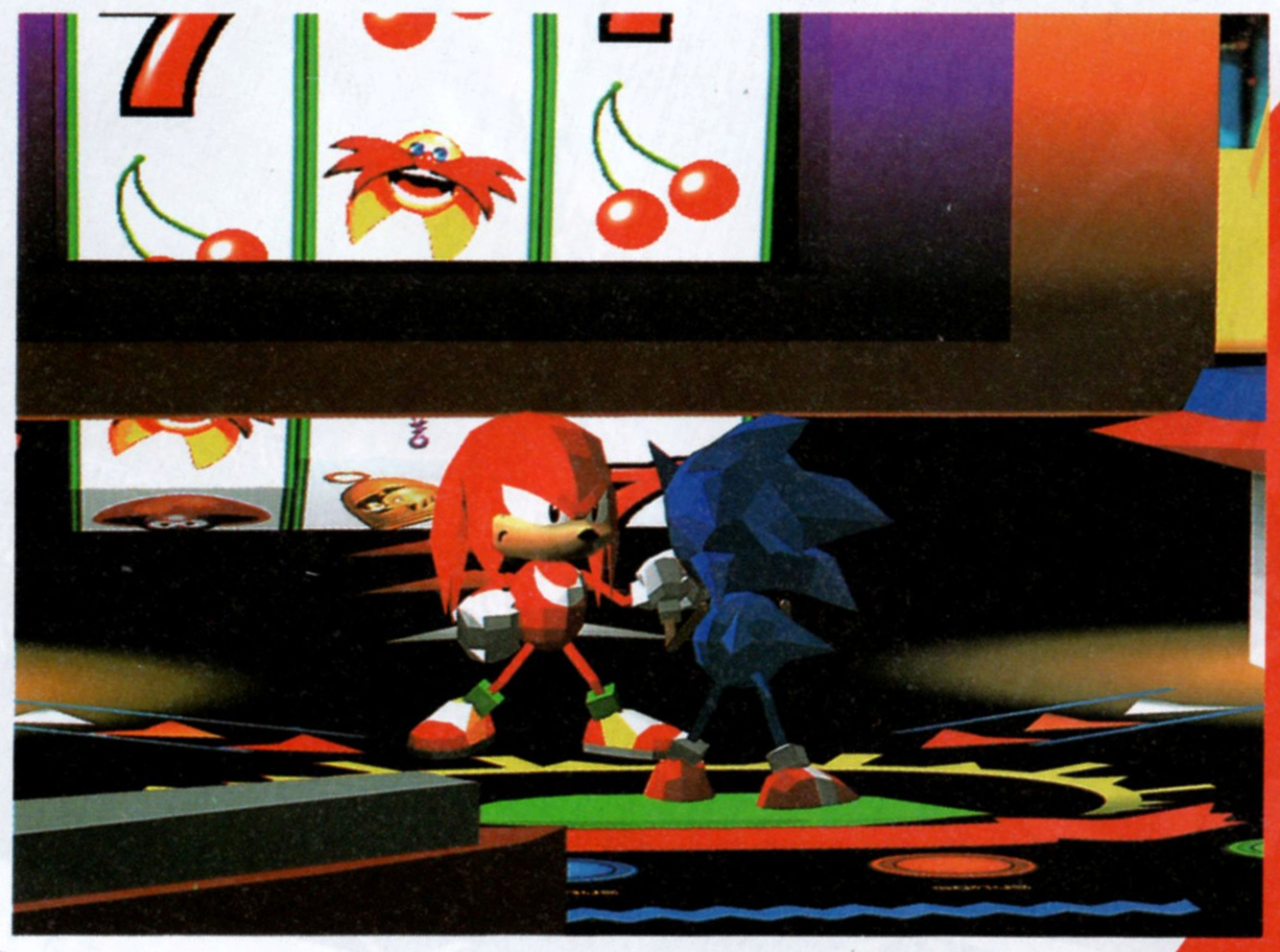
Another mock-up build. This one revealed Knuckles The Echidna as a playable character as well as the Casino Night stage. The stage looks noticeably different, lacking walls of any kind as well as featuring obstacles like bumpers that are very close to the characters. This may be a remnant from the stage's original "Pinball" theming.
Build 5 (Amy)#
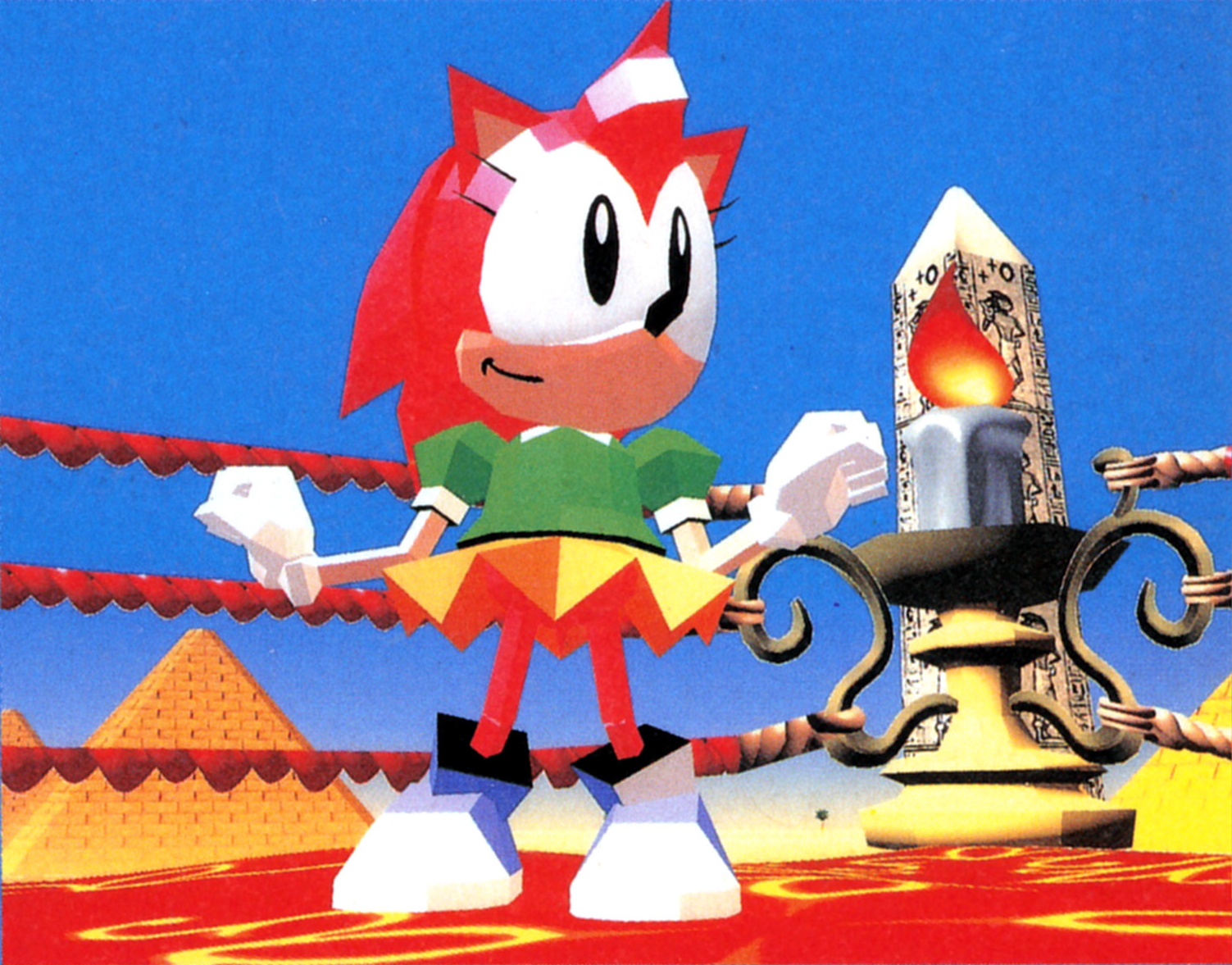
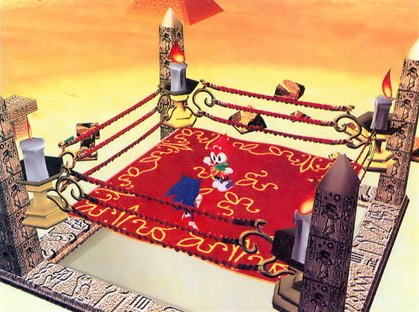
Presumably yet another mock-up build, though could possibly derive from the same build as the former screenshots. This revealed Amy Rose as a playable character as well as her associated stage, Flying Carpet. Amy looks close to the final game besides having a different idle pose, though this could be purely a creation of the mock-up build. More notably, the stage is markedly different. It is not on its signature flying route, instead being planted in place on some stone pillars. The candles' fire surrounding the stage are also sprites instead of polygonal models as in the final game. They face awkwardly towards the stage here, though were presumably meant to face towards the camera to give the illusion of being 3D. Remnants of this early version of the stage still exist in the final game.
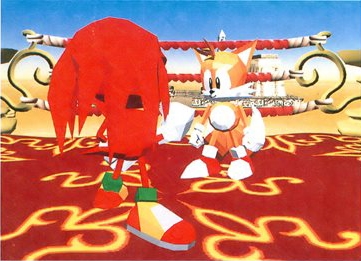
A variation on the build's scenario is shown featuring Knuckles and Tails in the stage. Tails' model has been updated by this point and is now close to the final game.
AOU Show 1996 Build#
For the AOU Show 1996 event held in February of that year, a playable build of Sonic The Fighters was featured, being about 3 months away from its full release at this time. The game was reportedly 50% complete by this point, if the build's "Thanks for Playing" screen leftover in the final game is to be believed. Much of the game's contents were revealed at this event, albeit more quietly compared to AM2's efforts until now. Fang The Sniper, Espio The Chameleon, and new characters Bean The Dynamite and Bark The Polar Bear were all revealed, and the Aurora Icefield, Mushroom Hill and Death Egg's Eye stages were showcased too.
It's not currently unknown exactly how much of the game was accessible in this build, but it can be presumed that all of the 8 playable characters were featured as well as at least half of the stage list.
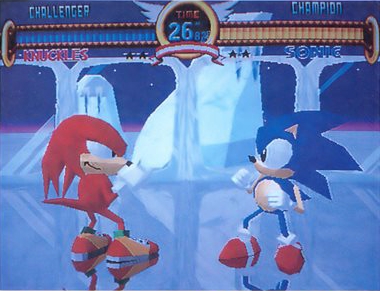
Several scenarios from this build were shown in screenshots released around the time. Here, Sonic and Knuckles are shown fighting in Aurora Icefield. The HUD elements are noticeably different, showing static blue and yellow colors for the health bars instead of the dynamically changing colors seen in the final game. The barrier indicator at the bottom is also completely absent. The nameplate on the Player 2 side also seems to be incorrectly oriented at this point for all characters.

The stage itself is also markedly different, featuring alternate designs for the walls and a slightly different floor and sky model.

Sonic's win animation is different from the final game, instead using one of "Sonic and Tails"'s win animations from Fighting Vipers. The "Winner" text is also different from what's seen in the final game.

The Mushroom Hill stage has a slightly different background with a lighter color and no visible brown hill.
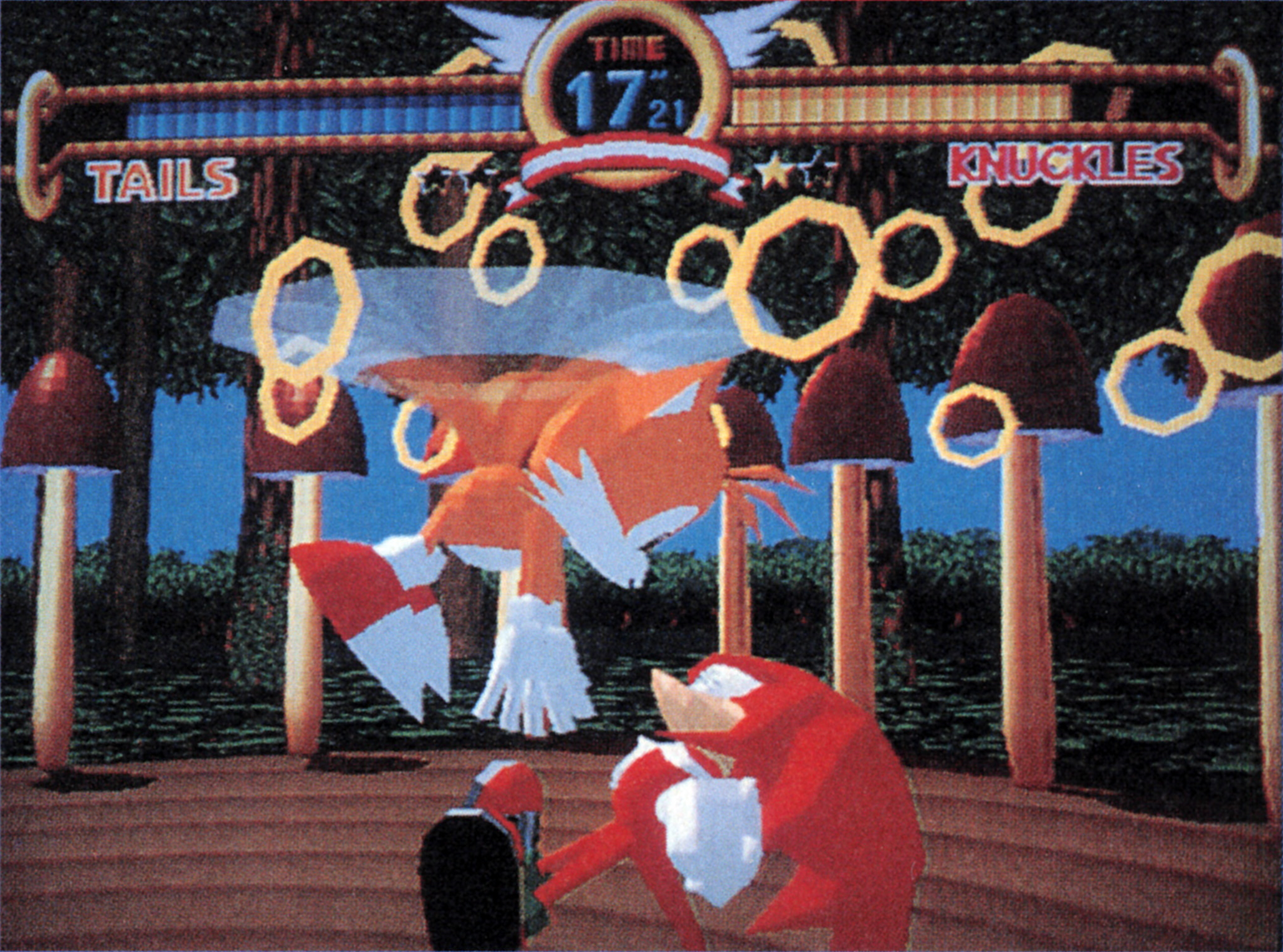
Tails' Airplane Drop throw doesn't have a unique camera angle in this build. An alternate version of the throw with no camera exists in the final game's files that matches this version, indicating it to be a leftover from this build.
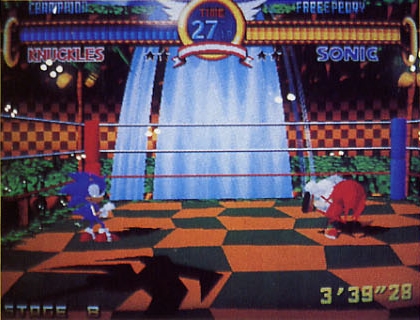
This scenario shows Knuckles on the arcade ladder. Sonic is the Stage 8 fight as is usually seen in the final game, but he's curiously fought in South Island instead of Giant Wing. A timer is visible during the match, which is normally only seen in the final game after winning a match. It notably indicates the player reached this point in 3 and a half minutes in-game time which is remarkably difficult to accomplish in the final game. This may indicate that some stages were skipped for this build.
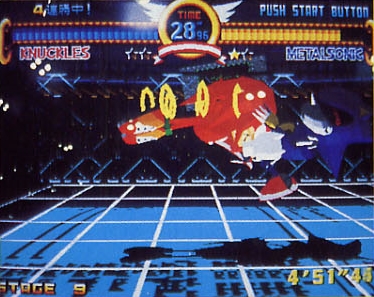
This shows another scenario from presumably the same arcade playthrough, with Knuckles fighting Metal Sonic in the Death Egg's Eye stage. The arcade ladder curiously calls this "Stage 9" instead of "Final Stage". This seems to support miscellaneous evidence in the final game that there was supposed to be another fight in the arcade ladder that was cut.
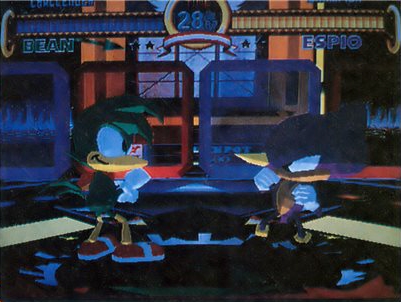
This shows Bean and Espio fighting in the Casino Night stage. Bean here is using the same mouth texture that Sonic and Knuckles use. He would instead receive his own unique mouth texture in the final game, though his official art and Vs. Screen images weren't altered to reflect this.

His bomb attacks also seem to have significantly more prominent smoke visual effects compared to the final game, though it is difficult to confirm the degree to which with only the screenshots to confirm it.
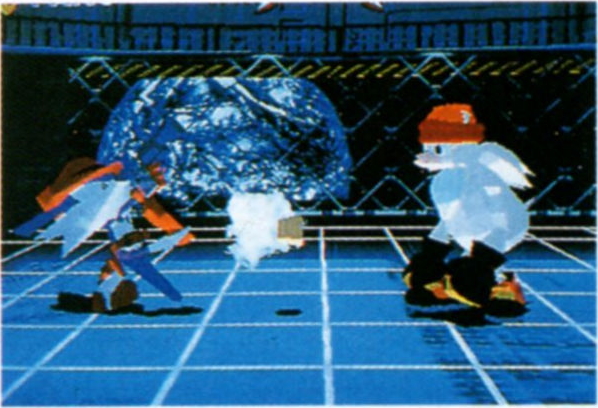

Bark is shown in multiple screenshots to have a remarkably different design compared to the final game, having lighter-colored fur, a different hat and no scarf. Other screenshots show that his character select artwork reflected this different design as well. Bark was most likely fully re-modeled in the time between this build and the final game.
Concept Art#
On March 2026, the aforementioned Sega AM2 developer Masahiro Sugiyama posted concept artwork from the games he worked on on his X(Twitter) account, including artwork for Sonic The Fighters.
Honey#
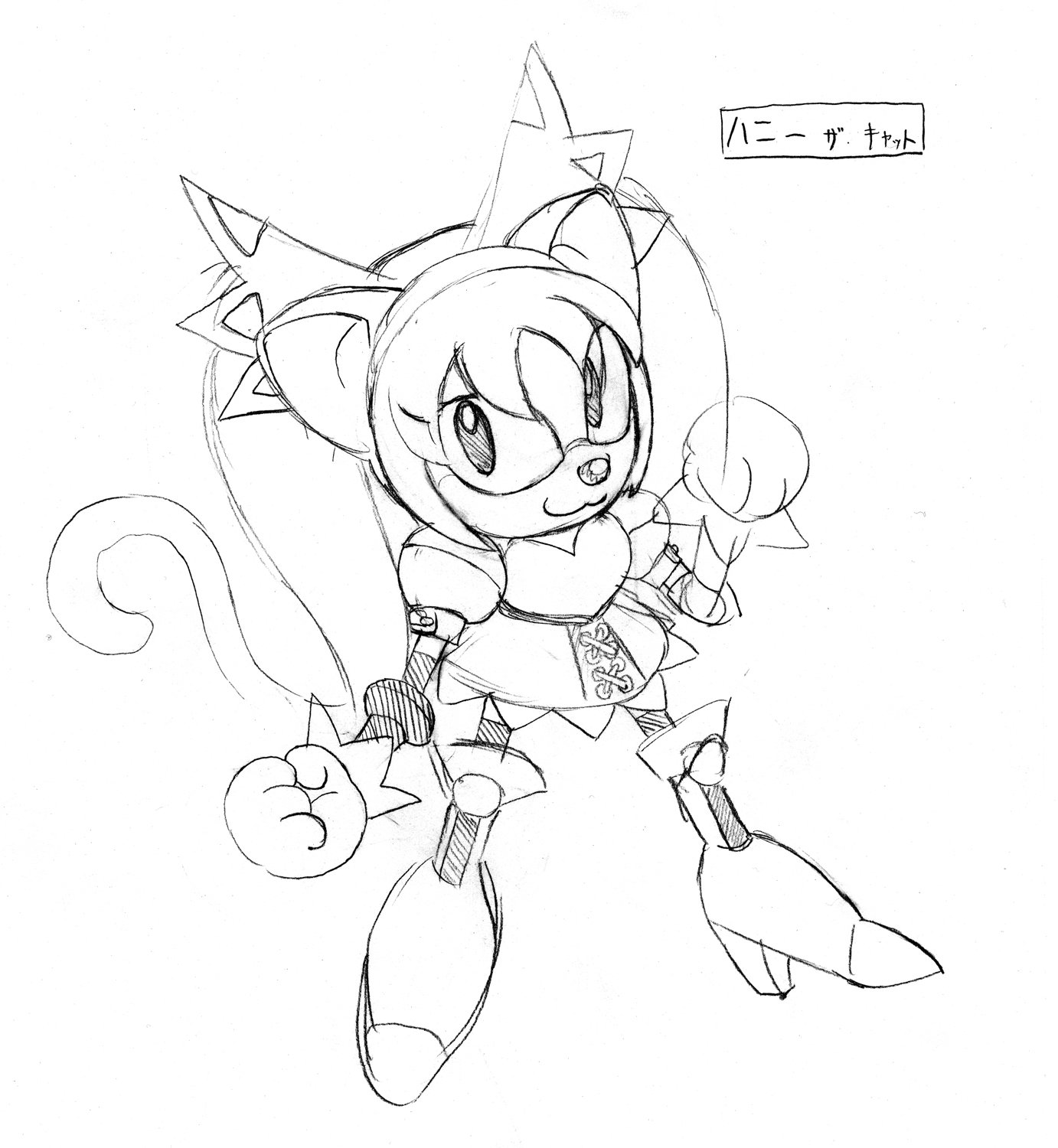
The earliest completed sketch of Honey The Cat. Per Sugiyama's word, he created Honey's model based on this sketch. The design seems to be more-or-less finalized here.
Rocket Metal#
According to Sugiyama, he spontaneously conceived of the character Rocket Metal midway through development out of a desire to add a character similar to Metal Sonic to the game. Notably, Metal Sonic is known to have been added early on in the game's development, hence both characters were likely developed in tandem. This new character, tentatively titled "Space Sonic" and "Space Metal", was to be a playable character with a unique moveset. This moveset was never completed as the character was not deemed a priority to work on due to not being a main character. Said character was ultimately relegated to a cameo in the final game. Two pieces of concept art have been unearthed depicting the character's design process.
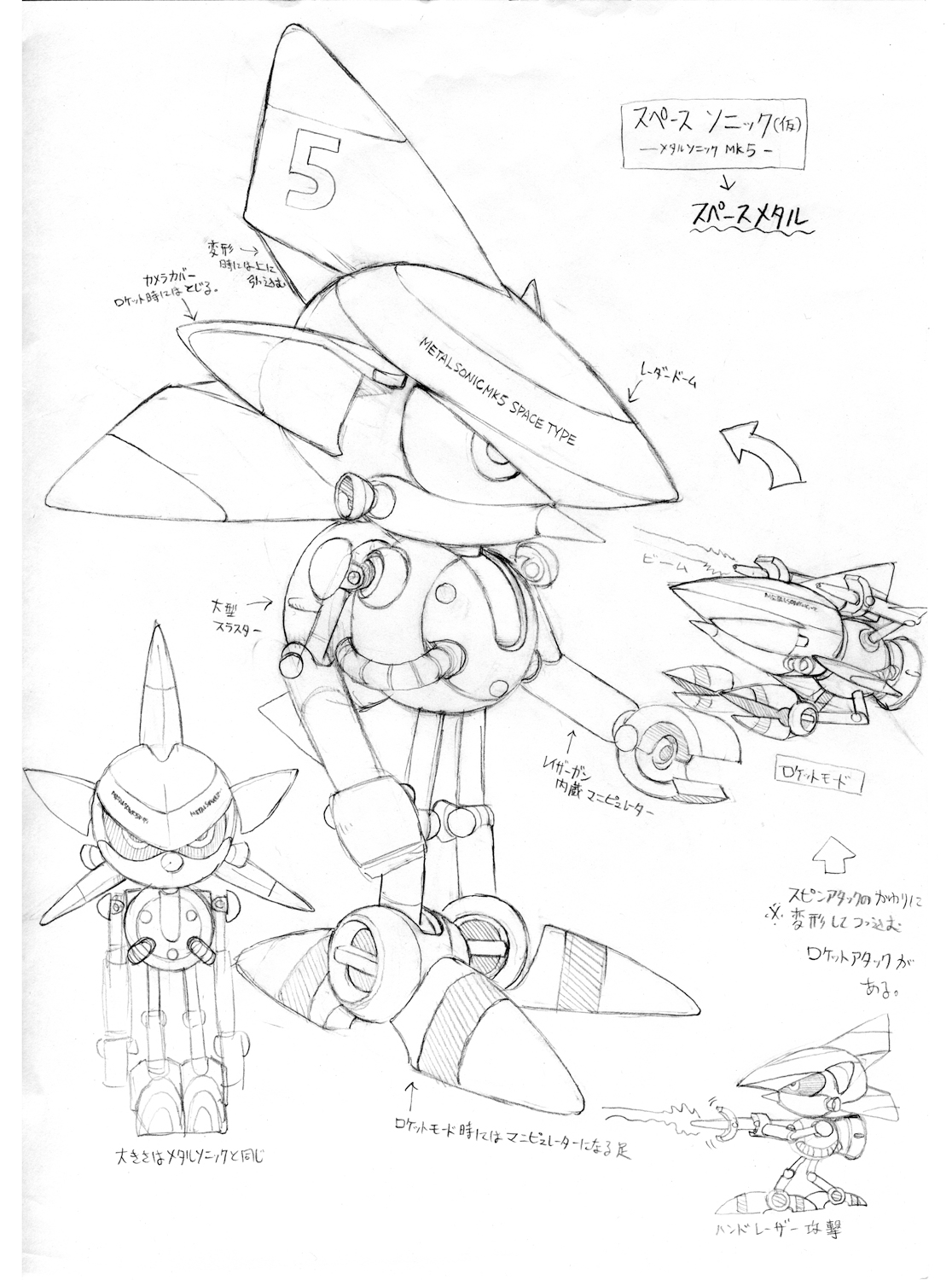
A series of sketches depicting an early design for Rocket Metal. This is presumably the earliest completed design for him when he was still known as Space Sonic/Space Metal. Several differences and points can be gleamed from the concept art itself;
- His head is significantly smaller and shaped differently, positioning the rocket-like elements to face to the front of his head instead of above it.
- The codename listed on his head is "Metal Sonic Mk5 Space Type". In the final game, it instead says "Mecha Sonic Model No. 29".
- His ears are shaped differently and positioned more to the sides of the head, seemingly acting as additional prongs to the rocket.
- His torso has compartments on his elbows that his arms appear to come out of and tubes around the bottom half. These elements are not in his final design.
- In the largest sketch, he seems to have additional small thrusters behind his knee area. These were replaced with pads in front of the knee area in the final design, with the thrusters instead being placed on his feet.
- Said feet are remarkably different, having a symmetrical look on the front and back. This was to tie into his rocket form, which is shown to have them transform into claw-like appendages. This design element was removed from the final game.
- The sketch at the bottom right depicts him shooting a laser out of his right hand. This was evidently a move the character was planned to have given Rocket Metal's unused hand models labelled "lasergun" in the files.
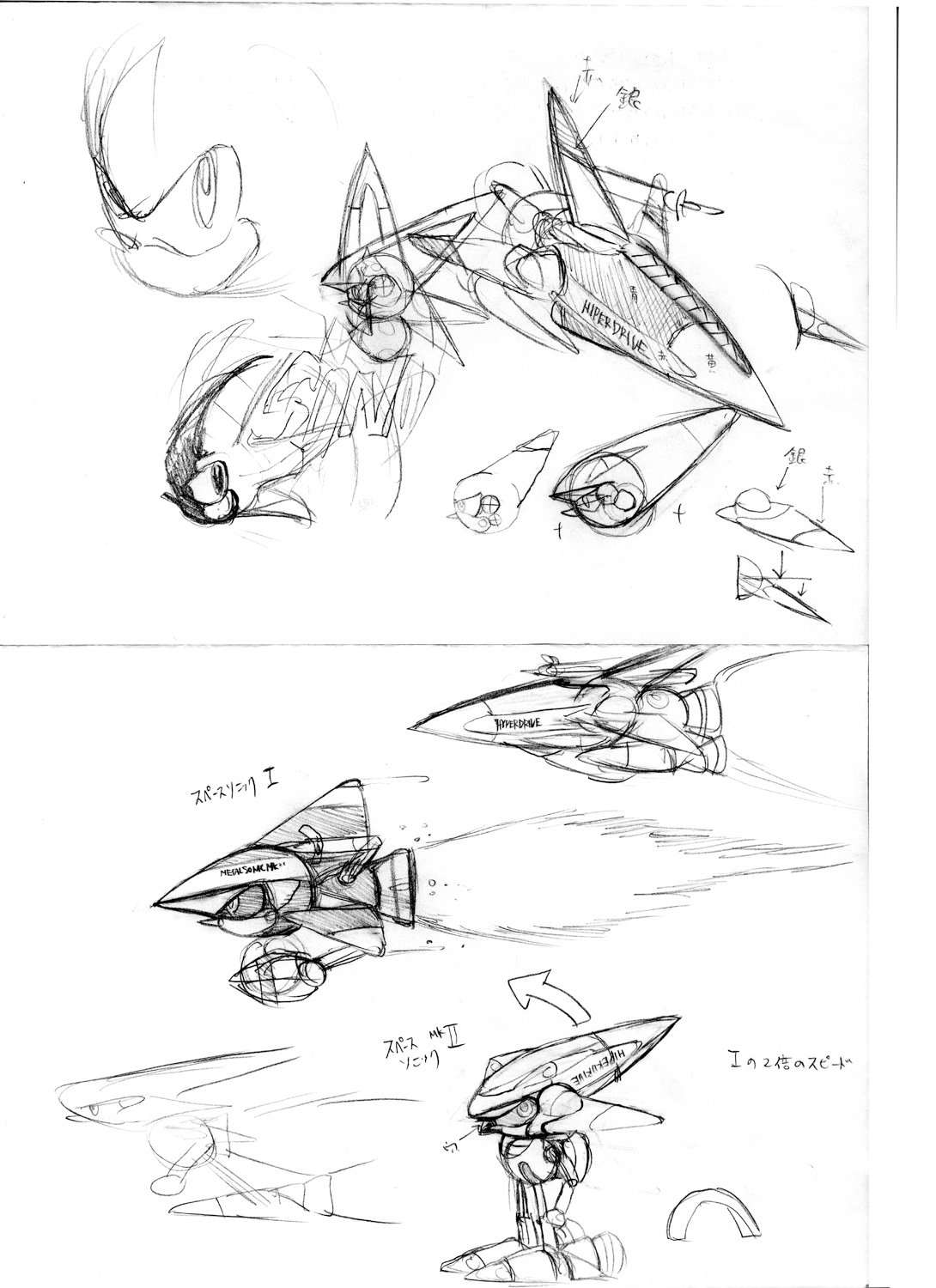
A series of sketches depicting two designs for what would become Rocket Metal. Following the previous design, Sugiyama decided to split the character into two different models; a "Space Sonic I" and a "Space Sonic MkII" who would've been an upgraded model from the first. The latter design was adapted into the final Rocket Metal character while the former design was scrapped altogether. Aside from that, the following points can be noted from the artwork;
- Super Sonic's head seems to be drawn on the top panel, presumably used as a reference point for the Space Sonic designs.
- Space Sonic MkII's rocket form has the visible codename "Hyperdrive" on his head. Space Sonic 1, conversely, has "Metal Sonic MkII" listed on his head in the bottom panel.
- Space Sonic I seems to derive from the previous beta design with no rocket form, with that instead being reserved for Space Sonic MkII which more closely resembles the final design.
Misc.#

Among the screenshots shown on the game's arcade flyer, Fang and Amy can be seen fighting in the Death Egg's Hanger stage with 20+ seconds remaining, a scenario that is impossible in the final game. This seems to indicate that the stage was meant to be playable in 2-Player Vs. matches. This scenario could possibly have occurred instead for debugging purposes and may not actually reflect an intention to make the stage accessible in such as manner, but this seems unlikely given that the build shown in the screenshot very closely resembles the final game, not to mention the fact that the developers chose to include the screenshot on the arcade flyer. Then again, it wouldn't be the first time Sega AM2 included content not accessible in their games on the flyer.
Sega Saturn Port#
Shortly after its release in arcades, a port of Sonic Championship was announced for the Sega Saturn, with a release anticipated in late 1996. A playable build of the game was allegedly shown privately during E3 1996 according to a then-representative of SquareSoft (now Square Enix). Confirmations of a Saturn port continued to circulate magazines until 1997 in North America, and well into 1998 in Japan, but it ultimately never materialized. According to a member of Sonic Team, Yojiro Ogawa, the Saturn port was cancelled because the devs did not feel the console could produce an accurate experience to the arcade version.