 This article has a talk page!
This page details pre-release information and/or media for Metroid.

|
To do: |
Concepts#
Gameplay#
At the beginning of development, Hiroji Kiyotake was pondering why Super Mario Bros. necessitated avoiding enemies, and wanted to make actions Mario didn't have. He conceived the Screw Attack as a method of spin-jumping to defeat enemies.1
Game Title#
The game was originally titled Space Hunter, but Hiroji Kiyotake and possibly Hirokazu Tanaka collectively combined the words "metro", as in "metro subway", and "android" to get the final title, Metroid.2 The "space hunter" term continued to be used to describe Samus for the manuals of Metroid3 and Metroid II: Return of Samus4.
Samus Aran#
Hiroji Kiyotake did the design of Samus for the original game.5 He intended the name of "Samus Aran" to reference Edison Arantes Nascimento, the real name of Brazilian soccer legend Pelé. Apparently he'd originally thought the name was more like Samus Arantes Nascimentos.
According to Yoshio Sakamoto, the game was "partway" through development when one staff member suggested the person inside the suit turning out to be a woman, and everyone went with it.6
Intro Sequence#
At first, Gunpei Yokoi called for a more elaborate intro sequence, where Samus appears with bombs and her Morph Ball, running around while the game scrolls. At Yoshio Sakamoto's objection, this got changed to the final game's simpler cut to the title logo appearing.
Music#
Composer Hirokazu Tanaka wasn't very approving of the game industry's trend at the time of upbeat music no matter what. As such, he intended his soundtrack for Metroid to directly counter that. He composed the soundtrack "as music the players feel as if they were encountering a living creature", and intended for the audio to be "without any distinctions between music and sound effects". His personal image he had in mind for the soundscape was, "Anything that comes out from the game is the sound that game makes." He reserved melody only for after defeating Mother Brain because he "wanted only a winner to have a catharsis at the maximum level." Furthermore, he "didn't discuss [the music] with anybody".7
Map Names#
In addition to doing the game's audio, Tanaka was also the one in charge of naming each of the maps on Planet Zebes.
Manual Screenshots#
Menu Screens#
Prerelease |
Final |
|---|---|
 |
 |
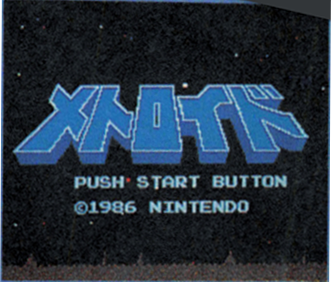
This shot of the title screen shows that the start game prompt originally wasn't centered properly.
Prerelease |
Final |
|---|---|
 |
 |
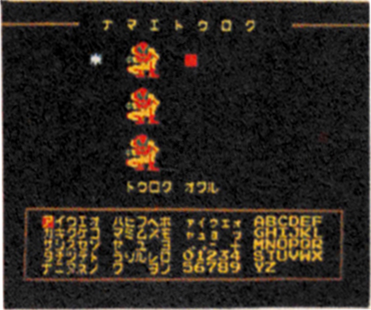
This shot of the continue screen shows a different, slightly sloppier sprite of Samus crouching. Also seen here, in the name selection screen, is an earlier iteration of the game's font. Namely, the kana Ha (ハ) is more noticeably different, whereas the equal, period, interrogation/exclamation mark, and slash symbols are all missing.
(Source: Enhanced manual scans provided by GamingAlexandria.)
Prerelease |
Final |
|---|---|
 |
 |
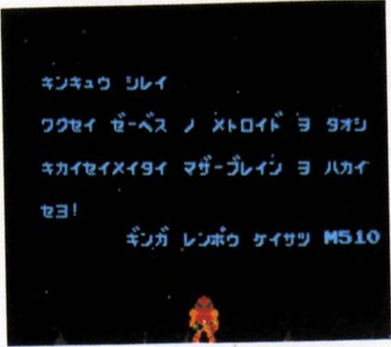
This shot of the Mission Objective text featured in Famimaga Issue 18 shows that Samus was originally present there. Meanwhile, in the final game, she only appears in the ending.
(Source: Famimaga Issue 18 - August 1986])
Samus Sprites#
Scan |
Mock-Up |
Final |
|---|---|---|
 |
 |
 |
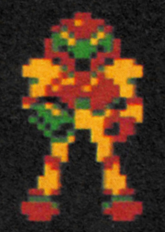
This early front facing sprite is pretty much identical to final, aside from the plastron and some of the detailing on the ankles and feet.
Scan |
Mock-Up |
Final (Unused) |
|---|---|---|
 |
 |
 |
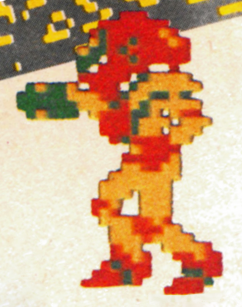
The sideways Samus sprite shows her less hunched over, and features extra plastron details as well as straps for her ankle pads. This sprite is worth noting due to it being a unique left facing one, whereas the final game simply mirrors the right-facing one to save on memory. However, unique right-facing Samus sprites still exist in the final game, though go unused. This sprite can also be seen in early promotional material, showing that the devs did originally consider using those. Moreover, this particular sprite also seems to have served as the basis for the "enhanced" Samus sprite seen in the game's US boxart.
Scan |
Mock-Up |
Final |
|---|---|---|
 |
 |
 |
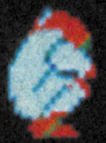
The frame of Samus curling up into her Morph Ball form was redrawn, namely making her taller and shifting the helmet's sheen the other way around.
Enemy Sprites#
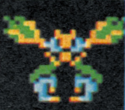
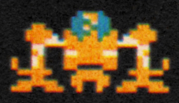
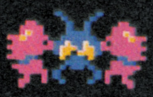
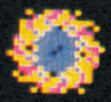
The game's manual is kind enough to not only include a bestiary, but one which also features early sprites for a handful of enemies. Worth noting is the Multiviola, which takes on the form of a fireball instead of an orb, making it look closer to its larval counterpart, the Viola. This is actually reflected in its promotional art, which was made prior to the game's release. Moreover, this early sprite actually remains in the final game's data, though there it goes completely unused.
Another mention goes to the yellow Zoomer enemy, whose early sprite also seems to have been used as the basis for its "enhanced" depiction in the game's US boxart. This can most notably be seen by its goofier eyes, as well as the extra shading present on its spikes.
Name |
Scan |
Mock-Up |
Final |
|---|---|---|---|
Zeb |
 |
 |
 |
 |
 |
 |
|
Zoomer |
 |
 |
 |
 |
 |
 |
|
Rio |
 |
 |
 |
Side-Hopper |
 |
 |
 |
Dessgeega |
 |
 |
 |
Waver |
 |
 |
 |
Nova |
 |
 |
 |
 |
 |
 |
|
Multiviola |
 |
 |
 |
 |
 |
 |
|
Rinka |
 |
 |
 |
Scan |
Mock-Up |
Final |
|---|---|---|
 |
 |
 |
The sprite for the energy orbs dropped by enemies is also slightly different. Namely, its inner portion is white instead of black.
(Source: Sprite reconstructions provided by FrenchOrange.)
Early Room Layouts#
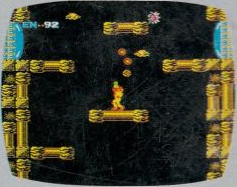
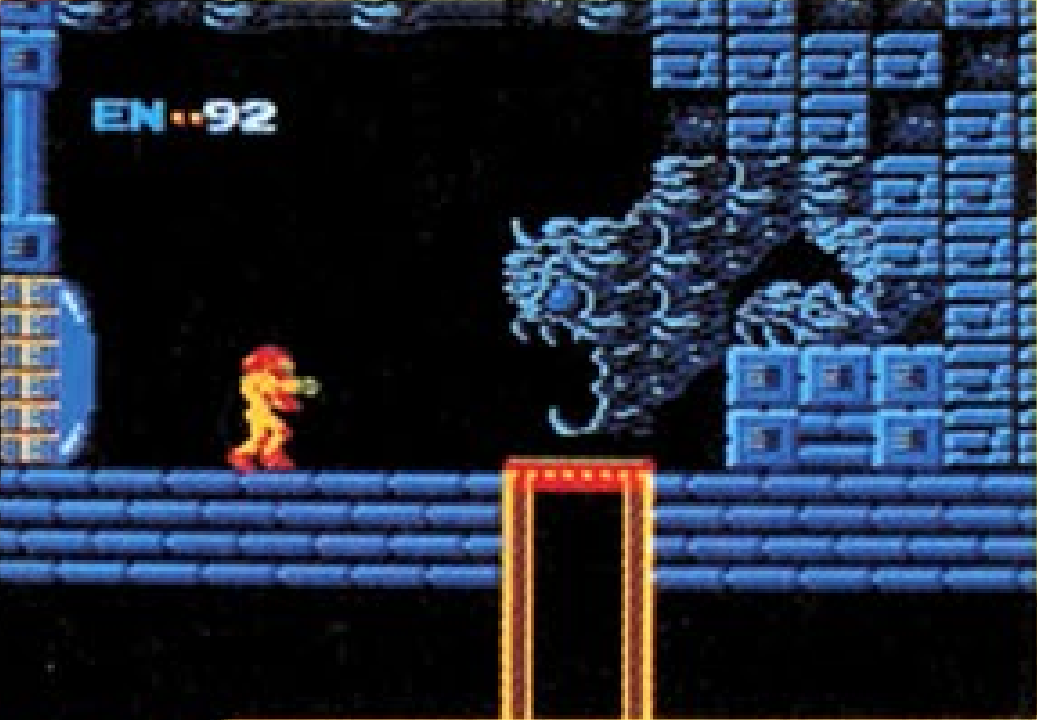
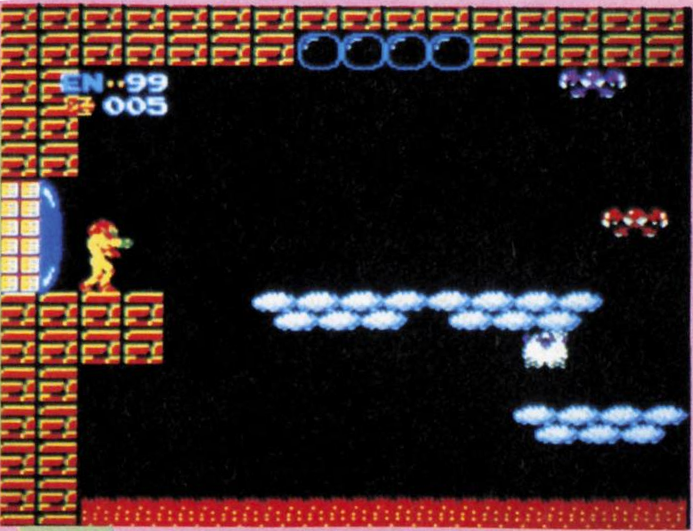
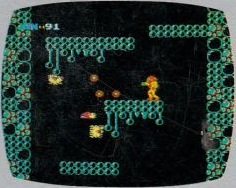
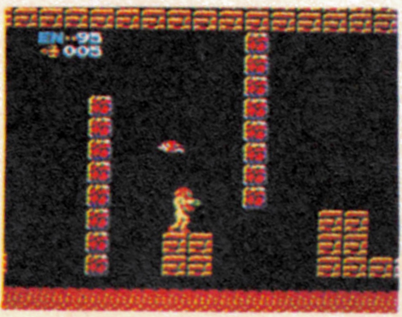
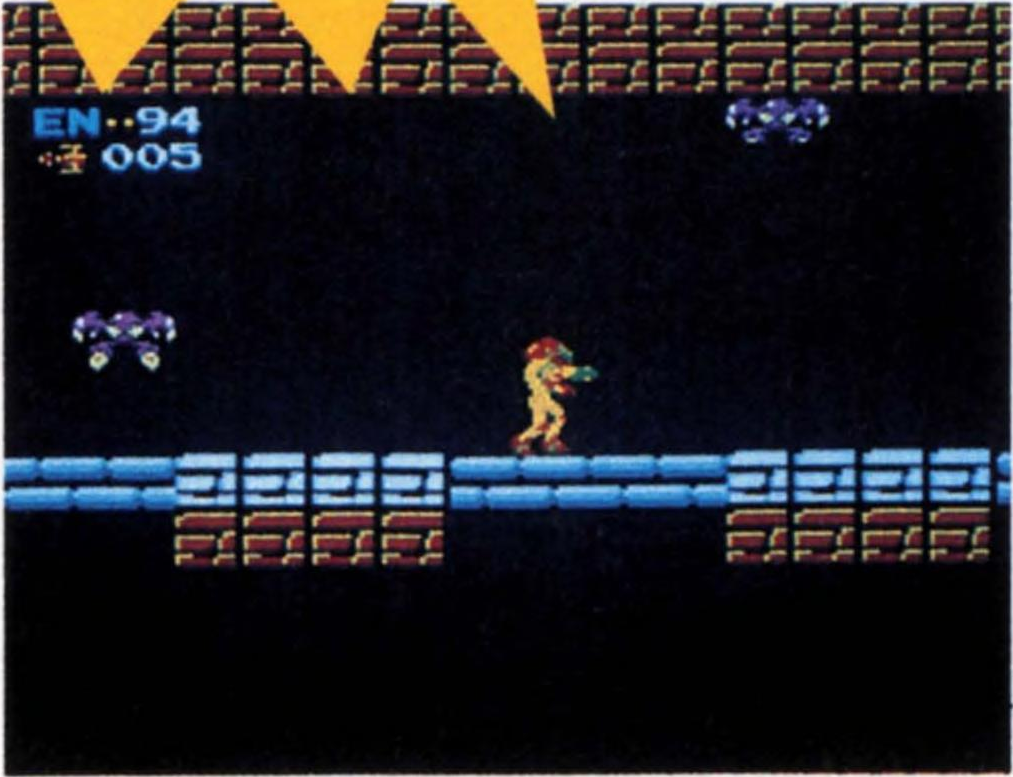
A few earlier layouts of rooms can be seen in magazine coverage, commercials, and even the back of the international NES box. These vary from changes to the actual layouts, to the way enemies are arranged in said rooms.
Brinstar#
Prerelease |
Final |
|---|---|
 |
 |
Seen on the back of the NES box. The room is mostly the same layout-wise, but features two yellow Rippers instead of a singular red one.
Prerelease |
Final |
|---|---|
 |
 |
This room can be seen in Famitsu Issue 5. The floor was made thinner in the final game.
(Source: Famitsu Issue 5 - August 22 1986)
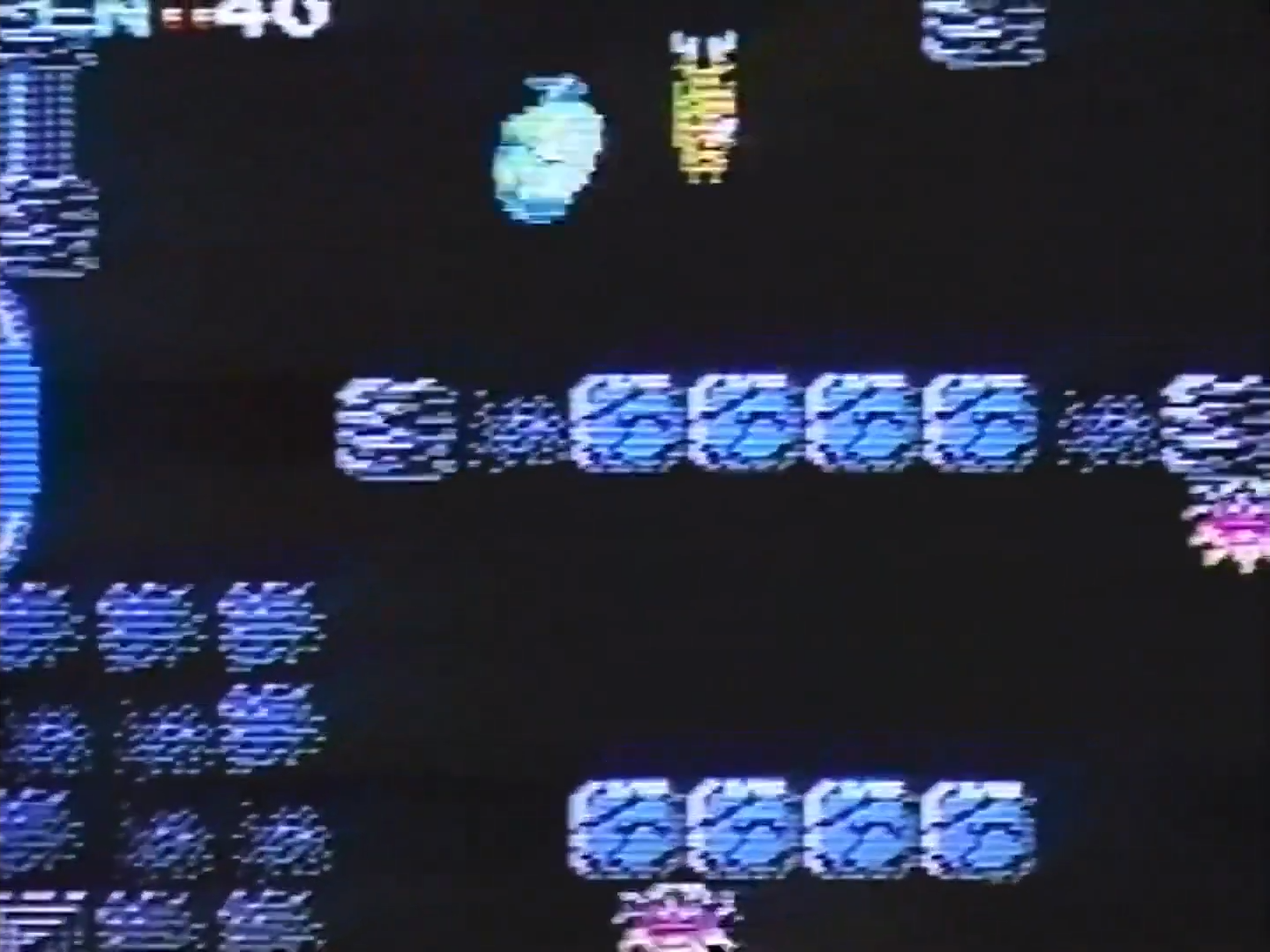
Prerelease |
Final |
|---|---|
 |
 |
Seen in the Japanese commercial. The room lacks a row of breakable blocks, and features changes to the enemy variety, namely having a Skree on the ceiling.
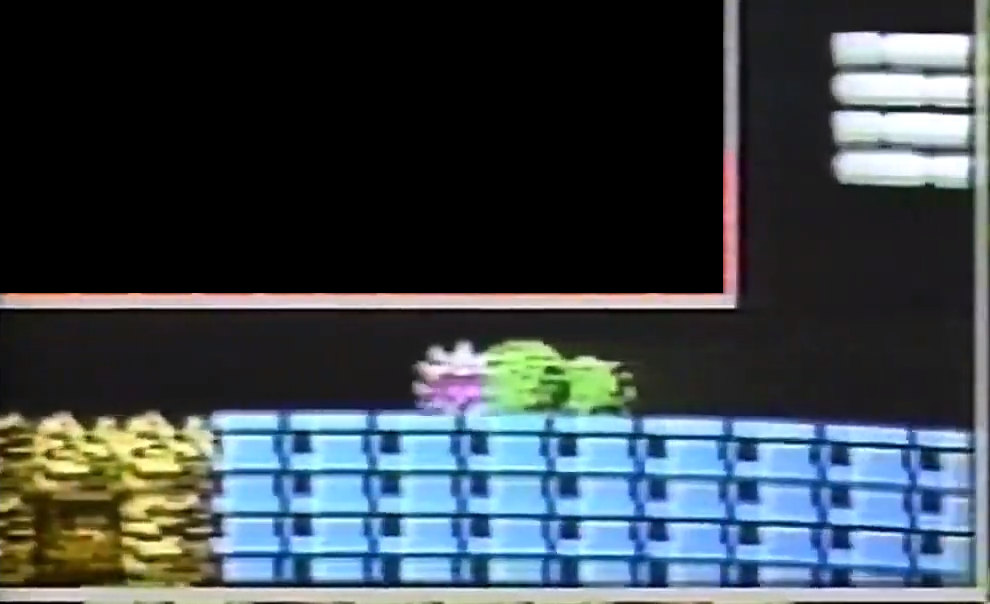
Prerelease |
Final |
|---|---|
 |
 |
Another room seen in the Japanese commercial. A minor layout difference can be seen on the right, with the gray platform being made taller in the final game.
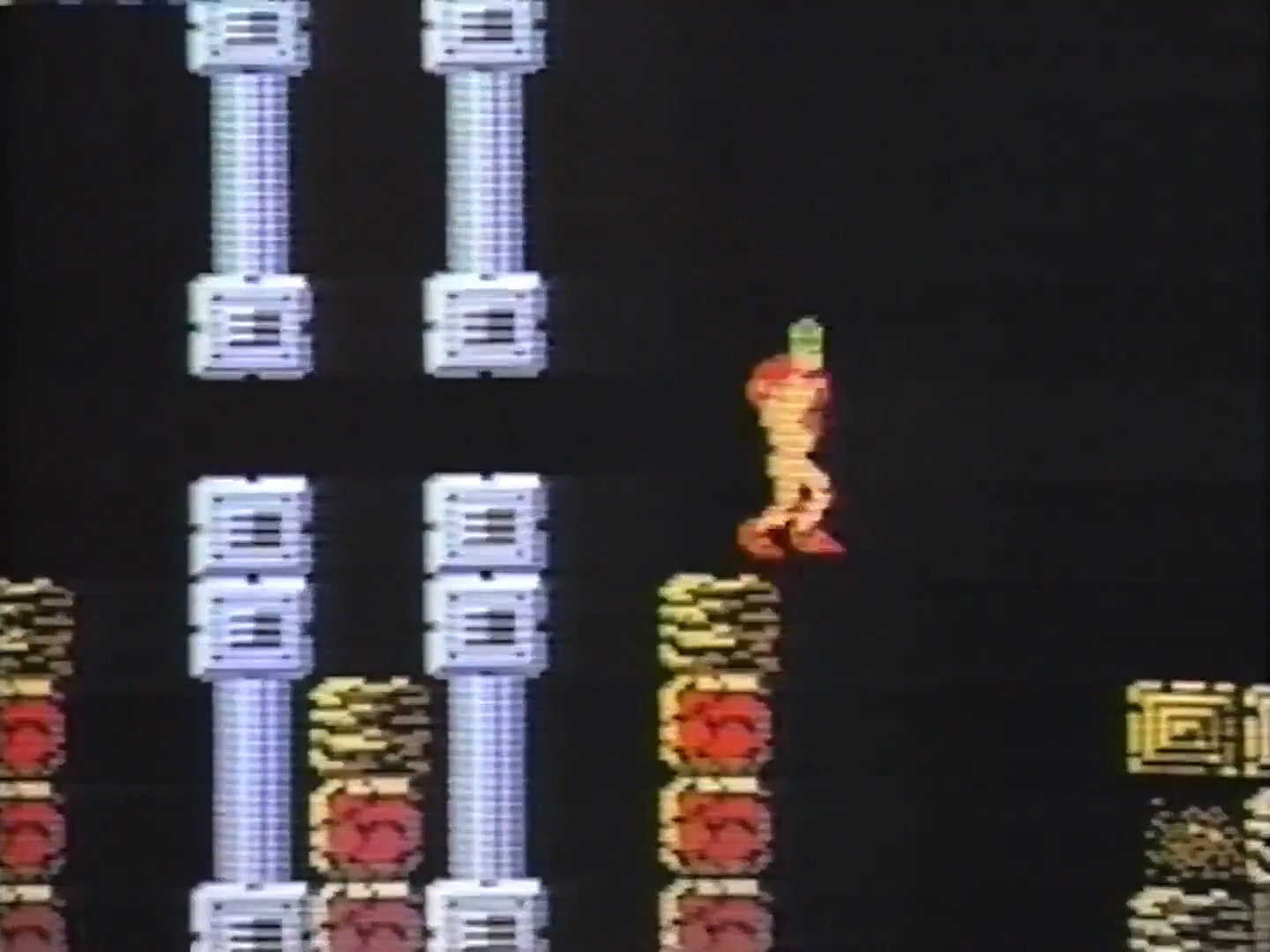
Prerelease |
Final |
|---|---|
 |
 |
Also seen in the Japanese commercial. It features a couple of changes, including the metal bars being closer to each other, requiring the Morph Ball to navigate through.
Prerelease |
Final |
|---|---|
|
 |
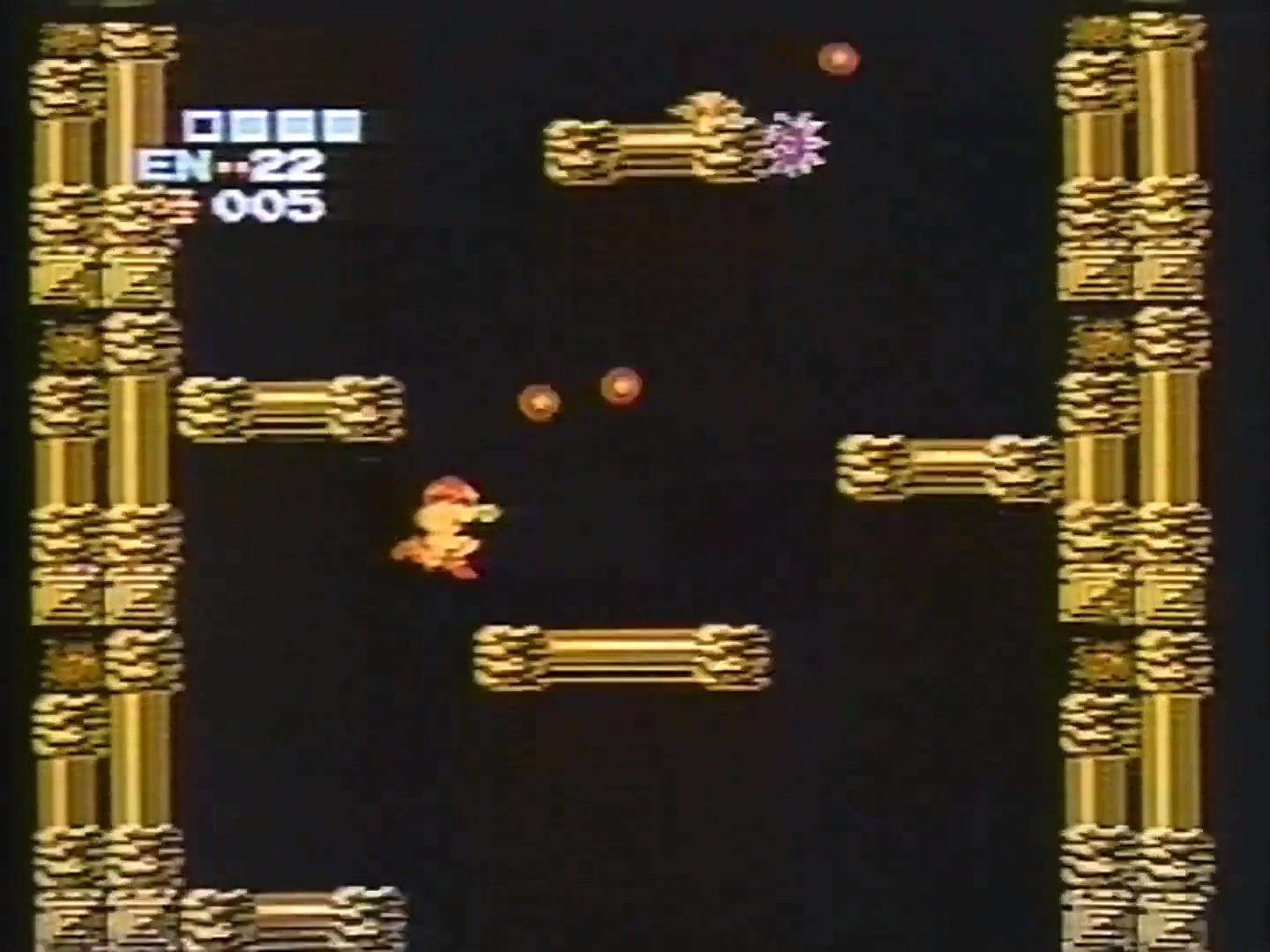
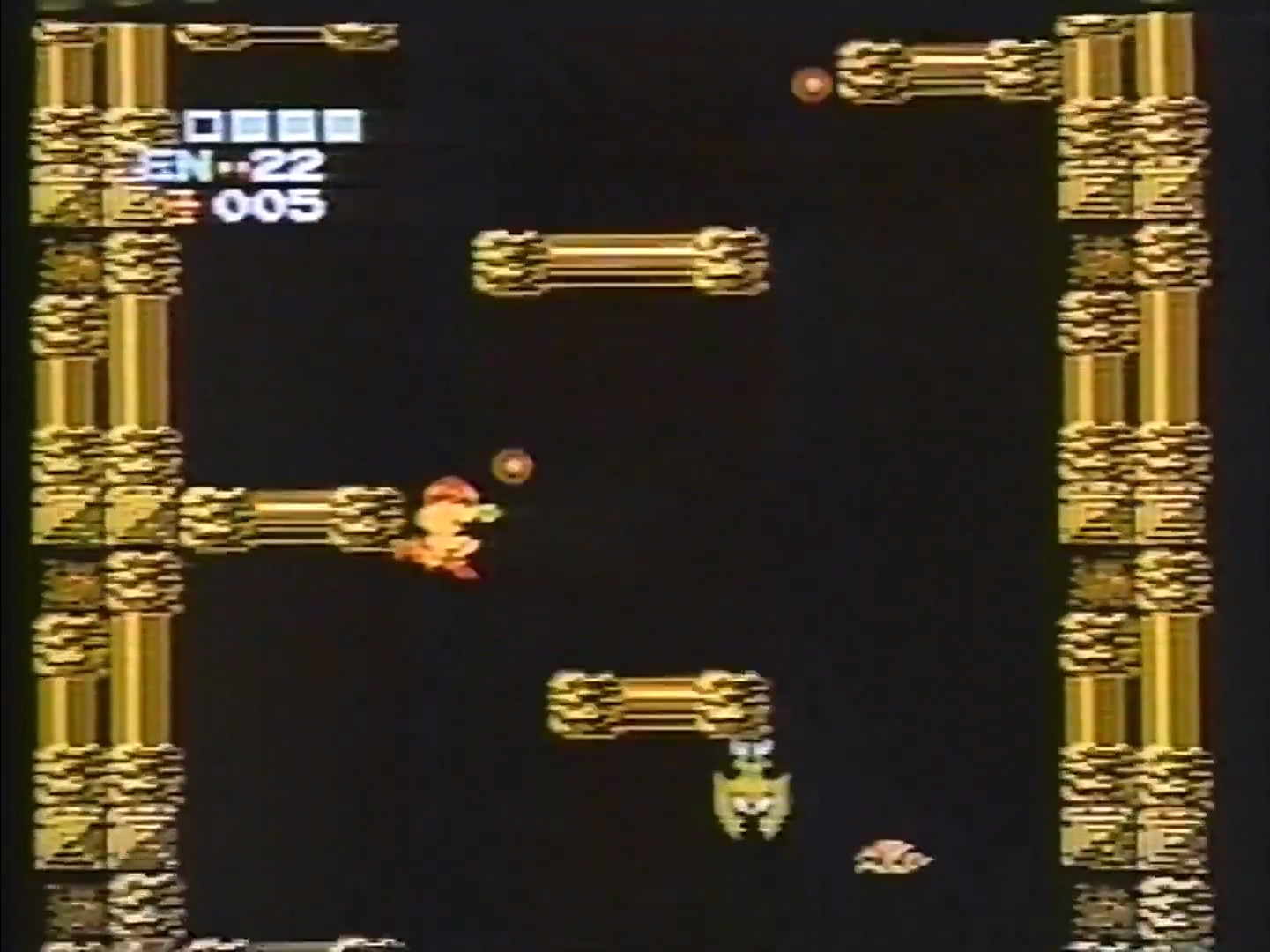


There's a part in the Japanese commercial where Samus is falling down through this repeating room type. This build features both differences to the placement of the platforms as well as differences in the enemy variety. Most notable is the presence of the Skree, an enemy only ever seen on ceilings in the final game.
(Source: Japanese Metroid Commercial)
Prerelease |
Final |
|---|---|
 |
 |
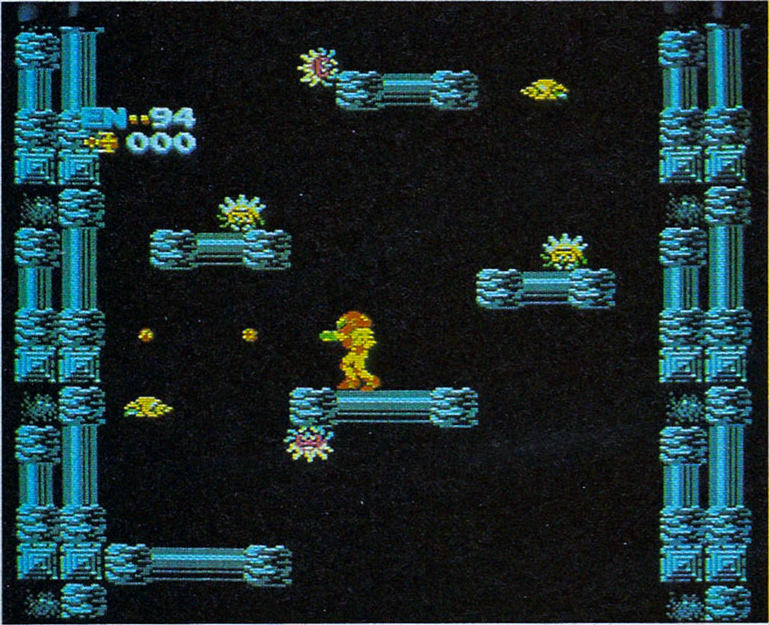
The same layout as the previous room shows up once again in a screenshot from a late 1988 Nintendo Buyer's Guide. However, this is a lot closer to the final layout, the biggest difference being the color variant of the Zoomers.
(Source: Game Player's Nintendo Buyer's Guide - Winter 1988)
Prerelease |
Final |
|---|---|
 |
 |
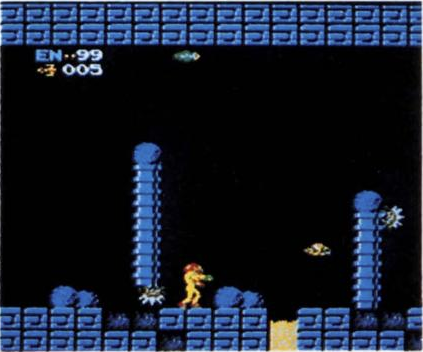
This room can be seen in Famimaga Issue 19. Most notably, it features a completely different palette, suggesting that this room layout was either featured in the west part of Brinstar at one point in development, or that the palette change seen in zones such as Brinstar (West and East) and Norfair (North and South) hadn't yet been fully implemented.
Unused |
Used |
|---|---|
 |
 |
Another notable difference is that the Waver featured in the screenshot is using its unused sprite from the Kraid's Hideout enemy sprite set.
(Source: Famimaga Issue 19 - September 19 1986)
Prerelease |
Final |
|---|---|
 |
 |
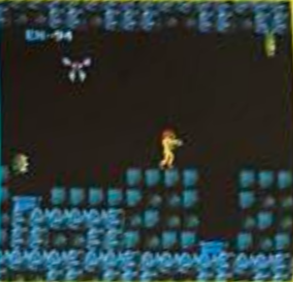
This room can be seen in a screenshot featured in a 1986 Famimaga Metroid map poster. The tile layout matches the final game, but notably there's a red Rio instead of a yellow one as well as a Skree not found there in the final game.
(Source: Famimaga Metroid map poster )
Norfair#
Prerelease |
Final |
|---|---|
 |
 |
Seen on the back of the NES box, as well as in Famitsu Issue 9 and Famimaga Issue 18. Mostly the same as final, aside from enemy variety.
(Source: Famitsu Issue 9 - October 17 1986)
Prerelease |
Final |
|---|---|
 |
 |
A room layout that can be seen on the back of the NES box, and shows that the enemies were shuffled around slightly.
Prerelease |
Final |
|---|---|
 |
 |
This room, featured in Famimaga Issue 18 as well as the manual, had its Ripper II replaced by three Novas, and the leftmost platform went from one block tall to three.
Prerelease |
Final |
|---|---|
 |
 |
This room is featured in Famimaga Issue 18, and features some notable differences to both platform and enemy placement. Most notably, it lacks the pipes which spawn red Gamets.
Prerelease |
Final |
|---|---|
 |
 |
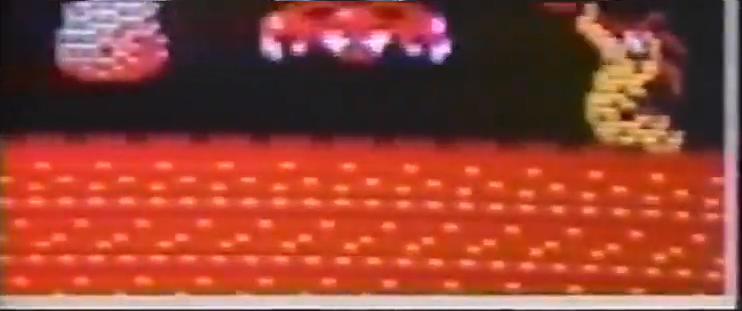
This room can be seen in the Japanese commercial, and features a red Geruda not present there in the final game, as well as a red Dragon instead of a purple one. The palette used here is also that of purple Norfair (North Area), instead of green Norfair (South Area).
Tourian#
Prerelease |
Final |
|---|---|
 |
 |
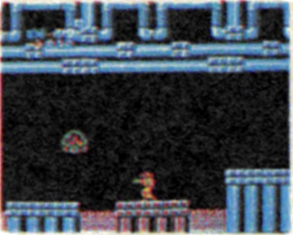
Found in the manual is a small screenshot of Tourian, which shows the rightmost lower platform with a red palette instead of a grey one.
References#
- Nintendo Classic Mini: NES special interview – Volume 5: Metroid | News | Nintendo ZA↩︎
- Metroid Database :: Famicom Disk System Interview - Part 4: Naming Samus↩︎
- Metroid - Nintendo Entertainment System (1987) (Nintendo) (US) - "As a last resort, the Federation Police have decided on this strategy: to send a space hunter to penetrate the center of the fortress and destroy the Mother Brain. The space hunter chosen for this mission is Samus Aran. He is the greatest of all the space hunters and has successfully completed numerous missions that everybody thought were absolutely impossible."↩︎
- Metroid 2 Return of Samus Game Boy Manual - "There are many unknown planets throughout the galaxy. Many of these are causes of concern to the Galactic Federation. To take care of this, they employ Space Hunters, the greatest of which is Samus Aran."↩︎
- Metroid Database :: Famicom Disk System Interview - Part 5: Development Process of Metroid↩︎
- Metroid: Zero Mission Director Roundtable - IGN - "It is true that in developing the original Metroid, we were partway through the development processes when one of the staff members said, "Hey, wouldn't that be kind of cool if it turned out that this person inside the suit was a woman?" So that's how we decided on that." -Yoshio Sakamoto↩︎
- Shooting from the Hip: An Interview with Hip Tanaka↩︎