 This article has a talk page!
This page details pre-release information and/or media for Crash Bandicoot.
Early Preview#
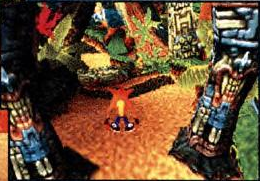
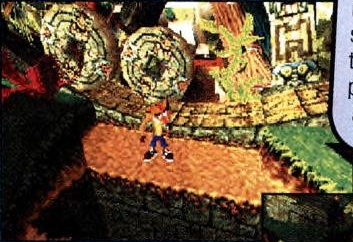
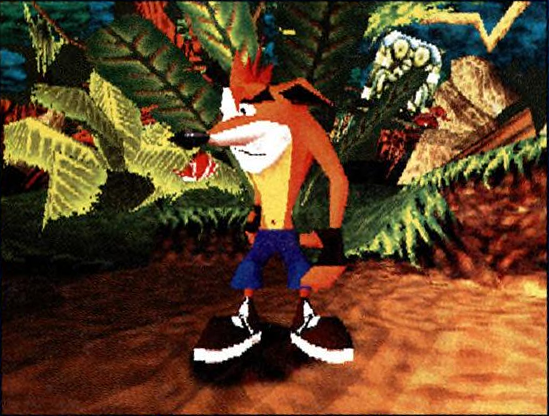
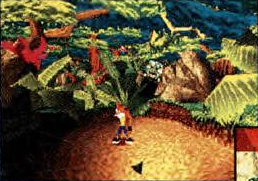
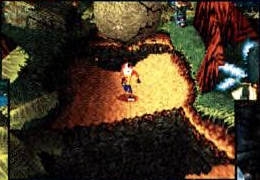
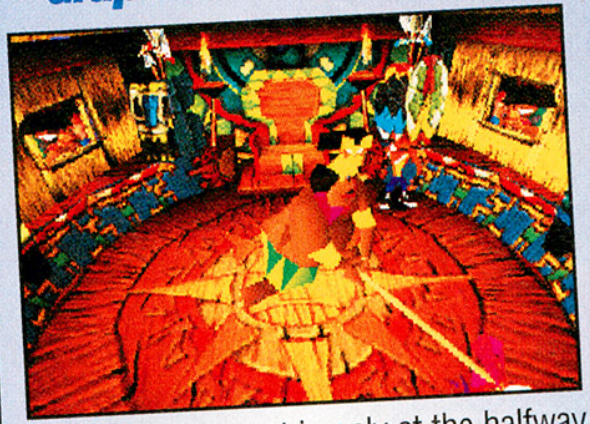
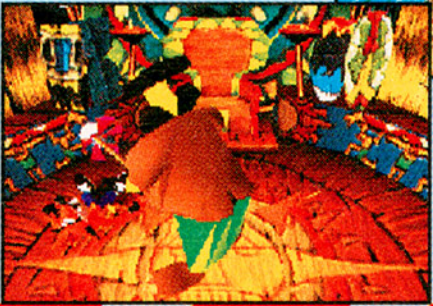
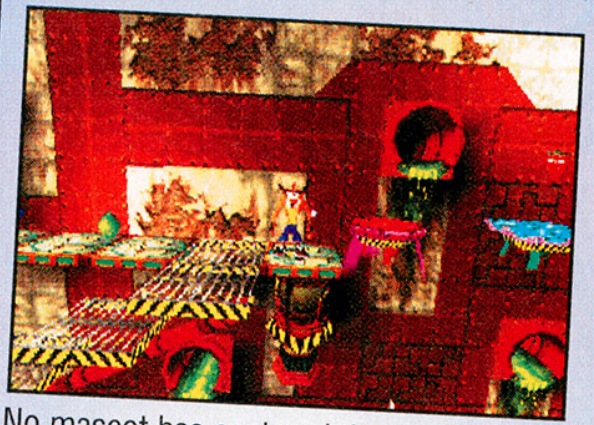
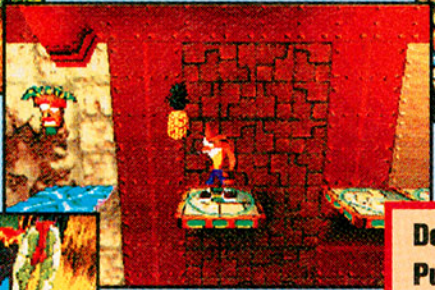
Some of the earliest screenshots of the game can be identified by the presence of different fruits, which were later replaced by the iconic Wumpa fruit. Interestingly, leftovers of this very early code are still present in the April 8th, 1996 prototype. These images were featured on the GamePro magazine issue 091 (April 1996). Also according to the magazine article, the game's music and sound effects weren't available for previewing.1. Judging by content such as crates and Wumpa fruit being missing, the build was most likely compiled sometime in 1995.
General Differences#
- Crash's model uses an early version that can be discerned by the shiny nose texture on it. This model also appears in the early code present in the April 1996 prototype.
- Wumpa Fruit do not exist yet - instead, Crash would collect regular fruit such as pineapples, limes, and strawberries.
- Crates apparently do not exist - they do not show up in any of the screenshots where they would regularly be.
- Aku Aku pickups are a 2D sprite instead - this is the version of Aku Aku that would create a floating sparkle around Crash instead of having a 3D witch doctor mask follow him.
- This build appears to have the ability to activate a debug freecam, judging by a screenshot where Crash's model is focused upon much closer than the game would ever normally allow.
- Bosses don't have health bars.
Jungle Rollers#
- Crash doesn't have a shadow.
- The scenery is slightly different in the second screenshot: in the final game, there is a rectangular stone pillar to the left of where Crash is standing and a plant to the right of him. Neither of these show up in this version.
Boulders#
- The camera angle at the beginning of the level is positioned and focused on Crash at a higher angle. The final level places the camera right in front of him, like the rest of the level does.
- Although the general layout in the screenshot where Crash is running from the boulder is the same, the scenery is completely different.
Papu Papu#
- Papu Papu has an earlier design with a yellow hair ornament and bracelets, instead of blue ones. This is actually how he appears in the game's promotional art as well.
Heavy Machinery#
- The general design of the level is much more colourful and cartoony: bright reds, greens, and yellows are found all over the place instead of the final drab grey and dark red/yellow colour scheme.
- The regular platforms that do not do anything are coloured red and green on the sides instead of brown and yellow. The top of them is coloured green and a light tan instead of dark grey.
- The moving platforms that carry you to places upon getting on them have a general bright red colour. They also have warning stripes along their lower area and emit red light. This platform is brown with lime green highlights and white light emission in the final game.
- The platforms that drop shortly after you land on them have a general bright blue colour. They also have warning stripes along their side and emit blue light. This platform is brown with lime green highlights and white light emission in the final game.
- The stair-like platforms are marked with warning stripes along their side. They're marked with a lime green highlight in the final game.
- Tiles for pipelines of dripping toxic waste used to be surrounded by a small section of wall that matched the colour of the tube. The tile surrounding the tube is a washed-out red in the final game.
- The first stair platform that branches out from the regular 2D path is placed at the same height as the regular 2D path instead of being at the same height of the step after it.
Early 1996 Preview#
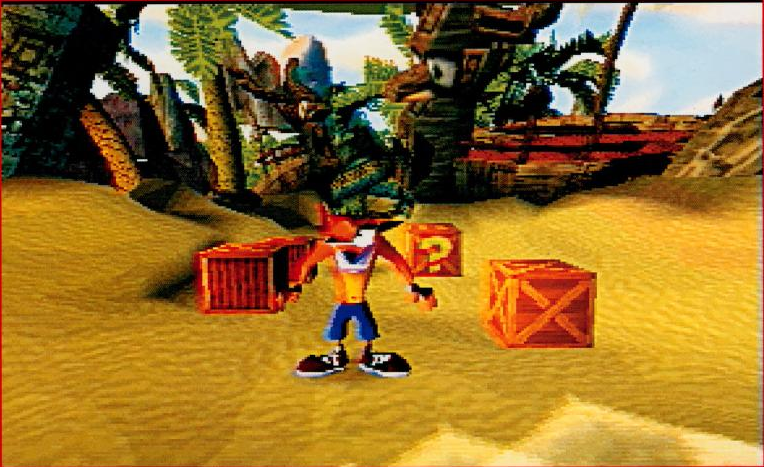
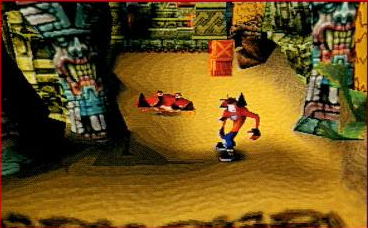
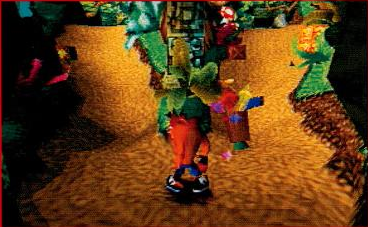
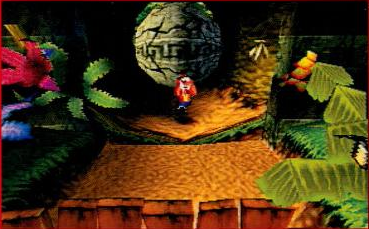
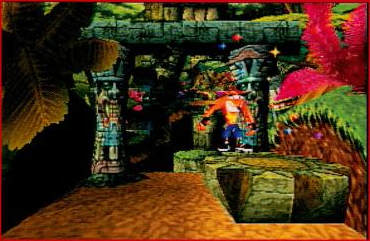
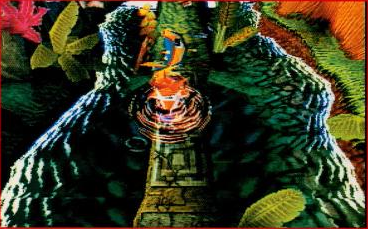
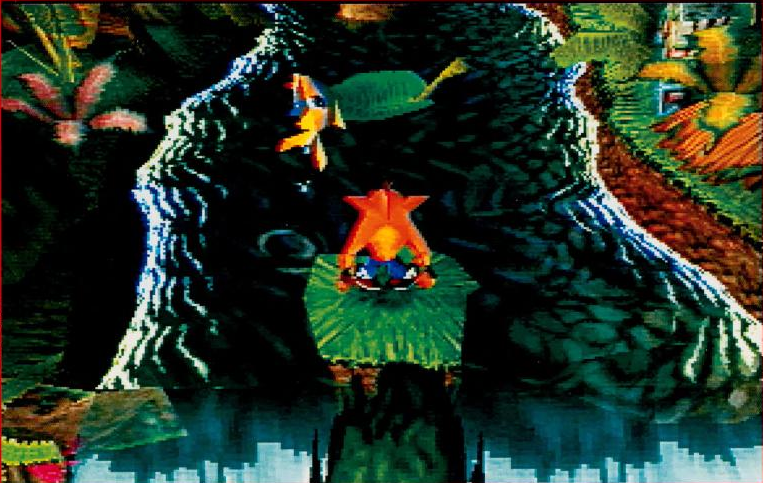
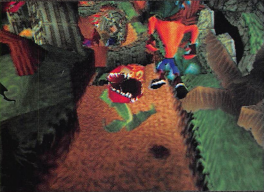
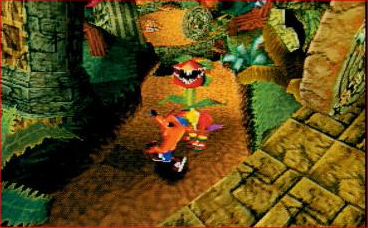
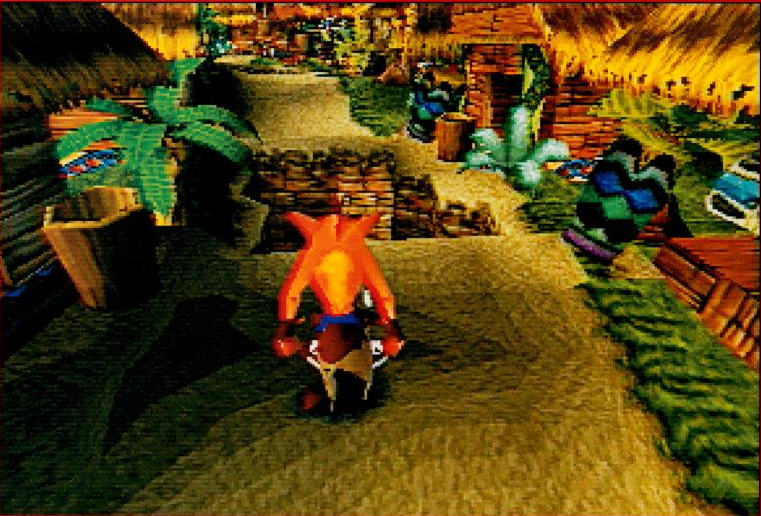
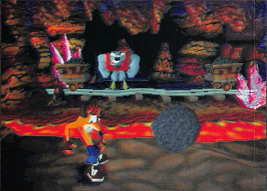
Screenshots of this build were given to magazines such as EGM Issue 083 (June 1996) - however, it's a much earlier build than June, with differences that set it before the April 8th, 1996 prototype. By this point, crates, Wumpa fruit, and Aku Aku's physical form have all been added.
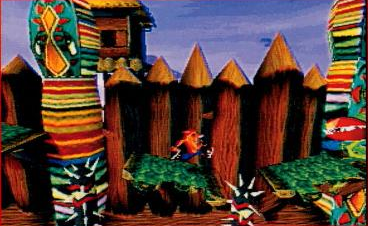
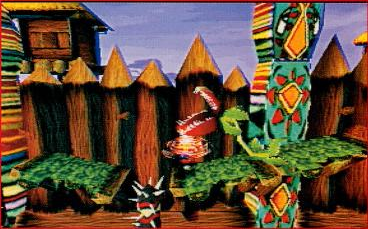
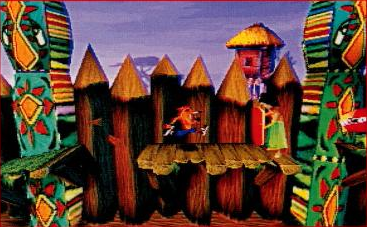
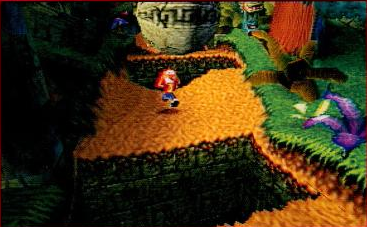


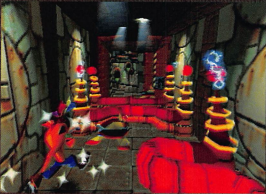
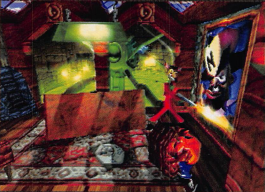
General Differences#
- Aku Aku doesn't have his "golden" second form, as he is in his regular appearance during invincibility in the Cortex Power screenshot.
- Bosses don't have health bars.
N. Sanity Beach#
- There are 4 crates around Crash instead of 3, and they are all spread out wider. The regular crate in the screenshot seems to have been the one removed from the group of crates in the final level.
- The regular crate and bounce crate before the stairs are slightly off to the right.
- The Aku Aku crate and question mark crate on the stairs in the final game are placed behind the large pillars on the sides of the staircase, hiding them in plain sight.
Upstream#
- A stack of crates with an Aku Aku crate in the final game doesn't appear to have an Aku Aku crate in this build, as Crash is spinning it with no sign of Aku Aku anywhere.
Rolling Stones#
- The checkpoint crate after the turtle doesn't appear to be present.
Hog Wild#
- Crash is in his default pose atop the warthog.
- The pit at the start of the level is much bigger.
Koala Kong#
- The crystals in the level scenery are pink instead of green.
Cortex Power#
- The level design is very different - there does not appear to be vertex colouring in the scenery and the camera angle is set at an angle more akin to Toxic Waste that lets you see the roof instead of being a top-down view.
- The wall in the distance with toxic waste oozing out of pipes is not present in the final level.
- The powerplant enemy that appears before the two hot pipes was omitted from the final game.
- The enemy itself looks drastically different than its final appearance - it seems smaller, it is much more colourful, and it appears to be vertex coloured rather than using flat colours.
B-Roll Preview#
Some short clips of two different builds were shown off at E3 1996:
Pre-April Footage#
Despite appearing very similar to the April 8th, 1996 prototype, this version has key differences that make it clear that it is a separate build.
General Differences#
- The first Wumpa fruit that Crash collects doesn't register, and the Wumpa counter remains at 0 until he picks up another one.
N. Sanity Beach#
- There are 4 crates around Crash instead of 3, and they are all spread out wider. The regular crate seems to have been the one removed from the group of crates in the final level.
- The Aku Aku crate and question mark crate on the stairs in the final game are placed behind the large pillars on the sides of the staircase, hiding them in plain sight.
- The pile of four crates behind the aforementioned Aku Aku crate is a pile of eight, with an extra layer of crates on top of it.
The Great Gate#
- The iron bounce crate is placed in the middle of the level's start point instead of to the right. The bounce crate above that is on the left side of the tower and is higher up. The third bounce crate is missing from this version.
- The Wumpa and normal crate stack is closer to the center of the spawn point. The normal and ? crate stack has been moved to the right, and a removed stack of two normal crates appears next to it.
- The stack of normal crates after finishing the bounce crates is closer to the left side of the wooden bridge, and the Aku Aku crate is higher up to the right. The third crate of the stack is missing, making the crate pile lose its "staircase" appearance.
- A gap in the bridge between the aforementioned crates and the first turtle is present, but the gap was filled in for the final game.
- The level is shown to have the full yellow gem path at this point in development, despite being missing in the April 8th, 1996 prototype.
Pre-E3 Footage#
Footage of this build can also be seen lumped in with the B-roll footage shown at E3. The footage of this build can be discerned by the "PlayStation™" watermark in the bottom left corner.
General Differences#
- The first Wumpa fruit that Crash collects doesn't register, and the Wumpa counter remains at 0 until he picks up another one.
- The "CHECKPOINT" text from the checkpoint crate uses the final wording and textures, but will come out of the crate in a swirling effect akin to the "continue" crates in the April 8th, 1996 prototype.
Japanese Preview#
An early demo version of the Japanese localization was shown in a preview article of the Jugemu magazine (November 1996). Despite the game being finished at that point, some differences regarding the Japanese translation can be seen.2
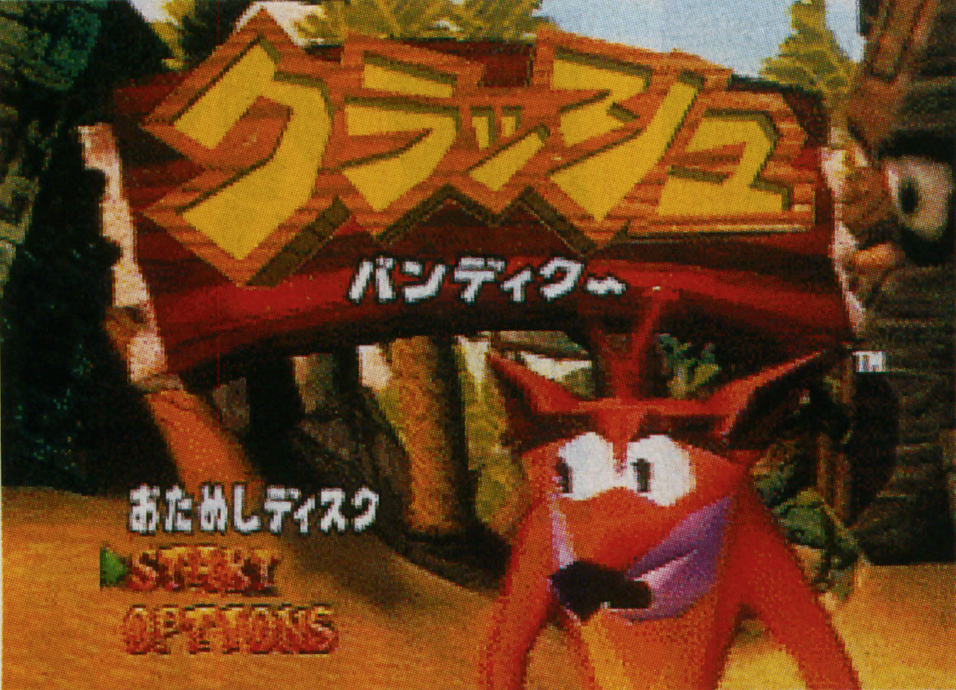
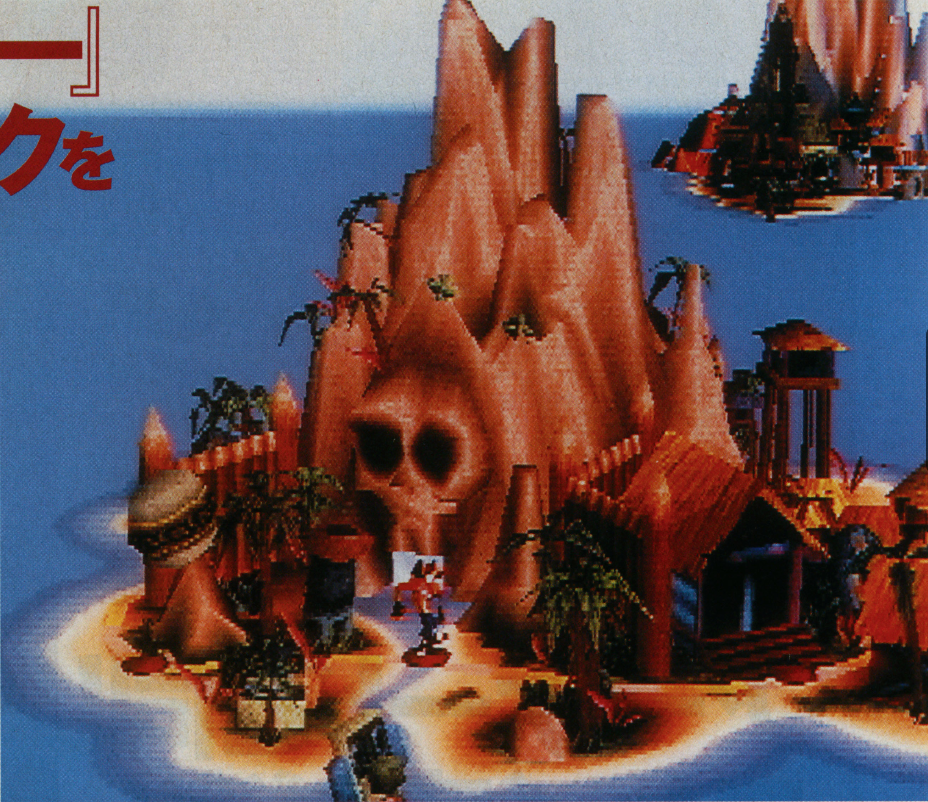
Title Screen#
- The logo has a different design; クラッシュ ("Crash") is larger, lacks the gradient, and features a wooden outline texture, while the バンディクー ("Bandicoot") subtitle is smaller.
- A similar version of this logo appears on the game's box art.
- A white notice reading おためしディスク ("Trial Disc") appears above the options (the same notice is also present in the Otameshi Disc).
- Selectable options are displayed in English.
Map#
- Level names appear to be disabled on the map screen, likely because they had not yet been localized into Japanese.
SGI Build#
Throughout the development of Crash Bandicoot, Naughty Dog used computers from Silicon Graphics Incorporated (SGI), powerful workstations with high-grade graphics for the time, to test the game. While specific details about this version of the game are hazy, a picture predating the April 8 prototype reveals what it looked like:
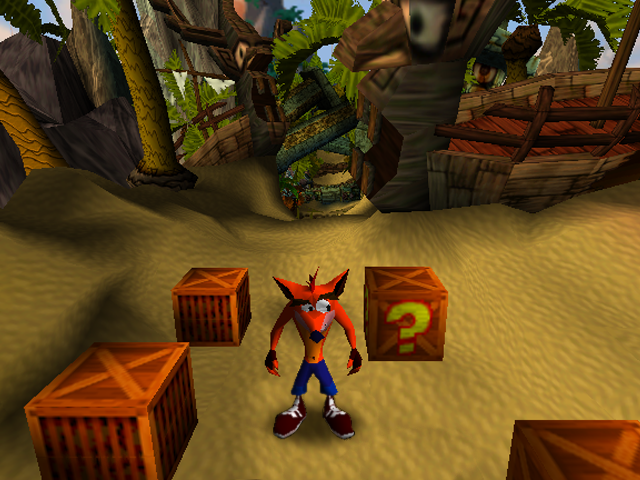
This file is dated to April 4 in the archive it originates from.
General Differences#
- The game is rendered in true color rather than the PlayStation's 15-bit color.
- In-game entities like Crash and crates are given shading on their left side instead of their right side.
- Textures are rendered with a bilinear filter rather than a nearest-neighbor filter, much like the level textures in promotional art.
- Crash's eyes don't have a glow-in-the-dark effect, just like in the old 1995 code found in the April 1996 prototype.
- Keyboard controls were used instead of a traditional controller.3
- The game is incapable of saving to a memory card.
N. Sanity Beach#
- There are 4 crates around Crash instead of 3, and they are all spread out wider. The regular crate in the screenshot seems to have been the one removed from the group of crates in the final level.
Music#
Pre-Console Music#

|
To do: |
The music tracks in the Crash games created for the PlayStation were MIDI-like files with unique samples for each level. The developers might have changed the samples or instrumentation for some of these tracks during development for any reason. Josh Mancell, the creator of the soundtracks for the Crash games created by Naughty Dog, has released many of the original tracks from the games from before they were converted to the Naughty Dog music format on his SoundCloud. As the first Crash game was the only one in which Mancell did not also act as a consultant to "approve" the converted songs on top of making them, it contains the most differences between the pre-console and final versions:
Level |
Pre-Console |
Final |
Notes |
|---|---|---|---|
N. Sanity Beach |
The pre-console mix has a removed intro sequence. |
||
Boulders |
|||
Village (2D) |
|||
River |
|||
Village (Inside) |
The beginning sound effect was changed. |
||
Ruins (2D) |
|||
Ruins (Platform) |
|||
Power Plant |
Some drum sounds are missing throughout the song in the game version. |
||
Cortex Power |
|||
Generator Room |
|||
Toxic Waste |
The synth bass is super quiet in the game version as opposed to the pre-console version. |
||
Castle (Outside) |
|||
Castle (Halls) |
|||
The Lab |
|||
The Great Hall |
|||
Tawna |
|||
Papu Papu |
|||
Ripper Roo |
Several drum instruments are missing from the final version. |
||
Koala Kong |
Some parts of the drumkit use different sounds. The vibraphone is much quieter in the pre-console mix. There are cymbal crashes in the pre-console mix that are not present in the final version. |
||
Pinstripe Potoroo |
The drumset is totally different. The sound effect in the beginning was replaced with a falling piano in the Naughty Dog version. |
||
N. Brio |
|||
N. Brio (Japan) |
This track was originally made by Mancell with the intent of being a Japanese version of Dr. Neo Cortex's theme, but it was changed to belong to Brio. |
||
N. Cortex |
The vibraphone is much quieter in the final. |
||
N. Cortex (Japan) |
The rising piano sound effect in the pre-console was replaced in the final. |
Demo Music#
During the game's development, Josh Mancell, the lead composer, would create demonstration tracks in order to narrow down the sort of feel and theming Naughty Dog wanted for the music in the game. Some of these tracks have been released on Mancell's SoundCloud page and other websites.
Track |
Description |
|---|---|
The first demo track for the main theme. The melody was repurposed into the music for the second half of the "N. Sanity Beach" level. |
|
The second demo track for the main theme. |
|
The first demo track for jungle levels. |
|
The first demo track for boulder levels. |
|
The second demo track for boulder levels, titled "Jungle Boulders." |
|
A demo track created for the scrapped dirt cliff level, titled "Mountain Cliff." |
|
The first demo track for ruins levels. |
|
The second demo track for ruins levels. |
|
A demo track for bridge levels. It uses very similar samples to the final bridge theme. |
|
A demo track created for village levels. |
|
A demo track created for power plant levels. The track is titled "PowerPlant." |
|
A demo track created for power plant levels. The track is titled "PowerPlant Ambience" and is similar to the music for "Generator Room." |
|
A demo track for the Papu Papu boss theme titled "Papu Papu Ambience." |
|
The second demo track for the Komodo Brothers' theme (then named Kimodo Brothers), characters created for the original Crash Bandicoot but only first showed up in the sequel. |
|
Scrapped Cartoon Animation#
On July 18, 2015, game producer David Siller, posted on his Youtube channel footage of an unused cartoon animation of Crash Bandicoot.
During the game's early development, Universal commissioned traditionally animated cutscenes to be used in the game. Like all of Universal's animation at the time, they were done by a Korean studio called Akom, known for their work on shows like Tiny Toon Adventures and Animaniacs. They produced an intro and an ending for the game. The singing narration was done by Jim Cummings, who was a prominent voice actor in many 1990s cartoon shows, and the background score is stock. As for why the animation went unused, Dave Siller explained:
It was based on ideas for where we were going with this IP at that time. It was probably too ambitious in nature and was also trying to be humorous. It was never used or even embedded in the game as a hidden "easter egg" treat.
Once UIS licensed the game to Sony for publication, Sony did not want it utilized since they were heavily pushing the "3D" agenda. There are many close to the development of the original game that do not even know that this material even existed.
— David Siller
According to him in the comments, the animation was also meant to test the waters for cartoon and theme park adaptations if the game was successful enough. Though the game was successful, a cartoon TV series never came to be. Siller claimed in the same comment that the idea was abandoned by the time Sony picked up the publishing rights.
The discussion at Universal at that time was if the game was successful (before Sony came a knockin') then this animation was a somewhat prototype to further flesh out ideas for a possible cartoon series and inclusion into the game. This animation was influenced by Animaniacs and even a few others popular at that time. A Crash Bandicoot attraction was also discussed as our offices were right next door to where Universal Theme parks maintained a creative office to plan new park attractions. UIS even did some consulting for them.
— David Siller
The introduction cutscene shows almost every character in the game, including Tiny Tiger and the Komodo Brothers (with their original designs). In addition, Tawna has a pink shirt and green shorts, just like in earlier versions of the game. The only character notably absent is Aku Aku but it's difficult to say whether he was considered a proper character at that point, or even finalized to begin with. The initial background with the islands was based off concept art for the game, as were many of the characters' animated frames.
(Source: Crash Mania)
Despite the fact that the animation seems to be from rather late on in development due to the usage of Crash Bandicoot's final name instead of "Willy the Wombat", Siller explained that the cartoon animation was actually an idea that lasted for a majority of the game's development before the end result:
This ideas and planning for this animation were conceived early in Crash Bandicoot's production phase but were not yet seen until the near end due to both the title change and Sony's new involvement.
— David Siller
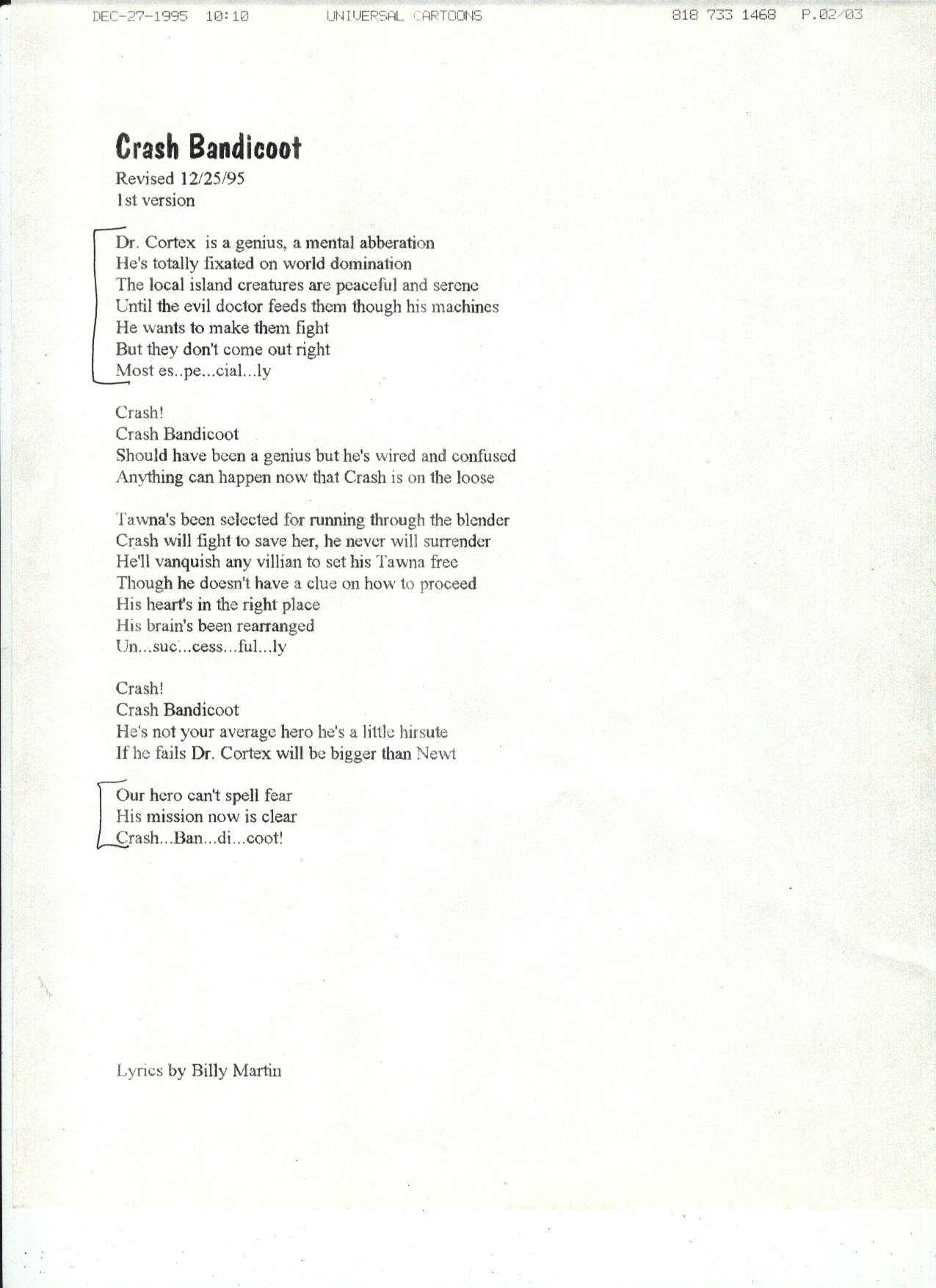
Several versions of the theme song for the game were written in 1995, and the task of writing lyrics for the theme song was shared between David Siller, Naughty Dog executive Jason Rubin, and external source Billy Martin. Some of the earliest drafts for theme were written together by Rubin and Siller when the working title for the game was still Willy the Wombat - the theme they wrote lyrics for are completely different from the decided lyrics used in the cartoon. A truncated version of Rubin and Siller's lyrics was also created in which Crash is referred to as Joe Wombat.
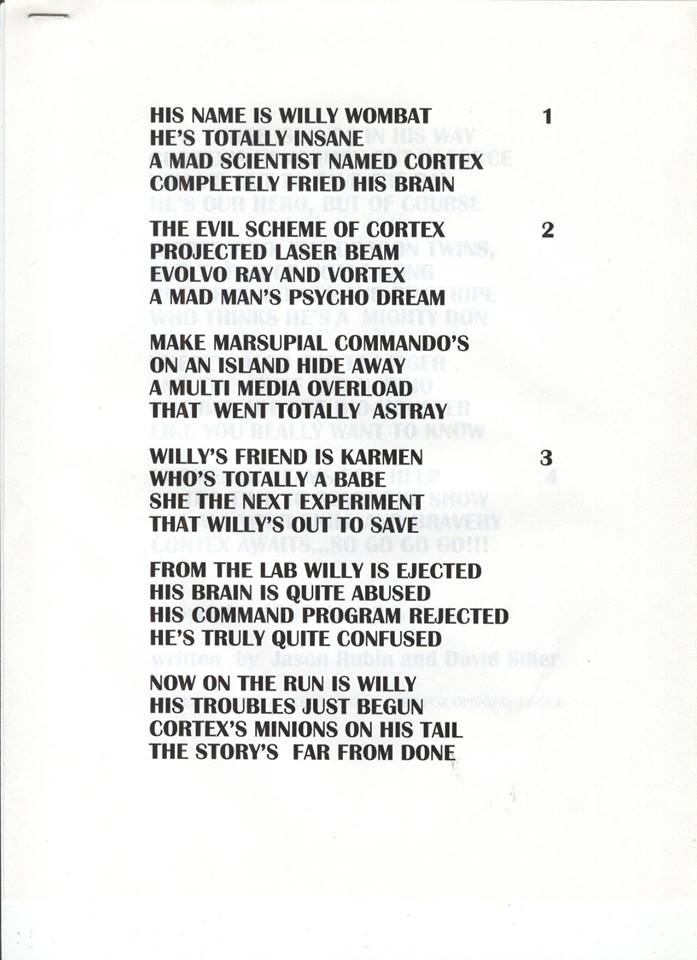
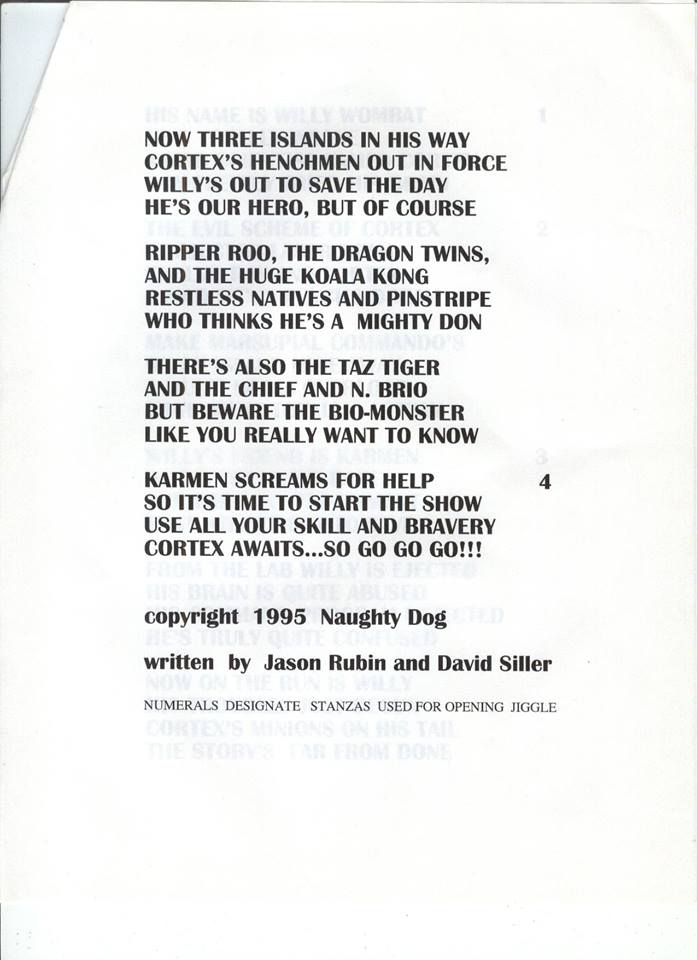
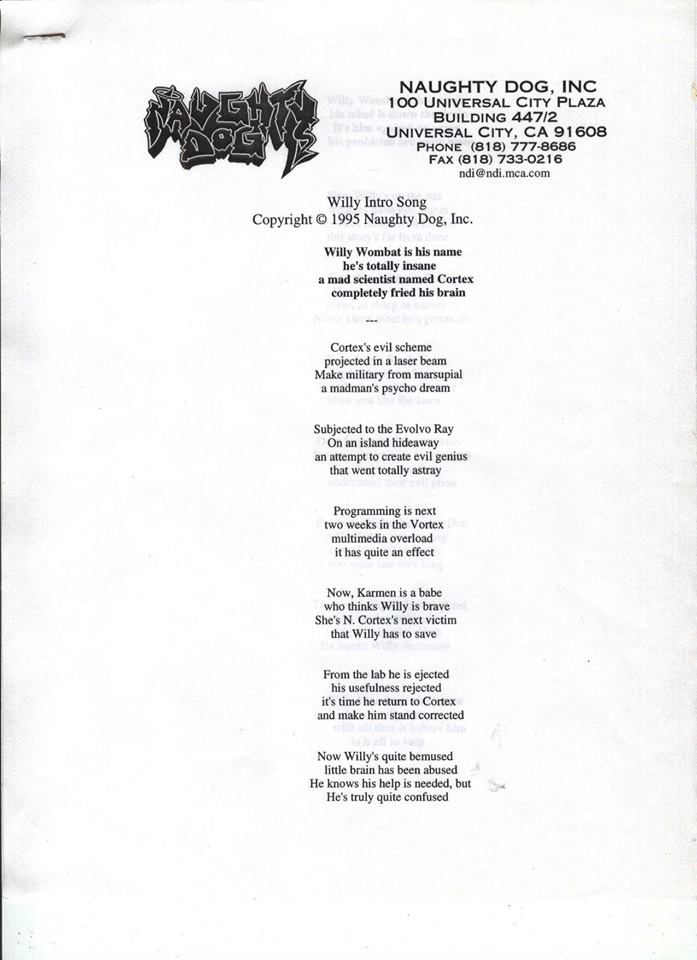
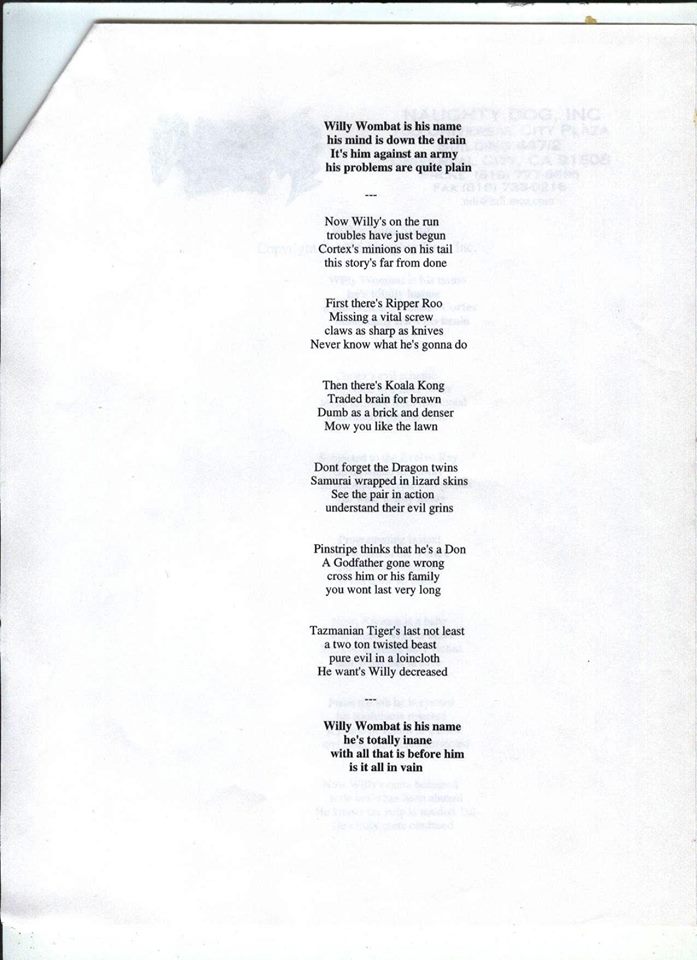
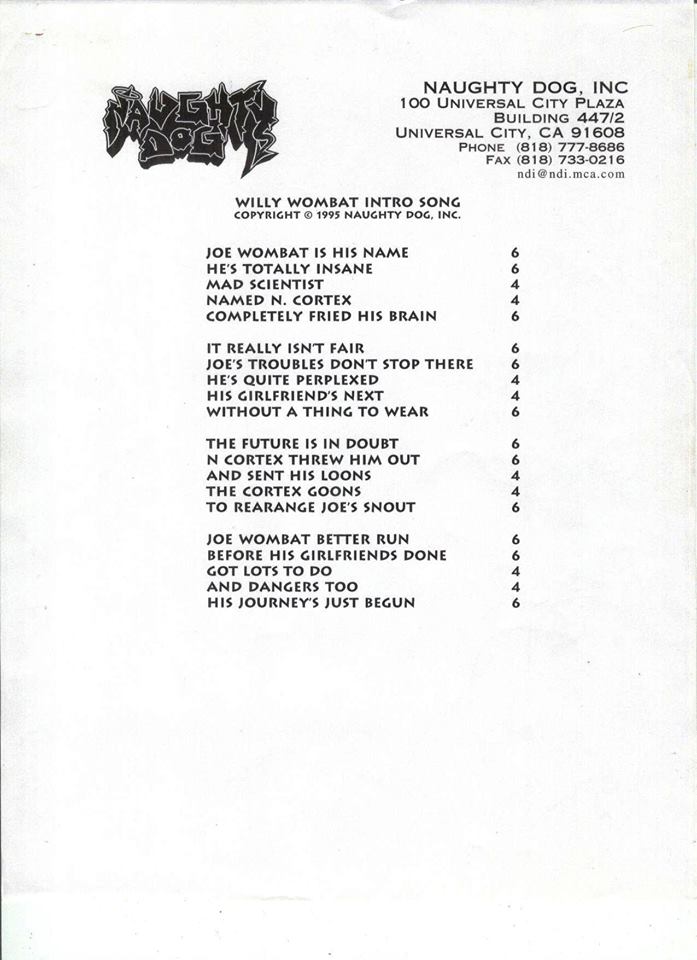
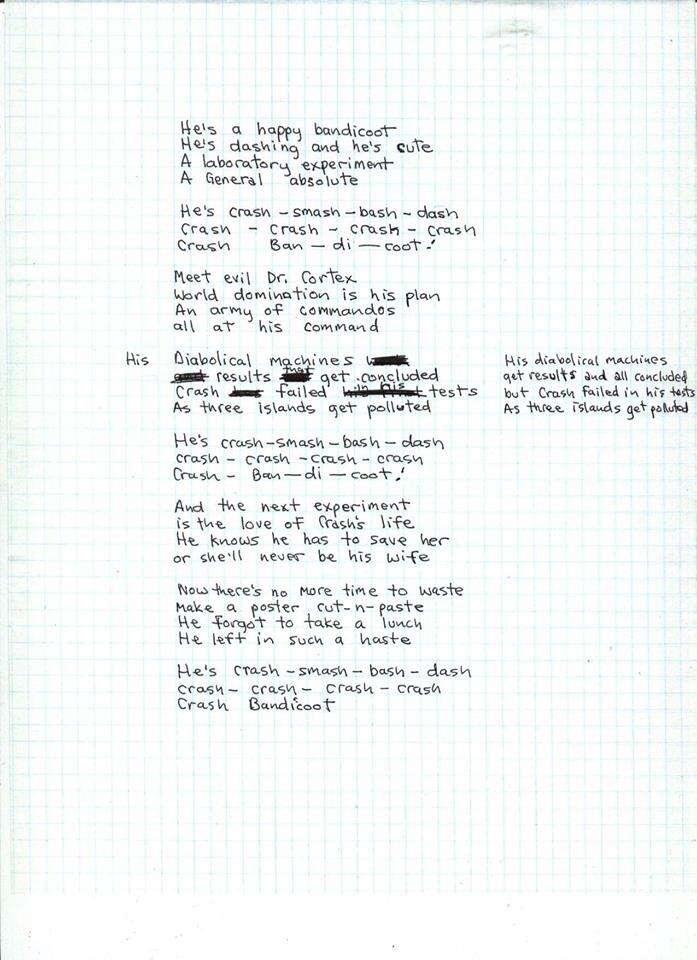
A new version of the theme was created by Billy Martin when the protagonist's name was changed to Crash Bandicoot. Before his involvement, however, David Siller himself had written a theme for the intro and ending of the game using the Crash Bandicoot name, neither of which are similar to the other versions of the theme song and was ultimately unused.


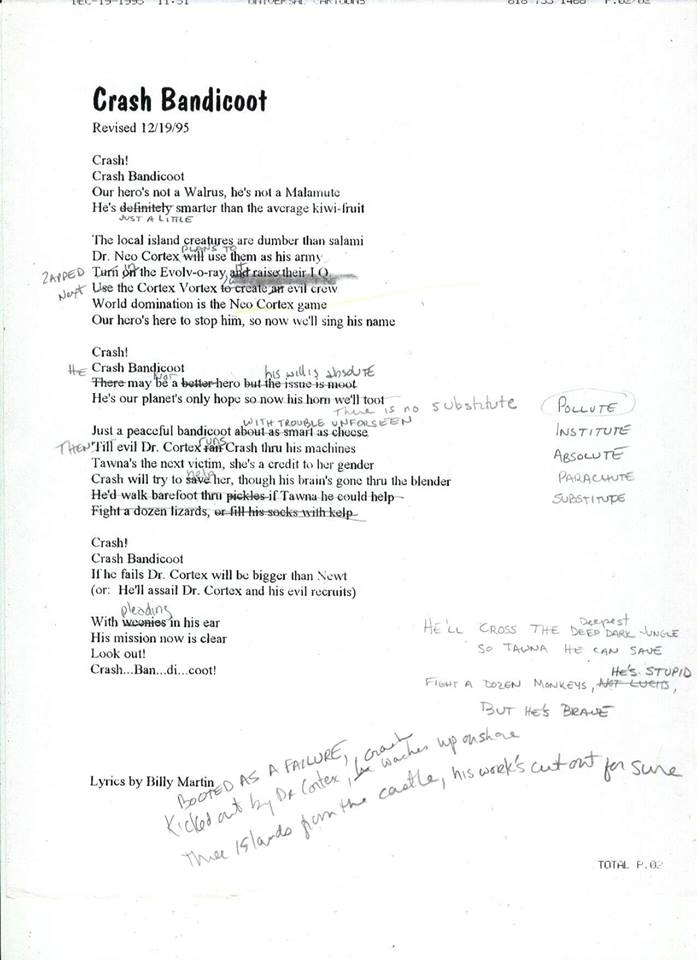
In December 1995, Rubin and Siller worked with an external musician, Billy Martin, to create the final theme for the game. An early version of the theme from December 19 was created - the pacing of it is almost identical to the used theme, but the lyrical content is completely different. Two more versions of the theme were written on Christmas 1995: these ones are much more close to the used version, and are almost the same but with minimal differences in the lyrics, such as one version using the lyric "He wants them for his troops / their heads are screwed on loose." Both versions were combined to create the final version of the theme song.

Resources#
No exact dates#
- The Crash Bandicoot Files: How Willy the Wombat Sparked Marsupial Mania (Mostly May 1995? But has stuff that's arguably either earlier or later, including the script to that one animated intro)
- Documents allegedly written by Joe Pearson uploaded on Crash Mania (Has a script for an opening sequence that is marked as having been revised in February 20, 1995, but the rest of the pages are unclear)
- David Siller's levels (one is dated February 10 1995, but some of these pages come after the finalized designs as Crash is drawn)
- David Siller misc (One is dated March 26, 1996. Crash is sometimes called willy/willey here)
- David Siller game design (One is dated October 22, 1995. Another is dated December 1994. Crash is sometimes called willy/willey here)