 This article has a talk page!
This page details pre-release information and/or media for Syndicate (1993, DOS).
Syndicate marked the turning point for Bullfrog from where the Amiga was no longer the lead platform for its games and it became a dedicated PC developer.
Development Timeline#
1991#
Development begins on the game, as an Amiga title. Reportedly devised during a session down a local pub (although it's also claimed it was conceived at a Pizza Hut), leadership on the game that became Syndicate was assigned by Peter Molyneux to programmer Sean Cooper as his first original game at Bullfrog1, after cutting his teeth at the company on the already in-progress Flood. An initial name for the game "Bob" was coined by Cooper after early player graphics created for the game consisted of a "blue and orange bloke". Cooper wasn't interested in making Bob a cyberpunk game, stating he "wanted Arnie with a chaingun,"2 with this direction evident in the early militaristic screenshots seen in Amiga Power. However, both Peter Molyneux and art director Paul McLaughlin intended for a Blade Runner inspired violent cyberpunk game which the art quickly evolved into, and seem to have begun development with the central concept of corporations battling for global supremacy via heavily armed agents already in place. Reportedly the earliest build was a side-scrolling game3, but the game quickly moved towards an isometric perspective. Other early viewpoint experiments included an oblique view mode that was abandoned4. The game initially worked solely as a simple multiplayer game, allowing four players to battle via networked Amigas. As with most Bullfrog games, the game was developed through feedback from multiplayer matches5. The concept of having multiple characters in a team under the player's control came from an abandoned early aspect of the game Flood, where the game reportedly featured four simultaneous characters whose viewpoint could be set as current on the screen 6. Early versions of Syndicate are said to have featured eight agents on a player's team, but this was found to be too complex, so was reduced down to four.
Early iterations of the game experimented with different control schemes. The prevailing early concept was that control would mostly be indirect a la Populous, with the mood sliders and various buttons used to instruct agents on what to do, but with them exhibiting a level of autonomy where they could refuse or flee from situations. This idea would eventually be scrapped over the course of development.
1992#
September
The game is officially named Syndicate. By this stage the PC is now the lead platform for the game. Reportedly Amiga development was handed over at this point to Guy Simmons. According to the game's manual, the original PC code was far too complex to run at playable speeds on the Amiga, even after much optimisation.
October
The game's final graphical tilesets are now in use.
1993#
January
Mike Diskett begins work on the Amiga port of the game. His optimisations get the game working at a playable speed on the platform7.
March
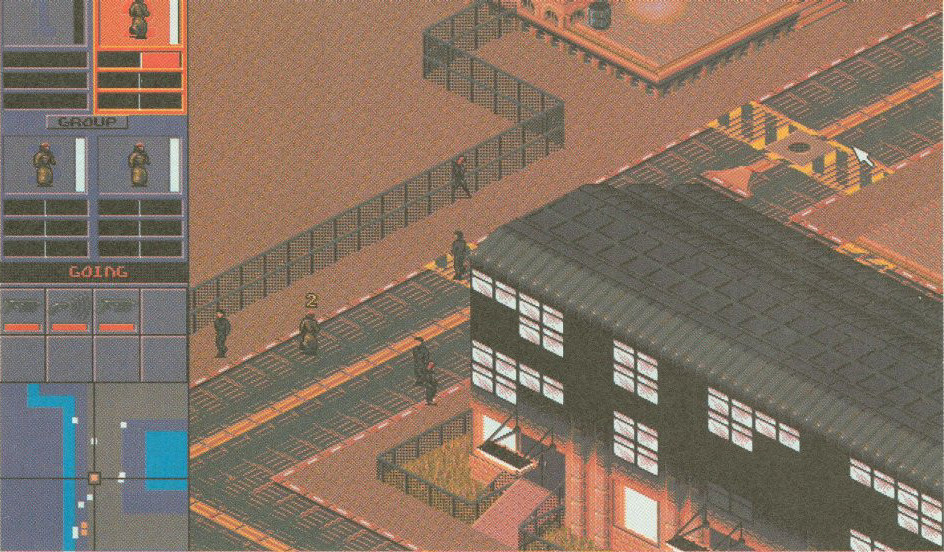
PC Player screenshots show that while the game was very close to the final in-game UI design, the menu screens were still totally different and must have been redone relatively late before launch. If it hadn't already, the original indirect control concept is confirmed to have now been abandoned for the final style of direct control over agents due to it being "frustrating".
May
Electronic Art's QA team fail to get the game's multiplayer mode to work consistently on their computers. This leads to an edict by the publisher to remove the multiplayer mode entirely from the final game. Reportedly this was due to the game going out of sync in low bandwidth environments. Multiplayer was removed two days before the end of the release window.
June
Syndicate is released.
July
The Amiga port of Syndicate is released.
August
Bullfrog supply PC Format magazine with a tutorial on C programming. The tutorial in issue 23 of the magazine uses parts of the Syndicate source code included on the cover disk, specifically the central Bullfrog libraries of common functions that underpinned all games released by the company.
December
Syndicate: The American Revolt is released. As well as new single player levels and weapons, this expansion re-instates the cut multiplayer mode now the sync issues had been fixed.
1994#
July
Syndicate Plus, a compilation of Syndicate with the Syndicate: The American Revolt add-on is released.
Magazine Coverage#
Amiga Power Issue 2 June 1991#
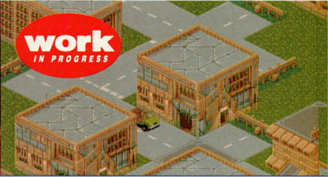
The first known coverage of the game is in issue 2 of Amiga Power. At this point the game is running on the Amiga and is already played from the final isometric perspective. The pair of screenshots show a very different visual style with a lot of grass and trees, and the few characters and vehicles (a jeep and truck are visible) have a militaristic appearance more reminiscent of say, Cannon Fodder than the final dystopian visuals of Syndicate. The game is said to be called Bob at this point, but already there is a popular second title bandied around by Sean Cooper - "Higher Functions". The description of the game's concept already sounds very close to that of the final, with the player controlling four independent agents to do the bidding of a sinister megaglobal corporation. There's also already talk of upgrading them and the ability to control how they react to the game world - but there's a warning they can "run away" if the wrong fluids are administered that is of course not possible in the actual game. The intention was for the player to only have indirect control of the characters, somewhat like in Populous. There's also the concern from Cooper on how the game would fit into the tiny 512KB RAM of an unexpanded Amiga 500, already foreshadowing the eventual move to PC. The final Amiga port of the game would only run on 1MB Amigas.

Joystick Issue 19 September 1991#
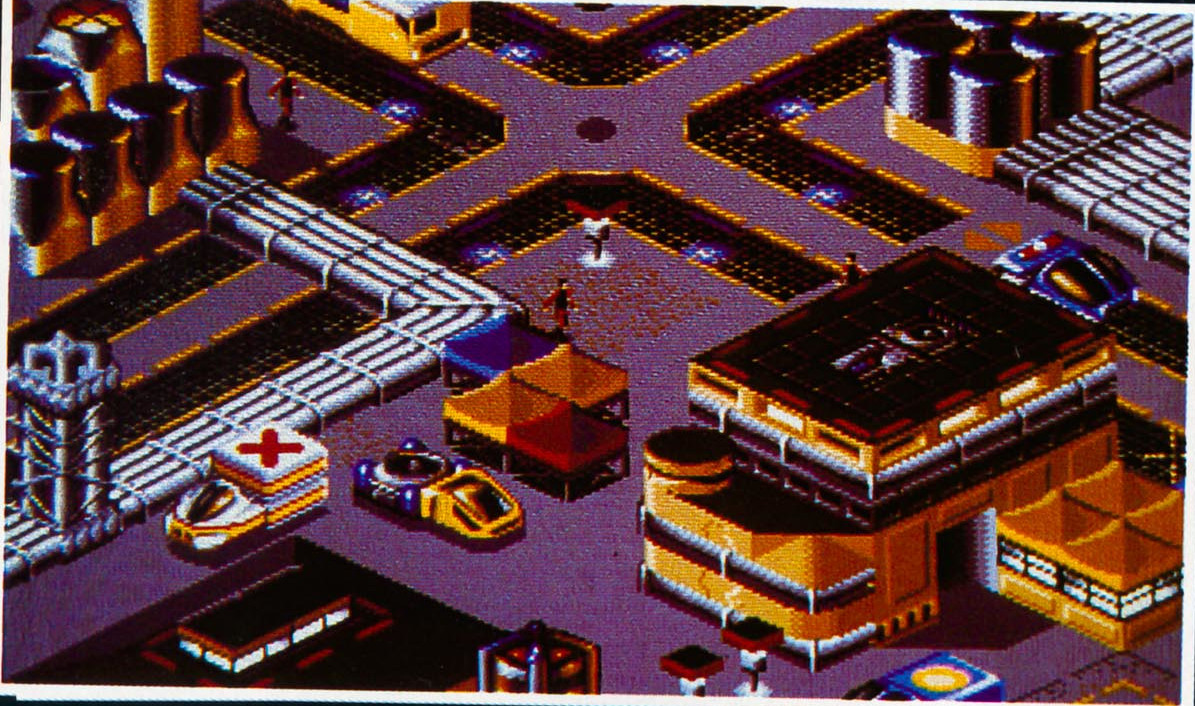
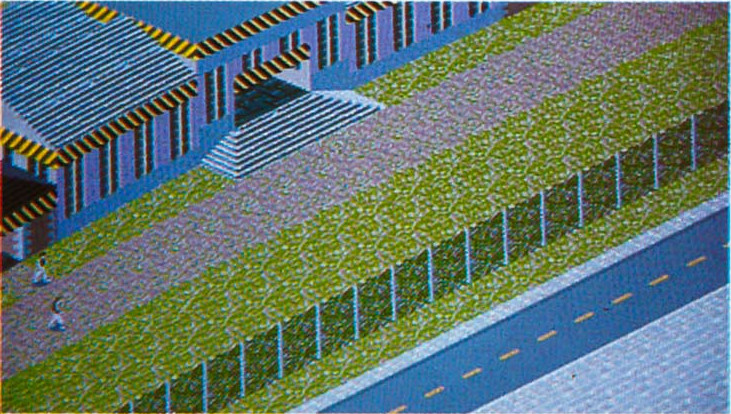
Featuring two screenshots of what was still an Amiga game clearly much further in development. While one screenshot shows some kind of public building with grassy fields surrounding it, the main attraction is a screenshot showing a visual style that is a clear precursor to the final aesthetic. Even the emergency vehicles visible have familiar styles to those of the final.
Gen 4 November 1991#
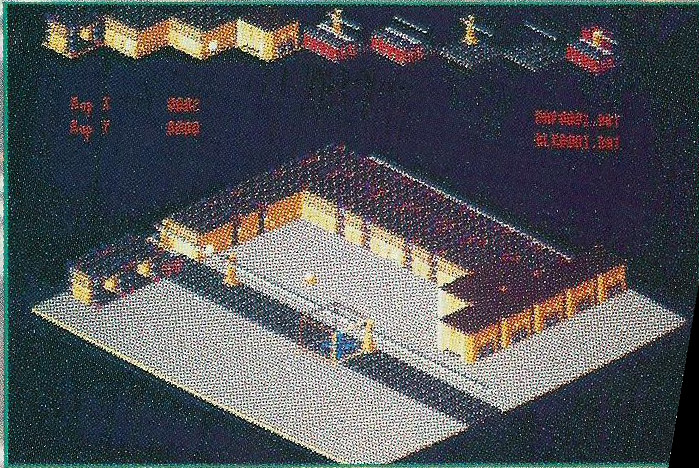
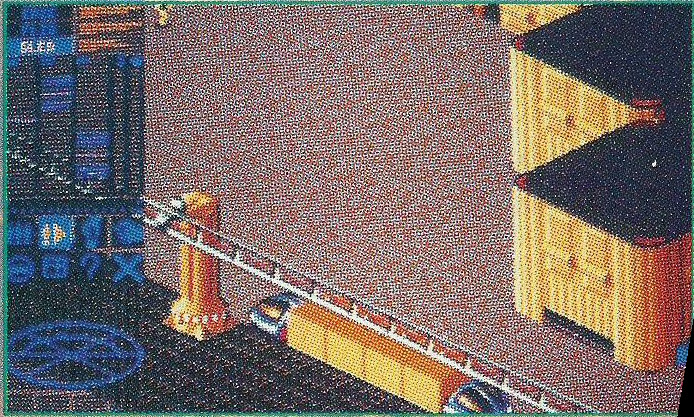
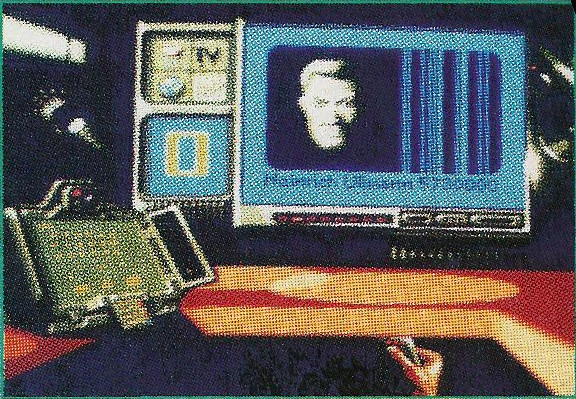
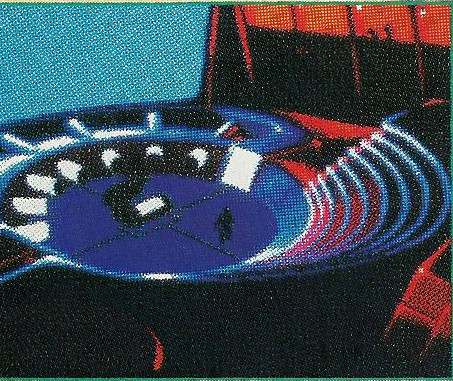
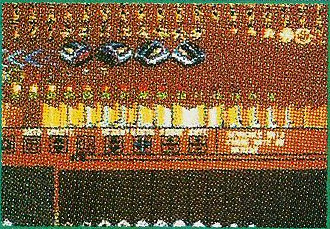
Interesting screenshots of the Amiga level editor, and many early cut scene and menu screenshots that would be totally redone.
ACE Issue 55 April 1992#
Confusingly the cover of this issue teases the game as one of the abandoned alternative titles Higher Functions while the article itself refers to the game as Bob. There's also reference to yet another aborted title of the game in the name "Cyber Assault" which is in itself confusing as this was already the name of an elaborate April fools hoax created by Bullfrog some years before. The game is said to have a business sim element that was never included in the final game, with the ability to buy stocks and shares in rival corporations, the value of which would be affected by in-game events. There is even talk of around "twenty minutes" of in-game advertising for other corps that would give storyline clues of what other syndicates were up to. Based on the comments in the later Amiga Power coverage, it's likely the screenshots at this point are actually from the PC version and not the Amiga. They include a sprite sheet for this set of cut graphics, some unseen agent menu artwork, and early executive office menu art. The various in-game shots would be included in better quality in the September issue of Amiga Power.


Amiga Power Issue 17 September 1992#
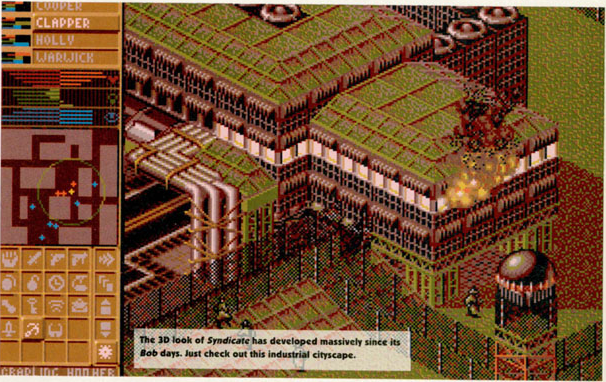
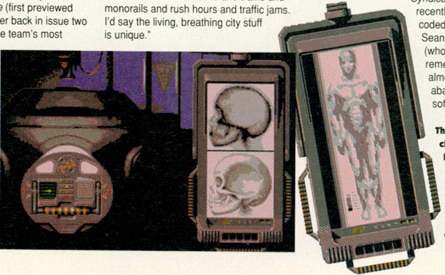
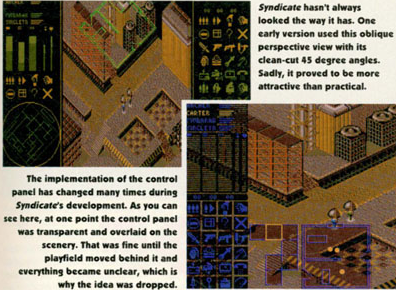
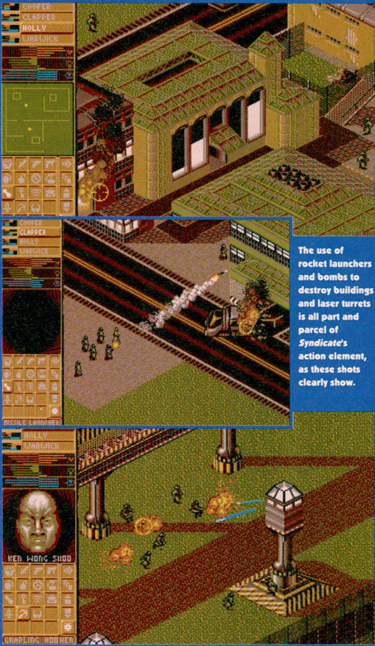
A very interesting article that includes extensive screenshots of mid development build with radically different UI, as well as several abandoned early attempts, including a 45 degree oblique angle viewpoint that was trialled for the game. At this stage the game is now primarily a PC title, and it's assumed all screenshots are therefore from the PC build. Bullfrog's Peter Molyneux reels off a long list of rejected titles for the game now it had finally been christened Syndicate: Influence, Nexus, Network, Cartel, REPS (Retro Engineered Persuasive Salesmen), Infiltrader, Legal Tender, Illegal Tender. Screenshots detail how the central area of the left hand control panel could show different things at this point, including the map/scanner as in the final game, but also what seems to be some kind of portrait of a target in a level. The indirect control concept seems to have been at its height here, with a huge array of buttons to give various commands to the agents. This gives an insight into how complex this style of play must have been and why it was eventually abandoned for simple direct control of the agents.

CU Amiga December 1992#
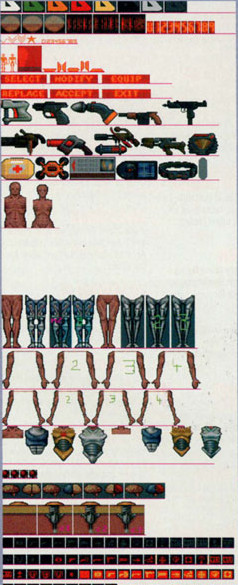
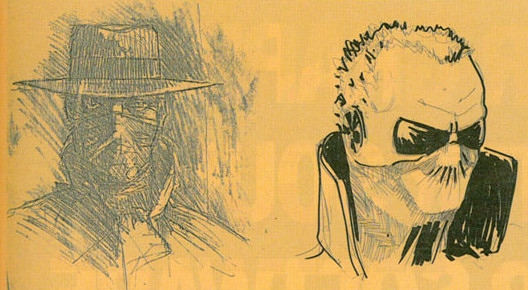
The December 1992 issue of CU Amiga has the complete graphical tile set of a scrapped early version of the equip screen. The weapon icons are seemingly the same as the final game, but almost everything else is different. The final in-game tiles are now in place and there a new version of the player's control panel UI visible in the in-game screenshots, which is closer to the final but still has the radar in the middle rather than the bottom of the panel. Finally there are some concept art sketches.

Joystick 34 January 1993#
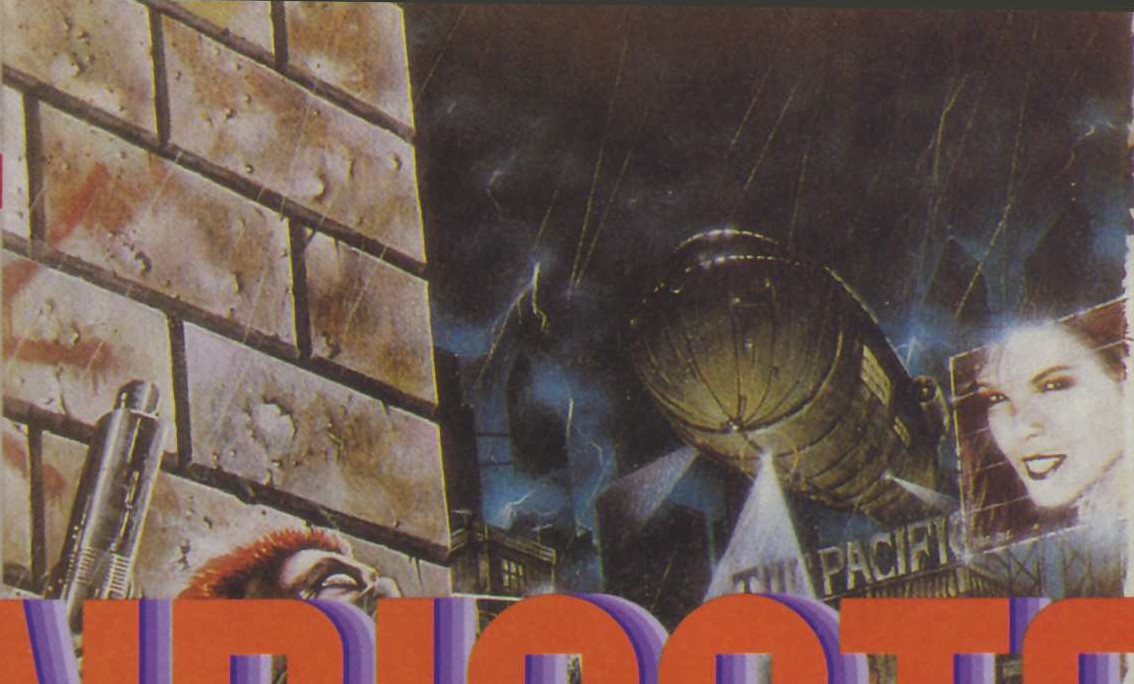
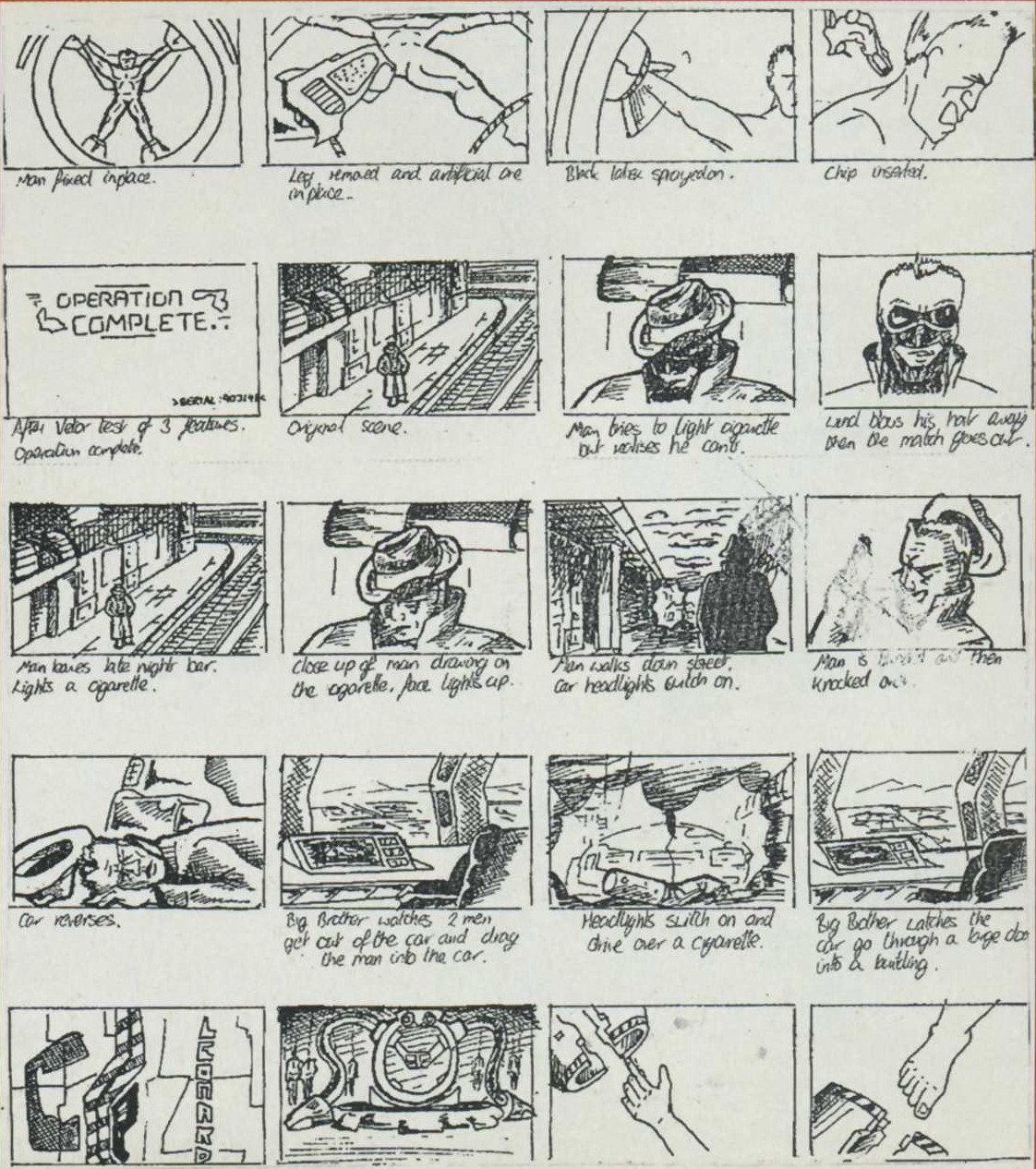
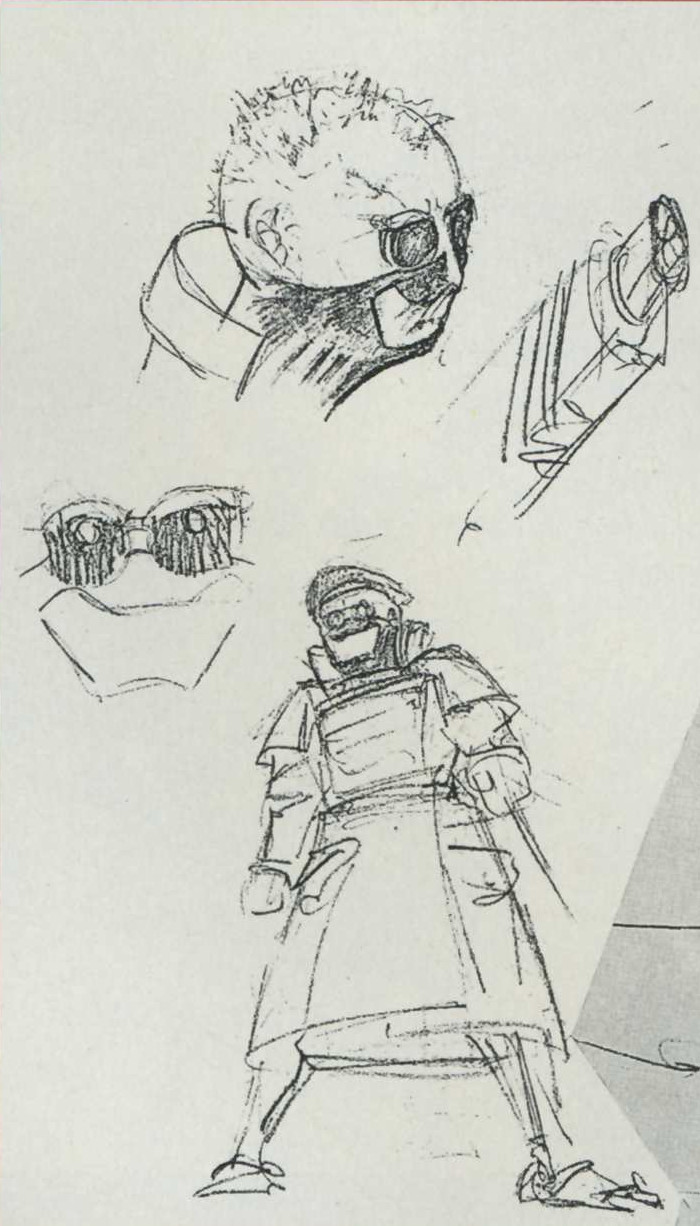
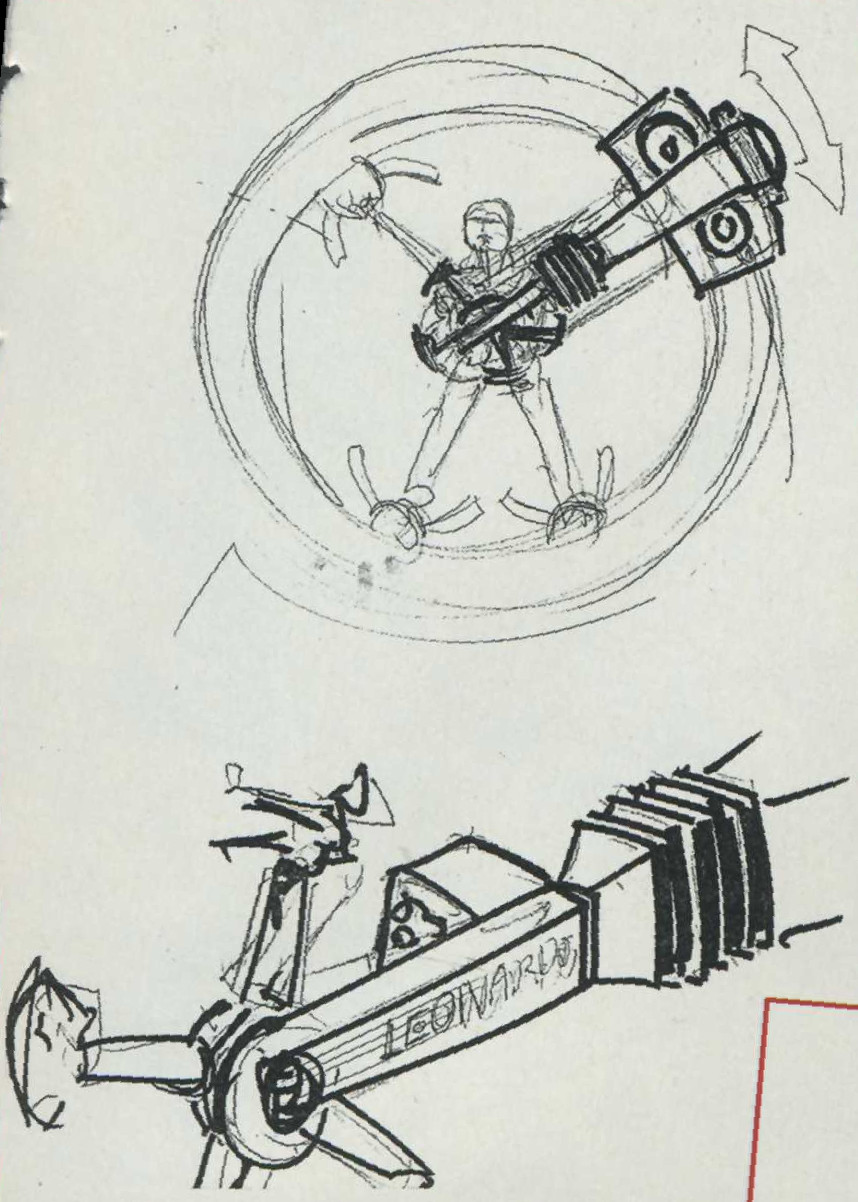
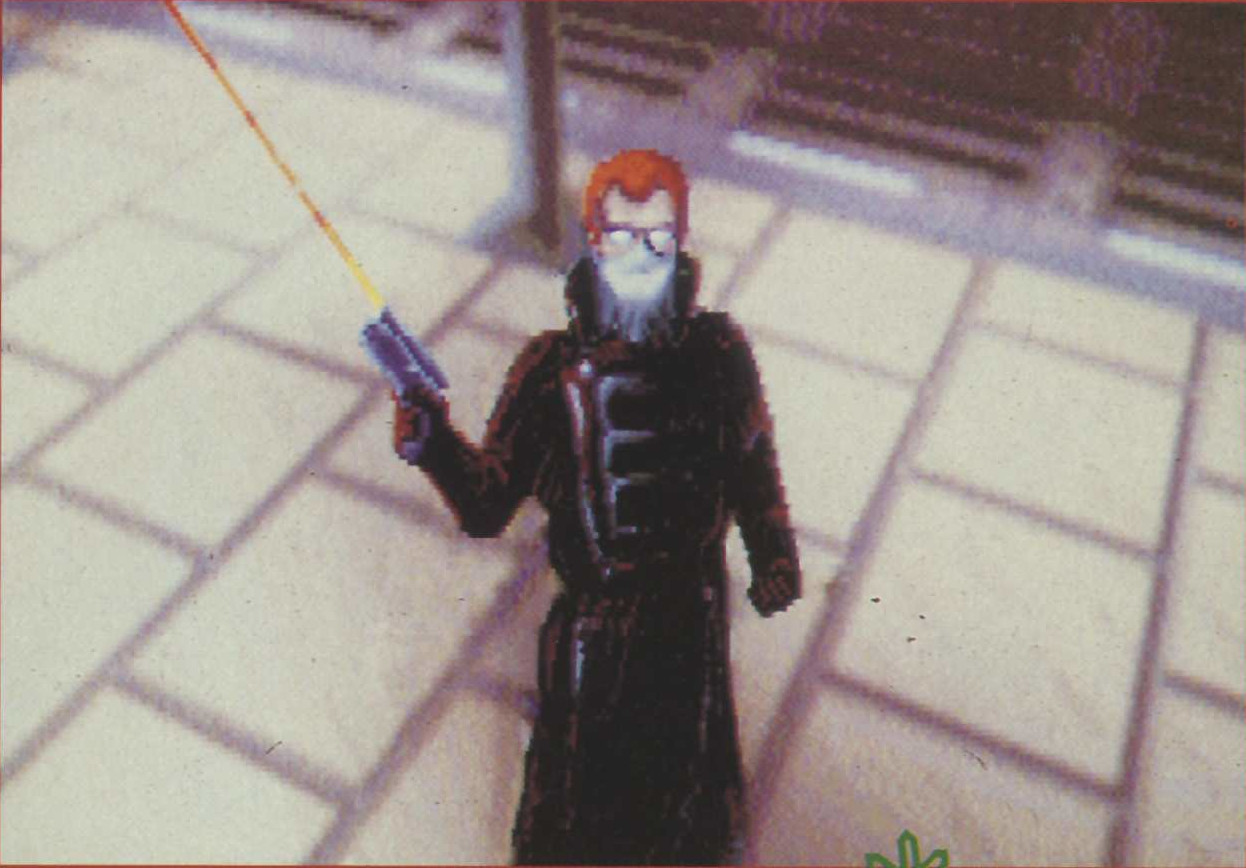
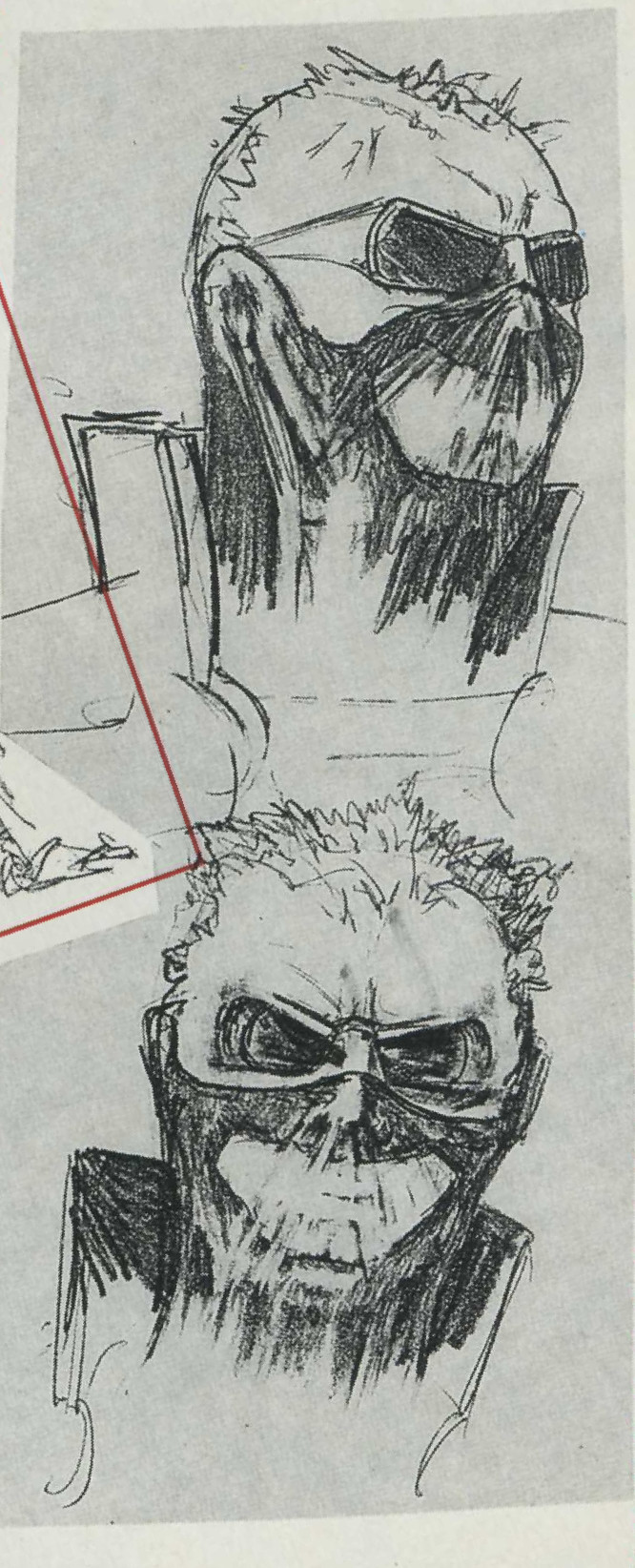
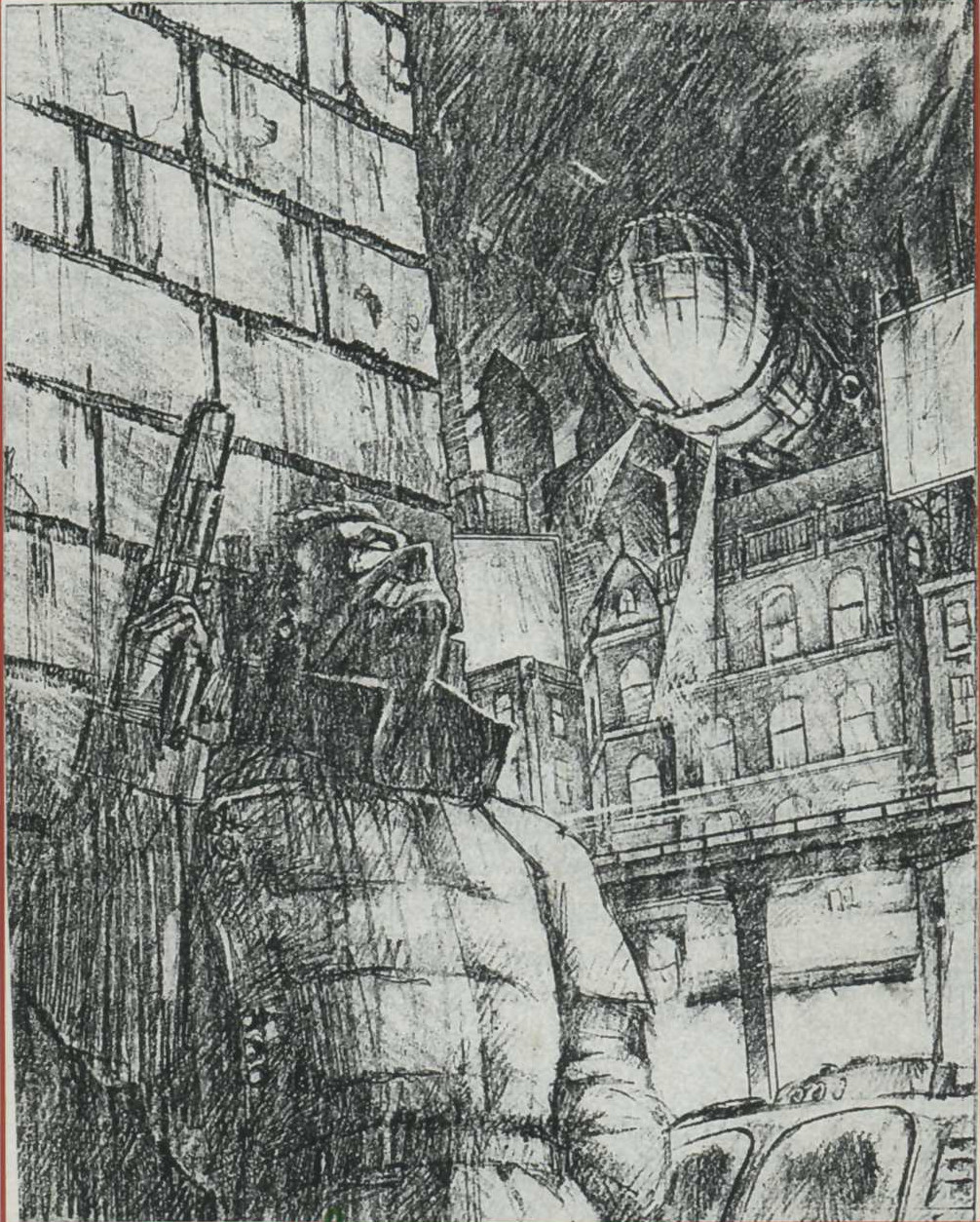
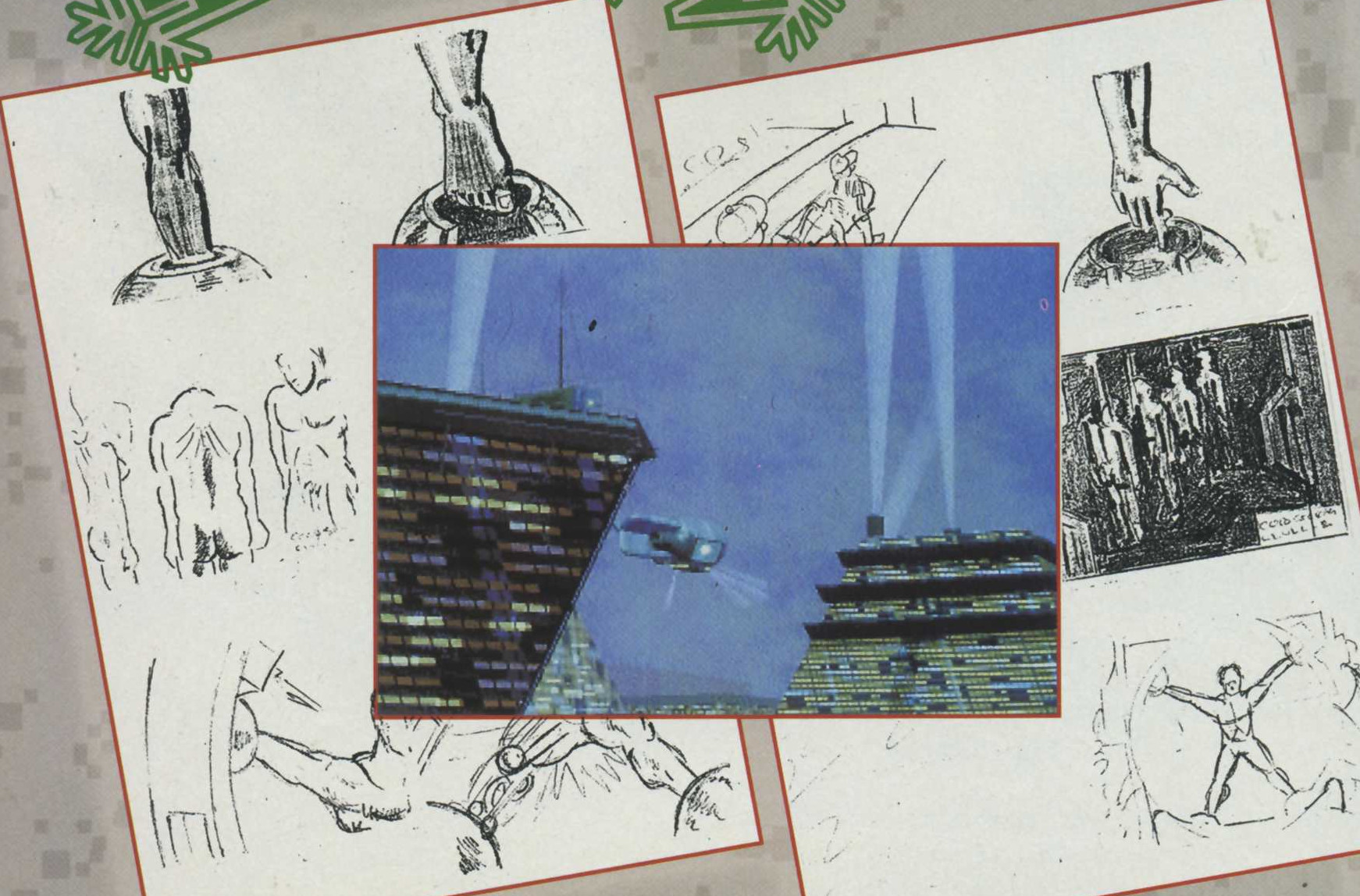
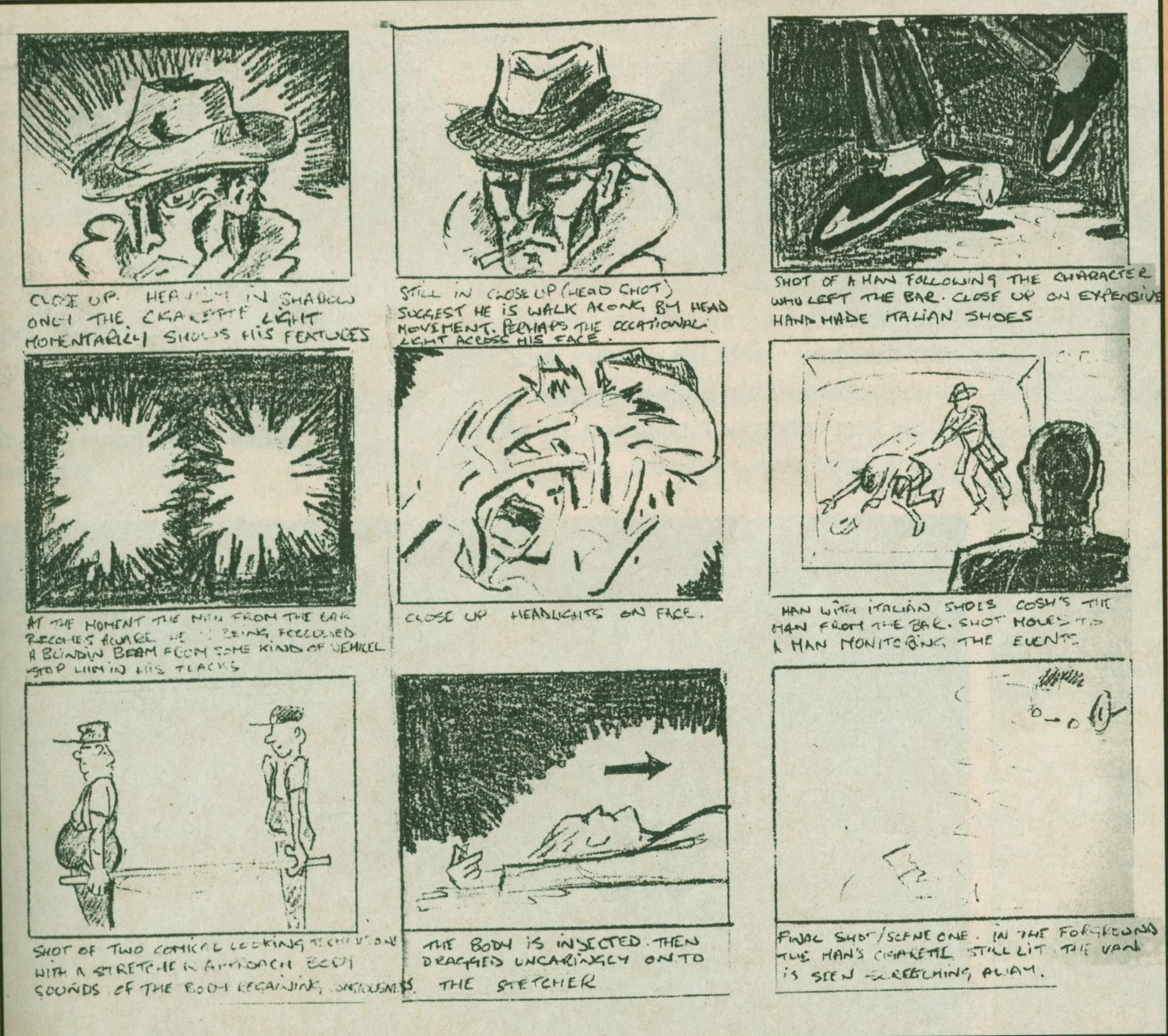
A veritable feast of concept art was printed here, with an early version of what is recognisably the game's intro FMV in storyboard form, and lots of sketches of agents.

PC Player March 1993#
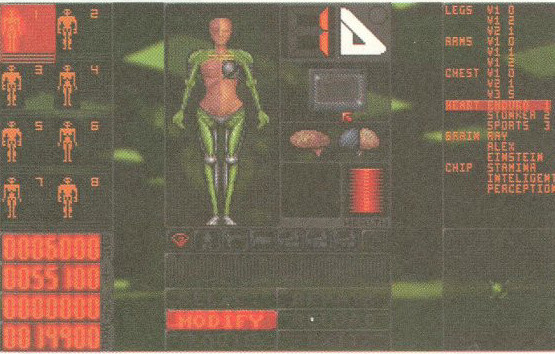
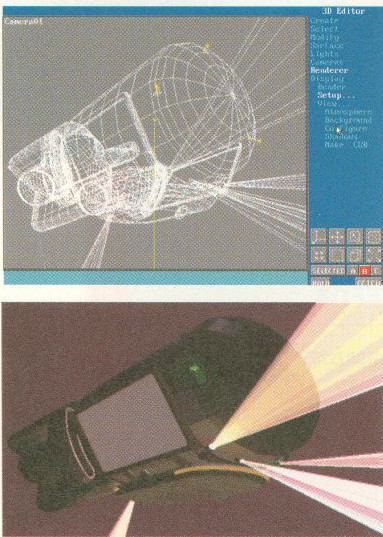
Some interesting near-final screenshots. The in-game screen initially seems identical to the final game, but closer inspection shows a "group" button to control all agents at once rather than the icon of 4 figures used in the end. The totally different looking early equip screen seen in the CU Amiga coverage is still in place here, and has spaces for eight agents rather than only four.
PC Review Issue 21 July 1993#
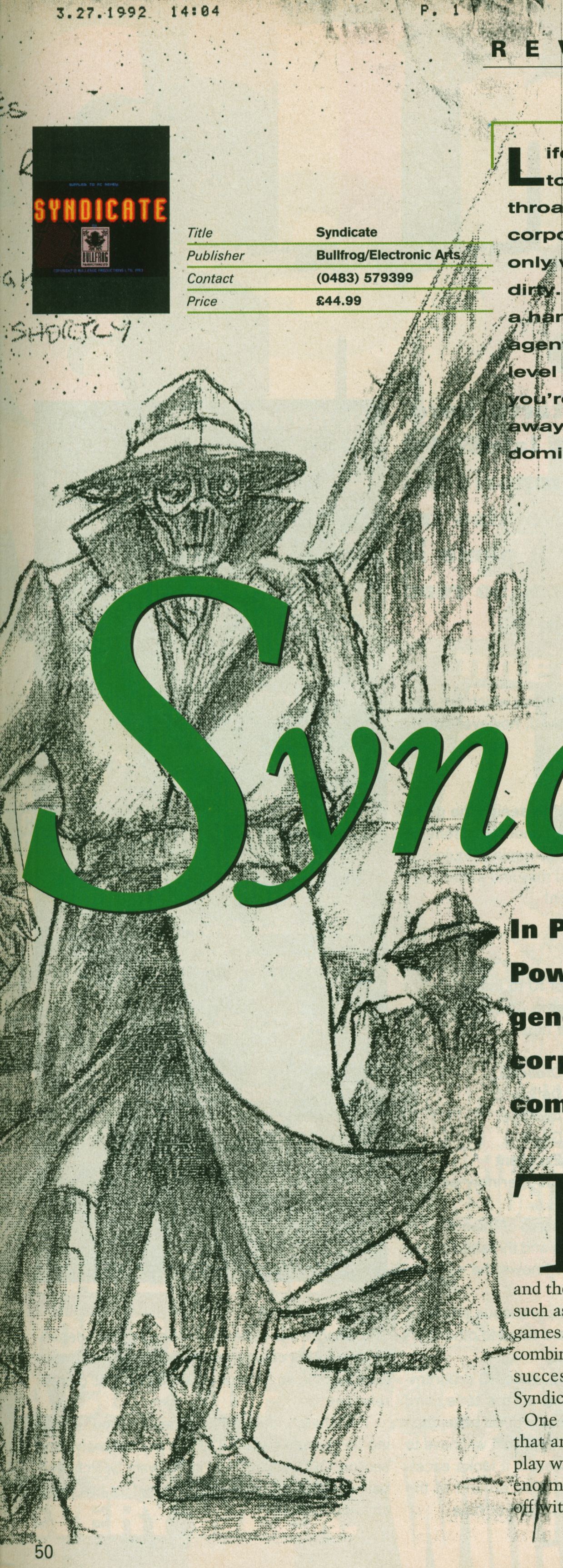
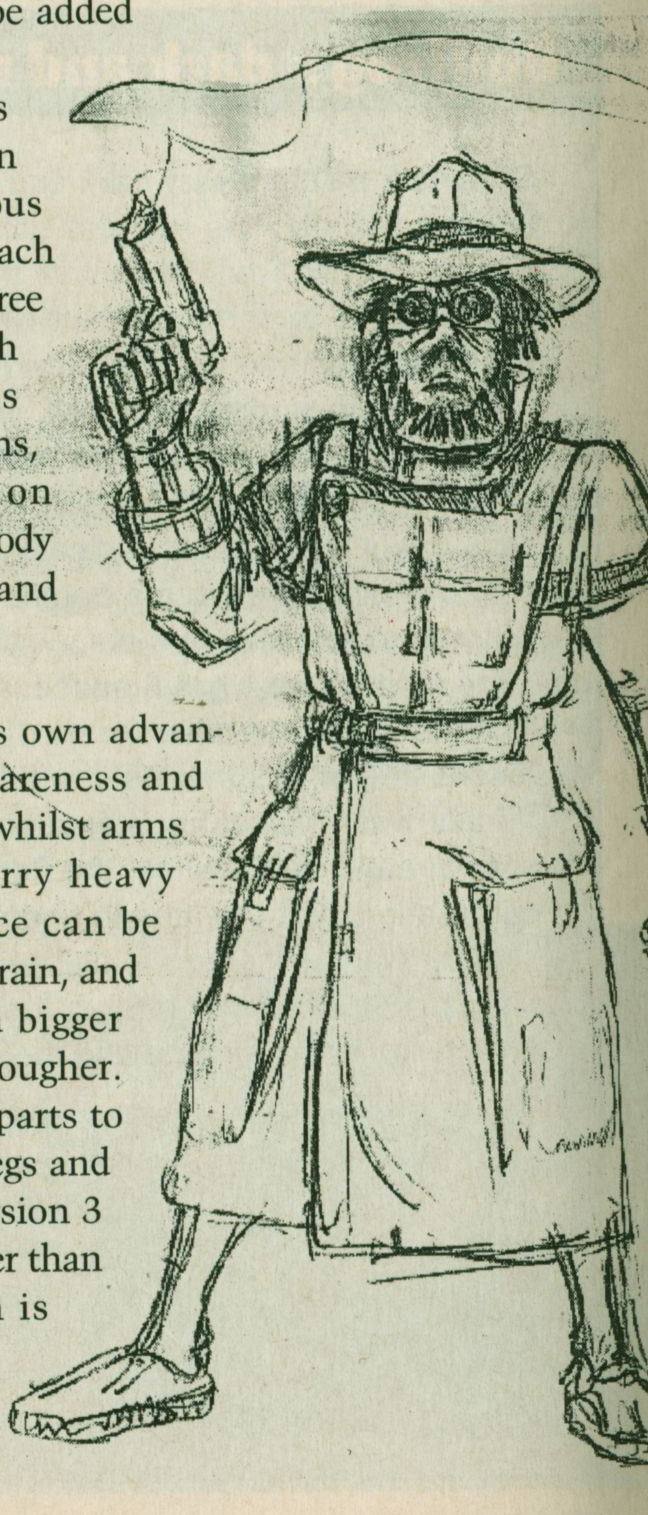
This magazine's review of the final game is dotted with some very early concept art. Not only are there a lot of otherwise unseen agent concept art sketches (the visible date of one piece suggesting these were from around March 1992) but also a very interesting version of the storyboard for the intro that's even earlier than the one printed in Joystick magazine. This has a very different feel compared to the po-faced final sequence, with two "comical looking technicians" - looking uncannily like future Theme Park handymen - carting the unfortunate target away. The article also claims that there were plans to enhance future ports of the game, including the CD32, 3DO and PC CD-ROM editions, to have a new longer intro sequence and "greater detail" in the cities. This wasn't the case, with all ports of the game (save the very different Nintendo and Sega ports) all being essentially the same as the original PC release (with some downgrades).
Edge Online December 2009#
An interesting making of article featuring interview quotes from Sean Cooper, Alex Trowers, Glenn Corpes and Paul McLaughlin. Among other things it's said that vehicles could actually go everywhere on the map and were not restricted only to roads until late in development. The reason for the change was reportedly lack of memory for sprites for facing away from the cardinal directions, and because running other players over for kills was too easy/effective.
Arcade Attack Podcast#
The October 2019 edition of the Arcade Attack podcast featured an interview with Sean Cooper on his career in games, including working on Syndicate. Most interestingly Cooper reveals that initially the Gauss Gun was intended to be a "high tech electronic weapon" that would "de-chip" enemies (presumably to de-persuade them like the disruptor in Syndicate Wars). However, with the game imminently going to Electronic Arts' QA team he ran out of time to implement it and simply made the weapon a rocket launcher, hence the disconnect between the name and look of the weapon, and what it actually does.
References#
- Arcade Attack Podcast Sean Cooper (Syndicate Creator/Bullfrog) - Interview. October 2019↩︎
- Alex Wiltshire (2015), Britsoft: An Oral History. Read Only Memory. p. 349. ISBN 978-0-9575768-2-7↩︎
- Glenn Corpes Blog Syndicate: Is Plot or Mechanic the Essence of a Game? September 2011↩︎
- Gary Penn, Syndicate. Amiga Power No. 17. September 1992. Future Publishing. p. 18-19. ISNN 0961-7310↩︎
- PC Invasion Sean Cooper On Syndicate. June 2009↩︎
- Edge Online The Making Of: Syndicate. December 2009↩︎
- Artists Biographies, Syndicate Game Manual. p4 July 1993↩︎