 This article has a talk page!
This page details pre-release information and/or media for Streets of Rage (Genesis).

|
This page is rather stubbly and could use some expansion. |
Early Development#
Witnessing Final Fight#
Around 1990, after Capcom released Final Fight on the SNES, Sega found out about the game’s great success. The big blue S then decided to come up with a game similar in genre to Final Fight. After buying a Super Nintendo to examine the game, they decided on a police/detective type story (which will reshape later on). Sega’s conceptualized game’s title was D-SWAT (Dragon-SWAT that is), and development was started.
Creating the Characters#
Sega decided on three fighters who all share similar tae-kwon-do-type abilities. The characters all appear pretty different, considerably, from their final counterparts. The names and descriptions were changed to prevent sexist/racist issues.
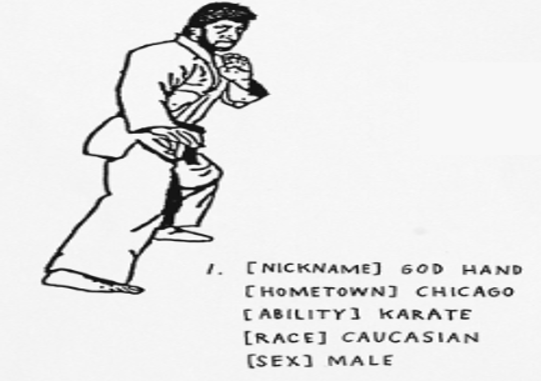
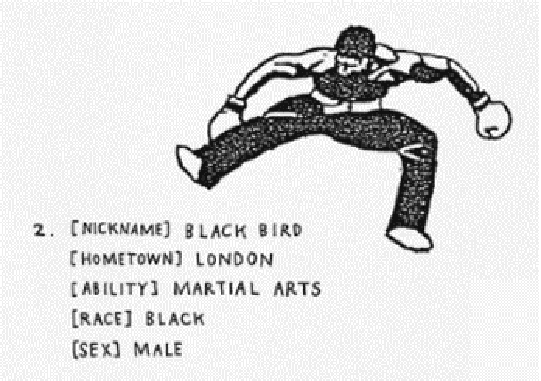
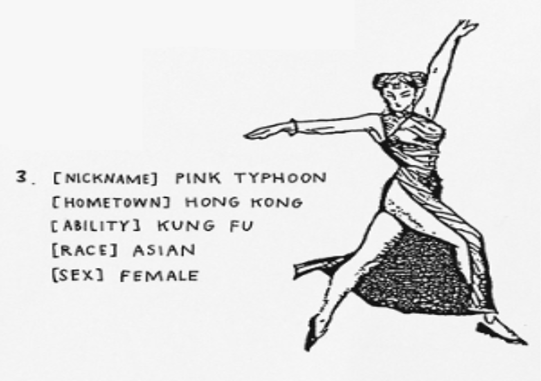
Curiously, Pink Typhoon's design appears to be recycled from 1989's The Revenge of Shinobi. In that game, the "Chinatown" stage featured a woman matching Pink's appearance who would use kicks to attack the player.
Storyline#
The storyline was shortened and made more simplistic in the final but was long and in-depth prior.
Early#
"The 21st century has become the age of the criminal. Cities such as Tokyo, NY, LA, Hong Kong
and London are rampant with organized crime.
The ICPO (part of the International Judicial Administration) has been held responsible and as a result
has been denied the right to arrest."
"Finding themselves in dire straights, the ICPO has assembled a special task force.
Their purpose is to wipe out criminals.
To avoid public condemnation they operate in secret and without firearms.
This unique group of warriors have transformed their bodies into deadly weapons.”
"Now they strike dread and vengeance into the heart of the criminal world, who refer to them as the..."
"Dragon-SWAT" ... "D-SWAT"Final#
"This city was once a happy, peaceful place… until one day, a powerful secret criminal organization
took over. This vicious syndicate soon had control of the government and even the police force. The city
has become a center of violence and crime where no one is safe.
Amid this turmoil, a group of determined young police officers has sworn to clean up the city.
Among them are Adam Hunter, Axel Stone and Blaze Fielding.
They are willing to risk anything... even their lives... on the...
Streets of Rage
Start of Programming#
At this point, the work on the actual game started. The basis of gameplay has been put together, and the most differences we will see are mainly going to be in the graphics. As you will see in some early screenshots, the scores' last two digits will be something besides 0’s. Nothing gives you points in the tens and ones in the final, so this is a unique feature.
Early |
Final |
|---|---|
 |
 |
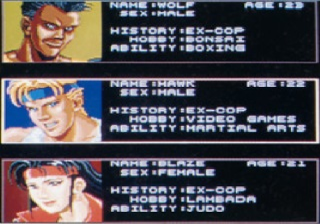
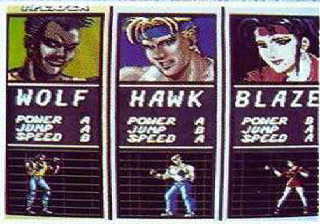
Adam’s early name was Wolf, Axel’s was Hawk, and Blaze’s was already finalized. They lacked last names and their ages were placed on the same line. There was once a rumor that Adam and Axel had these names in development, but this shot holds the rumor true.
Early |
Final |
|---|---|
 |
 |
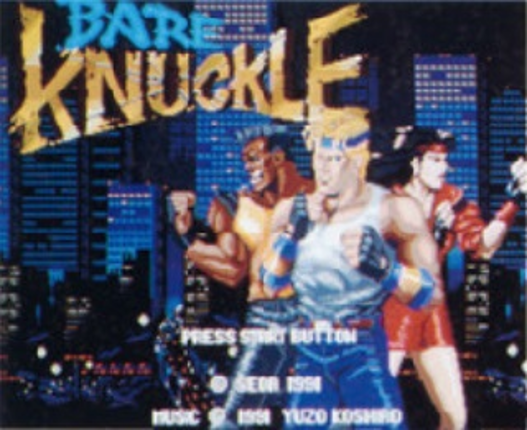
When looking closely, you can see that Adam and Blaze have different expressions on their faces (also featured on the SEGA Shinsaku promotional video). Also, towards the bottom, “SEGA” and “1991” are switched. There is no “TM” by the logo, either.
Early |
Final |
|---|---|
 |
 |
Like in the profiles in the intro, Adam and Axel’s names were originally Wolf and Hawk.
Stage 1#
Early |
Later |
Final |
|---|---|---|
 |
 |
 |
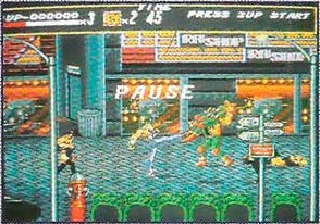
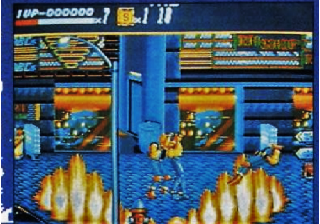
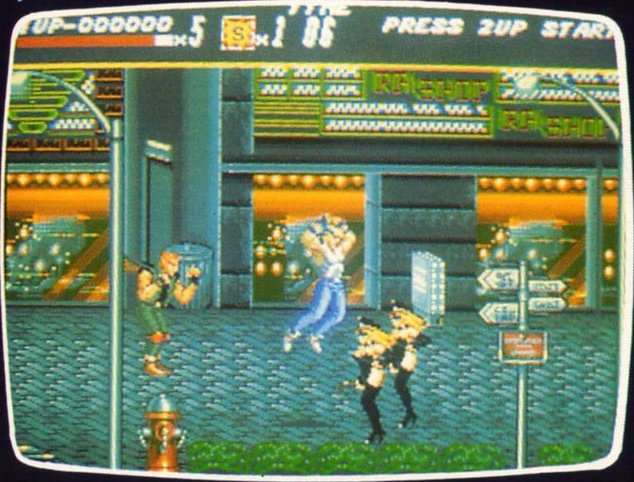
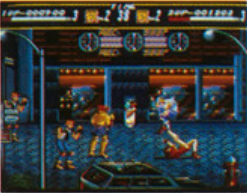
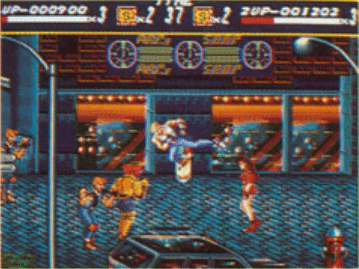
Changes to the design of a couple of stores were made, too. "RACH'S SHOP" appears to have had mistakes in its design, because if you look closely, the "RA" looks to have something right in front of it that doesn't line up with "SHOP". The part of the stage in the early shot was changed for the final, so it was matched in the final shot as closely as possible.
Early |
Final |
|---|---|
|
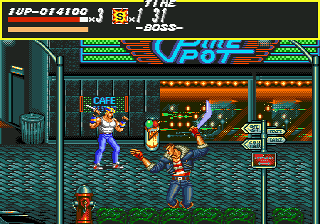 |
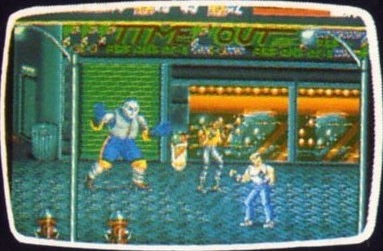
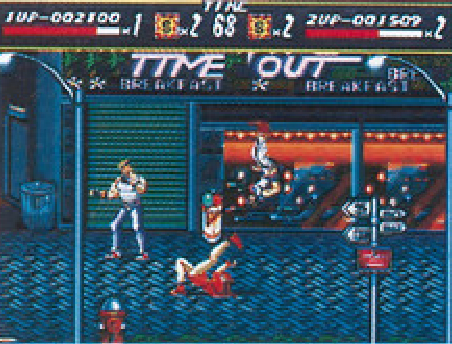
The "Pine Pot" store in the background was originally called "Time Out" which used a similar font style. A fire hydrant was removed, and a road sign was added. This early build also showcases an unused, and unnamed character. This character, likely a stage boss due to its size, wore a hockey mask, boxing gloves, long socks, and shorts. They seemed to have been cut early in the development process due to lack of available photos, as well as other bosses filling the Stage 1 slot fairly quickly. The BOSS text and health meter also isn't present in the HUD.
Early |
Final |
|---|---|
|
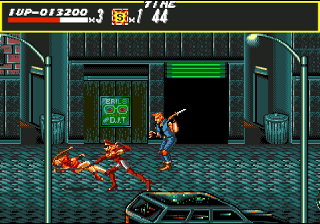 |
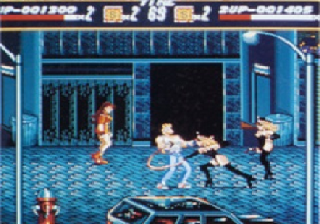
The garage has no door in the early build and the wall to the left had five copied strips of its design. A fire hydrant would be removed from the final. Also, Nora originally had a "skimpier" design for her sprites, showing a lot more skin on her legs which got eventually covered with grey thighs. Also of note is the original stance Nora had, which was changed in subsequent builds, but ended up being recreated as Electra's stance in the third game.
Early |
Final |
|---|---|
 |
|
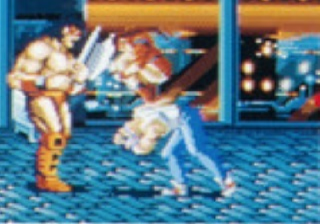
The boss of this stage was originally Abadede (the third stage’s boss in the final) before Antonio replaced him. His original design wielded an axe, which was removed in the final, rehauling him into a wrestler instead, which would be continued into the sequel.
Early |
Final |
|---|---|
 |
 |
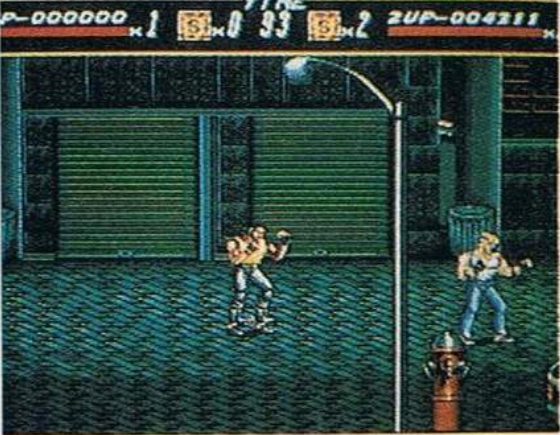
Early at one point, there was a section with a set of garage doors (that didn't open apparently). The first garage door was replaced with a section of wall and sign in the final. The earlier versions also feature a different bottom piece to the garage doors, a thicker panel with a handle. Other differences include a narrower alleyway, missing red bricks, no scrubs/signs in the foreground, a missing light post, and a different hydrant placement.
Early |
Final |
|---|---|
|
 |
A look at the unfinished Y. Signal redesign that made it to the final game, after scrapping the original design (which ened up being tweaked into the SOR2/3 design). Here the Signal features incomplete, unshaded colors (which also causes the skin to look even darker) and entirely different pants color (blue vs brown in final).
Stage 2#
Early |
Final |
|---|---|
 |
 |
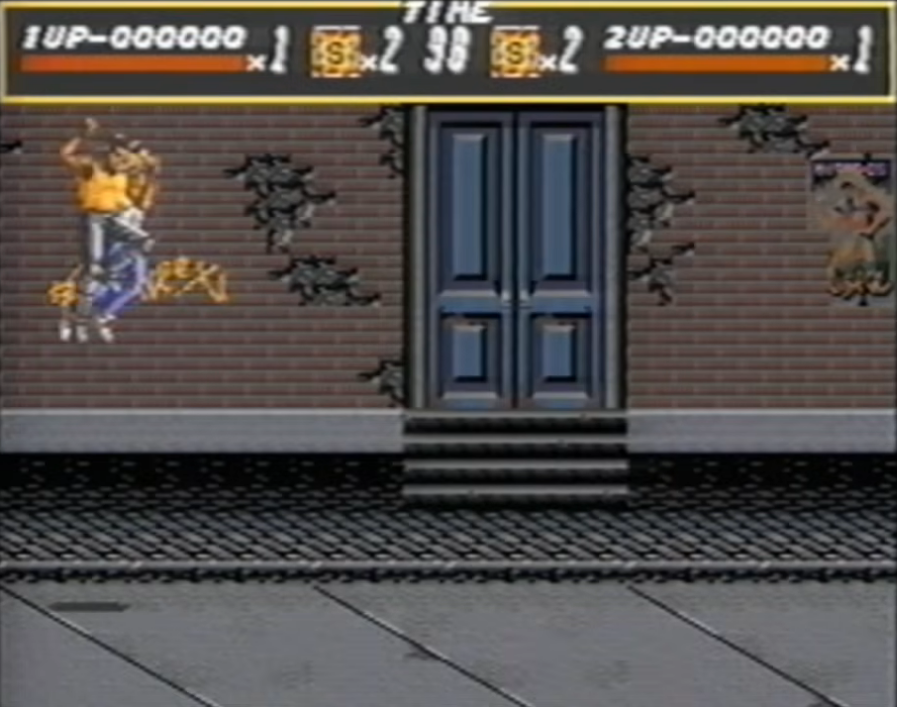
The stage starts in a very different section, beginning with the door wall versus the half-fence area with a view of the skyline. It's possible the final starting point section was added in front of this area later on, as the original start and subsequent sections generally fit the structure of the final. The building foundation and concrete floor colour are also a noticeably lighter colour at this point vs the final.
Early |
Final |
|---|---|
 |
 |
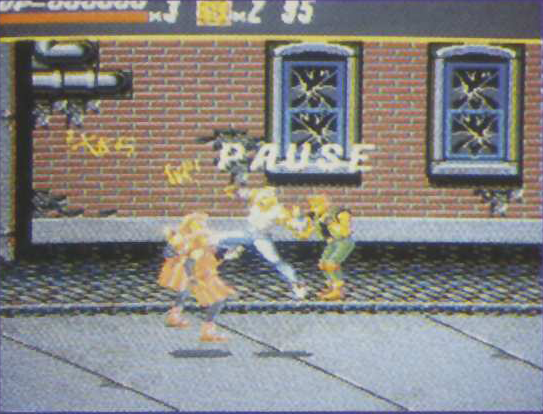
The following sections also feature vastly different wall designs, brick colour and level of damage, graffiti and layout, with a noticeable large pipe piece on the wall that did not make the final game. A very interesting bit here is the windows placement, as they are arranged symmetrically in the final, but feature offset positions here.
Early |
Final |
|---|---|
 |
 |
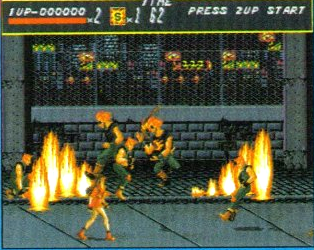
This early screenshot features the juggler enemies (Jack) with a different design, originally sporting black shirts, blue jeans, and black face paint/domino masks. In the final game, they were re-designed to have a more circus-like outfit. They also do not appear in this segment of the stage.
Early |
Final |
|---|---|
 |
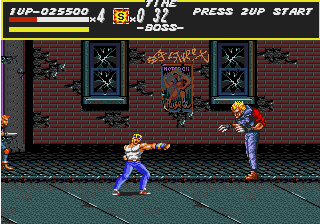 |
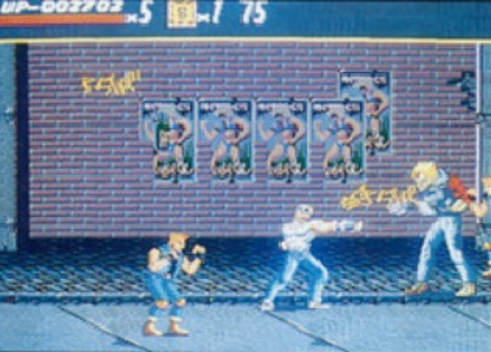
While the boss in stage 2 is still Souther, the wall was designed pretty differently. The bricks weren't vandalized as much, there were five posters, the graffiti was moved around, and no windows were present. Note that the timer is at 75; the highest the timer starts at in the final is 60 on any difficulty in any stage, explained below. The boss' health meter, once again, isn't shown in the HUD. The large numerals appear to have their final design, suggesting this is a slightly later build. In addition, Player 1's score appears to function, which will also be explained below. The latter two features may also apply to other screenshots.
Promotional Video#
Watch on YouTubeA promotional video, showcasing an early build of the game. While its visually very close the the final game overall, it has a lot of differences and it's seems to be quite buggy.
- The song that's used for the character select is "Endlessly Heat". It’s vastly different from the final game’s, yet it sounds like it evolved into "Keep the Groovin'", the final Round 4 music. Most likely used as a placeholder here.
- When the level starts, the HUD is blank.
- You start a life with two special attacks uses instead of one, and the Timer at 99.
- The Signal enemy had a completely different appearance, but it already had its main way of attack via a throw.
- The first player's never appears to function, while the second player's does, revealing a different scoring convention. Killing a Galsia gives 100 points while the early Signal earns 101, an odd value that may have been temporary. In the final game, Galsia gives 500 points and Signal's 600.
- The "GO" symbol has a gray and metallic appearance.
- When vaulting over or being thrown by an enemy, the animation is incorrectly overlaid on them.
- Enemies don't scream when they die.
- The breaking sound of the Police car completely different and a lot quieter, vagely resembling resembling a siren.
- The primary color of the Galsia enemies seems to be green. Green Galsia's only starting appearing from Round 3 in the final game.
- Nora (the Dominatrix enemy) are seemingly absent from this build.
- One of the stores in the background of Round 1 was called "Time Out", which was changed to "Pine Pot" in the final.
- Some other background stores of Round 1 in this build are mostly made out of recycled tiles, as placeholders.
- Round 2 looks a lot simpler and missing some smaller details, like the rolling cans and dripping pipes. The music also sounds different past a point in the gameplay.
- Most of the larger numerals for the timer, lives, etc. are designed differently.
Early |
Final |
|---|---|
 |
 |
Stage 3#
Early |
Final |
|---|---|
 |
 |
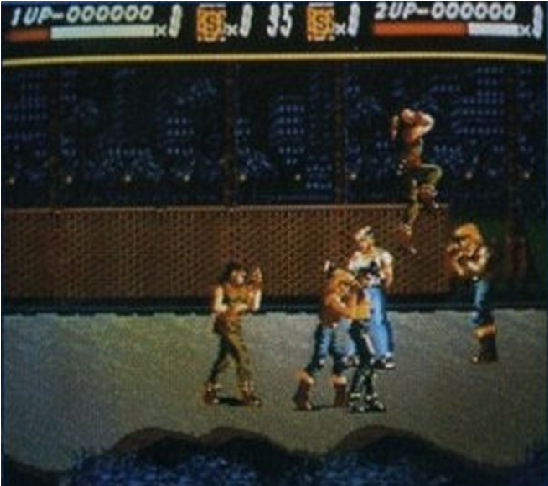
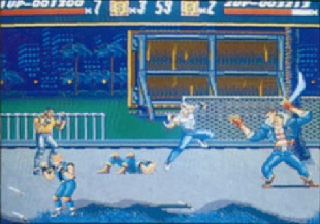
The only stage appearance difference between the early and the final here is the fence being brown instead of gray. However, there are a couple differences with the enemies. The Hakuyos were given a brown coloration, and the Galsias had early designs for their heads. While their boots and legs were pretty much the same, their hair was bouffant-style.
Early |
Final |
|---|---|
 |
 |
Antonio was originally the boss of the third stage, and Abadede was originally the boss of the first stage, meaning they switched places in the final game. Again, there is no boss health indicator. Also worth mentioning is Player 1 having three special attack uses in reserve. In the final game, it isn't possible to have more than two at this point without hacking, unless this was changed for testing.
Stage 4#
Early |
Later |
Final |
|---|---|---|
 |
 |
 |
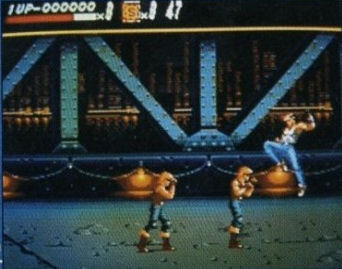
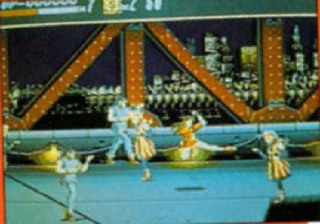
Stage 4 went through a couple of noticeable changes. The earlier builds bridge was designed to be less complete (or even abandoned) with more cracked and crumbly ground. The metal bars were silver/blue before being changed to red later on. Also of note in this picture is the original version of Axel's flying knee attack, a rarity as the main characters were generally complete early on.
Early |
Final |
|---|---|
 |
 |
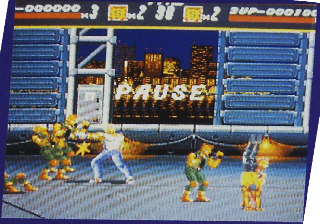
For the possible boss area, the back wall has a large opening in the middle that was filled in and given red lines at the ends. By this design timeframe, the ground layer has larger segments of concrete, whereas by the final, the segments are smaller and more numerous.
Early |
Final |
|---|---|
 |
 |
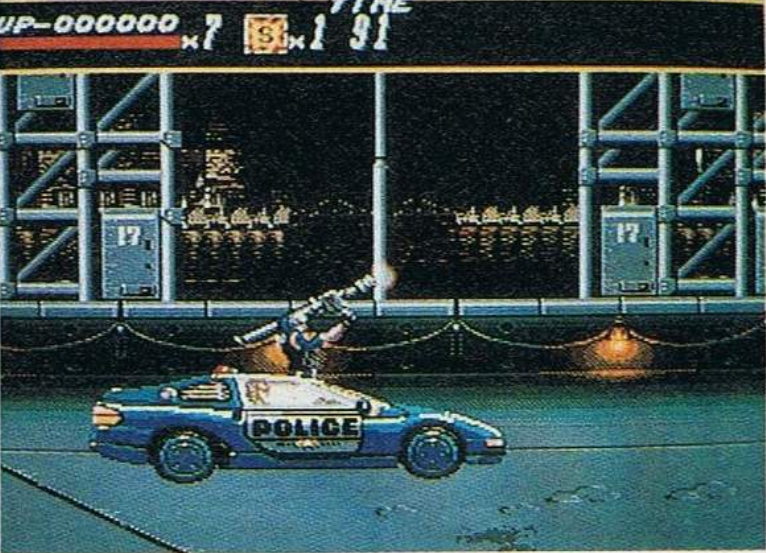
Early look at the Police on the stage, and what is interesting here is the background: At no point in the final game do the background steel/scaffold layers arrange in that pattern. Final screen position is the closest area design-wise to the early.
Stage 5#
Early |
Final |
|---|---|
 |
 |
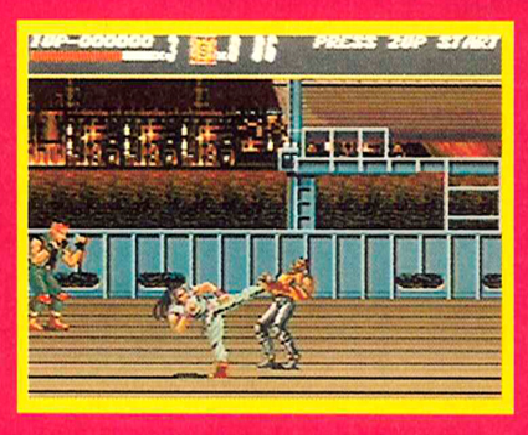
This part of Stage 5 appears to be the same, with differences in the the design of the floorboards
Early |
Final |
|---|---|
 |
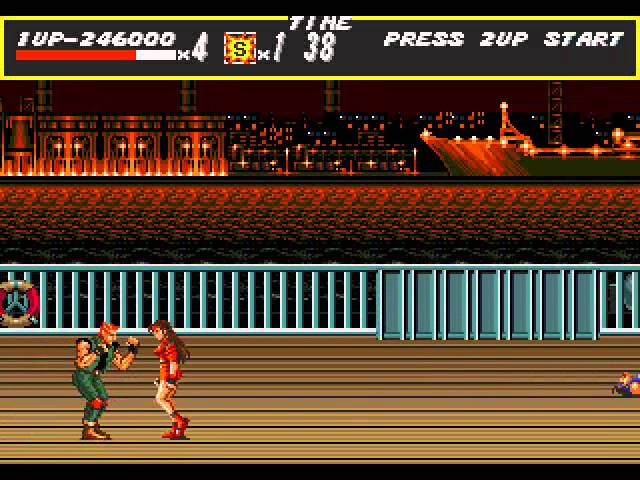 |
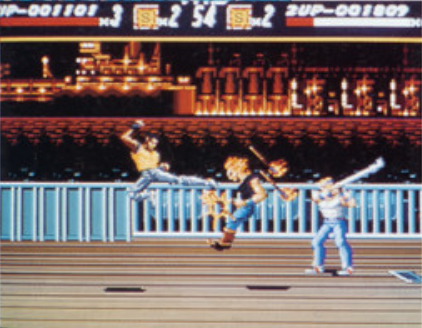
Originally there looked to be vents in the floor leftover after destroying the Vent stacks.
Stage 6#
Early |
Final |
|---|---|
 |
 |
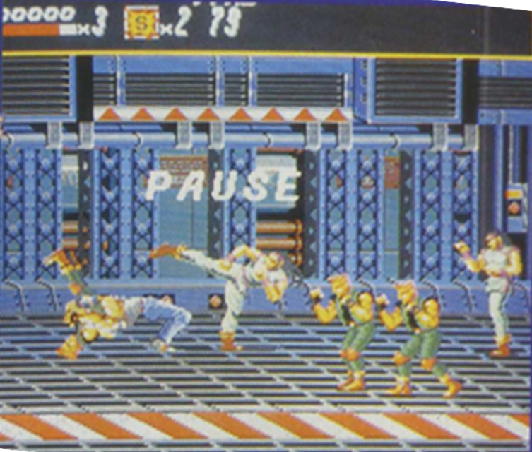
Metal columns were more prominently featured in the background before being reduced in amount. The red-and-white decal at the top used triangles in its design before being changed to stripes and the background was also blue, which was later changed to brown.
Early |
Final |
|---|---|
 |
 |
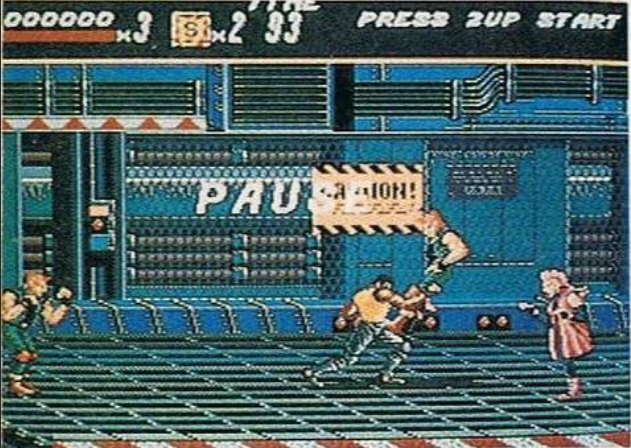
Perhaps the earliest look at the Factory stage, judging by the Y. Signal. The background layer here is colored blue instead of brown, and is lacking the giant hydraulic press that is located to the right of the Caution sign.
Early |
Final |
|---|---|
 |
 |
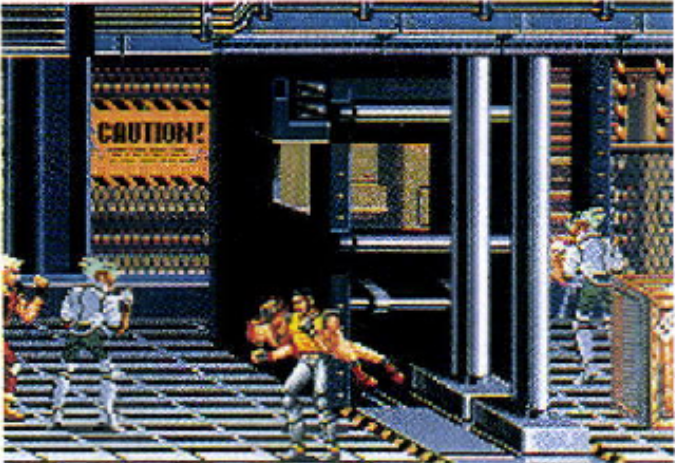
Here we see a unique, unused palette (Blue with greenish hair, black pants) for Y. Signal. In the final release, the purple variant is used instead. Interestingly enough, much like the earlier unshaded Y. Signal redesign, the pants are a unique color rather than brown, which was set as the default pants color in the final.
Early |
Final |
|---|---|
 |
 |
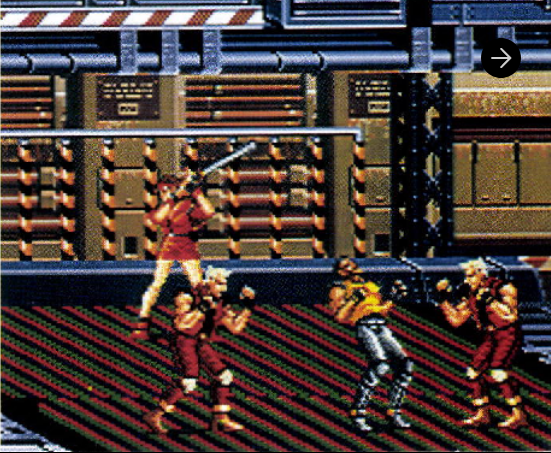
The double conveyor belt (Likely all of them as well) at one point were coloured a red/brown. This ends up looking like a glitch however and may have not been intended.
Stage 7#
Early |
Final |
|---|---|
 |
 |
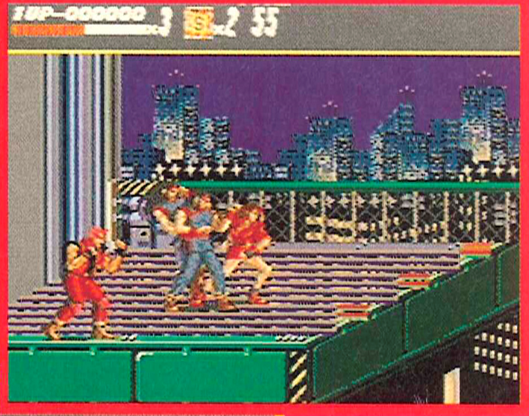
The entrance leading to the next stage is missing, alongside other small details. The sky is purple-colored for some reason and some of the elevator tiles are glitched. The Galsias wearing red have orange hair, which would be changed to white.
Stage 8#
Early |
Final |
|---|---|
 |
 |
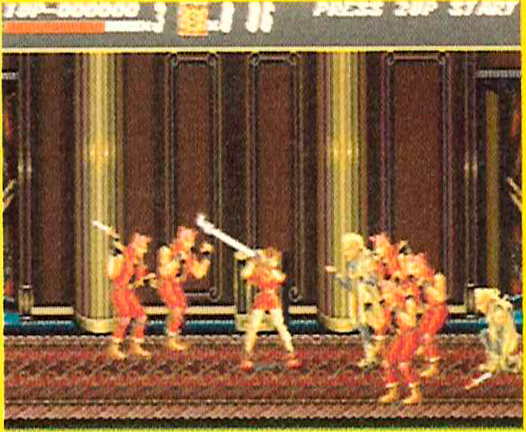
For some reason, the HUD shows the exact same information as the early stage 5 screenshot.
Early |
Final |
|---|---|
 |
 |
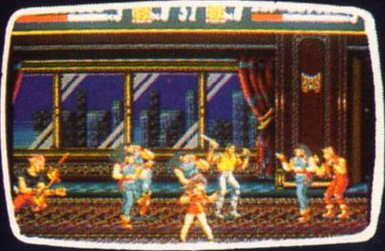
In the final game, there are no four-pane windows in the background; only two-pane ones are used.
Unknown Stages#
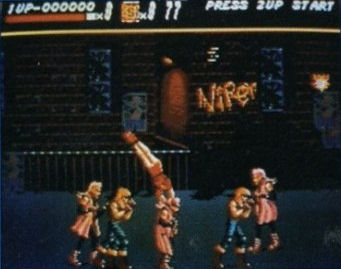
A few other screenshots show some stages that don't appear at any point in the final but may have been replaced.
 |
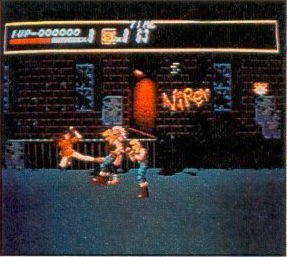 |
A stage set in a dark alley was showcased in some early screenshots, before being removed entirely from the game. It's likely a very early version of stage 2, given the similar theme and shared details (like the broken windows and the "viper" graffiti on the wall).
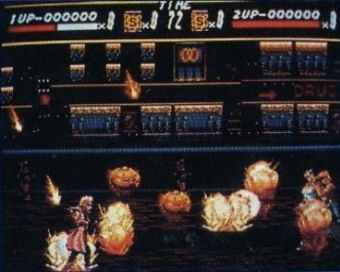
Another unknown stage set in what appears to be a dock/street was also previewed before being removed or replaced.
Development Documents#
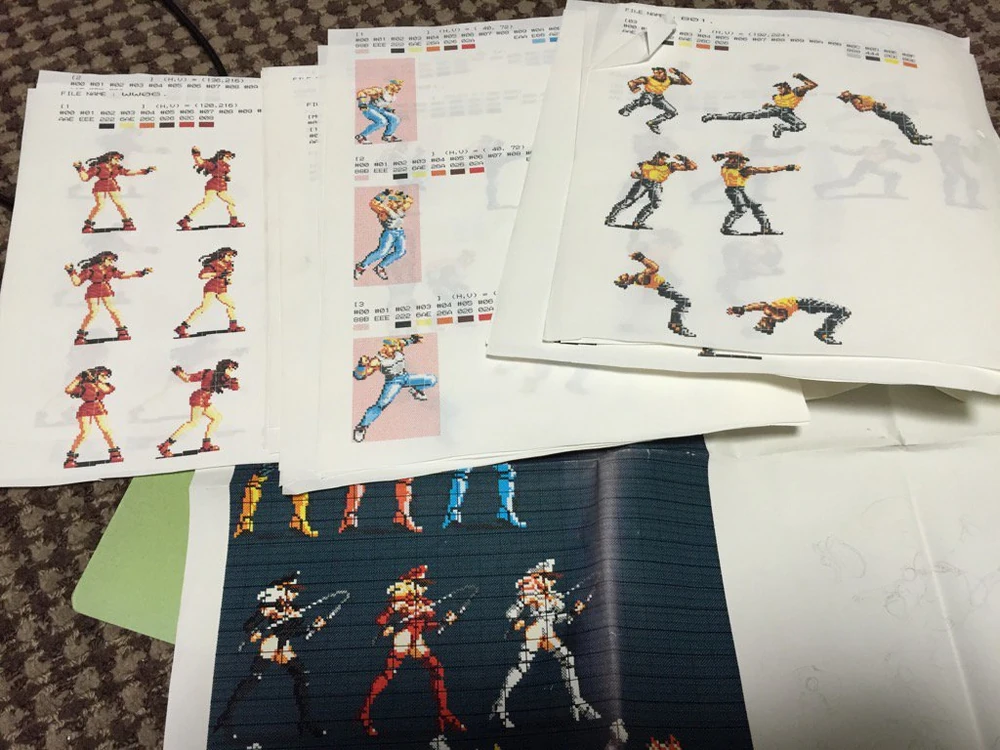
Posted by Yuzo Koshiro himself, these development sheets show a in-house method of sprite sheet creation. Of note are the earlier sprite versions of Blaze (with a different bend in her legs), the uncensored, scantily-clad Nora design, and unused red and blue Y. Signal palettes.