 This article has a talk page!
This page details pre-release information and/or media for Quake (PC).

|
To do:
|


Starting life out as a side-scrolling RPG known as The Fight for Justice starring a man known as Quake, this game would slowly evolve into the first-person shooter we know as today.
Despite Quake being a legendary PC title, its development was troubled to say the very least. High ambition, growing animosity among staff members and the fact that the team scrapped everything and restarted caused several team members, notably John Romero to leave id after release. Thankfully it wouldn't end up effecting the overall quality of Quake.
Development Timeline#
|
|
To do:
|
1990
- December 14th - Commander Keen in Invasion of the Vorticons releases, included in the game's first episode is a tease for The Fight for Justice, which would slowly evolve into Quake.
1991
- Unknown - Development begins but is later put on hold due to need for more advanced technology to achieve what the team desired. At some point later, The Fight for Justice concept was abandoned.
1993
- October - Virtua Fighter is released in arcades worldwide. John Romero is inspired to turn Quake into a 3D title.
1994
- Unknown - After the release of Doom II, id Software begins working on a new game engine capable of being able to display full 3D graphics.
- July - Computer Gaming World announces Quake.
- August 8th - Quake's programming language, "QuakeC" is developed and ready to be used for the game.
- August 22nd - The Fight for Justice is trademarked by Apogee. This is very anomalous with 'CGW' announcing the title officially as Quake and with the game's engine settling on the final name. Perhaps some part of Apogee picked up the original RPG project and was continuing it?
- Late 1994 - id Software bought SGI Indigo2 machine, and Alias/3 to be used to make the game's models. Multiplayer was reported to also have been working at this stage.
1995
- March - Kevin Cloud creates the first models for the game, one being a model of a human that consisted of approximately 200 polygons while using the Doom Cyberdemon textures as a placeholder base, a bat which would become the dragon or serpent (which both later become entirely scrapped within the final game's release), and something which Dave D. Taylor described as a "biped baddy." It was also during this time that the Quake engine had lighting implemented. 1
- June - id Software releases The Ultimate Doom, the US retail release and expansion to the original Doom with a fourth episode, engine improvements, and more. All focus was fully shifted into Quake after their involvement with Doom was finally settled and done.
- August 3rd - John Romero released the very first screenshots of the game and put them onto the id Software FTP server as "quakepix.zip" for anyone to look at.
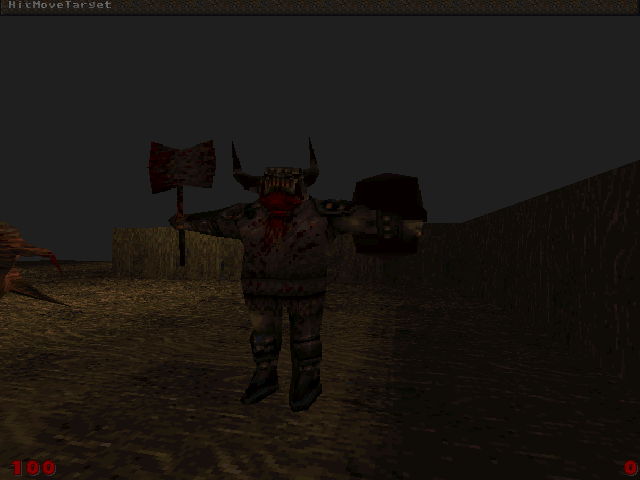
- September 28th - American McGee released more screenshots, consisting of the Knight and the Ogre within a zip file called "qpix.zip". an old id Software .plan file shows that the Knight's animations are the same, while the Ogre's has a missile attack while holding an axe and a shield instead of a chainsaw and a grenade launcher like how it does in final release of the game.
|
|
To do: |
- Very late September - Quake is shown off in the 1995 London European Computer Trade show. Knights were reported to die if pushed off high ledges, and an early cut off version E2M4 could be played. There was also an explosive weapon that uses the light_globe sprite as a projectile.
1996
- February 24th - Qtest1 is released for testing.
- June 22nd - After 5 years, 5 months, and 7 days after announcing the game, Quake is finally playable and released to the public within the shareware release.
- July 5th - The Linux shareware release version is released.
- July 22nd - The full version of Quake finally is available to people who ordered to id Software.
Early Development#
|
|
To do: |
Quake traces its origins as far back as 1990, when the first episode of the Commander Keen trilogy, Marooned on Mars is released, id Software included a preview message for a follow-up project called The Fight for Justice.

COMING SOON FROM ID SOFTWARE
As our follow-up to the Commander Keen trilogy, ID Software is working on "The Fight for Justice": A completely new approach to fantasy gaming. You start not as a weakling with no food--you start as Quake, the strongest, most dangerous person on the continent. You start off with a hammer of thunderbolts, a ring of regeneration, and a trans-dimensional artifact. Here the fun begins. You fight for justice, a secret organization devoted to vanquishing evil from the land! This is role-playing excitement.
And you don't chunk around the screen. "The Fight for Justice" contains fully animated scrolling backgrounds. All the people you meet have their own lives, personalities, and objectives. A 256-color VGA version will be available (smooth scrolling 256-color screens--fancy that)!
And the depth of play will be intense. No more "whack whack here's some gold." There will be interesting puzzles and decisions won't be "yes/no" but complex correlations or people and events.
"The Fight for Justice" will be the finest PC game yet.
Billy says: "ID Software is really keen!"
The "Quake" character mentioned throughout the preview message had originated from a Dungeons and Dragons campaign where he was John Carmack's character. The hammer would cause fissures in the ground and would damage the enemy.Petersen, Sandy. (2021, July 2). Why Is Quake Like That?. YouTube. https://www.youtube.com/watch?v=MUeu96TKQwU
He had a "Hellgate Cube sidekick creature" at some point as well and was said to be "a total badass".2 Additionally, the orbiting cube companion would also intercept enemy attacks and damage them if they go too close as well. Instead of the Lovecraftian and sci-fi worlds that Quake would eventually have, it would be the D&D world penetrating Earth.
Even though it never released, a few things from The Fight for Justice would end up in Quake:
- The name of Quake not only became the game's title, but also got used for the antagonist force you face (and not Shub-Niggurath, contrary to popular belief).
- The main protagonist also dropped the Quake name, becoming the Ranger in the final release.
- A weapon called the Hammer of Thunderbolts is mentioned, which likely became just the Thunderbolt later on, but you do start of with an axe as a melee weapon instead.
- The idea of a hammer, however, would possibly later be reused for the Scourge of Armagon expansion for the Mjolnir as it also has an electric attack.
- The Ring of Regeneration may have been changed to the Ring of Shadows, as Quake has plenty of other healing items.
- The trans-dimensional artifact may have been the runes later on, or maybe other powerups.
- All of the RPG elements, such as NPCs (probably talking about interactive NPCs) were completely scrapped from the shift of 2D to 3D, but some elements such as the monsters themselves and displaying screen text to the player would remain in the final game.
- Fully animated scrolling backgrounds is surprisingly accurate considering the entire rework, as the sky boxes have animated clouds.
- The mention of the 256-color VGA palette is also accurate, but no other versions with other color modes such as CGA or EGA of the game exist.
- Some maps in the game also have puzzles, so that is also another idea that hasn't changed, minus the NPC portion.
Timequake#
|
|
To do: |
Timequake is the early design incantation of the game when id Software transitioned the game from The Fight for Justice side-scrolling RPG and into a 3D FPS akin to Doom. The "time" part of the title was eventually cut and the game remained as "Quake" ever since.
Axe Ogre#
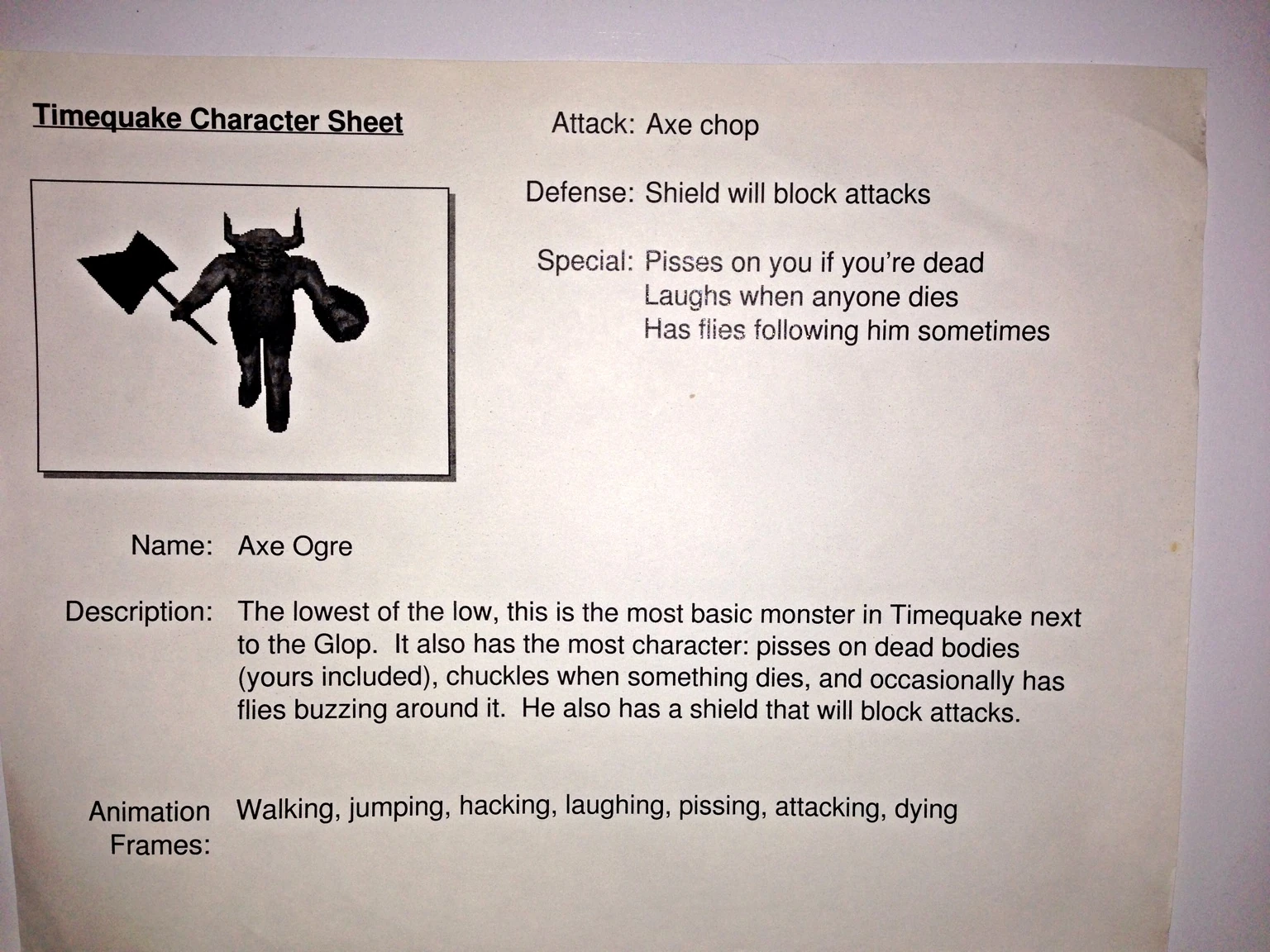
Timequake Character Sheet
Name: Axe Ogre
Description: The lowest of the low, this is the most basic monster in Timequake next to the Glop. It also has the most character: pisses on dead bodies (yours included), chuckles when something dies, and occasionally has flies buzzing around it. He also has a shield that will block attacks.
Animation Frames: Walking, jumping, hacking, laughing, pissing, attacking, dying
Attack: Axe chop
Defense: Shield will block attacks
Special: Pisses on you if you're dead
Laughs when anyone dies
Has flies buzzing around him sometimes
The Axe Ogre was the first official monster made for the game.. isn't too different from the finished product, but there are some key differences worth pointing out:
- Ogre has an axe used for melee attacks instead of it's chainsaw. I mean, it's in the name.
- Additionally, it has a shield instead of a grenade launcher.
- The shield would block attacks, which isn't seen in any other enemy in the game.
- It seems the Ogre was more of a standard, but beefy battle warrior type enemy instead of being more of a dual-purpose type of enemy. Eventually, Knights and Death Knights would be added where they would wield swords, replacing the original Ogre's concept.
- Design-wise, there are two angular horns that spike out of his head. The September 1995 screenshots in the next section show the design in detail.
- The Ogre has a "special ability" of some sort for laughing and pissing on you when it kills you. Classic id Software idea creation.
- Flies would also buzz around him as a "special ability." This doesn't exist in game, but eventually something similar would return in Quake 2. When killing Strogg, flies would buzz around their corpses.
- An enemy called the Glop is mentioned, but it's unknown what it could be besides it being the "most basic monster."
Early Screenshots#
|
|
To do: |
August 1995#
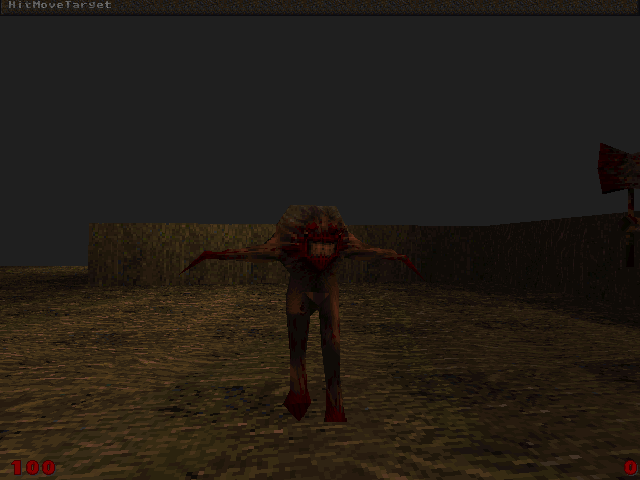
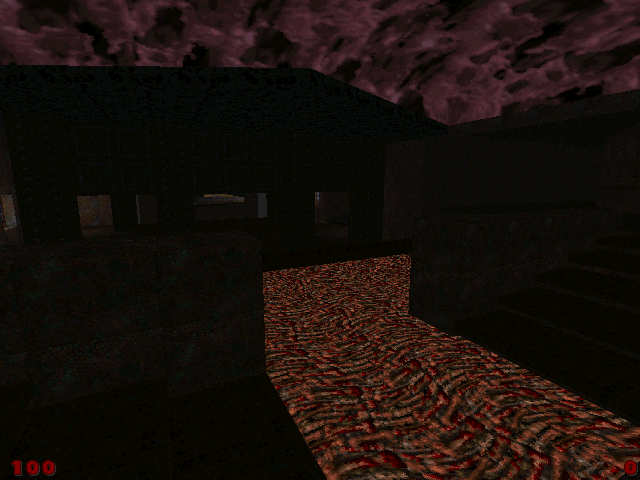
John Romero would release the first batch of screenshots for Quake. The "100" is using the font from Doom as a placeholder.
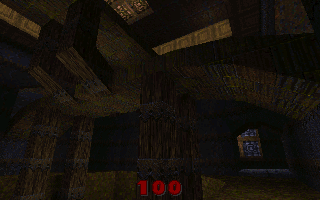


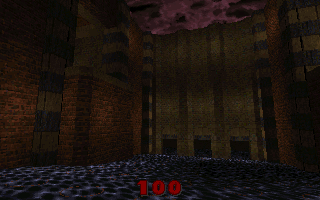
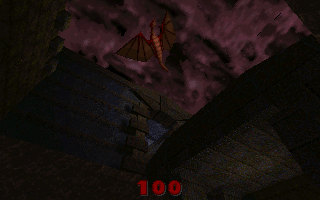

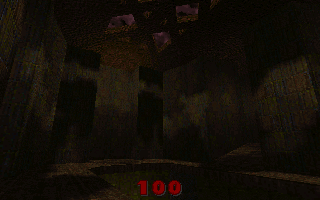

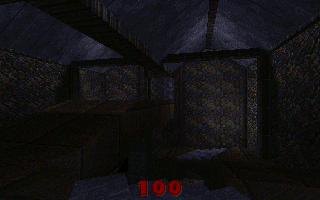

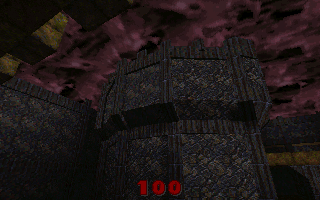
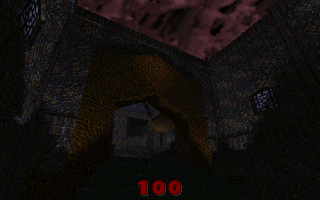

Romero provided eight screenshots; four were of E1M5: Phobos Lab from Doom and four of a recreation of it in Quake.

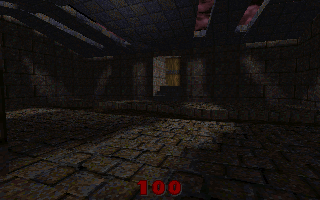

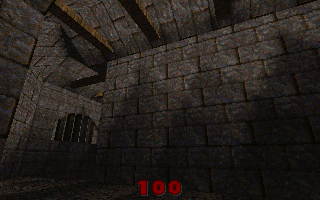

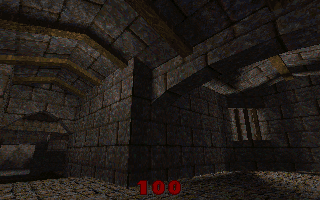

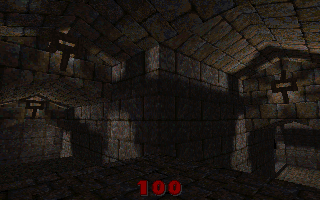
Finally two 640x480 24-bit TIFF color screenshots were provided.
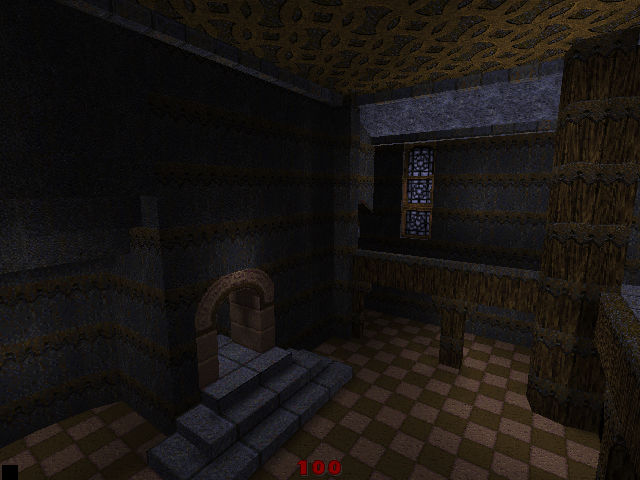
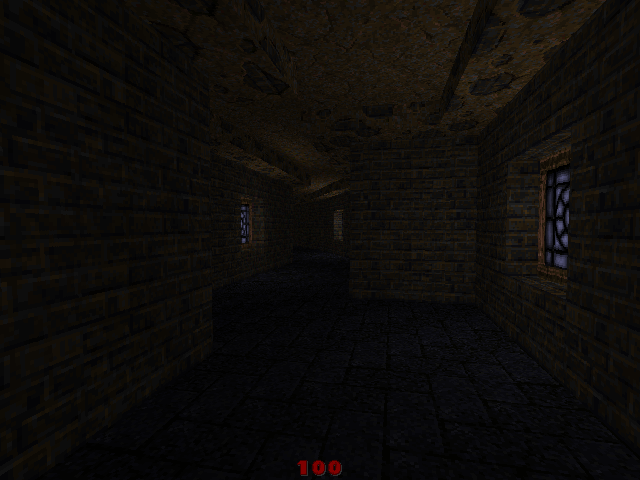
The README.TXT included alongside the screenshots.
Quake screen shots
Released August 3rd, 1995

Here they are - at long last!  The very first screens shots of Quake, taken at 320x200 resolution.  Screens q15.tif and q16.tif are high-res 640x480 24-bit TIFF color screens, just so you can see the awesome lighting. The cool Quake lighting can be seen in all these screen shots (except the de1m5-? ones, which are DOOM screen shots) and a couple sprites and an Alias model as well.  We don't have any Alias models working in the game at this point, but we're >this< close to getting them fully implemented with movement, proper light sourcing and animation. Screen q6.gif has our dragon hovering above a bridge above a moat.

The screen shots prefixed by qe1m5 are to be compared against their DOOM counterparts, the screen shots prefixed by de1m5.  Obviously, these are screens from DOOM episode 1, level 5.  I duplicated the level and Quakeified it and you can see for yourself how cool it looks compared to the original.

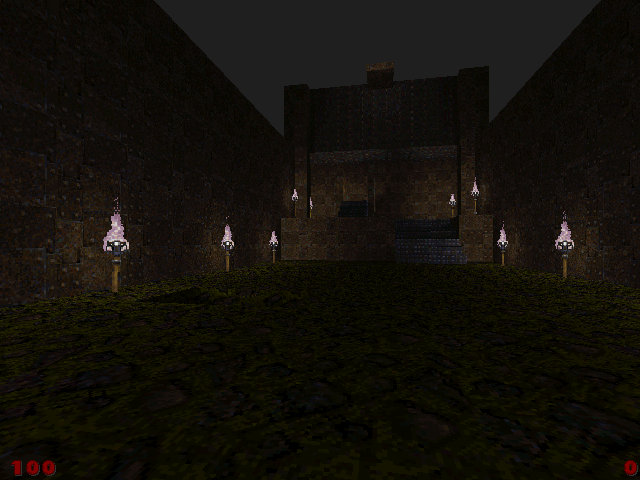
In q3.gif, you will see a couple torches at the end of the hall. Those are old DOOM torches, just holding a spot for the new ones, so don't worry - we're not shabbing out some old graphics on ya. The same goes for the numbers at the bottom of every screen shot, which are DOOM's status bar number graphics.

In the screens where you see some pink/purple sky - that sky parallaxes and is spherically mapped. You can just imagine the wind whistling in your ears...

You should see these screens in action. :)
(Source: quakepix.zip, id Software FTP)
At some point in Early August, id added an encrypted zip to their FTP with more screenshots intended for Steve Poole of PC Gamer magazine, who was doing a cover story for the game. The zip was later noticed, cracked (the password was "poole") and the screenshots were spread out online.


A single image called qe_dev.gif would be released on August 10th, showing a screenshot of the QuakeEd editor used for Quake on a NeXT workstation. 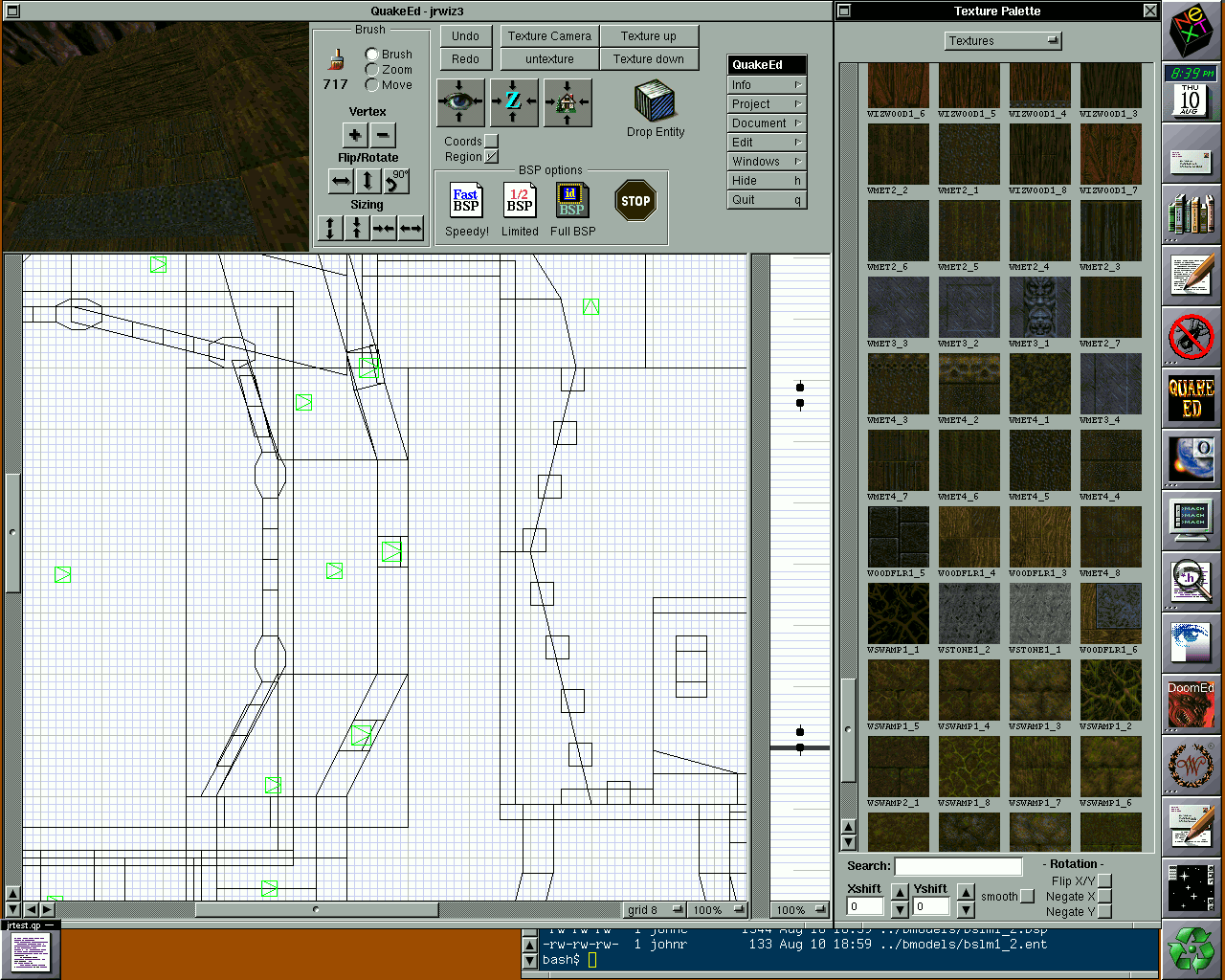
September 1995#
American McGee would release four oddly sized screenshots on September 28th. The images show the Knight and Ogre enemies, both of whom have noticeable differences from the final.
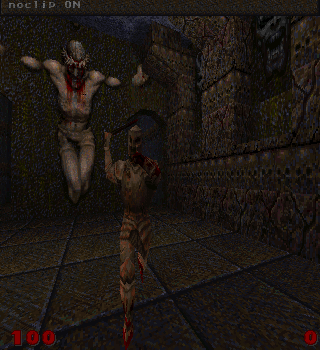
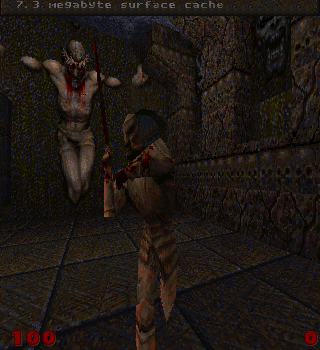
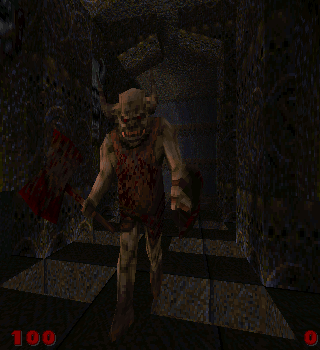
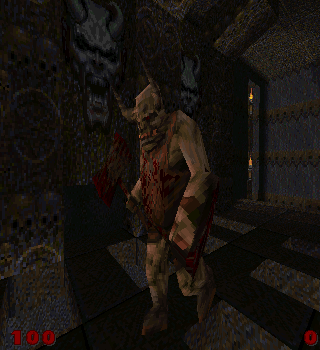
A separate .txt about the screenshots.
Quake screen shots
Released Sep 28th 1995

Here are some shots of the knight and ogre. I said something about looking at the knight in the help finger file... and then realized that there were no shots of him on the ftp site. So here they are.id Vault#
|
|
To do: |
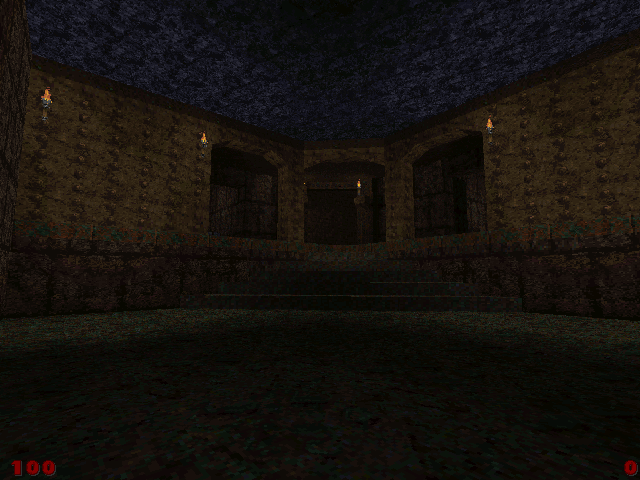
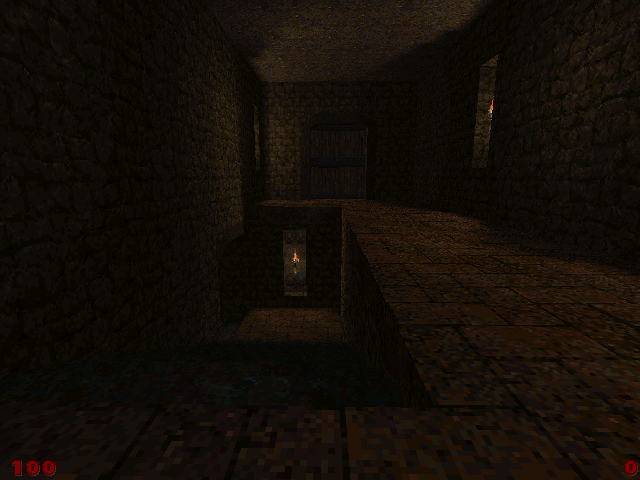
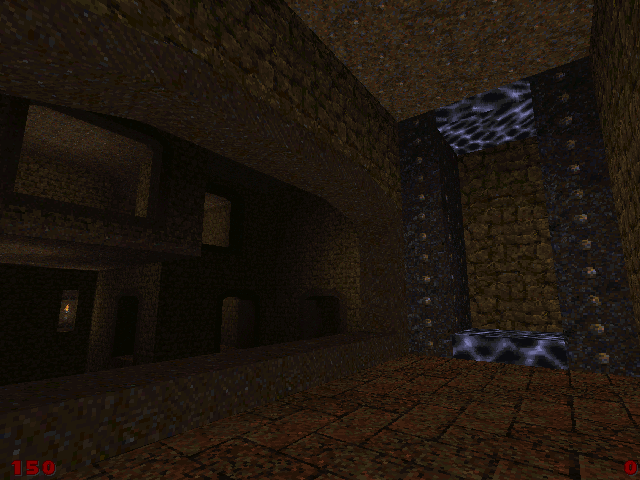
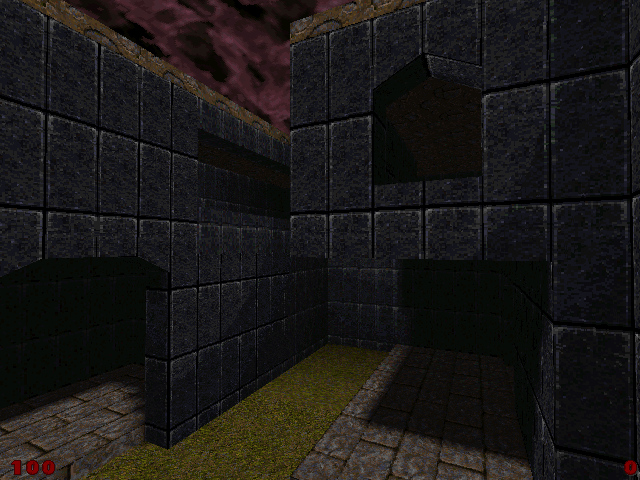
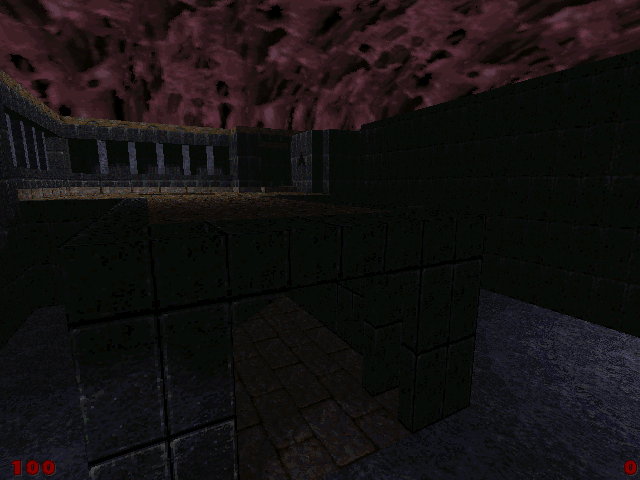
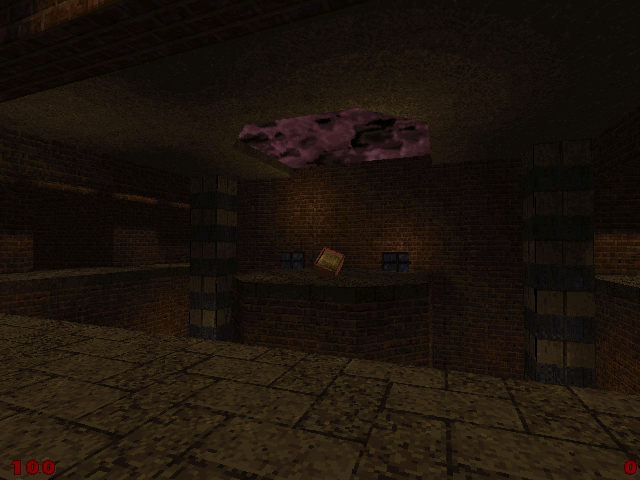
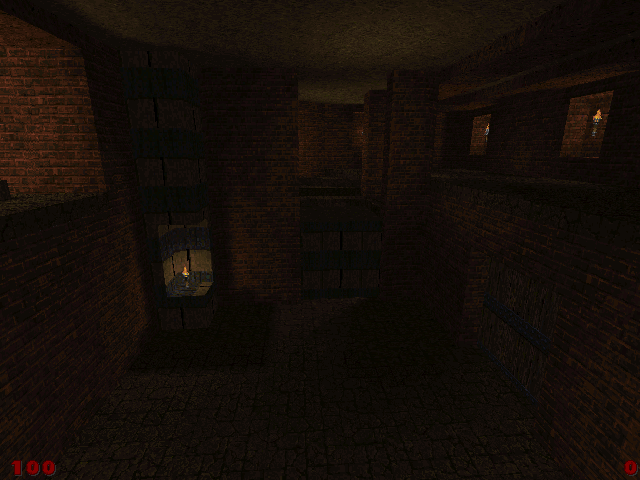
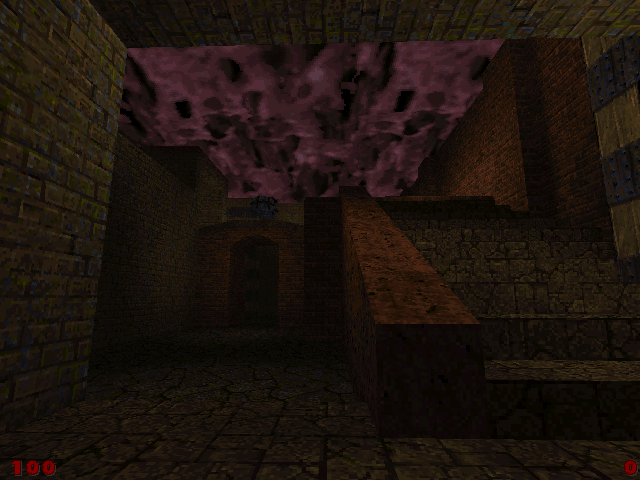
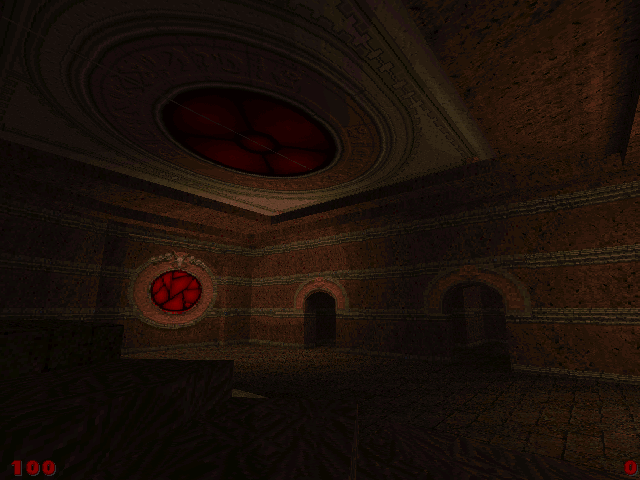
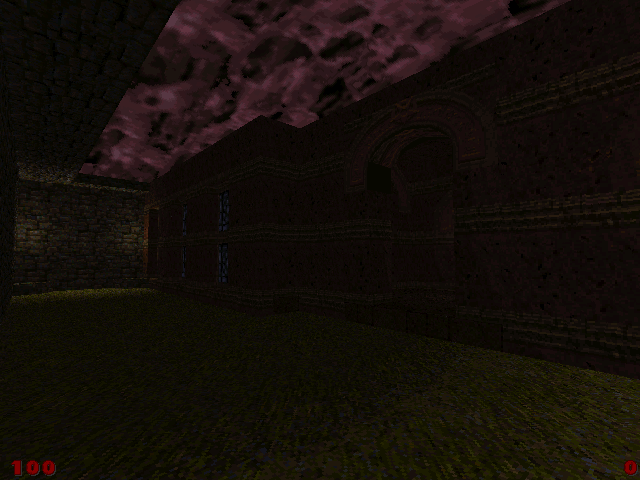
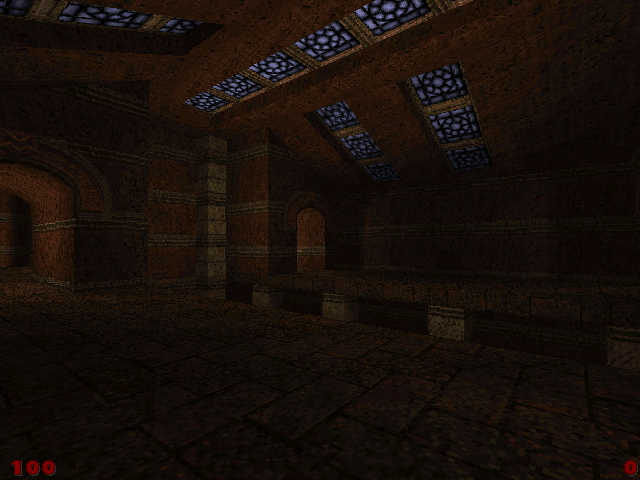
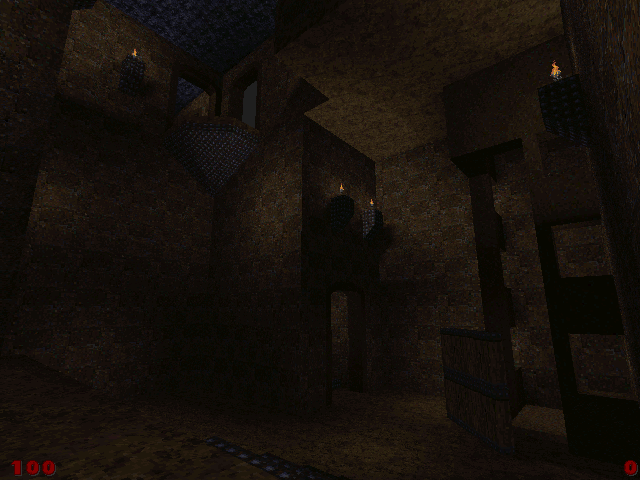
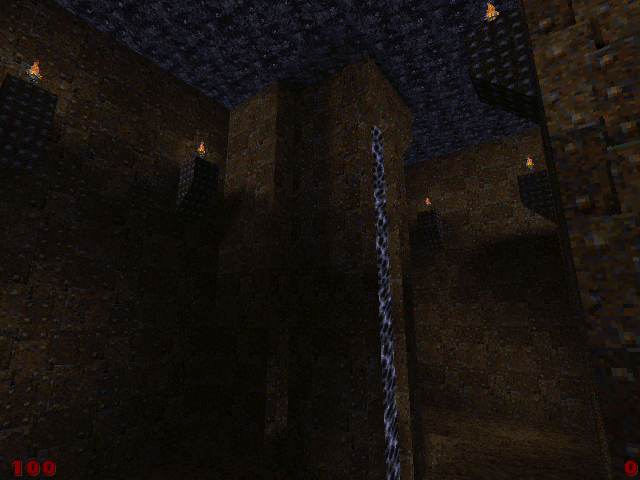
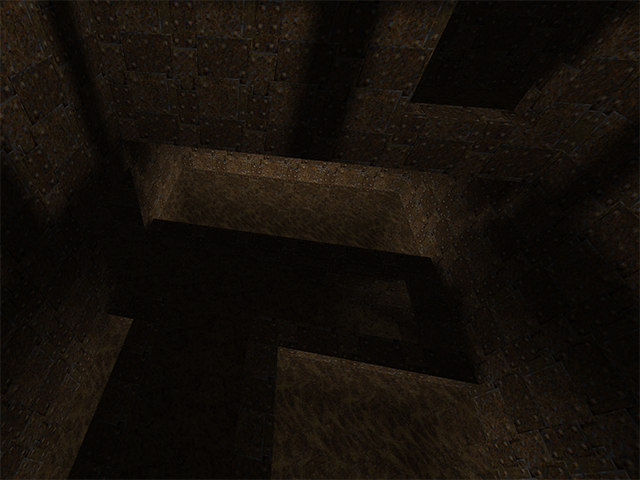
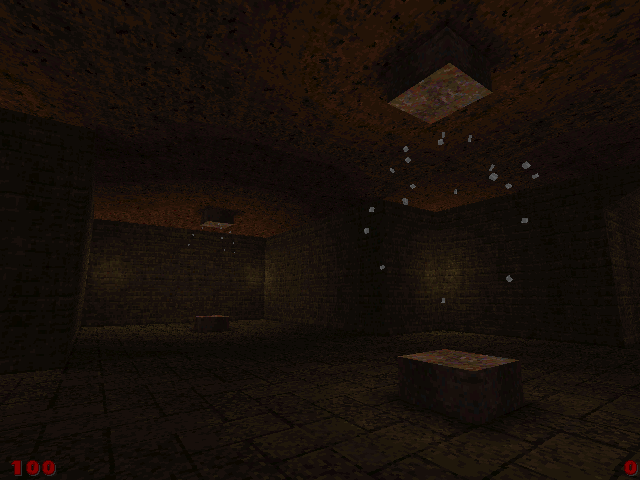
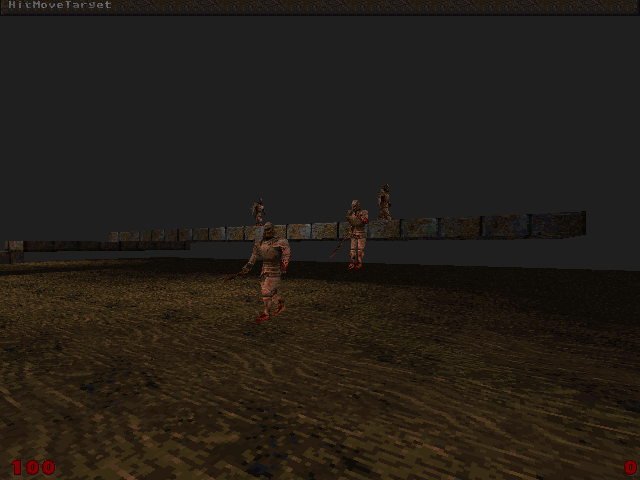
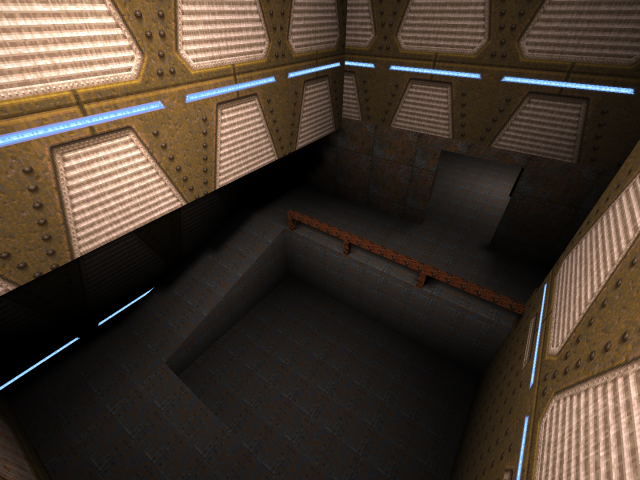
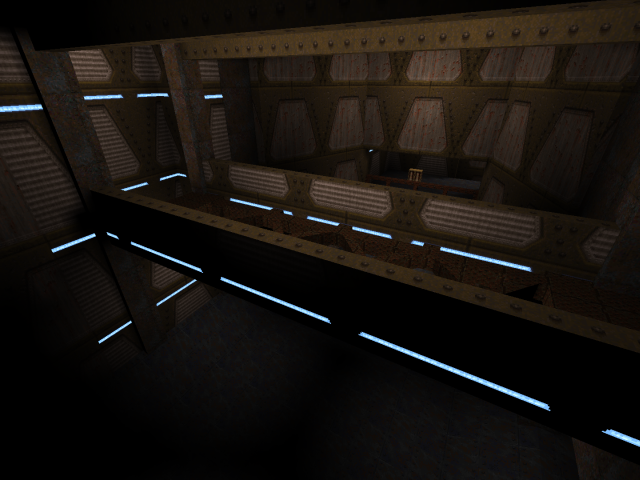
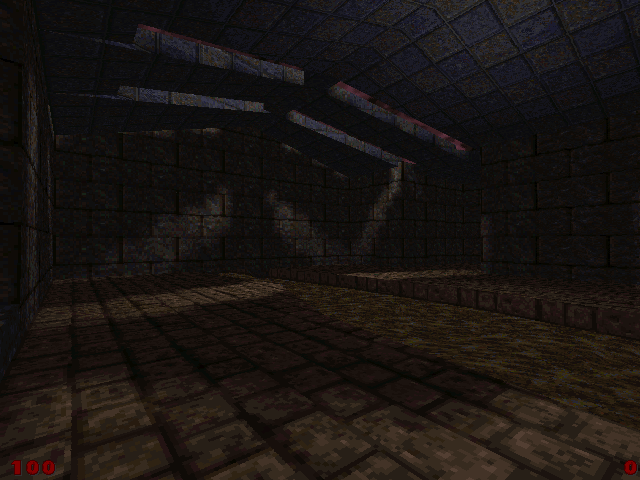
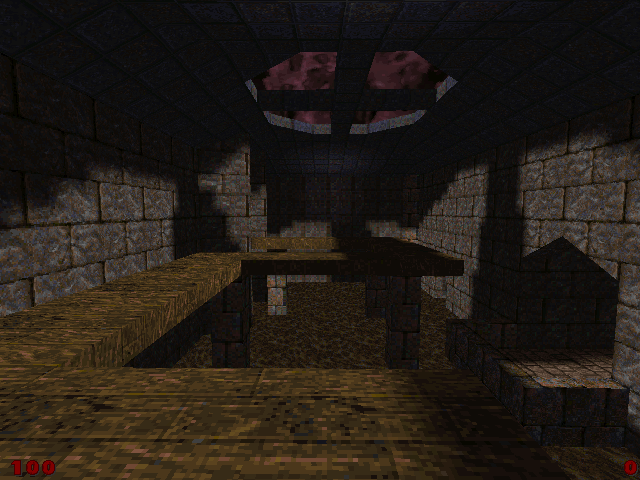
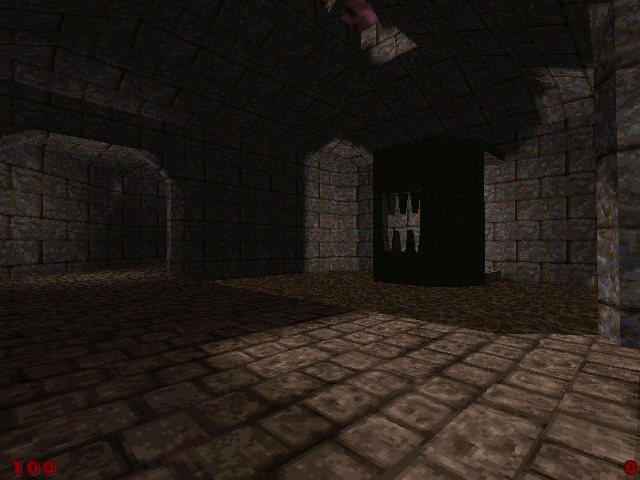
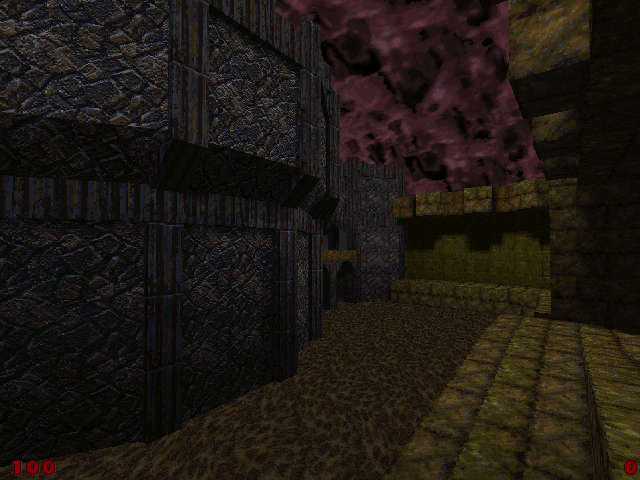
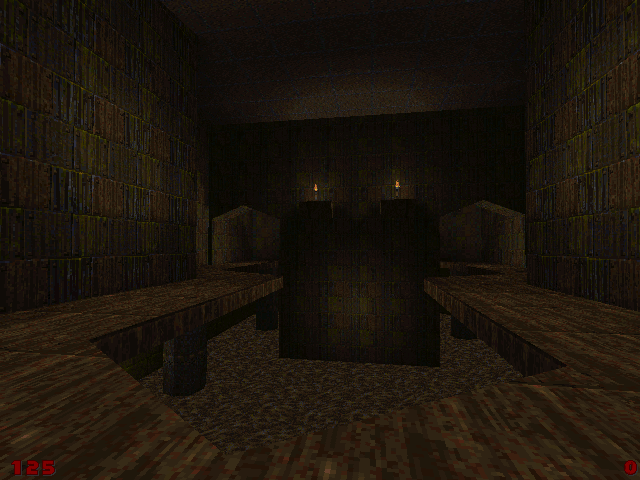
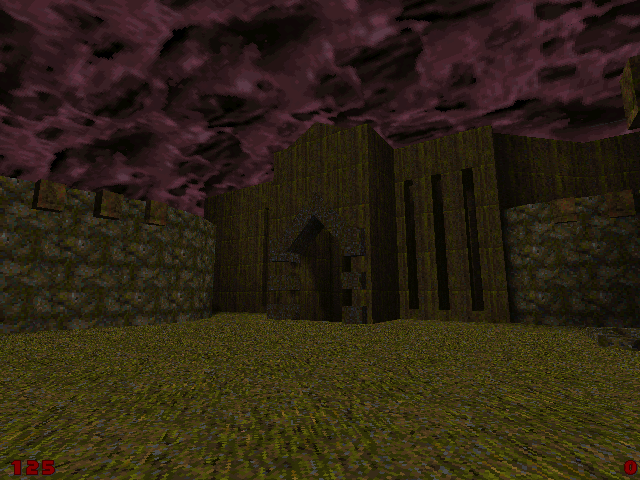
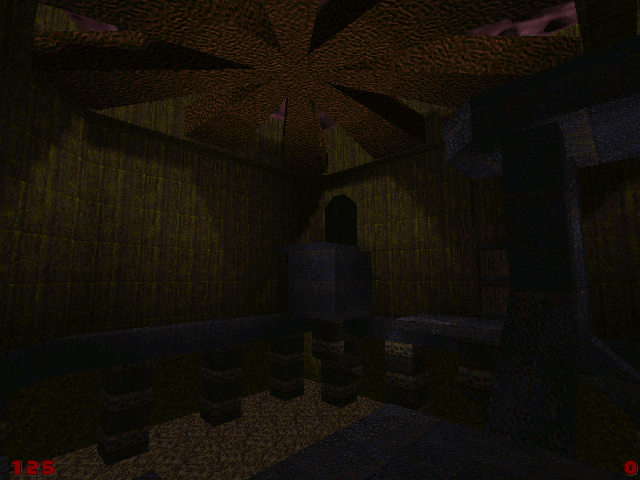
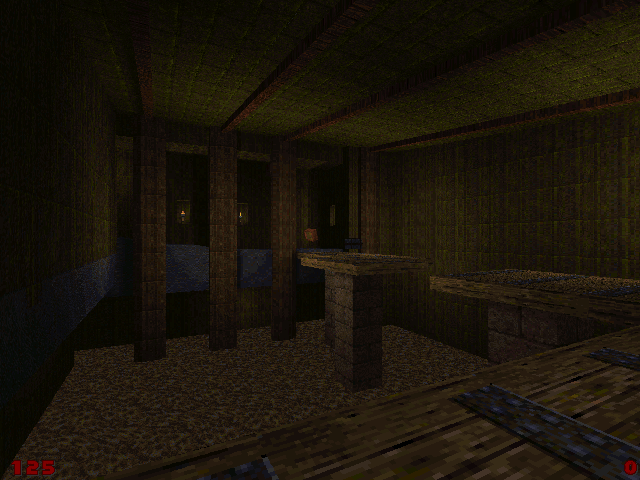
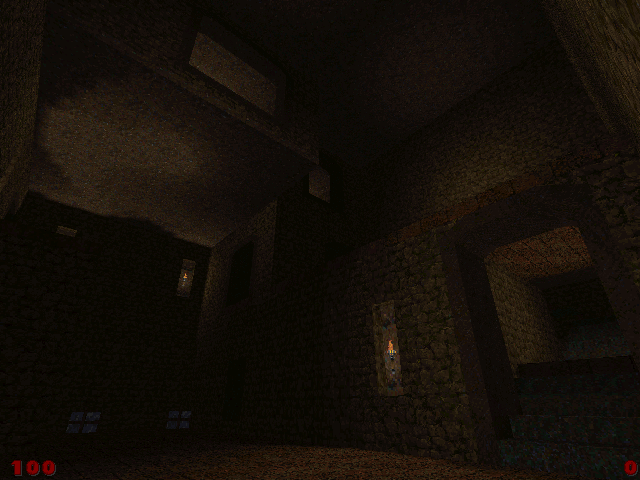
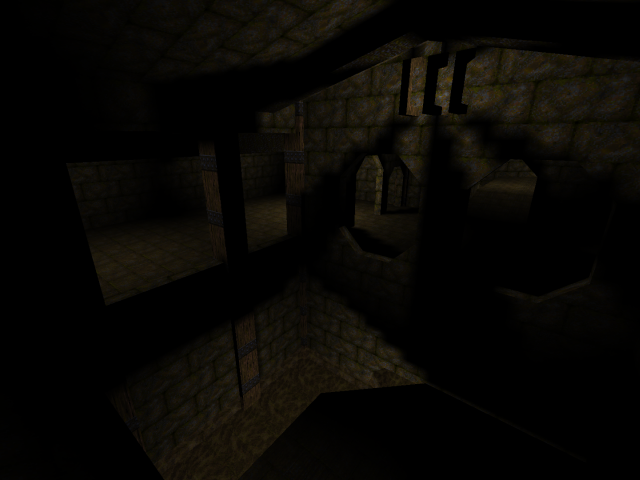
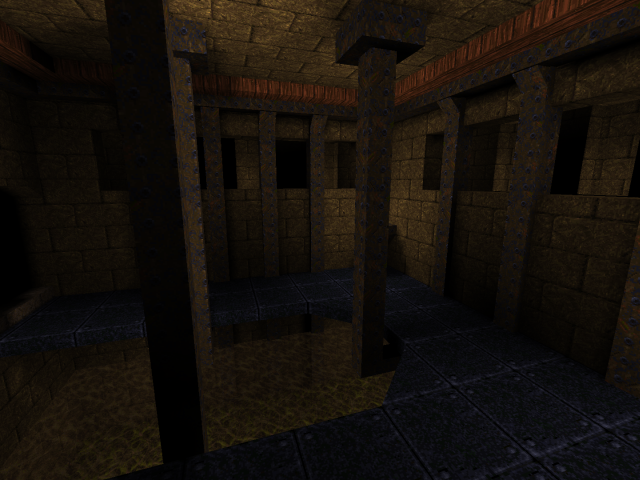
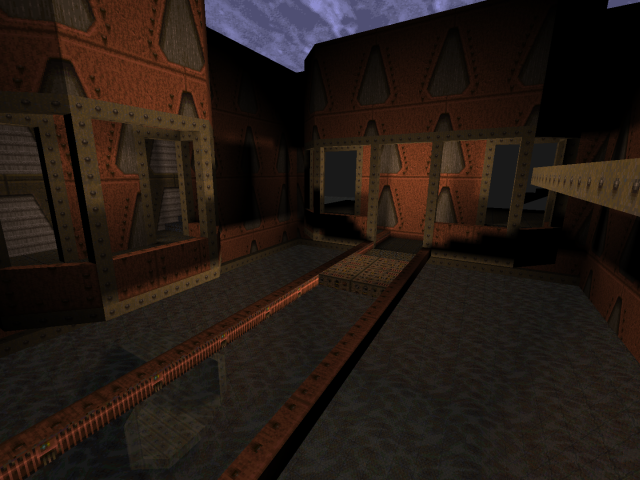
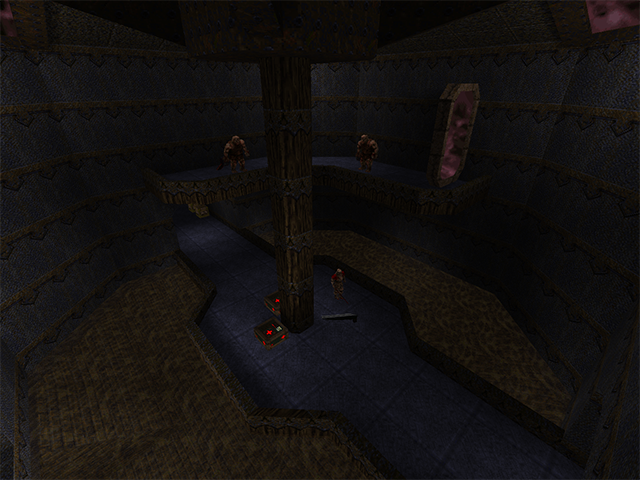
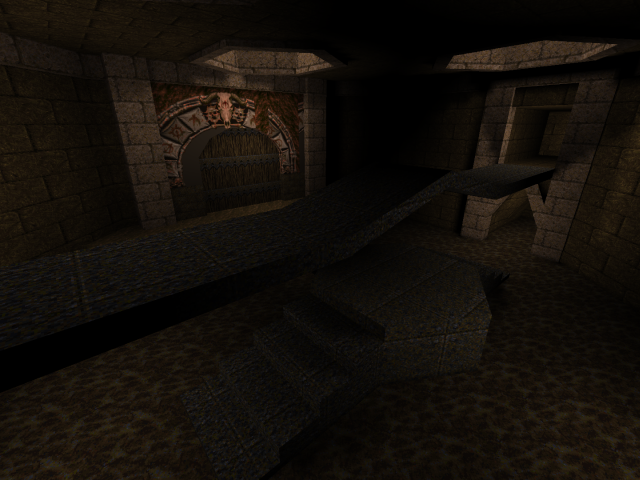
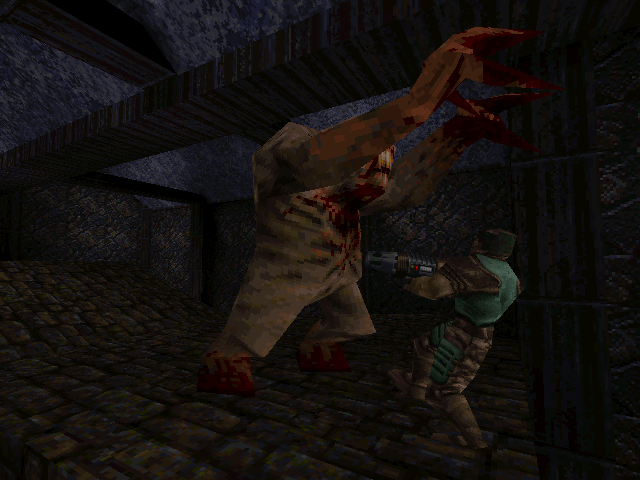
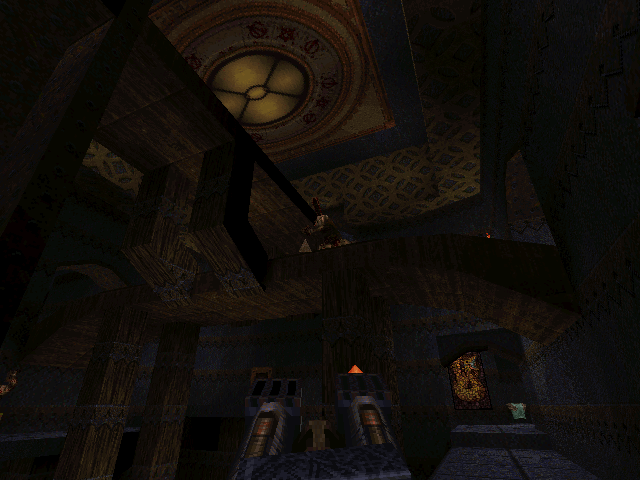
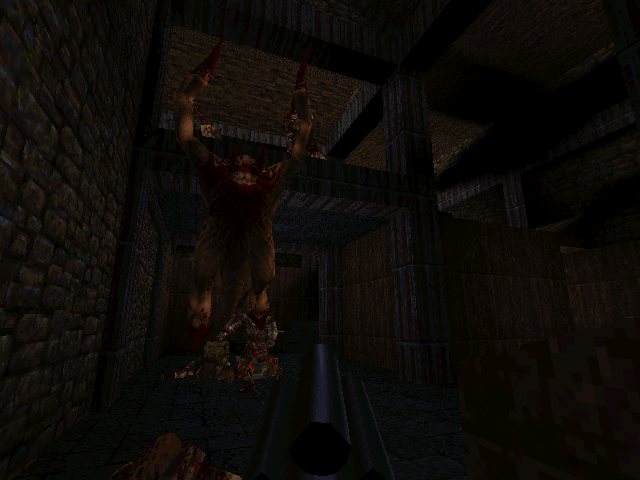
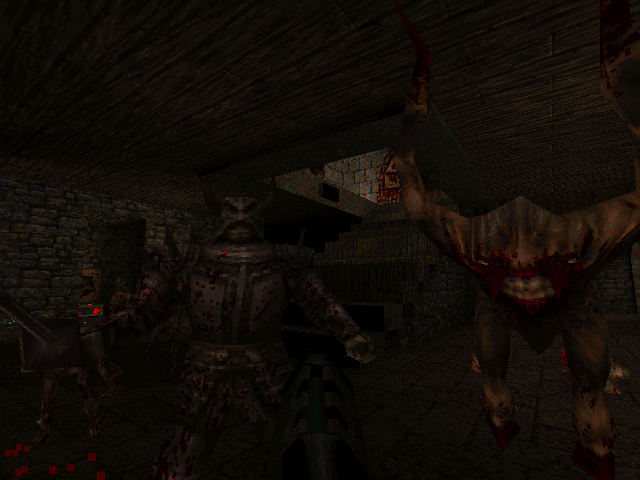
On August 6th, 2026, during the first day of QuakeCon 2026, the Quake remaster was updated. id Software, Nightdive, and Bethesda announced a new update to the remaster with a new expansion developed by MachineGames, titled Dawn of the Machine. And akin to all of the other recent Nightdive remasters and rereleases since 2023, there is always a "[Developer] Vault" addition, and Quake's remaster received one in coordination with the sequel's remaster from its release in 2023. A TON of unseen material was dug up from id and Nightdive, and were featured in the vault. For example, plenty of "new" screenshots have surfaced.
It is confirmed that John Carmack, John Romero, American McGee, and Tim Willits worked on these map in these screenshots in particular.
Retail Box#
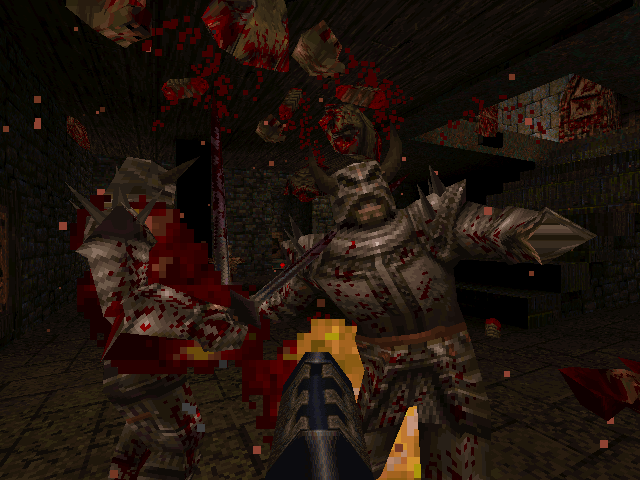
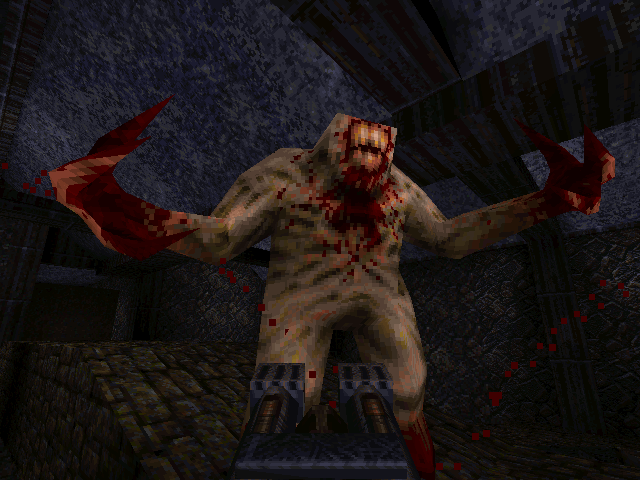
Concept Art#
|
|
To do: |
Ranger#
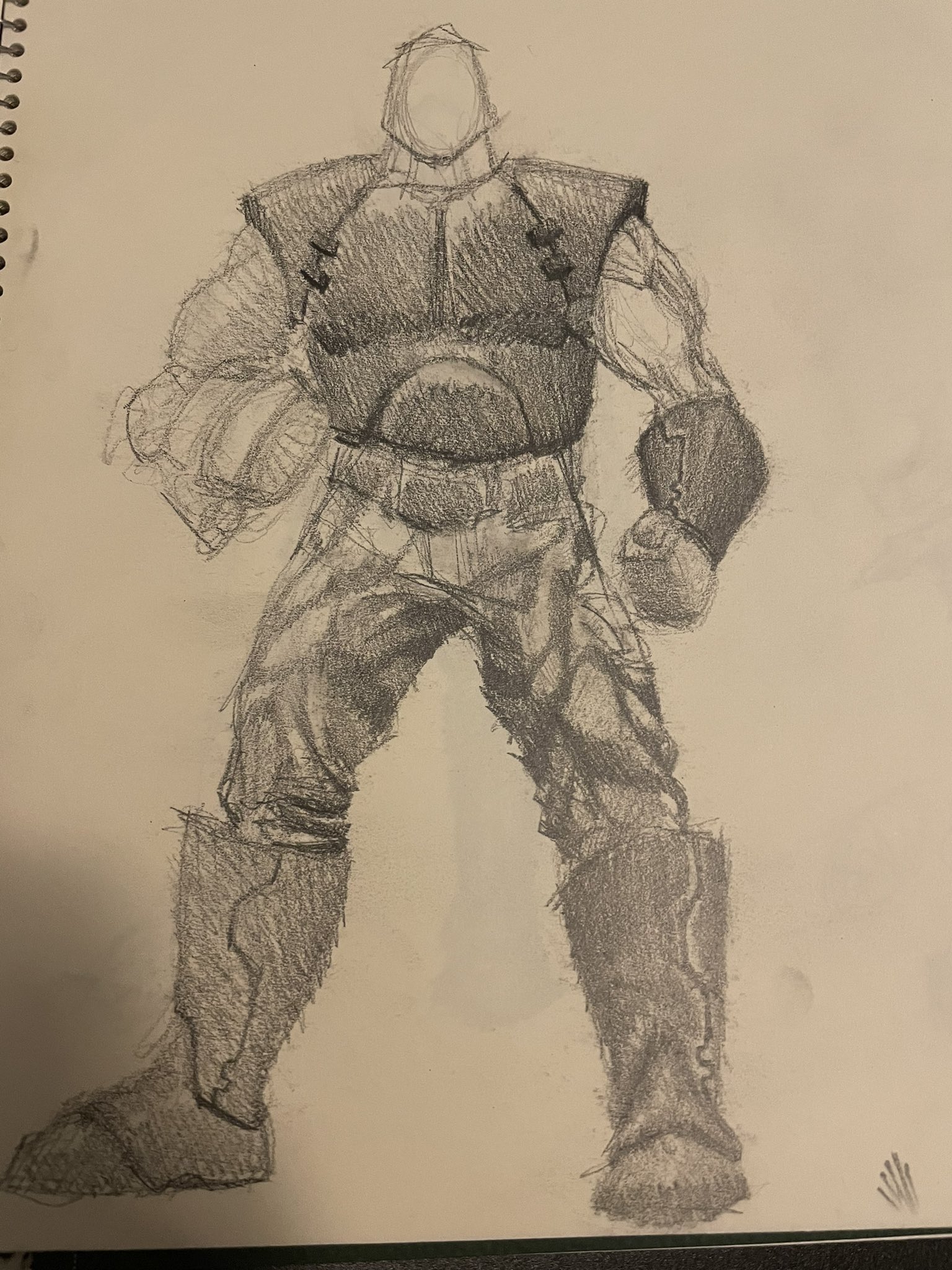 An early, incomplete early sketch of the Ranger, missing a face.
Shambler#

Different revisions of the Shambler drawn by Adrian Carmack.
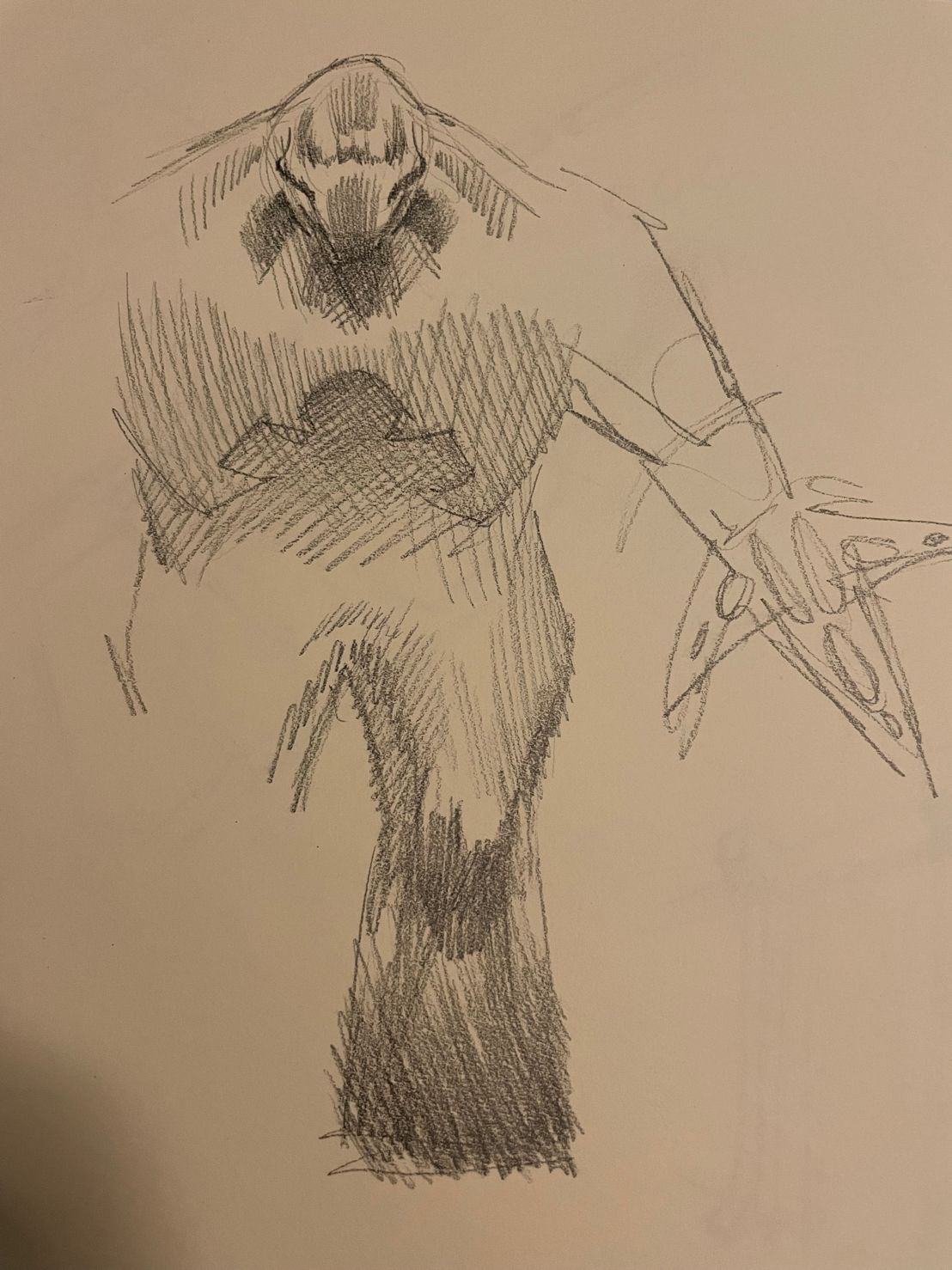
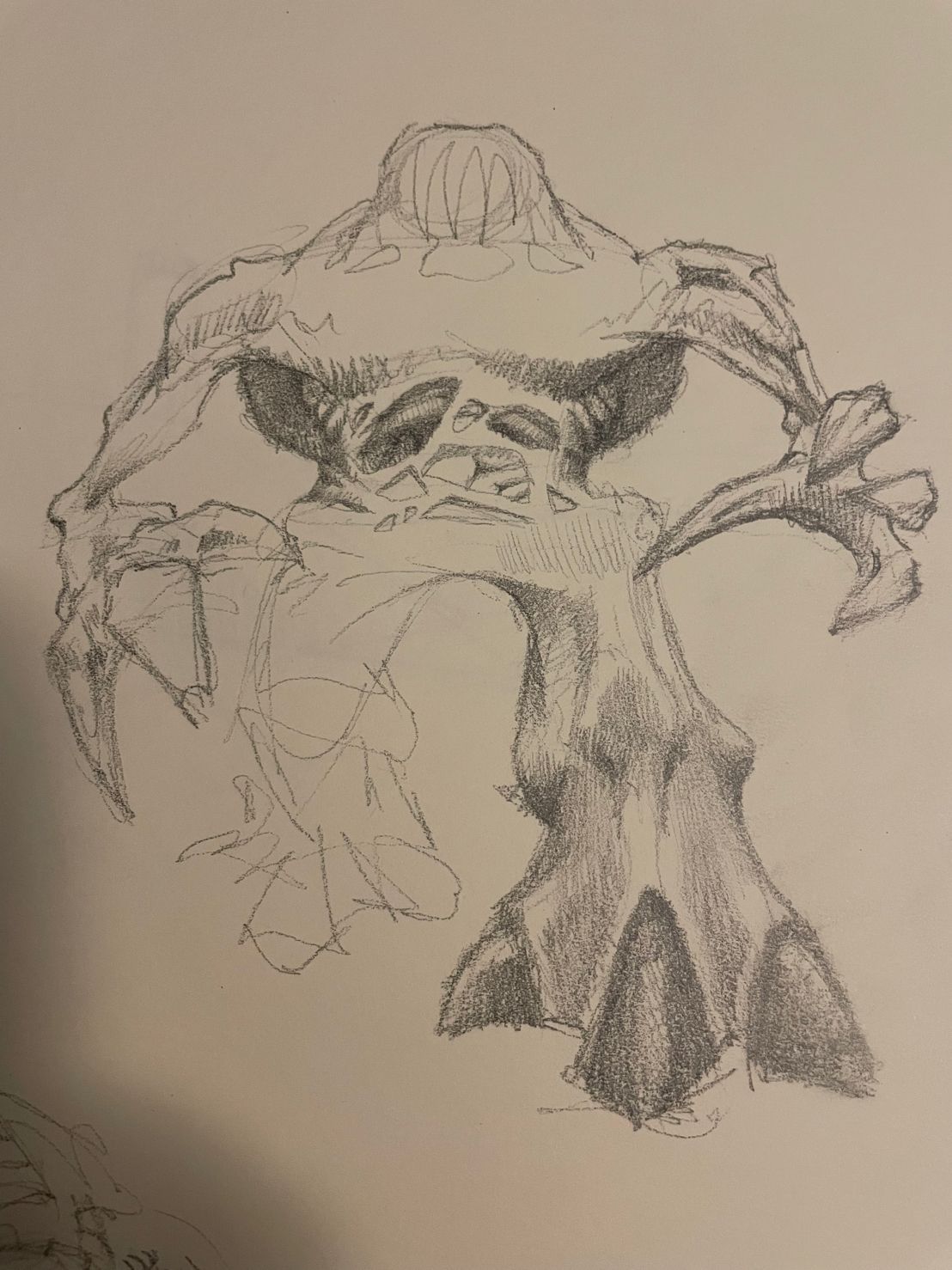
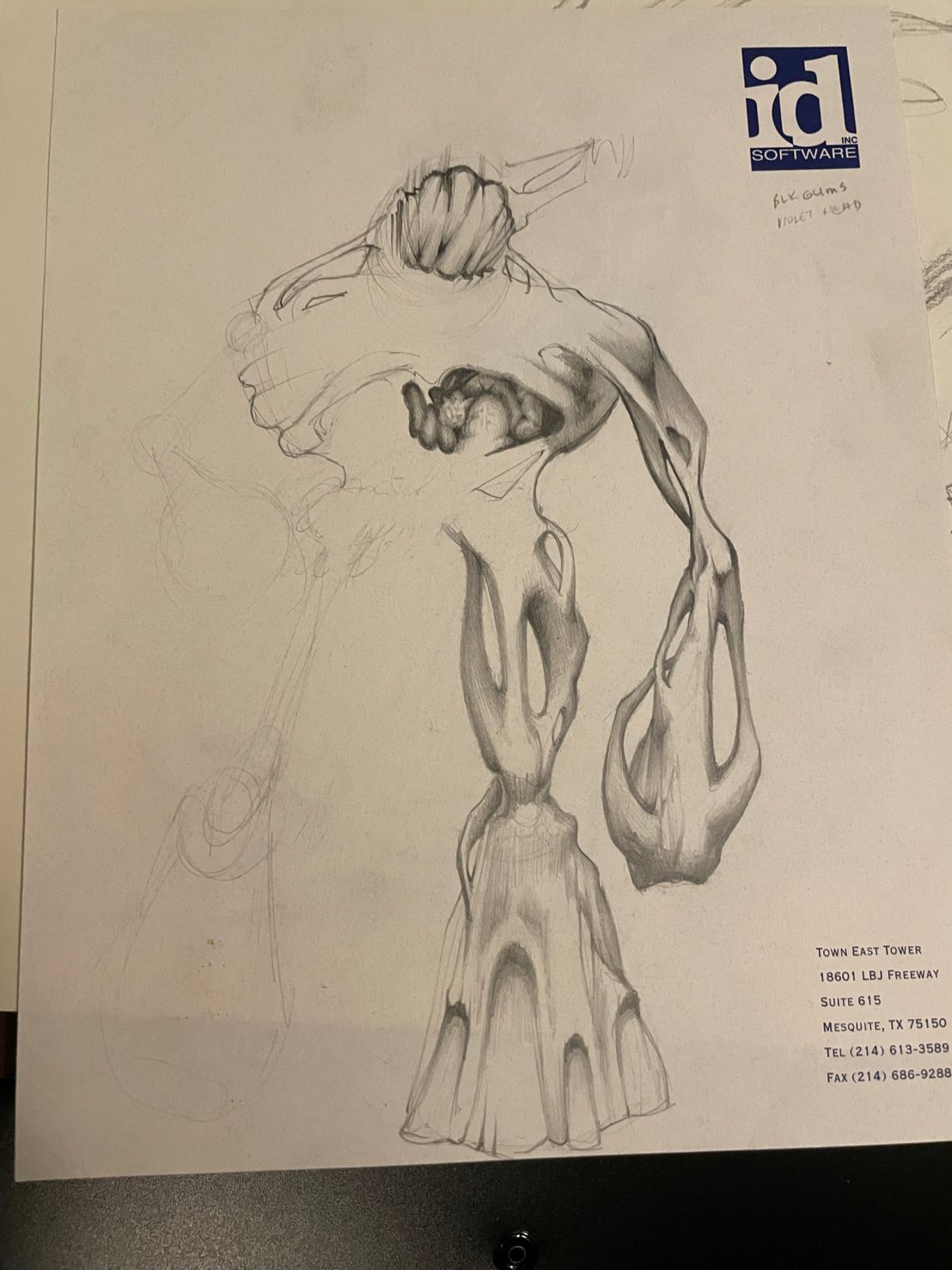
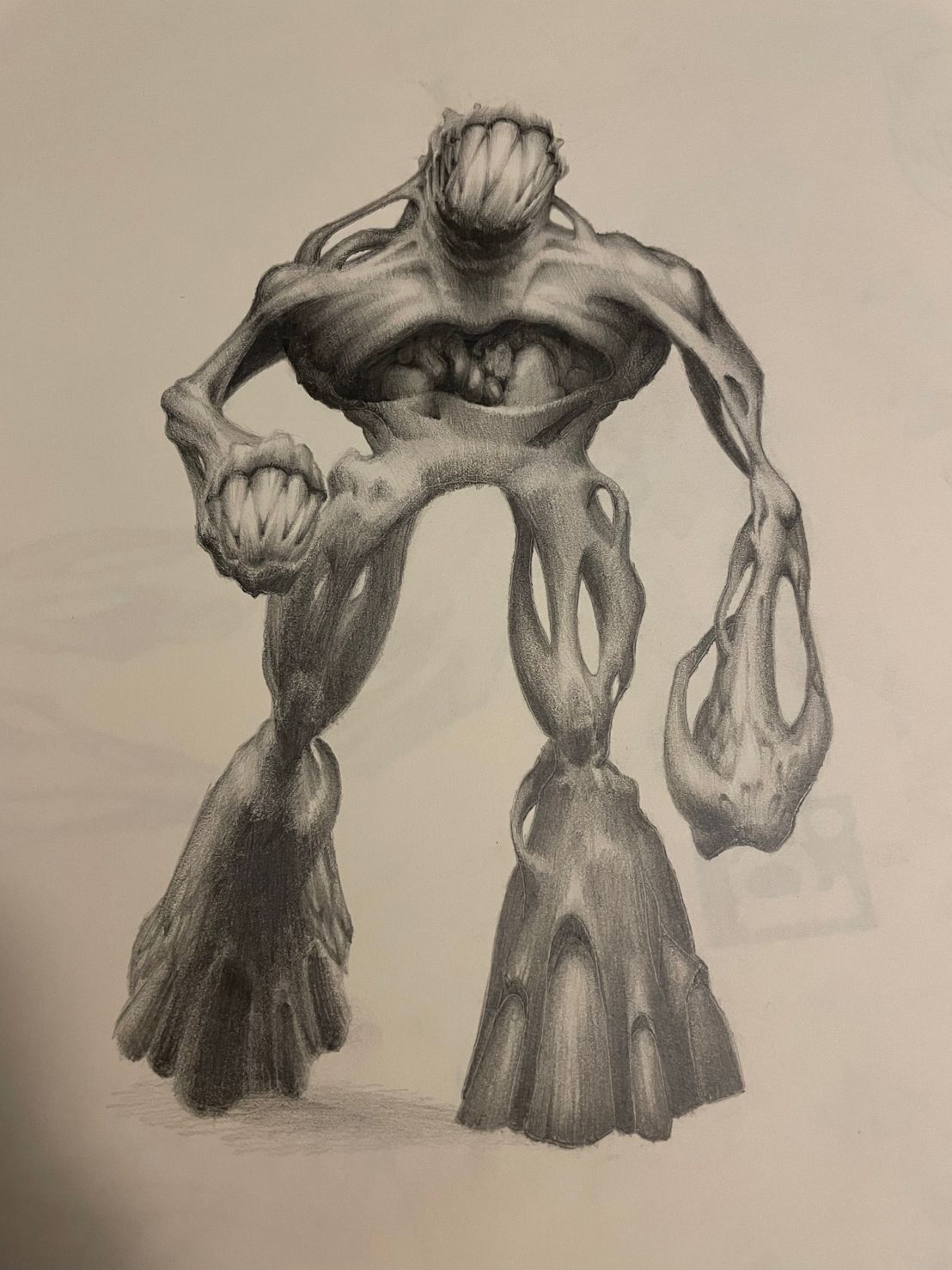
Scrag#
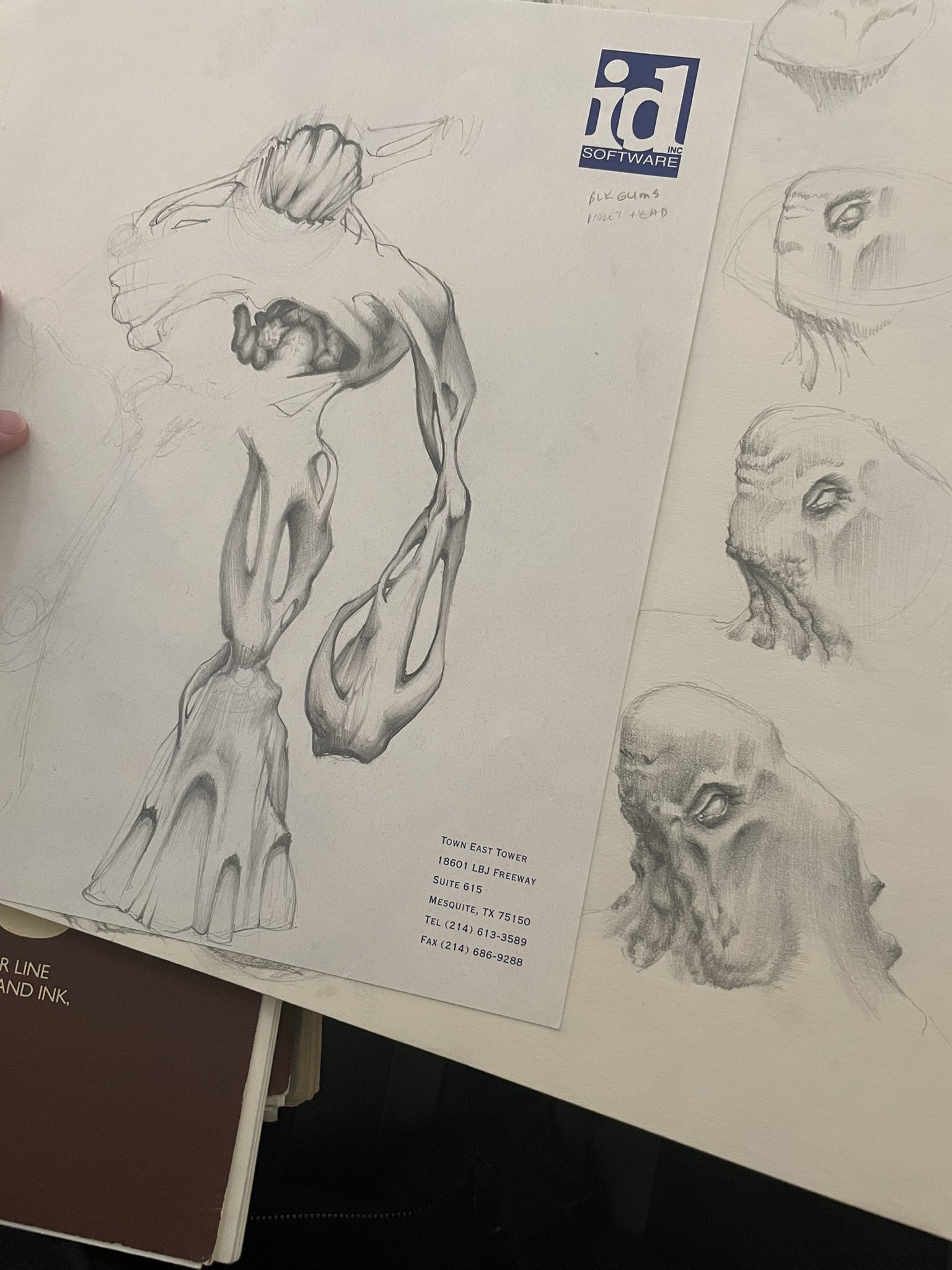 Alongside the Shambler, some sketches of the Scrag's face can be seen.
Shub-Niggurath#
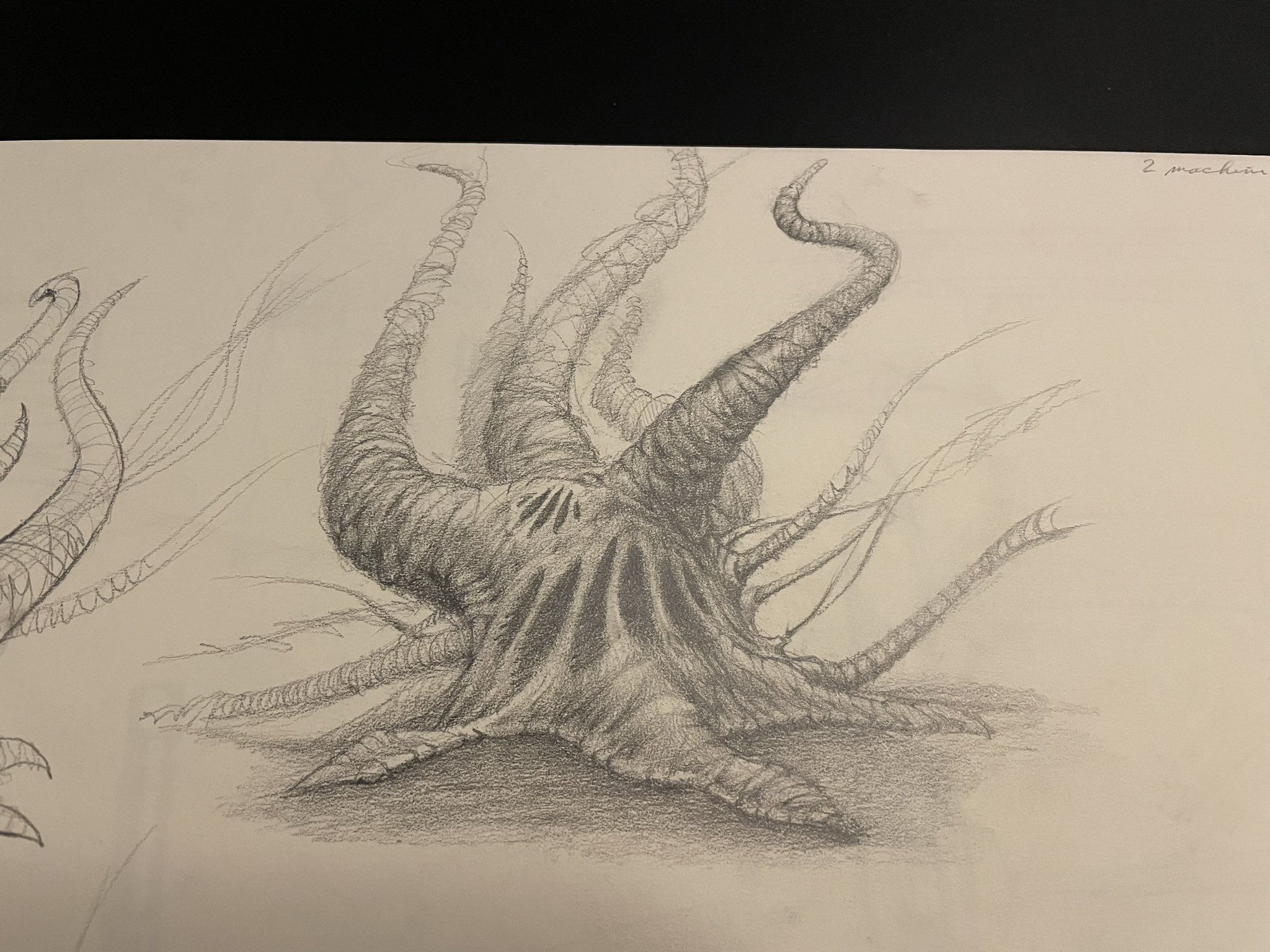 A few sketches of the final boss. Front and center is the final sketch, but set on the left side is part of an earlier sketch of her.
Expansions#
- The Phantom Swordsman and Statue enemies from Dissolution of Eternity are referred to as "Enchanted Sword" and "Living Statues" respectively on Rogue Entertainment's old website.
References#
- build 400 - quaketalk, Oct. 27th, 1995↩︎
- Post by John Romero - 3D Realms, January 14th 2000↩︎