This article has a talk page!
This page details pre-release information and/or media for Peggle Deluxe (Windows, Mac OS X).

|
This page sucks. |

|
This needs some investigation. |
The Game Idea#
The idea was at first shoot only one ball at a time and, instead of simply hoping to miss or bounce smartly off the pegs, you had to hit all the pegs to light them up, and you had to get the balls into valued holes, and your final target was a flying saucer.
The level was much less like Pachinko and more like trying to hit pegs and earn some wacky rewards. But everyone loved it.
The new goal of lighting pegs brought new dimensions of aiming and timing to the gameplay.
Early Prototype#
Brian took the level and ran with it. He designed a variety of levels to test the new game functionality.
While making those levels, the team realized they still needed to make the game more player-friendly. So they took a tip from breakout style games: they made the pegs disappear after being hit, so the other pegs could be hit more easily.
Brian also had a revelation late in developing the game. He wondered if some of the pegs could be special.

The first version of the game was very much like Pachinko, with lots of balls falling at once and scoring that was based on the number of balls that landed in the jackpot bucket. After they tested it out, Brian and Sukhbir liked the concept, but the game was too difficult and too chaotic, he thought it was too random and luck-based.
They knew there was a game in there, but at the time they just had a whole bunch of different ideas that mostly didn't work.
And so began a four-month process of creating handfuls of prototypes using various game designs. They added some basic graphics and sounds, ignored special effects for the time being, and tested and shared the results with coworkers in hopes of finding the perfect blend to fit the fun model of game play they envisioned.
They wanted to pack every level with obstacles and many goals to achieve, which made the project very challenging. Each level was like designing an entirely new pinball table, things like spaceships and windmills began to emerge, crowding the screen with obstacles that kept the player hoping that at least some of the bouncing balls would find their way to the jackpot bucket. But sometimes the levels got too cluttered and messy again. At other times, the game seemed way too hard to succeed at.
Then, Sukhbir thought up a sample level that changed everything.
Game Features#
The Powerups#
One of the first features to show up was power-ups, special shots triggered by hitting specially colored pegs.
The special pegs appeared on the board randomly, and sometimes all at once. People tossed in all kinds of ideas for special shots, but when they were all active at once, game play became nearly as chaotic. Choosing just some special kinds of shots and throwing away the rest risked losing some of the most enjoyable parts of the game.
Claude's Flippers#
The levels also had plenty of their own unique features competing for attention. One level in particular, which featured pinball-style flippers (now Claude’s Flippers), helped push the thinking in a different direction.
The team realized that things like the Flippers didn’t need to be attached to a level. Flippers, along with other special shots, could be the power-ups. And instead of each shot having its own colored peg, the green peg could trigger any kind of power-up, giving the player the choice of which power to use.
The power-ups still had room for evolution, but narrowing it all down to a single green peg was no small feat. In addition to cleaning up the levels, this new power-up direction gave the player a new layer of strategy to explore, and the game gained a new level of excitement.
Extreme Fever#
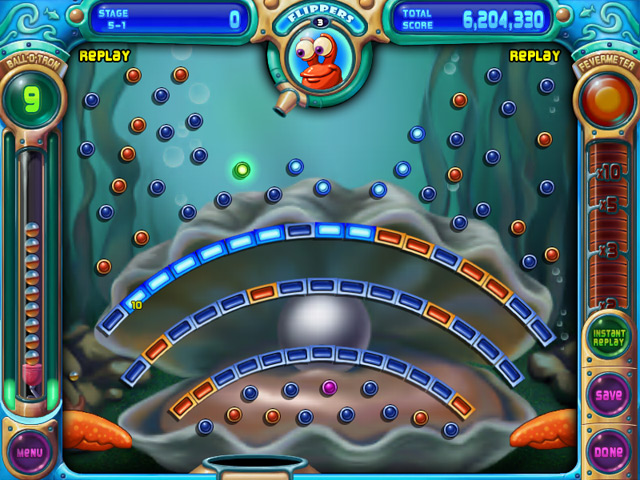
A feature that changed the course of Peggle was the Extreme Fever, the celebratory reward for finishing a level, originally, the phrase X-TREME FEVER and some fireworks splashed across the screen when you finished a level. Sukhbir liked it, but decided what it really needed was to be as outlandish as possible. First, he added a rainbow flying across the screen, then Brian piped in musical accompaniment, Beethoven's Ode to Joy, when it all came together, the experience of Extreme Fever was an exhilarating and hilarious reward for passing a level, the test players found themselves thrilled every time they saw it.
The team never fully intended to keep it in the game, but people loved it so much that it stayed in the game.
The Challenges#
Even with all the changes, the team still worried they were making the game too hard. Some levels were incredibly difficult, so the team created two game separate modes to please fans of the hard levels and fans of an easier game play. They kept the main game mode, Adventure, challenging, but not too challenging. For the player to be successful and have a great time playing, they left the second game mode, Challenge, to carry all the most difficult levels. The two modes offered a great progression of easy-to-difficult game play, with something for every skill level. Later on, two more game modes would be added, a Quick Play mode and a Duel mode. With all four modes together, the team was beginning to think everyone would love the game.
Art of Peggle#
Once we finalize the game mechanic and make the big conceptual changes, it’s finally time to focus on the game’s theme — which includes the art, music and effects. While the programmer focuses on plugging in a musical soundtrack and adding visual and audio effects, the artists get to work on giving the game its visual style.
Meet the Masters PopCap uses a team of artists for each game. Working on Peggle were Walter Wilson and Marcia Broderick, who, after several visions and revisions, eventually conceived a brilliant imaginary world that everyone would love.
Turtle Tut and Viking Cat turned into Kat Tut One big task in creating a theme for Peggle was to justify the number of power-ups Sukhbir and Brian had come up with. Meaning, if Walter and the others could think up 10 great characters, the game could feature 10 power-ups. If not, game play may need to change course.
Believe it or not, Peggle started out on a Nordic theme — complete with Vikings, Scandinavian mythology and ancient Scandinavian art (hold the lutefisk!).
While all PopCap artists have their own way of working, Walter often sketches his ideas on paper first, then takes the sketches to the computer and creates full-color versions. If the team agrees on where he’s going with the art, he hands it off to the programmer, who adds it to the game.
While people really liked the Nordic theme, it didn’t quite fit. A game as original as Peggle needed something unique, something completely invented.

After a few more attempts and lots of collaboration, a set of 10 characters emerged from the drawing boards — Peggle Masters who were a hodgepodge of creatures that were utterly fun to look at. Best of all, the characters meshed with the game so well that it was hard to believe they weren't there all the time.
But the great characters didn't simply complement a great game. They actually encouraged the team to reorganize the game's theme around a Peggle Institute where the player learns new skills from each Peggle Master. "Without Walter's great character designs" says Sukhbir, "Peggle would be a much different game."
The 10 characters also helped spawn 10 stages of game play, each featuring one Master and his/her Magic Power. This new twist in theme meant the green peg no longer featured a choice of power-ups — the player now had a single Master's Magic Power to use through each stage. Players found this new approach kept the game fresh and exciting, with so many possibilities — and the fun increased exponentially!
Level up#
With the characters conceived, the rest of the art followed — all the backgrounds and objects you see in the game, such as the Ball-o-Tron and the Fever Meter.
Walter applied a space-age theme to everything from the ball launcher to menus and buttons, giving the game a sleek, exciting look.
Meanwhile, Marcia focused on the backgrounds for each level. Since all the peg layouts had been designed by Brian and Sukhbir, Marcia focused on creating art that fit in those levels and offered a dazzling (but not overpowering) style.
Peggle was one of Marcia's first projects at PopCap. "It took me a while to get into the groove" she says, "but once I got a feel for Peggle and all its quirks, things flowed pretty smoothly". The result was a vivid collection of backgrounds that matched the whimsical personalities of the 10 Masters and their eccentric environments.
Everyone was impressed with them, and Marcia was thrilled: "They really captured the spirit of the game."

Bells and whistles#
After the art is in place, the extra-special touches — such as music, effects and the in-game story — are next on the to-do list for finishing up the game's theme.
Brian and fellow programmer Eric Tams shared the duties of gathering the soundtrack and sound effects and then plugging them into the game code. The real trick to this kind of work is to closely synchronize the audio with the action, so that, for example, a Free Ball gently clicks into place the instant it lands in the Ball-o-Tron, and a fiery flame roars at the exact moment Lord Cinderbottom's Fireball scorches the pegs.
Eric and Brian also designed and coded the dazzling visual effects. Sometimes they took the artists' work and animated it, like each Peggle Master's movements. At other times they designed new pieces (such as explosions and fireworks) that matched the artists' style for a given level.
Stephen Notley, PopCap's technical writer, also went to work on the characters' "voices" to help draw players a bit deeper into the world of the game.
While they don't have audible voices, each character's greeting at the beginning of his/her stage needed to be unique — from Splork's alien vocabulary to Jimmy's outdated skater slang. To get to know the characters, Stephen invented back-stories for each one, coming up with tall tales of how each Master rose to Peggle greatness. From there, he honed the stories until they were the simple, punchy greetings in the game today.
Secret to success#
So what's the trick to creating the theme for a game as odd as Peggle? "You try to go off the deep end a little bit" Walter explains. Going as far out as possible makes it a lot easier to see what works and what doesn't. "And then" he continues, "if you need to, you can reel it back in. Fortunately, we didn't really have to reel in a lot."
Finishing Touches#
As a game nears its release to the public, the focus shifts from creating the game to testing and adjusting all the little things until the game looks polished, feels seamless to play, and is as fun as possible!
Eric Tams took the lead on refining the game, to make sure everything from the special effects to clicking an item in the main menu felt smooth and functioned properly.
Among his tasks was adjusting game balance — making sure players could be successful even when using an array of shots and different strategies. This included re-programming certain parts of the game until players thought it felt right.
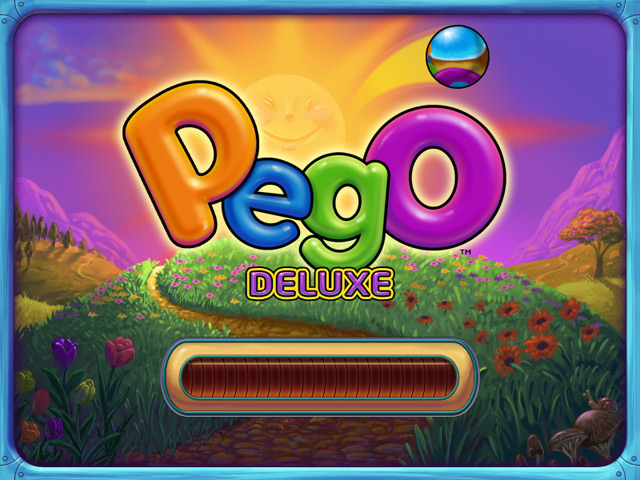
Eric also ironed out visual wrinkles — for example, when someone launches the game, a sun rises over the Peggle logo. The original animation was choppy because it was linked to the code that ran while the game was loading. He separated the animation from the startup process itself, which smoothed the animation into something cool to watch while the game loads in the background. It’s not the most glamorous work in creating a game, but it makes the game look glamorous!
Bug off#
The final step in producing a PopCap game is finding and fixing bugs — technical glitches or logical errors that interfere with game play. At PopCap, a quality gameplay experience is tantamount, and a bug-free game is simply more fun to play.
PopCap's Quality Assurance team (QA) is responsible for testing games to make sure bugs are squashed and that the games are ready to be released to the public. In short, they find the bugs and also suggest possible solutions. And no matter what the bug — from misspelled text to a clunky action sequence — the PopCap team is happy to fix it, so that everything is as perfect as possible!
For Peggle, the entire QA staff searched for bugs, Eric fixed them, QA retested a new version and unearthed other bugs, and Eric did more fixes. They did this over and over again until the bug sightings finally tapered off.
Most of the bugs were about things that didn't line up or function properly — the things that, if ignored, can keep a good game from being great. For instance, here are a few bug reports that came in:
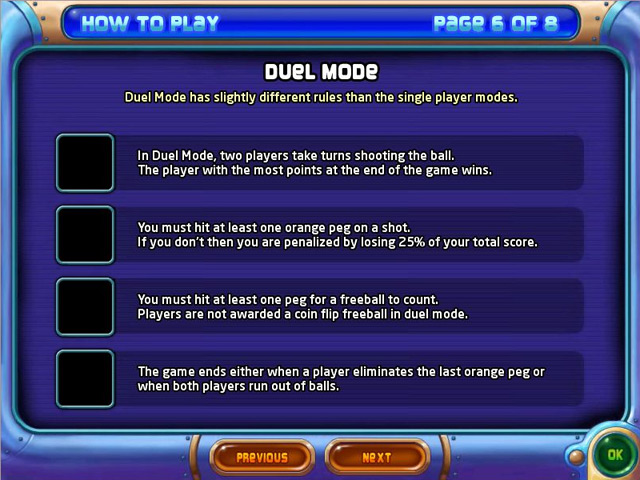
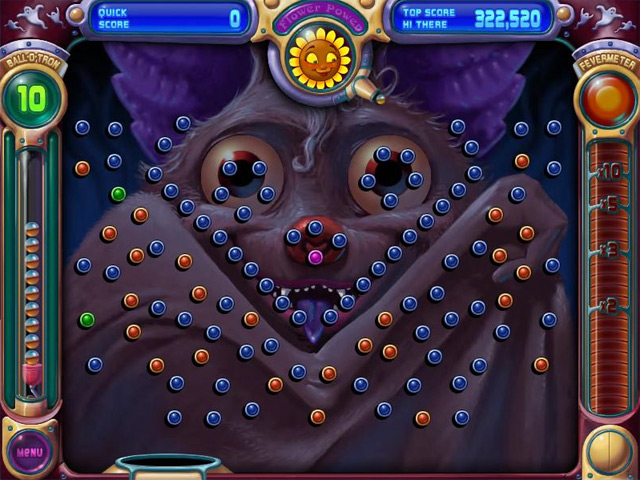
1: The pegs around one of the bat's eyes on the level "Baseball" don't line up properly. view 2: The game goes numb when you press the F10 button. 3: Images are missing on page six of the How to Play screen.
QA found pretty much every bug possible — which didn't really surprise anyone. "We have probably the best QA department I've ever seen," Eric brags. "They really are game experts. They find all those little things that no one else thinks of." Who else would think to press F10 and try fast-forwarding with the right-mouse button at the same time to see if the game keels over? (It did.)
And when things are getting down to the wire and you have a virtually bug-free game, you know you've got a good thing going.
Copyright Problems#
The game was nearly complete, and they had to set a particular date for public release, which they needed to hit. But there was a problem.
Pego#
The game was dubbed "Pego" for months of production, but the team was suddenly tasked with changing the name because of copyright issues, most likely because of Pogo, which was an EA property.
Sukhbir opened a company-wide forum to find a new name. Hundreds of names were planned, and finally, after a lot of soul and legal searching , the team chosed "Peggle."
But despite the name change, some graphics mentioning "Pego" weren't changed, like the ball at the title screen reflecting the Pego logo.