 This article has a talk page!
This page details pre-release information and/or media for Dungeon Keeper.

|
'...But what does it mean?' |
Dungeon Keeper 's development began in late 1994. Its release was delayed several times, and just months before release the game underwent a fundamental revamp.
Development Timeline#
- 1994
- Peter Molyneux talks to programmer Sean Cooper about his idea for Dungeon Keeper. Cooper creates a basic 2D isometric engine for the game, a la Syndicate. Around the same time engine programmer Glenn Corpes proposes using the Hi-Octane engine as a basis for a 3D engine for the game and begins work on this. Molyneux favours this approach and reportedly tells Cooper that "this is going to be the greatest moment of Bullfrog, I think I need to handle this," taking over development from him, and scrapping his early 2D build of the game1.
- Programmer Simon Carter starts in November, and begins developing the 3D lighting routines in December.2
- 1995
- A "rough engine" is developed.
- Development of the level editor started in May.
- By July, each character in the game took 1024 bytes of memory.3
- By September, the game featured the Possess Creature first-person view, and development of the creature shadows begins.
- The team try and fail to get a version out by Christmas.
- 1996
- Disillusioned with the direction Bullfrog had taken after being bought out by Electronic Arts, and uninterested in his new role as Vice President of EA, Peter Molyneux writes a resignation email as a drunken lark with Tim Rance (soon to be a co-founder of Lionhead). While intended as a joke, Rance actually pressed the send button on the email. EA quickly responded by barring Molyneux from the Bullfrog office and moving to cancel Dungeon Keeper. Desperate to keep the game alive, Molyneux spots a loophole of continuing work on the game from his own house for the remainder of his time at Bullfrog4.
- In February, the team relocates to project leader Peter Molyneux's house and develops a testbed version.
- In July, the testbed is integrated into the game at Bullfrog's office.
- By August, the anticipated release date is March 1997.5
- In September, Dungeon Keeper is shown at the European Computer Trade Show, where it received "great acclaim".
- Sometime in 1996, the game received a major revamp: an entirely new game was written, although the graphics remained virtually unchanged.6
- 1997
- Final testing began in April, and the project was signed off in June.
1995#
[[File:DKGen482Page52.png|thumbnail|A fireball lighting up a corridor. Also visible is a vastly different map to the final version.

(Source: Génération 4 November 1995 page 52)
]] Around this time, a "primitive version" was developed. The only functionality was scrolling around maps and switching to third-person view.7 By July, characters used 1024 bytes of memory and had different personalities and abilities such as smelling and hearing. The game now incorporates lighting routines used in Magic Carpet 's water reflexions: for example, fireballs could light up corridors.
1995 Progress Report#
Watch on YouTubeA progress report from Bullfrog in July 1995 shows various Bullfrog employees explaining how far they have progressed, with Dungeon Keeper featured at 2:52. At this point, the game is at 25% completion, with an estimate release date of January 1996. The second issue of Bullfrog Bulletin claimed a February 1996 release date.8
1995 Trailers#
In a July 1995 trailer, the game looks very different, the only obvious closest resemblance being the creatures.9
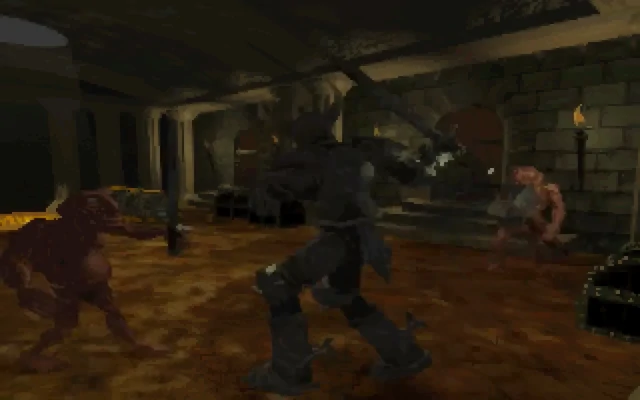
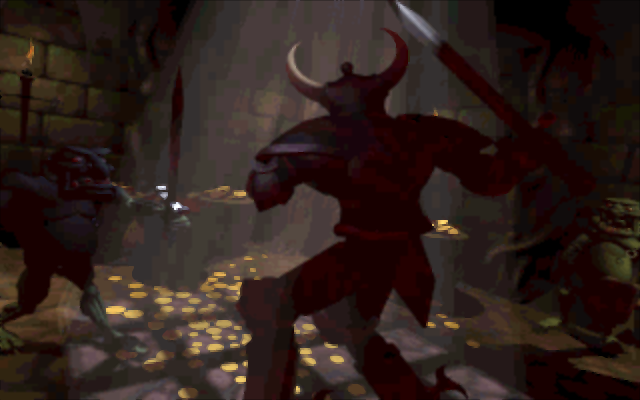
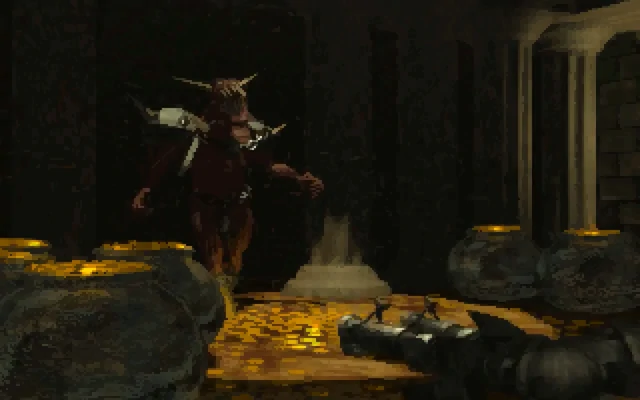
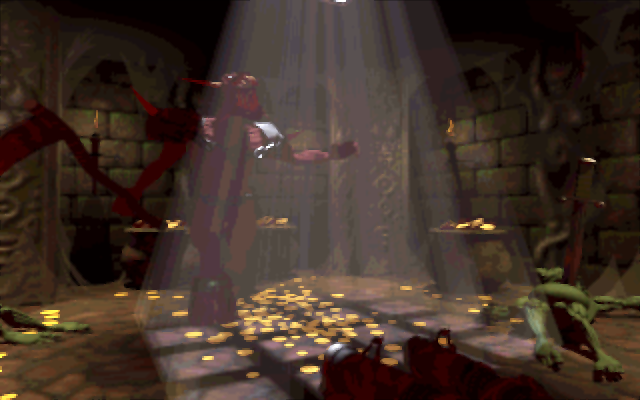
This trailer from late 1995 shows the game with a fairly different user interface. There are also some different graphics throughout. Also seen amongst the spell icons is a bomb icon not in the final game, possibly for the cut Time Bomb spell, and an icon used for the Lava Trap in the final game. This could be for the Magma Blast spell not in (or at least renamed) the final game. This icon, the text icons for the spells, and some of the other icons can be found in the final game's assets.
There are also shots of the intro, but two of them were re-rendered for the final game (at 1:30 and 1:52):
|
Trailer |
Final |
|---|---|
|
|
|
Trailer |
Final |
|---|---|
|
|
1995 Promotional Release#
An April 1995 promotional release showed the game with an axe-wielding creature not seen in the final version.10
December 1995 PC Zone Preview#
A preview of Dungeon Keeper in the December 1995 issue of PC Zone claimed a feature that would make the computer control the player's dungeon when logged out of an internet multiplayer game.11 Also seen in the preview is a screenshot displaying a menu that is not seen in the final game. [[File:DKPCZone33Page30.png|thumbnail|

(Source: PC Zone December 1995 page 30)
]]
1996#
Watch on YouTubeAn early 1996 trailer showed the game with a very different interface to the final game, used to summon creatures using resources and then controlling them as a group (assets for this user interface can be found in the final game). Barbarians and Thieves are also seen with shields and swords which they do not have in the final game. Also seen is the first part of the intro, where there is a minor difference to the final: the Dwarf doesn't put his sword away. Creatures were also split into two types: corporeal and magical.12). Gold was used to summon corporeal creatures, and mana was used to summon magical creatures.
The third issue of Bullfrog Bulletin claimed a summer 1996 release date.13 By autumn, the game was "just weeks" from completion. In an interview, Carter discussed the game letting players setting up "monster portals" to lure minions into the dungeon, where they would have been took to the prison. Also discussed was the idea of magic being represented as souls, which would have been dropped when a unit is killed along with their money. Imps would also have turned corpses into food and "tag" souls.14 By April, the "exploding lizards" weapon has been implemented. The original intention was to have grenades, but this was deemed to not fit in with the RPG theme,15 although the final game would call the spell "Grenade".16
The February 1996 issue of PC Entertainment revealed the following names for certain creatures:17
Final |
Early |
|---|---|
Dark Mistress |
Vengeful Siren |
Beetle |
Cockroach |
Barbarian |
Warrior Monk |
Tentacle |
Scum Tentacle |
Warlock |
Sorcerer |
It also said there was a Freeze Trap, and that the Gas Cloud Trap killed on contact.
PC Gamer March 1996 blurbs#
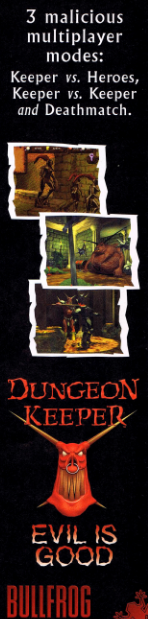
PC Gamer issue 28 (March 1996) has Dungeon Keeper blurbs, one of which claims three multiplayer modes: Keeper vs Keeper, Keeper vs Heroes (this was cut due to time constraints), and another one called Deathmatch. The final game only has one multiplayer mode: Keeper(s)vs Keeper(s).
June 1996 Joystick Preview Video#
Watch on YouTubeThe June 1996 issue of Joystick magazine included a very interesting video of the game in mid development, starting with musician Russel Shaw commenting on an early version of the intro, his ideas behind how the music sounded at this point in time, and finally a lengthy series of interviews with Peter Molyneux about his inspirations for the game. The actual game footage shown was already out of date at this time compared to contemporary magazine screenshots, so was likely recorded around the start of the year.
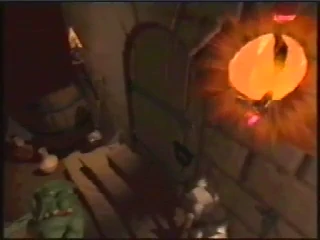
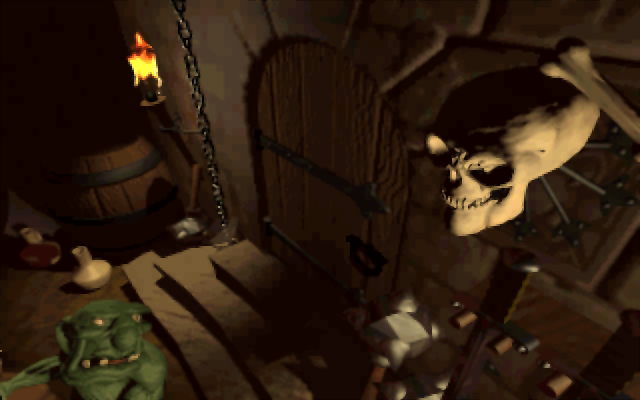
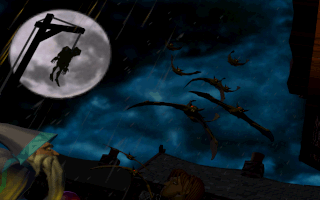
The intro video is an early version that ends with the wizard observing the swooping bats seen throughout early screenshots, rather than the knight as in the final version. It also shows another significant difference in the intro sequence: the skull alarm was originally an orb that glows:
|
Prerelease |
Final |
|---|---|
|
|
Shaw then talks about how the music at this point in development was deliberately not intended as actual music but more background ambience, with the intention of it changing dynamically (somewhat like Magic Carpet or The Chaos Engine) to "heighten the danger" for the player. This is surprising, as this entire concept was scrapped in the final game for straightforward non-dynamic CD audio tracks of actual music in the end.
The interviews with Peter Molyneux are also very interesting, as he explains how he is a long term friend of Origin's Richard Garriott of Ultima fame, and how this friendship meant he could ask Garriott for permission to include the Ultima Avatar character in Dungeon Keeper. He relates how he told Garriott he would depict the Avatar as being "roasted over a barbecue," and how Garriott thought he was only joking when he said this.
Molyneux also reveals that the concept of creating a game about being the bad guy came from a string of Hollywood films of the early '90s featuring amoral or bad characters in the lead. Reservoir Dogs, Pulp Fiction, and particularly Interview with the Vampire are listed as inspirations.
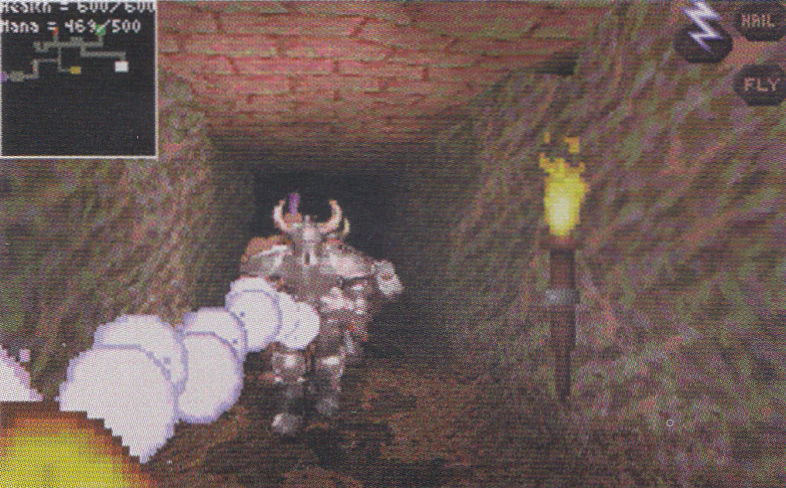
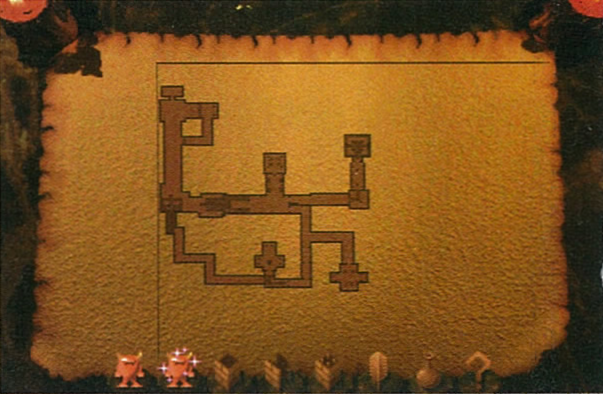
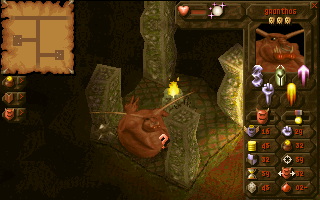
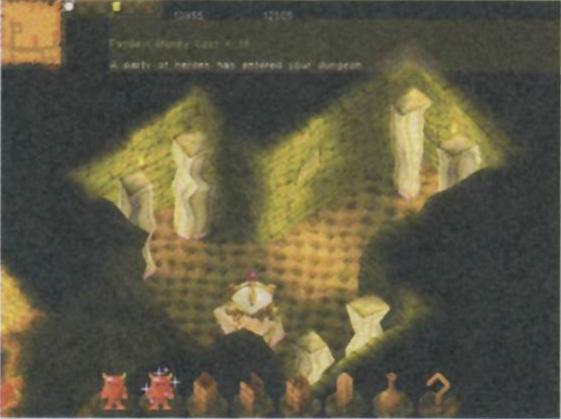
Watch on YouTubeAnother trailer from sometime in 1996 (likely late in the year) shows the game having some resemblances to the final version, but the interface is still very different, and shield icons appear above creatures' heads that are not in the final game. Also seen is the final part of the intro, where there is instead a Wizard and a person instead of a Knight and the Avatar:
|
Trailer |
Final |
|---|---|
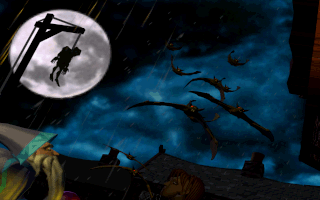
|
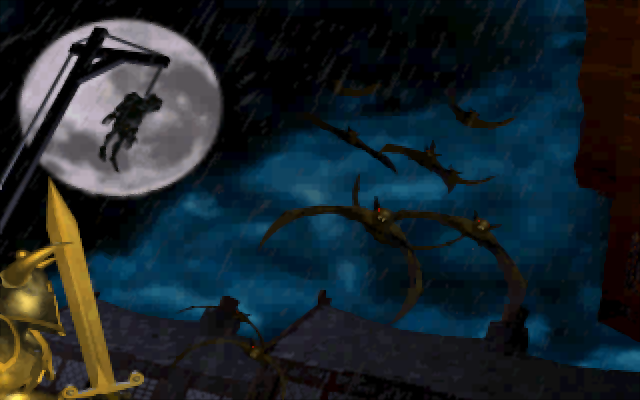
|
The trailer also claimed there would be three multiplayer modes and the game would support up to eight players.
Watch on YouTubeYet another 1996 trailer showcased things not seen in the final game, such as early room and spell menus (including early icons such as a trumpet representing Call to Arms), an arrow as the compass, and yellow dig and build boxes.
Dungeon Keeper Screens CD images#
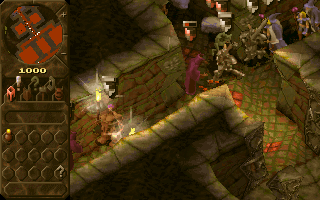
An Electronic Arts CD titled "Dungeon Keeper Screens" was dumped on archive.org, and contains, amongst other, less interesting stuff, many screenshots of the game, each dated 19 November 1996, and each showing an early incarnation of the GUI:
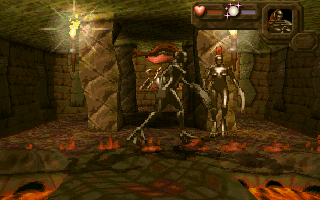
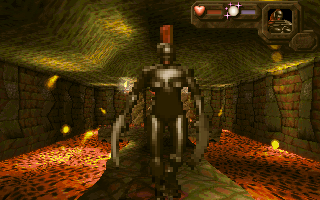
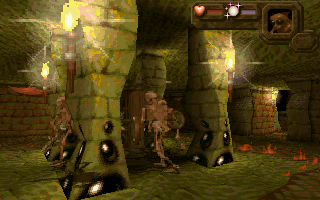
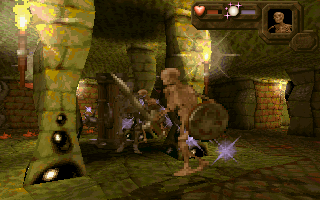
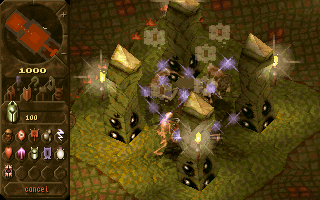
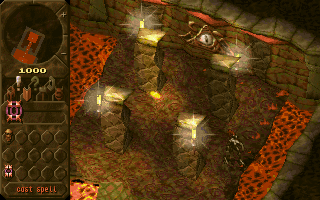


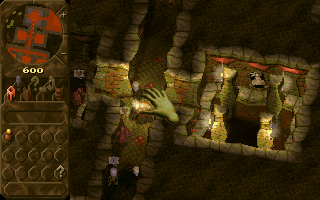
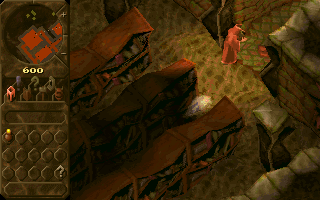
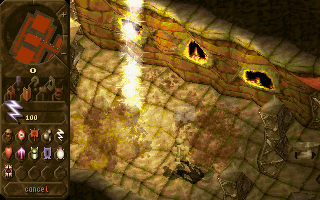
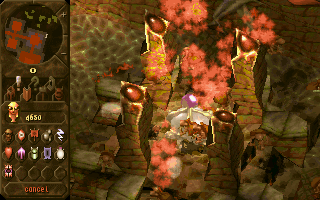
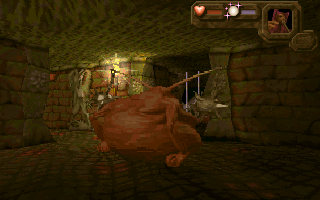

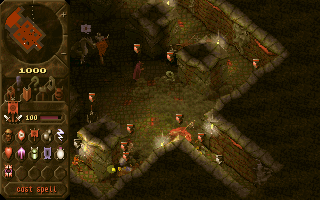
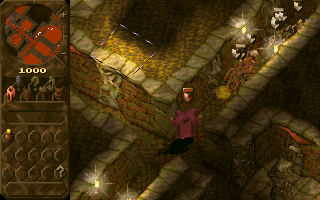

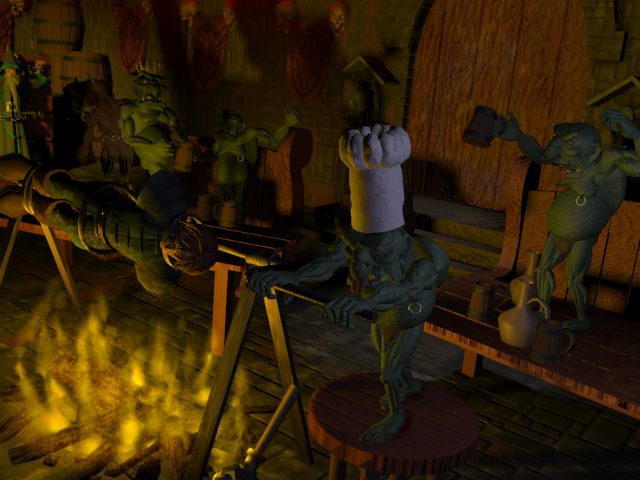
Also of interest is a screenshot, dated 4 December 1996, of the outro showing a Wizard, instead of the Avatar, shackled. This shows that the change from a Wizard to the Avatar (presumably including the corresponding difference in the intro, as seen above) came late in development.
|
Prerelease |
Final |
|---|---|
|

|
1997#
By early 1997, Dungeon Keeper was "near-complete", and a release date of summer 1997 was estimated.18 By this time, Dungeon Keeper had underwent a fundamental reworking: the 3D graphics engine was replaced with a 2D one, and the user interface was redone from scratch. Previously, the game's tasks included the player digging tiles himself and using mana and money to summon creatures and unleashing them on enemies. With the redesign, this was changed to Imps digging (with the player tagging tiles) and then claiming them. The entrances were also introduced. The game had 25 creature spells, 16 keeper spells, and 12 traps (including a Fireball trap that doesn't appear in the final game).19
Another change made very late in development was the Imps' priority of collecting gold to corpses.20 This broke the game, so it ended up as a 50/50 balance.
Dungeon Keeper was released in June, nearly two years after the original release date.
Other#
In an interview, developer Dene Carter revealed two cut features: an "ability to fill in holes", which he says broke the game, and a heroes vs Keepers multiplayer mode, which never happened due to time constraints.
(Source: Interview)
Press Kit Images#
In 1995 Bullfrog released a pack of lose screenshots and a simplistic manual viewer previewing their in-development games called Forthcoming Products From Bullfrog Productions. This was released on the cover disc of the June 1995 issue of the German PC Player magazine and it seems PC Format in the UK. Found on the internet it consists of the DOS executable and a later archive of official Bullfrog screenshots of games in development in 1995/96, including Theme Hospital, Syndicate Wars, Creation, and others. The early screenshots within were printed in all the videogame magazines at the time and show the game in many different stages of development. The archive consists of a directory full of these images in various formats, and a second "catalog" DOS executable that contains more images and basic explanatory text.
Press Release#
There is an image file containing a press release on the game.

DUNGEON KEEPER WORLD THE MOST LIFE-LIKE YET

All Bullfrog games are widely acclaimed for their realistic environments that enable players to immerse themselves in their game playing experiences. Now Dungeon Keeper takes this realism a stage further with the most intelligent population ever to inhabit a computer game world.

In Dungeon Keeper you are cast as an evil dungeon architect who must fight off heroes whose goals are to overthrow your evil empire and steal your ill-gotten treasure. You have at your disposal an army of imps to take care of dungeon maintenance and expansion, while a host of evil creatures will defend your labyrinth for you in retum for money and power.

It is these creatures who display the most sophisticated artificial intelligence yet implemented in a computer game. The imps act on your commands to dig for gold and tunnel out your dungeon but if they have no orders from you they will clean it up, build impenetrable walls to defend it and decorate it with nightmarish adornments.

The evil creatures exhibit an astounding range of personality traits. Skeletons like to be near corpses, while spiders like dusty corners and vampires seek out gloomy alcoves. Once they have found a place they like, they make it their own. These evil beings display a wide range of motivations; if they are hungry, they hunt for food - killing other dungeon inhabitants if necessary. If another creature encroaches on their lair, they will attack it. If they think that your powers and bank balance are waning, they will leave your dungeon altogether. The dungeon keeper can exert his influence over the evil creatures with the use of magic spells and so can call creatures to do battle and move from place to place.

Other features indude the ability to tunnel your dungeon out of rock, in the course of which you may discover a seam of gold which can be mined, forgotten chambers in evil creatures have been trapped for millennia or maybe you'll uncover evidence of a rival keeper's presence deep beneath the earth.

But don't allow yourself to be so distracted by all of this that you forget about those pesky heroes and their determination to stamp out your evil empire (and get rich at your expense). They are forever trying to tunnel into your
dungeon.

Dungeon Keeper will be published for PC CD by Bullfrog Productions on 7th June 1996, priced at 44.99. Versions for the PlayStation and Sega Satum are planned for release in November 1996. Worldwide distribution is by Electronic Arts.

For further information please contact Cathy Campos on 01483 579399.
The press release interestingly mentions a Saturn and PlayStation port, as was planned for Syndicate Wars. Neither was ever released.
1995 Pre-Alpha Images#
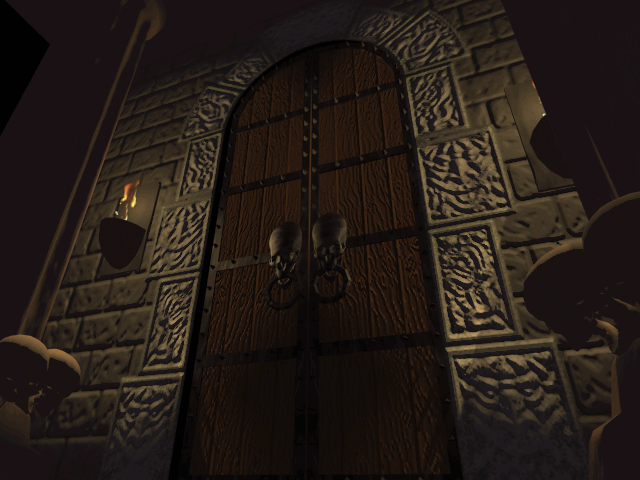
Unlike the other games featured in the View DOS program that comes with the pictures, a zip file called simply dk.zip includes all of the executable's source pictures without any watermark. An included id.diz file reports the archive contains "Dungeon Keeper - First Screenshots"
These do indeed seem to be the very first pictures of the game. They are timestamped from May 1996, but must be from earlier as they match with the video footage of the game from 1995. At this stage the game was basically only a tech demo.
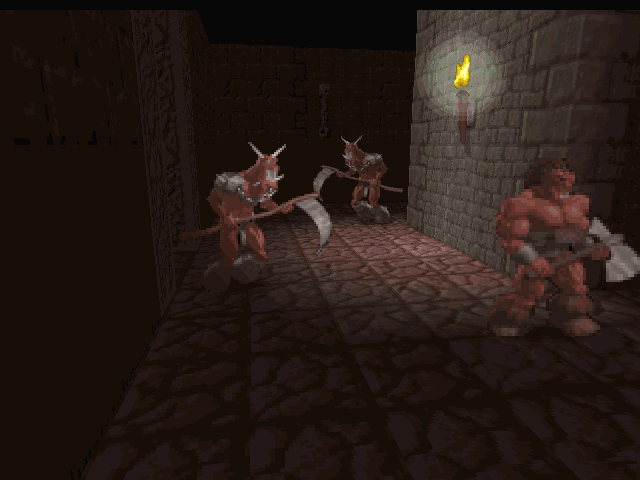
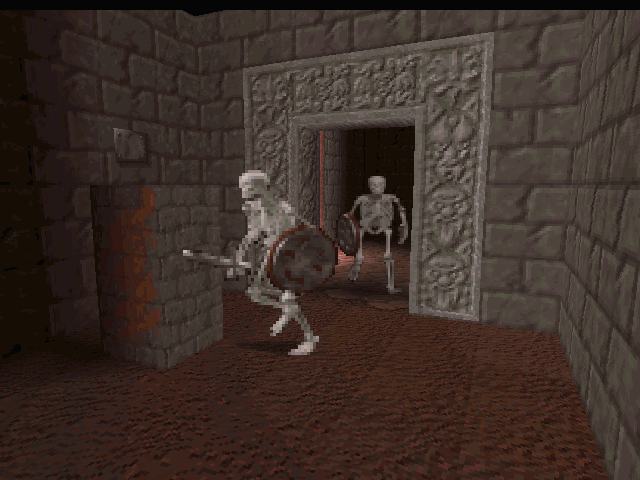
Early 1996 Build Pictures#
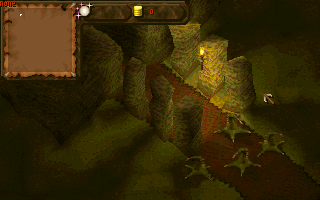
These all date from April 1996, but show a much later build than the first images above. At this stage of development the game had a deliberately minimalistic HUD, with elements hidden until strictly required.
Early CGI Images#
There are a number of still from the CGI intro. However, they seem to be exactly the same as the final game, apart from the below, which shows the alternate version with the wizard from the early version seen in the 1996 trailer.
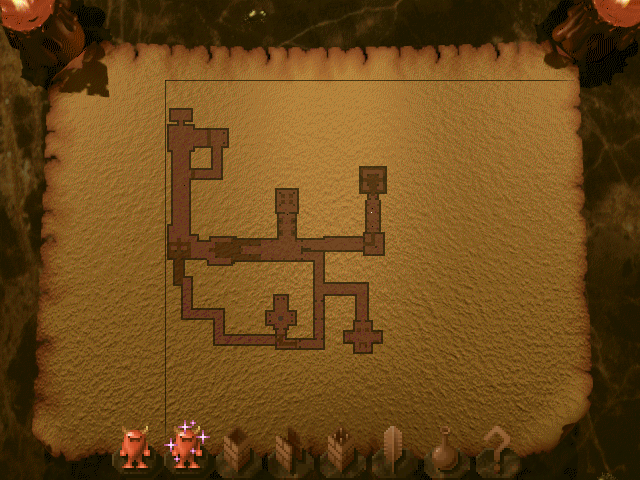
Early Build High Res Images#
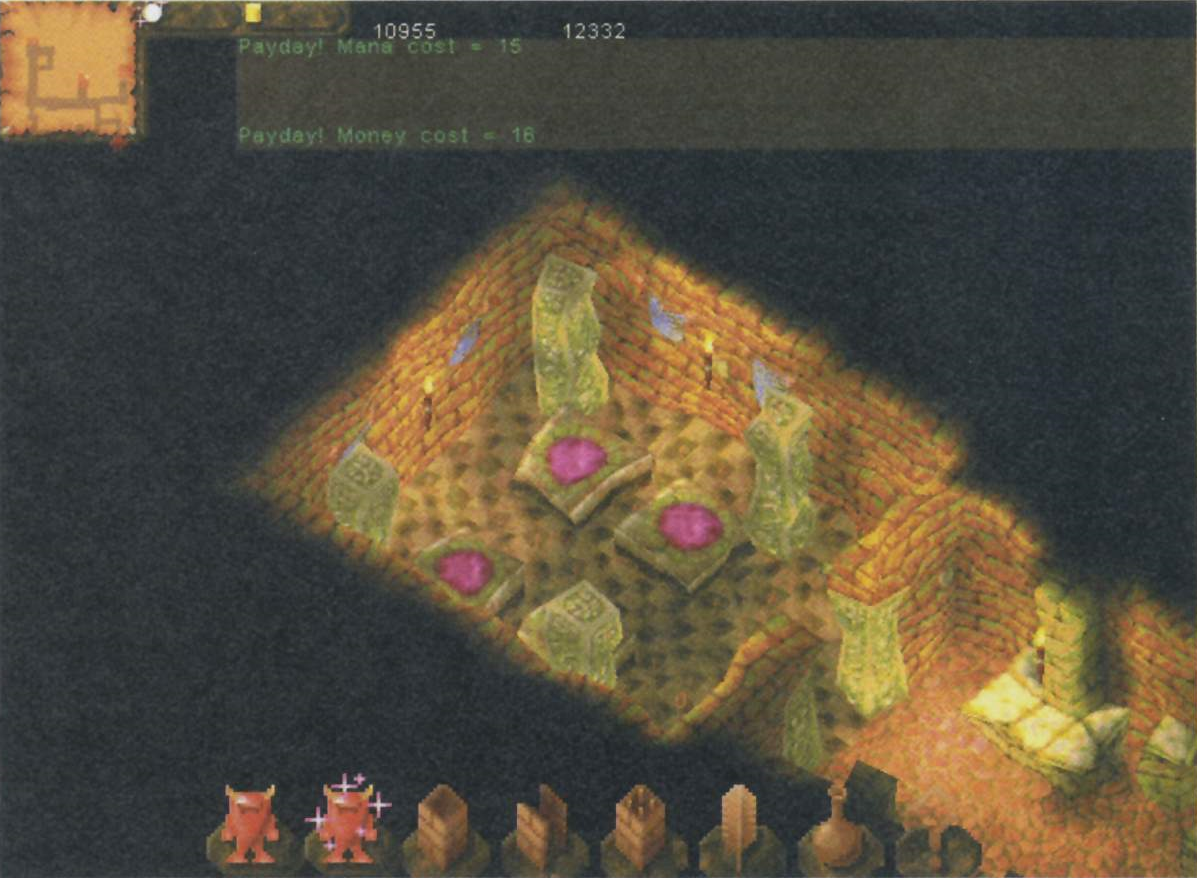
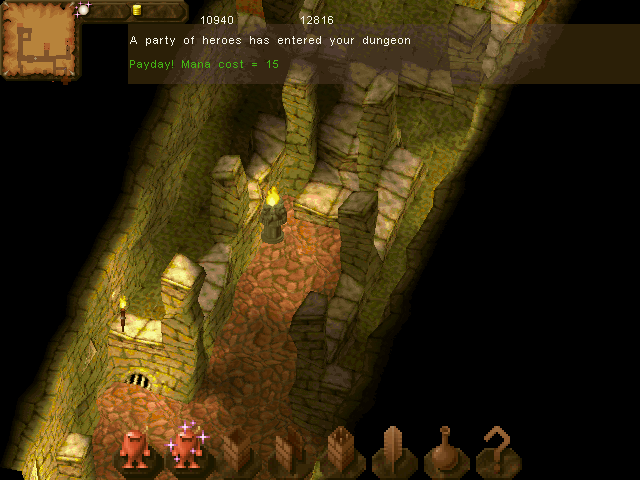
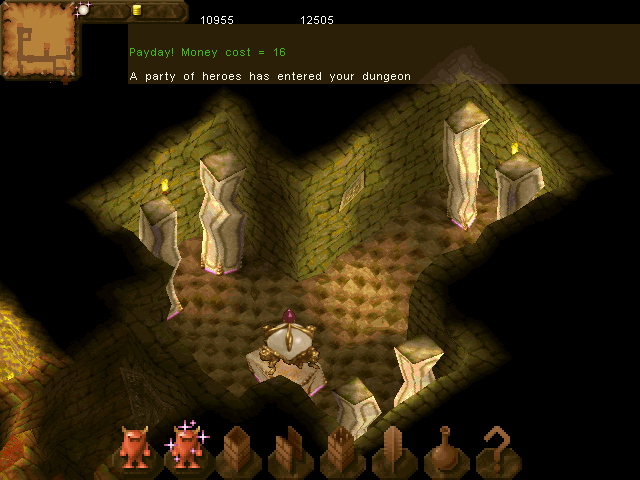
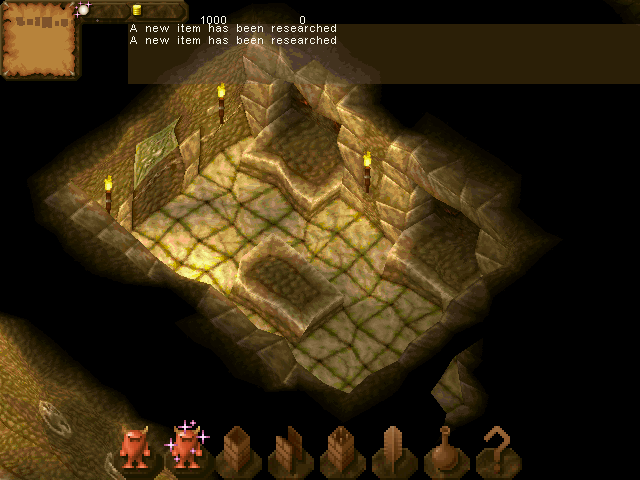
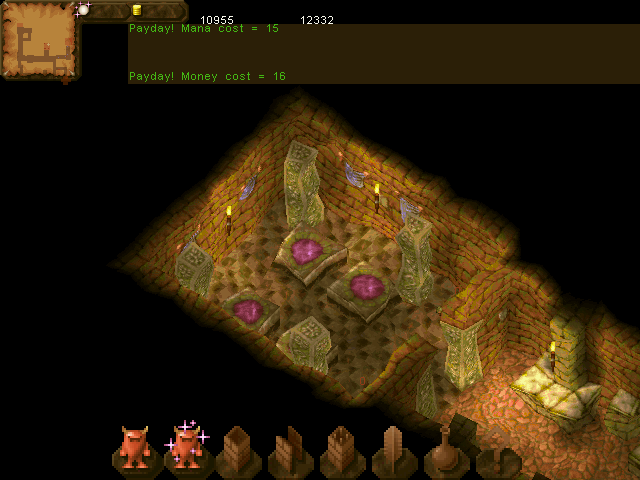
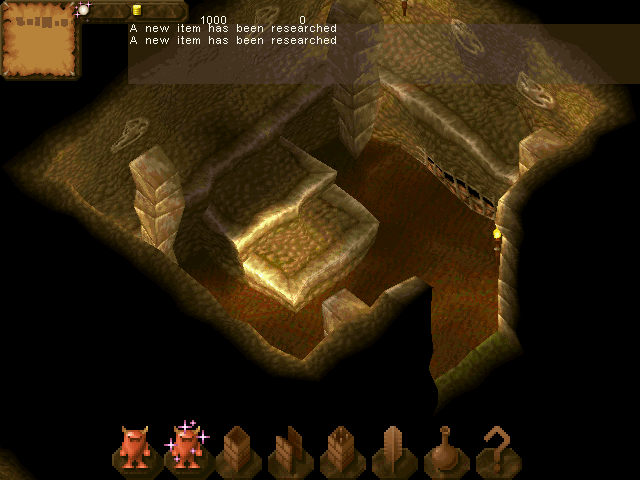
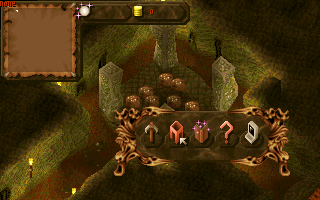
One thing that is noticeable in these images is that the actual numbers for the gold and mana counters are completely offset in the middle of the screen, away from their UI placements. These screenshots also all show an earlier interface design, with a different map and buttons along the bottom of the screen. As in early versions of Bullfrog's Genewars there seems to be a temporary debug log reporting events, such as creature payday. They also show lots of cut rooms/designs.
Early Build Low Res Images#
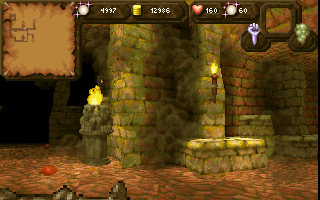
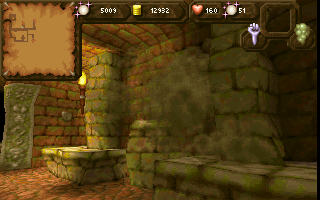
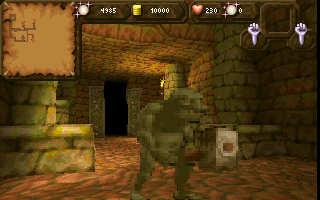
These all seem to be from the first person possessed creature view, hence why the bottom buttons are hidden. The possessed creatures' attacks appear at the top right of the screen, where they seem to be limited to only two in this version of the game. It's likely each mouse button would have its own attack à la Magic Carpet. Unlike the pre-release video from this period, there don't seem to be any creature portraits in the box here yet.




Intermediate Build Low Res Images#
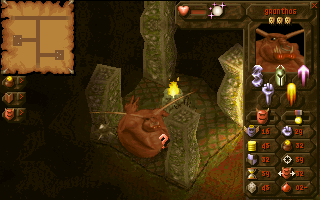
These seem to be from a slightly later version(s) of the above. The UI is broadly the same, but there are changes to the appearance of the map, and there are now buttons down the left of the screen as would be the case in the later 1996 build.
Later 1996 Build Pictures#
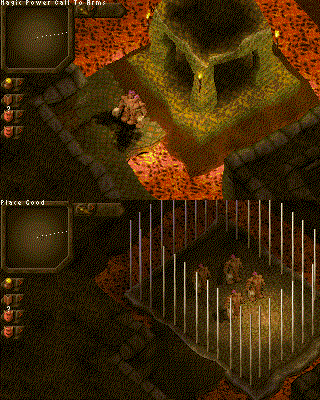
These all date from October 1996, and seem to show the game in yet another of its iterations, more rough around the edges than the previous scrapped build. The map is redrawn (and seems very unfinished) but more interestingly it seems the buttons along the bottom of the screen in the early '96 build are now arranged down the left hand side of the screen here. They then seem to expand into bigger panes on the right side of the screen where appropriate (e.g. for creature stats).
Later Build Animations#
There are two animgifs of this build included. These seem to have been used for the Bullfrog website.
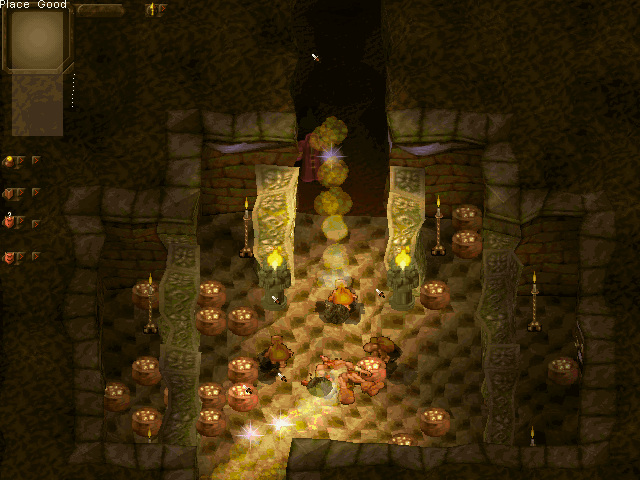
Later Build High Res Images#
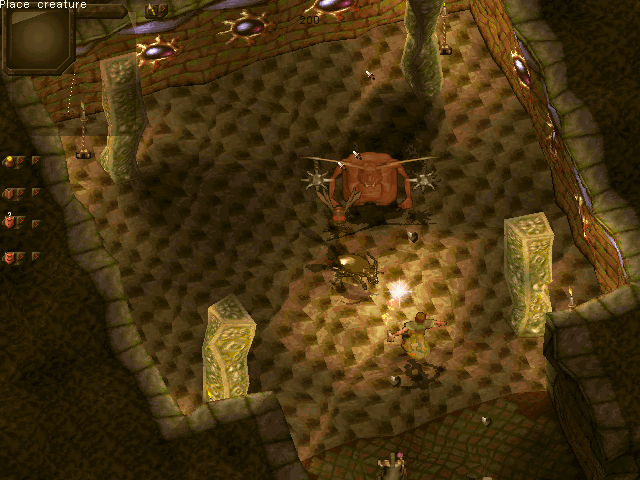
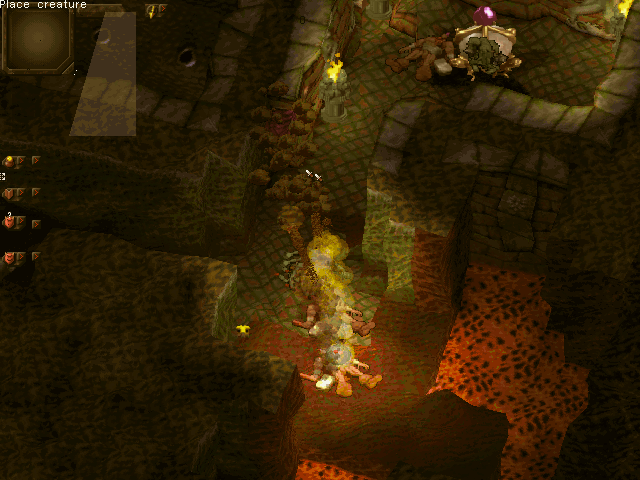
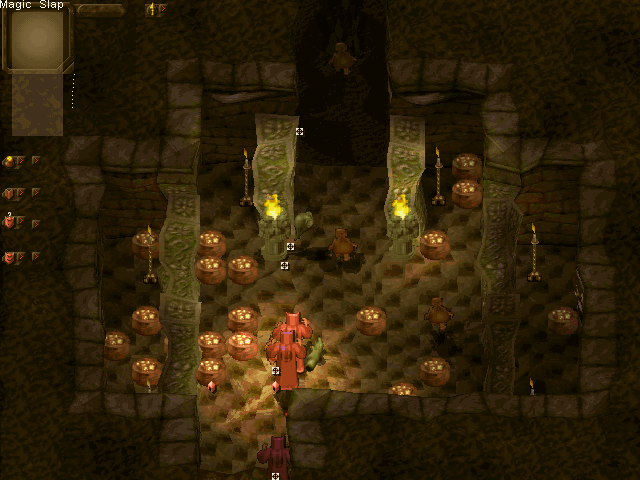
The map here is using the low resolution art assets and can be seen to be drawn outside of the actual box as a result. This can be seen in a video from this period and is reminiscent of some of the resolution related issues visible in the early pictures of Syndicate Wars that had similar problems on display. There are also lots of debug icons and text overlaid on the images.
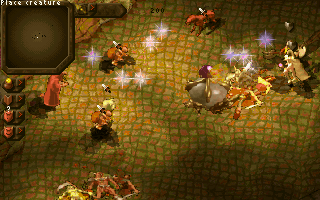
Later Build Low Res Images#
A single low res image is included from this build.
References#
- Arcade Attack Podcast Sean Cooper (Syndicate Creator/Bullfrog) - Interview. October 2019↩︎
- Melissa Tyler; Shin Kanaoya (1997). Keeper Chronology. Bullfrog's Official Guide to Dungeon Keeper. p. 264. Prima Publishing. ISBN 978-0-7615-0714-7.↩︎
- Bullfrog. Edge. No. 22. Bath: Future plc. July 1995. pp. 25–27. ISSN 1350-1593.↩︎
- Peter Molyneux Departed Bullfrog Over a Drunken Email — IGN Unfiltered Alex Osborn May 2017↩︎
- Simon Carter (August 1996). Dungeon Keeper Full Preview. Retrieved 28 February 2018.↩︎
- Ron Dulin. GameSpot Presents Legends Of Game Design: Peter Molyneux. GameSpot. GameSpot. p. 11. Retrieved 28 February 2018.↩︎
- The Making Of: Dungeon Keeper. Retro Gamer. No. 143. Bournemouth: Imagine Publishing. pp. 64–69. ISSN 1742-3155.↩︎
- Bullfrog Bulletin. No. 2. Guildford: Bullfrog Productions. 1996. p. back cover.↩︎
- Watch on YouTube↩︎
- Watch on YouTube↩︎
- "Dungeon Keeper". Blueprint. PC Zone. No. 33. London: Dennis Publishing. December 1995. pp. 28–30. ISSN 0967-8220.↩︎
- Dungeon Keeper Goodies Disc.↩︎
- Bullfrog Bulletin. No. 3. Guildford: Bullfrog Productions. 1996. p. back cover.↩︎
- Elf Destruction. Bullfrog Bulletin. No. 2. Guildford: Bullfrog Productions. Autumn/Winter 1996. pp. 4–6.↩︎
- Bullfrog. Prescreen. Edge. No. 31. Bath: Future plc. April 1996. pp. 42–45. ISSN 1350-1593.↩︎
- Grenade, Dungeon Keeper Wiki↩︎
- Steve Klett (February 1996). Guided Tour: Dungeon Keeper. PC Entertainment. No. 2. Vol. 3 IDG Communications. February 1996. pp. 41–43. ISSN 1074-1356.↩︎
- Bullfrog Bulletin. No. 4. Guildford: Bullfrog Productions. Spring 1997. p. back cover.↩︎
- Born-Again Keeper. Bullfrog Bulletin. No. 4. Guildford: Bullfrog Productions. Spring 1997. pp. 8, 9.↩︎
- Welcome to the House of Molyneux. PC Gamer UK. No. 44. Future Publishing. June 1997. pp. 74, 75. ISSN 1470-1693.↩︎