 This article has a talk page!
This page details pre-release information and/or media for Animal Crossing: New Horizons.

|
This page or section needs more images. |

|
To do:
|
While Animal Crossing: New Horizons was released in 2020, development began shortly after the release of Animal Crossing: New Leaf in 2012.1
Timeline#
2012-17
- Nov. 8 - Early plans for the next mainline Animal Crossing entry start conceptualization and development.
2018
- Unknown - Early builds for the Switch are created.
- September 13 - A new Animal Crossing game for the Switch is confirmed to be in development, with a tentative release date of late 2019.2
2019
- June 11 - Trailer and gameplay footage are released at E3 2019. At the end of the trailer, Nintendo announces that the game's release has been delayed to March 20, 2020, with Yoshiaki Koizumi citing a desire to "ensure the game is the best it can be."
- June-December - New features and content are revealed through Nintendo Directs.
2020
- January-March - New features and content continue to be revealed through Nintendo Directs.
- March 20 - Animal Crossing: New Horizons is released.
- New free content updates are to be added every month or so.
2021
- November 3-5 - Major content updates come to an end with the release of the 2.0 update and Happy Home Paradise DLC.
Early Development#
2018-2019 Builds#
During the CEDEC 2020 conference in Japan, some screenshots of the game at an early point in development were revealed. This first screenshot features the player walking on an island in an early build. 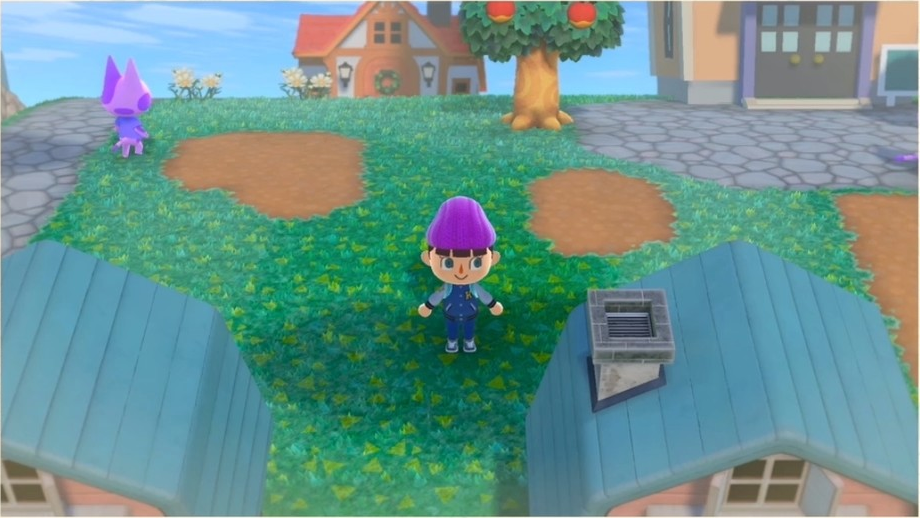
- The player character has very similar appearance to the that of the final game.
- On the left side of the screen, the villager Bob is seen wearing a purple shirt. On the right edge of the screen there is a shadow resembling a cat NPC and a purple tail similar to Bob's. It's possible that there were multiple Bobs roaming the island while NPCs were still being tested (however, this is unconfirmed).
- The ground has realistic growing tufts of grass, which were scrapped because they made seeing weeds more difficult.
- The dirt has an early texture, with the color falling somewhere between the regular dirt path and dark dirt path in the final.
- The dirt patches don't seem to be laid out in an organized way, so this may have been before grass deterioration and natural dirt patches were removed.
- There are two identical buildings partially visible in front of the player. These might be an early placeholder for villager houses.
- A very early version of the Resident Services building can be seen in the upper-right corner.
- In front of that building is a stone place reminiscent of New Leaf. This stone also forms a path along the left side of the screen.
- In the background is a player's house with a green mum wreath on the door, which looks similar to the final player houses.
- This screenshot has a white vignette effect, which may signal a shift in art style before the game's release. Vignettes would appear in the final but only at night.
This screenshot features a player standing in front of a patch of weeds. Unlike the last screenshot, this one includes an early HUD. 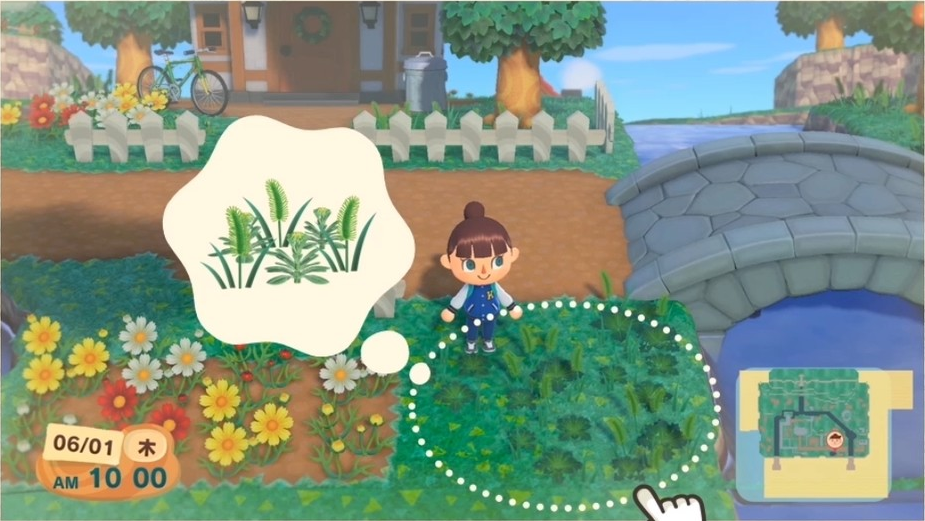
- The time and date are in the lower-left corner, with a design reminiscent of the clock in Doubutsu no Mori e+. The final game's clock has a basic white font and no background.
- A very early map details the island layout in the bottom-right corner. There is a large portion of yellow indicating the beach. It is much larger and more rectangular than the beaches in the final game, with an extra rectangular shape jutting out on the right, and a patch of sea in the lower-left corner.
- The water in the river looks similar to the water in New Leaf, and the shore of the river has a more rock-like texture than the final game. Part of another body of water can be seen on left edge of the screen.
- There is an tree with oranges growing on it in the upper-right corner of the screen.
- The Cosmos flowers near the player look almost identical to the final version.
- The patch of weeds is highlighted as part of the presentation to indicate how difficult it was to see them among the more the realistic grass.
- The white fencing in the background was not present at launch, but it was added in the 2.0 update. A version of the fence was present in the release version, but with a different texture
- Behind the fences is a different player house. The bike and trash can furniture items are placed in front of the house, suggesting that the ability to place furniture and fences outside was implemented early on.
- Over the horizon, a rooftop and chimney are barely visible, with the chimney blowing smoke. The red roof indicates this may be another player house, but this is not confirmed.
- In both upper corners are an early cliff design, resembling the cliffs from New Leaf.
E3 2019 Trailer#
The game was unveiled at E3 2019 with a trailer showing some gameplay footage. There are several differences between this build and the final, though most are aesthetic. 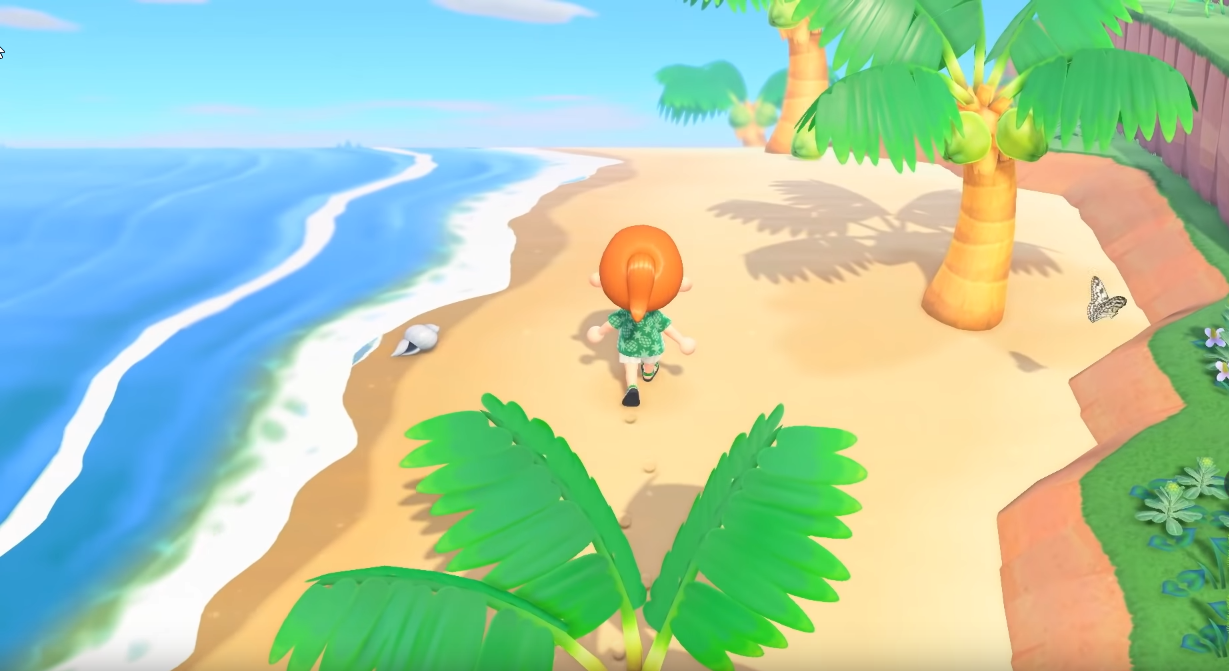
- The ocean has a more basic and cartoon-like appearance than the final build.
- The sand on the beach looks a lot less detailed. In a later clip (when the player decorates the beach in the morning), it seems much more detailed with a wavy texture and light grains, much like the final sand. This may be a different build, or it may just be a difference in the lighting and time of day.
- The ledge connecting the beach with the grass is a slightly different color.
- The grass is lacking the realistic tufts from earlier screenshots, and the triangular pattern present in the final build is faint, making the grass appear almost a solid green color.
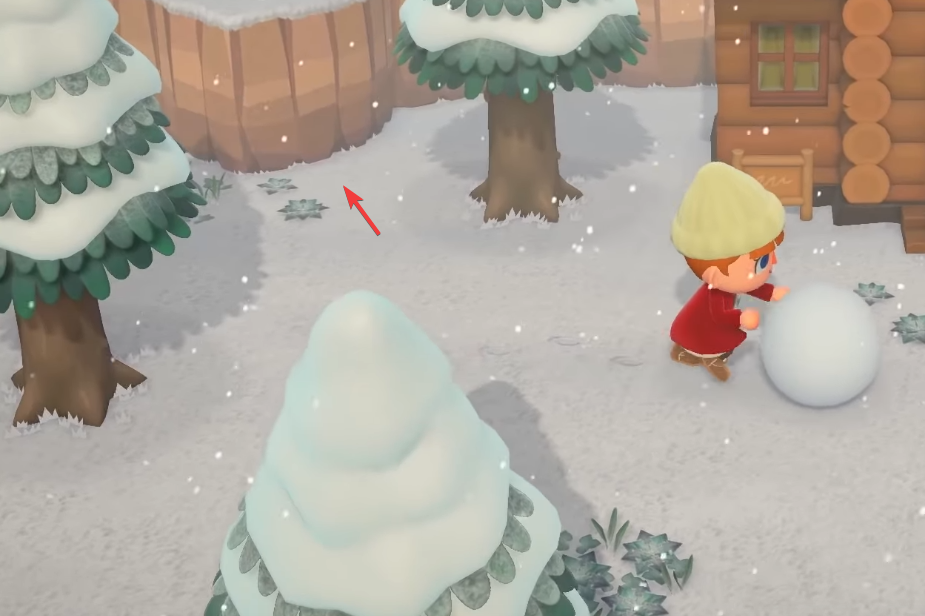
- During the clip of the player pushing a snowball in winter, there is a cliff which appears to extend 2 tiles outward. The cliff is diagonal on both edges in a way that is not possible in the final game. In the final game, a cliff can only be diagonal on one edge, and attempting to terraform the other corner will simply destroy the cliff.
- The same white simple wooden fence from the earlier screenshots can be seen at the end of the trailer, except with a more similar look to the wood fences in the final game.
Treehouse Gameplay#
Watch on YouTubeFollowing the Direct presentation, Nintendo's Treehouse stream included a segment focused on New Horizons, featuring a build with many differences compared to the final.
- The title screen doesn't focus on a villager, and is instead is a fixed shot of the ocean. It also lacks the copyright date and settings option.
- The loading screen icon is the same one that would eventually be used for autosaving, rather than the island icon used in the final version.
- A unique scene explaining the demo featuring Tom Nook, Timmy and Tommy is shown after starting the game.
- The minimap shows no peninsula extending off the beach.
- Numerous base apps are missing from the NookPhone.
- When opening the NookPhone, the camera angle is different, with a position closer to the common camera angle.
- The crafting recipe icon for the flimsy net is slightly different, with the inside of the net being pure white.
- A music track not featured in the final game can be heard outside. It was likely an early version of the "Island Orientation" theme.
- The sound effect used when using the d-pad to select a tool is slightly different, as is the angle of the tools themselves, as they clip through the player's head.
- Fuchsia's catchphrase from New Leaf, "girlfriend", had not yet been updated to "precious".
- The yellow selection highlight for textboxes is thicker.
- The Resident Services Terminal has a different, less detailed design.
- There is no background for the preview of an item about to be crafted. A traditional d-pad icon is also used to represent scrolling on the same screen, which was changed to the Joy-Con equivalent.
- "Weeds" were changed to "clumps of weeds".
- Choosing to play with another person in co-op doesn't bring up a menu to pick who you want to play with, and instead immediately asks if you want to play with the other player. Notably, no other player tents are shown on the island despite that them being established is required for multiplayer.
- The text for digging up a manila clam is different. It was changed from "I got a manila clam! These make amazing chowder. Yum!" to "I got a manila clam! Manila is my favorite flavor of clam!"
- When catching a new bug or insect, the player character says "Oh... What's this...?" instead of "Yes!"
- The corner of the airport and the seaplane's wing can briefly be seen at 24:58, featuring a teal color scheme cut from the final release.
- When speaking to Hamlet, he has unique dialog referencing Nintendo Treehouse Live.
Post-release#
April 26, 2021#

An update post on April 26, 2021 included a screenshot of a house style that would be added in November's 2.0 update. It was soon replaced with another screenshot, and an apology was posted on the Japanese version of the site.
(Source: Nintendo Life)