 This article has a talk page!
This page details development materials of Doom II: Hell on Earth (PC).

Early Maps#
These maps were retrieved from a backup image of one of id's NeXT development servers by an anonymous source. The maps themselves were not released, just captures of them loaded in Doom Builder.
(Source: http://doomwiki.imgur.com/)
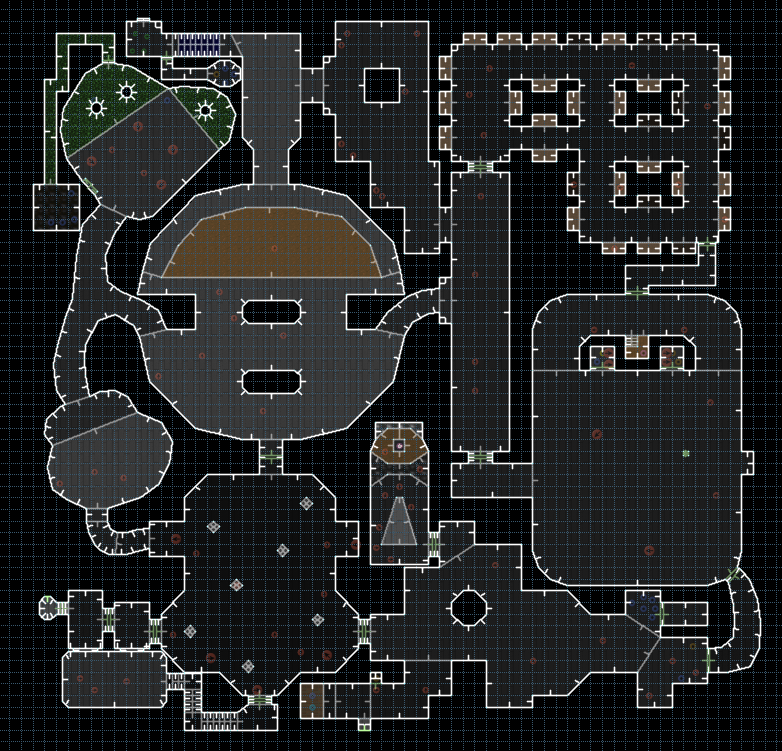
The map that would become Level 10: Refueling Base. Some small additions and changes have been made since the Doom 0.5 alpha.
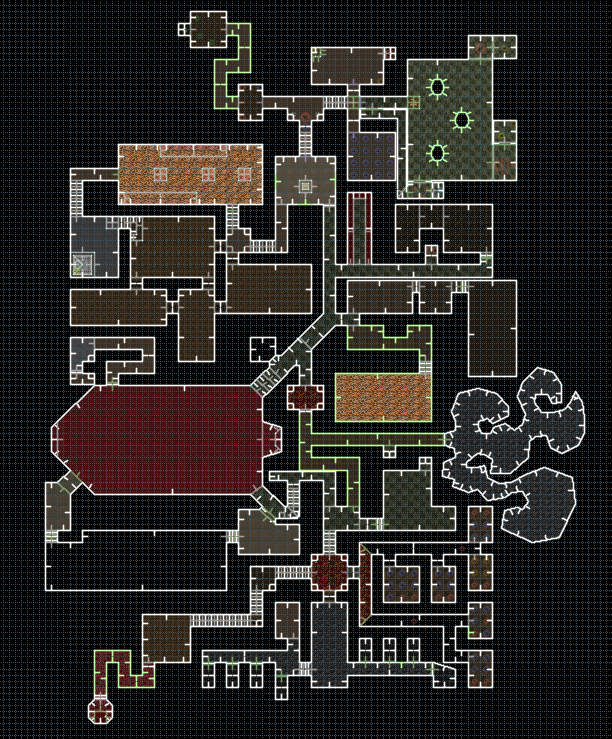
This map contains many of the rooms from Level 28: The Spirit World, but its layout is almost entirely differentǃ A bunch of simple, boxy corridors and rooms would be dropped from the final layout, and the cavernous section enlarged, with nearly everything else shifted around.
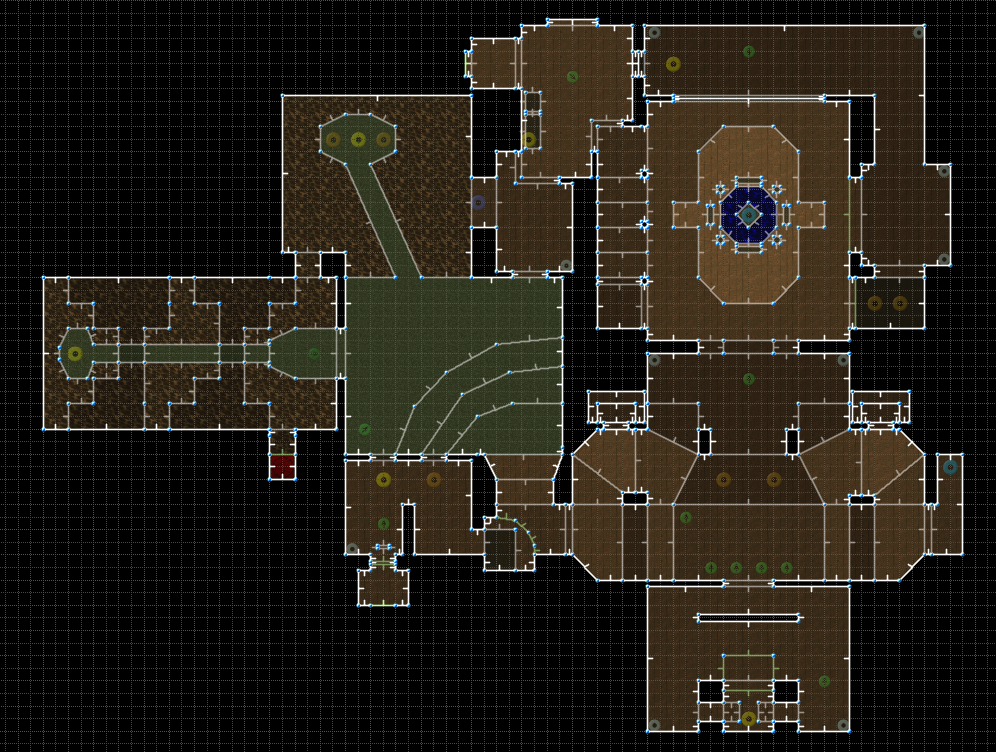
American McGee's id Map01 — a deathmatch map that was released standalone. There are no noticeable changes to the geometry of things, but it's named MAP35.WAD, hinting that it may have been intended for release with the game proper.
It might be worth noting that Heretic included a hidden conversion of this deathmatch map as E4M1 (which was moved to E6M3 in the Shadow of the Serpent Riders expansion) that is only accessible with the change level cheat and command-line parameter. Perhaps something similar was planned for Doom II?
/temp Directory Level Differences#
Level 1: Entryway#
|
/temp directory |
Final |
|---|---|

|

|
- Drastically different from the final version of Entryway, the player starts off inside an elongated room, lacking a view of the outside, and a chainsaw.
Early Progression#
Two early orders for level progression can be found in the map sources. All of the game's map files were backed up to an /old directory on July 29, 1994. They were then copied to a /temp directory in a new order, evidenced by their timestamps. The /temp order closely matches the final order, outside of levels which are missing.
The level table below uses the ordering in the /old folder by default, but can also be sorted by the /temp or final order. Only one map is exclusive to the /old folder, while the final slotting has two maps that aren't in the /old or /temp folders.
Level Name |
/old Slot |
/temp Slot |
Final Slot |
|---|---|---|---|
Entryway |
MAP01 |
MAP01 |
MAP01 |
The Catacombs |
MAP02 |
MAP04 |
MAP22 |
The Crusher |
MAP03 |
MAP06 |
MAP06 |
Dead Simple |
MAP04 |
MAP07 |
MAP07 |
The Pit |
MAP05 |
MAP09 |
MAP09 |
Refueling Base |
MAP06 |
MAP10 |
MAP10 |
Tricks and Traps |
MAP07 |
MAP08 |
MAP08 |
The Waste Tunnels |
MAP08 |
MAP05 |
MAP05 |
Tenements |
MAP09 |
MAP17 |
MAP17 |
Circle of Death |
MAP10 |
MAP11 |
MAP11 |
The Factory |
MAP11 |
MAP12 |
MAP12 |
The Citadel |
MAP12 |
MAP19 |
MAP19 |
The Courtyard |
MAP13 |
MAP18 |
MAP18 |
Downtown |
MAP14 |
MAP13 |
MAP13 |
Industrial Zone |
MAP15 |
MAP15 |
MAP15 |
Bloodfalls |
MAP16 |
MAP30 |
MAP25 |
Nirvana |
MAP17 |
MAP21 |
MAP21 |
The Gantlet |
MAP18 |
MAP03 |
MAP03 |
Suburbs |
MAP19 |
MAP16 |
MAP16 |
Gotcha! |
MAP20 |
MAP20 |
MAP20 |
(alternate The Spirit World) |
MAP21 |
MAP22 |
N/A |
Barrels o' Fun |
MAP22 |
MAP23 |
MAP23 |
The Chasm |
MAP23 |
MAP24 |
MAP24 |
The Inmost Dens |
MAP24 |
MAP14 |
MAP14 |
Underhalls |
MAP25 |
MAP02 |
MAP02 |
Monster Condo |
MAP26 |
MAP26 |
MAP27 |
The Abandoned Mines |
MAP27 |
MAP25 |
MAP26 |
The Living End |
MAP28 |
MAP28 |
MAP29 |
(alternate Grosse) |
MAP29 |
MAP29 |
N/A |
The Spirit World |
MAP30 |
MAP27 |
MAP28 |
Wolfenstein |
MAP31 |
MAP31 |
MAP31 |
Grosse |
MAP32 |
MAP32 |
MAP32 |
(alternate Bloodfalls) |
MAP33 |
N/A |
N/A |
The Focus |
N/A |
N/A |
MAP04 |
Icon of Sin |
N/A |
N/A |
MAP30 |
21st Birthday Art Release#
John Romero included a number of Doom II assets in art he released on Doom's 21st birthday.
(Source: John Romero's Twitter)
Graphics in Development#


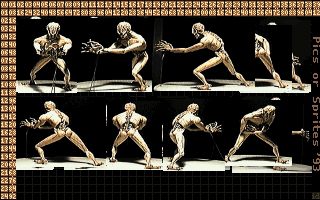
Captures of the Revenant's punching animation.
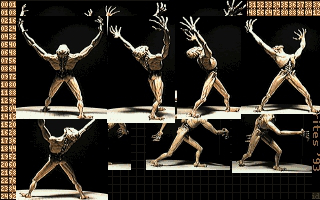
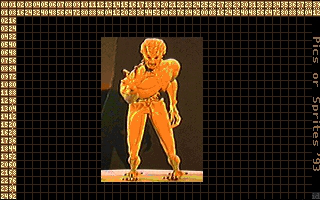
The Arch-Vile model in two different attack poses.
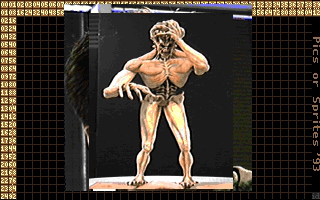
Large Arch-Vile captures, before being rescaled.

A photo of John Romero, with six different conversions into the game's palette. This would be edited into the normally unseen sprite used for the killable part of the final boss.

The SS's death animation contains a sprite from the undeveloped EGA version of Wolfenstein 3D.


Various spritesheets for the Chaingunner, which include eight directional sprites.


A very minuscule change of Romero's pain state has 2-4 pixels that have been changed on the right of his mouth.
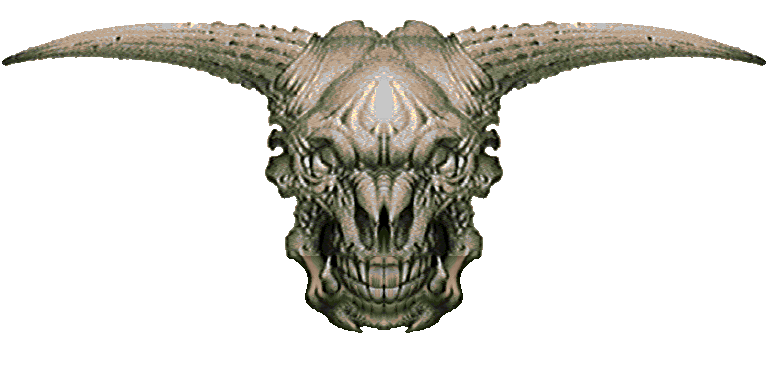
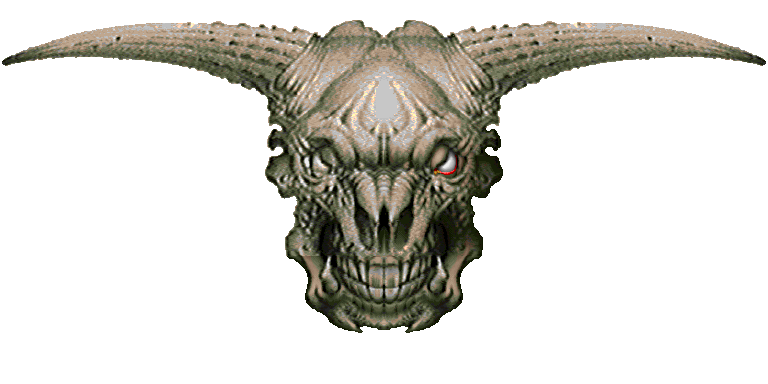
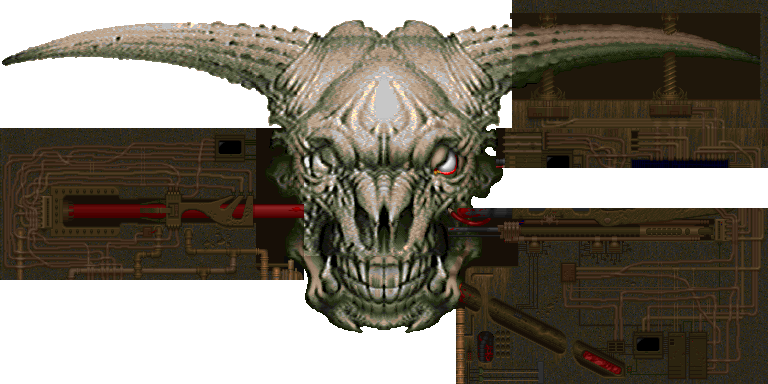

Speaking of the Icon of Sin, his (stitched together) wall texture had a few changes. Two variations of the Icon of Sin exist within the Romero dump, and the Icon of Sin consisting of nine walls. If the walls were connected together, we get the complete version of the wall that would've been seen in the game. First being from the scanned drawing directly (similar to the marble wall textures from the first game), next one has half of the face edited, next one after had a few tech wall textures, and the last one is a near complete version of just the Icon of Sin's face (albeit minor shading needs to be done and to have the Icon of Sin bound within the wall.)
Unused Graphics#


Two frames of a pump-action super shotgun.

Unused gore decorations: A huge pile of marine bodies and skulls around a stake, and an eviscerated corpse hanging over a fire pit.

Waterfall patches for an animated texture. The code to animate these is present in the executable.

Test capture of the Arch-Vile, oddly titled manmon_lbm.
Early Music#
Just like Doom 1, Doom 2's music was influenced by rock and metal bands at the time. Bobby Prince composed the music for both games and had some "inspirations" for the music, and also notable that these tracks were composed when the original Doom was being developed, and were later reused for Doom 2. All tracks that were set to play in the game will be using DOS/Windows MIDI for comparison.
Cover Tracks#
The original song a track is derived from is seen on the left, with the MIDI cover in the middle, and the final release's track on the right.
MAP 7, 19, and 29 - Shawn's Got the Shotgun
Original Song |
MIDI Cover |
Release |
|---|---|---|
The main melody is heavily reworked into a more original tune, along with changing the guitars with an electronic bass as the main instrument. The percussion timings are adjusted, but mainly the patterns are exactly the same.
MAP 9 - Into Sandy's City
Original Song |
MIDI Cover |
Release |
|---|---|---|
Stone Temple Pilots' "Sex Type Thing" was reworked into a more original track similar to Shawn's Got the Shotgun, but on a much more heavier scale. The guitar was changed into a harpischord while also with a reworked but similar melody,
MAP 23 - Bye Bye American Pie
Original Song |
MIDI Cover |
Release |
|---|---|---|
Very minor note changes. Also, the track title's name is possibly a reference to the lyrics of the song "American Pie" by Don McLean, while also pertaining the name of ID Software employee and developer of Doom 1 and 2, American McGee as other tracks of Doom 2 reference ID Software employees such as Sandy Petersen with the track "Into Sandy's City", and Shawn Green with "Shawn's Got The Shotgun" as some examples.
MAP 25 - Adrian's Asleep
Original Song |
MIDI Cover |
Release |
|---|---|---|
Some instrument changes, such as timings of the hi-hats.
Early Tracks#
MAP 30 - Opening To Hell
Early |
Final |
|---|---|
Originally, the Icon of Sin's theme was going to originally be a track for the intro of the original Doom. Ironic. The "Opening" track was worked further to be more of a map theme rather than a track fit for the title screen.
Early Sounds#
Icon of Sin#
Name |
Original Audio |
Modified |
Final (reversed) |
|---|---|---|---|
DSBOSSIT.wav (Sight sound) |
(Source: doom_txt's Twitter)
Upon seeing his head on a pike during the development process of the game (placed by Adrian Carmack and Kevin Cloud as a joke, and John Carmack programmed it so that the final boss is a kill-able monster), Romero recorded numerous phrases with Robert Prince. Robert chose the final line, "To win the game, you must kill me, John Romero." Sound processing was applied to the recording, and then reversed the track to make it sound more "demonic," in reference to several religious fundamentalists accusing popular bands at the time for allegedly using a process called "backmasking" in order to give out demonic messages praising Satan.1